reviewstook.com is reader-supported. When you buy through links on our site, we may earn an affiliate commission.
Where to buy
Amazon carries every linked pick among these best cameras for instagram selfies. Buy the camera with the two accessories that actually change selfie quality: a small grip or mini tripod so the camera can be placed rather than held at arm’s length, and a pocket light for after dark, because placement and light do more for a face than any sensor in this list.
- Sony ZV-1F: check price on Amazon
- DJI Osmo Pocket 3: check price on Amazon
- Insta360 GO 3S: check price on Amazon
- Insta360 X4: check price on Amazon
- Insta360 Ace Pro 2: check price on Amazon
- GoPro Hero: check price on Amazon
The best cameras for instagram selfies are not the best cameras. A selfie is a specific photographic act: a face at arm’s length or on a small tripod, in uncontrolled light, judged on a phone screen in half a second, by an audience deciding whether the skin looks like skin and the moment looks like it felt good to be in. The cameras that win that contest are the ones with flattering colour, reliable face autofocus, screens you can actually see yourself in, and a size that means the camera is present at the moments worth posting.
Phones set the baseline here, and this list respects it: a separate camera earns its place only where it beats the phone honestly, in low light at a restaurant table, in video that becomes Reels, in a look with depth and softness a small phone sensor fakes with software, or in battery life across a full day of shooting. Each pick below clears that bar in a different way, from a compact designed for faces to a 360 camera that makes the selfie a group photograph with nobody left holding the phone.
Skin is the technical heart of it. Instagram selfies live or die on how a camera renders skin tones under restaurant LEDs, bathroom fluorescents and golden-hour sun in the same week. The picks were judged on that rendering, on face and eye autofocus that finds you without being asked, and on how little work stands between the moment and the post, because a selfie that needs an evening of editing is a selfie that never gets posted.
Key Takeaways
- A selfie camera earns its money after dark and indoors, where phone sensors smear and these larger sensors keep skin looking like skin.
- Seeing yourself while you shoot changes everything: flip screens and front screens are not vanity features, they are framing tools.
- Face and eye autofocus matter more than resolution, because a soft-eyed selfie at any megapixel count is a deleted selfie.
- Placement beats holding: a camera that sits happily on a mini tripod or a café table produces better angles than any arm’s-length shot.
- The best selfie camera is the one at the event; every pick here is small enough to be carried without a decision.
In this guide
Quick Picks
| Pick | Badge | Why it earns its place |
|---|---|---|
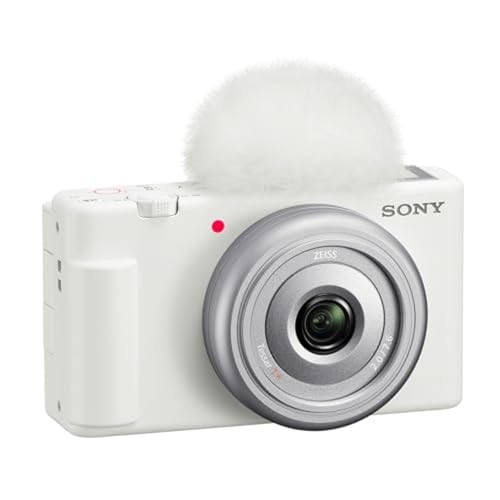
| Sony ZV-1F | Best selfie compact | A one-inch sensor, a wide lens made for arm’s length, and face-first features in the white finish that disappears into a bright aesthetic. |
| DJI Osmo Pocket 3 | Best for selfie video and Reels | A gimbal that tracks your face and smooths your walk, turning selfie video into footage that looks crewed. |
| Insta360 GO 3S | Best wearable selfie camera | A thumb-sized camera that clips to a collar or cap and shoots hands-free POV and selfie angles nothing else can reach. |
| Insta360 X4 | Best group selfie camera | It shoots in every direction, so the group selfie includes the person who used to hold the camera, and the background too. |
| Insta360 Ace Pro 2 | Best action selfie camera | A big flip screen and a large sensor make it the selfie camera for ski trips, surf days and festivals. |
| GoPro Hero | Best simple adventure selfie pick | GoPro’s compact, friendly body with 4K video and a touchscreen, for feeds built on beaches, bikes and weekends. |
How did we choose cameras for the front-facing test?
We judged skin first. Each pick was assessed on how its colour science treats faces across the week’s real lighting, daylight, office light, restaurant warmth and night streets, because Instagram is a skin-tone contest judged at thumbnail size. Cameras that render faces waxy, orange or grey under ordinary indoor light were marked down regardless of their other gifts, and the face-first compacts and vlogging cameras, designed by people who think about this problem daily, rose naturally.
Second came the mechanics of self-framing: a screen that shows you the shot, autofocus that locks to a face or an eye without menu-diving, and controls operable by the person in front of the lens, including timers, gesture and voice triggers and apps that turn the phone into a remote. Third came presence: size, battery behaviour across a day out, and video quality for the Reels and Stories that now share the feed with stills.
We also held every pick to the phone test explicitly. If a camera’s selfie advantage over a good phone was imaginary, it did not belong here; each of the six clears the bar in an identifiable situation, and the verdicts name the situation rather than pretending one camera wins everywhere.
Which are the best cameras for instagram selfies worth switching from your phone for?
Six answers: the face-designed compact, the gimbal that films you like a crew would, the thumb camera that is always on your collar, the 360 that includes everyone, the action camera that survives the pool party, and GoPro’s compact for the adventurous feed.

Sony ZV-1F — Best selfie compact
The ZV-1F is the camera this genre would design for itself. Its wide fixed lens frames a face and shoulders at arm’s length without the distortion of an ultra-wide phone lens, the one-inch sensor keeps restaurant and evening light honest, and its face and eye autofocus simply handles the focusing while you handle the expression. The background-defocus switch softens a cluttered café into a backdrop at one touch, skin tones are rendered by a maker who tunes for faces first, and the fully articulating screen lets you compose exactly the post you intend rather than the one the arm’s length lottery delivers.
- Form: fixed-lens compact with 1-inch sensor
- Lens: wide, selfie-distance framing
- Screen: fully articulating for self-view
- Autofocus: face and eye priority
- Video: 4K for Reels and Stories
The ZV-1F habit is placing rather than holding. Set it on its mini tripod on the café table, the windowsill, the stack of books, frame with the flip screen, and take the photograph with the timer or the phone app while your hands do something more photogenic than gripping a camera. Placement buys the two things arm’s length never can: a flattering slightly-higher angle and a background you chose. Its white finish is not a trivial detail in this genre either; it photographs well in flat-lays, matches bright aesthetics, and signals a camera that is part of the outfit rather than equipment, which is exactly how often-carried cameras get used.
Strengths
- Face-first design in every detail
- One-inch sensor wins the evening hours
- Defocus switch cleans up backgrounds instantly
Trade-offs
- Fixed lens means framing with placement
- No viewfinder for bright-sun work
- A phone still wins on instant sharing speed
Best for: Creators and everyday posters who want selfies visibly better than a phone’s, especially indoors and at night.
Not suited for: Group adventures and water, where the action cameras below take over.

DJI Osmo Pocket 3 — Best for selfie video and Reels
For the moving selfie, the Pocket 3 has no peer in this list. Its mechanical gimbal erases the handheld shake that marks phone selfie video, face tracking keeps you framed while you walk, talk and gesture, and the one-inch sensor holds evening streets and restaurant interiors with a confidence phone footage cannot match. The rotating screen flips to selfie view in a twist, the camera is small enough to be forgotten in a jacket until the moment arrives, and its vertical shooting suits the formats Instagram actually rewards now. If your feed is more Reels than grid, this is the first pick, not the second.
- Form: gimbal camera with 1-inch sensor
- Stabilisation: mechanical 3-axis gimbal
- Tracking: face tracking for selfie video
- Screen: rotating, vertical shooting friendly
- Video: 4K with slow-motion options
The Pocket 3 pattern is the walking monologue and the day-in-the-life sequence: camera at chest height on its small handle, face tracking on, and a route through the market, the seafront or the festival while you narrate. Because the gimbal does the camera operating, your performance relaxes into conversation, and viewers feel the difference as production value without ever naming it. Learn its battery rhythm, top up between locations rather than during them, and shoot the stills for the grid on the same pass; the one-inch frames extract into perfectly respectable photographs, making this the one-device answer for a mixed feed.
Strengths
- Gimbal smoothness transforms selfie video
- Face tracking frees your performance
- Excellent low-light video for its size
Trade-offs
- Stills are a by-product, not its first talent
- Battery needs topping up on long days
- Gimbal is a mechanism to protect in bags
Best for: Reels-first creators, vloggers and anyone whose selfies move.
Not suited for: Still-photography purists who never shoot video.

Insta360 GO 3S — Best wearable selfie camera
The GO 3S redefines the selfie as something that happens while your hands are busy living. Worn on its magnetic pendant, clipped to a cap or stuck to its pivot stand, it captures the cooking class, the climb, the market haggle and the dog walk from your own point of view, then flips in its Action Pod, which adds a selfie screen, for the conventional framed shot. The footage stabilises in software to a smoothness that belies the camera’s size, the 4K recording is honest quality, and the whole system is so small that the question of whether to bring a camera simply stops occurring.
- Form: thumb-sized modular camera with pod
- Mounting: magnetic pendant, clips and stands
- Video: 4K with strong stabilisation
- Screen: pod provides selfie framing
- Use: hands-free POV plus framed selfies
Wear this camera the way its designers dream of: on the pendant under a shirt or jacket, started with one press when the moment starts, ignored while it happens. The selfies it produces are of a kind no held camera makes, your hands in the frame doing the thing, your friends’ faces reacting, the scene from inside rather than from arm’s length outside it. Then dock it in the pod for the composed shots and the review. Its disciplines are battery and awareness: short clips are its native language, and a camera this discreet obliges you to be thoughtful about filming other people, a courtesy the genre should keep.
Strengths
- Hands-free angles no other pick can shoot
- So small it is always with you
- Pod restores conventional selfie framing
Trade-offs
- Short-clip battery rhythm
- Small sensor trails the one-inch picks at night
- Easy to forget it is recording, mind your manners
Best for: POV creators, travellers and anyone whose best moments need both hands.
Not suited for: Long continuous recording or the darkest venues.

Insta360 X4 — Best group selfie camera
The X4 solves the group selfie’s ancient injustice: whoever holds the camera is distorted at the frame’s edge or missing entirely. Mounted on its selfie stick, which vanishes from the shot, the X4 records the whole sphere in 8K and lets you choose the framing afterwards, so the whole group, the landmark and the sunset all make the final image, and the photographer stands inside the photograph for once. Reframed stills and clips pull from the same capture, the body is waterproof for the pool and beach chapters of the feed, and single-lens mode covers conventional action filming when the trip turns adventurous.
- Form: 360 camera, waterproof
- Video: 8K 360 capture, reframe afterwards
- Mounting: selfie stick disappears from shots
- Modes: 360 plus single-lens action mode
- Workflow: frame selection in the app
The X4 habit is planting the stick and joining the picture. At the viewpoint, the birthday table or the boat’s bow, extend the stick, start the capture, walk into your own photograph and let the moment happen at full width; choose the selfie angle, the group angle and the scenery angle later from the same seconds. It asks a little app work in exchange, and its files are large, so review each evening and export the keepers before the card becomes an archive of unexamined spheres. For travel feeds especially, one X4 capture yielding a grid post, a Reel and a Story is an economy no other pick matches.
Strengths
- Nobody is left out of the group shot
- One capture yields many framings
- Waterproof for the wet chapters of a trip
Trade-offs
- Reframing is an app step after the fact
- Files are large and hungry
- Reframed stills trail a dedicated camera’s detail
Best for: Travel groups, friend groups and anyone tired of holding the camera.
Not suited for: Instant, unedited posting straight from the moment.

Insta360 Ace Pro 2 — Best action selfie camera
The Ace Pro 2 is the selfie camera for the days that would kill a compact. Its large flip-up screen is the best self-framing tool among the action cameras, its large sensor keeps faces clean in the mixed light of après-ski bars and night markets, and the body is waterproof and hard-wearing in the way the genre’s best stories require. Held on a short grip it frames a composed selfie or a piece to camera; mounted, it films the descent, the ride or the dive; and its stills are strong enough that the grid need not know a phone was ever involved.
- Form: action camera with flip touchscreen
- Sensor: large 1/1.3-inch class sensor
- Video: up to 8K, strong slow motion
- Build: waterproof as sold
- Mounting: quick-release system
Use the Ace Pro 2 as the trip’s narrator. Flip the screen for the morning’s plan and the evening’s verdict, mount it for the action between, and the day assembles into a story with a face in it rather than a montage of scenery. The flip screen’s framing honesty changes selfie quality more than any sensor could: you compose the shot you meant, with the horizon where you wanted it and the background character included on purpose. Guard the hinge from sand, rinse the body after salt water as its makers advise, and it will outlast several phones’ worth of adventures while photographing all of them better.
Strengths
- Flip screen gives true selfie composition
- Large sensor for night and indoor faces
- Tough enough for the adventurous feed
Trade-offs
- Bigger than the simplest action cameras
- Flip hinge deserves sand awareness
- 8K is for highlights, not all day
Best for: Adventure creators whose selfies happen on mountains, water and night streets.
Not suited for: Minimalists who want the smallest possible camera.

GoPro Hero — Best simple adventure selfie pick
The compact GoPro Hero is the straightforward adventure selfie camera: small, light, waterproof and simple, with 4K video, a touchscreen for framing, and stabilisation that keeps a held selfie steady on a boat, a bike trail’s rest stop or a rooftop at sunset. It lacks the flagship GoPros’ front screen, so selfie framing uses the rear screen before you turn it around or a practised sense of its wide lens, which is forgiving enough that the practised sense works. What it returns for that small compromise is a camera with almost no learning curve and a price of entry that leaves budget for the grip, the case and the trips themselves.
- Form: compact waterproof action camera
- Video: 4K recording with stabilisation
- Screen: rear touchscreen
- Build: rugged, waterproof as sold
- Mounting: standard action-camera ecosystem
The Hero habit is the wide-lens discipline: hold it a little further away than instinct suggests, because its wide view forgives framing but punishes closeness with distortion, and use its photo timer on a placed camera for the group shots at the summit or the beach bar. Paired with the phone app, it becomes a remote-viewfinder camera on a mini tripod, which quietly upgrades it into a proper selfie studio for travel. It will not out-shoot the Ace Pro 2 in a night market or the ZV-1F at a café table, and it does not pretend to; it is the camera for the bright, wet, moving days, and on those days it is exactly enough.
Strengths
- Simple, tough and genuinely compact
- Wide lens forgives casual framing
- App pairing adds a remote viewfinder
Trade-offs
- No front screen for live selfie framing
- Night faces trail the large-sensor picks
- Fewer pro controls than flagship GoPros
Best for: Weekend adventurers and travel feeds shot in daylight and water.
Not suited for: Nightlife-heavy feeds or precision self-framing.
How do the six Instagram selfie cameras compare side by side?
| Pick | Form | Strongest suit | Watch out |
|---|---|---|---|
| Sony ZV-1F | Compact camera | Face-first stills and video | Place it, do not just hold it |
| DJI Osmo Pocket 3 | Gimbal camera | Selfie video and Reels | Manage the battery rhythm |
| Insta360 GO 3S | Wearable camera | Hands-free POV selfies | Short clips are its language |
| Insta360 X4 | 360 camera | Group and travel selfies | Evening review keeps files sane |
| Insta360 Ace Pro 2 | Action camera | Adventure selfies and narration | Keep grit from the hinge |
| GoPro Hero | Action camera | Daylight adventure selfies | Hold it further away |
Split the table by your feed’s centre of gravity. Still photographs at tables and in cities belong to the ZV-1F; moving storytelling to the Pocket 3; lived experience to the GO 3S; groups to the X4; and the adventurous chapters to the Ace Pro 2 or the little Hero depending on how much night your adventures contain. Every pick beats a phone somewhere specific, and none beats it everywhere, which is the honest shape of this category in this decade.
The hidden common factor is light discipline. Each of these cameras rewards the same thirty seconds of thought, face toward the window, lamp behind the camera rather than behind you, background chosen rather than inherited. A phone in that light beats any camera in bad light, so learn the light first and let the picks here multiply it.
What actually makes a selfie look good on Instagram?
Light direction, before everything. A face lit from the front and slightly above, by a window, a doorway’s open shade or a lamp you have moved two metres, gains modelling and clear eyes; a face lit from behind becomes a silhouette with a famous background, and a face lit from directly above gains shadows in every socket. The thirty seconds spent turning toward the light is the highest-value act in selfie photography, worth more than every camera on this page combined, which is why the guide says it first.
Angle and distance come second. Slightly above eye level flatters almost every face, and a little more distance than instinct suggests, with the frame cropped afterwards, avoids the wide-lens distortion that enlarges whatever is nearest the camera. Background third: a selfie is a portrait plus a place, and the posts that travel are the ones where the place was chosen, the doorway, the mural, the mountain, rather than inherited from wherever you happened to stop.
How do you take selfies that do not all look the same?
Vary the camera’s job. The grid tires of the identical arm’s-length face because the geometry never changes, so rotate through the modes this list offers: the placed camera’s full composition, the wearable’s inside-the-moment POV, the 360’s whole-scene group shot, the gimbal’s walking talk. Four posts in four geometries read as a life; four posts in one geometry read as a habit, and audiences can feel the difference without articulating it.
Vary the light and the hour with the same intent. Golden hour flatters everyone and therefore distinguishes no one; add the blue hour after sunset, the neon street, the window-lit morning, the rainy café. The cameras here were chosen partly for how differently they render those hours, the compacts’ softness, the action cameras’ punch, and a feed that ranges across them looks like a person with a life rather than a filter with a person attached.
What settings and habits protect skin tones?
Expose for the face and lock it there. Every camera here will, left automatic, expose for the whole scene, and a bright window or sky behind you will quietly darken your face into the least flattering version of itself. Tap or set exposure on the face where the camera allows, add a touch of exposure compensation in backlit scenes, and check the first frame’s face rather than its background; the background can be interesting at any brightness, the face cannot.
Keep the processing honest. The beauty modes and heavy filters that promise perfection deliver the waxy, poreless look audiences increasingly read as artificial, and the cameras here were chosen for rendering skin with its texture intact. Post the version that looks like you on a good day, lit kindly, rather than a stranger assembled by software, because the accounts that age well on the platform are the ones whose owners remain recognisable in person.
How do you build a selfie setup that travels in a jacket pocket?
The kit is three objects: the camera, a mini tripod small enough to live in the same pocket or bag, and the phone that receives the results. The mini tripod is the piece beginners skip and the piece that changes everything, because it converts any table, wall, railing or stack of books into your photographer, at heights and distances no arm achieves. Choose one with a ball head or a tilting top, since selfie framing lives and dies on a few degrees of tilt, and practise the whole sequence, place, frame, timer, at home until it takes under a minute in the wild.
Settings should be pre-decided, not rediscovered at every stop. Fix your defaults at home: the face-detection mode on, the timer duration you prefer, the grid overlay enabled so horizons stop slanting, and the connection to your phone tested while nothing matters. A travel selfie kit fails socially before it fails technically, the friends waiting while you pair a camera are an audience cooling by the second, so the discipline is that the kit wakes up ready, every time, like a good travelling companion.
Power is the third pocket discipline. These small cameras sip batteries on stills and drink them on video, so the habit is a top-up during lunch from the same power bank that feeds the phone, and a cable that serves both. Arrive at the golden hour with a living camera and the day’s earlier discipline pays out in the only light that cannot be rescheduled; the feed’s best photograph is disproportionately often the one taken by the person whose camera was still awake.
How do groups and couples take selfies that flatter everyone?
The geometry of fairness is distance and height. A camera placed further away, on the mini tripod or the X4’s stick, compresses the differences between the nearest and furthest faces, so nobody is the distorted foreground giant of the arm’s-length group shot. Height just above the group’s eye line flatters every face in it, and arranging the group in a shallow arc rather than a line keeps the edges from stretching, a small choreography that takes ten seconds and rescues a thousand photographs.
Light the group, not the landmark. The eternal group-selfie failure is the famous view correctly exposed behind five silhouetted faces, because the camera obeyed the bright background. Turn the group so the light that lit the landmark falls on the faces instead, and take the view’s portrait separately; two good photographs beat one compromised one, and the feed can hold both. Where turning is impossible, expose for the faces and let the background bloom bright; people forgive a glowing sky and never forgive a dark face.
Finally, take more frames than feels polite, in a short burst of variations: one composed, one mid-laugh, one with the group’s own chaos allowed in. Groups relax into the later frames, the performed smiles soften into real ones, and the photograph everyone actually shares is rarely the first. The cameras here with face detection across multiple faces earn their keep in exactly these seconds, holding focus on the crowd rather than on the most convenient nose.
What separates a selfie feed that grows from one that stalls?
Consistency of presence, not of formula. The accounts that grow post a recognisable person living a visibly varied life: the face is the constant, the worlds change. That is an equipment insight as much as a creative one, because it rewards the camera that is present in the most worlds, the wearable at the workshop, the tough compact at the café, the 360 on the trip, over the technically finest camera that attends only formal occasions. Presence is a specification, and this list weighted it accordingly.
Craft compounds quietly underneath. A feed whose light keeps improving, whose backgrounds stop containing bins, whose angles vary because the camera gets placed in new ways, teaches its audience to expect quality without ever announcing it. The creators who sustain that improvement treat each post as a small review: what did the light do, where was the camera, what will I place differently on Thursday. Ten minutes of that honesty a week outperforms any growth tactic being sold this month.
And the honest foundation is recognisability. The feeds with futures are the ones whose owner looks, in the photographs, like the person their friends know: real skin, real expressions, the good light doing the flattering instead of the software. Every camera here was chosen for rendering a person truthfully and kindly at once, because that combination, not perfection, is what an audience trusts, follows and stays for.
How do you shoot selfies after dark without the flash look?
Find the light that already exists and stand in it properly. A shop window, a street lamp’s edge, a restaurant’s pendant lights, the glow of a fairground: cities at night are a chain of small studios, and the selfie craft is positioning your face at the flattering edge of one, close enough to be lit, far enough that the light stays soft. The large-sensor picks here, the ZV-1F and the Ace Pro 2 and the Pocket 3, hold that light’s colour and keep skin clean at sensitivities where phones dissolve into watercolour.
Kill the built-in flash instinct. Direct on-camera flash at arm’s length is the least flattering light in photography, a white blast that flattens the face and blackens the world behind it. If a light must be added, make it the pocket light from the buying advice, held or placed off to one side and dimmed to blend with the scene rather than replace it, so the photograph still reads as night, with your face as its subject rather than its survivor.
Steady the camera and slow down. Night selfies fail on movement as often as on noise, so the placed camera on its mini tripod, the timer, and a held breath buy sharpness no setting can. Shoot several frames, because expressions and tiny movements vary, and review the face at full zoom once, not the whole scene, before moving on; the night will not repeat the moment while you discover at home that every frame blinked.
How do you direct yourself when there is no photographer?
Treat the session like a sitting, not a snapshot. A portrait photographer gives a subject small instructions and time to settle into them; alone, you must supply both halves, so work in short rounds: place the camera, take a handful of frames with one intention, chin, gaze, the laugh held back, review once, adjust one thing, and go again. The rounds impose the patience that arm’s-length shooting skips, and the difference between the first round and the third is usually the difference between the delete pile and the post.
Give your hands and eyes somewhere true to be. The self-conscious stiffness that ruins selfies is mostly unemployment: hands with nothing to do hover, eyes with nothing to meet stare. Hold the coffee, lean on the railing, look at the friend just out of frame or the view just past the lens, and the photograph acquires the aliveness of a moment interrupted rather than a face presented. The placed cameras here, and the wearable’s inside-the-action view, exist to make that aliveness available on demand.
End the session on schedule. Ten good minutes of directed rounds outproduce an hour of hopeful volume, and the review discipline, choose the post the same day, while the moment’s feeling is still legible to you, keeps the feed honest. Your future audience cannot see the hundred frames you rejected; they see the one you chose and the standard it quietly declares, and learning to choose like an editor is the last selfie skill the cameras cannot do for you.
How do outfits, places and props change a selfie?
Colour is the cheapest production design there is. A top that separates you from the background, in tone or in hue, does the compositional work of a studio backdrop, and the creators with recognisable feeds are usually running a quiet palette discipline: a family of colours the face is framed by, varied enough to live in, consistent enough to recognise at thumbnail size. The cameras here render colour faithfully enough for that discipline to be visible, which is a backhanded compliment phones, with their scene-by-scene colour opinions, do not always earn.
Places should be chosen like co-stars, not backdrops. The café window seat, the mural wall, the mountain rail: each contributes a story the caption then does not have to tell, and the placed-camera habit turns any of them into a set in a minute. Rotate the cast deliberately, because a feed shot against one wall becomes a hostage video with better lighting, and the small cameras’ portability is precisely the permission to keep moving the set.
Props earn their place when they are true. The instrument you actually play, the dog who actually owns you, the book you are actually reading: audiences have a finely tuned instrument for detecting borrowed personality, and it fires at thumbnail size. The selfie is a claim about a life, and the cameras are neutral recording devices; the credibility is supplied entirely by what you put in front of them, which is why the genre’s best practitioners spend more thought on their days than on their devices.
How do you stay safe and considerate while filming yourself in public?
Read the room before the lens. Some spaces welcome cameras and some merely tolerate them, and a few, places of worship, memorials, other people’s worst days, forbid them in spirit whatever the rules say. The wearable and compact picks here are discreet enough to be rude with, which places the responsibility where it belongs: on the photographer’s judgement. Ask where asking is due, move on where the answer is no, and never let a feed’s appetite outrank a stranger’s dignity; the audience you want can tell the difference in the photographs themselves.
Mind the physical world while the screen has your eyes. Selfie injuries are a real and unglamorous statistic, harvested at cliff edges, rooftops and track sides by people watching a frame instead of a footing. The placed camera is again the safety device: set it, step into position with your eyes up, and let the timer do the looking. No photograph in this genre’s history has been worth the alternative, and the cameras’ remotes and timers exist so that none ever needs to be.
Finally, protect the people who wander into your frames. A crowd is a backdrop of individuals, each with a life the internet does not need assigned to them; frame tighter, wait for the gap, or blur generously in the edit where a stranger’s face becomes a feature. Consideration scales with reach, and the habit formed at a hundred followers is the one that will still be serving, and protecting, you at a hundred thousand.
How do you take selfies with strangers, staff and serendipity?
The world’s best selfie partners are the people already in the story: the market trader, the guide, the chef who made the thing you are eating. Ask, briefly and with the camera visible, accept no with a smile that costs you nothing, and where the answer is yes, take the photograph properly, placed camera, kind light, rather than as a grabbed trophy, and show them the result before you leave. That small courtesy, repeated, is how travel feeds acquire their warmth, and it is also how doors open that no itinerary lists.
Serendipity has a technique: be visibly ready. The camera worn, the GO 3S on its pendant, the compact in the hand rather than the bag, signals availability to the moment and to the people in it, and moments, like cats, approach the prepared and avoid the fumbling. Keep the kit’s wake-up time near zero, the settings pre-decided as this guide keeps urging, and the difference shows in the archive as a hundred small encounters that a slower kit would have watched happen to somebody else.
Credit and kindness complete the exchange. Name the place, tag the business where tagging helps them, send the photograph to the person when you promised to, because the promise is the part everyone remembers. A feed built on other people’s generosity has obligations, and discharging them visibly is not just ethics but strategy: the accounts that communities root for are the ones that give the place and its people back more attention than they took.
What should you do when the selfie has to carry bad news or real life?
Not every post is a golden hour, and the feeds that endure are the ones whose owners learned to photograph the ordinary and the difficult with the same honesty as the celebrations. The craft transfers directly: kind light, a placed camera, an unforced expression, and the discipline to let the photograph be plain when the day was plain. Audiences trust a feed that admits weather, in every sense, and the trust is the asset that outlasts any single post’s performance.
Restraint is the technique that matters most here. The camera does not need to attend everything, and the moments you choose not to photograph protect the ones you do, in your own memory as much as in your audience’s estimation. When you do post the hard day, let the caption carry only what the photograph cannot, and resist explaining the image into a lesson; the plain record, a face in window light on a difficult afternoon, says the truest thing available, which is that life continued and was witnessed.
The cameras’ role in these posts is discretion. The small, quiet picks, the wearable, the friendly compact, intrude least on a day that is not about photography, and their images carry an intimacy the big production never could. It is the last argument for the kit this guide has built: not the sharpest or the fastest, but the one that can be present, gently, for the whole of a life rather than only its highlights.
What mistakes make selfies look worse than the phone’s?
- Shooting with the light behind you, so the camera exposes for the view and your face becomes its darkest element.
- Holding any wide camera too close, and letting lens distortion rewrite the geometry of your face.
- Using the harsh on-camera light or a bare flash at night instead of turning toward an existing soft source.
- Posting the first frame every time instead of taking the extra twenty seconds for a placed, framed shot.
- Leaving the background to chance, so bins, strangers and clutter narrate the photograph alongside you.
- Filtering skin into plastic and losing the texture that makes a face read as real at thumbnail size.
Each mistake is a small surrender of the advantages these cameras exist to provide: control of framing, light and placement. The phone’s great strength is that it is thoughtless; a dedicated camera only wins when you spend the small thoughts it makes possible, and the posts that result are visibly, measurably different.
Final Recommendation
For most posters the Sony ZV-1F is the selfie camera to buy: it is the one designed from the sensor outward for a face at arm’s length, and it shows in every evening photograph. Choose the Pocket 3 if your feed moves, the GO 3S if your hands are busy living, the X4 if your selfies are really group portraits, and the Ace Pro 2 or little Hero if your life is wetter and faster than a café. Whichever you carry, turn toward the light, place the camera when you can, and let the best camera for Instagram selfies be the one that was actually there, framed on purpose.
Frequently Asked Questions
Is a dedicated selfie camera really better than a phone?
In daylight, marginally; after dark, indoors and in video, clearly. Larger sensors keep skin clean where phones smear, gimbals and stabilisation transform selfie video, and flip screens make framing deliberate. The phone still wins on sharing speed, which is why the cameras here earn their place on quality, not convenience.
Which pick is best for Reels and Stories?
The Pocket 3, whose gimbal, face tracking and vertical-friendly screen were practically specified by the formats. The ZV-1F follows closely for seated talking content, and the GO 3S owns the hands-free POV style that performs so well in short form.
How do I avoid wide-angle face distortion?
Add distance and crop later. Hold or place the camera further away than feels necessary, keep your face near the centre of the frame where lenses are kindest, and resist the ultra-wide selfie habit; the compacts’ moderate wide lenses here are chosen partly because they flatter at normal distances.
What is the best budget route into better selfies?
The compact GoPro Hero for bright, active days, or saving toward the ZV-1F if your feed lives indoors and at night. Before either, the free upgrades outperform both: face the light, place the phone on a timer for a week, and learn what placement does, so the camera you buy multiplies a skill you already own.
Can these cameras post directly to Instagram?
They work through the maker’s phone app or a card transfer, adding a step the phone does not need. Most creators treat that step as the edit: select, crop and caption in the transfer, and the small friction quietly raises the standard of what reaches the feed.
Which camera should a group of friends buy together?
The X4. It is the only pick that photographs the whole group including its operator, survives the pool and the beach, and yields stills and clips for everyone’s feeds from one capture, which makes it the natural shared camera for a travelling group.
How do I stop my selfie camera making my skin look orange indoors?
That cast is mixed lighting winning: tungsten warmth on the face, daylight from a window behind, and automatic white balance surrendering between them. Commit to one light source, turn your face fully into the window light or fully into the room light, and set white balance for that source if the cast persists; the cameras here reward the commitment with the skin tones they were tuned for.
Is it worth carrying a camera when my phone shoots 4K video too?
For seated talking, the difference is the sensor and the lens working in real light rather than computational rescue; for moving content, the gimbal and stabilisation here are a different category of footage altogether. Carry the camera on the days whose footage you intend to keep, and let the phone carry the ordinary days without guilt.
How often should I post selfies among other content?
Often enough that the face remains the feed’s anchor, rarely enough that the places and the life stay visible around it. The healthy pattern most creators settle into alternates: the selfie that says I was here, the scene that shows where here was, the detail that shows what it felt like. A camera kit that covers all three grammars, as this list intends, makes the rotation natural rather than forced.
What do I do about a blemish, a scar or a bad-skin week?
Photograph anyway, in the kind light, at the honest angle, and let the texture be what it is. The audience for a real face has never been larger, the cameras here render skin as skin rather than as porcelain, and the posts their owners once nearly deleted for such reasons are routinely the ones strangers write to them about, years later, with thanks.
Should I shoot selfies in RAW or JPEG?
JPEG, for almost everyone in this genre, because the cameras here are chosen for colour you can post and the workflow’s speed is part of the aesthetic. RAW earns its storage when a scene’s light is extreme, a sunset face against a dark room, and you plan to rescue it deliberately at home. Decide per session rather than per camera, and let the ordinary days travel light, because a feed is a practice of frequency as much as of quality.
How do I take a selfie timer shot without the awkward dash?
Give yourself more time than pride suggests and walk, never run, into the frame, arriving a breath before the shutter so the expression has somewhere to settle. Burst mode on the placed camera turns the dash into a sequence you can choose from, and the frames mid-stride, laughing at the absurdity of the exercise, are so often the keepers that experienced solo creators plan for them deliberately rather than apologising for them afterwards.
What is the kindest light of the whole day for a face?
The hour after sunrise and the hour before sunset share the title, but the connoisseur’s answer is the ten minutes just after the sun has gone, when the whole sky becomes the softbox and shadows simply decline to exist. The cameras here with the larger sensors hold that light’s colour beautifully, and a feed that learns to schedule around it acquires a glow no filter has ever honestly reproduced, because the light was actually there, on an actual face.
Related Guides
Keep reading with best cameras for intermediate and best cameras for irl twitch stream and best cameras for kids 6.


