reviewstook.com is reader-supported. When you buy through links on our site, we may earn an affiliate commission.
Where to buy
Amazon carries every linked pick among these best cameras for indoor interviews, and interview kits should be priced as kits: the camera, one fast lens where the body needs one, a microphone you trust, and lighting, even a single soft panel, before any second camera. Interviews are won by sound and light; the camera’s job is to stay out of the way of both.
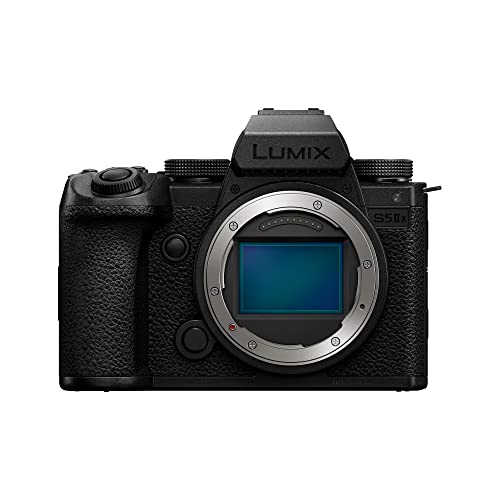
- Panasonic LUMIX S5IIX: check price on Amazon
- Sony Alpha 7 IV: check price on Amazon
- Sony ZV-1F: check price on Amazon
- OBSBOT Tiny 2: check price on Amazon
- Logitech Brio: check price on Amazon
- DJI Osmo Pocket 3: check price on Amazon
The best cameras for indoor interviews are judged by a standard no specification sheet mentions: how the person in the chair feels. An interview camera should be quiet, patient and visually unintimidating, able to run for an hour without a fan announcing itself, hold a face kindly in mixed indoor light, and never make a nervous subject feel examined by machinery. Everything else, resolution, codecs, colour science, serves that central requirement.
Indoor light is the other half of the problem. Interviews happen in offices with overhead panels, in living rooms with one window, in hotel suites and school halls, and the light is almost never designed for faces. The cameras on this list were chosen for how they behave in that imperfect reality: sensors that stay clean when the light is thin, autofocus that finds an eye and stays with it without hunting, and recording stamina that does not impose a time limit on a conversation just as it becomes honest.
The list deliberately spans four levels of production: two full-frame mirrorless bodies for filmed documentary work, a compact built for faces, two intelligent webcams for remote and hybrid interviews, and a gimbal camera that turns a spare room into a studio in five minutes. The right pick depends on whether your interviews are filmed in person, conducted over calls, or both, and the verdicts say which.
Key Takeaways
- In interviews the microphone and the light outrank the camera; choose the body after deciding how the voice will be captured and the face lit.
- Eye autofocus that locks and holds quietly is the single most valuable camera feature in this genre, because the operator should be listening, not focusing.
- Recording stamina matters more than headline resolution: an interview that warms up at minute forty cannot be filmed on a camera that overheats or stops at minute twenty-nine.
- Smaller, friendlier cameras genuinely change what subjects say; a webcam or a compact often draws a more honest conversation than a rigged cinema body.
- For remote interviews, the guest’s camera matters as much as yours, so a good webcam you can post to a guest is a production tool, not a spare.
In this guide
Quick Picks
| Pick | Badge | Why it earns its place |
|---|---|---|
| Panasonic LUMIX S5IIX | Best for documentary interview work | Built for long-form video: strong stabilisation, professional recording options and a body that runs a full interview day without drama. |
| Sony Alpha 7 IV | Best hybrid studio choice | Superb eye autofocus, strong stills for portraits of your subjects, and the deepest lens shelf in the business. |
| Sony ZV-1F | Best friendly compact for faces | A small fixed-lens camera designed around faces: soft skin rendering, easy background blur and zero intimidation. |
| OBSBOT Tiny 2 | Best webcam for remote interviews | A tracking PTZ webcam with a large sensor that frames your guest, or you, like a camera operator is quietly present. |
| Logitech Brio | Best straightforward interview webcam | Clean 4K-capable picture, adjustable framing and total plug-and-play calm for interviewers who record over calls daily. |
| DJI Osmo Pocket 3 | Best one-person interview kit | A gimbal camera that stabilises itself, tracks faces and turns any room into a two-person interview set in minutes. |
How did we choose cameras for the interview chair?
We weighted behaviour in bad light first. Indoor interviews are lit by windows, ceiling panels and table lamps rather than by a gaffer, so sensor cleanliness at raised sensitivity and colour that keeps skin human under mixed light decided the top of the list. Cameras that turn faces waxy or green under ordinary room lighting were pushed down regardless of their outdoor reputations.
Second came conversational stamina: long recording without overheating warnings, reliable power from USB or a dummy battery for all-day sessions, and media that does not fill during a long answer. An interview is the worst genre in which to watch a battery icon, because the subject can see you watching it, and the trust in the room leaks away with your attention.
Third came presence. We favoured cameras that look like cameras rather than surveillance, that can be operated by one person who is also conducting the conversation, and that offer clean output for streaming or recording a remote guest at matching quality. Autofocus trustworthiness ran through all three filters: the operator of an interview is its listener first, and the camera must hold the face alone.
Which are the best cameras for indoor interviews to put in front of a subject?
Six answers at four production levels: the Panasonic for the working documentary kit, the Sony full-frame for stills-and-video studios, a compact that flatters faces, two webcams that solve the remote half of modern interviewing, and a gimbal camera for one-person crews.

Panasonic LUMIX S5IIX — Best for documentary interview work
The S5IIX is the working interviewer’s body on this list. Its phase hybrid autofocus finds a face and stays with it through the head movements, leans and laughter of a real conversation, its in-body stabilisation forgives a handheld second angle, and its recording options, including external recording workflows used by documentary crews, treat an interview as the main event rather than a clip. Full-frame rendering in indoor light is its core gift: faces stay clean and dimensional in the flat glow of an office, and backgrounds fall away softly enough to make a rented room look chosen.
- Form: full-frame mirrorless body, lenses separate
- Autofocus: phase hybrid with face and eye detection
- Stabilisation: in-body image stabilisation
- Video: professional recording modes and external options
- Power: USB powering for long sessions
The S5IIX habit is building the interview around the chair rather than the camera. Set the chair where the light is kindest, place the camera at the subject’s eye level just beside your own shoulder, and conduct the conversation with your face near the lens line so the subject’s eyeline reads as connection rather than interrogation. Because the autofocus can be trusted, your attention stays where an interviewer’s attention belongs: on the answer forming, on the follow-up question, on the pause that should be allowed to breathe. Crews who run this body tend to stop checking the monitor, and subjects can feel the difference within minutes.
Strengths
- Autofocus trusted enough to ignore mid-interview
- Full-frame look flatters faces in plain rooms
- Professional recording depth for documentary delivery
Trade-offs
- Needs a lens budget on top of the body
- Menus reward an hour of setup learning
- Overkill for call-based interviews entirely
Best for: Documentary makers, journalists and brands filming in-person interviews as finished productions.
Not suited for: Anyone whose interviews all happen over video calls, where the webcams below are the honest tool.

Sony Alpha 7 IV — Best hybrid studio choice
The Alpha 7 IV suits the studio that does everything: film the interview in the morning, shoot the subject’s portrait for the article or the episode art after lunch, and trust the same body for both. Its real-time eye autofocus is among the most reliable ever put in a camera of this class, locking to a subject’s eye and holding through glasses, head turns and the moment a subject looks down to gather a thought. The full-frame sensor keeps indoor colour honest, the lens ecosystem offers a fast prime at every budget, and its video feature set, including breathing compensation with supported lenses, is aimed squarely at talking-head work.
- Form: full-frame mirrorless body, lenses separate
- Autofocus: real-time eye AF for people
- Stills: high-resolution stills for portraits
- Video: 4K recording with 10-bit options
- Lenses: the largest native lens range here
In an interview practice the A7 IV rewards the two-camera habit more than any pick here. Run it as the main camera on the subject, add any modest second body or even the ZV-1F below for your own reverse angle, and the edit gains the rhythm of a conversation rather than the flatness of a deposition. Its stills strength changes the deliverable too: a proper portrait of each guest, shot in the same light as the interview, gives articles, thumbnails and episode pages a coherence clients notice. Set the eye AF, frame a little loose for the crop you will want later, and let the camera be the least interesting thing in the room.
Strengths
- Eye autofocus of the highest reliability
- One body for interview video and guest portraits
- Lens choice at every price and purpose
Trade-offs
- Long sessions need power planning
- Body plus fast prime is a serious budget
- Feature depth takes time to configure well
Best for: Studios and creators whose interviews sit inside a wider stills-and-video practice.
Not suited for: Pure remote interviewing, or anyone who will never use the stills half of the camera.

Sony ZV-1F — Best friendly compact for faces
The ZV-1F is the camera to put in front of someone who dislikes cameras. It is small, quiet and unmistakably friendly, with a fixed wide lens that suits a subject seated across a desk or a small table, a one-inch sensor that handles indoor light far better than a phone-sized chip, and face-focused features designed for people talking to a lens: reliable face and eye autofocus, a product-showcase mode that is secretly excellent for holding up documents or objects mid-interview, and a background-defocus switch that softens a messy room at one touch. It records in 4K and doubles as a high-quality webcam over USB.
- Form: fixed-lens compact with 1-inch sensor
- Lens: wide fixed lens for desk-distance framing
- Autofocus: face and eye priority modes
- Video: 4K recording, USB webcam function
- Audio: directional built-in microphone capsule
The ZV-1F changes interviews by changing the room’s temperature. Subjects who would perform for a big rig talk to this camera the way they talk to a person, because it looks like a holiday camera and behaves like a patient listener. The working pattern is the kitchen-table interview: camera on a mini tripod between you, a soft lamp to one side, and a conversation recorded at a quality that surprises everyone who hears it afterwards. Its limits are honest ones, no lens changes, no cavernous low-light reserves, but within an arm’s-length, well-lit conversation those limits rarely appear, and the honesty it buys is worth more than specifications.
Strengths
- Least intimidating serious camera here
- Face-first features need almost no setup
- Doubles as an excellent USB webcam
Trade-offs
- Fixed lens fixes your framing distance
- Low-light ceiling below the full-frame pair
- No viewfinder, screen only
Best for: Podcasters, oral historians and anyone interviewing camera-shy subjects at close range.
Not suited for: Large rooms, stage interviews or work needing lens reach.

OBSBOT Tiny 2 — Best webcam for remote interviews
Remote interviews live or die on the guest’s picture, and the Tiny 2 is the webcam that fixes it. Its motorised gimbal and AI tracking keep a subject centred and properly framed even when they lean, stand or gesture, its unusually large sensor keeps faces clean in the dim spare-room light guests actually have, and gesture control lets a non-technical guest start tracking without a settings expedition. Sent to a regular guest, a podcast co-host or an executive who records often, it raises every conversation they join, and as a UVC device it works with the recording and call software you already use.
- Form: PTZ webcam on a motorised gimbal
- Sensor: large 1/1.5-inch class sensor
- Tracking: AI auto-framing with gesture control
- Video: up to 4K capture
- Control: voice commands for hands-free operation
The Tiny 2 habit for interviewers is sending the camera ahead of the conversation. Post it to a recurring guest with a one-line instruction, plug it in and wave, and the interview starts with framing and light already solved rather than with ten minutes of watching someone hold a laptop at chin height. At your own desk it plays the opposite role: it follows you as you shift, stand and think, which keeps a solo-recorded interview feeling alive instead of pinned. Its tracking follows people rather than objects, which is precisely the interview case, and its clean sensor output cuts through call-platform compression better than a dim camera ever will.
Strengths
- Auto-framing rescues non-technical guests
- Large sensor beats typical webcam murk
- Gesture control avoids setup calls before interviews
Trade-offs
- Costs far more than a basic webcam
- Gimbal tracking can wander if two people share frame
- Overkill for guests who record exactly once
Best for: Podcasters and producers with recurring remote guests worth equipping properly.
Not suited for: One-off calls, where the Brio below is the sensible spend.

Logitech Brio — Best straightforward interview webcam
The Brio is the interview webcam for people who record conversations as their job and want the camera to vanish from their attention. It delivers a clean, detailed picture with adjustable field of view, so a home office can be framed as a head-and-shoulders shot rather than a room tour, its autofocus is steady rather than theatrical, and it works over a single USB connection with every call and recording platform in ordinary use. Set at eye level on a small stand, lit by a window or one soft light, it produces guest and host footage that edits together without embarrassment beside far more expensive cameras.
- Form: premium USB webcam, UVC device
- Video: up to 4K, smooth rates at 1080p
- Lens: adjustable field of view, autofocus
- Mounting: clip plus tripod thread
- Extras: privacy shutter on many bundles
The Brio working pattern is permanence: leave it mounted, framed and lit, so joining an interview is a one-click act rather than a setup ritual performed while a guest waits. Interviewers who record daily learn that consistency is a production value of its own: the same framing, the same background, the same eyeline in every episode becomes part of the programme’s identity, and a fixed Brio delivers it without a crew. Pair it with the discipline of recording the local feed rather than the call’s compressed stream whenever the platform allows, and the humble webcam interview quietly reaches a standard viewers accept as professional.
Strengths
- Set-and-forget reliability for daily recording
- Adjustable framing suits small rooms
- Works with every platform without drivers
Trade-offs
- Needs decent light to look its best
- No tracking, so framing is your job
- Premium webcam pricing
Best for: Daily remote interviewers, podcasters and consultants who record over calls.
Not suited for: In-person documentary filming, where the full-frame pair take over.

DJI Osmo Pocket 3 — Best one-person interview kit
The Pocket 3 is the solo interviewer’s entire camera department in a coat pocket. Its three-axis gimbal makes handheld footage calm enough to feel tripod-born, its one-inch sensor handles indoor light with a confidence no other camera this size matches, face tracking keeps a walking interview subject framed, and the rotating touchscreen flips between filming your guest and filming yourself asking the question. For run-and-gun interviews, conference conversations, vox pops and the growing genre of the walking interview, it produces finished-looking footage with a crew of one and a setup time measured in seconds.
- Form: gimbal camera with 1-inch sensor
- Stabilisation: mechanical 3-axis gimbal
- Screen: rotating touchscreen for self-framing
- Tracking: face tracking for moving subjects
- Video: 4K recording with slow-motion options
The Pocket 3 habit is the interview that moves. Walk the chef through the kitchen, the founder through the workshop, the athlete through the gym, and the conversation gains the place itself as a third participant, something a static camera in a quiet room can never offer. Its smallness works on subjects the way the ZV-1F’s does: people forget to perform for something the size of a chocolate bar. Battery and audio planning are its honest homework, a full day needs power top-ups and a proper microphone for anyone speaking at distance, but as the camera that is always with you when an interview opportunity appears unannounced, it has no rival on this list.
Strengths
- Gimbal footage looks produced with zero crew
- Excellent indoor image from a tiny body
- Face tracking suits walking interviews
Trade-offs
- Built-in audio needs help at distance
- Battery life plans a long day carefully
- Fixed lens, framing is done with your feet
Best for: Solo creators, journalists and anyone whose interviews happen on location and unplanned.
Not suited for: Formal seated productions where a full-frame rig is already justified.
How do the six interview cameras compare side by side?
| Pick | Form | Strongest suit | Watch out |
|---|---|---|---|
| Panasonic LUMIX S5IIX | Full-frame mirrorless | Filmed documentary interviews | Budget for a fast lens too |
| Sony Alpha 7 IV | Full-frame mirrorless | Hybrid video and portrait studio | Plan power for long sessions |
| Sony ZV-1F | Compact camera | Close, friendly conversations | Frame at desk distance |
| OBSBOT Tiny 2 | PTZ webcam | Remote guest framing | One subject per frame tracks best |
| Logitech Brio | Webcam | Everyday call interviews | Give it light and a stand |
| DJI Osmo Pocket 3 | Gimbal camera | Moving, one-person interviews | Add a microphone for distance |
The comparison that matters is not sensor size but setting. In a room you control, with a seated subject and time to light, the full-frame pair produce the richest footage and the ZV-1F the friendliest. Over calls, the contest inverts completely: the Tiny 2 and Brio are the production, and the mirrorless bodies are furniture. The Pocket 3 sits outside the table’s logic entirely, owning the interviews that happen standing, walking or unplanned. Most working interviewers end up owning one from the first group and one from the second, because modern interviewing is both.
Audio deserves the final word in any comparison here, because every camera on this page will be judged by viewers mostly on sound. Budget for a microphone before budgeting for a second camera, place it close to the subject, and let any of these six bodies do the comparatively easy job of watching.
How do you light a face indoors without a lighting crew?
Start with the light the room already owns and move the chair, not the lamp. A subject seated at an angle to a window, with the daylight falling across one side of the face, gets modelling and catchlights that a ceiling panel never provides, and the camera placed on the window side keeps the lit side of the face toward the lens. Kill the overhead light if it is fighting you: mixed sources are what make indoor faces look ill, and one consistent source, even a modest one, reads as intentional.
When you add light, add exactly one soft source first: a panel or a lamp through a diffuser, placed at roughly forty-five degrees to the subject and a little above eye level, close enough to be soft and far enough not to glare. Close is the secret of softness, because a large apparent source wraps light around a face. Then expose for the face, lock the exposure so a subject’s lean does not pump the brightness, and let the background fall where it falls; an interview is a portrait that talks, and the face is the whole assignment.
How should you record sound for an interview that matters?
Distance is destiny in interview audio. A microphone on the camera hears the room; a microphone near the subject hears the person, so the single most valuable accessory in this genre is a way of getting a mic within arm’s reach of the speaker: a lavalier clipped to a collar, a small recorder on the table, or a microphone on a stand just out of frame. Any of the cameras here will accept the result gratefully, and the improvement over built-in audio is larger than any camera upgrade on this page.
Record a safety copy when the conversation is unrepeatable. Many interviewers run the camera’s audio and a separate small recorder simultaneously, because media fails, batteries die and interviews cannot be re-asked. Monitor with headphones at the start, even for two minutes, because the faults headphones reveal instantly, a humming fridge, a rustling lavalier, a room echo you had stopped hearing, are invisible on a level meter and fatal in the edit.
How do you make a nervous subject forget the camera?
Choose the smallest camera the production honestly allows, and set it up before the subject arrives so the room looks like a place for conversation rather than a film set. Sit close to the camera’s line so the subject talks to you and merely happens to be framed, keep your own eyes off the monitor while they speak, and let silences run: the most revealing answers in interviews usually arrive after the pause a nervous operator rushes to fill. Every camera on this list was chosen partly for how little it asks of the person in front of it.
The first five minutes decide the rest. Ask easy, factual warm-up questions while levels are checked, explain plainly when recording starts, and never restart a take for a technicality in the first half unless the fault is fatal. A subject who feels the conversation matters more than the machinery gives you the interview you hoped for; a subject who feels managed gives you a performance, and no camera at any price can edit around the difference.
How do you set up a two-camera interview that edits like a conversation?
Give the cameras different jobs and different framings. The main camera holds the subject in a medium close shot, the second takes either the interviewer for reverse angles and questions, or a wider view of the room for context and cutaways. Match their colour as closely as the bodies allow, same white balance set manually rather than automatically, similar picture profiles, because an edit that cuts between two colour worlds feels amateur no matter how good the questions are, and audiences sense it before they can name it.
Sync is the unglamorous foundation: a clap or a handclap-like marker at the start of each take, recorded by both cameras and their audio, makes the edit a pleasure instead of an archaeology dig. Record the main audio once, properly, close to the subject, and let the second camera’s own sound serve only as the sync reference. Keep both cameras rolling through the whole conversation rather than starting and stopping for answers; interviews breathe in the pauses and the follow-ups, and a camera restarted for each answer teaches the subject to perform in fragments.
In the edit, the discipline is restraint: hold on the subject for the substance, cut to the listener for reaction only where the reaction is real, and let the wide shot breathe at the conversation’s turns. The cameras on this page, particularly the mirrorless pair with matching colour science within their own systems, make that restraint possible; mismatched webcams and bodies make it a colour-correction sentence. Buy the pair, where a pair is planned, inside one system whenever you can.
How should you prepare a room that was never meant to be a studio?
Walk the room as the camera sees it before touching a setting. Sit in the subject’s chair and have someone sit in yours: look for the bright window that will silhouette, the cluttered shelf that will narrate against the subject, the door that will open mid-answer. Then make the three cheap moves that transform ordinary rooms: turn the chair so the best light falls across the subject, clear or soften the background with distance, since a subject placed well away from the wall lets any lens melt the room into backdrop, and silence the room’s machinery, the fridge, the air handler, the buzzing light, whose sounds you stopped hearing years ago and the microphone never will.
Chair choice is a production decision. A chair that swivels and creaks will do both, on camera and on the recording, so choose the boring solid chair, place a cushion where it helps posture, and set the subject’s eye level to the camera’s with books or a stand rather than tilting the camera into an interrogation angle. Put water within the subject’s reach, because a dry throat ends more interviews than batteries do, and keep tissues closer than dignity requires; real conversations about real subjects sometimes need them.
Finally, light the subject’s eyes. The catchlight, the small reflection that makes eyes alive on camera, comes from any reasonably sized source in front of the subject, and its absence is why so many well-recorded interviews look oddly flat. A window does it free; a soft panel does it at night. Check the eyes on the monitor before the first question, and you have done more for the film than any setting buried in any menu on any camera in this guide.
What should you ask about before the camera rolls?
Consent and comfort, in plain language, before anything technical. Tell the subject what the interview is for, where it will appear, how it will be edited, and that they may pause, restate or strike an answer; then actually honour the first pause without a flicker of disappointment, because the trust purchased in that moment funds every honest answer that follows. For student and research interviews this conversation is also an ethical requirement, and the companion guide on research interviewing treats it at the length it deserves.
Agree the practical frame: how long the conversation will run, whether names, dates and spellings will be checked on camera at the end, because a subject spelling their own name and role on the recording saves the edit a dozen uncertainties, and whether there are topics the subject wants flagged rather than ambushed. None of this softens the journalism; it sharpens it, because a subject who knows the boundaries stops defending against imaginary ones and starts answering the real questions.
Then do the technical liturgy out loud, together: phones silenced and away, a glass of water placed, the spare battery and card visibly ready so the subject never watches you calculate. State the first question’s territory so the subject’s mind can walk toward it while the last settings are checked. Interviews are remembered by their subjects as experiences, not recordings, and the experience you are staging in these minutes is the one the answers will come from.
How do remote and in-person interviews change each other?
They have quietly merged into one practice. The guest filmed properly in person this month is the guest joining by call next month, and the programmes that look professional are the ones whose quality survives the alternation: a consistent framing language, the same care with light and sound, and cameras chosen so the call episodes do not feel like apologies between the real ones. That is why this list insists on treating the webcams as first-class picks rather than accessories; in a modern interview practice they carry half the catalogue.
The skills transfer in both directions. Remote interviewing taught everyone to light a face with a window and a desk lamp, to put a camera at eye level, to value a guest’s comfort in their own space; in-person work is better for all of it. In-person craft returns the favour with its disciplines of recorded local quality, safety copies and patience with silence, which remote conversations, with their latency and their mute buttons, need even more and practise even less.
Plan the catalogue, not the episode. If your interviews will alternate formats, buy inside one visual family where you can, keep a small kit that can be posted to a recurring guest, the Tiny 2 pattern, and standardise the guest instructions into one kind page: camera at eye level, light in front, headphones if they have them, a glass of water nearby. The page will do more for your archive’s quality than any single camera on this list, and it costs an afternoon to write once.
How do you interview children, elders and experts differently?
Children need the camera to disappear fastest and the session to be shortest. Choose the friendliest body here, the ZV-1F or the Pocket 3, keep a parent in the room and in the frame’s edge where the child can find them, ask questions that invite stories rather than facts, and stop while it is still fun, because a child’s best material arrives in a burst and punishes any attempt to extend the sitting past its natural life. Consent belongs to the guardians, but assent belongs to the child, and an interviewer who honours a small person’s wish to stop earns the family’s trust for the sequel.
Elders reward the opposite tempo: unhurried sessions, a comfortable chair properly supported, water and pauses offered before they are needed, and questions ordered so the vivid decades come before fatigue. Their interviews carry an archival weight the others do not; record at the best quality your kit allows, make the safety copy without fail, and spell names and places on camera, because the recording you are making is frequently the one a family will keep for a century, long after the programme it was made for is forgotten.
Experts and public figures bring the third discipline: preparation visible enough to earn their candour. They have been interviewed badly for years and can smell a generic question at fifty paces, so the camera craft recedes and the research leads; ask the question their own field argues about, and the S5IIX or the A7 IV will record a person becoming interesting in real time. With the practised, also agree the frame early, length, topics, review rights if any, because professionals relax inside explicit boundaries and perform inside vague ones.
What does a good interview edit keep, and what does it let go?
Keep the thinking. The pause before the true answer, the self-correction, the laugh that admits the previous sentence was the public version, are the moments an audience trusts, and they are exactly what an anxious edit removes in the name of pace. Cut the logistics, the throat-clearing, the questions themselves where they add nothing, and the repetitions where a story is told twice no better the second time; protect the silences that think. The cameras’ job in this is done by the time of the edit, but the long, unbroken takes they made possible are what give the editor something worth protecting.
Structure is discovered, not imposed. Lay the whole conversation out, mark the passages where the subject’s energy rises, because subjects reliably ignite at their true material, and build the film’s spine from those passages in the order the argument wants rather than the order the afternoon produced. The question order that elicits a good conversation and the sequence that makes a good film are cousins, not twins, and the interviewer’s loyalty belongs to the conversation in the room and the film afterwards, in that order.
Let go of your favourite question. Every interviewer has one, beautifully phrased, that produced a mediocre answer, and it survives edit after edit on the strength of its phrasing. The audience keeps only answers. Apply the same ruthlessness to your own presence generally: the film is the subject’s, and the interviewer who can be almost entirely removed while the conversation still breathes has done the job this entire guide, cameras and all, exists to serve.
How do you keep an interview practice sustainable for years?
Standardise the kit until setup is muscle memory. The interviewers who last are not the ones with the finest cameras but the ones whose bag is always packed, whose settings live on a card taped inside the case, whose guest instructions are written once and sent without thought. Every decision removed from the day of the interview is attention returned to the person in the chair, and attention, compounded across hundreds of conversations, is the entire craft. Choose from this list the body you will actually standardise on, and let familiarity make it invisible.
Archive as you publish, with names, dates and consent records attached to the masters, stored twice, in a structure your future self can search. Interview archives become valuable in ways nobody predicts: the local figure becomes national, the company’s founder retires, the student’s thesis becomes a book, and the producer who can find, clear and deliver the old conversation in a day owns an asset that cannot be recreated at any price, because the people in it have changed or gone.
Finally, review your own work annually with a kind eye and a notebook. Watch the oldest interview you can bear and the newest back to back; the distance between them is your education, itemised. The cameras will have changed across those years and will matter less in the comparison than the listening will. That is the secret this whole guide has been circling: the best camera for indoor interviews is a means, and the end is a person saying something true because the room, the light, the sound and the silence were all arranged to let them.
How do you handle the interview that goes wrong?
It will, in one of the standard ways: the subject who freezes, the subject who performs, the room that fills with noise, the answer that opens a door you were not prepared for. The craft is recovery without visible panic. For the frozen, shrink the machinery’s presence, put the camera further into the room’s furniture, ask about objects and places rather than feelings, and let the recording run through the warm-up you would normally cut, because frozen subjects thaw in minutes if the room stays kind. For the performer, the cure is specificity: ask for the day, the room, the exact words, and watch the performance dissolve into memory.
Noise and interruption are logistical, and the answer is the safety discipline already described: keep rolling if the conversation can survive it, note the moment, and pick up the thread with a recap question that lets the edit stitch invisibly. The interview that must stop entirely, for emotion, for a phone call from a hospital, for life happening, should stop with grace and without a flicker of production disappointment; reschedule like a human being, and the resumed conversation will usually repay the decency with interest.
The difficult answer, the revelation, the accusation, the grief, is not the interview going wrong but the interview arriving. Stay quiet longer than is comfortable, keep your face receiving rather than reacting, and let the camera’s patience, the long take nobody interrupted, do the work the whole apparatus exists for. Interviewers are remembered by their subjects for how they behaved in that minute, and by their audiences for the fact that the camera was still, mercifully, rolling.
What does the interviewer’s own setup say to the subject?
Everything, before a word is spoken. A room arranged with care, a chair that is comfortable, water poured, the camera unhurried and already settled, tells the subject that their words are expected to matter and that time has been made for them. The opposite arrangement, a camera being assembled around a waiting person, cables still being hunted, tells a story too, and the interview that follows is conducted inside it. Arrive early enough that the subject never watches the sausage being made; the ten minutes of setup theatre you spare them are repaid in the first answer’s ease.
Your own position teaches as well. Sit where the subject’s eyeline to you passes near the lens, keep your notebook below the frame’s notice, and dress like the conversation rather than the production. The solo operator’s temptation is to keep adjusting, a light here, a setting there, and every adjustment re-announces the machinery. Set it, trust it, and become a person again; the cameras on this list were chosen to survive being trusted, which is the deepest compliment an interview camera can be paid.
And end as deliberately as you began. The formal close, the spelled name, the thanks, the explanation of what happens next, returns the subject to ordinary life with the experience intact, and it is in those minutes, recorder still running if you have the wit to leave it, that subjects so often say the thing the whole interview was for. Keep the camera’s patience to the very end of the goodbye; the door-frame remark is a genre of its own, and it belongs to the interviewers whose equipment never hurried anyone.
What mistakes quietly ruin indoor interviews?
- Filming against a bright window, so the camera exposes for the daylight and the subject becomes a silhouette with a voice.
- Leaving every ceiling light on, mixing colour temperatures until skin looks unwell under all of them.
- Trusting the camera’s built-in microphone from across the room and recording the echo instead of the answer.
- Watching the monitor instead of the subject, and teaching them within minutes that the machine matters more than the conversation.
- Using a camera that stops, overheats or fills its card mid-interview, right as the answers become honest.
- Placing the camera far below or above eye level, which quietly turns a conversation into an interrogation or a lecture.
Every mistake on this list is a failure of attention rather than of budget, and each is prevented by the same ten minutes: arrive early, move the chair toward kind light, place a microphone close, set the camera at eye level, start recording before the real questions, and then devote yourself entirely to listening. The cameras here were chosen to make those ten minutes sufficient.
Final Recommendation
Film in person for a living and the S5IIX is the interview body to build around, with the A7 IV the choice when stills share the workload. Interview over calls and the Brio is the dependable default, upgraded to the Tiny 2 when your guests need framing help. Keep a ZV-1F for the conversations that need a friendly face of a camera, and a Pocket 3 for the interviews that happen on foot. Whichever you choose, spend the next money on a microphone and one soft light: the best camera for indoor interviews is the one in a room where the voice is close and the face is kindly lit.
Frequently Asked Questions
What matters more for interviews, the camera or the microphone?
The microphone, decisively. Viewers forgive a soft picture in a good conversation and forgive nothing in bad sound. Every camera here produces an acceptable image in decent light, but none of their built-in microphones matches a modest microphone placed near the subject, so buy the mic first and the camera second.
Can a webcam really produce a professional interview?
Yes, when it is one of the two here, mounted at eye level, framed tightly and lit by a window or a soft light, and when the recording is taken from the local feed rather than a compressed call stream where possible. Most viewers cannot distinguish that result from a far more expensive setup, because the limiting factors were light and sound, not the camera.
How long can these cameras record a single interview?
The mirrorless pair and the webcams are built for long sessions, with the webcams limited only by the computer recording them. The compacts reward a power plan for very long days. In practice, plan power and media for twice your expected conversation length, because the best material often arrives after the scheduled end.
What lens should I use for a seated interview on a mirrorless body?
A fast prime around the classic portrait range is the traditional answer: it blurs a plain room into a backdrop, gathers indoor light generously and flatters faces. Frame a little wider than feels natural if you will crop for vertical clips later, and keep the camera at the subject’s eye level whatever lens you choose.
How do I interview two people at once?
Widen the framing, light both faces from one large soft source placed centrally, and give each person a microphone if the conversation matters. The full-frame pair with a moderate lens, or the Pocket 3 on a small tripod using its face tracking on the pair, both handle it; the friendly compacts and webcams are happiest with one subject at a time.
Is eye autofocus really necessary?
For a solo operator conducting the interview, it is close to essential. It holds the subject’s eye through movement and expression changes while your attention stays on listening, and the difference shows in the footage as calm: no hunting, no drifting focus during the answer that matters. On the webcams, tracking or a fixed frame does the same job by other means.
What if my subject wears glasses and the autofocus keeps catching the frames?
Modern eye AF, including on both mirrorless picks here, handles glasses well in decent light; help it by lighting the face evenly so reflections do not mask the eyes, and by choosing the eye-detection mode rather than general face detection. If reflections persist, angle the key light slightly higher and to the side.
Should interviews be filmed in 4K if they publish in HD?
Filming in 4K buys reframing freedom, a wide shot that yields a close crop for the edit, which solo interviewers use constantly, at the cost of storage and processing. If your workflow handles it comfortably, the flexibility is real; if it makes every edit a chore, HD from a well-framed camera publishes identically and finishes sooner.
How many interviews can I film in a day?
Two deep ones, three at a stretch, and the limit is the interviewer rather than the equipment. Listening at the level a good interview requires is tiring in a way that shows on the third recording as thinner follow-ups and shorter patience with silence. Schedule the day’s most important conversation first, protect the gaps between sittings, and let the cameras, which do not tire, wait quietly for the human half of the apparatus to recover.
Related Guides
Keep reading with best cameras for interviews student research and best cameras for image processing using opencv and best cameras for irl twitch stream.


