reviewstook.com is reader-supported. When you buy through links on our site, we may earn an affiliate commission.
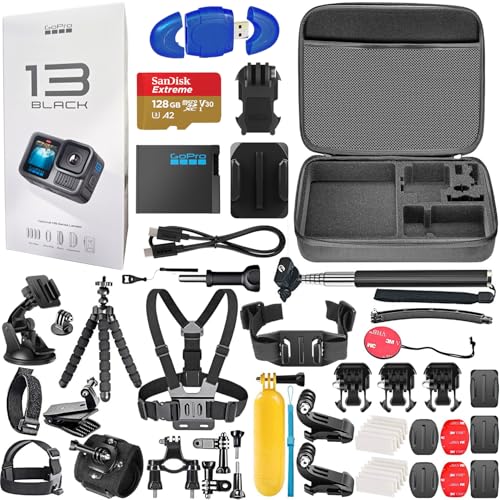
Where to buy
The six cameras ranked here all carry Amazon links in the buying table that follows. Helmet kit should be bought with its mounts in the same order and tested on your actual helmet before the ride, the descent or the shift that matters, because a mount’s promise and a helmet’s curve settle their differences at home or not at all.
- GoPro HERO13 Black: check price on Amazon
- GoPro Hero: check price on Amazon
- Insta360 GO 3S: check price on Amazon
- DJI Osmo Action 5 Pro: check price on Amazon
- Insta360 Ace Pro 2: check price on Amazon
- AKASO EK7000: check price on Amazon
A helmet camera is worn, not carried, and that single fact rewrites the buying rules. The best cameras for helmets are judged by grams and leverage as much as by sensors: a heavy camera on a long mount turns every head movement into a negotiation, catches wind like a sail, and reminds its wearer of its presence for exactly as long as the activity was supposed to make them forget everything else. Weight, mount security, breakaway behaviour in a fall, battery honesty and stabilisation that survives a human neck’s constant small corrections: those are the helmet specifications, and resolution is merely the entry fee.
The wearers divide by helmet: cyclists and mountain bikers who live at chin and chest height, motorcyclists touring and commuting, skiers and snowboarders, equestrians, climbers, and the growing ranks of workers, instructors and inspectors who film from hard hats. Their shared need is a camera that starts with gloves on, survives weather without a case ceremony, and produces footage level enough to watch without queasiness. The six picks span that family’s budgets and ambitions, from a featherweight clip-on to the flagship all-rounder, with an expendable veteran for the roles where helmets meet ground.
One principle governs everything below: the helmet’s first job is protection, and the camera is a guest on it. Mounts must respect the shell, break away rather than lever in a crash, and comply with whatever rules your sport, employer or insurer sets. Film everything, compromise the helmet never.
Key Takeaways
- Weight and mount leverage decide helmet comfort more than any sensor.
- The HERO13 is the flagship all-rounder for chin, side and top mounts.
- The compact GoPro Hero and GO 3S win wherever grams are the argument.
- Breakaway mounts and shell-friendly attachment are safety features, not options.
- Voice control and big buttons matter because helmet cameras are run by gloves.
- Stabilisation must forgive the neck’s constant micro-movements.
In this guide
Quick Picks
| Camera | Badge | Why it is here |
|---|---|---|
| GoPro HERO13 Black | Best Helmet Camera Overall | Flagship stabilisation, mounts everywhere and voice control for gloved starts. |
| GoPro Hero | Best Lightweight GoPro | The compact, simpler Hero for riders who count every gram. |
| Insta360 GO 3S | Best Ultralight Pick | Thumb-sized 4K that clips to caps, straps and helmet edges almost invisibly. |
| DJI Osmo Action 5 Pro | Best for Long Days | Endurance and low-light strength for touring, commuting and all-day wear. |
| Insta360 Ace Pro 2 | Best Image Quality | Richest footage for riders whose helmet films are also their channel. |
| AKASO EK7000 | Best Budget and Spare | Expendable helmet duty with case and mounts included in the box. |
How did we choose cameras for helmet mounting?
We weighed them, literally and figuratively. Total worn weight includes the mount, and the mount’s leverage multiplies it: a camera held two inches from the shell on a rigid arm feels twice its scale weight by the third hour. Candidates were favoured for compact bodies, low-profile mounting options and centre-of-mass that hugs the helmet, and we treated manufacturers’ mounting ecosystems, chin mounts, side mounts, adhesive systems with tethers, as part of the product being judged.
Safety behaviour came second and non-negotiably. We looked for mounts that release or break away under crash loads rather than turning the camera into a lever against the neck or a spike against the shell, adhesive systems that do not compromise helmet materials, and designs that keep the camera from becoming a snag point on branches, lifts and machinery. Readers must still check their own sport’s and employer’s rules; this guide’s picks simply start from the responsible end of the market.
Third, the worn workflow: starting a recording without removing gloves or the helmet, confirming it with a beep or a light visible in peripheral vision, batteries that match the activity’s real duration, and stabilisation tuned for the head’s motion, which is neither a bicycle frame’s buzz nor a chest’s sway but something quicker and more human. The six below passed those tests in different proportions, and the detail sections assign each its honest wearer.
The picks in detail

GoPro HERO13 Black — Best Helmet Camera Overall
The HERO13 is the helmet camera against which the class is measured, because it does the flagship things without forgetting it will be worn. Its stabilisation is the best in this guide at erasing the head’s jitter while preserving the deliberate look, the glance at the junction, the check over the shoulder, that gives helmet footage its narrative. Its mounting ecosystem is the deepest available: chin mounts that put the lens at the rider’s true eye line, side and top mounts, adhesive bases with tether points, and accessory lenses that widen the view for sports where the action happens at the periphery.
Voice control is a helmet feature before it is a convenience: a gloved rider, a skier mid-lift, a worker on a ladder can start and stop recording without touching anything, and the camera’s audible confirmations close the loop. Waterproofing in the bare body means rain and snow need no case, and its high frame rates serve the crash-analysis and coaching uses that increasingly justify helmet cameras to clubs and employers. Battery appetite is the tax, paid in spares carried in a pocket.
It is not the lightest option here, and on an ultralight cycling helmet its presence is known by the fifth hour. Riders for whom grams outrank features should read the next two picks first. For everyone else, the HERO13’s completeness, mount it anywhere, film anything, trust the stabilisation, makes it the default recommendation, the camera a helmet owner buys once and mounts for years.
- Form: waterproof action camera
- Mounts: chin, side, top and adhesive systems
- Control: voice commands and glove-friendly buttons
- Stabilisation: strongest in this guide
- Role: motorcycle, MTB, ski and work helmets
Strengths
- Head motion smoothed without losing intent.
- A mount exists for every helmet geometry.
- Starts by voice with gloves on.
Trade-offs
- Heavier than the ultralight picks.
- Batteries rotate on long days.
- Flagship price for a crash-exposed role.
Best for: riders and workers wanting one helmet camera for everything. Not suited for: gram-counting endurance cyclists.

GoPro Hero — Best Lightweight GoPro
The compact Hero answers the weight argument inside GoPro’s own house: a smaller, lighter, simpler 4K action camera that keeps the family’s mounting language and waterproof build while shedding the flagship’s bulk and menu depth. On a helmet, that trade reads as pure gain for a large class of wearers, the commuter whose camera is an insurance witness, the young rider whose neck is still growing, the instructor issuing cameras to a whole class. It mounts where its big sibling mounts, starts simply, and produces footage whose quality embarrasses the word entry-level.
Simplicity is a safety-adjacent virtue on a helmet: fewer modes to mis-set with gloves, fewer decisions at the roadside, a camera that is either recording or not and makes its state obvious. Its touch screen serves setup at home, and its app connection handles the rest. For families and fleets, one model in many helmets, the Hero’s consistency and price let the system, rather than the flagship, be the purchase.
Stabilisation, frame rates and low light all step down a class from the HERO13, and battery endurance is sized for rides rather than expeditions. Judge it as the honest commuter and class camera it is, and it has no real rival in this guide except the even lighter pick below, which trades the GoPro mount world for a clip.
- Form: compact waterproof action camera
- Video: 4K in a simplified package
- Mounts: GoPro ecosystem compatible
- Weight: notably lighter than the flagship
- Role: commuting, classes, young riders
Strengths
- GoPro mounting without flagship mass.
- Simple enough to issue to a whole class.
- Commute-length battery and honest footage.
Trade-offs
- Stabilisation a class below the HERO13.
- Fewer frame-rate and lens options.
- Low light is adequate, not generous.
Best for: commuters, instructors and gram-aware riders. Not suited for: cinematic helmet productions.

Insta360 GO 3S — Best Ultralight Pick
The GO 3S redefines the helmet camera’s lower weight limit: a thumb-sized 4K camera that clips to a helmet’s strap, edge or an accessory mount and is, in the most literal sense, forgotten by its wearer within minutes. For equestrians whose helmets should carry nothing heavier than a thought, for cyclists allergic to top-mounted sails, for workers whose hard hats already carry lamps and shields, it is the only pick here that adds a camera without adding a presence. Its magnetic mounting makes repositioning an experiment of seconds, brim for the trail, strap for the road, and its stabilisation, while not flagship grade, is startlingly composed for something this small.
The action pod extends its working day and provides the screen and controls the camera itself omits, living in a pocket between uses. Footage quality at 4K serves coaching, incident review and social sharing without apology, and the camera’s discretion is a social feature: people behave naturally around a camera they cannot see, which matters for instruction and for the documentary honesty of a commute.
Battery life per charge is short, low light is modest, and a camera this small demands a tether habit, because what is easy to forget is easy to lose. It is a specialist in weightlessness. Wearers whose first specification is that there be no specification, no weight, no bulk, no negotiation, have exactly one candidate in this guide, and it is a genuinely brilliant one.
- Form: thumb-sized modular camera
- Mounts: magnetic clip and strap options
- Video: 4K from a near-weightless body
- Pod: screen, controls and extra power
- Role: equestrian, cycling, hard hats
Strengths
- Effectively zero helmet presence.
- Mounts in seconds, anywhere magnetic.
- Discreet enough for natural behaviour.
Trade-offs
- Short recording stretches per charge.
- Needs a tether against loss.
- Low light trails the full-size picks.
Best for: weight-critical and discretion-critical wearers. Not suited for: all-day continuous recording.

DJI Osmo Action 5 Pro — Best for Long Days
Touring motorcyclists, all-day instructors and workers on long shifts share one helmet requirement that outranks the rest: the camera must still be alive at the interesting hour, which is usually the last one. The Action 5 Pro’s endurance makes it the long-day pick, recording across a full touring day with a battery discipline its rivals cannot match, while its larger sensor keeps dawn starts, forest shade and winter afternoons cleaner than action cameras traditionally manage. Its dual screens help a stopped rider check framing without unmounting anything, and its subject tracking has a quiet helmet use: mounted facing the rider from a bar or mirror stalk, it holds them in frame for the piece to camera at the viewpoint.
Its magnetic mounting system speeds the helmet-to-hand transitions that touring days are full of, viewpoint, café, fuel stop, and its stabilisation, a half-step behind the HERO13 in violence, is more than equal to road and trail reality. Cold mornings deserve a mention: battery efficiency is worth most exactly when cold is taxing every cell, and this camera’s economy buys margin on the mornings tours are remembered by.
Its accessory shelf is smaller than GoPro’s and its peak frame rates lower, so the crash-analysis specialist and the mount collector will still look left. The rider whose diary is measured in countries rather than clips should look here first, because endurance is the helmet specification that cannot be faked in the edit.
- Form: waterproof action camera, dual screens
- Endurance: longest recording legs here
- Sensor: larger than classic action format
- Mounting: quick magnetic transitions
- Role: touring, commuting, long shifts
Strengths
- Still filming at the day’s last hour.
- Shade and dawn stay unusually clean.
- Fast helmet-to-hand mounting changes.
Trade-offs
- Fewer mounts than the GoPro world.
- Peak slow motion a step lower.
- Stabilisation cedes extremes to the HERO13.
Best for: tourers, commuters and all-day professional wear. Not suited for: maximum frame-rate analysis.

Insta360 Ace Pro 2 — Best Image Quality
Some helmet footage is evidence; some is cinema. The Ace Pro 2 serves the second ambition with the richest image in the action class, a large sensor and premium lens that keep low light handsome, dawn patrol, night skiing under lights, the forest trail at last light, and colour that cuts a travel film together without a colourist’s apology. Mounted at the chin, it produces the motorcycle travel footage that makes audiences lean forward; mounted on a ski helmet, it holds the mountain’s scale and the skier’s speed in one honest frame.
The flip screen, unusual on a helmet camera, earns its place at the stops: framing the piece to camera, reviewing the descent with a friend on a screen two people can read, checking that the mount survived the last fall. Its stabilisation and high frame rates keep it credible as an action instrument rather than merely a pretty one, and its build is properly waterproof for the weather its wearers chase.
It is the heaviest and dearest of the full-size picks, and on a helmet both facts register by the hour. Choose it when the footage’s destination justifies the carriage, a channel, a film, a coaching library shot to last, and mount it low and close to keep its leverage honest. It is the connoisseur’s helmet camera, and connoisseurs know exactly why they are carrying it.
- Form: action camera with flip screen
- Optics: large sensor, premium lens
- Low light: strongest in its class
- Review: flip screen readable by two
- Role: travel films, channels, coaching libraries
Strengths
- Cinema-leaning footage from a helmet.
- Dusk and night sessions stay rich.
- Review screen serves stops and lessons.
Trade-offs
- Heaviest full-size pick here.
- Premium price in a crash-exposed role.
- More camera than commuting requires.
Best for: creator-riders and filmmakers. Not suited for: expendable or issued-fleet duty.

AKASO EK7000 — Best Budget and Spare
Helmet cameras live where helmets occasionally meet the ground, scenery and other vehicles, and a rational fleet therefore includes one camera whose loss is a shrug. The EK7000, with its waterproof case, bundled mounts and remote, is that camera in this guide: issued to students, lent to friends, mounted for the mud race and the demolition derby of a first ski season, it records serviceable footage while absorbing the risks the flagships should be spared. Its price also makes it the honest first helmet camera, the one that teaches a new rider whether they actually use helmet footage before the flagship money moves.
As a spare it completes a serious kit: when the main camera is lost, drowned or forgotten on a charger in another country, the EK7000 keeps the tour, the course or the commute documented. Its footage trails the fleet in stabilisation, low light and colour, visibly, and its case is required for true weatherproofing rather than optional. None of that argues with its role, because its role is presence under risk, and presence is the first virtue this entire guide is built on.
Buy it as the second camera even if it is bought first. Fleets that start with a brave spare and add a flagship later end up braver and better equipped than fleets that start precious, and helmet filming, of all filming, rewards bravery with angles.
- Form: budget action camera with case
- Kit: mounts and remote in the box
- Video: serviceable action footage
- Batteries: cheap to stockpile
- Role: students, spares, risky mounts
Strengths
- Absorbs the risks flagships should not.
- Whole kit costs less than a flagship case.
- Teaches new wearers their real habits cheaply.
Trade-offs
- Case required for real weatherproofing.
- Stabilisation and low light trail the fleet.
- App experience is basic.
Best for: spares, students and first helmet cameras. Not suited for: a channel’s hero footage.
Comparison table
| Camera | Form | Best at | Standout | Choose it for |
|---|---|---|---|---|
| GoPro HERO13 Black | Action camera | All-round helmet work | Stabilisation and mounts | Most riders, most sports |
| GoPro Hero | Compact action | Lightweight duty | Simpler, smaller GoPro | Commuting and classes |
| Insta360 GO 3S | Micro camera | Weightlessness | Thumb-sized 4K clip-on | Equestrian and hard hats |
| DJI Osmo Action 5 Pro | Action camera | Long days | Endurance and low light | Touring and shifts |
| Insta360 Ace Pro 2 | Action camera | Image quality | Large sensor richness | Films and channels |
| AKASO EK7000 | Budget action | Bravery | Price and bundled mounts | Spares and students |
Where should a helmet camera actually sit?
Position is storytelling. The chin mount, available across the GoPro ecosystem, places the lens nearest the wearer’s true eye line, so footage shows what the rider saw, bars, controls and road in their natural arrangement, and it keeps the camera’s weight low and central where the neck forgives it soonest. The top mount sees over obstacles and reads clearly in traffic, at the price of the tallest leverage and the most wind. The side mount splits the difference and suits helmets whose fronts are crowded with visors, peaks and vents.
Each sport has settled preferences worth respecting before innovating: motorcyclists favour chin and side for the eye-line truth, mountain bikers mix chin and chest for the bike’s presence in frame, skiers accept top mounts for the panoramic payoff, equestrians and hard-hat wearers gravitate to the lightest clip that the GO 3S embodies. Whatever the position, the test is a full dress rehearsal: wear the mounted helmet for the activity’s real duration at home or on a short outing, and let your neck file its report before the expedition does.
And keep the camera’s presence in the safety conversation. A mount that releases under load, a tether that keeps a released camera from becoming road debris, adhesive matched to the shell’s material: these are the unglamorous specifications that separate a helmet camera system from a camera near a helmet, and every pick in this guide can be built into the former with its maker’s own accessories.
How do you run a helmet camera well?
Start it like a ritual, not a hope
The helmet camera’s classic failure is the unworn recording: the perfect descent filmed on a camera that was off, or the commute’s incident captured by a full card. Build the start into the activity’s existing ritual, helmet on, camera on, confirmation beep heard, visor down, and verify the recording indicator in a mirror, a shop window or a companion’s nod. Voice control on the flagship picks exists to make this ritual gloved and reliable; use it, and test it at home until it is boring.
Manage wind before it manages the audio
Helmet audio is wind’s playground. Foam windscreens on the camera, a mount position tucked out of the clean airflow, and realistic expectations, narration belongs at stops, not at speed, keep the soundtrack honest. For commuters whose camera is a witness, the incident’s sounds matter less than its pictures; for creators, the stop-and-talk structure, with the Ace Pro 2’s screen or the DJI’s dual displays, produces the watchable film.
Charge and clear on a rota
Worn cameras fail socially before technically: left uncharged from yesterday, full from last week. The rota that saves them is the same one every fleet in this site’s guides ends with, charge nightly, clear cards after copying, spare battery in the same pocket every time. Helmet cameras amplify the lesson because their owner is usually moving too fast to improvise around a dead one.
What mistakes do helmet camera users make?
Mounting high, long and heavy
The tower mount, camera on a stalk above the helmet, maximises leverage, wind and ridicule while minimising comfort and safety. Mount low, close and light; if the shot needs height, the sport probably offers a better position than your head’s summit. Your neck will file its gratitude within the hour.
Drilling or gluing against the shell’s rules
Never drill a helmet, and never trust an adhesive the helmet maker warns against. The shell is a safety device with a materials science of its own; mounts must attach by approved adhesives, straps or clips, and release under crash loads. A camera that compromises the helmet has failed before it records a frame.
Filming everything and watching nothing
Hours of unreviewed helmet footage are a storage bill, not an archive. The wearers who benefit, commuters with their incident insurance, athletes with their coaching, creators with their films, all review on a rhythm and delete without sentimentality. Keep the rota and the fleet stays a tool; skip it and the fleet becomes a guilt with a lens.
Ignoring other people’s privacy and the local rules
Helmet cameras record the public, colleagues and other riders, and sports, employers and jurisdictions all have views on that. Know the rules of your trail, site and road, announce recording where courtesy or policy asks, and treat incident footage with the gravity of evidence. The welcomed helmet camera is the one whose owner visibly respects the spaces it enters.
Final Recommendation
Most wearers should buy the HERO13 and mount it low, close and tethered, with voice control learned before the first real outing. Gram-critical wearers choose between the compact Hero and the weightless GO 3S by whether they live in GoPro’s mount world or beyond it. Long-day riders take the Action 5 Pro, filmmakers the Ace Pro 2, and every fleet, however grand, should include the EK7000 as its brave spare. Wear the camera like it belongs to the helmet’s safety system, because run properly, it does.
Frequently Asked Questions
Is a helmet camera legal for my commute?
Recording in public is broadly permitted in many places, but camera mounting, evidence rules and employer or insurer conditions vary, and some sports restrict helmet attachments in competition. Check your local rules and your helmet maker’s guidance before relying on footage or entering events; this guide’s safety-first mounting advice is the right starting posture everywhere.
Chin mount or top mount?
Chin for truth, top for panorama. The chin position reproduces the wearer’s view and carries its weight kindly; the top sees further and feels heavier. Most riders who try both settle at the chin for daily use and keep the top mount for the days the view is the point.
How long will a helmet camera record?
From the GO 3S’s short, brilliant bursts to the Action 5 Pro’s touring-day legs, the fleet spans the honest range. Match the camera to the activity’s real duration, carry the flagship’s spares in a warm pocket, and remember that cold weather taxes every battery’s promise by a margin worth respecting.
Can a helmet camera replace a dash camera?
For riders, it often serves better, because it looks where the rider looks, including the mirrors and the junction that mattered. Its evidence value depends on the same virtues as any witness: continuous recording, correct time, and files preserved unedited. The compact Hero and the HERO13 both serve commuters in exactly this role.
What if my sport bans helmet mounts?
Then the chest, strap and equipment mounts in these cameras’ ecosystems carry the filming, and several picks, the GO 3S above all, were born for strap-and-clip duty beyond helmets. Respect the ban absolutely; a disqualification or a voided insurance is the most expensive footage in sport.
How do helmets for work change the camera brief?
The hard hat adds an employer to the audience. Site filming serves inspections, training libraries, incident review and remote supervision, and its cameras are judged on issue-and-forget virtues: the compact Hero’s simplicity, the GO 3S’s invisibility on a crowded shell, battery systems a stores department can rotate. Consent and data rules tighten, footage belongs to the firm, retention is policy, and the camera that respects that machinery, standard mounts, standard files, no exotic apps, wins the contract over the camera with the prettier image.
Professional wear also runs longer than sport: a full shift at a helmet’s rim punishes grams that a two-hour ride forgives, which pushes issued fleets toward the light end of this guide and reserves the flagships for the specialist, the inspector whose footage is the product. Supervisors evaluating cameras should run the dress rehearsal at shift length, with all the helmet’s other furniture fitted, lamps, shields, hearing protection, because interference between accessories is discovered by wearing, never by catalogue.
The dividend, when it is done well, is a training library filmed from the worker’s true viewpoint, worth more than any classroom reconstruction, and a safety record that can be reviewed rather than remembered. That is the professional case for the helmet camera, and it is why this guide treats the work helmet as a first-class citizen rather than an afterthought.
What happens to helmet footage after the ride?
It divides into evidence, coaching and story, and each deserves its own handling. Evidence, the commuter’s incident, the worker’s near-miss, is preserved whole, unedited, with its metadata intact and its card treated as an original. Coaching footage is clipped to the moments that teach and filed by athlete and date, where its value compounds across a season. Story footage enters the ordinary editorial river, where the Ace Pro 2’s richness and the HERO13’s stabilisation pay their rent in watchability.
The common discipline is speed of triage. Helmet cameras generate volume out of proportion to their size, because they are worn for hours and loved for minutes. The evening copy-and-sort, ten honest minutes with the day’s cards, keeps the archive a tool rather than a tide. Wearers who skip the triage for a month own a hard drive’s worth of unwatched life and, experience says, stop wearing the camera soon after, which is the true cost of the skipped ten minutes.
Keep the keepers in two places, name them by date and activity, and let the rest go without ceremony. The helmet camera’s promise was presence at the moments that matter; the archive’s job is to make those moments findable, and findability, as every guide in this series ends up concluding, is a habit rather than a feature.
How does winter change the helmet camera’s job?
Cold is the helmet camera’s honest examiner. Batteries surrender capacity exactly when the light is best and the day is shortest, screens slow, and the wearer’s gloves thicken into paws that turn small buttons into rumours. The fleet’s answers are distributed: the Action 5 Pro’s efficiency buys the most margin, voice control on the GoPro flagships bypasses the button problem entirely, and the GO 3S’s pod can live warm in a chest pocket between bursts. Skiers and winter commuters should rehearse the whole routine, mount, start, confirm, stop, wearing the actual gloves of the coldest expected day, because a system that works in the kitchen and fails on the lift is a summer system.
Snow adds its own optics: a white world that fools exposure into grey, flat light that erases the terrain’s shape, and the camera’s job becoming the preservation of contrast the eye barely has. The Ace Pro 2’s sensor richness earns its carriage here, holding the snow’s texture where lesser cameras bleach it into a white void with a skier-shaped rumour in the middle. Whatever the pick, wipe the lens at every stop; a helmet camera in falling snow films its own private weather within the hour if its owner forgets.
And respect the fall line’s arithmetic: winter helmets meet ice, lifts and other skiers, and mounts get their breakaway examination for real. Check the mount after every fall, however gentle, and retire adhesive pads that have taken a load. The camera that survives winter intact has usually been maintained like safety equipment, which, this guide maintains, is exactly what it is.
What should a first helmet camera owner practise in week one?
Three drills, none of them scenic. First, the mount audit: fit the camera, wear the helmet for a full activity session, and afterwards inspect the mount, the adhesive, the tether and your own neck’s report with complete honesty. Adjust position by the evidence, not by the mirror’s flattery. Second, the start ritual: twenty repetitions of starting, confirming and stopping the recording in the gloves and light of the real activity, until the sequence is muscle memory that a stressful moment cannot interrupt. Third, the evening triage: copy, name, review and delete a day’s footage inside ten minutes, proving the archive routine while the stakes are a practice ride rather than the trip of the year.
Week one is also when the wearer learns their camera’s honest voice: how its beeps carry over wind, whether its indicator is visible in peripheral vision at the chin position, how its app behaves on the phone with the least signal. These are not review-unit facts; they are fit facts, personal as a helmet’s own padding, and they decide whether the camera is worn in month six. The picks in this guide were chosen to make week one encouraging, simple starts, clear confirmations, footage worth the trouble, because a helmet camera’s career is decided early and by ergonomics.
Owners who run the three drills own a system by week two. Owners who skip them own a gadget whose failures will schedule themselves for the worst available moments, as unattended systems reliably do.
How do groups, clubs and fleets standardise on one helmet camera?
The club that issues cameras, the riding school, the site contractor, the ski patrol, faces a purchasing logic the individual never meets: the fleet must be teachable in an afternoon, maintainable by a cupboard of shared spares, and boringly identical in every helmet. That logic elevates the compact Hero and the EK7000 from budget picks to institutional answers, one for quality-critical fleets, one for scale, and it demotes the flagships to the specialist roles where their virtues justify their variety. A fleet manager reading this guide should invert the individual’s order: standardise first, specialise second, and let the HERO13 and Ace Pro 2 equip the instructors and filmmakers who serve the whole group.
Standardisation pays its dividend in the archive: identical cameras produce identical file behaviour, so the club’s coaching library, the firm’s training archive, the patrol’s incident record all ingest without conversion rituals or colour arguments. It pays again in the cupboard: one battery type, one mount type, one cable, spares that fit every helmet in the building. And it pays a third time in dignity, because the newest member’s footage looks like the oldest member’s, and nobody’s contribution is diminished by their equipment’s generation.
The individual buyer can steal the fleet’s wisdom without the fleet: buy the camera your riding companions already run, and their mounts, batteries, advice and spare everything become part of your system. Helmet cameras, worn in company, are social equipment, and the social choice is frequently the correct one even when a rival wins the laboratory comparison by a nose.
Why does the neck keep the final vote?
Every helmet camera review is eventually decided by an electorate of one neck. Specifications persuade the mind in the shop; grams, leverage and wind persuade the neck on the road, and the neck does not read brochures. This is why this guide has returned obsessively to worn weight, mount position and the dress rehearsal: they are not ergonomic garnish on the real decision, they are the real decision, because a camera left at home for its weight has an image quality of exactly zero, in every light, at every frame rate. The lightest camera that meets your footage standard is, by the only arithmetic that survives contact with a five-hour ride, the best camera you can buy.
The fleet’s order encodes that arithmetic honestly. The GO 3S exists for necks that refuse everything; the compact Hero for necks that accept a little; the flagships for necks that are paid back in stabilisation, endurance or image quality for every gram they carry. None of those bargains is foolish, and each wearer should strike theirs consciously, at home, in week one’s drills, rather than discovering it at altitude. Comfort is not the opposite of performance in worn equipment. Comfort is the mechanism by which performance gets worn at all.
So try the mounted helmet before judging the camera, lend your neck the deciding vote it has earned, and let the footage standards in this guide arbitrate only among the cameras your neck has already approved. That two-stage decision, neck first, sensor second, is the helmet buyer’s whole wisdom, and it has been hiding inside every section above.
A short history the helmet camera is still writing
The helmet camera began as a dare: broadcast engineers bolting broadcast weight to racing drivers, then surfers and skiers miniaturising the insult into something a neck could forgive. Its modern form, the six cameras above, is the dare democratised, and its cultural effect has been larger than its size: sports re-coached themselves from the athlete’s true viewpoint, commutes acquired witnesses, workplaces acquired memory, and a generation learned to narrate its descents, rides and rounds from inside the helmet rather than about it. Buying into the class today means buying mature tools for a settled grammar, which is a pleasant position: the experiments have been run, the mounts standardised, the failure modes catalogued in guides like this one.
What remains genuinely open is the wearer’s own grammar: what deserves filming, what deserves only living, and how the camera’s presence changes the riding it records. The best helmet camera owners develop a light touch with that question, filming the commute for its insurance, the descent for its joy, the lesson for its value, and leaving the rest of life unrecorded on purpose. The fleet supports every one of those choices equally, which is as it should be: the camera is the instrument, the wearer is the editor, and the helmet, protected first and filmed second, carries them both.
One last fitting note, offered because it is learned the expensive way by someone every season: mount the camera, then adjust the helmet’s fit again. The added grams shift how the helmet sits, how its straps tension and where its padding presses, and a fit that was perfect bare can be subtly wrong dressed. Refitting takes two minutes and returns both comfort and protection to their intended state, which makes it the best-value two minutes in this entire guide. Do it at home, do it after any mount change, and do it without resentment when a companion points out the camera has crept; the creep is information, and the refit is the reply.
With fit restored and the ritual rehearsed, the system disappears, which is the helmet camera’s whole ambition: a witness that weighs nothing in the mind, however much it weighs on the scale, present at the moments that deserve a record and absent from the wearer’s attention the rest of the time. The six cameras above reach that disappearance by six different roads. Choose the road your neck prefers, and ride.
Ride, and let the record accumulate the way fitness does, almost invisibly, session by session, until the archive can answer questions nobody thought to ask it in advance: how the cornering changed across the season, what the junction actually looked like that morning, whether the young rider’s head position has finally stilled. Those answers are the helmet camera’s compound interest, paid to the wearers who kept the rota, kept the mount honest and kept the camera light enough to be there. Presence, patience and a tether: the whole guide, in the end, is those three words with product names attached.
What about sound, speech and the story a helmet hears?
A helmet is an acoustic instrument as much as a platform: it collects the wearer’s breathing, muttered calculations, shouted warnings and sudden silences, and that soundtrack is often the footage’s most truthful layer. The cameras in this guide capture it with varying grace, the action flagships taming wind best, the tiny GO 3S hearing the wearer with an intimacy its size suggests, and all of them benefiting from the foam windscreens and tucked positions the workflow section recommended. Creators should test their narration at the speeds and in the weather they actually ride, because a voice that survives the recording is a narration that never needs dubbing, and dubbed helmet footage has a deadness audiences detect without knowing why.
There is also an ethics of the helmet’s ear. It records companions who did not choose to be in a film, instructors mid-correction, strangers at the scene of an incident. The wearer’s rule should be the journalist’s: record for the record, publish with judgement, and let the people inside the footage keep their dignity even when the footage is evidence. The cameras make the hearing effortless; the effortlessness is exactly why the judgement must be deliberate. A fleet that is technically excellent and socially careless will find doors, trails and facilities closing to it, and no stabilisation in this guide can smooth that footage.
Handled well, though, the helmet’s soundtrack is the class’s gift to storytelling: the effort audible in the climb, the relief at the summit, the instructor’s calm inside the student’s storm. Preserve it honestly, level it kindly in the edit, and the films will carry a humanity that the steadiest picture alone cannot supply.
Finally, a word for the companion who rides without a camera and appears in yours. Offer them the footage as a gift rather than a product, the descent, the lesson, the day’s best minute, cut kindly and sent without a watermark of obligation. Helmet cameras spread through groups exactly this way, generosity first, gear second, and the group’s shared archive becomes richer than any individual’s could be. The wearer who films for the group as well as for themselves will never lack for subjects, angles or invitations, which are, in the end, the raw materials every camera in this guide was built to gather.
Generosity first, gear second could stand as the motto over this whole category, because the helmet camera’s history is a history of people showing each other what the world looked like from inside their own attempt at it. The six cameras above are simply the current, excellent instruments of that impulse, ranked by how completely they disappear into the attempt itself. Choose yours, fit it honestly, rehearse its ritual, and then go and do the thing it was bought to witness. The footage, like the fitness and the friendship, will take care of itself in the doing.
Do the thing, and on the way home, resist reviewing it all at the roadside. The triage waits for the evening, the mount check waits for the bench, and the ride itself, which the camera was bought to serve rather than to interrupt, deserves the wearer’s whole attention while it is still happening. That restraint, paradoxically, is what makes the archive worth keeping: it was gathered by someone who was actually there, not by someone watching their own life through a viewfinder at one remove. Presence first, pictures second, was the rule when the helmet camera was a dare, and the six polished instruments above have not changed it. They have only made the pictures worthy of the presence.
Worthy of the presence: hold that phrase as the acceptance test for whatever you buy. Mount it, wear it for the real duration, and ask whether the footage honours the day or merely survives it. The picks above pass that test in ascending order of ambition, from the brave little EK7000 to the cinematic Ace Pro 2, and the right one is the one whose honouring matches the days you actually live. Match honestly, and the camera will repay the honesty every time the helmet goes on.
Every time the helmet goes on, the same small ceremony is available: straps, fit, camera, confirmation, and then the world. Owners who keep the ceremony keep the footage, and owners who keep the footage keep, in the end, a second memory of the years they spent moving through weather and landscape with their eyes up. That second memory is the helmet camera’s true product, beyond evidence, beyond coaching, beyond content. Buy the instrument that protects it best for your kind of motion, and the rest of this guide is just the working out.
The working out ends, as it began, with the helmet itself: protective, personal, fitted like a promise. The camera joins that promise as a witness, and a witness’s virtues are the ones this guide has ranked throughout, lightness, honesty, reliability and discretion. Keep those four in that order when the next model tempts you with a fifth, and the fleet you build will age the way good safety equipment ages, into trust, the deep, unshowy kind that lets a rider clip in, press record, and think about the road, the slope or the round ahead, exactly as they did before the camera existed, with the single difference that now the day will still be there, in full, when they want it back.
When they want it back is the whole design brief, stated in five words. Everything else in this guide, the mounts, the grams, the rituals and the rotas, is engineering in service of that wanting, so that the record exists, is findable, and was gathered without costing the wearer the very experience it preserves. Buy for that, and the helmet camera stops being an accessory. It becomes what its best owners already call it: the second memory, riding along quietly, asking nothing, keeping everything that mattered.
Strap in, press record, and let the second memory do its quiet work while the first one enjoys the ride.
Related Guides
Riders heading off-road should compare our hiking and camping camera guide. For POV filming in the round, see our action camera roundup, and for river duty, our Grand Canyon rafting camera picks.


