reviewstook.com is reader-supported. When you buy through links on our site, we may earn an affiliate commission.
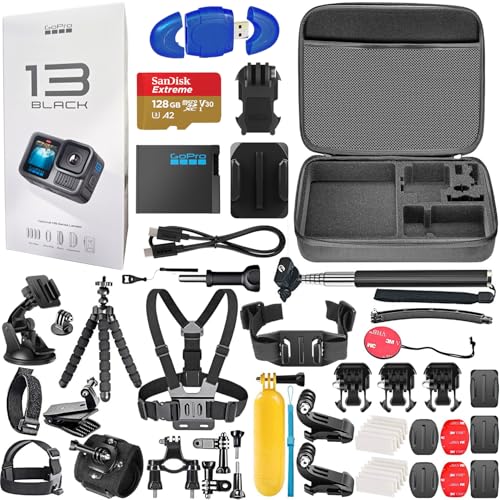
Where to buy
Four of the six cameras below link to their Amazon listings; the automated match camera and the traditional camcorder class are prose-only picks in this guide, available from sports-technology and electronics retailers. Football filming is a ninety-minute endurance event for the equipment as much as the players: buy the camera with the battery, storage and mounting its full match demands, and a tripod or elevated position plan, because the best seat for filming football is rarely the one the ticket describes.
- GoPro HERO13 Black: check price on Amazon
- Insta360 X4: check price on Amazon
- DJI Osmo Pocket 3: check price on Amazon
- Nikon Z50 II with Two Lenses: check price on Amazon
- Automated match camera class: available from sports-technology retailers (prose-only pick in this guide)
- Traditional camcorder class: available from electronics retailers (prose-only pick in this guide)
Football is the hardest sport to film well and the most filmed sport on earth, and the gap between those two facts is where this guide lives. The play is wide, fast and far away; the decisive pass happens in a second, at the other end of a hundred metres of grass; and the filmer, who is usually a parent, a fan or a club volunteer rather than a broadcast professional, must choose constantly between the wide frame that shows the game and the tight frame that shows the player. The best cameras for football are ranked here by how they serve that choice across a full ninety minutes: reach, stamina, stabilisation from a windswept touchline, and behaviour in the floodlit murk where most grassroots football actually happens.
This guide’s football is the people’s game in both its senses: the youth match on Saturday morning, the amateur league under lights, the school final, the fan’s away day, the semi-professional club building its audience one stream at a time. It is deliberately distinct from our neighbouring guide on game film, which serves the coach’s analytical eye; this one serves the record, the story and the sharing, the grandfather overseas watching a grandchild’s match, the club’s highlights that fill the social feed by Monday.
The honest starting point is that no single camera does everything football asks. The broadcast illusion, every player legible at every moment, is a twenty-camera fiction. The real art, and the art these six picks serve in their different ways, is choosing the compromise that matches your purpose: the whole match for the record, the tight story for the family, the automated coverage for the club that has no volunteer to spare.
Key Takeaways
- Football filming is a constant negotiation between the wide game and the tight player.
- The HERO13 on a high mount gives families the complete, honest match record.
- The 360-degree X4 films the whole pitch and finds the action afterward.
- The Pocket 3 is the fan’s and the touchline storyteller’s camera.
- Nikon’s two-lens kit is the photographer’s route to tight, publishable match coverage.
- Automated match cameras serve clubs that need coverage without an operator.
- The traditional camcorder remains the simplest ninety-minute answer ever built.
In this guide
Quick Picks
| Camera | Badge | Why it is here |
|---|---|---|
| GoPro HERO13 Black | Best for the Full Match Record | Wide, tough and tireless from a high touchline mount. |
| Insta360 X4 | Best for Never Missing the Play | Films the entire pitch; reframe to the action in the edit. |
| DJI Osmo Pocket 3 | Best for Fans and Stories | Stabilised touchline films, interviews and atmosphere. |
| Nikon Z50 II with Two Lenses | Best for Tight Coverage | A telephoto lens for the player, a standard for the story. |
| Automated Match Camera Class | Best for Clubs Without Operators | AI coverage that follows play and streams itself. |
| Traditional Camcorder Class | Best Simple Match Camera | Zoom, stamina and simplicity in one purpose-built tool. |
How did we choose cameras for football?
We began with the geometry of the game. A football pitch is the largest common filming subject in amateur sport, and the camera’s field of view and reach decide which football it can film at all. Wide instruments see the shape of play and lose the shirt numbers; long lenses find the player and lose the pass that made the goal. We ranked each pick for the honesty of its compromise, and for how gracefully it lets the filmer move between the wide and the tight within one match.
Duration was scored at the full ninety plus the before and after that real filming includes: batteries or power for two hours of readiness, storage for the whole record, and thermal behaviour under a summer tournament’s sun or a winter night’s cold. Stabilisation was judged from the touchline’s reality, handheld in wind, on a monopod in a crowd, on a fence mount vibrating with the spectators, rather than from a studio floor.
Light was judged at grassroots o’clock: the late-afternoon glare, the training-ground dusk, the floodlights whose quality ranges from television to candlelight with a generator. Autofocus and tracking were considered for the one job football uniquely demands, following a fast subject at distance among twenty-one decoys, and we were honest about which picks attempt it and which decline it in favour of the wide, everything-sharp philosophy that most amateur football filming actually relies on.
The picks in detail

GoPro HERO13 Black — Best for the Full Match Record
The most useful football film for most families and grassroots clubs is the complete match, honestly framed, and the HERO13 on a high pole or stand at the halfway line is this guide’s workhorse for it. Its wide view covers the game’s shape from a modest elevation, its stabilisation irons the pole’s sway and the crowd’s vibration, and its toughness treats the touchline’s weather, mud and stray balls as the working environment it is. Set it, elevate it, and let it witness all ninety minutes while the filmer actually watches their child play, which is a benefit no specification sheet lists and every parent understands instantly.
The footage serves the family’s real purposes: the goal found and clipped in the evening, the season’s archive complete, the relatives overseas sent the whole match rather than a rumour of it. Its high frame rates give the highlights a slow-motion grace note, and its ecosystem covers the elevations and mounts the halfway-line position demands, from tripod to fence to the tall monopod that grassroots filming increasingly treats as standard kit.
The wide philosophy’s cost is intimacy: faces are small, the far touchline is a rumour, and the tight story of one player’s match must come from another camera or not at all. Battery across a tournament day means spares or power, planned like the team’s own. As the record camera, the foundation every football filming kit is built on, it remains the most proven answer here.
- Form: waterproof action camera
- Position: elevated halfway-line mount
- View: wide, whole-shape coverage
- Endurance: spares planned for tournament days
- Role: families, grassroots clubs, archives
Strengths
- The complete match, honestly witnessed.
- Lets the parent watch instead of filming.
- Tough enough for the touchline’s real weather.
Trade-offs
- Faces are small at pitch distances.
- Tight player stories need a second camera.
- Tournament days demand battery planning.
Best for: families and clubs wanting the whole match recorded. Not suited for: filmers seeking tight, cinematic player coverage alone.

Insta360 X4 — Best for Never Missing the Play
Every football filmer knows the specific grief of the goal scored just outside the frame, during the one pan that arrived late. The X4’s answer is to abolish the frame at capture: mounted high at halfway, its twin lenses record the entire sphere, the whole pitch in every direction, and the filmer, or the editor, chooses the shot afterward, following the break, widening for the celebration, tightening for the scorer. For the solo club volunteer producing highlights alone, it converts the game’s cruellest filming problem into an editing decision, which can be taken calmly, twice, with tea.
As a highlights instrument it is quietly revolutionary for small clubs. One recording yields the wide tactical view, the broadcast-style follow, and the vertical cut for the feed, all from the same ninety minutes, and its stabilisation renders the reframed pans smooth in a way handheld touchline footage never is. The invisible-stick effect from a tall pole produces the floating, drone-adjacent angle that makes grassroots highlights look startlingly produced.
The costs are workflow and files: the reframe is an edit step that must be learned and budgeted, the footage is heavy, and per-frame detail at long range, cropped from the sphere, trails a dedicated long lens. For the club whose nightmare is the missed moment rather than the soft pixel, that is the right trade, and this guide ranks it as the most forgiving football camera a lone operator can own.
- Form: waterproof 360 action camera
- Capture: the whole pitch, every direction
- Workflow: reframe and direct in the edit
- Output: wide, tight and vertical from one match
- Role: club highlights, solo volunteers, archives
Strengths
- The goal outside the frame no longer exists.
- One match becomes every format’s highlights.
- Reframed pans are calm and smooth.
Trade-offs
- Reframing is real editing work.
- Files are heavy across a season.
- Long-range detail trails a true telephoto.
Best for: solo club filmers and highlight producers. Not suited for: filmers wanting finished footage with no edit step.

DJI Osmo Pocket 3 — Best for Fans and Stories
Not every football film is the match. The Pocket 3 films the day around it: the journey, the turnstiles, the warm-up at touching distance, the manager’s interview in the corridor, the away end in full voice, the child’s first stadium from the child’s own height. Its gimbal turns the walk to the ground into a tracking shot, its tracking holds the interviewee while the filmer holds the conversation, and its low-light grace serves the concourse and the evening kickoff alike. For the fan creator, the club’s storyteller and the family historian, it is the camera that makes football content feel like a film rather than a recording.
From the stands it does honest work within its wide view’s limits, atmosphere, set pieces at the near end, the crowd’s weather, and its vertical mode is native to the platforms where fan content lives. Paired with the record camera at halfway, it completes the two-camera grassroots production that this guide keeps recommending: one witness for the game, one for the story, both pocketable, both affordable to real clubs and real families.
It is not a match-coverage camera from the stands, its fixed view cannot follow play at distance, and its battery suits the day’s chapters rather than ninety continuous minutes. Judged as the story instrument it is, it has no peer here, and football, which is stories all the way down, deserves a place for it at the top of the bag.
- Form: pocket gimbal camera, one-inch sensor
- Stabilisation: three-axis mechanical
- View: wide, close, atmospheric
- Screen: rotates for vertical fan content
- Role: fan films, interviews, matchday stories
Strengths
- The matchday feels like a film, not a recording.
- Interviews and atmosphere handled gracefully.
- Completes the two-camera grassroots kit.
Trade-offs
- Cannot follow distant play from the stands.
- Battery suits chapters, not full matches.
- Fixed wide view is its whole vocabulary.
Best for: fan creators, club storytellers and family historians. Not suited for: anyone needing it to cover the match itself.

Nikon Z50 II with Two Lenses — Best for Tight Coverage
For the filmer whose football is a player’s story, the scout’s relative, the academy parent, the club photographer crossing into video, tight coverage is the brief, and tight coverage is a lens problem before it is a camera problem. This kit answers it in one box: the standard zoom for the warm-up, the tunnel and the story, and the telephoto for the match itself, bringing the far touchline’s duel into publishable range. Nikon’s subject recognition works the footballer’s version of its craft, holding the runner among the decoys with a persistence that rewards the filmer who picks their player and commits.
The stills arm is not a bonus here but half the assignment: the match photograph for the programme, the poster, the player’s own archive, taken on the same body between video passages, in matching colour. For school and academy football, where the record is as much photographic as filmed, that duality makes this kit the most complete single purchase in the guide.
The honest costs are an operator’s full attention for ninety minutes, because tight coverage is a performed skill, not a setting, and a crop sensor’s limits under the worst floodlights. The filmer must also accept the tight philosophy’s bargain: the goal at the other end, outside the frame, is the price of the portrait at this one. For the player’s own story, it is the right price, paid knowingly.
- Form: APS-C mirrorless, two-lens kit
- Lenses: standard story plus telephoto reach
- Focus: subject recognition among decoys
- Stills: match photography on the same body
- Role: player stories, academies, school football
Strengths
- The far touchline brought into range.
- Photographs and film from one kit.
- Recognition that commits to your player.
Trade-offs
- Demands a skilled operator all match.
- Tight framing misses the other end’s story.
- Worst floodlights test the small sensor.
Best for: academy parents, scouts’ families and club photographers. Not suited for: filmers wanting the whole match without operating.
Automated Match Camera Class — Best for Clubs Without Operators
The prose-only pick names the class that has quietly transformed grassroots football coverage: the automated match camera, a fixed elevated unit whose AI follows the play, produces a broadcast-style film and often streams it, with no operator at all. Discussed here without a link because the class, sold by sports-technology companies, often as a service with a subscription, sits outside this guide’s verified pool. For the club with three teams, one volunteer and no camera operator in its future, it is not a luxury but the difference between coverage and none.
Its virtues are institutional and cumulative. Every match is filmed identically, the archive builds itself, the stream serves the supporters who cannot travel, and the footage doubles, as our game-film guide explores, as coaching material. Sponsors, whose logos ride the stream and the highlights, frequently underwrite the arrangement, which is how the class has spread through the grassroots game faster than any camera in this guide.
The cautions are a buyer’s rather than a filmer’s: subscription economics that should be read across five years, image quality that serves coverage rather than cinema, data and consent policies for filming minors that the club must own rather than assume, and a dependence on the provider’s platform for the archive’s survival. Chosen with those eyes open, it is the most consequential football filming decision a small club can make, and this guide would be incomplete without it.
- Form: fixed automated camera system
- Operation: AI follows play, streams itself
- Coverage: every match, identically, unattended
- Economics: often subscription and sponsor-funded
- Role: grassroots clubs, schools, leagues
Strengths
- Coverage exists even with no volunteer.
- Archive and stream build themselves.
- Sponsors often carry the cost.
Trade-offs
- Subscription read across years, not months.
- Coverage quality, not cinematic quality.
- Consent and data duties stay with the club.
Best for: clubs and schools needing guaranteed coverage. Not suited for: filmers who want hands-on creative control.
Traditional Camcorder Class — Best Simple Match Camera
The final pick is a respectful nod to the instrument that filmed a generation of football before the action camera was born: the traditional camcorder, discussed as a class without a link because its current models sit outside the verified pool. Its virtues read like a list of everything the modern multi-purpose camera makes difficult: a long, stabilised zoom that travels from the whole pitch to one player on one control, recording stamina measured in full matches by design, ergonomics built for two hours at a tripod or a shoulder, and an simplicity that a deputised grandparent can operate after one demonstration.
For the family or club whose filmer changes weekly, that last virtue is decisive. The camcorder asks nothing, configures nothing, and forgives everything except being left at home. Its footage, honest high-definition with colours tuned for daylight and floodlight alike, has filled more club archives than every other pick in this guide combined, and its used market makes the class the budget route into serious match coverage.
Its limits are the modern world’s: smaller sensors that concede the worst floodlights, fewer creative modes, and a form the content creator’s audience finds less glamorous than its results deserve. For the pure job of filming football matches, simply, completely and forever, it remains a benchmark the newer instruments should be flattered to be compared with.
- Form: dedicated camcorder class
- Zoom: long, stabilised, single-control
- Stamina: full matches by design
- Operation: deputisable in one demonstration
- Role: families, clubs, rotating volunteers
Strengths
- The simplest complete match tool ever built.
- Zoom range the action cameras envy.
- A used market full of honest bargains.
Trade-offs
- Small sensors concede bad floodlights.
- Fewer creative and content modes.
- Discussed here without a purchase link.
Best for: families and clubs with rotating filmers. Not suited for: creators needing content versatility and style.
Comparison table
| Camera | Form | Best at | Standout | Choose it for |
|---|---|---|---|---|
| GoPro HERO13 Black | Action | Complete match record | Elevation, toughness, stamina | Family archives |
| Insta360 X4 | 360 action | Never missing the play | Reframe after the whistle | Club highlights |
| DJI Osmo Pocket 3 | Gimbal | Matchday stories | Glide, tracking, vertical | Fans and storytellers |
| Nikon Z50 II Two-Lens | APS-C mirrorless | Tight player coverage | Telephoto reach, stills | Academies and scouts |
| Automated Match Class | Fixed AI system | Operator-free coverage | Streams and archives itself | Grassroots clubs |
| Camcorder Class | Dedicated | Simple match filming | Long zoom, full-match stamina | Rotating volunteers |
What should you check before buying a camera for football?
Check your position before your camera. Where will you actually film from, the touchline’s mud, the stand’s third row, the clubhouse roof, a scaffold the club permits? The answer sets the elevation you need, the reach you need, and whether a fixed automated answer is even possible. Football filming is real estate first and electronics second, and the filmer who secures the halfway-line elevation has improved their footage more than any upgrade in this guide could.
Check the full match’s logistics against your calendar: batteries or power for the whole afternoon, storage for a tournament’s four matches, and a workflow that gets the film off the card before next Saturday replaces it. Then check the light of your actual kickoffs, because the 7.45 floodlit match and the noon friendly are different sports photographically, and the low-light order of your shortlist should follow your fixture list, not a review’s daylight.
Finally, check the permissions with the league, the club and, for youth football, the safeguarding rules that govern filming minors in your competition. They are not red tape around the filming; they are part of its licence to exist, and the filmer who knows them, and can show a coach or a parent exactly how the footage is used and stored, is the filmer who gets the halfway-line spot next season too.
How do you film a football match well?
Film from halfway, elevated, and stay there
The halfway line is football filming’s throne because the game is symmetric and the story can break either way. Elevation, even a modest platform or a tall mount, flattens the pitch’s geometry into readability, separates the players from the far touchline’s clutter, and turns a crowd of legs into a formation. Every pick in this guide improves dramatically with height, and the cheapest production value in the sport is a safe, permitted way to gain three metres of it.
Let the play come to the frame
Amateur football filming’s signature failure is the anxious pan, chasing the ball a half-second late for ninety minutes. The professional’s calm, wide enough to hold the play’s development, moving only when the attack commits, produces footage that coaches, families and editors can all use. The 360 and wide picks automate that calm; the tight-coverage filmer must learn it as a discipline, and it is worth the learning, because a steady frame is the difference between a record and a seasickness tape.
Capture the sound of the place
The touchline’s voice, the crowd’s weather, the referee’s whistle and the thump of the strike are half the match’s memory, and they are lost by cameras left to their own microphones at distance in wind. A recorder near the pitch’s edge, or the discipline of filming the crowd’s reactions as footage in their own right, restores the atmosphere that the silent wide shot, however complete, cannot convey.
Deliver the highlights before the weekend ends
Football footage has the shortest shelf life in sport: the goal clipped by Sunday night is a story, by Thursday a history lesson. Build the workflow, the X4’s reframe, the record camera’s chapter marks, the phone edit at the ground, that gets the moments out while the mud is still on the boots. The clubs and families who master the turnaround, not the resolution, are the ones whose filming is actually watched.
What mistakes do football filmers make?
Filming from ground level behind the goal
It feels dramatic and reads as chaos: foreshortened players, the far end invisible, every attack a pile of bodies at a closing door. Behind-the-goal is a supplementary angle for penalties and celebrations, and a poor home for a whole match. The halfway elevation exists because generations of filmers learned this in their first season, usually from their own unwatchable tapes.
Zooming to the ball and losing the game
The tight frame that follows the ball shows a player running with it and nothing of why: the run off the shoulder, the space opening, the pass that was on. Football’s meaning lives one pass wider than the ball, and the filmer who frames for the play’s development, not its current address, produces footage that teaches, thrills and archives in equal measure.
Forgetting the second half’s battery and the extra time
Matches do not end at the filmer’s convenience. The battery that dies at the eighty-ninth minute of a cup tie, the card that fills during the penalty shootout, are the genre’s defining tragedies, and both are planning failures, not equipment failures. Carry the match’s full logistics with a final’s margin, because football saves its most filmable moments for the filmer who is almost out of everything.
Publishing other people’s children carelessly
Youth football footage carries duties that adult filming does not: consent, naming, and the safeguarding policies of the league and the club. The filmer who treats those duties as part of the craft, checking before filming and sharing within the agreed channels, protects the children, the club and the filming itself. No highlight is worth the trust that careless publishing spends.
Final Recommendation
For most families and grassroots clubs, start with the record: the GoPro HERO13 elevated at halfway, witnessing the whole match while you watch it. Add the X4 when highlights become the club’s voice, or choose it first if one volunteer must produce everything alone. Keep the Pocket 3 for the story around the game, and take the Nikon two-lens kit when one player’s journey is the film. Clubs that need guaranteed coverage should cost the automated class honestly across five years, and families with rotating filmers should respect the old camcorder’s simplicity. Film from halfway, frame for the play, deliver by Sunday, and the people’s game will have the record it deserves.
Frequently Asked Questions
Can I film a whole match on one battery?
On the stamina-led picks, a full match is achievable in moderate weather with disciplined settings, but the professional habit is to plan power for the whole day, spares or a power bank for the action cameras, mains where the position allows. Extra time and penalties are exactly when the record matters most, and they are in no battery’s brochure.
Is a phone good enough for football filming?
For the near touchline’s moments and the celebrations, increasingly yes, and every family’s archive mixes phone clips honourably. For the whole match, the phone’s reach, stamina and storage argue against it, and the elevated wide record in this guide is the upgrade that changes what a family’s football archive can be.
What is the best position for filming youth football?
Elevated at halfway, with the league’s and club’s permission, outside the technical areas, and with the safeguarding arrangements agreed before the season rather than negotiated at the gate. Height and centrality serve the film; permission and consideration serve the filmer’s welcome, and both matter equally across a season.
Do I need 4K for football?
It helps the wide-record philosophy specifically, because the elevated wide frame can be cropped toward the action in the edit without collapsing, which is how small clubs fake a second camera. For tight coverage and simple records, good high-definition remains entirely respectable, and light and position will outrank resolution in every match you film this year.
How do clubs afford automated match cameras?
Usually by treating coverage as a club asset rather than a camera purchase: sponsors underwrite the stream their logos ride on, leagues negotiate group arrangements, and the archive’s value to recruitment, coaching and community is counted honestly against the subscription. The five-year total, not the monthly figure, is the number to judge.
How does filming football change from youth to amateur to semi-professional?
Youth football filming is a family archive with safeguarding duties: wide records, consent respected, sharing kept inside the team’s own circle, and an emphasis on every child’s moments rather than the match’s narrative, because at that level the match is twenty-two stories and each family has come for one of them. The wide picks dominate, and the filmer’s diplomacy is as important as their elevation.
Amateur football adds the club as an institution: highlights for the feed, a stream for the exiled supporters, an archive the sponsors can see themselves in. The two-camera pattern of this guide, record plus story, becomes the standard Saturday, and the automated class begins its economic argument. Semi-professional football adds an audience that judges production as part of the club’s credibility, where the stream’s reliability, the graphics’ tidiness and the highlights’ turnaround are competitive assets, and where the coaching use of the same footage, our neighbouring guide’s territory, starts to share the camera’s cost and justify its quality.
The through-line at every level is that the filming serves the football, never the reverse. Schedules, positions and access are the game’s to grant, and the filmer who remembers it is welcome at all three levels, with any of these six cameras, for as long as they care to keep filming.
What does a season of football filming teach?
It teaches the game’s geography in a way playing it never quite does. From the halfway elevation, a season of footage is an education in shape, spacing and the runs that television’s tight framing hides, and parents who film a season routinely report understanding their child’s sport, and their child’s role in it, at a new depth. It teaches weather, too, and the touchline’s society, and the names of every referee in the league.
And it teaches the archive’s compounding value. A single match is a record; a season is a story; three seasons are a childhood, a club era, a player’s whole development, and they are built from afternoons when the filming felt routine. The cameras in this guide were ranked for that compounding: stamina for the routine Saturdays, files that organise themselves into seasons, and footage that will still be watchable when the under-twelves are playing senior football and somebody, at a reunion, asks whether anyone filmed it. Somebody did. Make it you, from halfway, elevated, with the battery for extra time.
How should a club organise its filming across teams?
With a rota, a kit that lives at the ground, and a shared archive discipline: the same position, the same settings card taped in the case, the same naming for every match’s file, so that any volunteer produces interchangeable footage and the season assembles itself. Clubs that treat filming as infrastructure, rather than as one enthusiast’s hobby, keep their coverage when the enthusiast moves away, which is the moment most grassroots archives quietly end. The automated class is the extreme form of that infrastructure thinking, and even clubs that film manually should borrow its philosophy: the system, not the person, is the club’s camera.
How do you film football in bad weather and worse light?
Grassroots football is scheduled by people who do not consult photographers: the winter evening under floodlights of varying honesty, the cup tie in horizontal rain, the summer final in glare that whites out half the pitch. The filming answers are a hierarchy of acceptance. First, position: the covered stand’s edge or the clubhouse side, where the camera’s worst enemy, rain on the lens, can be wiped in shelter and the wind is somebody else’s problem. Second, protection: the action picks here are waterproof by design, and the mirrorless kit wants its rain cover treated as part of the camera rather than an accessory for pessimists. Third, exposure honesty: floodlit murk filmed a stop brighter and noisier beats the smeared, over-processed darkness that aggressive in-camera correction produces, because a grainy record of the winning goal outranks a clean film of the warm-up.
Night matches also reorder this guide’s table in a way worth stating. The larger-sensor and low-light virtues rise, the wide philosophy’s small faces grow harder to read, and the tight kit’s fast telephoto earns its keep precisely when the light is worst. The filmer whose season is mostly floodlit should weight the low-light paragraphs of each pick accordingly, and should test the actual ground’s lights in a friendly before trusting them with a cup tie.
What is the filmer’s etiquette at someone else’s ground?
Arrive as a guest and behave as one: ask where filming is welcome, keep the technical areas and the officials’ sightlines sacred, and remember that the home club’s own filmer has the halfway throne by right of tenure. At youth grounds, introduce yourself to both coaches before the warm-up rather than explaining yourself to a concerned parent at half time. The football filming community at grassroots level is small, generous with positions, power and local knowledge, and entirely closed to the filmer who treats grounds as studios and people as extras.
Share the footage generously within the agreed channels. The opposition’s striker’s goal, sent to their club by Monday, buys more goodwill than a season of correct paperwork, and the archive that serves both teams becomes, over years, the league’s shared memory, with its keeper quietly at the centre of the game’s local history. That is not a bad place for a camera to end up.
How do highlights actually get made on a Sunday?
By a workflow that begins during the match. The record camera’s operator, or the filmer’s own notebook, logs the moments by the match clock: goals, chances, incidents, the minute noted in the margin of the teamsheet. The X4’s editor bookmarks as they reframe; the tight filmer marks the files the camera lets them protect. At home, the log turns a ninety-minute excavation into a twenty-minute assembly: the moments pulled, the order set by the game’s own narrative, the vertical cut exported from the same timeline, the whole package posted while the weekend still cares.
Clubs that publish highlights people actually watch add two crafts to that workflow: the caption that tells the story the clip assumes, and the consistency of posting after every match, won or lost, because the audience for grassroots highlights is built on reliability exactly as a congregation is. The camera’s contribution to both crafts is the same as ever: footage that is complete, findable and honestly framed, from a position the filmer secured by being early, polite and prepared.
Why does the second camera change everything at a grassroots match?
Because it dissolves the founding dilemma this guide opened with. With the record guaranteed by the wide camera at halfway, the second instrument is free: the tight lens can hunt the player’s story, the Pocket can wander the touchline for the day’s human film, and neither is gambling the match itself on its choices. Failure becomes affordable, which makes ambition affordable, and the production’s ceiling rises from competent record to genuine storytelling without its floor moving an inch.
The two-camera pattern is also how volunteers multiply. The record camera needs no operator, so the club’s one willing filmer is released to the creative seat, and a second volunteer can be recruited to the simple, sociable job of the story camera years before they would volunteer to be responsible for the match. Every pick in this guide finds its best use inside that pattern, and the clubs that adopt it rarely return to one camera, however good, again.
The season’s last match, and what the archive is for
Every football filming season ends at a presentation evening, a leavers’ match, a final, where the archive stops being a by-product and becomes the point. The season’s goals in order, the youngest player’s first match beside their last of the year, the club’s centenary footage cut from Saturdays nobody thought were historic: this is what the halfway camera was actually doing while it appeared to be recording fixtures. Filmers who understand that from September film differently, more completely, more patiently, with the presentation evening’s screen in mind during the wettest Tuesday’s training-ground friendly.
So keep the whole record, label it like it matters, and resist the highlight-only archive that deletes the ordinary matches where most of a football life is actually lived. The ordinary, in twenty years, is the treasure. The camera that witnessed it, elevated at halfway in all weathers, will have been the best football purchase the family or the club ever made, and this guide’s table, read in that light, is simply six different ways of making sure the witness is present.
Present, charged, elevated and permitted: those four adjectives, applied to any camera in this guide, will produce a season of football film that families and clubs treasure out of all proportion to its cost. The rest, the resolution, the frame rates, the ecosystems, is refinement. Begin with presence, this Saturday, at the next match on the fixture list, because that match, like all of them, will happen exactly once.
Happen once, and be remembered, if the filmer does their quiet work, forever, which is a remarkable return on a Saturday afternoon and a tall pole. Football has always understood the value of the witness; it fills stadiums with them. The camera simply lets the witness keep what they saw.
Keep it well, then: the whole match, the whole season, the whole era, backed up in two places and named like the history it is. Future players, future parents and the club’s future self are all counting, without knowing it, on the person who stood at halfway with a charged battery and a tall mount, and pressed record before the whistle.
Press it this weekend, before the warm-up ends and the teams come out, and let the record begin with the day itself rather than the kickoff, because in twenty years the walk out, the coin toss and the nervous jokes will be worth as much as the goals, and they are the footage nobody else in the ground is making.
Nobody else, and therefore, in the archive’s economy, priceless, though the camera that made it cost less than the team’s away kit. That disproportion, between the modest instrument and the permanent record, is the deepest reason this guide exists, and the best argument for choosing from its table today rather than after another unfilmed season has gone past the halfway line and into memory unrecorded.
Unrecorded seasons cannot be recovered by any later purchase, which gives the football filmer’s decision a deadline the other guides in this series mostly lack. The fixture list is already published. Choose the camera that will be elevated at halfway for the next match on it, and let the record, and the season, begin.
Begin, and discover within a month what every club filmer discovers: that the filming changes your own relationship with the game, deepening the watching, widening the understanding, and attaching you to the club’s story in a way that outlasts any single season’s results. The camera is the excuse. The attachment is the reward.
Rewards compound quietly in football, in archives as in league tables, and the filmer who starts now will be, by spring, the person the whole club turns to when the past needs proving, celebrating or simply watching again on a wet night with the season gone.
That person deserves a camera equal to the trust, and any of the six above, chosen for the job it will actually do at your ground, will prove equal to it across the seasons. Choose, elevate, record, and welcome to the halfway line.
The halfway line, on a Saturday morning with the mist still on the pitch and the whole season ahead, is one of the finest seats in sport, and it is reserved, at every grassroots ground in the world, for exactly the person this guide was written for.
Take the seat, then, with the camera charged and the mount tall, and let the first whistle of the filmed era sound whenever the referee is ready. The game will do the rest, as it always has, and this time the rest will be kept.
Kept, shared and, in the fullness of seasons, cherished, which is a great deal to ask of a small camera on a tall pole, and exactly what the six in this guide were chosen, each in its own way, to deliver.
Deliver that, week after week, and the question of which camera is best will have been answered in the only tribunal football recognises: the archive, screened on a winter night to a room that was there, and is there again.
There again, in the room, in the replay, in the story told one more time with the evidence running: that is football filming’s whole promise, and it begins, as this guide began, with a camera in the right place when the whistle goes.
Be in the right place for the next whistle, then, and for the hundred after it. The game is generous to its witnesses, and its witnesses, armed with any camera in this guide and the patience of a season, become its historians.
Historians of the people’s game, equipped with nothing more exotic than a tall mount and a full battery, have preserved more joy than all the broadcast archives of their era, because they filmed the football that mattered to the people in the frame. Film yours.
Film it from the first match of the season to the last, through the weather the fixture list has in store, and let nobody tell you the camera is a distraction from the football. Handled as this guide describes, it is the opposite: a way of belonging to the football more completely than the terraces alone allow.
Belonging, recorded and replayed across the years, is the final product every camera in this table is really selling, and on that measure the best of them is simply the one that will still be at halfway, charged and elevated, when the fixture list turns to the matches that matter most.
Those matches are already on the calendar. Meet them there.
Meet them with the mount assembled the night before and the cards emptied and labelled, because matchday morning has its own emergencies and the camera should never be one of them.
What should a parent volunteer check at halftime to ensure the second half records successfully?
Glance first at remaining storage and battery indicators while players take drinks, because stoppages provide the only relaxed opportunity to swap media safely. Wipe the front glass gently if drizzle has gathered, then confirm the horizon has not drifted after accidental knocks from spectators moving along the touchline. A ten second playback of the latest passage verifies sound and exposure have not changed unnoticed during celebrations.
Communicate briefly with whoever keeps score, confirming the correct running total for later editing and family sharing. Note the approximate clock time of any injury pause or disputed incident on a phone, making those moments far easier to locate afterwards. Resist reorganising bags extensively at this stage; familiarity with where spare batteries sit beats a tidy layout nobody remembers under pressure.
How can clubs make match recordings useful for young players without embarrassing individuals publicly?
Share full footage through a private team channel, accompanied by two or three collective learning points chosen by the coach beforehand. Highlighting intelligent positioning, recovery runs, and supportive communication gives youngsters constructive material to study without turning mistakes into entertainment for wider audiences. Parents should seek permission before extracting clips of other children for personal social accounts, even when intentions feel celebratory and harmless.
Short review gatherings work best when each participant identifies one action they would repeat and one decision they might reconsider. That balanced approach normalises video as a development tool rather than a tribunal. Over a season, players begin requesting particular passages themselves, demonstrating growing tactical curiosity and ownership of improvement that extends well beyond any individual result on the scoreboard.
Travel to away fixtures introduces unfamiliar stands, restricted touchlines, and varying permission expectations from home clubs, so arriving with a compact setup offers real advantages. Introduce yourself to the opposing coach before warmups, confirm where filming is welcome, and avoid blocking spectators who paid to watch their own children. Courtesy travels well across a league, and clubs remembered for considerate visiting filmers usually receive generous positions when fixtures reverse later in the season.
Younger siblings watching from the same vantage point appreciate a job, such as tracking substitutions on a notepad or guarding the spare battery pouch. Inclusion reduces wandering near equipment and builds the next generation of reliable volunteers. Clubs thrive on those small apprenticeships almost as much as on the recordings themselves over successive seasons.
Wet weather covers improvised from clear shower caps protect bodies between showers while still allowing screen visibility, a humble trick passed between grassroots filmers for years. Keeping one in every kit bag costs almost nothing yet saves frantic improvisation when clouds gather unexpectedly.
Related Guides
The coach reads the same match differently in our game film guide for analysts. Staged occasions get their due in the live events filming roundup, and the training week is covered by our fitness camera guide.


