reviewstook.com is reader-supported. When you buy through links on our site, we may earn an affiliate commission.
Where to Buy a Camera for 180 VR Video, and Why the Format Rewards Commitment
180 VR video occupies the most interesting middle ground in immersive media: wide enough to surround a seated viewer, directed enough that a filmmaker still composes. The best cameras for 180 vr video are therefore not simply 360 cameras with half the picture thrown away, though several excellent ones work exactly that way. The format has two families — dedicated VR180 cameras with twin fisheye lenses that record stereoscopic depth, and 360 cameras whose footage is reframed or cropped to a 180-degree window — and choosing between them is the first real decision this guide will walk you through.
Be honest with yourself about the audience before spending anything. VR180 shines in headsets, where its depth and presence are startling, and it flattens to a merely wide video on ordinary screens, where most viewers will actually meet it. Creators who publish for headset owners, for immersive installations, for training and property walkthroughs, or for the simple private joy of reliving a family event inside a headset, will find the format’s cameras mature and genuinely capable. Creators chasing flat-screen reach should read this guide as a map of a beautiful side road, not the highway.
Six routes follow: one 360 flagship that reframes superbly to 180, Canon’s professional VR180 lens system for mirrorless bodies, a cult foldable camera that shoots both 180 3D and 360, a modular 360 contender, a dual-mode hybrid from a smaller maker, and the discontinued VR180 camera that still circulates used and taught the format to a generation. Only the first carries a purchase link here; the specialist rest are described without links, because their markets are small, regional and best approached through the makers and specialist retailers.
Key Takeaways
- VR180 means stereoscopic depth in a forward hemisphere; 360 reframed to 180 is flat but far more flexible.
- Headsets are where this format lives — buy for the audience you actually have, not the one you imagine.
- Dedicated VR180 rigs demand stitching discipline and fixed viewing geometry; reframed 360 forgives everything later.
- Resolution is halved by every crop and split by every eye: start with the highest capture resolution you can afford.
- Stabilisation and horizon discipline matter more in immersive video, because the viewer’s body believes the camera.
- Sound recorded spatially sells the immersion as much as the picture does; budget a thought for it.
- Archive the masters with plain filenames and two copies; immersive files are unusually hard to identify or replace later.
- Place microphones near the subject from the first project; spatial believability is built in the room, not in the render.
- Cut rather than pan, keep shots longer than flat instinct suggests, and test the whole piece seated in a headset before anyone else sees it.
- Choose the family by subject distance: stereo for conversation and craft, reframed 360 for action, travel and insurance against missed moments.
- Light the whole room and hide equipment in the camera’s blind spot; the audience is inside your set now, inspecting it from within.
- Budget storage, rendering time and a review headset alongside the camera; the pipeline is part of the purchase, not an afterthought.
- Finish one small, beloved project completely before buying a second immersive camera for the shelf.
In this guide
Quick Picks
| Pick | Badge | Why it made the list |
|---|---|---|
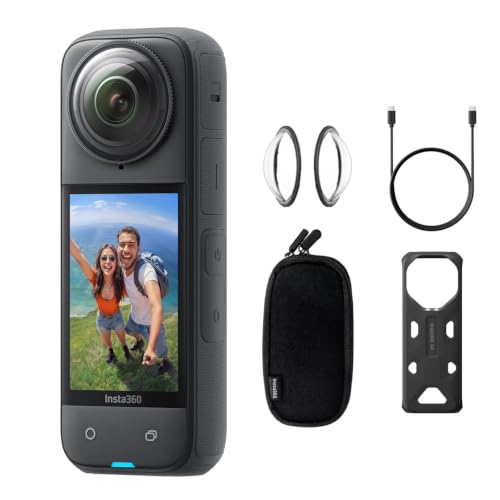
| Insta360 X4 | Best 360 route to 180 VR output | A waterproof 8K 360 camera whose resolution survives reframing to a 180-degree window better than any consumer rival. |
| Canon EOS VR System (RF Dual Fisheye) | Best true VR180 for professionals | Canon’s dual fisheye lens turns its full-frame mirrorless bodies into a genuine stereoscopic VR180 rig with professional image quality. |
| Insta360 EVO | Best foldable dual-format experiment | A cult camera that folds between 180 3D and 360 capture, still circulating used among immersive hobbyists. |
| Kandao QooCam Range | Best modular enthusiast alternative | Kandao’s QooCam cameras offer high-resolution 360 capture and immersive modes from a maker specialising in VR imaging. |
| Vuze XR | Best dual-mode hybrid for casual immersive fun | A transforming camera that switches between 360 and VR180 stereo capture with a physical twist of its lenses. |
| Lenovo Mirage Camera | Best used VR180 starter for the format-curious | Google’s VR180 format ambassador: a simple twin-lens point-and-shoot for stereoscopic video and photos, now a used-market bargain. |
How Did We Choose These Cameras for 180 VR Video?
We judged candidates on the format’s real bottlenecks rather than headline resolution: how much detail survives in the forward 180 degrees after stitching, reframing or splitting between eyes; whether the workflow — the maker’s software, the export formats, the headset playback path — is a road a working creator can actually travel weekly; and whether stabilisation keeps the horizon honest, because a tilted world in a headset is not an aesthetic choice but a nausea complaint.
We also separated the two families deliberately and refused to pretend they are interchangeable. Dedicated VR180 cameras deliver true stereoscopic depth and a fixed, intimate framing that suits performance, interview and presence pieces. Reframed 360 cameras deliver freedom — choose the 180 window in post, rescue a badly aimed shoot, publish flat versions from the same capture. Six routes survived, spanning a consumer flagship to a professional lens system, each the right answer for a recognisable kind of immersive creator.
Detailed Picks: Six Routes Into 180 VR Video

Insta360 X4 — Best 360 route to 180 VR output
The pragmatic creator’s answer to 180 VR is to capture everything and decide later, and no consumer camera captures everything at higher quality than the X4. Its 8K 360 recording means the forward 180-degree slice you eventually export still carries real detail, where lesser 360 cameras crop down to softness. Shoot the event once, then publish the immersive 180 cut for headset owners and a flat reframed version for everyone else from the same card — a workflow no dedicated VR180 camera can imitate.
Stabilisation is the second half of its case, because immersive footage punishes shake with the viewer’s stomach. The X4’s smoothing, proven across its action-camera lineage, keeps walking shots level and horizons trustworthy, and its toughness means the immersive camera can go where the immersive subjects are: boats, bikes, rain, dust. Battery and accessory ecosystems are mature, which matters on real shoots more than any laboratory figure.
Know precisely what you are not getting: stereoscopic depth. A reframed 180 window is a flat, if gloriously wide, picture, and headset viewers who know true VR180 will feel the difference in close subjects. If your work is presence and performance at conversational distance, read on to the Canon. If your work is action, travel and publish-everywhere flexibility, this is the professional’s shortcut and the beginner’s safest first immersive camera.
Editors should note the hidden dividend: because the whole sphere exists in the file, a missed moment at the frame’s edge is recoverable in post, and a vertical cut for social platforms is a third publication from the same shoot. In a format where reshoots are expensive and moments are unrepeatable, that insurance quietly justifies the entire reframing philosophy.
- Capture: 8K 360 video with strong stabilisation
- Workflow: reframe in the maker’s studio software to any window, including 180
- Build: waterproof action-camera toughness
- Audio: built-in microphones with wind reduction
Strengths
- Highest consumer 360 resolution for clean 180 crops
- One shoot serves headset and flat audiences
- Tough, stabilised and ecosystem-rich
Trade-offs
- No stereoscopic depth in the output
- Reframing adds an editing stage
- Detail still trails dedicated large-sensor rigs
Best for: action, travel and multi-platform immersive creators.
Not suited for: stereoscopic presence pieces at close range.
Canon EOS VR System (RF Dual Fisheye) — Best true VR180 for professionals
When the brief demands actual depth — a musician at arm’s length, an interview that feels like presence, a product experienced rather than shown — this is the system professionals reach for. Canon’s dual fisheye lens mounts on its full-frame mirrorless bodies and records two circular images side by side, which the company’s software converts into proper VR180: stereoscopic, immersive, and detailed with a large sensor’s authority in light that would defeat every smaller camera in this guide.
The production character is correspondingly grown-up. This is a tripod discipline: the rig is positioned like a seated viewer’s head, levelled with care, and left alone, because in VR180 the camera is a person and moving it carelessly moves the audience. Creators coming from conventional cinema will recognise the grammar immediately and produce their best immersive work by treating the format as theatre staging rather than as filming. Audio, recorded separately and spatially where the budget allows, completes the illusion the lens begins.
The costs are total-system costs: body, specialist lens, software subscription habits, and a workstation that enjoys large files. It is also a single-format commitment — this rig does one thing supremely and general filming not at all. For studios, educators and artists whose audience wears headsets, it is not an extravagance but the actual tool of the trade, and everything else in this guide is a compromise measured against it.
Property, training and medical-education producers have quietly standardised on rigs like this for a practical reason: the fixed, level, human-height viewpoint reproduces exactly the perspective a trainee or viewer will occupy. When the camera must be a person rather than an observer, the dual-fisheye discipline stops being a limitation and becomes the specification.
- Format: true stereoscopic VR180 from twin fisheye optics
- Bodies: Canon full-frame mirrorless models with VR support
- Workflow: Canon’s VR utility software for conversion and editing
- Use: controlled, tripod-led immersive production
Strengths
- True stereoscopic depth at full-frame quality
- Professional low-light and colour authority
- A complete, supported production workflow
Trade-offs
- The dearest route by a wide margin
- Tripod-bound, single-purpose rig
- Demanding files and software chain
Best for: studios, educators and artists filming presence for headsets.
Not suited for: run-and-gun or multi-format creators.
Insta360 EVO — Best foldable dual-format experiment
The EVO remains the format’s most charming idea: a camera that folds flat to shoot stereoscopic 180 — two lenses side by side, like eyes — and unfolds into a 360 camera when the story widens. For hobbyists who want to learn both immersive dialects on one modest used purchase, nothing else ever offered the same tuition, and its community of owners still trades tips, firmware wisdom and spare parts with missionary enthusiasm.
Image quality belongs to its generation, which the honest buyer must accept: resolution that modern headsets reveal as soft, stabilisation a step behind the current flagships, and an app ecosystem ageing with dignity. What has not aged is the geometry lesson it teaches. Shooting true stereo at conversational distance on the EVO teaches a creator more about VR180 framing — subject distance, eye-level honesty, the intimacy of the format — than a month of reframing 360 footage.
Treat it as an instrument of education and play rather than production. Buy used with returns, expect to hunt accessories, and let it answer the question every immersive beginner actually faces: does my audience, and my own stomach for the workflow, truly live in headsets? Creators who graduate from an EVO to the Canon system arrive knowing exactly why they are spending the money.
Second-hand prices make the EVO the format’s cheapest honest experiment, and its folding trick still delights in demonstrations — a useful property for educators introducing immersive media to sceptical classes. Some tools teach by being limited in instructive ways, and this little hinge of a camera is the syllabus made physical.
- Format: stereoscopic 180 3D folded flat; 360 unfolded
- Video: immersive capture with stabilisation for its era
- Build: pocketable folding design
- Market: discontinued; used and enthusiast channels
Strengths
- True stereo 180 and 360 in one pocket device
- Superb, affordable immersive education used
- A community that keeps it alive
Trade-offs
- Discontinued: ageing apps and support
- Resolution soft on modern headsets
- Accessories require hunting
Best for: hobbyists and educators learning immersive grammar.
Not suited for: client work or maximum quality.
Kandao QooCam Range — Best modular enthusiast alternative
Kandao is the specialist’s alternative in immersive imaging: a company that builds for VR first and action second, and whose QooCam line has consistently pushed resolution and stitching quality for enthusiast and prosumer creators. For 180 work, its 360 models reframe with detail to spare, and the range’s attention to stitch quality matters in immersive footage, where a seam crossing a face is not a blemish but an eviction from the illusion.
The maker’s software and format support suit creators who live partly inside editing suites and developer tools — the tinkerers, the installation artists, the technical demonstrators — more than the publish-tonight crowd. Features arrive aimed at immersive production rather than social convenience, and the community around the brand skews correspondingly technical, which the right buyer will experience as a feature and the wrong buyer as a chore.
Distribution and support vary by region more than the giants’ do, so buy through channels you trust and confirm the software path on your own computer before the shoot depends on it. For the enthusiast who finds the mainstream flagships too editorially guided, Kandao remains the road less travelled — and in immersive media, the road less travelled is often where the interesting work is happening.
Installation and exhibition creators value one trait above polish: control over the file. Kandao’s enthusiast orientation shows in export flexibility that installation timelines and custom players appreciate, where a consumer app’s one-tap pipeline would be a cage. Match the tool to the venue and the choice explains itself.
- Capture: high-resolution 360 video across the range
- Modes: immersive and reframed output options
- Maker: a specialist VR-imaging company
- Workflow: maker’s studio software for stitching and export
Strengths
- Specialist VR imaging pedigree
- Stitch quality respected by enthusiasts
- Flexible, technical workflow options
Trade-offs
- Regional support varies
- Less beginner-guided than Insta360
- Smaller accessory ecosystem
Best for: technical enthusiasts and installation creators.
Not suited for: one-tap publishing workflows.
Vuze XR — Best dual-mode hybrid for casual immersive fun
The Vuze XR’s party trick is mechanical and delightful: its two lenses sit back-to-back for 360 capture, then swivel to sit side-by-side for true VR180, like eyes opening. For families and hobbyists who want genuine stereo keepsakes — a birthday, a holiday, a grandparent’s kitchen — without entering the professional rig world, it remains one of the few cameras ever to offer real VR180 at a casual price and with casual manners.
Quality is honestly hobbyist: resolution and stabilisation that modern flagships have left behind, and a software story that requires patience as platforms age. But the emotional use case forgives specifications, because VR180 of your own people, replayed in a headset years later, does something no specification measures — it restores presence. Grandparents across an ocean have ‘attended’ birthdays through humbler cameras than this, and nobody in the headset was counting pixels.
Buy it as the EVO’s sibling in spirit: an education and a keepsake machine, sourced carefully, its limitations understood in advance. Creators who discover through it that immersive family archives matter to them will graduate with clear eyes; creators who discover the opposite will have spent hobbyist money learning a professional truth.
Wedding hobbyists have found a niche for dual-mode cameras like this: a discreet VR180 recording of the ceremony, gifted to the couple for headset replay on anniversaries. It is a use case no specification sheet imagines and no flat video replaces, and it justifies the format’s existence in a single sentence.
- Format: 360 or stereoscopic VR180 at the twist of the lenses
- Use: casual immersive capture for headset sharing
- Build: handheld stick-style body
- Audience: hobbyist and family immersive keepsakes
Strengths
- True VR180 stereo at a casual price
- Physical mode switch anyone understands
- Wonderful for family immersive keepsakes
Trade-offs
- Ageing software and support
- Resolution behind current flagships
- Hobbyist stabilisation
Best for: families and hobbyists wanting real stereo keepsakes.
Not suited for: professional or action production.
Lenovo Mirage Camera — Best used VR180 starter for the format-curious
The Mirage Camera was the format’s invitation to ordinary people: a pocketable, friendly twin-lens camera that shot VR180 photographs and video with a single button and sent them to headsets without a production pipeline. Production ended and the ecosystem around it faded, yet the cameras persist on the used market at prices that make them the lowest-risk experiment in true stereoscopic capture a curious creator can buy.
What it teaches is the format’s essence in its purest form. With no reframing, no modes and no escape into flat video, a Mirage owner learns VR180’s real grammar — subject distance, eye-level placement, stillness — within one afternoon, because the camera permits nothing else. Photographs, often overlooked in the format, are its secret strength: a stereo still of a person, replayed in a headset, carries a presence that justifies the whole experiment on its own.
Accept its museum status gracefully: batteries, apps and support belong to its era, and no client should depend on it. As a first taste of stereo — the camera you buy to find out whether immersive media is your road at all — it remains, years after its launch, almost unfairly good value in the only currency that matters at that stage: certainty about what you want next.
Teachers of media history use it as the format’s fossil record: the moment the industry believed VR180 would be the people’s immersive medium. Owning one is owning that argument in plastic, and shooting with it settles, better than any article, which parts of the prophecy were right.
- Format: dedicated VR180 stereoscopic capture
- Design: simple point-and-shoot with twin lenses
- Origin: built for the VR180 ecosystem with headset playback
- Market: discontinued; used only
Strengths
- Purest, simplest true VR180 capture
- Used prices make experimentation cheap
- Stereo stills are quietly wonderful
Trade-offs
- Discontinued ecosystem and support
- Ageing batteries and apps
- No flexibility beyond its one format
Best for: the format-curious and media educators.
Not suited for: any production deadline.
How Do the Six Best Cameras for 180 VR Video Compare?
| Pick | Best at | Watch out for | Ideal owner |
|---|---|---|---|
| Insta360 X4 | Most flexible immersive workflow | Flat, not stereo | Multi-platform creators |
| Canon EOS VR System (RF Dual Fisheye) | Real VR180 depth and quality | Cost and rigidity | Professional immersive studios |
| Insta360 EVO | Cheapest true-stereo tuition | Ageing ecosystem | Immersive hobbyists |
| Kandao QooCam Range | Enthusiast control and stitching | Support varies by region | Technical immersive creators |
| Vuze XR | Casual true-stereo capture | Ageing platform | Keepsake hobbyists |
| Lenovo Mirage Camera | Cheapest true-stereo experiment | Museum-status support | Curious experimenters |
What Is the Real Difference Between VR180 and Reframed 360?
Depth. A VR180 camera’s twin lenses see the world as your eyes do, from two slightly separated viewpoints, and a headset recombines them into genuine stereoscopic depth: faces have volume, hands reach towards you, rooms have air in them. A 360 camera sees from one viewpoint, however wide, so its reframed 180 window is a flat picture with an enormous field of view — immersive by envelopment, not by depth. Neither is fraudulent; they are different media sharing a headset, and the choice between them is the choice between presence and flexibility.
Distance decides which you will feel. Stereo depth is strongest within a few metres — conversation, performance, craft, family — and fades with the subject, so landscapes and action gain little from twin lenses and much from 360’s resolution and reframing freedom. Creators should choose by their typical subject distance and be suspicious of anyone who declares one family universally superior; the format wars are marketing, but subject distance is physics.
How Should You Shoot Differently When the Camera Is a Person?
Place it where a welcomed person’s head would be: seated eye height at a table, standing eye height in a room, never on the floor or the ceiling unless the viewpoint is the point. Move it as a considerate person moves — slowly, smoothly, or not at all — because the audience’s balance system is riding inside your camera and will report every carelessness as physical discomfort. In VR180 especially, the static, well-placed shot is not a failure of ambition; it is the grammar of the medium.
Direct your subjects accordingly. People should play to within a few metres of the lens, acknowledge it as a guest rather than ignoring it as furniture, and avoid rushing it, because stereo depth exaggerates approach speed alarmingly. Sound deserves the same person-thinking: a microphone near the action, not on the camera across the room, because ears localise the world the eyes are inhabiting and a mismatch dissolves the spell faster than any picture flaw.
What Does a Realistic VR180 Workflow Look Like From Shoot to Headset?
Capture conservatively, because immersive files are large and stitching is unforgiving: level the camera, keep the lenses clean and unobstructed, record longer takes than feels natural, and slate your audio if it is separate. In post, the families diverge — reframed 360 passes through the maker’s studio for direction and export, while dedicated VR180 passes through conversion software that builds the stereo pair into a standard immersive file. Both then travel to the headset by the platform’s app, a direct file copy, or a private streaming link, and both reward a test viewing in the actual headset before any audience is invited.
Budget the unglamorous hours. Immersive post-production runs slower than flat editing at every stage — stitching, rendering, reviewing in the headset, re-rendering — and creators who schedule it honestly publish consistently, while those who budget flat-editing time abandon projects at the render queue. The format’s professionals are not more patient people; they are people whose calendars tell the truth about the medium.
Who Is Actually Watching VR Video, and Where Is It Growing?
Headset owners, first and most honestly: a growing, enthusiastic audience that skews towards exactly the presence content VR180 does best. Beyond entertainment, the format’s working audiences are real and expanding — training departments replaying procedures from the operator’s viewpoint, property and tourism previews that let a visitor stand in a room, educators placing students inside environments no field trip reaches, and families archiving their own people in the only medium that restores presence.
Flat-screen platforms treat immersive uploads as novelties, which is why this guide insists on audience-first buying. A creator whose world is headsets, installations or private archives will find every camera here a working tool. A creator whose world is a feed should buy the X4 for its flat reframing and treat the 180 output as a bonus dialect — the one configuration in which the format’s economics forgive a flat-first career.
How Much Resolution Does 180 VR Actually Need?
More than intuition suggests, because the numbers are divided relentlessly. A 360 frame spreads its pixels around a whole sphere; your 180 window keeps perhaps half, a headset shows each eye its portion, and the visible slice at any moment is smaller again. This arithmetic is why the X4’s high capture resolution matters so much in practice, and why older VR180 cameras, respectable in their day, look soft in modern headsets whose displays have outrun them.
Practical guidance follows: buy the highest capture resolution your budget and workflow can carry, favour bitrates and clean lenses over headline modes you will never use, and judge footage only inside a headset, never on a monitor. A VR frame that looks sharp on a flat screen may dissolve in the headset, and vice versa — the medium grades its own homework in its own classroom, and creators who review anywhere else are marking the wrong exam.
Why Does Audio Decide Immersion More Than Picture Upgrades Do?
Because the brain forgives a soft image in a believable place and forgives nothing about a voice coming from the wrong location. Spatial or at least well-placed stereo audio anchors the viewer inside the scene; camera-top audio recorded across a room announces the recording apparatus and collapses presence instantly. Immersive creators learn to spend their second budget — after the camera — on microphone placement, windscreens and quiet rooms, in that order.
Start simply: a recorder or microphone near the principal subject, synchronised in post, transforms any camera in this guide more than a resolution class would. Musicians and interviewers, the format’s natural citizens, should treat the audio chain as the main purchase and the camera as its accessory, and their audiences will report the results as ‘incredible video quality’ — the medium’s oldest and most reliable misattribution.
What Are the Comfort Rules Every VR180 Creator Must Obey?
Keep the horizon level and the camera’s height human. Avoid acceleration — starts, stops and turns should be gentle or absent — and cut rather than pan whenever the edit allows, because a cut relocates the viewer painlessly while a pan drags their inner ear through the move. Keep shots longer than flat-video instinct suggests, since the viewer needs time to explore the space you have given them, and exploration is the pleasure you are selling.
Test every finished piece in a headset, seated, for its full duration, and invite one honest viewer to report discomfort without politeness. Nausea is not a review category you can argue with; it is a production defect, like distortion in audio, and the creators who build audiences in this format are the ones who treat comfort as a craft standard rather than a content warning.
How Should Beginners Choose Their First Immersive Project?
Choose something static, near and beloved: a grandparent telling one story, a musician playing one piece, a craftsperson’s hands at one task, your own kitchen on a celebration morning. These subjects flatter every camera here, forgive every workflow stumble, and produce the footage that converts sceptics — including, often, the creator. Action, travel and ambition can wait for the second project, when the pipeline is proven and the comfort rules are reflexes.
Finish it completely and show it in a headset to three people. Their faces in the first ten seconds will teach you the format’s true state of the art more honestly than a year of specifications: where presence lands, where it breaks, and whether your audience lives here. That answer, not any camera, is the real deliverable of a first project — the cameras in this guide are simply the six most honest ways to go and get it.
What Is the Used-Market etiquette for Discontinued VR Cameras?
Buy with returns, test immediately, and verify the unglamorous essentials: both lenses clean and unscratched, batteries holding a charge, the companion app still installable on your phone, and the export path working end-to-end before the return window closes. Discontinued immersive cameras fail socially before they fail mechanically — an orphaned app is a brick with lenses — so the software check outranks the cosmetic one.
Price your expectations to the era. A used VR180 camera bought for experimentation owes you learning, not longevity, and judged that way the EVO, Vuze and Mirage in this guide are bargains at almost any working price. Document what you learn, because the community knowledge around these devices is now carried by their owners, and today’s buyer is tomorrow’s only technical support.
Where Does 180 VR Go From Here?
The format’s centre of gravity is moving from novelty to utility: training, presence communication, performance archives and the slow mainstreaming of headsets as household objects. Cameras will follow the pattern of every maturing medium — fewer, better, more integrated — and the skills in this guide’s shooting sections will outlast every device in its picks, because they are about viewpoint, comfort and audience rather than about models.
Creators entering now are not late; they are early to the format’s serious period, with mature tools and an audience still small enough to know by name. That combination — proven equipment, unformed conventions, real demand in specific rooms — is historically the best moment to begin any medium. Begin with the project, choose the camera that serves it, and let the headsets multiply in their own time.
How Do You Light and Stage a Room for VR180?
Light the room, not the subject: in immersive video there is no ‘off-camera’ in the forward hemisphere, so stands, cables and softboxes must hide behind the camera’s blind spot or become part of the scene’s honest furniture. Practical lamps — the room’s own lights, motivated and visible — are the format’s natural lighting design, supplemented by sources concealed behind furniture or above the frame’s upper edge. Creators from theatre recognise the discipline instantly: the audience is inside the set, and the set must survive inspection from within.
Staging follows the same logic of inhabited space. Place the meaningful action in the stereo sweet spot a few metres out, dress the periphery for the glances it will receive, and rehearse with the headset on, standing where the viewer will sit. Details that flat filming crops away — the skirting board, the ceiling corner, the performer’s mark on the floor — are all in frame here, and the productions that feel effortless are the ones whose rooms were finished like rooms rather than like sets.
What Should Event and Wedding Creators Know About VR180?
That the format’s gift is attendance. A discreet VR180 camera at a ceremony, a concert or a family gathering records the event from a guest’s seat with a fidelity to presence that no highlight film attempts, and its audience is specific and grateful: the grandparent overseas, the friend who could not travel, the couple themselves on an anniversary. Sell or gift it as exactly that — a seat saved forever — and its technical limits become irrelevant beside its emotional specification.
Consent and placement are the professional craft: agree the camera’s position with the hosts, keep it seated among the guests rather than looming on a stand above them, and never let the immersive recording obstruct the flat photographers the day was actually commissioned for. Event VR succeeds as a supplement with manners, and the creators building quiet businesses in it are those who understood that from their first booking.
How Does VR180 Change Interview and Documentary Technique?
The interviewer disappears. In flat documentary, the subject addresses a person beside the camera and the audience eavesdrops; in VR180, the subject addresses the viewer, who occupies the interviewer’s seat with an intimacy that can feel like a confidence or an interrogation depending on how it is handled. Skilled immersive interviewers brief their subjects accordingly, sit closer than flat habit suggests, and edit with longer pauses, because the viewer needs time to inhabit the seat they have been given.
Silence and environment do more work than in any flat format. The room tone, the glance away, the hands in the lap at stereo distance — presence media amplifies all of it, which is why the format’s best documentaries feel less directed and more witnessed. Creators crossing over should unlearn coverage entirely: there are no cutaways to rescue a performance, so the craft moves entirely into casting, placement and the patience to let a moment complete itself.
What Does It Cost to Run a VR180 Practice Honestly?
Beyond the camera, the honest ledger includes storage in quantities flat shooters find comic, a workstation that renders immersive files without despair, at least one headset dedicated to review, and time — the largest line — for the slower pipeline at every stage. None of this is hidden by the professionals; it is simply absent from camera advertisements, which is why this guide prices the workflow alongside the hardware in every pick.
The return side deserves equal honesty. Immersive skills are scarce, headset audiences are underserved, and institutional buyers — training, property, education, events — pay for competence they cannot improvise. A creator who masters the comfort grammar and the pipeline owns a specialism with a moat around it, built from exactly the difficulties that deter the casual. The format rewards the committed with unusual consistency, which is perhaps the most professional thing that can be said about any medium.
How Should You Archive Immersive Footage for the Future?
Keep the masters. Immersive formats are young, players change, and today’s export is tomorrow’s compromise, while the original stitched or stereo master can be re-exported into whatever the next decade’s headsets prefer. Storage discipline — two copies, one elsewhere, formats documented in a plain text note beside the files — is the difference between an archive and a drawer of unreadable enthusiasm, and it matters most for exactly the footage this format is best at: irreplaceable people in irreplaceable rooms.
Label viewpoints and subjects while memory is fresh, because immersive files are unusually opaque to future browsing: no thumbnail conveys a sphere, and a filename is the only catalogue a family archive will ever have. The creators who treat today’s immersive keepsakes with that small archival respect are making a gift to viewers — often their own older selves — whose headsets will be far better than ours and whose gratitude will be entirely earned by a folder that still opens.
Why Do Makers Keep Returning to 180 After Chasing 360?
Because attention is finite and direction is a kindness. Full 360 capture promises total freedom and delivers, for many subjects, a viewer slowly rotating in search of the point. The 180 hemisphere restores the filmmaker’s oldest tool — choosing where the audience sits and what the world contains — while keeping immersion’s envelopment and, in stereo, its presence. Theatre understood this centuries ago: a stage is a hemisphere with better lighting.
The industry’s history rhymes with that logic, from the VR180 initiative that produced the Mirage to today’s reframing workflows that so often end at a directed 180 window. Creators need not take a side in the format’s philosophy, but they should notice where finished work keeps landing: facing forwards, at human height, with the story arranged in front of a seated guest. Buy and shoot for that destination and your work will look inevitable rather than experimental.
How Do You Direct Performers Who Are Used to Flat Cameras?
Reassure them with geometry. Actors, musicians and presenters trained on flat cameras play to a frame; in VR180 they must play to a guest, which is usually a relief once the first take demystifies it. Walk them through the stereo sweet spot, agree the distances that flatter, and show them a test in the headset immediately — performers who have seen themselves in the medium stop performing for a lens and start behaving in a room, which is the entire aesthetic the format exists to capture.
Give them fewer marks and more time. Without cutaways, performances breathe at their natural length, and the director’s craft becomes casting, placement and the courage not to interrupt. Many performers report preferring it within a day: no coverage, no resets for the close-up, no pretending the fourth wall is not a person sitting exactly where the viewer will sit. Direct the room, trust the guest, and let the take complete itself.
What Is the Simplest Way to Share a Finished Piece Privately?
Match the method to the viewer’s patience. For family and clients, a private link on a platform that supports immersive playback is the lowest-friction door, with the file itself offered as the archival copy beneath it. For installations and training, load the file directly onto the headsets that will play it and remove the network from the equation entirely — the most reliable immersive screening is the one with no login screen standing between the audience and the first frame.
Whatever the route, send a two-line viewing note with it: sit down, adjust the headset until the image is clear, take your time looking around. First-time immersive viewers blame themselves for the medium’s unfamiliarity, and a sentence of permission converts their hesitation into the exploration the piece was built to reward. Distribution is the last metre of production, and in a young format it deserves production care.
Which Mistakes Should You Avoid?
Buying a VR camera for a flat-screen audience. The format’s magic is headset-only. If your viewers live in a feed, buy the reframing flexibility of the X4 or spend the money on a conventional camera entirely.
Moving the camera like a drone. Immersive audiences are passengers with inner ears. Fast pans, tilts and walks turn presence into seasickness, and no stabilisation fully pardons a creator who films VR like an action sport.
Judging footage on a monitor. The headset is the medium’s only honest screen. Review there, at full length, before publishing — and fix the horizon and comfort problems the monitor hid from you.
Ignoring audio placement. A microphone on the camera across the room collapses the illusion the lenses built. Place sound near the subject from the very first project, even if the picture must wait for its upgrade.
Chasing stereo for distant subjects. Depth fades with distance; landscapes and stadiums gain nothing from twin lenses. Match the family to the subject distance, as the picks above argue, and spend the saving on resolution or audio.
Final Recommendation
Most creators entering 180 VR should start with the Insta360 X4: capture everything, reframe to 180 for headset viewers, publish flat for everyone else, and learn the medium’s comfort grammar on the most forgiving workflow available. When your work becomes presence at conversational distance — performance, interview, training, family — graduate to Canon’s VR system for true stereoscopic depth, or take the used-market tuition of the EVO, Vuze XR or Mirage to learn the stereo craft inexpensively first.
Whichever route you choose, obey the format’s two commandments: the camera is a person, and the headset is the only honest screen. Creators who internalise those sentences produce immersive work that audiences finish, remember and ask for again — which, in a young medium, is the whole game.
Begin small, finish completely, and show the result in a headset to someone whose reaction you trust. The format will tell you, in their first ten seconds, whether it is your medium — and for the creators it claims, no flat camera will ever quite satisfy again.
Frequently Asked Questions
What exactly does 180 VR mean?
Video covering the forward hemisphere — everything in front of the camera, wrapping around the viewer’s peripheral vision — as opposed to 360 video’s full sphere. In its dedicated form it is also stereoscopic, giving each eye its own view for real depth. On a flat screen it plays as a very wide video; in a headset it surrounds you.
Can I watch 180 VR without a headset?
Yes, as a wide flat video you can pan within on some platforms, but the format’s defining qualities — envelopment and depth — are headset experiences. If nobody in your audience owns a headset, treat 180 as a secondary output and choose a camera, like the X4 here, whose flat versions stand on their own.
Is VR180 better than 360 video?
Neither; they are different instruments. VR180 concentrates resolution and, in stereo form, depth into the direction a seated viewer faces, which suits performance and presence. 360 captures everything and decides later, which suits action, events and insurance against missed moments. Subject and audience choose between them, not fashion.
Do I need a powerful computer for VR editing?
Immersive files are large and stitching or conversion is real work, so a reasonably modern machine with fast storage is a genuine requirement rather than a luxury. The reframing route is the gentlest on hardware; the professional stereo route is the hungriest. Test your pipeline with sample files before a paid shoot depends on it.
Why do some VR videos make people feel sick?
Almost always camera movement and horizon errors: acceleration the viewer’s body cannot feel, tilted worlds, and cuts that relocate without warning. The comfort rules in this guide — static or gentle camera, level horizon, longer shots, headset testing — prevent the overwhelming majority of it, which is why professionals treat them as craft, not caution.
Can I shoot VR180 with a normal camera and a fisheye lens?
A single fisheye gives you a wide flat image, not VR180’s stereo pair, and stitching two normal cameras into a stereo rig is a research project rather than a purchase. The dedicated and dual-mode cameras in this guide exist because synchronised twin capture is genuinely hard to improvise; buy the geometry, don’t build it.
How long should a VR180 piece be?
Shorter than your instinct and longer than a clip: most presence pieces land between three and fifteen minutes, long enough for the viewer to settle into the seat and short enough that comfort never becomes endurance. Series of short pieces outperform single marathons for almost every audience this format serves.
Can I convert existing 360 footage into 180 VR?
Into a 180-degree flat window, yes — that is the reframing workflow this guide builds around the X4. Into true stereoscopic VR180, no: depth that was never captured cannot be manufactured in post. Decide which 180 your audience needs before the shoot, because the two products share a name and nothing else.
Do I need two headsets to review with a client or student?
One is enough if you mirror its view to a screen, which every major headset platform supports. The reviewer watches the flat mirror while the viewer inhabits the piece, and notes are taken against timecode. Two headsets become worthwhile only when the shared experience itself is the subject of the review.
Is VR180 suitable for real-estate and venue tours?
It is one of the format’s strongest working uses: a seated viewer placed at human height in each room absorbs scale and light in a way photographs and flat walkthroughs cannot reproduce. Shoot static positions per room, keep the horizon disciplined, and let the viewer — not the camera — do the travelling.
Can you watch 180 VR footage without a headset?
Yes, though you give up the feeling of standing inside the scene. Every major platform that hosts 180 video also renders it as a flat, draggable frame on a phone or desktop screen, so viewers without a headset can still look around by swiping or moving the mouse. Creators should check their work both ways before publishing: a composition that feels spacious in a headset can look empty and distant when flattened, and faces placed near the frame edges may warp on the flat render even though they look natural in the headset. Shooting a few seconds of test footage and reviewing it on a phone first is the cheapest insurance a 180 creator can buy.
Related Guides
Immersive work connects to the wider camera craft in these companion guides on action capture, audio and editing workflows: best 360 cameras for reframing and social video how to record spatial audio for immersive video best action cameras for travel filming


