Bongos are a pair of small hand drums, a smaller macho and a larger hembra, played with the fingers and palms. Shell wood, head material and a tuning key decide how they sound and how long they hold their pitch.
The six sets below range from a student set with a padded bag to Latin Percussion models with rawhide heads. Sizes and materials come from each Amazon.com listing page. We have not used these drums ourselves. Sound claims are the makers’ own.
As an Amazon Associate we earn from qualifying purchases. Links below are affiliate links, and they do not change the product information we give.
What to Look For
| Feature | Why it matters |
|---|---|
| Shell wood | Oak, birch and catalpa shells give different tone and weight |
| Head material | Rawhide and animal skin heads are common and tune with a key |
| Sizes | Pairs such as 6.75 and 8 inch set the pitch spread |
| Hardware | A tuning key or wrench is needed to set the pitch |
| Carry bag | A padded bag helps for lessons and travel |
Specs at a Glance
| Bongos | Sizes | Shells and heads | Notes |
|---|---|---|---|
| Meinl Headliner | 6.75 and 8 in | Siam oak shells; buffalo rawhide heads | Steel hardware; tuning wrench included |
| EastRock | 4 and 5 in | Wood and metal; animal skin heads | Tuning wrench; case listed in one field |
| LP Aspire LPA601-HC | 6-3/4 and 8 in | Oak; rawhide heads | EZ curve rims; 9/32 inch lugs; brushed nickel hardware |
| RockJam 100300 | 7 and 8 in | Wood shells; tunable caprine skin heads | Padded carry bag and tuning key |
| Pyle PBND10 | 6.5 and 7.5 in | Birch wood; natural animal hide heads | Chrome hardware; rounded rims; tuning key |
| LP City LP601NY | Not stated | Siam oak or catalpa (listing conflicts); rawhide heads | Black powder-coated hardware; rubber bottoms; 9/32 inch lugs |
The 6 Best Bongo Drum Sets
Top pickBest for a player who wants solid wood shells
1. Meinl Percussion Headliner Bongo Drums 6.75 and 8 Inch
Meinl lists Siam oak shells in a vintage sunburst finish, buffalo rawhide heads, steel hardware and a tuning wrench, model HB100VSB. The maker says the shells are made of hardwood staves and that the finish is not a veneer.
Suits: a player who wants solid wood shells. Strengths: oak shells and a wrench included. Weaknesses: no bag is listed. Skip it if you need a carry bag.
View Meinl Headliner HB100VSB Bongo Drums on Amazon
Best for a small, portable pair
2. EastRock Bongo Drum 4 and 5 Inch Set
A mini pair of 4 and 5 inch bongos in wood and metal with natural animal skin heads and a tuning wrench. The bullet list names only the drums and the wrench, while a details field mentions a case, so check what arrives.
Suits: a small, portable pair. Strengths: a very compact size. Weaknesses: the case is unclear. Skip it if you want full-size shells.

Best for a player who wants a known percussion brand
3. LP Aspire Bongos, Havana Café, 6-3/4 and 8 Inch
Latin Percussion lists an oak pair in a Havana Café finish with rawhide heads, EZ curve rims, 9/32 inch tuning lugs, brushed nickel hardware and a tuning wrench.
Suits: a player who wants a known percussion brand. Strengths: curved rims and nickel hardware. Weaknesses: no bag is listed. Skip it if you want a padded bag in the box.

Best for lessons and group playing
4. RockJam 7 and 8 Inch Wood Bongo Drums with Padded Bag
A 7 and 8 inch wood pair with tunable caprine skin heads, a padded carry bag and a tuning key, aimed at beginners and class use. The listed size is 15.34 by 7.08 by 7.08 inches.
Suits: lessons and group playing. Strengths: a padded bag and key included. Weaknesses: the wood species is not named. Skip it if you want to know the shell wood.
View RockJam 7 and 8 Inch Wood Bongo Drums on Amazon
Best for a colorful, rounded-rim pair
5. Pyle Hand Crafted Birch Wood Bongo Drums 6.5 and 7.5 Inch
A pair in birch wood with natural animal hide heads, chrome-plated hardware, rounded rims and a tuning key wrench, listed in red.
Suits: a colorful, rounded-rim pair. Strengths: birch shells and chrome hardware. Weaknesses: a red finish only on this listing. Skip it if you want a natural wood look.

Best for a player who likes rubber bottoms
6. Latin Percussion LP601NY-VSB LP City Wood Bongos
The bullet list names Siam oak shells, black powder-coated hardware, 9/32 inch lugs, rubber bottoms and rawhide heads, but the overview table lists the material as catalpa wood, so the shell wood is unclear. The page does not state the drum diameters.
Suits: a player who likes rubber bottoms. Strengths: rubber bottoms and rawhide heads. Weaknesses: the shell wood and sizes are unclear. Skip it if you need confirmed sizes.
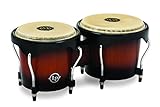
View Latin Percussion City LP601NY-VSB Wood Bongos on Amazon
Care and Setup
- Check the listing for the tuning key or wrench and any bag.
- Follow the maker’s instructions for tuning and care.
Mistakes to Avoid
- Skipping the maker’s tuning and care instructions.
- Assuming all listed woods are named the same way.
- Skipping a bag when you travel.
Questions to Ask Before You Buy
- Who will play: a child, a beginner adult, or someone with some experience?
- Will you play seated, with the drums between your knees, or on a stand?
- Do you want a natural wood look or a bright finish?
- Are you comfortable adjusting tension with a key, or do you prefer a simple setup?
- Do you need a bag for carrying to lessons or gatherings?
- Will the drums be played in a small apartment where volume matters?
Matching It to Your Use
For classroom or family use, lighter drums with simple hardware are easier to share. For casual jam sessions, a sturdier shell and a more resonant head make a difference. If you play along with recorded music, think about how much space you need on your lap and whether the rims feel comfortable under your hands.
Smaller drums sit differently from larger ones, so consider the size of the person playing. The maker’s listing normally gives dimensions; compare them against your own seat height.
Storage and Care Notes
Keep drums away from radiators, direct sun, and damp rooms, as natural materials can react to sudden changes. Wipe the shells with a dry soft cloth. Slacken the heads slightly if you will not play for a long time, unless the maker’s instructions say otherwise. A padded bag or a shelf away from foot traffic protects the rims.
Follow the maker’s listing and instructions for any further care guidance. If a head looks dented or a rim feels rough, stop playing and check the instructions for what the maker advises before using the drums again.
Tuning Natural Heads Step by Step
Every set in this guide uses animal-skin heads that are tuned with a key or wrench. Tuning is a skill that improves with practice, and getting it right is the biggest factor in how a beginner set sounds. A loose head sounds dull and flat, while an over-tightened head can sound harsh or put strain on the rim and the skin.
Work in small, even steps:
- Start with the head fairly loose, with every lug turned by the same amount.
- Tighten each lug a small turn at a time, moving across the drum in a crisscross pattern rather than around the circle. This keeps the rim level.
- Tap near each lug with a finger and listen for the same pitch all around. Adjust any that sound lower or higher.
- Set the pitch gap. The smaller macho is higher than the larger hembra. A gap of around a musical third to a fifth is a common starting point, but trust your ear.
- Play, then adjust. Tone changes as you strike the heads with your hands, so fine-tune after a short warm-up.
Go slowly with rawhide and skin. The head can tear or the rim can distort if you apply sudden force. Natural heads also stretch after tuning, so expect to check them again after the first few sessions. Tune before each session at first, since small changes in humidity and temperature move the pitch. If you have trouble hearing the pitch, a phone tuner app can help, but the aim is a pair that sounds good together and not any exact note. Keep the key with the drums so you can touch up the tuning at any time.
Hand Technique and Posture Basics
Bongos are played with the fingers and palms, and early habits matter. Playing with a tense hand is a quick route to sore wrists and a harsh sound.
Sit on a stool or the front of a chair so your knees are lower than your hips and your feet are flat on the floor. Hold the drums between your knees, with the smaller macho on the left and the larger hembra on the right for most right-handed players, though some prefer the opposite. Tilt the drums slightly toward you if that is comfortable, and keep your back straight. Check that the rim and the lower edge of the shell do not press painfully into your legs. A seat that is too high or too low will tire your arms.
Some basic sounds to learn:
- Open tone. Strike near the rim with the fingers, letting the hand bounce off so the head rings.
- Slap. A sharper sound made by cupping the hand and striking near the edge with the fingertips and then bouncing away.
- Muted tone or bass. Press a hand on the head while striking for a short, dry note.
- Heel and tip. Alternate the heel of the palm and the fingertips for a rolling pattern.
A common first rhythm is the martillo, a steady alternating pattern of hands that forms the base of many Latin styles. Start slowly with a metronome and aim for an even sound before speeding up. Keep sessions short at first and stop if your hands hurt, because skin and tendons need time to adapt.
Natural Heads, Humidity and Climate
Rawhide, caprine and other animal-skin heads are sensitive to their surroundings. Humidity makes the skin absorb moisture and loosen, so the pitch drops. Dry air makes the skin tighten, so the pitch rises, and extremes can stress the head or the shell. This is normal behavior for natural materials, not a defect.
- Retune when the weather changes. You may find that the same drums sound different on a humid summer day and a dry winter day.
- Avoid extremes. Do not leave the drums in a hot car, near a heater, in direct sun or in a damp basement.
- Let them adjust. If you bring the drums from a cold place into a warm room, give them time to settle before tuning.
- Do not overtighten in dry conditions. A head that is tight in dry air can become even tighter or crack.
- Keep moisture off. Wipe away sweat after playing, and avoid placing the drums on wet surfaces.
If you travel, a padded bag, such as the one the RockJam listing includes, offers protection from knocks and some buffering from temperature changes. Check that your set comes with one or plan to buy a suitable bag. If a head develops a tear, a split or a permanent dent, stop playing and look at the maker’s guidance on replacement heads. Replacement sizes are specific, so measure the drum and check with the maker or a music store before ordering.
Size, Shell and Listing Checks Before You Buy
The listing details in this post show that information can be incomplete or inconsistent, so it pays to check carefully. For example, one listing gives two different shell woods, and another does not state the drum diameters. Be cautious about these gaps, and ask the seller or the maker if a detail matters to you.
Think about each of these factors:
- Drum diameter. Typical full-size pairs have a smaller drum and a larger drum, and mini sets are much smaller. Smaller drums fit small hands and tight spaces, but have a higher, thinner sound. Larger drums have more body and are better for adults used to a full sound.
- Shell material. Oak, birch and other woods vary in weight and tone. Hardwood staves, plywood and other constructions all exist. Confirm what the listing says.
- Rims and edges. Rounded or curved rims are kinder to the hands, especially for long sessions. Rough rims can be uncomfortable.
- Hardware. Look for sturdy lugs, a connecting bracket that holds the pair together and a key that fits. Lug size affects which key works.
- Bottom. Some drums have rubber feet or bottoms to stop them slipping if placed on a table.
- Weight and bag. A heavier set may feel more stable but is harder to carry.
Compare the listing carefully with your needs and check the return policy.
Learning Resources and When to Upgrade
Bongos can be picked up casually, but a little structure helps. Many players learn from instructional videos, books or a few lessons with a percussion teacher. Listening to Latin music and playing along is one of the best ways to learn feel and timing. Start with slow songs and a simple pattern, and gradually add variations.
Practice tips that tend to help:
- Keep sessions short and frequent, such as 10 to 20 minutes a day.
- Use a metronome or a recording to keep time.
- Record yourself so you can hear what is working.
- Stay relaxed, and let your hands rebound instead of pressing into the head.
- Play at a comfortable volume, especially in apartments.
As you improve, you may want to upgrade. Common reasons are a wish for a better tone, drums that will not hold tuning, rims that hurt your hands or heads that have worn out. Replacing heads on a good shell is often a cost-effective improvement, and a stand lets you play standing or with other percussion. If you decide to move up, consider listening to different sets in person if possible, and think about which sound you like. Keep the key and any spare parts safe, and note the tuning that works for you so you can find it again.
Bongo FAQ
Which drum is which?
The smaller drum is usually the macho and the larger is the hembra.
Do I need a tuning key?
Yes, a key or wrench sets the pitch. All six listings mention one or a wrench.
Which hand plays which drum?
Most players put the smaller macho on the left and the larger hembra on the right, but it is not a rule. Choose the layout that feels natural, and switch if it suits your dominant hand better.
How tight should bongo heads be?
They should be firm enough to ring clearly when struck, and not so tight that they sound harsh or strain the rim. Tune by ear and compare pitches around the head.
Why do my bongos go out of tune?
Natural heads react to humidity and temperature, and new heads stretch. Retune before playing, and keep the drums away from heaters, damp rooms and direct sunlight.
Can children play bongos?
Yes, and smaller sets suit small hands. Make sure rims are comfortable and sessions are short, and check that the tuning key is kept away from very young children.
Do bongos need a stand?
Not necessarily. Many players hold them between their knees while seated. A stand can help if you want to stand, or play with other instruments, and you should check that it fits the pair.
How do I protect my hands when I start?
Begin with short sessions and a relaxed technique. Rounded rims help, and calluses may form with regular playing. Stop if you feel pain or numbness.
Can I replace the heads myself?
Many players do, but it requires care and the right size of head and tools. Look at the maker's instructions or ask a music shop if you are not sure.
The Short Version
For solid oak shells, the Meinl Headliner. For a compact pair, the EastRock. For a known Latin brand, the LP Aspire. For a padded bag, the RockJam. For birch and chrome, the Pyle. For rubber bottoms, the LP City.