Disclosure: As an Amazon Associate, reviewstook.com earns from qualifying purchases. Links on this page are affiliate links; they cost you nothing extra. Prices and availability change often, so check the current Amazon listing before you buy.
Where to buy
Travel purchases happen against a departure date, which makes one check essential before anything else: open the Amazon listing and confirm the configuration, body only or the two-lens bundle in the Nikon case, plus a delivery estimate that lands before you leave. Kit names repeat across regions, colours drift out of stock, and a camera that arrives after the flight is a souvenir of a different kind. The Ricoh below could not be matched to a verified listing in our checked sources, so it is discussed in prose only. If you are travelling hand-luggage only, order early enough to test the whole packed system at home, bag, body and lenses together, rather than discovering an overweight surprise at check-in.
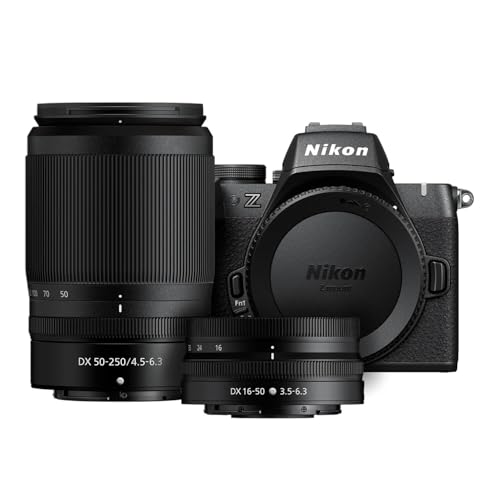
- For the Nikon Z50 II with Two Lenses, check price on Amazon
- Sony ZV-1F (White): check price on Amazon
- Sony a7 IV: check price on Amazon
- For the Panasonic LUMIX S5II, check price on Amazon
- For the Canon EOS R6 Mark II, check price on Amazon
- Ricoh GR IIIx – available from major camera retailers (prose-only pick in this guide)
Every traveller knows the two photographs that define a trip: the one taken, and the one described ever afterwards because the camera was back at the hotel. The best affordable cameras for travel are, at bottom, machines for shrinking the distance between those two outcomes. They are small enough to attend every day of the journey, tough enough to survive it, and good enough that the photographs justify having carried them past a hundred phone-worthy scenes. That distance, measured in steps and seconds rather than specifications, is the true subject of every review that follows.
Travel photography’s demands contradict each other cheerfully. The camera must be light for the mountain village and mighty for the cathedral interior; simple for the companion who borrows it at lunch and sophisticated for the night market; cheap enough to risk on a boat and valuable enough to produce the frame that ends up printed in the hallway. The six picks below are six different treaties negotiated with those contradictions, and the right one depends entirely on the traveller signing it.
Affordable, on the road, has a second meaning: replaceable. A camera whose loss would end the trip’s photography, or the traveller’s equanimity, is too expensive regardless of its price, which is why this guide respects the humble end of the list as seriously as the grand one. Insurance, backups and discretion all enter the scoring, because travel cameras live in the real world of crowded trains and café tables.
Weight is audited the way airlines audit it, as a total system: body, the lens actually mounted, batteries, charger, cards and the bag itself. Several famous bargains fail that audit once their entourage is weighed, while the little Nikon kit and the pocketable Sony pass it almost rudely. Read each review with your own suitcase open beside you.
Finally, every pick was asked the traveller’s rudest question: what do you do on day nine, in the rain, with one battery bar left and the best street of the trip in front of you? The answers, more than any specification, produced the order below.
A final filter before the reviews: every pick had to survive being lent. Travel cameras get handed to waiters, fellow travellers and new friends, and a body that returns from such hands with its settings scrambled or its owner anxious has failed a real travel test. Simplicity, in this guide, is scored as a form of durability.
Key Takeaways
- Complete holiday in a box: Nikon’s Z50 II two-lens kit, covering a whole trip from one small bag.
- Pocket champion: Sony’s ZV-1F, the camera that attends every outing because it weighs almost nothing. It is also the easiest camera here to lend without anxiety.
- Once-in-a-decade trips: Sony’s a7 IV, full-frame quality for journeys that will not repeat.
- Travel film honours: Panasonic’s LUMIX S5II, stabilised and free of recording-time anxiety.
- One trip, every genre: Canon’s EOS R6 Mark II, from safari detours to city nights.
- Purist’s pocket: Ricoh’s GR IIIx, prose only, for street photographers who travel with one focal length.
- Packing rule that outranks every badge here: if the kit does not fit the personal-item bag, it is not a travel kit.
In this guide
Quick Picks: Best Affordable Cameras For Travel
| Pick | Badge | Best for | Buying |
|---|---|---|---|
| Nikon Z50 II with Two Lenses | Best Travel Kit | First-time system-camera travellers | Check price on Amazon |
| Sony ZV-1F (White) | Best Pocketable Pick | Travellers who would otherwise only carry a phone | Check price on Amazon |
| Sony a7 IV | Best Full-Frame Traveller | Photographers whose trips are photography trips | Check price on Amazon |
| Panasonic LUMIX S5II | Best for Travel Film | Travellers filming a journey as a documentary | Check price on Amazon |
| Canon EOS R6 Mark II | Best All-Rounder | Travellers mixing safari, city and family in one trip | Check price on Amazon |
| Ricoh GR IIIx | Best Street-Travel Purist | Street photographers travelling with one pocket | Prose-only – see retailers |
How picks were chosen
Candidates were packed before they were judged. Each was assembled into its realistic travelling form, with the lens a tourist would actually mount and the charger they would actually carry, then weighed and measured against a typical personal-item bag. Systems that only look small in advertisements lost their advantage quickly under that treatment. Simplicity under lending, low light after dinner and performance in the rain were the three tie-breakers whenever two systems scored level.
Photographic scoring followed the itinerary of a real mixed trip: a dim cathedral, a noon market, a mountain viewpoint, portraits of companions at dinner, and one opportunistic animal at the roadside. A travel camera is a generalist by definition, so versatility outscored specialism, except where a pick openly declares its specialism, as the Ricoh does.
As throughout this guide, buying links exist only where a listing could be verified in our checked sources. The Ricoh GR IIIx, beloved and widely sold though it is, appeared in none of them, so it is reviewed fully and linked nowhere. Treat that as our discipline, not its demerit.
Theft and loss were considered without melodrama: how visible the system looks, how completely its loss would end the trip’s photography, and how easily its mount could be replaced mid-journey in a foreign city. Travel value includes surviving the trip’s worst afternoon.
The picks in detail: best affordable cameras for travel reviewed

Nikon Z50 II with Two Lenses – Best Travel Kit
Most travellers describe their ideal kit the same way: every focal length a holiday uses, in one bag, without a lens catalogue to study. Nikon simply sells that description. The Z50 II arrives with two lenses spanning wide to telephoto, so the cathedral interior, the mountain telephoto compression and the companion’s portrait all happen without a purchase decision in between, and the whole assembly stays small enough to live in a daypack’s top compartment.
Its colour presets are a traveller’s kindness. Holiday photographs shared the same evening, straight from the camera via its wireless link to a phone, look warm and finished, sparing the journey the deferred labour of raw editing at a desk back home. Travel pictures have a social half-life, and this camera respects it.
Strengths
- Two lenses cover a whole trip in one small bag
- Friendly colour presets suit holiday shooting
- Wireless sharing feeds photos to a phone quickly
Trade-offs
- Kit lenses prefer daylight to dusk
- No in-body stabilisation to rescue slow shutters
- Crop sensor low-light ceiling arrives early
| Key specs | APS-C Nikon Z-mount kit, two lenses included per listing; colour presets and wireless sharing |
|---|
Beginners graduating from a phone will find the transition gentle: controls that explain themselves, a body light enough to carry during the aimless wandering where travel photography actually happens, and files that forgive the learning curve. It is the only pick here that a first-time system buyer can use completely, on day one, with nothing left to purchase.
Daylight is its native country. The kit lenses prefer sun to dusk, there is no in-body stabilisation to rescue slow shutters in evening streets, and the crop sensor’s low-light ceiling arrives earlier than the full-frame picks’. Travellers whose trips are nocturnal should read further down the list.
For the classic itinerary, cities by day, coast paths, family visits, one festival, it remains the most complete and least demanding answer in this guide, and the one least likely to be left behind in the hotel safe.
There is a group-travel dividend too: because the kit is complete and approachable, a travelling companion can be handed the camera at a viewpoint and return a frame worth keeping. Shared cameras produce shared albums, and the photographer finally appears in the family record of the trip.
Pack it the night before a trip and the design intelligence shows: body, both lenses, charger and cards occupy less space than many travellers devote to shoes, leaving the bag’s remaining room for the journey itself rather than for the recording of it.
Best for: first-time system-camera travellers / Not suited for: photographers shooting mainly at night

Sony ZV-1F (White) – Best Pocketable Pick
The ZV-1F is the camera for travellers who have honestly audited their own behaviour and admitted the truth: the best camera is the one already in the coat. With a 1-inch-class sensor behind a fixed wide 20mm lens, it slips into a pocket the way a phone does, then outperforms the phone precisely where travel photographs are made, in dim restaurants, moving trains and backlit streets.
That fixed wide lens, often misread as a limitation, is a travel philosophy. It forces the photographer into the scene rather than zooming at it from across the square, and it frames streets, food, interiors and selfies with the inclusive angle travel diaries actually use. Companions who are not photographers can operate it in seconds, which means the traveller appears in their own photographs for once.
Strengths
- True coat-pocket size with a 1-inch-class sensor
- Fixed wide lens suits streets, food and selfies
- Simple controls for non-photographers in the group
Trade-offs
- Fixed lens cannot zoom into distant detail
- Small battery needs a power bank habit
- Not weather sealed for stormy trips
| Key specs | 1-inch-class compact, 20.1MP per listing; fixed 20mm wide lens; 4K video; white finish |
|---|
Video is its second native language, with 4K recording aimed at the vlogs and clips that modern trips generate. For the traveller whose journey is also content, for family abroad or an audience online, it covers both diaries in one pocketable object.
The compromises are physical and non-negotiable. A fixed lens cannot reach the distant detail, the lighthouse, the shy animal, the far fresco, and its small battery demands a power-bank habit on long days. Weather sealing is absent, so stormy trips require a pouch and some faith.
None of that diminishes its essential victory: it attends. Cameras in this guide with ten times its capability will lose photographs to it all year, simply because it was there and they were in a hotel room being too valuable to risk.
Its white finish, a small thing, turns out to be a travel feature: it reads as friendly rather than professional in markets and places of worship, lowering the temperature of encounters where a black professional body might raise questions. Discretion sometimes wears a colour.
Best for: travellers who would otherwise only carry a phone / Not suited for: anyone needing interchangeable lenses

Sony a7 IV – Best Full-Frame Traveller
Some trips are not holidays but expeditions of the heart: the honeymoon, the ancestral village, the trek saved for across a decade. The a7 IV is the pick for journeys whose photographs must be beyond reproach, because they will be printed, framed and inherited. Its full-frame files carry that weight effortlessly, with detail and low-light grace that turn a night train window or a candlelit chapel into a keeper.
Compact primes are the secret to travelling with it civilisedly. One small fast prime for evenings, one modest zoom for the day, and the system stays within a reasonable bag while outperforming everything else here after dark. Its battery endurance suits long sightseeing days, and its tracking autofocus handles the travelling chaos, children on ferries, dancers at festivals, with professional calm.
Strengths
- Full-frame quality for once-in-a-decade trips
- Compact primes keep the kit civilised
- Strong battery for long sightseeing days
Trade-offs
- Body plus lenses is the heaviest option here
- Cost concentrates risk in one bag
- Overkill for purely social sharing
| Key specs | Full-frame Sony E-mount body; real-time tracking autofocus; 4K-class hybrid video |
|---|
The E-mount’s depth becomes a travel insurance policy: a replacement lens, a borrowed battery, a repair shop that knows the mount, in most cities on most itineraries. Travelling with the world’s most common serious mount is a logistical advantage no specification table lists.
Honesty about the costs: body plus lenses form the heaviest option in this guide, and concentrating that value in one bag concentrates risk with it, theft, drops and water all mattering more. For purely social sharing it is also, cheerfully, overkill, a grand piano for playing birthday songs.
Photographers whose trips are photography trips, where the itinerary bends around light rather than lunch, will find it the natural flagship of this list, worth every gram on the mornings that matter.
Honeymooners should weigh a subtle virtue: its files need so little rescue that the couple can share a beautiful photograph the same evening without a laptop session, while the raw archive waits patiently for the album edit months later, at full quality.
Best for: photographers whose trips are photography trips / Not suited for: ultralight packers counting every gram

Panasonic LUMIX S5II – Best for Travel Film
Travellers who film their journeys as documentaries rather than souvenir clips should start here. The S5II’s stabilisation steadies walking footage through old towns and market aisles, its full-frame image gives travel film the depth audiences associate with cinema, and its unlimited 4:2:2 10-bit recording, per the listing, removes the quiet terror of a camera stopping mid-ceremony, mid-interview or mid-sunset.
That recording freedom changes travel filmmaking behaviour. You can let the fisherman mend his net for the full ten minutes, let the guide tell the whole story, and find the film inside the footage later. Cameras with clip limits train filmmakers to interrupt life; this one lets life finish its sentences.
Strengths
- Stabilisation steadies walking city footage
- Recording without time-limit anxiety
- Full-frame look for travel documentaries
Trade-offs
- Bigger than the crop-sensor picks
- Lens kit grows the bag quickly
- Autofocus is fine rather than magical
| Key specs | Full-frame 24.2MP-class L-mount body; unlimited 4:2:2 10-bit recording per listing; phase hybrid autofocus |
|---|
Stills are full-frame and entirely respectable, so the same body covers the photographic diary without a second system. Phase hybrid autofocus is fine rather than magical, serviceable for travel subjects, and the body is bigger than the crop picks, with a lens kit that grows the bag quickly if discipline lapses.
Choose one zoom and one fast prime and hold that line at the packing stage. Within that discipline, it is a production studio that fits a carry-on, and the footage it returns has a gravity that phone films and action cameras cannot counterfeit.
For the traveller whose souvenir is a film, a real one, with interviews and landscapes and a beginning and an end, this is the most capable tool in the guide.
Rail journeys suit it particularly well. Stabilised footage through a carriage window, interviews in a dining car, landscapes sliding past at speed: the S5II turns transit, usually dead time in a travel film, into some of its most evocative material.
Its one discipline is appetite: full-frame video files are large, and a filming traveller must budget cards and nightly storage accordingly. Plan the data the way you plan the route, and the appetite becomes a known cost instead of a mid-trip surprise.
Best for: travellers filming a journey as a documentary / Not suited for: stills-only travellers wanting minimum bulk

Canon EOS R6 Mark II – Best All-Rounder
The R6 Mark II is the pick for the itinerary that refuses to specialise: a safari detour on Tuesday, city nights on Thursday, the family reunion on Sunday. Its deep-learning detection handles the roadside elephant and the grandchild with the same competence, its stabilisation forgives tired evening hands after long travel days, and Canon’s colour flatters the travel portraits that become a trip’s most treasured frames.
Versatility at this level is a logistical gift. One body, one or two lenses, and the traveller stops making equipment decisions at every border, which is when mistakes, losses and missed photographs happen. The oversampled 4K video covers the clips and short films a modern trip generates without a second camera.
Strengths
- Handles wildlife detours and city nights alike
- Stabilisation forgives tired evening hands
- Canon colour flatters travel portraits
Trade-offs
- Size and cost sit mid-pack rather than leading
- Newer sibling tempts upgraders
- RF travel zooms are not the cheapest
| Key specs | Full-frame Canon RF body, 24.2MP per listing; deep-learning subject detection; oversampled 4K-class video |
|---|
Its files have the maturity described elsewhere in this guide: a raw workflow every editor understands, accessories in every airport city, and a price that has settled into value territory since its successor arrived. For a long trip, that global support network is a feature as real as any sensor statistic.
It leads this list in nothing and finishes near the front in everything, which is either a criticism or the definition of an all-rounder. Size and cost sit mid-pack, and RF travel zooms are not the cheapest companions, so the ultralight and the ultra-frugal should both look elsewhere.
Travellers who genuinely do not know what the trip will demand, the honeymoon that becomes a wildlife tour, the work trip that becomes a festival, should take the camera that answers every question adequately. Adequate everywhere beats brilliant somewhere, three borders from home.
Expedition travellers value a trait rarely reviewed: it behaves identically at altitude, in heat and after a week of dust, because its design is a mature production tool rather than a novelty. Predictability three borders from home is worth more than brilliance in the shop.
Best for: travellers mixing safari, city and family in one trip / Not suited for: minimalists wanting one tiny fixed-lens camera
Ricoh GR IIIx – Best Street-Travel Purist
The GR IIIx is less a product recommendation than a philosophy with a lens attached. A legendary pocket camera with a cult following, it fixes its superb lens at a documentary focal length, adds snap focus that rewards fast street work, and disappears into a jacket until the moment a scene assembles itself in a Lisbon alley or a Tokyo crossing. Street photographers who travel light regard it the way chefs regard a favourite knife.
Its APS-C sensor in a pocket body embarrasses larger systems in the genre it serves: candid, close, fast. The fixed lens disciplines the eye, compositions improve through constraint, and the camera’s discretion changes how strangers behave, which in street photography is the entire technical battle.
Strengths
- Legendary pocket camera with a cult following
- Snap focus rewards fast street work
- Superb lens fixed at a documentary focal length
Trade-offs
- No buying link, as no verified listing was found
- Fixed lens and no viewfinder divide opinion
- Fragile-feeling compared with sealed rivals
| Key specs | APS-C pocket compact; fixed 40mm-equivalent-class lens; snap focus modes |
|---|
The same purity divides opinion sharply elsewhere. There is no zoom for the distant detail, no viewfinder for those who need one, and its build feels delicate beside sealed rivals. Travellers wanting a general-purpose holiday camera should admire it and buy something else.
A sourcing note, as flagged earlier: no verified listing for it appeared in the sources we checked, so it is discussed in prose only, without a buying link. Its following is large enough that finding one through major camera retailers is rarely difficult; our links simply follow our evidence.
If your travel photography is the street, if one focal length feels like freedom rather than poverty, this is the pocket the rest of the guide is measured against and the one its owners defend with unusual passion.
Owners describe a curious effect after a month with it: they stop photographing landmarks and start photographing life, because the camera rewards noticing over visiting. Trips taken with it tend to produce fewer postcards and more photographs, a trade its following considers the entire point.
It also ages into a second career as the camera that lives by the front door at home, ready for the school run and the visiting relatives, because a pocket camera this good refuses retirement after the trip ends.
Best for: street photographers travelling with one pocket / Not suited for: travellers wanting zoom flexibility
Comparison table
| Camera | Badge | Key specs | Buying |
|---|---|---|---|
| Nikon Z50 II with Two Lenses | Best Travel Kit | APS-C Z-mount two-lens kit; colour presets; wireless phone sharing | Check price on Amazon |
| Sony ZV-1F (White) | Best Pocketable Pick | 1-inch class, 20.1MP per listing; fixed 20mm lens; 4K video | Check price on Amazon |
| Sony a7 IV | Best Full-Frame Traveller | Full-frame E-mount; real-time tracking; 4K-class hybrid video | Check price on Amazon |
| Panasonic LUMIX S5II | Best for Travel Film | Full-frame L-mount, 24.2MP class; unlimited 4:2:2 10-bit per listing | Check price on Amazon |
| Canon EOS R6 Mark II | Best All-Rounder | Full-frame RF, 24.2MP per listing; deep-learning detection; oversampled 4K | Check price on Amazon |
| Ricoh GR IIIx | Best Street-Travel Purist | APS-C pocket compact; fixed 40mm-equivalent-class lens; snap focus | Prose-only – see retailers |
How do you choose the right camera for travel photography?
Start with the work, not the wishlist
Plan the trip before the camera. A beach fortnight with children, a solo trek, a three-city rail journey and a safari each crown a different pick in this guide, and the itinerary is a more honest adviser than any reviewer. Write the days down, mark where photographs will actually happen, and let that map interrogate every specification.
Notice especially the evenings. Trips divide into those that end at dinner and those that begin there, and night capability is the most expensive specification in travel photography, in money and in grams.
If the trip involves other people’s schedules, tours, family, children, weight every convenience double. Solo travellers can indulge complexity; accompanied travellers must be ready before the group moves on.
Sensor size versus system size
On the road, sensor size is a weight decision wearing a technical costume. Full frame’s evening grace costs kilograms across a system; crop and 1-inch formats return those kilograms as comfort, speed and the likelihood the camera attends the outing at all. The best travel sensor is the largest one you will still be carrying on day nine.
Run the honest test: pack your current bag for a full day’s sightseeing, with water and a jacket, and walk your own neighbourhood for six hours. Your shoulders will file the correct report.
Altitude and cold both tax smaller formats’ batteries harder, so mountain itineraries should add a power margin to whichever format wins the argument in the valley.
The lens question decides the decade
Travel lenses are chosen by itinerary, not by reviews. One versatile zoom covers the classic holiday; a fast prime rescues the evenings; a fixed-lens compact abolishes the decision entirely. Price the travelling configuration, body plus the glass you will genuinely mount, in every system you consider, because bodies travel as systems or not at all.
Also consider the borrowed-lens map. Mounts stocked by rental shops along your route turn a breakage from a catastrophe into an errand, a consideration globe-trotters weigh heavily and stay-at-home photographers never think of.
Think in outfits, not items: the camera plus its day lens is one outfit, the evening prime another. A system that cannot dress for both occasions with two lenses will dress your bag with five.
Resist the travel-zoom trap while pricing: the enormous-range zooms that promise everything deliver their weakest results exactly at the extremes you bought them for, and a modest zoom plus a fast prime usually photographs a trip better.
Endurance is a specification
Travel power is a logistics chain: batteries, chargers, cables, adapters and the sockets of three countries. Bodies that charge by USB from a common power bank simplify that chain beautifully, while proprietary chargers multiply failure points in hotel rooms. Ask how a full day of your shooting, hundreds of frames and an evening of review, fits inside the battery you will actually carry.
Storage is the second chain. Decide the backup rhythm, nightly to a phone or drive, dual cards where offered, before departure, because a lost card on day twelve holds eleven days of irreplaceable evidence.
Decide your loss plan before departure: insurance, a backup body or phone strategy, and files backed up nightly. Endurance includes surviving the worst day, not only powering the best one.
Handling beats headlines
Travel handling means one-handed operation while the other hand holds a rail ticket, a child’s hand or a coffee; controls that work after a glance, not a study; and a camera that wakes before the moment leaves. The ZV-1F and GR IIIx built their followings on exactly this literacy.
Discretion is handling, too. A small, quiet camera changes the behaviour of markets, places of worship and strangers at café tables, and those changed behaviours are the photographs travel exists to collect.
Try the one-handed test in the shop: raise, wake, focus and shoot with a single hand while the other holds an imaginary railing. Travel will ask exactly that, on a moving boat, within the first week.
Sound is handling for filming travellers: a camera you can hold steady at arm’s length for a two-minute piece to camera, without shaking or cramping, will produce more usable travel film than a heavier body with superior specifications.
Buy for the second year
Your second year of travel will be braver than your first: longer trips, stranger light, perhaps a project, a book, a wall of prints. A system that grows, with lenses to add and a body that will not embarrass the prints, protects that bravery from a costly restart. The a7 IV and R6 Mark II are this guide’s second-year answers.
Equally, honour the opposite truth: many travellers discover their camera need was a single great trip. For them the Nikon’s completeness or the Sony compact’s simplicity is not a compromise but a conclusion.
And if the honest answer is that this trip is a one-off, borrow or buy the simple complete kit without shame. A concluded journey with a humble camera outranks an aspirational system still being researched at home.
How to get the best from your camera for travel photography
Travel photographs improve fastest through habits, not hardware. The field routine below is distilled from trips that came home with the goods, and it works identically on the pocket Sony and the full-frame flagships.
The routine also assumes you will sometimes be tired, lost or behind schedule, because travel guarantees all three. Habits that only work when you are fresh and organised are not travel habits at all.
- Carry the camera ready, not packed. Strap on, lens cap off, settings at your travel baseline before leaving the hotel. Moments in transit, the station farewell, the market waking up, are the journey’s least staged photographs, and they only happen to cameras already in hand. Readiness is a habit the whole trip can feel: the traveller with the camera in hand gets asked to take the group’s photograph, and inherits everyone’s gratitude and several introductions.
- Photograph the journey, not just the arrivals. Trains, ferries, queues and roadside stops are the connective tissue of a travel story. Albums made only of landmarks read like brochures; the journey frames are the ones travellers actually narrate years later.
- Ask, smile, then shoot portraits. A moment of connection before the camera produces portraits with eye contact and ease, and often an invitation, to the home, the workshop, the second cup of tea, where the real photographs live. Consent is a technique, not merely a courtesy.
- Back up every night, in two places. Cards to a phone or drive, and the drive somewhere separate from the camera bag. Ten minutes each evening is the entire cost of making a lost bag a financial event rather than an emotional one.
- Shoot the same street twice. Visit your favourite location once in the morning and once in the evening. Travel light changes character completely across a day, and the comparison teaches your eye faster than any tutorial, while doubling your chances with the weather.
- Keep one lens on for a whole day. Constraint breeds seeing. A single focal length for a day, whether the Nikon’s zoom locked at one setting or the Ricoh’s fixed lens, trains composition by footwork and produces a coherent visual diary instead of a catalogue of zooms.
- Write captions while you travel. Place names, people’s names, the joke behind the photograph: two lines in a notebook or phone note each evening. Memory edits ruthlessly, and the caption written on the day is the difference between an archive and a mystery. Future you, assembling the album in November, will be extravagantly grateful for the habit.
- Edit lightly on the road, honestly at home. Share a handful of frames during the trip for joy and connection, but save the serious edit for the big screen at home. Travel euphoria flatters weak photographs; distance restores judgement, and the archive deserves the restored version.
Follow that routine and even the humblest pick here returns with a story rather than a souvenir folder, which is the entire point of carrying a camera past the phone in the first place.
Years later, nobody in your household will ask which body made the travel album. They will ask to see it again, and the camera that deserves your money is the one that maximises what is inside it.
Common mistakes
Buying the headline instead of the session
A flagship’s video specification photographs no cathedral, yet travellers buy headlines every season and then leave the heavy marvel at the hotel. Shop for your sessions: the dawn walk, the family dinner, the crowded train. The camera present at those moments, however humble, defeats the masterpiece in the safe.
Before paying, rehearse your three commonest trip moments with the shop’s demo unit: the cathedral, the dinner, the viewpoint.
Ignoring the total kit cost
Travel kits bill you in two currencies, money and grams, and both totals hide in accessories: lenses, chargers, cards, the bigger bag the system demands. Total both before buying, using the comparison above, and the Nikon’s boxed completeness and the little Sony’s simplicity reveal their true pricing genius.
Weigh the packed bag on a bathroom scale and write the number down; grams, like money, hide until totalled.
A traveller’s trick: price and weigh the system in the bag you already own. If it demands a new bag, that bag’s cost and size belong in the comparison too.
Skipping the spare battery
Travel days are longer than home days and sockets are stranger. A spare battery, or a power bank for the USB-charging bodies, is the difference between photographing the festival’s climax and describing it. Pack power the way you pack underwear: with margin, and in more than one bag.
Distribute power across bags, so one lost pouch cannot silence the camera for the rest of the trip.
Leaving protective gear at home
Trips expose cameras to sand, spray, dust and the mysterious liquids of night trains. A zip pouch, a cloth and a simple rain cover weigh nothing and stand between your sensor and a ruined archive. The traveller cleaning sand from a lens mount in a hostel bunk has paid full tuition for this lesson.
Add the protective kit to the camera order itself, while the intention exists, not to a someday list.
Beach days deserve a specific ritual: camera into a sealed pouch before the sand, hands rinsed before handling, and the lens changed, if it must be, inside the bag’s shelter.
Never updating or checking settings
Travel scrambles settings like nothing else: a borrowed camera mode at the festival, a time zone wrong in the metadata, stabilisation confused on the train. A nightly two-minute audit, plus firmware checked before departure, keeps the camera configured for the trip you are on rather than the one you finished last month.
Photograph your configured menus before departure, so a reset abroad can be undone from your own pictures.
The nightly audit takes less time than brushing your teeth, and it protects the following day completely.
Final recommendation
If one pick must be named for the classic trip, take the Nikon Z50 II two-lens kit: complete on arrival, light enough to attend everything, and kind to beginners and budgets alike. Travellers who know their camera must vanish into a pocket should take the ZV-1F instead, and street purists will already have chosen the GR IIIx in their hearts. Those three answers cover the overwhelming majority of real itineraries, which is why they lead the table.
For the journey of a decade, the a7 IV justifies its grams; for the journey filmed properly, the S5II; for the journey that refuses categorisation, the R6 Mark II. Match the treaty to your itinerary, back up nightly, and let the camera you carry be the camera that was there.
Above all, decide before the departure board calls. A camera chosen in time to be learned at home will outperform a superior camera first unboxed in a foreign hotel, every trip, without exception.
More detail: living with a camera for travel photography
A travel camera earns its keep across borders, and living with one is mostly logistics made fond. You learn its battery’s true appetite on night trains, which pocket of the daypack it inhabits, how its files from a desert noon grade beside a fjord’s dusk. That knowledge compounds across trips, until the camera feels less like equipment and more like a seasoned travelling companion with opinions. The companion metaphor is earned in small services: the camera that starts quickly at a border-crossing sunrise, that sips power on a long bus ride, that its owner can operate in the dark of a sleeper train without waking the compartment.
There is a sentimental milestone every travel camera reaches: the first print on the wall at home. From that day it stops being an expense and becomes the instrument that furnished the house’s memory, and owners defend such cameras with a loyalty no upgrade cycle easily breaks. Choose files you want to live among. Choose, in other words, for the walls of your home as much as for the roads of the world.
Expect the camera to shape future trips. Travellers plan around a beloved tool’s strengths, returning to streets it loves, travelling lighter because it asks little, staying out later because it sees in the dark. Equipment that shapes journeys for the better has justified itself completely.
Airports teach the final lesson about a travel system: how it behaves at security, in a hurry, half asleep. Kits that consolidate into one bag, one charger family and one card type glide through a journey’s friction points, and that glide, repeated across years of trips, is what owners mean when they call a camera a great traveller.
Repairs abroad complete the picture. The mounts with global service networks turn a foreign malfunction into a city errand, and that quiet infrastructure is part of what the a7 IV and R6 Mark II are really selling to the serious traveller.
FAQ
Is one zoom lens enough for travel?
For the majority of trips, genuinely yes. A single versatile zoom covers landmarks, streets and portraits without a lens change in a dusty square, and the Nikon kit’s two lenses extend that logic to telephoto. Add a fast prime only when your evenings, concerts, night markets, family dinners, consistently outrun the zoom’s aperture.
The photographers who outgrow one zoom are usually those whose trips acquire a theme, birds, architecture, street, and each theme, not general travel, is what demands the specialised second lens.
One zoom also simplifies the insurance, the bag and the decision fatigue of a trip, three currencies travellers run out of faster than money.
How many batteries should a traveller carry?
Two for the camera, minimum, plus a power bank where the body charges by USB. Long sightseeing days with heavy screen review consume more than manufacturers’ stills ratings suggest, and foreign sockets are not always where the itinerary promised. Rotate the pair so both age evenly, and charge during the midday rest whenever a socket appears.
Cold climates and high screen use both argue for the third battery. It weighs little, and the photograph it saves is usually the one taken at the journey’s far edge.
Can I charge these cameras by USB on the road?
Several can, including the compact and mirrorless picks that accept USB power, which lets one power bank serve camera and phone alike. Check your specific body’s behaviour before departure, since some charge only when switched off, and test the exact cable and bank you will carry rather than discovering an incompatibility at altitude.
A bedside routine helps: camera and phone on charge together each night, cables living in one pouch, so the morning starts with everything full and nothing forgotten in a foreign socket.
Is a compact camera better than a small mirrorless for travel?
Better for the traveller who values attendance over flexibility. The ZV-1F and GR IIIx will be present for more moments than any system camera, and presence wins photographs. Mirrorless wins when the trip’s ambitions include lenses, evenings and prints. The honest dividing line is whether you travel to photograph or photograph while travelling.
Many travellers conclude the correct answer is sequential: a compact for the wandering years, a system for the project years, each bought when its trip arrives.
How do I back up photos while travelling?
Nightly, to two destinations that sleep in different bags: a phone or tablet plus a small drive, or dual cards where the body offers them. Cloud upload joins in whenever hotel bandwidth allows. The rule that matters is that no single theft, loss or failure can take the trip’s photographs with it, and that rule costs ten minutes a day.
Treat the backup as part of the day’s photography, like charging a phone. Travellers who fold it into the evening routine, shower, backup, dinner, almost never lose a frame.
Photographers on long expeditions add a weekly second tier, a laptop or portable drive stored apart from the daily backup, because distance from home multiplies every risk the nightly routine manages.
What size camera bag fits airline personal-item rules?
Rules vary by airline, so measure your intended bag against your carrier’s published personal-item dimensions before the trip, not at the gate. Every system in this guide, at its travelling configuration, fits a modest personal-item bag or daypack; the full-frame pairs require the discipline of one zoom and one prime rather than the whole shelf.
When in doubt, choose the bag by the camera’s travelling outfit, not its full wardrobe. The lenses staying home need no space, and the discipline of dressing the camera per trip keeps every bag honest.
Related guides
Travel kit decisions travel together, so the guides below cover the compact cameras, bags and mirrorless families that pair with the bodies above on the road. The bag guide in particular assumes the personal-item discipline argued for throughout this page. All were selected from the same verified catalogue as the links inside this guide.


