Mobile gaming stopped being a compromise a long time ago. The phone in your pocket now carries a flagship chipset, a display that refreshes faster than most gaming monitors did a few years back, and a 5G modem that can keep a ranked match alive while you ride a bus across town. The catch is that not every phone with a fast chip is actually good at games, and not every phone marketed to gamers is worth carrying every day. Some overheat after twenty minutes, some throttle the moment the battery dips, some have gorgeous screens that drain the cell before the final circle, and some simply feel wrong in the hand when the match gets tense. As an Amazon Associate, this site may earn an affiliate commission from qualifying purchases made through links on this page, at no extra cost to you, and that support is what keeps these in-depth buying guides free to read.
This guide looks at five of the strongest 5G gaming phones you can buy right now, chosen for the things that actually decide matches: sustained performance rather than a single benchmark spike, a display that stays smooth under load, cooling that works instead of merely sounding impressive on a spec sheet, battery life that survives a long session, and a 5G connection that holds steady when the network gets crowded. A phone that is perfect for a competitive shooter player is not necessarily right for someone who plays open-world adventures on the train, so read the buying factors first, then match the picks to the way you actually play.
Before diving into the picks, it helps to be honest about what 5G adds to gaming and what it does not. A fast modem cannot fix a throttling chipset, a dim display, or a battery that gives up at the worst moment. What 5G does, when the coverage is there, is cut the round trip between your phone and the game server, keep cloud gaming streams stable, and let you download a twenty-gigabyte update without hunting for Wi-Fi. The phones in this guide all handle that part well, so the real differences show up elsewhere: in thermals, in how the screen feels under your thumbs, in how long the phone stays fast, and in the small design decisions that separate a phone you tolerate from a phone you love playing on.
In this guide
Quick picks: best 5g gaming phones
| # | Product | Where to buy |
|---|---|---|
| 1 | ASUS ROG Phone 9 | Check on Amazon |
| 2 | REDMAGIC 12 Pro | Check on Amazon |
| 3 | Samsung Galaxy S25 Ultra | Check on Amazon |
| 4 | iPhone 16 Pro Max | Check on Amazon |
| 5 | OnePlus 13 | Check on Amazon |
What to Look for in a 5G Gaming Phone
Shopping for a gaming phone is different from shopping for a camera phone or a battery phone, because the spec sheet tells only half the story. A chipset can post a huge benchmark score in a three-minute test and then fall apart in a forty-minute ranked session, and a display can claim a high refresh rate while the touch sampling lags just enough to make flick shots feel mushy. The sections below break down the factors that matter most, in the order that tends to decide whether a phone earns a permanent place in your pocket or gets traded in after a month.
Chipset and GPU: Sustained Speed Matters More Than Peak Speed
The processor is the heart of any gaming phone, but the number on the box is not the number you play with. Modern flagship chips from Qualcomm, MediaTek, and Apple all deliver enormous peak performance, enough to run the most demanding mobile titles at high settings, and on paper they look almost identical. What separates them in real play is how long they can hold that performance before heat forces them to slow down. A phone that sustains ninety percent of its peak speed for an hour will feel dramatically better than a phone that spikes higher for five minutes and then throttles to seventy percent for the rest of the match, even if the second phone wins the benchmark chart.
Pay attention to how a phone is reviewed after long sessions, not just in launch-day benchmarks. Look for mentions of frame rate stability in games like Genshin Impact, Honkai: Star Rail, PUBG Mobile, and Call of Duty: Mobile at the settings you actually use, because those titles stress the GPU in different ways. A chipset paired with a vapour chamber, graphite layers, or an active fan will hold its clocks longer than the same chip in a thin glass slab with nowhere for the heat to go. Storage speed matters too: UFS 4.0 storage loads large open worlds faster and reduces the stutter that appears when a game streams assets mid-match. RAM matters less than marketing suggests once you pass a comfortable amount, but having enough memory to keep a game alive in the background while you answer a message without a reload is a genuine quality-of-life win.
One more thing that rarely makes the spec sheet: software tuning. Some manufacturers ship aggressive performance modes that unlock the full chip at the cost of heat and battery, while others cap performance to protect thermals and longevity. The best gaming phones give you the choice, with a game mode that lets you pick between a balanced profile for daily play and a full-power profile for ranked sessions. If a phone only offers one or the other, think about which one matches your habits, because you will live with that decision every day.
Display Refresh Rate and Touch Response
The display is where you actually meet the game, and for competitive play it matters as much as the chip. A 120Hz or 144Hz panel makes motion visibly smoother, and once you have played a fast shooter at high refresh, going back to a standard panel feels like playing through fog. But the refresh number is only the start. Touch sampling rate, the speed at which the screen registers your finger, decides whether your aim tracks instantly or lags a fraction behind your thumb, and in a close duel that fraction is the whole match. Look for touch sampling rates well above the refresh rate, and for screens that keep latency low even when the phone warms up.
Brightness and colour matter in a different way. A dim screen is a liability outdoors and in bright rooms, and a phone that cannot hold its brightness under sustained load will wash out just when you need to spot an enemy in a shadow. OLED panels dominate this category for good reason: deep blacks make dark maps readable, response times are effectively instant, and contrast makes enemies stand out against busy backgrounds. Resolution is a trade-off rather than a race; a sharper panel looks better in cinematic games, but it also asks more of the GPU and the battery, so some of the best gaming phones let you drop resolution in game mode to protect frame rates. That flexibility is a feature, not a flaw.
Cooling: The Difference Between a Sprint and a Marathon
Cooling is the most underrated spec in mobile gaming, and the easiest to fake on a marketing slide. Every flagship chip generates serious heat under a sustained gaming load, and the phone has only two choices: move that heat away from the chip, or slow the chip down. Passive cooling, meaning vapour chambers, graphite sheets, and metal frames that spread heat across the body, works silently and needs no moving parts, and it is enough for most players most of the time. Active cooling, meaning a built-in fan or a clip-on cooler, moves more heat and holds peak performance longer, but it adds noise, bulk, and a part that can wear out.
The practical test is simple: after thirty minutes of a demanding game, does the frame rate stay flat, and does the phone stay comfortable to hold? A phone that gets uncomfortably hot on the back near the camera module will make your fingers sweat and your grip slip, and a phone that throttles silently will leave you wondering why the game suddenly feels choppy. Some gaming phones route heat away from the grip zones deliberately, keeping the centre of the phone cool even as the edges warm up, and that kind of thoughtful thermal design is worth more than a bigger vapour chamber number on a slide.
Battery and Charging: Playing Longer Without the Anxiety
Gaming is the hungriest thing a phone does, and battery capacity is the simplest predictor of how long you can play before hunting for a charger. A large cell, in the region of five thousand milliamp-hours or more, is the baseline for a serious gaming phone, and the biggest cells in this category now stretch well beyond that, giving genuinely all-day play for moderate gamers and a full evening of heavy sessions for everyone else. But capacity alone does not tell the story. A power-hungry display at maximum brightness, a chipset running flat out, and a 5G radio working hard will drain even a large battery faster than a casual user expects, so efficiency matters as much as raw size.
Charging speed changes the equation in a different way. A phone that refills half its battery in fifteen minutes turns a coffee break into another two hours of play, and that can matter more than an extra thousand milliamp-hours of capacity if you are usually near an outlet between sessions. The trade-off is heat and long-term battery health: very fast charging generates warmth, and some phones manage it better than others, with dual-cell designs that split the load and charging modes that slow down once the battery passes a certain level. Bypass charging, a feature on several dedicated gaming phones, is the quiet hero here: it powers the phone directly from the charger while you play, keeping the battery out of the loop, reducing heat, and preserving the cell over months of heavy use. If you play while plugged in often, bypass charging is worth seeking out specifically.
Gaming Triggers, Controls, and Software
Touchscreen controls work, but they have limits, and the phones in this category attack those limits in different ways. Dedicated gaming phones often ship with ultrasonic shoulder triggers or capacitive pressure zones built into the frame, giving you real buttons for aiming, shooting, and scoping without your thumbs ever leaving the sticks. The difference in a shooter is immediate: you can move, aim, and fire at the same time, the way you would on a console controller, instead of lifting a thumb to tap a fire button. The best implementations let you map each trigger to any on-screen control, adjust sensitivity, and even split one trigger into two actions with a short press and a long press.
For phones without built-in triggers, the software layer does the heavy lifting. A good game mode blocks notifications, locks brightness and refresh rate, frees memory, and routes network traffic to the game first. A great game mode adds per-game profiles, so your shooter runs at maximum frame rate while your puzzle game sips battery, and it lets you record clips, monitor frame rates and temperatures in real time, and adjust performance without leaving the game. Haptics deserve a mention too: precise, strong vibration motors make every shot, hit, and reload feel distinct, and some phones tie haptics to in-game events in ways that genuinely add information rather than noise.
Audio is part of the control picture, even if it does not look like it. Dual front-facing speakers make footsteps and directional cues far easier to place than a single bottom speaker that your palm covers, and a headphone jack, rare as it now is, removes latency entirely for competitive players who rely on sound. If a phone lacks a jack, check its Bluetooth latency with your actual earbuds, because a delay of a fraction of a second between seeing a muzzle flash and hearing it can throw your reactions off in a way that is hard to diagnose until someone points it out. Small details like these add up across a season of play, and they are exactly where dedicated gaming phones earn their keep.
5G Modem Performance: Latency Is the Real Spec
When gamers talk about 5G, they usually mean speed, but latency is the number that decides matches. A connection that downloads fast but answers slowly will still leave you rubber-banding in a firefight, while a connection with modest download speeds and consistently low ping will feel rock solid. The modem inside the phone, the quality of its antennas, and how the phone manages the handoff between 5G and Wi-Fi all shape that experience, and the differences between flagship modems in real-world conditions are smaller than the differences between carriers and locations. What you can control is choosing a phone with a modern modem that supports the bands your carrier actually uses, including mid-band spectrum where most of the real-world 5G speed lives, and millimetre-wave if you play in dense city centres or stadiums where it is deployed.
Dual SIM and smart network switching matter for players who game on the move. A phone that clings to a dying Wi-Fi signal instead of switching to a strong 5G connection will cost you a match, and a phone that switches decisively will save it. Some gaming phones include network acceleration features that bond Wi-Fi and mobile data or prioritise game packets over background traffic, and while the gains are modest, they are real in congested environments like tournaments, campuses, and crowded trains. Heat matters here too: a modem working hard in a hot phone can throttle just like a chipset, so the same cooling that protects your frame rate also protects your connection.
The Picks: Five 5G Gaming Phones Worth Your Money
Every phone below was chosen because it is genuinely good at the job, not because it carries a gaming label. They span dedicated gaming hardware and flagship all-rounders, because the right answer depends on whether gaming is your phone’s entire job or one job among many. Read each pick on its own terms, compare them in the table further down, and trust the fit with your habits over any single ranking.

Top pick
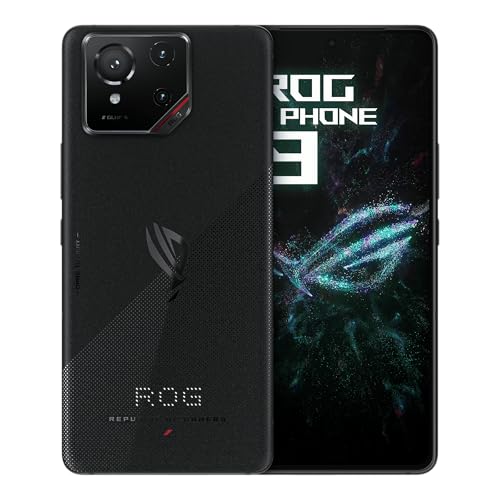
1. ASUS ROG Phone 9
The ROG Phone 9 is the closest thing to a handheld console that still makes phone calls, and ASUS has spent years refining exactly this formula. It arrives with a flagship Snapdragon chip tuned for sustained loads, a vapour chamber and graphite cooling stack that keeps the frame rate flat through long sessions, and a display that refreshes fast enough to make every swipe and flick feel immediate. What sets it apart is not any single spec but the way the whole package is aimed at one purpose: the ultrasonic AirTriggers on the shoulder give you real buttons for competitive shooters, the front-facing stereo speakers are loud and directional enough to place footsteps without earbuds, and the software game launcher, Armoury Crate, lets you build per-game profiles that trade battery for performance or silence for speed depending on the match ahead.
In daily use the ROG Phone 9 is unapologetically a gaming device. It is heavier and thicker than a slim flagship, the design announces itself, and the camera, while perfectly usable, is not the reason anyone buys this phone. That honesty is part of its appeal. Nothing about it pretends to be a minimalist lifestyle object; everything about it says it was built to be held sideways for hours, and once you settle into a session the ergonomics make sense in a way that a prettier phone never quite does. The weight distributes evenly, the grip zones stay cooler than the centre, and the trigger placement falls naturally under your index fingers.
Strengths: The AirTriggers are the best built-in controls on any phone here, genuinely useful rather than a gimmick, and they transform shooters and racing games alike. Sustained performance is excellent, with frame rates that stay flat in demanding titles long after thinner phones start throttling. The display is fast, bright, and responsive, and the stereo speakers are a real competitive advantage. Bypass charging protects the battery during long plugged-in sessions, and the huge cell means you can play for hours before the low-battery warning appears. The software is the most gamer-focused of the bunch, with detailed performance monitoring, macro support, and deep customisation that rewards players who like to tune their setup.
Trade-offs: This is a big, heavy phone, and it never tries to hide it, so one-handed use and pocketability suffer. The camera system lags behind the best camera flagships, and software support, while improved, does not match the longest update promises in this guide. The gaming aesthetic will not suit everyone, and some of the accessories that complete the experience cost extra. Battery life is strong but the phone’s hunger at maximum settings means you will still want the performance profiles tuned to your actual games rather than left on full power all day.
Who it suits: Competitive mobile gamers who play shooters and battle royales for hours at a time and want hardware controls, sustained speed, and software that treats gaming as the main event rather than an afterthought. If your phone is primarily a gaming machine that also handles messages and calls, this is the most purpose-built option here.
For players who want shoulder triggers, flat frame rates and a phone built around the match rather than around the camera, the ROG Phone 9 is the purest gaming pick in this guide — check price on Amazon
Check price on Amazon: ASUS ROG Phone 9

2. REDMAGIC 12 Pro
REDMAGIC has always taken the most aggressive approach to mobile gaming hardware, and the 12 Pro is the clearest expression of that philosophy: a built-in cooling fan, a flat uninterrupted display with the camera hidden beneath the screen, and shoulder triggers, all in a phone that costs less than most flagships while outgunning them on raw gaming features. The North American version covered here pairs 16GB of memory with 512GB of storage in the Nightfreeze finish, so the configuration is generous before you even reach the gaming hardware. The fan is the headline, and it works. Spinning quietly inside the chassis, it pulls heat off the chipset during long sessions, and the difference shows up in the frame-rate graph: where passively cooled phones gradually sag, the REDMAGIC holds its line, session after session. Turn the fan off and the phone is silent for daily use; turn it on and you get a little whir and a lot of headroom.
The under-display camera gives the 12 Pro something no other phone here can match: a completely clean, flat rectangle of screen with no notch, no punch hole, and no curved edge to distort the corners where game controls live. For gaming that matters more than it sounds, because the display is the whole playing field, and a hole in the middle of the minimap is a real annoyance. Selfies from the hidden camera are soft and hazy compared with a conventional front camera, and REDMAGIC is upfront about that trade, but for players who care about the game more than the video call, it is a trade worth making. The big memory and storage allocation helps here too, keeping large game libraries installed and alive in the background instead of forcing you to delete one title to make room for the next.
Strengths: The active cooling fan delivers the most consistent sustained performance in this guide, especially in long, demanding sessions where other phones gradually lose pace. The flat, uninterrupted display is genuinely better for gaming, with fast refresh, strong touch response, and no distractions. Shoulder triggers are responsive and customisable, the battery is enormous, and charging is fast enough that a short break refills a meaningful chunk of play time. The 16GB of memory and 512GB of storage in this North American configuration are generous for the money, and the gaming software is packed with useful touches: per-game tuning, frame-rate and temperature overlays, and a dedicated game space that keeps distractions out.
Trade-offs: The under-display selfie camera is the weakest front camera here by a clear margin, so video calls and selfies suffer. The fan, while quiet, is a moving part that adds a faint whir and a dust ingress point, and the phone’s software, while much improved, still feels less polished than the mainstream flagships. Water resistance is more limited than on the sealed flagships, and long-term software support is shorter. The Nightfreeze design is unmistakably gamer-flavoured, which will delight some buyers and put off others.
Who it suits: Players who want maximum sustained performance and the cleanest possible display for the least money, and who are happy to trade selfie quality and a little polish for a fan-cooled phone that simply refuses to slow down. It is the value pick for serious gamers who measure a phone in frames per second rather than in camera samples.
If your priority is a fan-cooled engine, a flawless full-screen display and long sessions without throttling, the REDMAGIC 12 Pro delivers more gaming hardware for the money than anything else here — check price on Amazon
Check price on Amazon: REDMAGIC 12 Pro

3. Samsung Galaxy S25 Ultra
The Galaxy S25 Ultra is not a gaming phone in the narrow sense, and that is precisely why so many gamers end up loving it. It is a flagship that happens to be superb at games: a top-tier Snapdragon chip, a vapour chamber that is larger than the one in its predecessor, a gorgeous anti-reflective display that stays readable in sunlight, and a 5G modem that holds a steady connection in crowded places. Where the dedicated gaming phones win on triggers and fans, the S25 Ultra wins on being the phone you actually want to carry everywhere else, and then discovering it plays your games beautifully too.
That display deserves a paragraph of its own. The anti-reflective coating cuts glare in a way you notice immediately outdoors and under bright indoor lighting, which is exactly where mobile gaming happens more often than anyone admits: on a sunny bench, by a window, on a train with the sun streaming in. Colours are vivid without being cartoonish, the refresh rate adapts smoothly between still content and fast motion, and the brightness holds up under load. Add the S Pen, which some players use for strategy titles and precise menu navigation, and you have a device that covers more kinds of play than any single-purpose gaming handset.
What surprises first-time owners is how well the S25 Ultra sustains performance. Samsung has tuned this generation to hold frame rates steady rather than chase a brief peak, and the larger vapour chamber makes a real difference in a forty-minute session of a demanding title. It will not match a fan-cooled phone in an hour-long stress test, but for the sessions most people actually play, the gap is small and the rest of the phone is so much more versatile that the trade is easy to accept. Battery life is strong, charging is quick enough, and the software is the most mature here, with years of updates ahead and a game launcher that, while less flamboyant than a gaming brand’s, covers the essentials well: blocking notifications, locking performance profiles, and recording clips.
Strengths: The anti-reflective display is the best screen for playing in bright light, and the overall display quality is superb. Performance is fast and, crucially, stable across realistic session lengths, with a large vapour chamber doing quiet work. The camera system is the most versatile in this guide, the build feels premium and durable, and software support stretches for years. The 5G modem is excellent, with strong antenna performance and smart switching between networks. Battery life is reliable across a full day of mixed use and gaming, and the ecosystem, from watches to earbuds to tablets, is the deepest here.
Trade-offs: There are no built-in gaming triggers, no fan, and no bypass charging, so competitive players who want hardware controls will need a clip-on accessory. The phone is large, heavy, and expensive, and the boxy corners can dig into your palms during very long sideways sessions. Charging speed, while adequate, is slower than the fastest gaming phones, and the game software, though solid, lacks the deep per-game tuning and overlays that dedicated gaming brands offer.
Who it suits: Players who want one phone that does everything brilliantly, with gaming as a major but not exclusive priority. If you need a great camera, a great screen for everything else, long software support, and strong gaming performance in a single device, this is the most complete package here.
For the gamer who also wants a superb camera, a glare-free display and a phone that excels at everything else too, the Galaxy S25 Ultra is the most versatile flagship on this list — check price on Amazon
Check price on Amazon: Samsung Galaxy S25 Ultra

4. iPhone 16 Pro Max
Apple’s approach to gaming has always been quieter than the gaming brands, and the iPhone 16 Pro Max makes its case without shouting. There is no fan, no trigger, no gaming mode plastered across the marketing, yet the combination of Apple’s silicon, a superb display, and the most polished game library on mobile makes it one of the most capable gaming phones you can buy. The chip inside is ferociously fast, and because Apple controls the silicon, the operating system, and the developer tools, games are often optimised for iPhone first, with features and visual settings that arrive here before they reach other platforms.
The real story is the game catalogue. Console-quality titles that were once unthinkable on a phone now run on the 16 Pro Max with graphics that genuinely impress, and the App Store’s curation means the games you find tend to be polished and well supported. Cloud gaming services run beautifully too, and the 5G modem holds a stable connection for streaming, which matters more than raw speed when you are playing a game rendered on a server hundreds of miles away. Add a controller and the phone becomes a genuinely capable portable console, with a display that makes the most of every frame.
Thermals are the honest caveat. The iPhone’s titanium frame and glass body dissipate heat well, but there is no vapour chamber arms race here and no fan, so in the most demanding titles at maximum settings the phone will warm up and, over a long session, ease its clocks back to protect itself. In practice this is less of a problem than it sounds, because most games are tuned to the platform and the chip is so fast that even a throttled iPhone is still quick, but players who grind the heaviest titles for hours at maximum settings should know the limit exists. Battery life, on the other hand, is outstanding: the large cell and the efficiency of the chip mean long sessions barely dent the percentage, and the phone sips power in lighter games.
Strengths: The chip is among the fastest in any phone, and games are frequently optimised for iPhone first, with console-quality titles available here. The display is bright, accurate, and beautifully tuned, with a high refresh rate that feels effortless. Battery life is excellent, the build is premium and durable, and the 5G modem is strong and reliable. The ecosystem is a genuine advantage: controllers, cloud saves, and cross-device play with iPad and Mac work smoothly, and software support will last for years. Haptics are the best in this guide, precise and expressive in a way that adds real feedback to gameplay.
Trade-offs: There are no built-in gaming triggers or active cooling, and the most demanding games at maximum settings will warm the phone and eventually throttle. The price is high, storage upgrades are expensive, and the closed ecosystem means less customisation than Android gaming phones offer. The game launcher and per-game performance tuning are minimal compared with dedicated gaming software, and fast charging, while improved, still trails the quickest Android rivals.
Who it suits: Players invested in the Apple ecosystem who want the best game catalogue, the most polished experience, and a phone that happens to be superb at games alongside everything else. If you play console-quality titles, stream games over 5G, and value battery life and long-term support, this is the iPhone to get.
When the game library, the chip and the battery all matter as much as the frame rate, the iPhone 16 Pro Max is the most polished all-rounder for Apple gamers — check price on Amazon
Check price on Amazon: iPhone 16 Pro Max

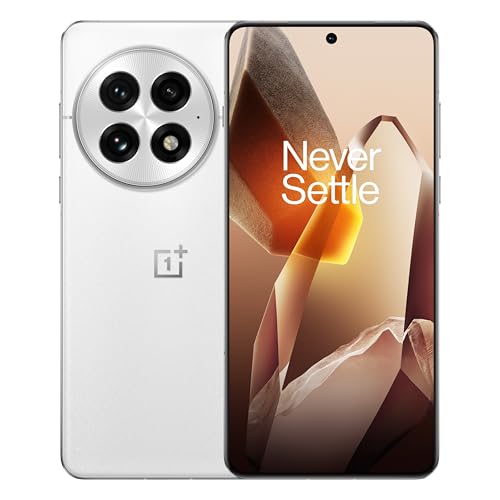
5. OnePlus 13
The OnePlus 13 is the quiet achiever of this guide, a phone that does not market itself as a gaming device yet keeps showing up at the top of sustained-performance tests. The reason is a combination that gaming phones chase and rarely achieve this elegantly: a flagship chip, a large vapour chamber, and a huge silicon-carbon battery, all in a body that looks and feels like a premium flagship rather than a piece of gaming equipment. It is the phone for the player who wants the performance without the aesthetic, the speed without the shout.
That battery is the headline feature for gamers. It is one of the largest cells in any mainstream flagship, and paired with the efficiency of the chip it delivers genuinely long gaming sessions, the kind where you stop checking the percentage and just play. When it does run low, charging is among the fastest here, refilling a big portion of the cell in the time it takes to make a coffee, and the phone manages the heat of that fast charge well. For players who game in bursts through the day, that combination of huge capacity and rapid refill is arguably more useful than a fan, because the constraint on your play is almost never thermals, it is time and battery.
The display is fast, bright, and easy on the eyes, with a high refresh rate and strong touch response, and the software stays close to stock Android with a game mode that covers the essentials without drowning you in menus. There is a dedicated gaming mode that blocks interruptions, stabilises the frame rate, and lets you monitor performance, and while it lacks the granular per-game tuning of a ROG or RedMagic, it gets the fundamentals right and stays out of your way. The stereo speakers are good, the haptics are strong, and the 5G modem holds a steady connection across the bands that matter.
Strengths: Battery life is outstanding, among the best in this guide, and charging is very fast, so downtime between sessions is minimal. Sustained performance is excellent, with the large vapour chamber keeping frame rates steady in demanding titles. The display is bright, smooth, and responsive, and the design is premium without gaming styling, so it fits anywhere. The software is clean and fast, the price undercuts the most expensive flagships, and the overall balance of speed, battery, and everyday usability is hard to beat.
Trade-offs: There are no shoulder triggers, no active cooling, and no bypass charging, so the most competitive players will miss the hardware controls that dedicated gaming phones offer. The camera, while good, does not match the very best camera flagships, and the gaming software is simpler than the dedicated brands, with less per-game tuning. The phone is large, and the curved display edges, while subtle, are not as ideal for gaming as a fully flat panel.
Who it suits: Players who want flagship gaming performance and marathon battery life in a phone that looks at home in a meeting as well as in a match. If your priority is playing for hours without worrying about the battery, and you would rather have a clean premium phone than a gaming-styled one, this is the sweet spot.
For marathon battery life, fast refills and flagship speed in a phone that never looks like a gaming device, the OnePlus 13 is the best-balanced pick in this roundup — check price on Amazon
Check price on Amazon: OnePlus 13
Quick Comparison: Which 5G Gaming Phone Fits Your Play Style
Spec sheets blur together after the third phone, so use this table as a shortcut. It compares the five picks on the qualities that actually change how a session feels, not on numbers that look impressive in a chart. Match the row to your habits, and the right phone usually picks itself.
| Phone | Best for | Cooling | Display | Battery stamina | Standout feature |
|---|---|---|---|---|---|
| ASUS ROG Phone 9 | Competitive shooters | Large vapour chamber, passive | Fast, bright, responsive | Strong, with bypass charging | Ultrasonic shoulder triggers |
| REDMAGIC 12 Pro | Long sessions on a budget | Built-in active fan | Flat, uninterrupted, no notch | Very strong | Fan cooling and clean full screen |
| Samsung Galaxy S25 Ultra | All-round flagship gaming | Large vapour chamber, passive | Anti-reflective, superb in sunlight | Strong all-day stamina | Best display for bright light |
| iPhone 16 Pro Max | Console-quality titles | Passive, titanium frame | Bright, accurate, smooth | Excellent | Best game catalogue and haptics |
| OnePlus 13 | Marathon battery life | Large vapour chamber, passive | Bright, smooth, eye-friendly | Outstanding | Huge battery with very fast charging |
The pattern is clear once you see it laid out. If competitive play is your life, the ROG Phone 9 and the REDMAGIC 12 Pro are the two that were built for it, one with the best triggers and one with the best cooling for the money. If gaming is one of several things your phone must do brilliantly, the Galaxy S25 Ultra and the iPhone 16 Pro Max are the two flagships that never feel like a compromise outside the game. If battery anxiety is what ruins your sessions, the OnePlus 13 removes it more completely than any other phone here.
Frequently Asked Questions About 5G Gaming Phones
Does 5G actually make a difference for mobile gaming?
Yes, but not in the way the advertisements suggest. The biggest gain from 5G is lower and more stable latency, which is what keeps your actions registering quickly in competitive matches, and the ability to download large games and updates far faster than on older networks. In a strong coverage area, 5G can feel as responsive as good home Wi-Fi, and for cloud gaming it is often the difference between a smooth stream and a stuttering one. Where coverage is weak or congested, however, a good Wi-Fi connection will still beat a poor 5G signal, so the honest answer is that 5G is a genuine advantage when the network is good and a non-factor when it is not. The phones in this guide all have modern modems, so the difference between them matters less than the quality of the network where you actually play.
Do I need a dedicated gaming phone, or will a flagship be enough?
For most players, a flagship is enough. Modern flagship chips run every major mobile title well, and phones like the Galaxy S25 Ultra, the iPhone 16 Pro Max, and the OnePlus 13 will handle long sessions without embarrassing themselves. A dedicated gaming phone earns its keep in specific situations: if you play competitive shooters for hours and want shoulder triggers, if you grind the most demanding titles at maximum settings and need active cooling, or if you want software that treats gaming as the main event. If none of those apply, you will likely be happier with a flagship that is also a great camera, a great daily phone, and a great gaming device in one. The trade is real in both directions, so match the phone to your habits rather than to the label.
How important is a cooling fan in a gaming phone?
A fan matters most in long, heavy sessions. In a thirty-minute game, most well-designed phones with a good vapour chamber will hold their performance without any active cooling, and you would never know the fan was missing. Stretch that session to an hour or more in a demanding title, especially while recording or streaming, and the fan starts to show its value, holding frame rates flat where passively cooled phones gradually ease back. The trade-offs are noise, a moving part, and a design that is less sealed against water and dust. For casual and moderate players, a fan is a nice bonus rather than a necessity; for players who treat mobile gaming like a serious hobby with multi-hour sessions, it is one of the most meaningful features a phone can have.
What refresh rate should I look for?
Look for a display that refreshes at 120Hz or higher, and pay as much attention to touch sampling rate as to refresh rate. A 120Hz panel is the sweet spot for most players: visibly smoother than a standard display, widely supported by games, and not so demanding that it destroys battery life. Higher refresh rates, such as 144Hz or above, are a real advantage in fast competitive titles, but only if the games you play actually support them, and many popular titles cap at 120Hz or lower. Touch sampling, the speed at which the screen reads your finger, matters just as much for aiming and reaction time, so look for a high touch sampling rate alongside the refresh number. If you mostly play slower strategy, puzzle, or story-driven games, a 120Hz display is plenty, and battery life will thank you for not chasing a bigger number.
Will a gaming phone still be good in a year or two?
Yes, provided you choose one with a flagship chip and a manufacturer that supports it with software updates. The chips in the phones on this list are so far ahead of what most mobile games demand that they will run new titles well for years, and the limiting factor is usually battery health and software support rather than raw speed. Phones with bypass charging protect their batteries better during plugged-in play, and phones with longer update promises stay secure and compatible with new games for longer. The dedicated gaming phones here tend to offer shorter software support than the mainstream flagships, so if you keep a phone for four or five years, that is worth weighing against the gaming features. Buy for the chip and the cooling first, and the phone will age gracefully.
How to Choose: Matching the Phone to the Way You Play
If you take one idea from this guide, let it be this: the best 5G gaming phone is the one that fits the way you actually play, not the one with the longest spec sheet. Start by being honest about your sessions. If you play competitive shooters for hours, prioritise triggers, cooling, and touch response, and the ROG Phone 9 or the REDMAGIC 12 Pro will repay you every match. If you play a mix of everything and want one phone that handles work, photography, and games, the Galaxy S25 Ultra or the iPhone 16 Pro Max will make you happier across the whole week, not just during the match. If battery anxiety is the thing that actually ruins your play, the OnePlus 13 removes it so thoroughly that you will wonder why you tolerated anything else.
Then test the phone the way you will use it. During the return window, play your actual games at your actual settings, on your actual network, for the length of a real session, and watch the frame rate, the temperature, and the battery rather than the benchmark score. A phone that feels right in your hands after a long session is worth more than a phone that wins a chart you will never look at again.
Whichever of these five you choose, you are getting a phone that can handle the most demanding mobile games on a fast 5G connection, and the differences between them are about fit rather than quality. Pick the one that matches your games, your hands, and your habits, and the matches will take care of themselves.
Of the five phones here, the right one is the one that disappears in your hands and lets the game take over, so choose for your sessions, not for the spec sheet, and enjoy the smoothest mobile gaming you have ever had.