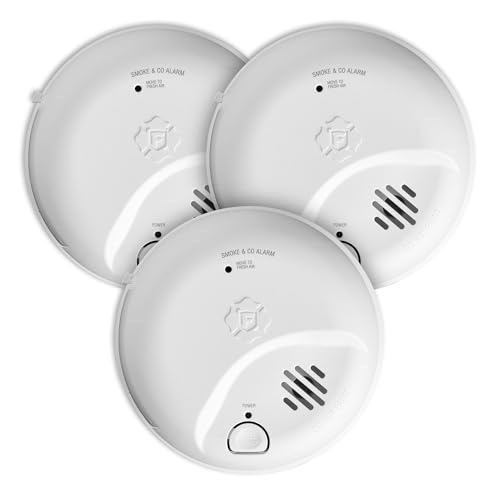
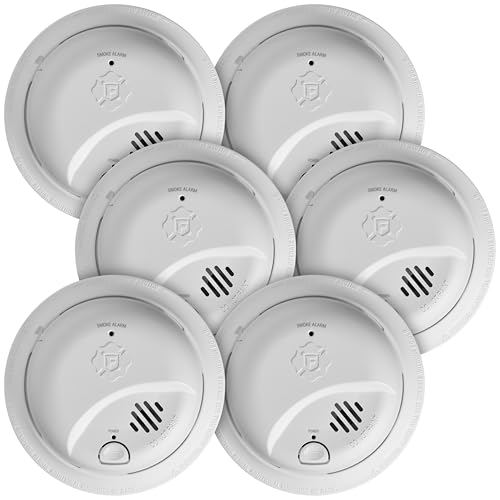
The best place to hang smoke detectors is the ceiling, in the centre of the room, away from the kitchen and the bathroom, and the reason is simple: smoke rises, and a detector on the ceiling hears it first. A detector in the wrong place will not warn you in time, and a detector in the right place can give you the minutes that matter. The six detectors in this guide cover every home: hardwired alarms for a permanent install, battery alarms for a quick fit, smart alarms that talk to your phone, and interconnected alarms that all sound together when one of them senses smoke. They are the detectors to buy once you know where to hang them.
The six detectors below cover every home and every budget. There is the First Alert 9120B for a hardwired three-pack that covers a whole floor, the Google Nest Protect for a smart wired alarm that speaks and sends alerts, the Kidde 30CUA10-V for a hardwired alarm with voice alerts and a 10-year battery, the First Alert SC5 for a smart hardwired alarm, the X-Sense SD19-W for a wireless interconnected alarm with a 10-year battery, and the Kidde 20SD10 for a simple battery alarm that needs no wiring at all. Every detector in this guide is a complete smoke detector, not a part or an accessory, and every linked model was checked against its listing title for brand and model before it was included.
Before you buy, check three things: whether your home needs hardwired or battery alarms, how many detectors you need and where they go, and whether the alarms should connect to each other. A battery alarm in a home with hardwired boxes, too few detectors for the rooms you have, or alarms that do not sound together are the three most common ways a smoke detector purchase goes wrong. The best place to hang smoke detectors in this guide was chosen from the standard placement rules, and the detectors were chosen for honest battery life, clear alarms, and the kind of reliability that lets you sleep at night.
In this guide
Quick picks: best place to hang smoke detectors
| # | Product | Where to buy |
|---|---|---|
| 1 | First Alert 9120B | Check on Amazon |
| 2 | Google Nest Protect | Check on Amazon |
| 3 | Kidde 30CUA10-V | Check on Amazon |
| 4 | First Alert SC5 | Check on Amazon |
| 5 | X-Sense SD19-W | Check on Amazon |
| 6 | Kidde 20SD10 | Check on Amazon |
How the picks were chosen for the best place to hang smoke detectors
Detection type came first. Every detector in this guide is a photoelectric or dual-sensor smoke alarm, which is the type that suits most homes, and several also detect carbon monoxide, which is a bonus that saves a second device. A detector that only senses heat, or a detector that is really a mounting plate or a replacement part, was excluded, because this guide is about alarms that detect smoke. The detection type was recorded from each listing, so the comparison table reflects what the seller states, and buyers should confirm the current specifications, including the sensor type, on the product page before ordering.
Power and interconnection came second, because they decide how the alarm behaves in a real fire. The hardwired alarms in this guide connect to your home wiring and to each other, so they all sound together when one of them senses smoke. The battery alarms run on a sealed 10-year battery, which means no battery changes and no wiring, and the wireless interconnected alarm links up to 18 detectors without a wire. A detector with a replaceable battery that needs changing every year was excluded in favour of sealed 10-year designs, because a detector with a dead battery is worse than no detector at all.
Finally, we checked that every pick is a complete smoke detector sold as a new listing, with a brand and model that match the listing title exactly. Mounting plates, replacement parts, and accessories were excluded, and renewed listings were avoided in favour of new ones. Power type, battery life, and interconnection were recorded from each listing, so the comparison table reflects what the seller states, and buyers should confirm the current specifications, including the alarm sound level, on the product page before ordering.
Where to hang smoke detectors: the placement rules
The ceiling is the best place to hang a smoke detector, because smoke rises and spreads across the ceiling first. Mount the detector in the centre of the ceiling, or at least 4 inches away from the wall, because the corner where the wall meets the ceiling is a dead spot where smoke collects slowly. A detector in the middle of the ceiling hears smoke sooner than a detector in a corner, and sooner is what matters when a fire starts. If you have a pitched ceiling, mount the detector near the peak, within 3 feet of it, because smoke rises to the highest point first.
Put a detector inside every bedroom, outside every sleeping area, and on every level of the home, including the basement. That is the standard rule, and it means a small home needs at least three or four detectors, while a larger home needs more. A detector outside the bedrooms warns you while you sleep, a detector in each bedroom warns the person inside it, and a detector on every level means a fire in the basement is heard upstairs. Count the bedrooms, count the levels, and buy enough detectors to cover them all, because one detector in a hallway is not enough for a whole home.
Keep detectors away from the kitchen, the bathroom, and the garage, because steam, cooking smoke, and exhaust fumes cause false alarms, and a detector that cries wolf gets disabled. Mount a kitchen detector at least 10 feet from the stove, and a bathroom detector at least 3 feet from the shower door, because steam sets off photoelectric alarms. Do not put a detector in an unheated garage or attic, because cold and dust affect it, and do not put one near a window, a vent, or a ceiling fan, because drafts push smoke away from the sensor. The right place is a quiet ceiling, away from steam, drafts, and cooking smoke.
Ceiling or wall: mounting height and distance
The ceiling is the best place, but a wall mount works if the ceiling is not an option. Mount a wall detector high on the wall, between 4 and 12 inches below the ceiling, because smoke rises to the top of the room and a detector mounted lower will hear it later. A detector mounted near the floor is almost useless, because smoke fills a room from the top down, and a detector at knee height will only sound when the room is already full of smoke. High on the wall is the rule, and the closer to the ceiling, the better, as long as it stays at least 4 inches below it.
Distance from the wall matters on the ceiling too. Mount a ceiling detector at least 4 inches away from the wall, because the corner is a dead air space where smoke moves slowly. In a large room, mount the detector near the centre, and in a long hallway, mount one detector every 30 feet or so, because smoke spreads along the hallway and a single detector at one end will hear a fire at the other end too late. In a room with a ceiling fan, mount the detector away from the fan, because the fan pushes smoke away from the sensor.
For most buyers, the decision is simple: ceiling first, high on the wall second, and never low on the wall or near the floor. Measure 4 inches from the wall on the ceiling, or 4 to 12 inches below the ceiling on the wall, and the detector will hear smoke as soon as it rises. Check the instructions that come with the detector, because the manufacturer states the exact distances for that model, and follow them. A detector in the right place is worth more than the most expensive detector in the wrong place.
Rooms that need detectors and rooms that do not
Every bedroom needs a detector, and so does the hallway outside the bedrooms. A fire that starts in a bedroom is most dangerous to the person sleeping in it, and a detector inside the room warns them directly. A detector in the hallway warns everyone else, and it covers the path to the exit. The living room needs a detector too, because it is where fires from heaters, candles, and electronics are most likely to start, and the basement needs one, because a fire there can spread upstairs before anyone notices. Count the bedrooms, the hallways, the living areas, and the levels, and buy a detector for each.
The kitchen needs a detector, but not too close to the stove. Mount it at least 10 feet from the cooking area, because cooking smoke causes false alarms, and a detector that alarms every time you fry something will be disabled, which defeats the purpose. A photoelectric detector is less sensitive to cooking smoke than an ionisation detector, which is one reason the detectors in this guide suit kitchens better than older designs. If the kitchen is small, put the detector in the hallway outside it, rather than in the kitchen itself.
The bathroom, the garage, and the attic do not need detectors in the usual sense. Steam from a shower sets off a smoke detector, so keep detectors at least 3 feet from the bathroom door rather than inside it. An unheated garage is too cold and dusty for a standard detector, and an attic is too hot in summer, so use a heat detector in those spaces if your local rules call for one. The laundry room needs a detector if it has a gas dryer, because lint and gas are a real fire risk. Buy detectors for the rooms people sleep and live in, and keep them out of the rooms that cause false alarms.
Quick picks at a glance
| Product | Power and type | Battery and linking | Best for |
|---|---|---|---|
| First Alert 9120B | Hardwired, smoke | Battery backup, 3-pack | Whole-floor installs |
| Google Nest Protect | Wired, smoke and CO | Voice and phone alerts | Smart homes |
| Kidde 30CUA10-V | Hardwired, smoke and CO | 10-year battery, voice | Family homes |
| First Alert SC5 | Hardwired, smoke and CO | Smart, phone alerts | Smart wired upgrades |
| X-Sense SD19-W | Battery, smoke | 10-year battery, wireless | Homes without wiring |
| Kidde 20SD10 | Battery, smoke | 10-year battery | Simple quick fits |
The best place to hang smoke detectors: the detectors to buy

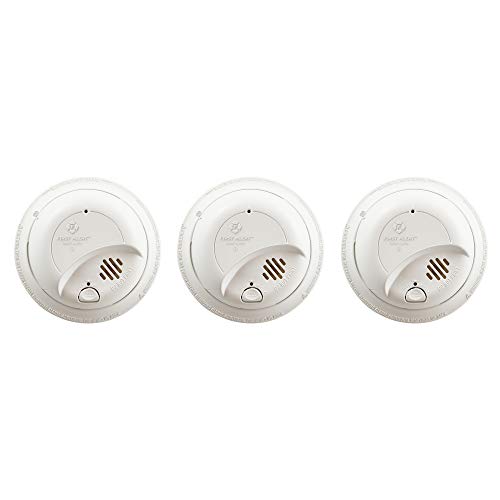
First Alert 9120B SMI100-AC Smoke Detector, Hardwired Alarm With Battery Backup
The First Alert 9120B is the hardwired pick in this guide and the detector for a permanent install that covers a whole floor. The listing describes a 9120B and SMI100-AC smoke detector, a hardwired alarm with battery backup, sold as a 3-pack. The 9120B wires into your home's mains power, with a battery backup that keeps it working during a power cut, and the three-pack covers three rooms or a whole floor in one purchase. It is the detector for a homeowner who wants a permanent, wired alarm system that meets the standard placement rules without fuss.
Where the 9120B earns its place is the combination of hardwired power and a three-pack value. A hardwired alarm never needs a battery change to keep working, because the mains power runs it and the battery is only a backup, and the three-pack means you can cover the bedrooms and the hallway in one order. The hardwired design also means the alarms can interconnect, so they all sound together when one of them senses smoke. For a homeowner replacing old wired alarms, or fitting a new home with a proper system, the 9120B three-pack is the straightforward choice.
Key specs:
- Hardwired alarm with battery backup
- Model 9120B and SMI100-AC
- 3-pack for a whole floor
- Smoke detector
- First Alert and BRK brands
Strengths:
- Hardwired power with battery backup, so it works in a power cut
- Three-pack covers a whole floor in one purchase
- Can interconnect with other hardwired alarms
Trade-offs:
- Needs existing hardwired boxes, so it is not a quick fit
- No carbon monoxide detection in this model
- Hardwired install may need an electrician
This detector fits homeowners who want a permanent hardwired alarm system, with a three-pack that covers a floor in one purchase.
Best for: permanent hardwired installs covering a whole floor
Not suited for: renters, or homes without hardwired alarm boxes
Check price on Amazon: First Alert 9120B

Google Nest Protect Smoke Alarm, Smoke Detector and Carbon Monoxide Detector, Wired
The Google Nest Protect is the smart pick in this guide and the detector for a connected home. The listing describes a smoke alarm that is both a smoke detector and a carbon monoxide detector, wired, in white. The Nest Protect speaks to you, telling you where the smoke is and how serious it is, instead of just beeping, and it sends an alert to your phone when you are away. It is the detector for a buyer who wants to know what is happening at home, even when they are not there, and who wants a smoke and carbon monoxide alarm in one device.
In daily use, the Nest Protect is the detector that talks. A calm voice says which room has smoke, which is far more useful than a beep from somewhere in the house, and the phone alert means you know about a problem while you are out. The wired design means it never needs a battery change, and the carbon monoxide detection means one device covers two dangers. The Nest Protect also tests itself, so you do not need to climb a ladder and press a button every month. For a smart home, a frequent traveller, or anyone who wants a detector that explains itself, the Nest Protect is the pick.
Key specs:
- Smoke detector and carbon monoxide detector
- Wired design
- Voice alerts with room location
- Phone alerts when you are away
- White finish
Strengths:
- Voice alerts tell you which room has smoke
- Detects smoke and carbon monoxide in one device
- Phone alerts keep you informed when you are away
Trade-offs:
- The most expensive detector in this guide
- Needs a wired connection, so it is not a quick fit
- Smart features need the app and Wi-Fi to work fully
This detector fits smart-home owners and frequent travellers who want a talking alarm, phone alerts, and smoke plus carbon monoxide detection in one device.
Best for: smart homes that want voice alerts and phone notifications
Not suited for: tight budgets, or homes without wired alarm boxes
Check price on Amazon: Google Nest Protect

Kidde Smoke and CO Detector, Hardwired and 10-Year Battery, 30CUA10-V
The Kidde 30CUA10-V is the voice-alert pick in this guide and the detector for a household that wants to hear exactly what the danger is. The listing describes a smoke and carbon monoxide detector, hardwired with a 10-year battery, model 30CUA10-V, sold as a single pack, with voice alerts, wired interconnect capability, and no battery replacements. The voice alert tells you whether the danger is smoke or carbon monoxide, which matters in the middle of the night, and the 10-year sealed battery means the backup never needs changing. It is the detector for a family that wants a clear, spoken warning instead of a beep.
Where the 30CUA10-V earns its place is the combination of hardwired power and a sealed 10-year battery. The mains power runs the alarm, the battery is a backup that lasts a decade, and the wired interconnect means all the alarms in the home sound together. The voice alert is the feature that sets it apart: a spoken warning is easier to understand than a beep, especially for children and older family members. For a family home that wants a hardwired alarm with a clear voice and a decade of battery backup, the 30CUA10-V is the detector to buy.
Key specs:
- Smoke and carbon monoxide detector
- Hardwired with 10-year battery
- Model 30CUA10-V, single pack
- Voice alerts
- Wired interconnect capability
Strengths:
- Voice alerts say whether the danger is smoke or CO
- 10-year sealed battery, so no battery changes
- Wired interconnect sounds all alarms together
Trade-offs:
- Needs existing hardwired boxes, so it is not a quick fit
- Single pack, so a whole home needs several
- Hardwired install may need an electrician
This detector fits family homes that want a hardwired alarm with a clear voice alert, a 10-year battery, and interconnected alarms.
Best for: family homes that want voice alerts and a 10-year battery
Not suited for: renters, or homes without hardwired alarm boxes
Check price on Amazon: Kidde 30CUA10-V

First Alert SC5 Hardwire Smart Smoke and Carbon Monoxide Alarm
The First Alert SC5 is the smart hardwired pick in this guide and the detector for a connected home that already has wired boxes. The listing describes a hardwire smart smoke and carbon monoxide alarm, model SMCO600NV-AC. The SC5 wires into your home's mains power, detects both smoke and carbon monoxide, and connects to your phone, so you get an alert when you are away. It is the detector for a buyer who wants a smart alarm without replacing the wired boxes, and who wants smoke and carbon monoxide detection in one device.
What makes the SC5 work well is that it brings smart features to a standard wired install. The hardwired power means it never needs a battery change, the smoke and carbon monoxide detection covers two dangers in one device, and the phone connection means you know about a problem while you are out. The smart features also mean the alarm can tell you which room has the problem, which is far more useful than a beep from somewhere in the house. For a homeowner with wired boxes who wants a smart alarm, the SC5 is the straightforward upgrade.
Key specs:
- Hardwire smart smoke and carbon monoxide alarm
- Model SMCO600NV-AC
- Phone alerts
- Smoke and CO detection
- Hardwired power
Strengths:
- Smart features with phone alerts on a wired install
- Detects smoke and carbon monoxide in one device
- Hardwired power, so no battery changes
Trade-offs:
- Needs existing hardwired boxes, so it is not a quick fit
- Smart features need the app and Wi-Fi to work fully
- Single alarm, so a whole home needs several
This detector fits homeowners with wired boxes who want a smart alarm with phone alerts and smoke plus carbon monoxide detection.
Best for: smart alarms on existing wired boxes
Not suited for: renters, or homes without hardwired alarm boxes
Check price on Amazon: First Alert SC5

X-Sense Interconnected Smoke Detector, 10-Year Battery, SD19-W
The X-Sense SD19-W is the wireless pick in this guide and the detector for a home without wired boxes. The listing describes an interconnected smoke detector with a 10-year battery, model SD19-W, sold as a single pack, with up to 18 wireless detectors linked together, so one alarm sounds and all of them sound. The SD19-W needs no wiring at all: you mount it on the ceiling, it links to the other detectors wirelessly, and the sealed 10-year battery means no battery changes for a decade. It is the detector for a renter, an older home, or anyone who wants interconnected alarms without an electrician.
Where the SD19-W earns its place is the wireless interconnection. A fire in the basement sets off the detector in the bedroom, which is the whole point of an interconnected system, and the wireless link means you get that protection without running a single wire. The 10-year sealed battery means the detector works for a decade without attention, and the single-pack format means you buy as many as you need, one room at a time. For a home without wired boxes, a rental, or a house where running wires is impractical, the SD19-W is the detector that brings proper protection without a renovation.
Key specs:
- Interconnected smoke detector
- 10-year battery
- Model SD19-W, single pack
- Up to 18 wireless detectors linked
- No wiring needed
Strengths:
- Wireless interconnection links up to 18 detectors
- 10-year sealed battery, so no battery changes
- No wiring needed, so it fits any home
Trade-offs:
- Battery only, so no mains backup
- Smoke only, no carbon monoxide detection in this model
- Wireless link needs the detectors within range of each other
This detector fits renters, older homes, and anyone who wants interconnected alarms without wiring, with a 10-year battery.
Best for: wireless interconnected alarms without wiring
Not suited for: buyers who want carbon monoxide detection, or mains-powered alarms
Check price on Amazon: X-Sense SD19-W

Kidde Smoke Detector, 10-Year Battery-Powered, 20SD10
The Kidde 20SD10 is the simple pick in this guide and the detector for a quick fit that just works. The listing describes a smoke detector, 10-year battery-powered, model 20SD10, sold as a single pack, with no battery replacements, no low battery chirps, and LED status lights. The 20SD10 mounts on the ceiling with two screws, runs on a sealed 10-year battery, and needs no wiring, no app, and no setup beyond mounting it. It is the detector for a renter, a spare room, or anyone who wants a reliable alarm in minutes, without an electrician or a smartphone.
In daily use, the 20SD10 is the detector that disappears. The sealed 10-year battery means you fit it and forget it for a decade, the LED status lights tell you at a glance that it is working, and the lack of a replaceable battery means there is no low-battery chirp at 3 a.m. to wake you up. The simple design is the point: there is nothing to configure, nothing to connect, and nothing to go wrong. For a rental, a spare bedroom, or a home that needs one more detector in the right place, the 20SD10 is the alarm that does the job with the least fuss.
Key specs:
- 10-year battery-powered smoke detector
- Model 20SD10, single pack
- No battery replacements
- LED status lights
- No low battery chirps
Strengths:
- Sealed 10-year battery, so no battery changes
- Simple fit with no wiring and no app
- LED status lights show it is working
Trade-offs:
- Battery only, so no mains backup
- Smoke only, no carbon monoxide detection in this model
- No interconnection, so it sounds alone
This detector fits renters, spare rooms, and anyone who wants a simple battery alarm that fits in minutes and works for a decade.
Best for: simple battery alarms that fit in minutes
Not suited for: buyers who want interconnected alarms, or carbon monoxide detection
Check price on Amazon: Kidde 20SD10
Buying guide
Count the rooms before you buy
Put a detector inside every bedroom, outside every sleeping area, and on every level of the home, including the basement. Count the bedrooms, count the levels, and buy enough detectors to cover them all, because one detector in a hallway is not enough for a whole home. A small home needs at least three or four detectors, while a larger home needs more, and the cost of an extra detector is small compared with the warning it gives.
Choose hardwired or battery for your home
A hardwired alarm suits a homeowner with existing wired boxes, because it never needs a battery change and it interconnects with the other alarms. A battery alarm suits a renter or an older home without wired boxes, because it fits in minutes with two screws and no electrician. A wireless interconnected alarm, such as the X-Sense SD19-W in this guide, gives you the interconnection of a wired system without the wiring. Choose the power type for your home, not for the alarm.
Mount on the ceiling, away from the walls
Mount the detector in the centre of the ceiling, at least 4 inches away from the wall, because the corner is a dead spot where smoke collects slowly. If you must use a wall, mount it high, between 4 and 12 inches below the ceiling, and never near the floor. Keep the detector away from ceiling fans, vents, and windows, because drafts push smoke away from the sensor, and check the instructions that come with the detector for the exact distances.
Keep detectors away from steam and cooking smoke
Mount a kitchen detector at least 10 feet from the stove, and a bathroom detector at least 3 feet from the shower door, because steam and cooking smoke cause false alarms. A detector that cries wolf gets disabled, which defeats the purpose, so keep detectors out of steamy rooms and away from the cooker. If the kitchen is small, put the detector in the hallway outside it, rather than in the kitchen itself.
Test every month and replace on schedule
Test each detector once a month by pressing the test button, and replace the whole detector after 10 years, because the sensor wears out even if the battery still works. A detector that is past its date may not sound in a fire, so check the manufacture date on the back and replace it on time. A monthly test takes a minute, and a replacement every decade costs little, but both are the difference between a detector that works and one that does not.
Setting up and everyday care
Install the detector carefully and it will protect you for years. Mark the ceiling position first, at least 4 inches from the wall and away from fans and vents, then drill the holes and mount the bracket with the screws provided. For a hardwired alarm, switch off the power at the breaker before you touch the wiring, and follow the instructions exactly, because mains wiring is not a job to guess at. For a battery alarm, mount the bracket, twist the detector on, and test it immediately by pressing the test button, because a detector that is not tested is a detector you cannot trust.
Keep the detector clean and test it regularly. Dust the detector every few months with a soft brush or a vacuum on a low setting, because dust on the sensor causes false alarms and slow detection. Test each detector once a month, replace the whole detector after 10 years, and never paint over a detector, because paint blocks the sensor. A detector that is clean, tested, and replaced on schedule will sound when it matters, and a detector that is dusty, untested, or past its date may not.
Common mistakes to avoid
Putting the detector in the wrong place
A detector in a corner, near the floor, or next to a window will not hear smoke in time, because smoke rises to the ceiling and spreads from the centre. Mount it in the centre of the ceiling, at least 4 inches from the wall, and the detector will hear smoke as soon as it rises. The right place matters more than the most expensive detector.
Buying too few detectors
One detector in a hallway is not enough for a whole home. Put a detector inside every bedroom, outside every sleeping area, and on every level, including the basement, because a fire in a room without a detector will not be heard until it spreads. Count the rooms, buy enough detectors, and the whole home will be covered.
Disabling a detector after false alarms
A detector that alarms every time you cook will be disabled, and a disabled detector protects no one. Move the detector at least 10 feet from the stove, or put it in the hallway outside the kitchen, rather than disabling it. A detector in the right place does not cause false alarms, and a detector that is disabled is worse than no detector at all.
Forgetting to test and replace
A detector that is never tested may not work when it matters, and a detector past 10 years may not sound at all. Test each detector once a month, replace the whole detector after 10 years, and check the manufacture date on the back. A minute a month and a replacement every decade are the cheapest protection a home can buy.
Our recommendation
If you want one detector system for a whole home, buy the First Alert 9120B three-pack for its hardwired power, battery backup, and coverage of a whole floor in one purchase. If you want a smart alarm, buy the Google Nest Protect instead, because its voice alerts and phone notifications tell you what is happening, even when you are away. Both will protect you well, and the choice between them comes down to whether you want a simple wired system or a connected one.
If your home has no wired boxes, buy the X-Sense SD19-W, because its wireless interconnection links up to 18 detectors without a single wire. If you want a simple alarm that fits in minutes, buy the Kidde 20SD10, and if you want a hardwired alarm with a voice alert, buy the Kidde 30CUA10-V. If you want a smart alarm on existing wired boxes, buy the First Alert SC5. Whichever detector you choose, mount it on the ceiling, test it monthly, and replace it after 10 years.
Related reading on Reviewstook: best home security system under 15, best home security camera for apartments under 150, and best doorbell camera under 150
Frequently asked questions
What is the best place to hang smoke detectors?
The ceiling, in the centre of the room, at least 4 inches away from the wall, is the best place, because smoke rises and spreads across the ceiling first. Put a detector inside every bedroom, outside every sleeping area, and on every level of the home, including the basement. Keep detectors at least 10 feet from the stove and 3 feet from the bathroom door, to avoid false alarms from cooking smoke and steam.
Should smoke detectors be on the ceiling or the wall?
The ceiling is best, because smoke rises to it first. If you must use a wall, mount the detector high, between 4 and 12 inches below the ceiling, and never near the floor, because smoke fills a room from the top down. A detector near the floor will only sound when the room is already full of smoke, which is too late.
How many smoke detectors do I need in my home?
Put one inside every bedroom, one outside every sleeping area, and one on every level, including the basement. A small home needs at least three or four detectors, while a larger home needs more. Count the bedrooms, the hallways, and the levels, and buy enough detectors to cover them all, because one detector in a hallway is not enough for a whole home.
How far should a smoke detector be from the kitchen?
At least 10 feet from the stove, because cooking smoke causes false alarms, and a detector that alarms every time you cook will be disabled. If the kitchen is small, put the detector in the hallway outside it, rather than in the kitchen itself. A photoelectric detector is less sensitive to cooking smoke than older designs, which helps in a kitchen.
Do I need hardwired or battery smoke detectors?
A hardwired alarm suits a homeowner with existing wired boxes, because it never needs a battery change and it interconnects with the other alarms. A battery alarm suits a renter or an older home without wired boxes, because it fits in minutes with two screws. A wireless interconnected alarm, such as the X-Sense SD19-W in this guide, gives you interconnection without wiring.
How often should I test my smoke detectors?
Test each detector once a month by pressing the test button, and replace the whole detector after 10 years, because the sensor wears out even if the battery still works. Dust the detector every few months, never paint over it, and check the manufacture date on the back. A monthly test takes a minute, and it is the difference between a detector that works and one that does not.