Compact used to be the default size for a phone. Now it is a special request. Most Android flagships have settled around screens of 6.7 inches and up, bodies close to 160mm tall, and weights that push past 200 grams, which is fine until a phone has to be steered with one thumb on a crowded train, slipped into a front pocket, or held through a long call without the little finger going numb. This guide is for readers who measure a phone by its body first and its spec sheet second. Every pick below earned its place through millimetres and grams published by its manufacturer, not through camera rankings, gaming benchmarks, or charging speeds.
One distinction runs through the whole guide, and it matters enough to state before any product names appear. Four of these phones are compact as slabs: their screens measure 6.3 inches or less, and the body around the screen stays short and narrow enough for genuine one-handed reach. The other two are flip phones. Open, they are full-size handsets with 6.9-inch screens and widths of roughly 74 to 75mm, no narrower than an ordinary phone. Their claim to a place here is what happens when they close: folded, each one drops to a height of about 86 to 88mm, shorter than any slab on this list, and becomes a thick little square that disappears into pockets no tall phone fits. Compact in the hand while open and compact in the pocket while closed are two different promises, and the picks are labelled honestly as one or the other throughout.
A note on how this guide is put together. ReviewsTook may earn an affiliate commission when readers buy through links on this page, at no extra cost to the reader. The shortlist and the buying advice are built from research: manufacturer specification sheets, official product documentation, and published dimensions and weights, cross-checked across sources before a model is included. Nothing here rests on a price, because prices move; the tiers are described in words, as budget, mid-range, and premium, and each pick closes with a prompt to check the current figure at the retailer.
In this guide
Quick picks: best compact android smartphones
| # | Product | Where to buy |
|---|---|---|
| 1 | Samsung Galaxy S25 | Check on Amazon |
| 2 | Google Pixel 10 | Check on Amazon |
| 3 | Google Pixel 9a | Check on Amazon |
| 4 | Samsung Galaxy Z Flip 8 | Check on Amazon |
| 5 | Motorola Razr (2025) | Check on Amazon |
Two kinds of small, and why the tape measure decides
Screen size is the number printed in adverts, but it is a poor guide to how a phone handles. What a hand actually wraps around is height, width, and weight, and those three figures do not move in step with the diagonal. A 6.3-inch screen can sit inside a body that is shorter and lighter than another brand’s 6.3-inch phone, because bezels, camera housings, battery capacity, and frame design all add or save millimetres. This list contains a perfect teaching example: the Google Pixel 9a and the Pixel 10 both carry 6.3-inch displays, yet the 9a is the taller and wider phone of the two, while the Pixel 10 is the heavier one. Anyone shopping by diagonal alone would call them the same size. Anyone shopping by body measurements would not.
So the entry rules for this guide are written in body measurements. A slab phone qualifies when its display is 6.3 inches or smaller and its published height stays under roughly 155mm, which in practice means the top of the screen remains reachable and the frame can be gripped rather than palmed. A flip phone qualifies on its folded height, provided the article is upfront that opening it restores full-size width. Weight is treated as a first-class figure rather than a footnote, because a 40-gram gap is the difference between a phone that vanishes into a shirt pocket and one that drags at it. Thickness counts too, though with a twist: the folded flips are the thickest devices here by a wide margin, and that trade is examined pick by pick rather than hidden.
Who is asking for this has also changed. Compact buyers used to be people who simply liked small phones; now they include commuters who use a phone one-handed as a matter of routine, runners and cyclists who carry a phone on the body, parents handing a phone to smaller hands, and a growing number of people who are deliberately limiting how absorbing their phone is — a device that is pleasant to use in short sessions and easy to put away serves that goal better than a cinema that happens to ring. The market has not rewarded these readers with much choice, which is precisely why the few genuine options deserve to be measured carefully rather than lumped together under one marketing word.
The compromises of a small body are real and they are mostly physics.
A shorter, thinner frame leaves less room for battery cells, so compact flagships carry smaller batteries than their plus-sized siblings. Camera hardware competes for the same shallow depth, which is why dedicated telephoto lenses are the first feature to shrink or disappear as bodies get smaller. Heat has less metal and less air to spread through. None of this makes compact phones bad phones; it makes them phones whose buyers should know exactly which trade they are accepting. The sections below keep returning to those three trades — battery, camera reach, and charging pace — because they are where small phones genuinely differ from big ones.
The five picks at a glance
The table below lines the five phones up by the figures this guide is actually about. Read the height and width columns before the screen column; that ordering is the whole point. Flip phones are listed with both their folded and open heights, because quoting only one of the two would be exactly the kind of selective measurement this guide exists to avoid.
| Phone | Form | Screen | Body (height × width) | Weight | Character in one line |
|---|---|---|---|---|---|
| Samsung Galaxy S25 | Slab | 6.2 inches | 146.9 × 70.5mm | 162g | The smallest full flagship, with a real telephoto |
| Google Pixel 10 | Slab | 6.3 inches | 152.8 × 72.0mm | 204g | Compact outline, heavy build, longest software runway |
| Google Pixel 9a | Slab | 6.3 inches | 154.7 × 73.3mm | 186g | The budget route in, bigger in the hand than its screen suggests |
| Samsung Galaxy Z Flip 8 | Flip | 6.9 inches open | 85.7 × 75.4mm folded | 180g | Premium flip; pocket-small closed, full-size open |
| Motorola Razr (2025) | Flip | 6.9 inches open | 88.1 × 74.0mm folded | 188g | The softer-priced flip with a genuinely useful cover screen |
Two patterns stand out. First, the lightest phone on the list is also the smallest-screened one: the Galaxy S25 pairs a 6.2-inch display with a 162-gram body, undercutting every slab rival on weight. Second, the flips invert the usual problem. They are the heaviest-feeling devices here while open, because 74 to 75mm of width is 74 to 75mm of width, yet nothing else in the guide folds down to a package under 90mm tall. Readers who want small in the hand should stay with the first three rows; readers who want small in the pocket should read the last two rows carefully and forgive the thickness.
The picks in detail

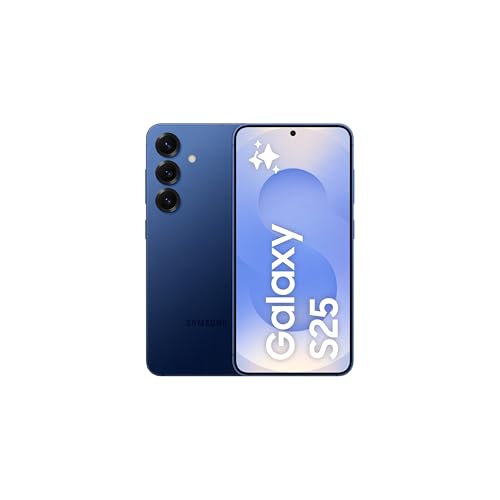
1. Samsung Galaxy S25 — the small flagship that gives up the least
Samsung’s base Galaxy S25 is the reference point for this entire category, because it is the one phone that shrinks the body without shrinking the ambition. At 146.9mm tall, 70.5mm wide, and 7.2mm thick, it is the shortest and narrowest slab in this guide, and at 162 grams it is close to the lightest as well. A thumb genuinely reaches across its 6.2-inch display, the top corners included, and the flat frame gives fingers a definite edge to hold rather than a curve to chase. For readers whose last several phones kept growing and whose patience shrank in proportion, this is the handset that restores the older feeling of a phone being a one-handed tool.
The specification refuses to behave like a compromise model. The processor is the same flagship-tier Snapdragon silicon fitted to the larger S25 models in the US market, the memory is a generous 12GB, and the camera system keeps the arrangement small phones usually lose: a 50-megapixel main camera, a 12-megapixel ultrawide, and a dedicated 10-megapixel telephoto with 3x optical zoom. That telephoto matters more than its modest zoom figure suggests. It is the difference between cropping a distant subject out of a wide shot and actually framing it, and it is the feature whose absence defines most of the other picks in this guide. The display is a bright 120Hz AMOLED panel, the build carries an IP68 rating, and Samsung’s software commitment stretches to seven years of operating system and security updates, which makes the small body a long-term home rather than a stopgap.
The trades are the familiar physics of a small frame. The battery is a 4,000mAh cell, the smallest in this guide alongside nothing else particularly close, and heavy users who stream, navigate, and photograph through a long day will feel that ceiling in a way owners of the bigger S25 models will not. Wired charging runs at 25W, which is respectable rather than fast, and the phone asks its owner to plan around overnight or desk charging instead of quick top-ups. Storage starts at 128GB with no card slot, so the 256GB version is the safer buy for anyone who keeps a phone for the full update window. None of these are surprises; they are the published cost of the smallest flagship body Samsung sells, stated plainly so the choice is an informed one.
Strengths
- Shortest and narrowest slab body in this guide at 146.9 × 70.5mm, and just 162g.
- Full flagship processor and 12GB of memory; nothing about the performance is cut down.
- A dedicated 3x telephoto camera, the feature compact phones most often surrender.
- Seven years of OS and security updates, IP68 sealing, and a bright 120Hz AMOLED screen.
Trade-offs
- 4,000mAh battery is the smallest here; demanding days will end with a charger in hand.
- 25W wired charging is mid-paced, and there is no microSD expansion at any storage tier.
- Buyers must choose between the unlocked version and carrier versions carefully, since update timing and band support follow the variant.
Who it suits
The S25 suits the reader who wants a flagship in full — processor, cameras, update runway — and simply refuses the size flagship phones have drifted into. It is the easiest recommendation in this guide to defend and the hardest to fault on anything except stamina, so if its measurements match the hand it is headed for, check price on Amazon.
Check price on Amazon: Samsung Galaxy S25
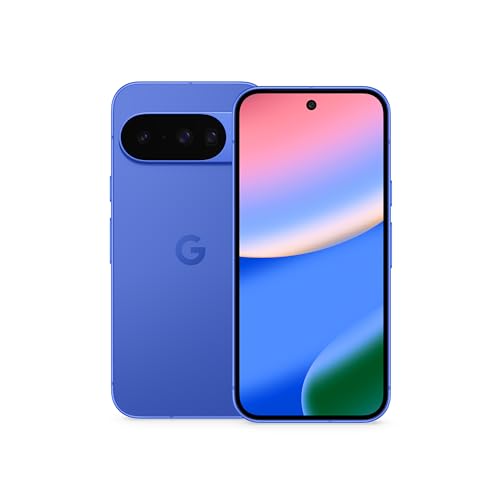
2. Google Pixel 10 — compact outline, serious weight, the camera-brain pick
Google’s Pixel 10 takes a different route to the same brief. Its 6.3-inch Actua display sits in a body measuring 152.8 × 72.0 × 8.6mm — a fraction larger than the Galaxy S25 in every direction, still comfortably inside one-handed territory for most adults, and still far below the dimensions of the plus-sized phones it competes with on features. The surprise is the scale reading: 204 grams. That is heavier than the budget Pixel 9a, heavier than both flips when their weight is judged per the area they cover, and heavy enough that the Pixel 10 feels dense and deliberate in the hand rather than light. Buyers choosing it for size should know they are choosing a small footprint, not a small mass.
What the weight buys is a notably complete package. The Tensor G5 processor drives Google’s camera processing and its on-device AI features, and this generation of the base Pixel finally adds a dedicated telephoto camera — a 10.8-megapixel unit with 5x optical zoom — alongside the 48-megapixel main camera and a 13-megapixel ultrawide. For a compact phone, a 5x optical reach is remarkable; it out-zooms the Galaxy S25 on paper while keeping the body in the same class. The battery is a 4,970mAh cell, far larger than the Samsung’s, and the phone adds magnetic Qi2-style accessory support under Google’s Pixelsnap name, plus the usual IP68 rating and seven years of updates. Readers comparing the wider Pixel family can cross-check the line-up in our guide to the before deciding which size of Pixel fits their hand.
There is also a software character to the Pixel that spec tables flatten. Google ships its phone with the features it announces each year — call screening, transcription, photo tools that remove distractions or rescue group shots — and those features tend to arrive on Pixels first and stay exclusive for a while. For buyers who use them, they are a real part of the value; for buyers who do not, the phone’s appeal rests on the camera hardware and the clean interface. The magnetic accessory system deserves a practical note as well: it aligns wireless chargers and snap-on wallets and grips the way Apple’s MagSafe does, which partly compensates for the phone’s weight by making one-handed grips and stands easier to attach. A compact phone with a magnetic ring grip is, in daily handling, a more secure phone than its dimensions alone suggest.
The costs are the ones Google’s spec sheet does not hide.
Charging is mid-paced rather than rapid, the ultrawide camera’s modest sensor is a step below the main camera’s quality, and the Tensor line has never been the pick for sustained heavy gaming, where rival flagships hold their peak performance longer. The 204-gram weight deserves repeating as a genuine trade rather than a statistic: in a trouser pocket it announces itself, and during long reading sessions the wrist notices. Variant discipline matters at purchase, too. The unlocked model and carrier models are not identical — the Verizon version, for instance, carries different 5G band hardware — so the listing has to match the network the phone will actually live on.
Strengths
- 5x optical telephoto in a compact body; the longest genuine zoom reach in this guide.
- 4,970mAh battery, much larger than the other flagship slab here.
- Seven years of updates, IP68, magnetic accessory support, and Google’s camera processing.
- 152.8mm height keeps the top of the screen within one-handed reach for most hands.
Trade-offs
- 204g is heavy for the class; this is a small-footprint phone, not a light one.
- Charging speeds are unremarkable and the ultrawide camera trails the main camera.
- Carrier and unlocked variants differ in 5G bands, so the exact version matters.
Who it suits
The Pixel 10 suits the photographer who thinks in zoom lengths and the software loyalist who wants Google’s features and update policy in a body that stays under 153mm tall. Accept the weight as the price of the battery and the telephoto, and it becomes a very complete small phone, so check price on Amazon.
Check price on Amazon: Google Pixel 10
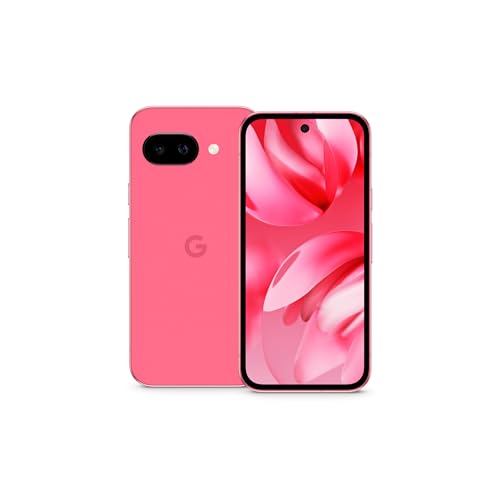
3. Google Pixel 9a — the budget pick, with a size warning attached
The Pixel 9a is the budget door into this guide, and it arrives carrying the single most instructive fact in the whole article. Its screen measures 6.3 inches, exactly the same diagonal as the Pixel 10, yet its body measures 154.7 × 73.3 × 8.9mm — taller, wider, and thicker than the flagship it shares a screen size with. The reason is no mystery: a lower price buys less miniaturisation, so the bezels grow, the frame thickens, and the diagonal stays the same while the phone in the hand gets bigger. This is why the guide ranks by body measurements. A reader who bought the 9a expecting the Pixel 10’s footprint, because the screens matched, would be holding a noticeably larger phone.
Judged on its own terms rather than against its sibling, the 9a has a great deal going for it. At 186 grams it undercuts the Pixel 10 by a meaningful margin, and its 5,100mAh battery is the largest fitted to any slab in this guide, which pairs with the efficient Tensor G4 processor to make stamina a genuine strength rather than a spec-sheet claim. The camera system covers the two lenses most people actually use — a 48-megapixel main camera with optical stabilisation and a 13-megapixel ultrawide — and Google’s processing keeps results consistent. The display is a 120Hz Actua panel, the body is IP68-rated, the back is a matte composite that shrugs off fingerprints and fine scratches better than glass, and the update commitment matches the flagship line at seven years.
The economies show where economies usually show. There is no telephoto camera at all, so distant subjects are a digital crop and nothing more. Charging, wired and wireless alike, runs at modest speeds that ask for patience. The thicker bezels make the front of the phone look a generation older than it is, and the plastic back, however practical, feels like what it is. None of this disqualifies the 9a; it defines it. It is a phone for buyers whose budget is fixed and whose priority list runs battery, camera consistency, and software support ahead of zoom lenses and slim frames. Its presence here is honest but conditional: it qualifies on its screen class, and its body is the largest of the four slabs, so the smallest-handed readers should look at the two picks above it first.
Strengths
- 5,100mAh battery — the largest slab battery in the guide — in a 186g body.
- Same seven-year update commitment and IP68 rating as the flagship Pixel line.
- Dependable main and ultrawide cameras with Google’s processing behind them.
- Matte composite back resists fingerprints and hides wear well.
Trade-offs
- Taller and wider than the Pixel 10 despite the identical 6.3-inch screen size.
- No telephoto camera; zoom is digital cropping only.
- Slow charging by current standards, and visibly thicker screen bezels.
Who it suits
The 9a suits the value-first buyer who wants the Pixel software experience and two-day stamina without paying flagship money, and who can accept a body at the large end of compact. If the hand test passes and the missing telephoto is no loss, it is the sensible spend in this guide, so check price on Amazon.
Check price on Amazon: Google Pixel 9a

5. Samsung Galaxy Z Flip 8 — compact is what happens when it closes
The Galaxy Z Flip 8 needs its measurements stated in the right order, because the wrong order tells a lie. Open, it is a 166.9mm-tall phone with a 6.9-inch screen and a width of 75.4mm: a full-size handset by any definition, wider than every slab in this guide, and not a one-handed device in any honest sense. Folded, it becomes an 85.7 × 75.4mm square, 13.1mm thick, weighing 180 grams — a package shorter than any phone here by more than 60mm, which drops into a jacket pocket, a small bag, or the coin-adjacent corner of a jeans pocket where no tall phone survives. The Flip 8 is in this guide for the folded number, and everything about it should be judged on whether the reader’s problem is pocket space rather than hand reach.
Samsung has had several generations to refine the formula, and the current one is the most complete. The large cover display handles notifications, replies, widgets, and viewfinder duties without opening the phone, which quietly changes how the device is used across a day: the main screen is for sessions, the cover screen is for glances, and a good share of interactions never unfold the phone at all. The US version runs Snapdragon flagship silicon, the build carries water resistance that earlier flips could not offer, and the camera system, while built around a main and ultrawide pair, doubles as its own tripod — half-fold the phone, set it on a table, and it frames group shots and video calls at angles no slab can manage without a stand.
The flip trades are structural and should not be minimised. The folded thickness of 13.1mm is nearly double the Galaxy S25’s depth, so the pocket bulge is shorter but fatter. The inner display’s crease is visible at some angles and palpable under a thumb, the screen’s protective surface demands more care than ordinary glass, and there is no dust-resistance rating to match the water rating, so beach bags and building sites are hostile territory. There is no telephoto camera, battery capacity sits below the slab flagships, and the buyer must confirm the listing’s region: the US model carries the Snapdragon chipset, while other markets’ variants differ, so an imported listing is not automatically the phone described here.
Strengths
- Folds to 85.7mm tall — the smallest pocket footprint in this guide by a wide margin.
- Large, genuinely useful cover display that handles quick tasks without unfolding.
- Flagship Snapdragon performance in the US version, plus water resistance.
- Half-folded FlexCam positioning gives tripod-free angles for photos and calls.
Trade-offs
- Open, it is a 75.4mm-wide, 6.9-inch phone; it is not compact in the hand.
- 13.1mm folded thickness, a visible crease, and no dust-resistance rating.
- No telephoto camera, and regional chipset variants make listing checks essential.
Who it suits
The Flip 8 suits the pocket-space buyer: anyone whose constraint is bags, pockets, and clutter rather than thumb reach, and who likes the cover-screen habit of answering less and opening the phone deliberately. If folded height is the measurement that matters in your life, check price on Amazon.
Check price on Amazon: Samsung Galaxy Z Flip 8

6. Motorola Razr (2025) — the friendlier-priced way to fold small
Motorola’s base Razr for 2025 makes the same argument as the Samsung flip at a softer point in the market, and in one respect it makes the argument better. Folded, it measures 88.1 × 74.0mm — a touch taller than the Flip 8, a touch narrower, and noticeably thicker at 15.9mm — and it weighs 188 grams. Open, it is a 171.3mm-tall handset with a 6.9-inch main display, which is to say it is the tallest phone in this guide when unfolded. The cover display is the headline: a 3.6-inch panel that Motorola lets owners run far more of the phone from than early flip screens allowed, including full apps, so the closed phone is a working tool rather than a notification mirror.
Ownership of a flip carries habits slab owners never think about, and the Razr asks for the standard set. The inner screen arrives with a factory-fitted protective film that should not be peeled away, fingernails are discouraged on the soft display surface, and the hinge prefers pockets free of grit. None of this is onerous, and Motorola’s hinge is rated for a large number of folds, but a buyer who is careless with phones in dusty or sandy places should count the care routine as part of the price. In return, the closed phone is unusually satisfying to live with: it stands at half height on a desk during video calls, it props itself for selfies and group shots without accessories, and answering it by flipping it open and ending a call by closing it are small pleasures that slab owners underestimate until they have lived with them.
The hardware underneath is honest mid-range equipment.
A MediaTek Dimensity 7400X processor handles everyday duties without flagship pretensions, the battery is a 4,500mAh cell that benefits from how much work the cover screen absorbs, and the camera pair covers main and ultrawide duties competently. Motorola sells the phone directly in the US through normal retail channels, which matters more than it sounds like: no import questions, no band puzzles, a standard warranty, and carrier availability for buyers who prefer to buy that way. Among the two flips, this is the one that asks the least homework of its owner.
The discounts show up in the details. The processor is a clear class below the Samsung’s silicon, and heavy games will find its ceiling quickly. The 15.9mm folded thickness is the fattest folded profile here, the hinge and inner screen carry the same crease and care considerations as any flip, and Motorola’s software update commitment is shorter than the seven-year promises elsewhere in this guide, which shortens the phone’s sensible lifespan. Model discipline matters at checkout: the plain Razr (2025) is a different phone from the Razr+ (2025) and the Razr Ultra, with different screens and processors, and the pick here is the standard 256GB Razr — listings that blur the three names are listings to walk away from.
Check price on Amazon: Motorola Razr (2025)
Head to head: the two decisions most readers actually face
Galaxy S25 versus Pixel 10
This is the flagship-slab decision, and it splits cleanly along two lines: the hand and the camera philosophy. The Samsung is smaller in every dimension — 5.9mm shorter, 1.5mm narrower, 1.4mm thinner — and a remarkable 42 grams lighter, which is the single largest weight gap between any two phones in this guide. For a buyer whose compact requirement is strict, that ends the argument before it starts. The Pixel counters with equipment: a bigger battery by nearly a thousand milliamp-hours, a 5x telephoto against the Samsung’s 3x, and magnetic accessory support the S25 lacks. Its camera processing also produces a different look — more contrast, more computational sharpening of difficult scenes — that some photographers prefer and others find heavy-handed. Software taste plays a part too: Samsung’s One UI is dense with options and its own app ecosystem, while the Pixel runs Google’s cleaner interpretation of Android with features that arrive there first. Neither phone is the wrong answer. The S25 is the better object to hold; the Pixel 10 is the better-equipped tool, and it asks the hand to carry the difference.
Galaxy Z Flip 8 versus Razr (2025)
The flip decision is about what the closed phone is for. Samsung’s cover display is the more polished glanceable surface, the Flip 8 folds 2.8mm thinner than the Razr, and its Snapdragon processor is a clear class above the Motorola’s Dimensity, which matters if the phone will be kept for years and asked to run demanding apps at the end of them. The Razr answers with the cover screen that behaves most like a phone in its own right — full applications rather than widgets — with official US sales and a standard warranty, and with a price position that makes the experiment of flip ownership considerably cheaper to try. Thickness cuts the other way than buyers expect: the Razr is the thicker fold, so in a tight pocket the Samsung is the tidier package despite the shared concept. Readers who know they love the format and intend to keep the phone should lean Samsung; readers who are flip-curious, or who want the cover screen to do the most work, will find the Motorola the friendlier first step.
Strengths
- Folds to 88.1mm tall, with a 3.6-inch cover screen that runs real apps.
- Sold officially in the US with standard warranty and carrier options.
- 4,500mAh battery, aided by how much daily work the cover screen absorbs.
- The softer-priced entry into flip ownership in this guide.
Trade-offs
- Mid-range processor; demanding games reach its limits quickly.
- 15.9mm folded thickness and a 171.3mm open height — the extremes of the guide.
- Shorter update commitment than the Samsung and Google picks.
Who it suits
The Razr suits the flip-curious buyer who wants the folded footprint and the cover-screen lifestyle without paying flagship money or importing anything. It is the relaxed route into a small-when-closed phone, and if that balance sounds right, check price on Amazon.
What to look for in a compact Android phone
Read the body measurements, not the screen diagonal
Height governs reach, width governs grip, and weight governs fatigue; the diagonal governs advertising. Before comparing anything else, line up the three body figures from the manufacturer’s own specification page. A phone under roughly 150mm tall and 71mm wide suits most hands for true one-handed use. Between 150 and 155mm tall, most people manage with occasional shuffling of the grip. Beyond that, one-handed use becomes a claim rather than a description. This guide’s Pixel 9a and Pixel 10 share a 6.3-inch screen and differ by 2mm of height, 1.3mm of width, and 18 grams — proof, in a single brand’s own line-up, that the diagonal is the least informative number on the page.
Decide which kind of compact you actually need
Slab compacts and flips solve different problems. A small slab is easier to use every minute it is in the hand and no easier to store. A flip is no easier to use — its open width matches a normal phone — and dramatically easier to store, at the cost of folded thickness and a hinge to look after. Buyers who complain about thumb strain and one-handed reach need the slab. Buyers who complain about pockets, bags, and phones sliding out of shallow storage need the flip. Choosing the wrong kind is the most expensive mistake in this category, because both kinds advertise themselves with the same word.
Expect the battery trade, and size it against your day
Small frames hold small cells. In this guide the slab flagships run 4,000 to 4,970mAh while larger phones routinely exceed that, and the honest question is not which battery is biggest but which battery survives the buyer’s actual day. Light users — messages, browsing, some photography — will find even the smallest cell here adequate. Users who navigate, stream video over mobile data, and hotspot will not, and for them the Pixel 9a’s 5,100mAh or the Pixel 10’s larger cell is not a luxury but the deciding feature. Charging pace is the pressure valve: a compact phone with modest battery and modest charging speeds asks for a planned charging routine, and buyers who cannot offer one should weight stamina higher than any other line in the table.
Know which camera you are giving up
The telephoto lens is the standard casualty of the small body, because its optics need depth and width that compact frames begrudge. Of the five picks here, only the two flagship slabs carry a dedicated telephoto — 3x on the Galaxy S25, 5x on the Pixel 10 — and the flips and budget models crop digitally instead. For portraits at a natural distance and subjects across a room or a field, optical reach is the difference between a photograph and an enlargement. Buyers who rarely zoom past arm’s length will never miss it; buyers who shoot school stages, wildlife, or sport from the seats should treat the telephoto as a headline feature, not a footnote, and let it steer them to the top of the list. Comparing against what full-size flagships do with their extra camera room is a useful baseline before accepting the compact trade.
Use the software help that small phones still need
Even a compact phone occasionally asks for two hands, and every maker here builds software compensation worth switching on. One-handed modes shrink the interface toward a corner of the screen; reachability gestures pull the top of the display down to thumb level; and the keyboard on every pick can be floated, narrowed, and docked to one side for thumb typing. These features matter more, not less, on the boundary-sized picks like the Pixel 9a, whose extra millimetres put notification shades and top-corner icons just past a smaller hand’s comfortable arc. Buyers with genuinely small hands should also weigh the fingerprint reader’s position — under-display readers sit at different heights, and side-mounted readers on power buttons suit some grips better. The tape measure starts the decision, but a minute spent enabling the reachability settings on the phone you already own will tell you how much of your one-handed struggle is size and how much is setup.
Budget for the case, because it changes the measurements
Every figure in this guide describes a naked phone, and almost nobody carries one. A typical case adds a millimetre or two to each side, several millimetres to the height, and ten to twenty grams — enough to push a boundary pick like the Pixel 10 from manageable to marginal for a small hand, and enough to make a folded flip’s lump noticeably lumpier. Slim cases preserve most of a compact phone’s point; rugged cases quietly undo it. Grip texture matters as much as bulk: a matte, slightly soft case can make a narrow phone feel more secure than a wider phone in a glossy shell. The practical advice is to choose the case with the same care as the phone, to favour the thinnest protection that matches your drop history, and to re-check the total width against your hand rather than assuming the spec sheet’s number is the one you will live with.
Treat flips as two phones and check both
A flip’s specification has two states, and both deserve scrutiny. Folded, check the thickness honestly — 13 to 16mm is a lump, not a sliver — and check what the cover screen can actually do, because cover screens range from notification panes to near-complete interfaces. Open, check the width and the crease, and remember the inner display’s surface is softer than ordinary glass and wants a gentler life. Water resistance now appears on premium flips, but dust resistance generally does not, and no flip in this guide should be bought by someone whose work involves grit, sand, or flour dust without understanding that gap.
Storage, SIMs, and the features small phones quietly drop
Compact bodies shed expandable storage first: none of these five phones keeps a microSD slot, so everyone should buy storage for the phone’s whole lifespan rather than its first year — the higher tier is usually the wiser purchase on a device with a seven-year update window. SIM arrangements vary in ways listings understate. Some compact flagships are eSIM-only in the US, others pair one physical slot with eSIM. Travellers who swap local SIMs, and users whose carrier still issues physical cards, should confirm the arrangement on the exact variant rather than the model name. None of these five phones keeps a 3.5mm headphone socket, so buyers are committing to USB-C or wireless audio. None of these details is a reason to reject a phone, but each is a reason the cheapest listing of the right model can still be the wrong purchase.
Verify the variant before the price
Compact phones are unusually variant-sensitive. The same model name can hide different storage, different 5G bands between unlocked and carrier builds, different chipsets between regions on the flips, and entirely different model codes on imports from overseas sellers. The listing title, the model code, and the manufacturer’s regional specification page should all agree before a purchase. This is also where the import warning generalises: any phone bought outside its official sales region carries the seller’s warranty rather than the manufacturer’s local one, and its band support was designed for somewhere else. None of that makes such purchases wrong; it makes them purchases that require reading.
How this shortlist was built
The entry rules came first and the product names second. A slab phone had to publish a display of 6.3 inches or smaller and a body height under roughly 155mm on its manufacturer’s own specification page; a flip had to fold below 90mm in height, with its open dimensions stated wherever its size is discussed. Models that failed those gates were excluded no matter how strong their cameras or processors were, which is why several excellent large phones, and a few nominally small ones whose bodies told a different story, do not appear. Within the gates, the five picks were chosen to span the real decision space rather than to crown a single winner: two flagship slabs with different strengths, one budget slab, one lightweight import with features the others dropped, and two flips at two market levels. Figures quoted for height, width, thickness, weight, battery capacity, and camera hardware are the manufacturers’ published numbers, and where sources disagreed, the manufacturer’s own regional specification page was treated as the authority. Variant warnings — carrier versus unlocked builds, regional chipsets, import model codes — are included in each pick because in this category the wrong variant is a more common disappointment than the wrong phone.
Frequently asked questions
Is a 6.3-inch phone genuinely compact?
By current standards, yes — with the body caveat this guide keeps repeating. A 6.3-inch screen inside a 152.8mm body, like the Pixel 10, is a compact phone in 2026 terms. The same diagonal inside a 154.7mm body with thick bezels is at the boundary. Judge the height and width, and the answer takes care of itself. A practical test helps: hold your current phone, note where your thumb naturally stops, and compare that reach against the candidate’s published height; a phone whose top edge sits within a few millimetres of that point will feel familiar from the first hour.
Are flip phones really smaller than compact slab phones?
In a pocket, yes; in a hand, no. Folded, the flips here are 85.7 and 88.1mm tall, far shorter than any slab, but they are 13.1 and 15.9mm thick, and open they are full-size phones 74 to 75mm wide. They are smaller to store and identical to use. Which of those two facts matters is a personal answer, not a specification.
Why do compact phones have smaller batteries?
Volume. A battery is a physical object competing with the screen, cameras, speakers, and frame for the same shallow box, and a shorter, thinner box holds a smaller one. Manufacturers partially compensate with efficient processors, high-density cell chemistry, and software management, but the ceiling is set by physics, which is why this guide treats battery size as a first-order buying criterion rather than a detail. It is also why the flips are less disadvantaged than they look: a 4,500mAh cell in the Razr sits closer to the slab flagships than the format’s reputation suggests, because so much of a flip’s day runs on the small cover screen, which sips power compared with lighting the full panel.
Will a compact phone still get software updates for years?
The Samsung and Google picks here carry seven-year update commitments, which makes them unusually safe long-term purchases for their size. The flips run shorter policies. For buyers who keep phones four years or more, the update window deserves a place in the decision alongside the tape measure, since a small phone that stops receiving security patches has stopped being a bargain at any size.
Small phones ask their buyers to know themselves: which measurement hurts, which feature is expendable, which trade is worth it. Get those three answers right, and the compact Android you end up with will feel less like a compromise than like the first phone in years that was sized for a hand instead of a spec sheet — and that fit, once felt, is very hard to give up.