reviewstook.com is reader-supported. When you buy through links on our site, we may earn an affiliate commission.
Where to buy
A warbler gives you perhaps two seconds. It lands, it tilts its head, it is gone — and a general wildlife camera that was still waking up, still hunting focus, still deciding whether that smudge is an animal at all, records a branch. The hunt for the best digital cameras for wildlife birding comes down to that two-second problem: birds, not wildlife in general. Deer stand around. Birds negotiate nothing.
Three capabilities separate a birding camera from a merely good camera. Reach, because birds keep their distance and the crop factor of a smaller sensor can be worth more than megapixels. Silence, because a mechanical shutter’s clatter at a hide window or a dawn chorus walk ends encounters that a silent electronic shutter would have prolonged. And the pair of tricks that feel like time travel: pre-capture, which keeps frames from before you pressed the button, and sustained burst with bird-eye detection, which holds focus on a head the size of a thumbnail while wings blur around it.
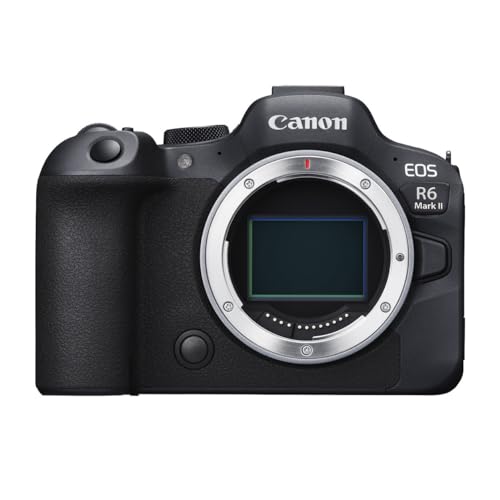
- Canon EOS R6 Mark II: linked pick, full-frame body whose bird detection and pre-shooting suit perched and passing birds alike
- Sony Alpha 7 IV: linked pick, the bird-eye autofocus benchmark among full-frame hybrids at sensible money
- Nikon Z50 II with Two Lenses: linked pick, crop reach in a light two-lens kit for walking birders and hide days
- Canon EOS R7: prose-only pick, the crop-sensor birding specialist whose pre-capture and pixel density were designed for this exact subject
- OM System OM-1 Mark II: prose-only pick, the computational birding body with live tools and deep bird detection in a weather-sealed shell
- Sony Alpha 6700: prose-only pick, compact crop body whose AI-driven subject recognition punches far above its size for birds in flight
Landscapes share a shelf with wildlife in many guides; not here. Every judgement below — buffer depth, blackout behaviour, how a body feels after four hours on a neck strap — was made through a hide window or under a flight path, with birds as the only client.
Key Takeaways
- For birds, effective reach beats sensor size: a crop body with a modest telephoto often out-frames a full-frame flagship.
- Pre-capture ends the era of the almost photograph — the take-off and the strike get recorded before your reflexes vote.
- Bird-eye detection is not a gimmick; at telephoto distances the eye is the only focus point that matters.
- Silent electronic shutters keep hides and dawn walks productive, but test them under artificial light for banding.
- Buffer depth decides flight sequences: a fast burst that stalls after one second is a perched-bird camera.
- The lens budget is the real budget; choose the body whose telephoto path you can actually afford to walk.
In this guide
Quick Picks
| Pick | Badge | Why it earns its place |
|---|---|---|
| Canon EOS R6 Mark II | Full-frame birding all-rounder | Bird detection, pre-shooting and a buffer that swallows a whole flight sequence. |
| Sony Alpha 7 IV | Bird-eye benchmark | Eye detection for birds inside a mature, rentable telephoto ecosystem. |
| Nikon Z50 II with Two Lenses | Walking birder’s kit | Crop reach and two zooms at a weight your neck forgives by evening. |
| Canon EOS R7 | Crop birding specialist | Pixel density on distant birds plus pre-capture for the take-off moment. |
| OM System OM-1 Mark II | Computational hide companion | Deep bird detection and live composite tools in a sealed, compact system. |
| Sony Alpha 6700 | Pocketable flight tracker | AI subject recognition in a body that disappears into a birding vest. |
How did we test cameras against a subject that never poses?
We judged by encounters, not specifications. A birding body was asked four questions drawn from real mornings. Does it find a small bird against moving branches before the bird leaves? Does it stay silent enough that the next bird lands anyway? When a perched bird explodes into flight, does the camera own frames from before the explosion? And after two hundred frames of a feeding flock, is the buffer still writing calmly or has the camera locked the photographer out of the next arrival?
Reach arithmetic formed the second sieve. We compared what each system actually puts on a bird at a given distance — sensor crop, pixel density on the subject, and the telephoto lenses a normal budget can reach within that mount. A body whose longest affordable lens is short is a short birding camera whatever its badge says, and we scored systems, not spec sheets.
Field manners closed the assessment: viewfinder blackout during bursts, because a birder tracks through the finder; control layout usable with gloves at a February hide; weather sealing for the marsh at dawn; and battery stamina across a cold morning’s waiting, which is most of birding, punctuated by seconds of violence.

Canon EOS R6 Mark II — Full-frame birding all-rounder
Birders who want one body for the heron at dawn and the warbler at noon keep arriving at this Canon. Its subject detection names birds explicitly, the eye lock holds through the head-bobbing that defeats lesser systems, and the pre-shooting function quietly banks frames from before the shutter press — so the kingfisher’s dive, which no human reflex has ever honestly caught, lands on the card anyway. That single feature rewrites a birder’s relationship with perched birds: you watch, you wait, and when the moment detonates, the camera has already been working.
Flight work is where the buffer earns respect. A full-frame body pouring high-speed frames into a shallow buffer is a sprinter with no stamina; this one sustains its burst through a raptor’s whole pass across a hide, still writing while the next bird arrives. Viewfinder behaviour during those bursts keeps the bird framed rather than replaced by a slideshow of its recent past, which is the difference between tracking and archaeology.
Canon’s telephoto path is the grown-up consideration. The RF mount offers everything from sensibly priced mid telephotos to professional glass that costs like a car, and rental houses stock the range deeply. A birder can start honest and grow without changing bodies — the mount is the mortgage, and this body is a house worth extending.
Concessions: full-frame reach must be bought with focal length, since there is no crop factor helping, and electronic-shutter users should test for banding under the artificial lights of indoor hides or evening roost watches. Neither dents the verdict for a birder wanting one body to do the whole year.
- Class: Full-frame mirrorless, interchangeable lenses
- Birding signature: Bird detection with pre-shooting capture
- Burst character: Sustained high-speed bursts with a deep buffer
- Shutter options: Silent electronic or mechanical, selectable per situation
- Telephoto path: Deep RF range from starter zooms to pro glass
Strengths
- Pre-shooting banks the take-off before reflexes react
- Buffer sustains whole flight sequences
- Detection holds bird eyes through clutter
Trade-offs
- Reach must be bought in millimetres, no crop help
- Pro RF telephotos are a serious investment
- Electronic shutter needs a banding check under hide lights
Best for: birders wanting one full-frame body for perched, passing and flying subjects
Not suited for: walkers who count every gram on long reserve trails
Adopt one discipline with this body and your keeper rate climbs within a month: leave pre-shooting armed whenever a bird is perched and restless, and review the banked frames at the hide rather than at home. Knowing which moments the camera rescued teaches you which birds were about to move — the oldest birding skill, now with evidence.

Sony Alpha 7 IV — Bird-eye benchmark
Sony’s bird-eye autofocus set the standard that rivals still chase, and on this body it remains a small marvel: a heron’s eye found across a reed bed, a gull’s eye held through a banking turn against a glaring sea. Bird photography is focus at the limit of distance, and the eye is the only honest target — a frame sharp on the wing and soft on the eye is a delete, however dramatic the pose. This camera understands that hierarchy in its bones.
The ecosystem argument is at its strongest here. Sony’s telephoto catalogue, extended by third-party makers, gives birders the widest spread of long lenses at every budget tier, including the mid-price long zooms that most real birding is actually done with. A birder building over years — body now, longer lens next spring, faster lens eventually — finds no dead ends on this mount.
Stills of perched birds benefit from resolution that tolerates cropping, because even long lenses meet birds that keep another ten metres of dignity. The files hold together under the crop a small passerine demands, and the body’s custom buttons let a birder park bird-detection and silent mode where cold thumbs can find them without a glance.
Where does it yield? Burst depth and sheer frame rate sit a step behind dedicated speed bodies, and there is no pre-capture to rescue the take-off — your reflexes remain the weakest component, as they were for a century of birders. For flight tracking and perched portraiture, the trade is easy to accept.
- Class: Full-frame mirrorless, interchangeable lenses
- Birding signature: Bird-eye autofocus with real-time tracking
- Files: Resolution that survives cropping into distant subjects
- Telephoto path: Widest long-lens spread across budgets
- Controls: Custom buttons for detection and silent mode
Strengths
- Eye lock at distances where rivals give up
- Telephoto lenses exist for every stage of a birder’s life
- Crop-tolerant files rescue distant perched birds
Trade-offs
- No pre-capture for the take-off moment
- Burst depth trails dedicated speed bodies
- Full-frame weight on long walks adds up
Best for: flight trackers and perched-bird portraitists building a lens collection over years
Not suited for: reflex-sceptics who want the camera to catch take-offs for them
Program the memory recalls as habitats — one for open water and sky, one for woodland clutter, one for the hide — because bird autofocus behaves differently against each background. Sony’s birders who make that small investment stop negotiating with menus while a rarity crosses the reserve.

Nikon Z50 II with Two Lenses — Walking birder’s kit
Most birding is walking. The reserve trail, the coastal path, the woodland loop before work — and a kit that punishes the walker gets left at home by the third weekend. This two-lens Nikon outfit is the birding answer for the ambulatory: the crop sensor stretches the longer zoom’s reach into genuine birding territory, subject detection inherited from Nikon’s flagships recognises birds, and the whole system rides in a small bag that never once makes you reconsider the outing.
Reach arithmetic flatters this kit in a way newcomers underestimate. The crop factor means the telephoto end frames a bird as a substantially longer lens would on full-frame, and for perched and slow-moving subjects — the waders, the fence-post kestrels, the ducks that tolerate a careful approach — the results are honestly comparable to systems costing far more and weighing far more. Birding is a hobby of patience and proximity craft; this kit rewards both.
The detection deserves respect rather than the usual crop-camera apology. Birds are a named subject category, eye focus engages at working distances, and the electronic shutter keeps a hide session silent. A beginner birder learns real technique on this body — fieldcraft, exposure discipline, burst timing — because the camera is not the bottleneck; the birder is, which is exactly how skills grow.
Limits appear at the extremes: fast flight against clutter at dusk asks more of the autofocus and the sensor than either happily gives, and the two kit zooms are daylight friends rather than dawn specialists. Treat this as the kit for the ninety percent of birding that happens in walkable light, and it is not a compromise — it is the sensible centre of the hobby.
- Class: Crop-sensor mirrorless, sold with two zoom lenses
- Birding signature: Crop reach with named bird detection
- Weight: Full kit lighter than many single full-frame telephotos
- Shutter: Silent electronic option for hides
- Learning curve: Friendly controls, flagship-style detection
Strengths
- Reach per gram is the best in this guide
- Two lenses included cover the whole reserve
- Detection and silence suit real hide work
Trade-offs
- Dusk flight pushes autofocus and sensor hard
- Kit zooms are daylight tools
- Single card slot — copy cards each evening
Best for: walking birders, reserve regulars and beginners who will actually carry their kit
Not suited for: dedicated flight specialists working at last light
Carry this kit with the long zoom mounted and the wide zoom pocketed, never the reverse. Birds announce themselves at distance and forgive nothing while you swap lenses; landscapes, which use the wide lens, wait politely for you to change. That one habit converts more walks into photographs than any setting on the camera.
Canon EOS R7 — Crop birding specialist
If a committee of birders designed a crop camera, the minutes would read like the R7’s specification. A dense sensor puts an unusual number of pixels on a distant bird, the crop factor stretches telephotos, pre-capture banks the moment before the shutter press, and the burst rate serves flight sequences that embarrass larger bodies. It is not a general camera that birds happen to suit; it is a birding instrument that also does general work.
Pixel density is the argument to understand. Two cameras can frame a distant osprey identically, but the one placing more pixels across the bird delivers a printable file where the other delivers a suggestion. The R7’s density, paired with a mid-price long zoom, produces the combination most working birders actually dream about: reach and detail without a lens that needs its own luggage.
Dual card slots, a proper joystick and weather resistance pitched at field use complete the specialist picture. The camera expects rain at the marsh and mud at the hide and is built accordingly, with controls that stay operable in gloves — a detail that separates February birding equipment from catalogue birding equipment.
Its compromises are the crop format’s eternal ones: high-ISO files at a rainy dawn trail the full-frame picks, and the very fastest glass for the mount is still developing. Birders who live in bright and middling light — again, most birding — will rarely send a invoice to either limitation.
- Class: Crop-sensor mirrorless, interchangeable lenses
- Field signature: High pixel density plus pre-capture
- Cards: Dual slots for mirrored field insurance
- Build: Weather-sealed, glove-friendly controls
- Burst: Fast rates for flight sequences
Strengths
- More pixels on distant birds than any rival here
- Pre-capture rescues dives and take-offs
- Built for weather and gloves
Trade-offs
- Rainy-dawn files trail full-frame
- Fast native glass still arriving
- Crop view takes adjustment for full-frame converts
Best for: dedicated birders who want maximum reach per unit of money and weight
Not suited for: photographers who mostly shoot other subjects in the dark
Feed the R7’s density with technique: it magnifies camera shake as faithfully as it magnifies birds, so monopod discipline and shutter-speed honesty pay double here. Birders who master support on this body produce files that make full-frame owners quietly check their settings.
OM System OM-1 Mark II — Computational hide companion
The OM-1 Mark II comes from the system that treats birding as a first-class citizen rather than a marketing category. Its bird detection is deep and stubborn, the Micro Four Thirds crop doubles the reach of every telephoto — turning manageable lenses into genuine birding glass — and the body is sealed against the weather that sends other photographers home from the seawall. Add computational tools like in-camera neutral-density simulation for silky water behind a wader, and the camera feels designed by people who have actually sat in hides.
Weight is the system’s founding argument. A complete OM birding outfit — body, long zoom, spare battery — can weigh what a rival’s lens alone weighs, and birding is a hobby measured in miles and hours. Photographers whose backs or years argue against full-frame telephoto rigs find here not a lesser hobby but the same hobby, continued.
The buffer and burst behaviour suit flight work, with capture options that bank frames around the shutter press for the strike-and-dive moments. Stabilisation, long the brand’s glory, steadies long lenses handheld at shutter speeds that let dawn light stay usable a few precious minutes longer.
The small sensor’s physics remain: at the highest sensitivities, files grain sooner than full-frame, and subject isolation — the melted background of a full-frame portrait — is harder to buy at any price. Birders who shoot in honest light for documentation and delight, rather than for gallery walls at midnight, accept the exchange gladly.
- Class: Micro Four Thirds mirrorless, interchangeable lenses
- Birding signature: Doubled lens reach with deep bird detection
- Tools: Computational ND and capture-around-the-press features
- Build: Strong weather sealing for seawalls and marshes
- Stabilisation: Excellent for handheld telephoto at dawn
Strengths
- Complete birding kit at half the usual weight
- Detection and sealing built for real field days
- Stabilisation extends handheld dawn shooting
Trade-offs
- High-ISO grain arrives earlier than full-frame
- Background melt limited by the format
- Smaller system means a smaller rental pool
Best for: mobile birders covering miles, and anyone whose back votes in equipment decisions
Not suited for: low-light specialists chasing crepuscular rarities
Exploit the format’s gift shamelessly: because the lenses are small, carry the mid zoom as well as the long one. Woodland birds at close range are this system’s home turf, and the birder who can swap down in seconds photographs the warbler at six metres instead of cropping the one at sixty.
Sony Alpha 6700 — Pocketable flight tracker
The a6700 compresses Sony’s birding intelligence into a body that vanishes into a vest pocket between encounters. Its AI-driven recognition names birds among a roster of subjects, tracks them with the tenacity its full-frame cousins are famous for, and does so from a crop sensor that lends every telephoto a reach bonus. For the birder who also hikes, travels and refuses to dedicate a whole bag to one hobby, this is the camera that keeps birding portable.
Flight is its party piece. The tracking holds a swallow’s erratic line better than a body this small has any right to, and the burst rate feeds sequences long enough to find the one frame where wings, light and eye align. Paired with a compact long zoom, the outfit covers a coastal path day without ever announcing itself as equipment.
Video runs strong for the birder who records behaviour notes and song, and the stills files — from a modern crop sensor with serious processing — print far beyond the size sceptics predict. Battery life, historically the compact body’s confession, is respectable here, surviving a long morning’s intermittent bursts.
Ergonomics are the tax: a smaller grip, a viewfinder that sits to the corner, and controls that reward small hands. Gloved February work is possible but less graceful than on the bigger bodies in this guide. Birders in kind climates, or with kind hands, pay the tax without noticing.
- Class: Crop-sensor mirrorless, interchangeable lenses
- Tracking signature: AI subject recognition with bird tracking in a compact body
- Reach: Crop bonus on every telephoto
- Battery: Strong stamina for its size class
- Video: Capable for behaviour and song recording
Strengths
- Flagship-style tracking in a pocketable body
- Crop reach suits travel birding
- Stamina outlasts a long morning
Trade-offs
- Small grip taxes large or gloved hands
- Corner viewfinder divides opinion
- Single slot, so nightly copies matter
Best for: travelling birders and hikers who refuse a dedicated camera bag
Not suited for: hide specialists wanting the largest controls and buffers
Rig the a6700 as a ready camera, not a packed one: lens mounted, detection on birds, hanging from a cross-body strap under your arm. Its entire value proposition is being operable in the four seconds a hawk gives you over a ridgeline, and a camera in a bag is a story about a hawk.
Why does pre-capture change bird photography so completely?
Because the decisive bird moments are reflex-proof. A dipper drops from its stone, a tern folds and dives, a perched shrike simply ceases to be there — each event completes inside the quarter-second a human needs to perceive and press. For a century, birders caught these moments by luck, by anticipation, or by holding the shutter down on spec and filling cards with perched stillness.
Pre-capture mechanises the anticipation. While you half-press and watch, the camera records a rolling buffer; when the bird moves and you react, frames from before your reaction join the sequence. The take-off’s first wingbeat — the frame that tells the story — survives. Photographers describe the first week with the feature as mildly unfair, then as indispensable.
The discipline it demands is battery and card awareness, since a camera perpetually buffering is a camera perpetually working. It also rewards the old virtue of watching: pre-capture rescues the moment for birders who were looking at the right bird. It does nothing for the birder facing the other way, and fieldcraft remains undefeated as the primary technology of the hobby.
How silent does a birding camera actually need to be?
Silent enough for the distance you work at. At a feeding station or a hide window, birds feed within metres, and a mechanical shutter’s clack lands like a slammed door in a quiet room — repeated bursts can empty a station that took an hour of patience to fill. Electronic silence at those ranges is not a luxury; it is the entry fee.
Distance forgives. A raptor photographed across a valley neither hears nor cares about your shutter, and mechanical mode’s immunity to rolling-shutter distortion and light banding makes it the wiser choice there. Skilled birders treat shutter mode as a range decision, switching as subjects approach rather than pledging allegiance to one mode for the whole day.
Test the silent mode where you will use it. Artificial light in visitor-centre hides and evening roost spots can paint banding across electronic frames, discovered only at home. Ten test frames at the hide, reviewed at full magnification, settle the question for that location in under a minute.
What makes a bird in flight photograph succeed?
Position before equipment. A bird flying toward morning light, against a clean background, at a predictable crossing — a gap in a hedge, a river bend, a headland’s updraft line — will surrender portraits to a modest camera. The same bird against a cluttered woodland at noon defeats flagships. Flight photography is mostly the art of standing where birds commute, learned by watching flight lines empty-handed before ever lifting a camera.
Settings then serve the position: tracking autofocus with bird detection, a shutter speed honest about wing speed — hovering kestrels forgive, diving peregrines do not — and a burst long enough to contain the wing position you actually want, which is rarely the first frame. Panning smoothness, practised on gulls and pigeons without shame, is the physical skill underneath all of it.
Review ruthlessly and specifically. After a flight session, ask of every failure which of the four culprits it was: focus, shutter, position or pan. Sessions debriefed that way improve a birder measurably within a month; sessions judged as simply good or bad luck improve nothing but superstition.
How should a birder budget between body and lens?
Reverse the instinct of most camera buyers. In birding, the lens is the instrument and the body is its handle: reach, aperture and focus speed at the long end decide what is photographable at all. A mid-range body behind a serious telephoto out-photographs a flagship behind a short zoom on every bird that keeps its distance, which is most of them.
A workable split sends the majority of the budget to the lens and chooses the body for detection, buffer and sealing rather than flagship status. Our six recommendations were assembled with that split in mind — several exist precisely because their systems offer an affordable long zoom that makes the whole outfit coherent.
Plan the second purchase while making the first. Systems differ in what the upgrade path costs: the longer zoom next year, the faster prime eventually. A birder who maps that path avoids the expensive grief of changing mounts, which is the only purchase in this hobby that buys nothing photographic at all.
How do the seasons change what a birding camera must do?
Spring is a detection problem: migrants arrive in waves, foliage thickens daily, and the bird is a rumour behind leaves for all but two seconds of the hour. Cameras earn their keep with subject detection that finds a partly hidden bird and with bursts disciplined enough to own the gap in the branches when it comes. Autumn reverses the challenge — the leaves fall, the birds gather, and the work becomes flight and flock photography at wetlands and estuaries, where buffer depth and tracking across open sky decide the day’s harvest.
Winter is an endurance audit disguised as a season. Batteries surrender charge to the cold, so bodies with honest stamina — or pockets kept warm for rotation — outlast their specification sheets. Gloves turn fine controls into archaeology, which is why this guide weighted glove-operable dials and joysticks so heavily; the camera that cannot be adjusted at minus five is a camera photographing with yesterday’s settings. Winter light, low and golden for hours, rewards the photographer whose kit simply stays functional longest.
Summer belongs to the young birds and the long evenings: fledglings at feeding stations where silence is the entry fee, waders on evening mudflats where heat shimmer punishes the longest lenses and rewards the birder who works closer instead. Across all four seasons the pattern repeats — the winning camera is rarely the one with the highest peak specification, but the one whose strengths align with the season’s actual obstacle, and a birder choosing a system should ask which two seasons dominate their local patch before asking anything else.
What happens inside a hide during a well-run session?
The session begins before the birds wake: arrive in darkness or low light, settle the seat, the tripod height and the camera’s settings while nothing is watching, and pre-focus on the perch or the water’s edge where the action is contracted to happen. Exposure is set for the subject’s world, not the hide’s gloom, and the shutter mode is chosen for the distance at hand — silent for the feeding station’s regulars, mechanical for the far shore. A hide rewards the birder who front-loads every decision, because the visitors will not pause while a menu is consulted.
Patience then becomes a technical skill with measurable output. Movement inside a hide telegraphs through the structure; the photographers who fill cards are the ones who raise the camera once, slowly, and keep it raised, letting birds cycle through the frame rather than chasing each arrival with a swing of the lens. Pre-capture, where a body offers it, was designed for precisely this theatre: the watched bird, the held breath, the explosion that the camera banked while the birder was still deciding.
The session ends with the discipline nobody photographs: cards copied that evening, batteries charged, the hide left cleaner than it was found, and notes — species, light, settings that worked — written while the morning is still legible. Birding knowledge compounds exactly like that, in notebooks, and the camera’s contribution to a great season is often just being ready inside a routine the birder built around it.
How should you choose between burst speed and resolution for birds?
The choice depends on which failure you meet more often. If your deletes are moments missed — the strike between frames, the wing position that never occurred — burst speed and pre-capture are your medicine, and the bodies built around them will feel like a new hobby. If your deletes are files too small to print or crop — the distant rarity rendered as forty pixels of evidence — resolution on the subject is the medicine, and dense crop sensors exist precisely to administer it.
Most birders, honestly audited, meet the first failure more: birds are quick, and moments are the hobby’s currency. But habitat argues too. Open-country birders working at long range against the sky crop mercilessly and should weight pixel density; woodland birders working close in clutter should weight detection and burst, because their birds fill the frame when they appear at all — the problem is the appearing. Let your patch cast the deciding vote, since it will cast it anyway over the camera’s lifetime.
The consoling truth is that the current generation has narrowed the trade until it is a preference rather than a sacrifice. Nothing recommended here forces a birder to accept a broken version of either virtue — each is a coherent answer to the question, tuned to a different habitat, budget and pair of shoulders.
How do you read a bird’s behaviour before it flies?
Flight is announced, for those who learn the language. A perched bird that stops feeding and stares, that defecates, that crouches and leans into the wind or shuffles its feet for grip, is composing its departure — and the birder watching through the finder with pre-capture armed, or a finger already resting on the shutter, owns the next second instead of chasing it. Species have dialects: herons telegraph with a neck retraction, finches with a sudden stillness, raptors with a long, assessing look around. The local patch teaches its own dialects free of charge, one observed departure at a time.
The discipline underneath the reading is stillness of a particular kind: not frozen, but settled. A birder who has stopped moving, whose camera is already raised and whose settings were chosen for the departure rather than the perch, converts behaviour-reading into photographs. A birder still adjusting exposure when the signs appear owns a beautiful view of an empty branch and a story about reaction time. This is why the hide session described earlier front-loads every decision — the camera’s job is to be ready; the birder’s job is to be reading.
Keep a notebook for a season and the skill compounds measurably. Note the species, the sign, the seconds between sign and departure, and whether the frame was won. Patterns emerge that no guide can give you because they belong to your patch, your light and your regulars — the individual kingfisher whose pre-dive shuffle you now know like a friend’s tell. Equipment multiplies this knowledge; it has never once substituted for it.
Why do some bird photographs feel alive while sharper ones feel dead?
Because life in a bird photograph lives in the eye and the moment, not in the feather count. A frame with a catchlight in the eye, the head turned a degree toward the light, the body caught mid-intention — about to hop, calling, shaking off water — reads as a creature. A technically perfect profile of a bird staring into the middle distance reads as a specimen. The cameras in this guide serve the living frame with eye detection and burst depth, but the choice of moment belongs to the photographer, and it is usually made in the half-second of deciding whether to press at all.
Background is the second author of aliveness. A bird isolated against a clean wash of colour becomes a portrait sitter; the same bird against fractured branches becomes a puzzle. Working a few steps sideways to place the subject against water, sky or distant foliage is the least technological skill in this guide and the one most visible in its results. Birders who scout backgrounds with the same seriousness as subjects produce the frames that stop other birders mid-scroll.
Light finishes the argument. The low sun of the first and last hours models a bird’s form, lights the eye and warms the plumage; the overhead noon flattens all three. A birder’s calendar is therefore written by the sun rather than the clock, and the camera’s contribution — clean files at the sensitivities dawn demands, silence at the distances dawn allows — is exactly the contribution the picks above were chosen to make.
How do you photograph birds at a garden feeding station?
The feeding station is the beginner’s hide and the expert’s studio, and it rewards the same preparation as any session in this guide. Begin with the photograph’s geography rather than the birds’: place a natural perch — a branch with character, not a plastic rod — between the feeder and your chosen background, at a distance your lens fills honestly, so birds pause on it in the queue for food and pose against distance rather than against the fence. Light decides the station’s orientation: morning sun over your shoulder, the perch lit, the background in shade, and the garden becomes a studio that assembles itself daily.
Camera settings at a station are a portraitist’s settings. The birds are close, so depth of field thins and the eye must be the focus point — this is where bird-eye detection earns its marketing in a single afternoon. Shutter mode goes silent, because the audience is three metres away and has opinions about noise. Burst discipline matters more than burst speed: short, chosen bursts at the head-turn and the wing-stretch, not a motor-drive greeting for every arrival, because the station’s regulars habituate to a calm photographer and repay calm with behaviour — bathing, squabbling, courtship — that no distant hide session buys.
Work the station across seasons and it becomes a long-term study rather than a snapshot location. The same perch photographs fledglings in June, moulting adults in August and winter visitors in January, and the birder who keeps the station learns individual birds the way the hide taught patience: by return, by recognition, by name almost. Several of the picks in this guide — the light Nikon kit, the little Sony, the Tough-class compacts’ bigger cousins — exist for exactly this scale of birding, close to home and rich beyond its size.
How do the six birding tools compare in the field?
| Pick | Format | Reach story | Signature birding strength |
|---|---|---|---|
| Canon EOS R6 Mark II | Full-frame | Bought in focal length | Pre-shooting plus detection |
| Sony Alpha 7 IV | Full-frame | Deepest lens catalogue | Bird-eye autofocus |
| Nikon Z50 II with Two Lenses | Crop | Crop bonus, kit included | Lightest walking outfit |
| Canon EOS R7 | Crop | Density plus crop bonus | Pixels on distant birds |
| OM System OM-1 Mark II | Micro Four Thirds | Doubled reach | Weight and weather sealing |
| Sony Alpha 6700 | Crop | Crop bonus, compact | Tracking in a vest pocket |
Which birding mistakes waste more mornings than any equipment flaw?
Chasing is the first and oldest. Birds read a walking human as a predator with an itinerary, and the birder who strides at every subject photographs departure after departure. The photographers with full cards move slowly, stop often, let birds resume around them, and use hides, cars and patience as their longest lenses. Fieldcraft is not a soft skill decorating the hobby; at working distances it is most of the hobby.
The second mistake is exposure by hope at dawn. Backlit birds against a bright sky record as silhouettes with halos unless the photographer deliberately compensates, and the first hour — the best hour — is all backlight. Learn your body’s exposure compensation dial with gloves on, before the reserve, not during the heron. Third is the bursting bonfire: hundreds of frames of a motionless duck, filling the buffer and the card, leaving nothing for the arrival that matters.
Fourth, and quietest, is neglecting sound. Many birders find birds by ear first, and the photographer who learns the ten common songs of their local patch starts every walk with a map the eyes alone would take an hour to draw. Cameras record birds; attention finds them.
Final Recommendation
Choose by the birding you actually do. The Canon EOS R6 Mark II is the safest single answer — detection, pre-shooting and buffer in one full-frame body. Sony’s Alpha 7 IV suits the birder building a long-lens collection over years, while its little a6700 sibling serves the traveller. The Canon EOS R7 is the reach-per-money champion for the dedicated, the OM-1 Mark II the endurance champion for walkers, and the Nikon Z50 II kit the outfit most likely to be carried daily — which, in a hobby ruled by presence, may be the strongest recommendation of all. Buy the system whose lens path you can afford, then spend the saved money on the oldest birding technology: time in the field.
Whichever system you choose, make the decision once and then stop shopping for a year. Bird photography punishes the perpetually undecided more than it punishes any specification: the birder who spends the season learning one body’s detection habits, one lens’s balance and one patch’s flight lines will out-photograph the birder who spends it migrating between systems in search of a decisive advantage that lives, stubbornly, in the fieldcraft instead. The cameras above are all good enough to disappear. Let yours.
Frequently Asked Questions
How much zoom do I need for bird photography?
Think in terms of the frame, not the number. For most songbirds at honest distances, birders live at the long end of whatever they own and still crop; an effective reach in the range a 400mm lens gives on full-frame is the traditional starting point, with crop bodies reaching that view using shorter, cheaper lenses. Waders and raptors at reserves forgive less; garden birds at a feeder forgive almost anything.
Is a crop sensor really better for birds than full-frame?
For reach-limited subjects, often yes: the crop narrows the view so the bird fills more of the frame, and dense crop sensors place more pixels on the subject than similarly priced full-frame bodies. Full-frame answers with cleaner high-ISO files and shallower depth of field. The honest summary is that crop wins the distance argument and full-frame wins the darkness argument, and birders should pick by which argument their local patch keeps making.
What shutter speed freezes a bird in flight?
It depends on the bird and the wingbeat phase. Large, slow-flapping birds — herons, swans, big raptors — can be frozen at speeds a perched-bird photographer already uses, while small passerines and diving terns demand the fastest speeds your light allows. A practical method: start fast, review at full magnification, and slow down deliberately only when you are chasing motion blur in the wings as an effect rather than an accident.
Do I need a tripod for birding?
For hides and patient watches, support helps enormously — a monopod suits most telephoto work and walks easily between spots, while a tripod with a fluid or gimbal head owns the long hide session. For walking birding with the lighter kits in this guide, modern stabilisation has made handheld work entirely respectable. Match support to session length rather than to pride.
How do I photograph birds ethically?
The bird’s welfare outranks the frame, always: no flushing for a flight shot, no baiting where it is discouraged, no lingering at nests, and playback calls used sparingly if at all, especially in breeding season. Most reserves publish codes that amount to one sentence — if the bird changes its behaviour because of you, you are too close. The best bird photographers are remembered by other birders as the ones the birds ignored.
What is the single best upgrade for a beginner birder?
Time at one local patch, repeated across seasons — but if the question insists on equipment, it is the longer lens, not the newer body. Reach changes what is photographable; a body upgrade mostly changes how comfortable the photographing feels. Beginners who buy reach first and learn their patch produce, within a year, the portfolios that make body-upgraders envious.
How can I practise flight photography without travelling to a reserve?
Your local sky is already full of training partners. Gulls at a harbour, pigeons in a square, swifts over a summer street and crows commuting at dusk all offer the same tracking, panning and exposure problems as rarer birds, at unlimited volume and zero travel cost. Photographers who serve a month’s apprenticeship on common birds arrive at the reserve with their technique already paid for, and spend their expensive mornings on watching rather than learning. The rarity deserves your attention, not your practice swings.
Which lens should a beginner birder buy first?
The longest sensible zoom your system offers at the price your budget survives — bought after the body, chosen by the patch you actually visit. Garden and woodland birders working at close range can begin with a mid telephoto and grow; wetland and coast birders should save longer for the bigger zoom, because their subjects keep a distance no technique negotiates. Buy the lens your habitat demands, in the mount your body speaks, and resist the exotic prime until the zoom has taught you which focal length your birding truly lives at.
Should I rent a lens or a body before committing to a system?
Rent the lens first if your local hire shop allows it, because the lens is the longer relationship and the one your hands must love at arm’s length for hours. A weekend with the candidate telephoto on your current body — or on a hired body from the same system — teaches more about weight, balance and focus behaviour than a month of reviews. Birders who rent before migrating systems almost never migrate twice, and the hire fee is the cheapest tuition in the entire hobby.
How do I photograph birds from a car?
The car is the hide birds already trust, and many reserves are best worked from its window. Approach slowly, never brake sharply beside a subject, and switch the engine off well before shooting distance — vibration is the car-hide’s native enemy, and a beanbag on the window frame defeats it better than any tripod gymnastics inside a vehicle. Keep the camera inside the car’s silhouette, because a lens protruding from a window reads as a threat where the car itself reads as scenery. Some of the finest raptor and wader portraits in any portfolio were made by photographers who simply learned to be patient inside a parked car.
Related Guides
Continue with best telephoto lenses for bird photography on a budget when the body is chosen, browse best cameras for general wildlife and safari trips for the mammal side of the craft, and read best binoculars and scopes for bird identification to strengthen the finding half of the hobby.


