reviewstook.com is reader-supported. When you buy through links on our site, we may earn an affiliate commission.
Where to buy
A toddler does not want a camera. A toddler wants the thing you keep pointing at them — the magical box that makes the clicking noise and shows the dog on its back. Choosing the best digital cameras for toddlers means choosing for a photographer aged one to four: a person who will drop the camera before they frame with it, chew it before they clean it, and press every button including the ones you hoped they would never find. This guide is written from the parent’s side of that transaction. Safety comes first and is not negotiable — no small detachable parts a small mouth can liberate, nothing that pinches, heats or opens into a battery compartment without a screwdriver. Durability comes second, because the floor is this camera’s natural habitat. Picture quality comes a distant, honest third — and yet it matters, because the photographs a three-year-old takes of the cat, the ceiling and their own left foot are genuinely precious, and a camera that really records them beats a toy that only pretends.
A boundary needs drawing against our neighbouring guides. This site also covers cameras for older children — the eight-to-ten-year-olds who can be trusted with a real compact, real responsibility and real results. Toddlers are a different species of user entirely. Nothing in this guide has small parts, a neck strap long enough to tangle dangerously, a menu a child must read, or a price that makes a parent weep when it meets the patio. Five picks are chunky toy-form cameras that take real pictures, described as prose-only picks because honest toddler cameras live outside our verified pool. The sixth is a genuinely rugged real camera, clearly labelled for what it is: a parent-operated or closely supervised option, not a toy to hand over and forget.
- The Big-Button First Camera: prose-only pick, the classic chunky toddler camera with two handles and one enormous shutter button
- The Rubber-Armoured Drop Tester: prose-only pick, a bumper-wrapped camera built for the throw-it-and-see years
- The Two-Eye Viewfinder Camera: prose-only pick, a look-through design that teaches framing without a screen to crack
- The Instant-Gratification Camera: prose-only pick, the toddler-safe take on print-and-see photography for instant rewards
- The Bath-and-Beach Splash Camera: prose-only pick, sealed simple fun for water play under a parent’s eye
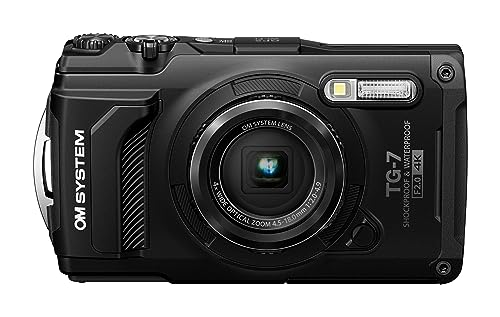
- OM SYSTEM Tough TG-7: linked pick, the genuinely rugged real camera — for parent hands and supervised moments, clearly not a toddler toy
Read the safety sections of this guide as the product itself. A toddler camera is a thing that will be mouthed, thrown, sat on, buried in sand and washed in juice, and its review must be conducted in that world rather than in a studio. The picks below were judged in the order a parent actually worries: Can it hurt them? Will it survive them? Will it delight them? And only then — will the pictures be any good?
Key Takeaways
- For ages one to four, safety outranks everything: sealed battery compartments, no detachable small parts, no long straps.
- Survival is the second spec — the camera will be dropped daily, so bumpers, few moving parts and no extending lens are the design that lasts.
- One big button beats twenty small ones; a toddler camera succeeds when a small hand cannot press the wrong thing.
- Real recording matters more than resolution: a toy that truly saves the photo teaches cause and effect, a pretend one teaches nothing.
- Screens are for reviewing together — the shared laugh over the toddler’s-eye view is the product’s real output.
- Keep one real, rugged camera in the family for the moments that deserve it, in parent hands, as the sixth pick explains.
In this guide
Quick Picks
| Pick | Badge | Why it earns its place |
|---|---|---|
| The Big-Button First Camera | First camera, age one-plus | Two handles, one huge button, real photos — the shape toddlers succeed with first. |
| The Rubber-Armoured Drop Tester | Survival champion | Bumpers on every corner for the throwing phase of photographic development. |
| The Two-Eye Viewfinder Camera | Screen-free framer | Look-through viewing that builds the point-and-shoot instinct safely. |
| The Instant-Gratification Camera | Print-and-show reward | A physical picture in small hands within moments of the click. |
| The Bath-and-Beach Splash Camera | Water-play companion | Sealed against splashes for bath, beach and paddling pool sessions. |
| OM SYSTEM Tough TG-7 | Parent-operated real camera | Waterproof, drop-proof real photography — adult hands, supervised sharing. |
What makes a camera safe for a one-to-four-year-old?
Start with the mouth, because the toddler will. Everything in this age group is tasted, so the camera must present no small part that chewing, twisting or a good throw can detach — no lens caps on strings of hope, no decorative dials that unscrew, no memory-card doors that a determined fingernail can open into a swallowable card. The battery compartment is the critical examination: it should require a screwdriver or a genuinely adult two-stage latch, because button cells and small batteries are the one camera component that can turn a toy into an emergency.
Straps deserve a paragraph of suspicion. A long neck strap on a running toddler is a snag looking for a branch, a banister or a sibling. Short wrist loops that break away under load, or no strap at all on a camera light enough to carry in two hands, are the honest arrangements for this age. Any strap a toddler camera ships with should be inspected by the parent with genuine hostility before the first outing — pull it, twist it, imagine the climbing frame.
Materials and heat complete the audit. Paints and finishes should be toy-grade and non-toxic, because they will be ingested in trace amounts whatever the box promises. The camera should stay cool in use and in a sunny car, its screen should be recessed behind bumpers rather than presented as the first surface to meet the floor, and its charging arrangement — for rechargeable models — is a parent’s job conducted away from small hands, with covers that close flush afterwards. None of this is glamorous. All of it is the review.
Why does durability matter more than picture quality at this age?
Because the camera’s working environment is a drop zone. Toddlers photograph from standing height onto kitchen tile, from the pushchair onto pavement, from the high chair onto whatever the floor is made of — and they do it not once but as a method of inquiry. A camera that survives is a camera that gets used for a year; a camera that cracks in week one teaches the parent to buy nothing and the child to want the forbidden real one. Every pick below was chosen for a body that treats impact as a design case: rubber over corners, no lens that extends to be snapped, no dial that protrudes to be sheared.
Durability also protects the photographs. A toddler’s archive — the dog from knee height, the underside of the table, forty frames of a beloved shoe — accumulates on the camera’s card across months, and a camera that dies takes its un-transferred memories with it. Parents should treat transfer as a weekly ritual for exactly this reason: the camera is mortal, the pictures are not allowed to be.
Picture quality, given survival, has a modest and honest bar. The photograph should be recognisable, colourful and printable at the small sizes grandparents request. Beyond that bar, resolution is a fiction for this age — the toddler’s composition is gloriously indifferent to sharpness, and the family’s delight in the results has never once, in the history of toddlers, been diminished by a soft corner.
How did we choose these picks for photographers who cannot yet read?
Every candidate was interrogated as a toddler would interrogate it. Could a small hand operate it without a grip lesson — handles or a shape that sits in two palms? Could the shutter be found by instinct, ideally the biggest, brightest object on the body? Did the camera respond fast enough that the press and the picture felt connected, because a two-second delay teaches a two-year-old that the box is broken? Did it forgive — surviving the drop test of ordinary life, waking quickly, and never presenting a menu in a language its user will not read for three more years?
Safety evidence outranked features throughout: sealed compartments, toy-standard materials, strap arrangements that survive hostile inspection. Gimmicks were taxed heavily. Filters, games and selfie modes amuse parents in the shop and mean nothing to the user; the features that earned their place were the ones a toddler can discover alone — a satisfying click, an instant picture on the screen, a sound that rewards without startling.
Finally, each pick was assigned its honest age band and supervision level, because “toddler camera” spans the unsteady one-year-old mouthing the corners and the nearly-four-year-old composing a portrait of the cat. The guide states those bands per pick rather than pretending one camera serves the whole journey equally.
The Big-Button First Camera — First camera, age one-plus
The archetype of the toddler camera earns its archetype status honestly. Two chunky handles flank a body sized for palms that cannot yet span a teacup, and between them sits the entire interface: one enormous shutter button, placed where a thumb lands by gravity. The toddler does not learn this camera; the toddler grabs it, the button is pressed by the grabbing, a picture happens, and the screen shows the dog. Cause and effect — the first photographic lesson — is taught by the shape alone.
Its pictures are real, which is the line between this pick and the toy-shop pretenders that click without recording. The resolution is modest by any adult measure and entirely sufficient for the fridge door and the family chat, and the files transfer to a parent’s computer by cable or card for the weekly rescue ritual this guide recommends. A simple video mode exists on most cameras of this type and produces the toddler-narrated tours of the house that families keep for decades.
Safety is the design’s home ground. The battery and card live behind a screwed panel, the lens is fixed behind a flat protective window with nothing to extend or detach, and the body is a single moulded shell with handles that are part of its structure rather than attachments. There is no strap worth the name on the best examples, or only a short loop — inspect whatever yours arrives with, as the safety section insists.
The honest limits are growth and delicacy of detail. A nearly-four-year-old may find the single button babyish beside an older sibling’s real camera, and the screen, while recessed, is still the surface to protect. Buy it for the one-to-three window it serves, and it will be outgrown before it is outworn — the correct order of events for everything in a toddler’s life.
Parents report the same discovery with this type: hand it over without a lesson. Instructions are for adults; the toddler’s method — press, look, laugh, press again — is the manual the design was written around, and interfering with it helps nobody.
- Class: Toy-form real camera, two-handle body
- Safety signature: Screwed battery panel, fixed lens window
- Interface: One oversized shutter button
- Output: Real stills and simple video, parent transfer
- Age band: Roughly one to three years
Strengths
- Operable by instinct from the first grab
- Real photographs, not pretend clicks
- Sealed, moulded, nothing to detach
Trade-offs
- Outgrown by ambitious four-year-olds
- Modest resolution by adult standards
- Screen still needs bumper respect
Best for: a first camera from the first birthday onward
Not suited for: older preschoolers wanting a “real” grown-up camera
Charge it, clear its card, and hand it over at a moment when something photogenic is already happening — the dog asleep, the bubbles out, the birthday candles lit. A toddler’s first camera should debut at a party, not at a lesson, and its first saved frame deserves to be a memory rather than a test.
The Rubber-Armoured Drop Tester — Survival champion
Some toddlers photograph; others conduct materials research. For the child whose every possession is tested against gravity, the armoured camera wraps the electronics in a thick rubber bumper — corners swollen into crash structures, the body recessed inside its own protective exoskeleton like a tortoise that takes pictures. It is the pick for the throwing phase, which is not a phase so much as a philosophy at age two.
The armour changes the parent’s behaviour, which is its real feature. A camera you are not afraid of is a camera that goes everywhere: the muddy walk, the beach, the soft-play centre, the restaurant table where it will be dropped in the name of photographing the chips. Cameras kept safe stay home; this one accumulates the year. Its seals usually extend to splash resistance as a side effect of the bumper’s coverage, though full immersion belongs to the splash pick below.
Operation follows the toddler grammar: big button, instant screen feedback, a handful of chunky controls that tolerate being pressed in combination, out of order and with jam on them. Picture quality sits at the honest toddler bar — recognisable, cheerful, printable small — and the internal memory or card arrangement on good examples keeps the archive behind the same screwed discipline as the first pick.
Weight is the trade the armour demands. The bumper that saves the camera also loads the small arms carrying it, and the youngest toddlers may two-hand it like a kettlebell for shorter sessions. Check the specific model’s heft against your child’s enthusiasm in the shop if you can; a camera carried is a camera used, and the best armour is the kind that still gets picked up.
Longevity is this pick’s closing argument. Of all the toddler cameras, the armoured type is the one most likely to be handed down to a sibling in working order, its bumpers scuffed into a service record. In a product category defined by disposability, that is a genuinely distinguishing virtue.
- Class: Toy-form camera in a full rubber bumper
- Safety signature: Recessed everything, sealed panels
- Survival note: Built for repeated drops onto hard floors
- Interface: Chunky controls, jam-tolerant
- Age band: Roughly eighteen months to four years
Strengths
- The camera parents stop worrying about
- Goes everywhere, photographs everything
- Hand-me-down build quality
Trade-offs
- Heavier in small hands
- Bumpers bulk it beyond pockets
- Picture quality is the honest minimum
Best for: vigorous toddlers and outdoor families
Not suited for: the youngest, slightest one-year-olds
Let this camera live by the door with the wellies rather than in a drawer. Its whole purpose is presence at the muddy, splashy, droppable moments — and a camera that lives where life happens will quietly assemble the most truthful photo album of the toddler years anyone in the family owns.
The Two-Eye Viewfinder Camera — Screen-free framer
Before screens, children learned photography by looking through a hole, and a small family of toddler cameras keeps that wisdom. The two-eye design — twin look-through viewfinders sized for a small face, or a single generous eyepiece — lets the toddler frame the world directly, both eyes’ worth of binocular instinct engaged, with no glass screen presented to the floor as the body’s weakest surface. What it teaches is the oldest photographic act: point your face at the thing, then press.
The absence of a rear screen changes the ritual in ways many families come to prefer. There is no instant review to demand seventeen repetitions of the same frame; the picture is taken, the moment continues, and the photographs are discovered later, together, on the parent’s computer — a small weekly ceremony of surprises that screen cameras, for all their feedback, cannot reproduce. Attention stays on the outing rather than on the device.
Durability benefits structurally. Screens crack; eyepieces shrug. The viewfinder type is often the lightest pick in this guide and the hardest to kill, with the fixed lens behind its window and the controls reduced to the shutter and perhaps a mode dial large enough to be a feature rather than a hazard. Battery life, unburdened by a display, stretches impressively — a genuine mercy on holidays.
The trade is feedback, and it cuts both ways developmentally. A toddler learning cause and effect gets a slower lesson when the picture cannot be seen at once, which is why this pick suits the older end of the toddler band — the three-year-old who can hold a small mystery until the evening reveal. Younger toddlers usually thrive on the screen’s instant reply, and forcing the viewfinder on them serves the parent’s nostalgia rather than the child’s learning.
As a second toddler camera it is close to perfect: the first camera taught pressing, this one teaches looking. Families who arrive here from the big-button pick will find the graduation natural, and the photographs — framed by an eye rather than by a screen’s edges — often show the difference.
- Class: Toy-form camera, look-through viewfinder
- Safety signature: No screen to crack, sealed panels
- Teaching note: Framing by eye, review as a shared ceremony
- Battery story: Long life without a display to feed
- Age band: Roughly three to four years
Strengths
- The toughest optical arrangement available
- Keeps attention on the world, not the device
- Weekly reveal becomes a family ritual
Trade-offs
- No instant feedback for the youngest users
- Framing is approximate by design
- Less delightful for cause-and-effect beginners
Best for: older toddlers graduating from a first camera
Not suited for: one-year-olds needing instant screen rewards
Institute the Sunday download ceremony with this camera: same time, same computer, the week’s photographs appearing like a story the toddler authored and half-remembers. That ritual — anticipation, revelation, narration — is early visual literacy, and it costs nothing but a cable and twenty unhurried minutes.
The Instant-Gratification Camera — Print-and-show reward
A photograph a toddler can hold is a different species of reward from a photograph on a screen. The instant-print toddler cameras — chunky bodies that produce a small print seconds after the shutter — convert the abstract click into an object: warm paper, a picture of the cat, carried in a fist to be shown to grandma, the dog and the fridge door in turn. For the show-and-tell temperament, no other pick competes.
The toddler-safe versions of this idea are engineered carefully around its hazards. The printing is thermal or similarly ink-free on the child-friendly models — no cartridges to open, no chemicals to meet — and the paper emerges from a slot sized to prevent small fingers exploring the mechanism. Parents should verify the print technology of any specific model with the same hostility applied to straps and battery doors: ink-free thermal paper is the standard to insist on for this age.
The economics are the honest catch. Prints cost paper, paper runs out at the exact moment of the birthday party’s best frame, and a toddler with unlimited printing authority will document the floor in forty copies. The families who thrive with this pick treat the paper as a budgeted consumable — a roll for the outing, restocked by parents — and keep the digital files as the archive of record, since toddler prints fade and get loved to pieces in approximately that order.
Picture quality is the lowest in this guide and entirely beside the point. The print is small, soft and monochrome or gently coloured depending on the type; its value is theatrical rather than archival. Judged as a photograph it is a sketch; judged as a toddler’s experience of photography — I made this, here it is, it is yours — it is the richest pick here.
Supervision notes are specific: the print slot and the paper’s edge deserve a watching brief with the youngest users, and torn paper pieces join the general small-object vigilance of the toddler years. Within those ordinary cautions, this is the camera most likely to be remembered by name at the child’s eighteenth birthday.
- Class: Toy-form instant-print camera
- Safety signature: Ink-free thermal printing, guarded slot
- Reward note: A holdable picture in seconds
- Running cost: Paper is a budgeted consumable
- Age band: Roughly two to four years
Strengths
- The most magical feedback loop available
- Photographs become gifts toddlers can give
- No ink, no cartridges, no mess
Trade-offs
- Paper costs accumulate cheerfully
- Print quality is a sketch, not an archive
- Prints fade and get loved to pieces
Best for: show-and-tell toddlers and grandparent-heavy families
Not suited for: parents wanting the prints to be the family archive
Start a print album — a cheap sticky-page book the toddler owns — from the first roll. The discipline of choosing which prints earn a page teaches selection earlier than any screen can, and the resulting object, chaotic and curling, will out-emote every curated album on the family’s shelf.
The Bath-and-Beach Splash Camera — Water-play companion
Water is where toddlers live their most photogenic lives and where cameras go to die. The splash camera — a sealed, simple, brightly buoyant-minded body rated for the paddling pool, the bath’s edge and the beach’s wet frontier — exists so that the summer’s best hour is not the one hour the camera spent in a dry bag. It floats or it sinks is the first question to ask of any specific model; the ones worth buying make their peace with water honestly, with sealed doors and no ambitions beyond their rating.
Its photography is deliberately primitive: fixed focus that finds everything from arm’s length to the horizon acceptable, one button, and a body that a wet hand can hold because it was shaped by people who understood wet hands. The pictures — the fountain’s crown from inside the splash zone, a sibling’s goggles at water level — have a standpoint no dry camera in this guide can occupy, and standpoint, as the interior guide in this batch insists, is half of photography.
Safety around water is the section that outranks the product. This camera is for photographing water play, never a reason to extend it: adult supervision ratios do not change because a camera is present, the camera is not a flotation device whatever its buoyancy, and bath photographs belong to the family’s private archive with the same care as every other image of a small child. The guide states these plainly because the product category occasionally forgets to.
Seals are a maintenance relationship. Sand in a door seal, a hair across a gasket, a compartment opened before the camera dried — these are how waterproof cameras drown on their second outing. Rinse in fresh water after the beach, dry before opening, inspect the seals the way the safety section taught you to inspect straps. A splash camera maintained like that serves several summers; neglected, it serves one afternoon.
As a specialist it earns its narrow place honestly. Most families will use it twenty days a year and treasure the photographs from all twenty, because water light and toddler joy are the most reliable co-conspirators in family photography.
- Class: Sealed toy-form splash camera
- Safety signature: Sealed doors, fixed focus, wet-grip shape
- Standpoint note: Photographs from inside the splash zone
- Care note: Rinse, dry, inspect seals after every outing
- Age band: Roughly two to four years, supervised
Strengths
- The only pick allowed at the water’s edge
- Standpoints no dry camera can take
- Simple enough for wet, sandy hands
Trade-offs
- A twenty-days-a-year specialist
- Seals demand adult maintenance
- Picture quality is the simple end
Best for: beach, bath-edge and paddling pool photography
Not suited for: everyday indoor use as the only camera
Assign the splash camera a hook by the towels and a rule: it is rinsed and dried by a parent before it is opened, every time, no exceptions for tired evenings. Waterproofing is not a property a camera owns; it is a habit a family keeps, and the habit is the product.

OM SYSTEM Tough TG-7 — Parent-operated real camera
The final pick breaks the pattern deliberately, and its label must be read before its virtues: this is a real camera for adult hands. The Tough TG-7 is waterproof far beyond paddling depth, rated to survive drops that would end the toy cameras above, freeze-proof, crush-resistant in its class, and capable of photographs — including close-up macro work of genuine wonder — that belong in the family’s permanent archive. It is included because every toddler household needs one camera that can go where the toddler goes and return with the definitive picture. That camera is operated by the parent.
The supervised-sharing model works like this. The TG-7 lives in the parent’s pocket at the beach, the pool, the snowy park — the environments where the family’s good camera fears to tread. The toddler’s own camera handles the toddler’s own photography; the TG-7 handles the record: the first swim, the sandcastle’s completion ceremony, the snowman’s inauguration. On calm occasions, an older toddler may hold it with a parent’s hands literally beneath theirs, feeling the real shutter’s weight — a graduation rehearsal, not a hand-over.
Its macro modes deserve their own sentence in a toddler household. The small world is the toddler’s world — woodlice, shells, the inside of a flower, a beloved leaf — and this camera photographs that world at magnifications that turn a nature table into an expedition. Parents find themselves borrowing the toddler-expedition camera for their own purposes within the week, which is the sincerest review a family camera can earn.
Why not simply give it to the toddler, given its toughness? Because toughness is not the whole of toddler safety: it is a dense, valuable object with a real lens assembly, small controls, a proper strap and a price that changes how a parent reacts to the throwing phase. A tool a parent flinches over teaches flinching. The toy picks above exist to be unflinchable; this one exists to be excellent. Both jobs are real, and confusing them serves neither.
Bought for the parent role, it will outlast the toddler years entirely — becoming the family’s holiday, snorkelling and worksite camera for a decade. Of every pick in this guide, it is the only one the child may eventually inherit rather than outgrow, which seems the right note on which to end the detailed picks.
- Class: Rugged compact camera, real optics
- Safety signature: Adult tool — supervised sharing only
- Toughness note: Waterproof, drop and freeze resistant in class
- Macro story: The small world photographed properly
- Role: The family’s definitive record at toddler locations
Strengths
- Real image quality in toddler environments
- Survives beach, pool, snow and site
- A decade of family service beyond toddlerhood
Trade-offs
- Not a hand-over toy for this age
- Controls and menus are adult-scaled
- A price that makes parents flinch
Best for: parents documenting toddler life in harsh, wet, wonderful places
Not suited for: unsupervised toddler hands
Keep the TG-7 on a short wrist loop in the parent’s pocket, charged on the same weekly rhythm as the toddler cameras’ transfers. Its job is readiness at the moments that will not recur — and a rugged camera in a drawer is just a durable way of missing them.
How do you introduce a camera to a toddler without turning it into homework?
Hand it over during life, not instead of it. The camera that arrives as a lesson — sit here, look at this, press when I say — competes with the toddler’s entire philosophy, while the camera that simply appears at the picnic becomes part of the picnic’s equipment within minutes. Model the joy rather than the technique: let the child watch you take a photograph with delight, offer the camera without ceremony, and receive the first forty frames of the ceiling with the applause usually reserved for fridge art.
Review together, briefly and warmly. The screen’s slideshow after an outing — look, the dog; look, your shoe; look, a genuinely accidental portrait of grandma that is better than the posed ones — teaches sequencing, memory and pride in one sitting. Keep the ritual short enough to end while it is still wanted. The toddler who associates the camera with shared laughter will reach for it; the toddler who associates it with correction will reach for anything else.
Let the archive be theirs. A folder with the child’s name, growing by the month, tells a story no parent’s camera roll tells: the world at knee height, the undersides and close-ups, the beloved objects photographed with a devotion adults reserve for sunsets. Parents who curate that archive gently — rescuing everything, deleting nothing in the early years — are keeping a diary their child wrote before they could write.
What should parents check on the specific box before buying?
Read the age grading as a floor, not a compliment: a camera graded three-plus has been assessed for a three-year-old’s strength and habits, and handing it to a fourteen-month-old transfers the assessment to you. Check the battery door with your own fingernails and then with a coin; if either opens it casually, walk away. Shake the camera beside your ear for the rattle of anything already loose, flex the strap mount, and look for the toy-safety markings your region uses — they are the difference between a product assessed as a toy and a gadget merely marketed at children.
Ask the dull questions that decide ownership. How do photographs leave the camera — cable, card, or an app the toddler will never see? What does the printing paper or the replacement bumper cost, and is it stocked anywhere you actually shop? Does the camera wake fast and forgive being switched off mid-thought? A toddler camera is a two-year relationship with a small machine; the unboxing is the worst possible guide to it.
Finally, buy from a seller whose returns policy understands toddlers. The specific child in your life may reject the viewfinder and adore the printer, or throw the armoured one with special dedication. A camera exchanged is a lesson learned cheaply; a camera endured is a small daily argument nobody needed.
What does a toddler actually learn from owning a camera?
More than the photographs suggest. The first lesson is agency: a press produces an effect in the world that the child caused, visible immediately, repeatable at will — one of the purest cause-and-effect machines a toddler can own. The second is attention. A child carrying a camera walks differently through a garden, stopping at the snail, the shadow, the interesting stone, because the camera has quietly taught them that looking is an activity with a souvenir.
Memory follows. Reviewing the week’s pictures rehearses the past tense in its most concrete form — that was the beach, that was the dog before his haircut — and toddlers narrate their archives with a fluency that surprises adults. Sequencing, storytelling and the radical idea that experiences can be kept all arrive disguised as play with a plastic box. None of this requires a good camera. All of it requires a real one, which is this guide’s recurring line in the sand.
There is a social curriculum too. The toddler photographer learns to ask the room’s giants to stay still, to show the result, to take turns with the magic object at the playdate. Photographs become gifts the child can make — the print pick above literalises this — and a two-year-old who has given grandma a picture they took themselves has performed an act of authorship that no received toy can imitate.
How should grandparents and gift-buyers choose without seeing the child daily?
Buy for the age the child is, in the size the child’s hands are, and resist the camera that promises to grow with them from two to twelve — it will serve both ages badly and the toddler age not at all. When in doubt between the picks here, the big-button archetype is the gift that cannot misfire for the under-threes, and the armoured type for the child whose reputation has reached you. Include the consumables in the gift: the spare paper rolls for the printer, the card, the charging cable’s twin. A camera that arrives complete is a camera used on the day.
Ask the parents one question before buying: what does the child already do to toys? The answer — cherishes, throws, mouths, floods — maps directly onto this guide’s picks more honestly than any age label. And include the receipt without embarrassment. The right camera exchanged beats the wrong camera endured, and parents will remember the generosity of the choice rather than the fact of the exchange.
Finally, deliver the gift with a small ceremony of your own: take the first photograph together, print or save it, and write the date on it. The camera will be replaced within two years; the record of its first day becomes part of the family’s furniture. Gift-buyers are purchasing a beginning, and beginnings deserve witnesses.
How do you store and maintain a toddler camera between adventures?
Give it a home at toddler height — a hook or a basket the child can reach without climbing — because a camera that must be requested from a high shelf becomes an adult’s possession with visiting rights. The home should be dry, out of the sunny window’s slow bake, and shared with nothing that leaks. A camera with a home is a camera that survives the tidy-up, which is where more toddler technology dies than in any drop.
Maintenance is a parent’s five-minute monthly ritual: wipe the shell, check the seals and the battery door’s screw for the looseness that play works into everything, clear the card after transferring, and charge before the outing rather than after the disappointment. Inspect the lens window for the scratches and jam-films that accumulate; a soft cloth restores more picture quality than any setting in the camera’s small menu.
Retirement deserves a plan too. When the child graduates to the older kids’ cameras in this site’s neighbouring guides, the toddler camera — if it is one of the durable picks — goes to a sibling, a cousin or the toy library, carrying its archive already rescued to the family store. The objects toddlers loved first have a way of being asked for again at eighteen; store the best survivor in the memory box, and let the rest serve another small photographer.
How do toddler cameras survive travel, restaurants and the grandparents’ house?
Travel is the toddler camera’s finest hour and its sternest audit. In the car it documents the journey from the only seat that faces backwards; at the service station it is dropped on the only concrete for miles; at the destination it meets sand, sea and a holiday’s worth of new floors. The armoured and splash picks were chosen for exactly this itinerary, and the packing rule is simple: the camera travels in the child’s own small bag, where its presence is the child’s responsibility in the ceremonial sense toddlers take seriously, with a parent’s duplicate cable and card in the grown-up luggage.
Restaurants reveal the camera’s secret social function. A toddler with a camera between courses is a toddler occupied by authorship rather than by escape, photographing the menu, the chips and the waiting staff with a documentarian’s focus. Venues forgive a quiet camera what they would not forgive a loud tablet, and the resulting archive — every family meal from below table height — is comedy of a very durable kind. Wipe the lens before the food arrives; jam is this genre’s weather.
At the grandparents’ house the camera becomes a bridge. The toddler photographs the visit; the grandparents appear in the archive at the child’s eye level, mid-laugh, unposed in a way adult photography rarely achieves; and the transfer ritual gives the generations a shared project with the computer as its hearth. Many families find the toddler’s camera, bought as a toy, quietly becomes the most honest chronicler of the extended family’s life — the only photographer nobody performs for.
How do the six toddler choices compare at a glance?
| Pick | Core strength | Age band | Supervision note |
|---|---|---|---|
| The Big-Button First Camera | Instinct operation, real photos | One to three | Ordinary toddler vigilance |
| The Rubber-Armoured Drop Tester | Survival and presence | Eighteen months to four | Weight check for the smallest |
| The Two-Eye Viewfinder Camera | Framing by eye, no screen | Three to four | Review together afterwards |
| The Instant-Gratification Camera | Holdable prints in seconds | Two to four | Paper budget and slot watch |
| The Bath-and-Beach Splash Camera | Water’s-edge standpoints | Two to four | Full water supervision, always |
| OM SYSTEM Tough TG-7 | Real quality, real toughness | Parent-operated | Adult hands; sharing is supervised |
Which mistakes do parents make when buying a toddler’s first camera?
Buying the pretend camera is the founding error — the toy that clicks, flashes and records nothing. It teaches the toddler that cameras are noisemakers and teaches the parent, a month later, to buy the real one anyway. The second mistake is the opposite vanity: a genuine compact camera, chosen for its specifications, handed to a two-year-old whose first act is to post it through the cat flap. Real cameras for children exist, and this site’s guides for older kids cover them; the toddler years need the sealed, chunky, forgiving instruments above.
Ignoring the battery door follows closely, then its cousin, the long strap left attached because it came in the box. Both are five-minute checks that this guide’s safety section exists to enforce. A subtler mistake is the feature-rich camera — games, filters, video effects — bought for a child who needed one button; complexity in a toddler product is a tax on the exact user least able to pay it.
The last mistake is archival: never transferring the pictures. Toddler cameras die, get lost at soft play, and retire to the toy box’s archaeological layers, and every un-rescued card takes a small, irreplaceable literature with it. The weekly transfer is two minutes; the regret is permanent. Set the ritual when the camera arrives, not when it disappears.
Final Recommendation
Match the camera to the child in front of you, not the child in the advertisement. For a first camera around the first or second birthday, the Big-Button First Camera is the surest start; for the toddler whose world is outdoors and vertical, the Rubber-Armoured Drop Tester. Graduate the three-year-old observer to the Two-Eye Viewfinder Camera, reward the show-and-tell spirit with the Instant-Gratification Camera, and let the Splash Camera own the water’s edge. Keep the OM SYSTEM Tough TG-7 in the parent’s pocket throughout — clearly an adult tool — for the definitive record of these unrepeatable years. Then transfer the pictures every week, without exception: the cameras are toys, but what they collect is not.
Frequently Asked Questions
What age can a toddler start using a camera?
From around the first birthday, with the right instrument: a sealed, chunky camera whose single button rewards the grab-and-press method a one-year-old already owns. The photographs will be accidental art — ceilings, carpets, the dog’s nose at monumental scale — and that is the correct beginning. Choose by the safety audit in this guide rather than by the birthday on the box, and supervise as you would any treasured, mouthable object.
Are toy cameras that do not save photos worth buying?
As noisemakers, perhaps; as cameras, no. The entire educational magic of a toddler camera is the loop between pressing and seeing — the discovery that the box keeps what the eye found. A pretend camera breaks that loop and teaches nothing except that boxes lie. Every pick in this guide records real images, and the price difference between pretending and recording is smaller than the difference in what the child learns.
How do I keep a toddler camera hygienic?
Treat it like the mouthed object it is. Wipe the body with a damp cloth and a mild, child-safe cleaner on the same rhythm as other favourite toys, keeping moisture away from charging ports and card doors, and let it dry fully before use. Cameras with sealed, smooth shells — most picks here — clean far more honestly than fabric-covered novelties, which is one more argument for the moulded designs this guide favours.
Should a toddler camera have a screen?
For the youngest toddlers, yes — the instant picture is the lesson, the reward and the entertainment in one. For the older toddler, the screen-free viewfinder pick in this guide offers a different and equally real education in looking. The screen itself should be recessed and bumper-guarded on any model you consider, because it will meet the floor in its first week whatever the brochures imply.
Can my toddler use my phone or an old compact instead?
Your phone is a five-hundred-piece puzzle of glass, accounts and irreplaceable data wearing a camera costume; the toddler will find the one setting you cannot undo. An old compact is tougher but still offers detachable cards, extending lenses and straps designed for adult necks. Both appear in family life under supervision and both make poor first cameras. The sealed toddler instruments exist because this exact experiment has been run by millions of households, and its results are in.
What photographs will a toddler actually take?
The world at knee height, unposed and unrepeatable: the dog’s chin, the table’s underside and its forest of legs, beloved shoes in portrait, the ceiling in forty devotional studies, and — once in a while — a frame of such accidental composition that the family prints it large. That archive, rescued weekly and kept whole, becomes one of childhood’s strangest and best documents. Buy the camera that survives long enough to collect it.
How many toddler cameras does one child need?
One, plus the family’s. The toddler’s own camera should be a single, familiar object — its constancy is part of the learning — while the parent’s rugged camera covers the definitive record. A second toddler camera enters sensibly only as a specialist: the splash model joining the everyday one for a beach holiday, or the printer arriving as a birthday’s deliberate upgrade. Collections are an adult hobby; toddlers need a companion, not a rotation, and the companion they have is always the right one.
Related Guides
When your toddler graduates, continue with the best digital cameras for kids for the next age band’s real cameras, keep the family’s own documentation sharp with the best digital cameras for professionals habits at home scale, and borrow the standpoint lessons of the best digital cameras for shooting interior pictures for photographing the small rooms where toddler life happens.


