reviewstook.com is reader-supported. When you buy through links on our site, we may earn an affiliate commission.
Where to buy
Each body below is sold through Amazon; use the link under a pick to check price on Amazon and to confirm whether the listing is body-only or a kit, because wedding photographers buy bodies and lenses as separate decisions and a listing’s photograph does not always make the distinction loudly. Availability of the newest bodies fluctuates around wedding season, so a couple of weeks of patience in spring can matter.
The best cameras for wedding pictures are judged here on one discipline only: still photographs of a wedding day. Not the film of the day, not the highlight reel — the frames that get printed, framed, and handed to grandparents. That focus changes the shopping list completely. Video specifications fall away; what remains is autofocus that finds an eye in a dim church and holds it through a confetti storm, sensors that keep a white dress detailed and a dark suit honest in the same frame, shutters quiet enough for a ceremony, and bodies that survive twelve hours of being carried, swung, rained on lightly and trusted absolutely.
A wedding is the least repeatable assignment in photography. There is no second take of the vows, no asking the registrar to wait for a card change, no controlling the light in a marquee at dusk. The cameras below were therefore chosen as insurance policies as much as instruments: dual card slots, dependable high-ISO pictures, weather sealing, batteries that outlast the speeches. Six picks — four full-frame bodies that working photographers actually carry, one crop-sensor kit that serves as a second body or a starter, and one prose-only route for the formal portraits, because the honest answer for a handful of frames is sometimes to rent rather than own.
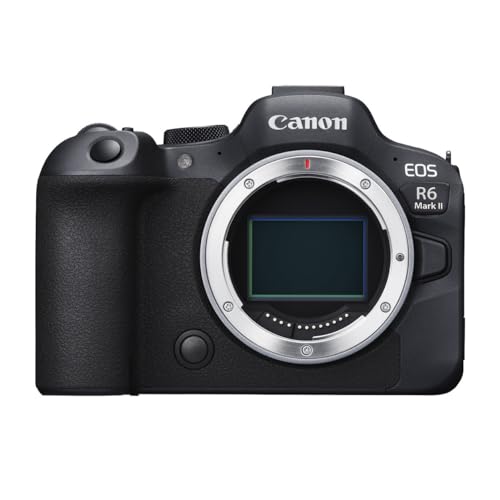
- Canon EOS R6 Mark II: check price on Amazon
- Sony Alpha 7 IV: check price on Amazon
- Canon EOS R6 Mark III: check price on Amazon
- Panasonic LUMIX S5II: check price on Amazon
- Nikon Z50 II with Two Lenses: check price on Amazon
- A rented medium-format body for the formal portraits: prose-only pick, explained below
Notice the companion guide on this site covering wedding filming; this one will not stray into motion. If your day needs both, read the two side by side and notice how the priorities rearrange themselves — the stills photographer’s perfect body and the filmmaker’s perfect body are cousins, not twins, and the differences are exactly where money gets wasted buying one tool for the other’s job.
Key Takeaways
- Canon’s EOS R6 Mark II is the working wedding photographer’s default: fast, quiet, kind in bad light.
- Sony’s Alpha 7 IV wins on autofocus certainty — eyes found and held in chaos.
- The EOS R6 Mark III is the newest Canon step for photographers already in the RF system.
- Panasonic’s LUMIX S5II brings full-frame wedding quality at a gentler system cost.
- Nikon’s Z50 II two-lens kit is the second body and the sensible start in one box.
- For a dozen formal portraits, renting medium format beats owning it — the prose-only pick explains.
In this guide
Quick Picks
| Camera | Badge | What it does best |
|---|---|---|
| Canon EOS R6 Mark II | Best all-round wedding body | The complete stills package for a twelve-hour day in mixed light. |
| Sony Alpha 7 IV | Best autofocus for candids | Eye tracking that treats a dancing crowd like a studio sitting. |
| Canon EOS R6 Mark III | Best new Canon step | The current-generation body for RF shooters upgrading with intent. |
| Panasonic LUMIX S5II | Best value full-frame | Wedding-grade files without the flagship system tax. |
| Nikon Z50 II with Two Lenses | Best second body kit | Two lenses and a light body: backup, reach and starter in one. |
| Rented medium-format body | Best for formal portraits | A weekend’s rental buys a look no purchase here matches. |
What do wedding pictures demand that other photography does not?
Three pressures arrive together and never separately. Speed: the decisive expressions at a wedding last a second, and the photographer who is changing a setting is not photographing. Darkness with dignity: ceremonies and evening receptions happen in light that would end a landscape shoot, and the pictures must still look like a celebration rather than a surveillance still. And consequence: every other genre permits a reshoot, a return visit, a better day; a wedding permits none, which is why redundancy — two card slots writing the same frame, a second body on the other shoulder — is a professional feature and not paranoia. We weighted those three pressures above resolution, above video entirely, and above the spec-sheet contests that dominate general camera buying. A body that is merely excellent at noon in a studio is merely a liability at a wedding; the picks below are the ones whose excellence survives the day’s worst twenty minutes.
One final criterion, invisible in every specification: how the body sounds and feels to the people being photographed. A wedding camera is a guest at the day — present at the vows, the tears, the toasts — and the quieter and calmer its presence, the more honestly people behave in front of it. The picks above were all handled with that in mind; a body that startles a congregation or dominates a portrait sitting taxes every frame it takes.

Canon EOS R6 Mark II — Best all-round wedding body
If one body in this guide could be handed to a competent photographer at 9 a.m. with the instruction ‘cover this wedding’, it is the R6 Mark II. Its virtues are the day’s virtues in order: autofocus that recognises people and finds their eyes among hats and bouquets, a burst fast enough for confetti and first-kiss turns, low-light files that stay graceful when the reception slides into candlelight, and a shutter with a genuinely quiet manner for the ceremony’s hush. Nothing about it is the best in this guide at any single thing; everything about it is near the top at all of them, simultaneously, for twelve hours.
The stills photographer’s angle is colour and skin. Weddings are skin — hundreds of faces, every tone, under light that swings from window daylight to tungsten to the DJ’s magenta — and Canon’s rendering of faces has a forgiveness that reduces the evening’s editing debt. A photographer delivering eight hundred pictures cannot hand-tune each one; a body whose straight-from-camera colour is already kind is a body whose photographer sleeps before the next wedding.
Handling under pressure is the third argument. The controls fall where a working hand expects them, the body balances with the fast standard zooms and primes that weddings run on, and dual card slots write insurance with every frame. Battery life spans the working day with the discipline of a spare in the pocket for the evening, and weather sealing shrugs at the garden-reception drizzle that sends lesser kit under a jacket.
Its limits are honest ones. Resolution is ample for albums and large prints but not the choice for a photographer whose signature is the giant wall canvas cropped hard from a group frame. The RF lens system is superb and priced like it. And its video talents, irrelevant here, mean a stills-only buyer funds capability they will never open — the standing tax on every modern hybrid body.
Buy the R6 Mark II as the main body of a wedding practice, or the only body of a serious enthusiast photographing family weddings properly. It is the guide’s answer to the unglamorous question that decides wedding photography: when everything happens at once in bad light, which camera is already ready?
- Format: full-frame mirrorless, RF lenses
- Cards: dual slots for instant backup
- Shutter: quiet modes for ceremonies
- Focus: people and eye detection for stills
Strengths
- Ready for every phase of the day
- Skin tones that shorten the edit
- Dual cards write insurance per frame
Trade-offs
- Resolution not built for huge crops
- RF lenses are a serious investment
- Video features funded but unused
Best for: working wedding photographers and serious family shooters. Not suited for: giant-crop wall art specialists or the very tightest budgets.
There is a discipline the R6 Mark II quietly enforces that photographers only appreciate in the edit: restraint. Because the body is fast, quiet and willing, the temptation is to photograph everything at maximum enthusiasm and deliver a mountain. The photographers who love this camera longest are the ones who set its burst sensibly, cull with a cold eye the next morning, and let its reliability serve a tighter, stronger album. A wedding is not improved by four thousand frames; it is improved by the right two hundred, and a body this capable makes the right two hundred easier to take and harder to hide among the rest.

Sony Alpha 7 IV — Best autofocus for candids
The candid is the wedding picture couples actually frame — not the posed line-up but the father’s expression during the speech, the flower girl mid-twirl, the couple glancing at each other when they think the formalities own the camera. Candids are an autofocus problem before they are anything else: the moment is unposed, often moving, frequently half-hidden, and gone in a second. The Alpha 7 IV’s real-time eye autofocus is the strongest candid tool in this guide, a system that finds an eye in a crowd scene and stays with it through turns, veils and dancing with a tenacity that changes what a photographer dares to attempt.
That daring is the point. With focus demoted from a worry to a utility, the photographer composes — watches the room, anticipates the laugh a half-second before it lands, works the edges of the dance floor where the real wedding is happening. The 33-megapixel files give room to crop a candid out of a wider frame, which is the candid shooter’s other half: shoot the scene, find the picture inside it later.
Sony’s lens catalogue is the candid shooter’s armoury: fast primes for candlelight, compact zooms for mobility, third-party options at every price the business can justify. The body is the hub of the deepest system in this guide, and a wedding practice built on it never meets a lens it cannot have.
The costs are ergonomic and financial rather than photographic. The menus reward configuration and punish improvisation, so the body should be set up at home, not at the venue. Sony colour is accurate and, to some eyes, less immediately warm than Canon’s; a photographer whose clients love a softer look will spend a little more time in the edit, or adopt presets and stop thinking about it. Neither cost survives contact with the autofocus advantage for long.
Choose the Alpha 7 IV if your wedding style is documentary — if the album you deliver is ninety percent found moments. It is the camera that makes found moments findable, in the worst light, at the worst distances, all day.
- Format: full-frame mirrorless, E-mount lenses
- Resolution: 33MP files with cropping room
- Autofocus: real-time eye tracking
- Cards: dual slots with modern media options
Strengths
- Eye autofocus that unlocks candids
- Deepest lens catalogue in the guide
- Cropping room for found moments
Trade-offs
- Menus need a home setup session
- Colour needs presets for warmth-seekers
- System cost grows with ambition
Best for: documentary-style wedding photographers living on candids. Not suited for: photographers who want the camera configured by intuition alone.
Working photographers also speak of this body in terms of trust transfer: clients cannot judge a sensor, but they can judge calm. A photographer whose camera simply works — whose focus lands while they are smiling at the couple, whose files appear on the backup drive without ceremony — radiates the steadiness that wedding mornings run on. The Alpha 7 IV’s competence is partly theatrical in that sense, and the theatre matters. The couple relaxes, the family relaxes, and relaxed people make the expressions that candids exist to catch. Equipment that lowers a room’s heart rate is doing photographic work before the shutter ever fires.

Canon EOS R6 Mark III — Best new Canon step
Every system has a generation where the working body becomes the new body, and the R6 Mark III is that step for Canon wedding shooters: the current-generation full-frame for photographers whose R6-era kit has earned its keep and whose clients’ expectations keep rising. Buying the newest generation is not vanity in wedding work; it is a decision about the next five seasons — about support, about batteries and accessories staying current, about the autofocus and processing improvements that compound across thousands of frames a month.
For the stills photographer the interest is in refinement where weddings actually press: subject recognition that handles a crowded room’s worth of faces with clearer priorities, processing that keeps high-ISO files cleaner for the evening’s end, and the general quickening of a body that has one less hesitation in it than its predecessor. Weddings are decided by hesitations — the half-second of focus hunting during the processional is a picture that does not exist.
The rational buyer of this body already owns RF lenses, or has decided to. Wedding economics are system economics: bodies cycle, glass endures, and the photographer’s real capital is the lens bag. The Mark III slots into that bag as its new centre, demoting the older body to the second shoulder — which is itself a wedding-grade upgrade, since the backup body stops being a compromise and becomes a second front line.
Newness carries its cautions. Early bodies cost early money, the secondhand market has not yet softened them, and a photographer whose current body is genuinely sufficient should let other people’s first seasons find the firmware quirks. The Mark III is a deliberate professional purchase, not an impulse, and it should be timed to the diary: bought before the season, learned at home, blooded at a small event before a flagship wedding depends on it.
Choose the R6 Mark III if you are building or renewing a Canon wedding practice for the next five years. It is the long-cycle decision in this guide — the body bought not for one wedding but for the shape of a business.
- Format: full-frame mirrorless, RF lenses
- Generation: current Canon working body
- Focus: refined subject recognition
- Role: main body in a two-body wedding kit
Strengths
- Five-season relevance and support
- Refinements aimed at real wedding pressure
- Demotes your old body to a strong backup
Trade-offs
- Newest-body pricing
- Firmware maturity still developing
- Wasted on an already-sufficient kit
Best for: Canon-system professionals renewing their main body. Not suited for: first-time buyers better served by the Mark II’s value.
A word about learning this body before the season: give it one full practice day that imitates a wedding’s shape — morning details in window light, a midday group in hard sun, an evening in a dim hall — and process the files as if a client were waiting. The Mark III’s refinements reveal themselves across that arc rather than in any single test frame: the focus that keeps its head in the crowd scene, the file that forgives the exposure you rushed. Photographers who rehearse a new flagship this way arrive at their first real wedding with the camera already demoted from novelty to tool, which is the only status a wedding camera is allowed to hold.

Panasonic LUMIX S5II — Best value full-frame
The S5II is the guide’s argument that wedding quality and flagship pricing have decoupled. A 24.2-megapixel full-frame sensor, phase hybrid autofocus that finally gives Panasonic’s stills the certainty wedding work demands, in-body stabilisation that steadies the slow shutter speeds of dark churches, and a body built to be carried all day — the specification reads like the tier above its price, and the files back the reading. For a photographer building a practice, that difference is a lens: the money not spent on the body buys the fast prime the reception needs.
Stills photographers should note the stabilisation in particular. Wedding light often forbids the flash and starves the shutter; a steady hand at a slow speed, holding a candlelit detail or a quiet portrait at the reception’s edge, is a picture other bodies must raise the ISO — and the noise — to reach. The S5II’s composure at the day’s dark end is a creative tool disguised as a specification.
The L-mount alliance is the system’s quiet strength: lenses from several makers on one mount, at several prices, which suits a practice equipping itself in stages. Buy the body and one fast lens now; add the second body — possibly this body’s own sibling — when the diary justifies it. Wedding businesses grow exactly like that, and a mount that respects staging is worth more than a mount that demands everything at once.
Trade-offs: the autofocus, while transformed from earlier generations, does not quite match the Sony’s clairvoyance in a chaotic crowd, and the lens catalogue, though broad, lacks some of the exotic glass the bigger systems parade. The used market is thinner, so bargains require patience. None of these touch the central fact of wedding-grade files at a sub-flagship system cost.
Choose the S5II if the budget must cover a whole practice — body, lenses, lights, insurance — rather than a flagship body and hope. It is how a careful photographer becomes a full-frame wedding photographer a season sooner.
- Format: full-frame mirrorless, L-mount lenses
- Sensor: 24.2MP full-frame
- Stabilisation: in-body, for slow church speeds
- Autofocus: phase hybrid system
Strengths
- Wedding files without the flagship tax
- Stabilisation for the day’s dark end
- Multi-maker lens mount, staged buying
Trade-offs
- Crowd autofocus a step behind Sony
- Thinner used market
- Fewer exotic lenses than big systems
Best for: photographers equipping a whole practice on a real budget. Not suited for: shooters needing the deepest exotic lens catalogue.
The S5II also suits a particular wedding temperament: the photographer who lights. Its stabilisation and clean high-ISO files pair beautifully with small, deliberate lighting — a single off-camera flash softening the speeches, a constant light warming the first dance — because the body asks so little exposure help that modest lights go a long way. Practices built around crafted evening light get flagship-looking receptions out of this body night after night, and the savings against the flagship tier fund exactly the lighting kit that makes it possible. That is systems thinking, and this camera rewards it more than any other pick here.

Nikon Z50 II with Two Lenses — Best second body kit
A wedding photographer’s second body is not a smaller main body; it is a different tool with its own jobs — the wide lens while the main body wears the portrait lens, the camera handed to the second shooter, the insurance policy riding in the bag. This two-lens Z50 II kit is built for that economy. The crop sensor stretches whatever lens it wears, the kit’s two zooms cover the day from group frames to speeches-from-the-back, and the whole package costs less than the flagship lenses the main bodies in this guide wear singly.
Crop format earns its keep at weddings in one specific way: reach. The toastmaster at the far end, the couple’s exit down a long aisle, the candid across a crowded marquee — the smaller sensor’s crop turns a modest zoom into a long lens, and the second shooter with this kit becomes the practice’s telephoto department without a telephoto budget.
As a starter it is equally honest. A photographer photographing their first weddings — family, friends, the first paying couples — gets a real system camera, two lenses that cover the day, and files that will not embarrass an album. The presets and friendly automation forgive while the photographer learns; the manual controls are all present when the learning turns serious. What it is not is a low-light equal of the full-frame bodies: the evening reception will ask more of it, and the wise starter pairs it with one fast prime as the first upgrade.
Battery and sealing are working-grade rather than expedition-grade, and the single card slot means the backup discipline must be procedural — copy at every break — rather than automatic. For a second body those are acceptable terms; for a main body at a flagship wedding they would not be, and this guide does not pretend otherwise.
Choose the kit as the second body in a growing practice, the second shooter’s camera, or the serious starter’s whole system. It is the most photography per unit of money in this guide, spent exactly where weddings reward it.
- Format: APS-C mirrorless kit, two lenses included
- Reach: crop factor extends telephoto coverage
- Role: second body, second shooter, starter system
- Sharing: wireless transfer for quick previews
Strengths
- Two lenses cover the whole day
- Crop reach for speeches and aisles
- Costs less than one flagship lens
Trade-offs
- Single card slot — backup by routine
- Evening light asks more of it
- Working-grade sealing and battery
Best for: second bodies, second shooters and serious starters. Not suited for: sole body at a flagship wedding in dark venues.
Second shooters deserve a sentence of their own here, because this kit is so often their camera. A good second shooter with the Z50 II kit covers the angles the principal cannot: the groom’s party while the principal is with the bride, the congregation’s faces during the vows, the wide establishing frame of every set piece. Brief them like a professional — the must-have list, the no-go zones, the card routine at breaks — and the kit’s reach and coverage turn a helper into a second pair of eyes the album visibly benefits from. Many principals began exactly there, holding a kit like this one, learning the day from its edges.
A rented medium-format body for the formals — Best for formal portraits
The formal portraits — the couple composed, the families arranged, the dozen frames destined for frames and walls — are the one part of a wedding where a different class of camera genuinely changes the picture. Medium format renders those portraits with a depth and tonal richness that full-frame approaches but does not equal, and the honest economics are that almost no wedding practice needs to own that difference. Rental houses exist precisely for this: the body and one portrait lens, collected Friday, returned Monday, insured, maintained, and current-generation without a capital decision.
This pick is prose-only because the right body varies by city, rental stock and the photographer’s familiarity — and because renting the system you can already operate beats owning the system you cannot. Book it for the weddings whose formals justify it: the estate venue, the couple who commissioned portraits as the day’s centrepiece, the family wall that has held three generations and expects the fourth to match.
Plan the rental like a professional. Collect early enough to shoot a test sitting; confirm the tethering or card workflow before the day; insure it as the contract requires; and schedule the formals with the rental’s strengths in mind — medium format is deliberate photography, slower and more composed, which suits a formal session’s pace and flatters subjects who are themselves standing still and being directed.
Know its boundaries. It is not a candid tool, not a dance-floor tool, and not a beginner’s treat; its files are large, its focus is measured, and its place in the day is a twenty-minute island of formality. Used exactly there, it produces the frames the couple’s grandchildren will assume were simply what cameras did.
Choose the rental when the formal portraits are the commission’s crown. Own the workhorse bodies in this guide for the other eleven hours; rent the aristocrat for the twenty minutes it was born for.
- Format: rented medium-format body and portrait lens
- Use: the formal portrait session only
- Workflow: test sitting before the wedding day
- Economics: weekend rental versus capital purchase
Strengths
- A portrait look ownership cannot justify
- Current generation without the capital
- Matches the formals’ deliberate pace
Trade-offs
- Slow, deliberate handling only
- Large files, measured autofocus
- Availability varies by city and season
Best for: portrait-centred weddings and generational family walls. Not suited for: candids, receptions, or photographers new to the format.
Practically, the rental conversation should happen when the booking is made, not the week before: the couple hears the portrait plan as part of the commission’s craft, the rental is reserved before the season’s stock thins, and the formal session is scheduled into the day with the unhurried slot the format deserves. A rented aristocrat squeezed into a stolen ten minutes is just an expensive body; given its twenty minutes and its test sitting, it earns every part of its keep.
Which lenses matter most for wedding stills?
The wedding lens kit is a solved problem with personal variations. A fast standard zoom covers the day’s spine — preparations, ceremony distance work, groups, reception candids — and earns its place on the main body from first frame to last. A fast prime, in the portrait range, is the low-light and shallow-depth instrument: the couple at dusk, the speeches by candlelight, the details with the background dissolved. A wider lens handles the architecture, the dance floor’s energy and the group of forty in a room built for twenty. Photographers argue about brands and exact focal lengths with religious fervour, but the structure — zoom for coverage, prime for darkness and depth, wide for space and chaos — survives every argument. Buy in that order, and let the second body wear whichever lens the main body is not using, so the pair of you covers the day without a single lens change performed under pressure.
How should a photographer handle a dark church and a bright marquee on the same day?
By treating exposure as two separate crafts. The church rewards restraint: high ISO accepted without panic, wide apertures, slow-but-steady shutter speeds, and silence — the quiet shutter modes in these bodies exist for sanctuaries, and flash belongs to the photographer’s negotiation with the officiant, never to assumption. The marquee rewards the opposite discipline: daylight that changes by the minute as clouds move, white fabric that tricks meters into underexposing faces, and a dress whose detail vanishes if the highlights are allowed to run. Expose for the dress and the faces, let the tent glow if it must, and check the histogram rather than the screen, which lies cheerfully in bright ambient light. The through-line is that wedding exposure is a series of deliberate decisions made early — set the body’s limits at home, its auto-ISO ceiling, its metering habits — so that on the day the photographer is watching people instead of negotiating with a menu.
What does a sensible two-body workflow look like?
Main body with the standard zoom, second body with the fast prime or the wide, both set to the same time, the same file naming, the same colour profile — synchronisation decided at home so the evening’s edit flows in capture order. Cards formatted in camera at the day’s start; both bodies writing to dual slots where they have them; a card case that separates full from fresh with religious consistency. At every natural break — after the ceremony, after the formals, before the evening — the photographer copies or swaps according to the plan made in calm, because plans made in calm are the only ones that survive a wedding. The second body is also the day’s mercy: when a guest wants a photograph, when the main body needs a lens change at leisure, when something — anything — misbehaves, the work continues. Photographers who adopt the two-body habit describe the same discovery: they stop photographing defensively, and the pictures get braver.
How do you photograph the details without missing the day?
The rings, the shoes, the bouquet on the windowsill — the still-life chapter of the album — tempt photographers into long, loving sessions while the human day accelerates elsewhere. The discipline is to shoot details in the day’s natural pockets: during preparations, while hair and makeup impose their own timetable, with the camera already set for window light and the objects arranged near it once, decisively. Two or three considered frames per subject, then back to the people. The bodies in this guide serve the discipline through their quiet modes and reliable close focus, but the real tool is a shot list written the night before, because a photographer improvising a details session at a wedding is a photographer not watching the bride’s mother see the dress for the first time. Details matter — they are how the album breathes — and they are also the only chapter that can be fully planned. Plan it, shoot it in the pockets, and spend the unplannable hours on the unrepeatable faces.
What should the backup plan contain besides a second body?
Everything that can fail, listed without superstition. Lenses: a second way to cover the standard range, even a humble one, because a dropped zoom at noon cannot be mourned until midnight. Light: a flash that works even if the favourite does not, with batteries counted twice. Power: chargers in the car, not at home. Storage: more cards than the day can fill, in a case whose full and empty sides never mix. Data: a laptop or drive that receives a copy before the photographer sleeps, because the wedding exists in one place until it exists in two. And the human layer — a colleague’s number in the phone, the person who could drive across town with a body if the unthinkable happened twice. Couples never see this plan and should never need to; its existence is precisely what they are paying for when they hire a professional rather than an enthusiast with a beautiful camera.
How do you deliver pictures that still look right in ten years?
Edit for the decade, not the season. The filters and fashions of a given year date an album faster than any camera choice; skin that looks like skin, dresses that stay white, and colour that tells the truth about the day will look correct in every future year, including the ones whose tastes nobody can predict. This is a camera argument as much as an editing one: bodies whose colour is honest from the start — a quiet strength across this guide’s full-frame picks — need less correction, and less correction means less fashion baked in. Deliver the timeless edit as the album, by all means offer the playful versions as extras, and remember that the couple at their silver anniversary will open the book you made in the style of forever, not the style of the summer they married.
How should you pace yourself across a twelve-hour wedding?
The photographer is equipment too, and the day is an endurance event disguised as a celebration. Eat when the couple eats — you will be photographing nothing they will miss and everything your blood sugar will. Sit during the meal you are not served at the table. Change your grip and your shoulder’s load between chapters of the day; the two-body harness that feels heroic at noon becomes an injury by the first dance if it never comes off. Every body shortlisted here was weighed with this in mind: the kit body exists so the second shoulder carries less, the lighter full-frame options exist for photographers whose season is forty weddings deep. None of this appears in an album, and all of it appears in the pictures — a fresh photographer at nine in the evening sees the dance floor’s moments; an exhausted one sees the exit. Pacing is a photographic skill, and the wedding that gets your best work at both ends of the day was planned that way.
What do couples actually do with wedding pictures?
Less printing than photographers imagine, more looking than anyone predicts. The album — physical or digital — is visited in bursts: the first anniversary, the parents’ evenings, the bad week when the marriage needs reminding of its beginning. The framed three live on walls and are seen daily without being looked at, which is its own kind of service. And a long tail of single frames travels — the phone’s wallpaper, the grandmother’s mantelpiece print, the photograph attached to a future eulogy nobody is thinking about yet. Knowing this should steer the camera decision toward consistency and honesty over spectacle: the pictures that serve a lifetime are the clear, kind, true ones, made by a body that never missed and never distorted. Buy the camera for the couple’s tenth year of looking, not for the photographer’s portfolio in the first month, and the priorities in this guide — reliability, colour, low-light grace — explain themselves.
How do you choose between these bodies if two of them fit?
Rent the finalists for one weekend each and shoot something wedding-shaped: friends at a dinner party in bad light, a family gathering with children moving at wedding speed, a portrait sitting against the clock. The body that disappears into your hands during that rehearsal is your camera, and no specification table can overrule the evidence of your own fingers. Check the files the next morning with the same cold eye — which edit fought you, which colour pleased you, which focus misses were the camera’s and which were yours. Photographers who buy this way keep bodies for five years and speak of them without reservation; photographers who buy from reviews alone spend the first season negotiating. The bodies in this guide are all capable of a wedding; the question is only which one’s habits rhyme with yours, and that is a question with exactly one qualified witness.
Why does the group photograph deserve more respect than it gets?
Because it is the picture the family actually uses. The artistic candids win the praise, but the group frame — everyone alive and assembled, once — is the one copied for relatives, produced at funerals, and checked by future generations for faces. Photograph it like the historical document it is: everyone sharp, everyone lit, nobody blinking in the only copy. That is a technical brief before it is an artistic one, and it favours the unglamorous virtues — depth of field chosen generously, a burst of frames so one has every eye open, a position with the light falling evenly. Run the combinations from the list agreed with the couple, call names rather than waving generally, and shoot each arrangement three times. The cameras here all serve the task; the photographer’s respect for it is the variable. A wedding album without a perfect group frame is a novel missing its cast list, and no amount of candid brilliance elsewhere quite repairs the absence.
What should happen to the files in the first hour after the wedding?
One thing, done completely: duplication. Before the car is unpacked, before the photographer sleeps, the cards are copied to two separate places, and the cards themselves are not formatted until the copies are verified openable. Weddings concentrate a photographer’s entire professional risk into that hour — tired hands, a dark hallway, a card case by the door — and the routine that survives tiredness is the routine practised until it is boring. The dual slots in the full-frame picks halve the risk in-camera; the photographer’s first-hour discipline eliminates most of what remains. Couples will never know this hour happened. That is what professionalism looks like from the outside: nothing to know, because nothing went wrong, because somebody treated the most dangerous hour of the process with the ceremony it deserved.
How do you work with the videographer instead of against them?
Many weddings now carry both crafts, and the stills photographer’s camera choice affects the peace treaty. Quiet shutters and no focus-assist lamps blazing into the filmmaker’s frame are the stills side of the bargain; in return the stills photographer gets an ally who warns about the light about to change and the moment about to repeat itself. Agree positions before the ceremony, agree who owns the aisle, and treat each other’s sightlines as property. The couple hired a team, whether or not the team arrived as one — and the albums and films of weddings where the two crafts cooperated are visibly, measurably better than the ones where they competed.
Comparison Table
| Camera | Format | Wedding role | Signature strength | Watch out for |
|---|---|---|---|---|
| Canon EOS R6 Mark II | Full-frame | Main body | All-day completeness | System lens prices |
| Sony Alpha 7 IV | Full-frame | Candid specialist | Eye autofocus | Menu setup required |
| Canon EOS R6 Mark III | Full-frame | New main body | Current-generation refinements | Launch pricing |
| Panasonic LUMIX S5II | Full-frame | Value main body | Stabilised low light | Thinner used market |
| Nikon Z50 II with Two Lenses | APS-C kit | Second body | Reach and economy | Single card slot |
| Rented medium-format body | Medium format | Formal portraits | Portrait depth and tone | Deliberate pace only |
What mistakes ruin wedding pictures that better gear cannot fix?
Arriving without having seen the venue’s light is the first: every church and marquee has a personality, and the photographer who discovers it during the processional is experimenting on the couple. Second, the single-copy sin — one card, one body, one battery — in the one genre where equipment failure is a permanent loss rather than an inconvenience. Third, photographing the day the couple is having as if it were the day the portfolio wants: chasing the dramatic backlight while the grandmother’s expression goes unrecorded. Fourth, the un-checked group list, so that the one combination of relatives that mattered most is discovered missing at the reception. Fifth, delivering late because the edit was approached as eight hundred individual artworks; the couple wants their day back while it is still warm, and a kind camera — one whose colour and consistency shorten the edit — is a delivery tool as much as a photographic one. Gear prevents none of these; habits prevent all of them, and the bodies above are chosen to reward the habits.
Final Recommendation
Build around one main body you trust in the dark. For most wedding photographers that is the EOS R6 Mark II; for the candid-obsessed, the Alpha 7 IV; for a Canon practice renewing itself, the R6 Mark III; for a budget that must equip a whole business, the S5II. Put the Nikon kit on the second shoulder or in the second shooter’s hands, and rent medium format for the formals when the commission crowns them. Then spend the remaining budget and all of your worry on the unphotogenic insurance — cards, batteries, backups, a spare of everything — because wedding pictures are not made by the best camera in this guide. They are made by the camera that was ready, twice over, at the moment that happened once.
Hold one thought above the gear while deciding: the couple will never ask which body made their album. They will ask, in ten years, why nobody photographed the grandparents together — or they will simply be grateful that somebody did. Every pick in this guide can make the pictures; choose the one whose reliability lets you spend the day watching for the grandparents.
Insurance, briefly, because it belongs in a professional’s buying decision: bodies at this level should be insured as business equipment from the day they arrive, and the policy’s existence changes how a photographer works — calmer at the crowded reception, braver at the rainy portrait session. The premium is part of the camera’s true price, and planning it from the start is cheaper than learning its absence the hard way.
Frequently Asked Questions
How many megapixels do wedding pictures need?
Enough for the album and a confident large print, which every full-frame body here exceeds. Cropping room is the practical benefit of more — reframing a candid or straightening a group — and the Alpha 7 IV’s extra resolution serves exactly that. Beyond it, light and focus decide quality, not the count.
Is one camera enough to photograph a wedding?
For a small, informal day, one good body with dual card slots can serve. For a full wedding, two bodies are the professional standard — not for luxury, but because a single failure or a single lens at the wrong moment becomes the couple’s permanent gap. The Nikon kit exists in this guide to make the second body affordable.
Should a beginner buy full-frame for their first weddings?
Only if the budget still covers lenses, cards, batteries and a backup plan afterwards. A crop kit used confidently out-photographs a full-frame body used anxiously, and low-light skill — positioning, timing, steady technique — transfers upward when the upgrade comes.
How important is a silent shutter at a ceremony?
Very, in venues that restrict photography or prize the hush. All the full-frame picks here offer genuinely quiet electronic options; learn their trade-offs at home — moving subjects and certain lighting can artefact — and use the mechanical shutter where the venue is relaxed.
What is the first lens to add to a kit body?
A fast prime in the portrait range. It transforms the evening reception and the couple portraits, teaches composition by fixing the photographer’s feet as the zoom, and holds its value if the system changes. It is the classic first upgrade because it changes the pictures, not just the specifications.
Do wedding photographers need weather sealing?
Weddings proceed in weather that cancels picnics. Sealed bodies and lenses — a strength of the full-frame picks — turn garden drizzle from an equipment emergency into an atmospheric portrait opportunity, and they pay for themselves the first wet Saturday of the season.
When should wedding pictures be backed up during the day itself?
At the natural chapter breaks — after the ceremony, after the formals, before the evening party — swap or copy cards according to the plan you made at home. Dual-slot bodies already hold an in-camera copy of every frame; the breaks are when a third copy can begin its separate existence, in a different bag, ideally in a different building by the night’s end.
Does the photographer’s dress code really interact with camera choice?
Indirectly, yes. Dark, quiet clothing and a camera carried close make the photographer forgettable, and forgettable photographers get honest expressions. Bulky rigs, bright straps and a body that must be swung and announced work against the candid style several picks here exist to serve.
And sign the day off properly: a short message to the couple that evening — three preview frames attached, the rest promised on the stated date — costs ten minutes and buys a fortnight of patient goodwill. The previews also serve as the photographer’s own check that the day’s files are healthy, which makes the kindness a quality-control step wearing a nicer outfit.
Related Guides
Companion reading for the stills side of the day: our guide to low-light portrait technique, the checklist for backing up a wedding day safely, and the companion piece on filming weddings for video if your commission covers both crafts.


