reviewstook.com is reader-supported. When you buy through links on our site, we may earn an affiliate commission.
Where to buy
Photographing miniatures is a conspiracy of scale: a model railway’s platform, a wargaming army, a dollhouse’s parlour — each must be persuaded to look full-sized, or at least magnificently itself. The best cameras for shooting miniatures win on four unglamorous virtues: focusing very close, holding depth of field across a tiny scene, tethering or flipping a screen so you can compose at table height without kneeling on the floor, and autofocus (or focus aids) precise at distances where a millimetre is a metre. The six below cover the whole miniature world, from the pocket camera with a microscope mode that seems designed by a modeller, to full-frame systems that focus-stack a diorama into impossible sharpness.
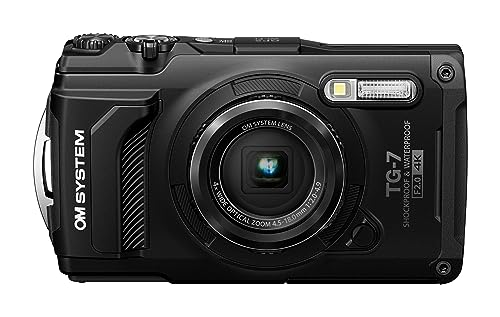
- OM SYSTEM Tough TG-7: check price on Amazon
- Nikon Z50 II with Two Lenses: check price on Amazon
- Sony Alpha 7 IV: check price on Amazon
- Sony ZV-1F: check price on Amazon
- DJI Osmo Pocket 3: check price on Amazon
- Canon EOS R6 Mark II: check price on Amazon
Two philosophies divide the list. The TG-7 and the ZV-1F bring the camera to the miniature — tiny bodies that fit inside a layout’s street or a diorama’s doorway, focusing almost to the glass. The mirrorless trio bring the miniature to the camera: macro lenses, focus bracketing and stacking, tethered screens the size of a cinema, files that survive being printed as the poster’s illusion of a real place. The Pocket 3 splits the difference for film-makers, gliding through model streets at a scale no tripod can reach.
Depth of field is the genre’s central bargain and this guide will not pretend otherwise: at miniature distances, physics gives you millimetres of sharpness and demands you earn the rest — with small apertures, careful planes, or stacked frames. Each verdict states how its pick pays that toll.
Key Takeaways
- The OM SYSTEM Tough TG-7’s microscope mode is the single finest miniature tool here: focus almost at the lens, built-in stacking.
- The Nikon Z50 II kit is the learner’s miniature studio, ready for a macro lens when the hobby deepens.
- Sony’s Alpha 7 IV plus a macro lens delivers gallery-grade miniature files and tethered precision.
- The Sony ZV-1F’s close focus and product mode suit sellers photographing models and crafts.
- DJI’s Pocket 3 films miniature worlds from inside them, at track level.
- Canon’s R6 Mark II brings focus bracketing and stabilisation to hand-held diorama work.
In this guide
Quick Picks
| Camera | Badge | Why it is here |
|---|---|---|
| OM SYSTEM Tough TG-7 | Best for miniatures overall | Microscope macro, in-camera focus stacking and a body that fits inside the scene. |
| Nikon Z50 II with Two Lenses | Best learning system | A real camera education with close-focusing kit glass and macro room to grow. |
| Sony Alpha 7 IV | Best for gallery quality | Full-frame files, macro lenses and tethering for competition-grade miniature work. |
| Sony ZV-1F | Best for sellers and sharers | Close focus, product-friendly autofocus and instant, flattering files. |
| DJI Osmo Pocket 3 | Best for miniature film | A gimbal camera that travels through model streets at platform height. |
| Canon EOS R6 Mark II | Best for focus bracketing | Automated focus stacks and stabilisation for deep, sharp dioramas. |
How did we judge cameras at the scale of a thumbnail?
By working distance, depth and honesty. Working distance: how close the camera must be to fill the frame with a 28mm figure or a carriage side, and whether the camera’s own bulk and shadow invade the scene at that distance. Depth: how the pick earns sharpness across a miniature’s planes — aperture range, focus bracketing, stacking, or the small sensor’s natural depth — because a model photographed with only its nose in focus reads as a toy, however fine the lens.
Honesty covered the working process: screens that compose at table height, focus aids that show the truth at full magnification, remotes and timers that fire without touching — and therefore shaking — the setup. Miniature photography is a tripod-and-patience discipline where the camera’s job is to hold still and tell the truth; bodies that demanded gymnastics or guessed at focus were cut.
Finally, the audience test. Miniatures are photographed to be shared — the club forum, the marketplace listing, the competition, the grandchildren who live abroad — so file quality at screen sizes, colour that respects a paint job’s hours, and video for the layout tour all counted. The best miniature camera is the one whose photographs make a stranger stop scrolling and lean in.

OM SYSTEM Tough TG-7 — Best for miniatures overall
The TG-7 seems designed by someone who photographs beetles and builds models, and for miniatures it is close to a cheat code. Its microscope mode focuses almost to the front element — a locomotive’s number plate, a figure’s face, a dollhouse’s tiny letter on a tiny desk — and its in-camera focus stacking merges a bracketed sequence into a frame sharp front to back, solving the genre’s depth problem inside the camera while you watch. The small sensor, a liability elsewhere, is an accomplice here: its natural depth of field keeps more of a miniature scene sharp at any given framing than any big sensor can.
The body cooperates with the world it photographs: small enough to sit inside a layout’s street for the driver’s-eye view, tough enough to live in the workshop among glues and ballast, and operable with the accessory lights and rails its maker offers for close work. Its files serve forums, listings and family screens beautifully, and its macro reaches subjects — frost on a miniature roof, the grain of a model’s timber — that other cameras need a lens budget to approach.
Its ceilings are the class’s: no interchangeable lenses, large prints stretch it, and serious stacking artists will eventually want a tethered system’s control. As the single camera a miniature hobbyist should own first — and possibly only — nothing in this guide, at any price, is more fit for the purpose.
- Mode: microscope macro focusing almost to the lens
- Stacking: in-camera focus stacking and bracketing
- Sensor: small format with naturally deep focus
- Body: tough, compact, workshop-proof
Strengths
- Depth of field miracles without a computer
- Fits inside the scene it photographs
- The hobby’s best value by a distance
Trade-offs
- Fixed lens, forever
- Gallery prints exceed its files
- Stacking control is simpler than a tethered system’s
Best for: railway modellers, wargamers, dollhouse builders. Not suited for: competition prints at large sizes.

Nikon Z50 II with Two Lenses — Best learning system
The Z50 II kit is the miniature photographer’s apprenticeship in a box. The kit lenses focus closer than beginners expect — close enough for layout scenes, rolling stock portraits and the army on its shelf — while the body’s subject detection, flip screen and honest controls teach the discipline properly: planes of focus chosen deliberately, apertures understood by their consequences, compositions made at table height without contortion. Nikon’s colour respects a paint scheme’s subtleties, which every modeller who has mixed that exact shade will appreciate.
Growth is the argument. When the hobby deepens — and miniature hobbies always deepen — the Z mount accepts a true macro lens, focus bracketing workflows, and tethered shooting, while the skills and the kit carry upward into Nikon’s larger bodies. A club photographer can grow from forum posts to competition entries without changing systems or relearning a camera.
The kit lenses are a beginning, not a macro solution: true close-up of a figure’s face wants the dedicated lens, and the APS-C files, while strong, sit below the full-frame pair for the largest prints. As the system a miniature photographer learns on and lives with for years, it is this guide’s warmest recommendation after the TG-7’s special magic.
- Sensor: APS-C, roughly 21 megapixels
- Lenses: two kit zooms with useful close focus
- Autofocus: subject detection for scenes and details
- Mount: Nikon Z, macro lenses available
Strengths
- A complete miniature studio education
- Colour that honours paint work
- Grows into macro and stacking workflows
Trade-offs
- True macro needs the dedicated lens
- Kit glass is a starting point
- Files trail full-frame for huge prints
Best for: hobbyists building a miniature practice. Not suited for: microscope-level detail out of the box.

Sony Alpha 7 IV — Best for gallery quality
At the top of miniature photography — the competition print, the manufacturer’s catalogue, the book of the layout — the Alpha 7 IV with a macro lens is the professional’s answer. Full-frame files hold a diorama’s detail at exhibition sizes; the E-mount’s macro library includes glass that resolves a rivet’s shadow; tethering puts the composition on a monitor where focus can be placed with a surgeon’s calm; and focus bracketing feeds stacking software the disciplined sequences it craves.
The body’s autofocus, famous for eyes, is equally obsessive about a designated point at macro distances, and its customisation lets a miniature specialist build a workstation: magnification on a button, bracketing on a dial, the remote in the other hand. Paired with a focusing rail and patience, it produces the images that make viewers refuse to believe the scene was nine inches long.
It is, unapologetically, the expensive road — body, macro lens, rail, software — and its bulk must be kept outside the scene it photographs, on a tripod, with the scene lit around its shadow. For the miniature artist whose audience is a gallery wall, no other pick here finishes the journey.
- Sensor: full-frame, high-resolution class
- Mount: Sony E macro lenses
- Workflow: tethering and focus bracketing
- Autofocus: precise point control at macro range
Strengths
- Exhibition-grade miniature files
- The deepest macro ecosystem here
- Tethered precision for stacking
Trade-offs
- System cost including macro glass
- Bulk stays outside the scene
- Overkill for forum-sized sharing
Best for: competition and commercial miniature work. Not suited for: casual layout snapshots.

Sony ZV-1F — Best for sellers and sharers
A great many miniature photographs are really product photographs: the painted figure for the marketplace, the finished kit for the forum, the commission piece for the client who lives abroad. The ZV-1F was built for exactly that desk. Its lens focuses close, its product-showcase autofocus snaps to the object held before it, its colour arrives warm and honest without an editing suite, and its flip screen composes at bench height while the model stays where the light is.
Speed is its commercial virtue: a finished piece can be photographed, reviewed and listed within the hour, in video as readily as stills — the turntable clip, the detail tour — which is how miniature sellers actually build followings. For the hobbyist whose audience is a screen and whose subject is a shelf, it covers the whole brief in a jacket pocket.
Depth is its honest limit: at miniature distances its sharp zone is thin, and the full-scene diorama shot — sharp from the front fence to the back wall — belongs to the TG-7’s stacking or the big systems’ brackets. Within its native work, the single hero piece beautifully lit, it is the fastest camera in this guide from finished model to published photograph.
- Sensor: 1-inch, roughly 20 megapixels
- Lens: fixed wide with close focus
- Autofocus: product showcase mode
- Screen: flip design for bench work
Strengths
- From finished model to listing in minutes
- Colour that sells paint work honestly
- Video detail tours included
Trade-offs
- Thin depth for whole scenes
- Fixed lens limits true macro
- No stacking workflow
Best for: sellers, commission painters, forum sharers. Not suited for: deep diorama scenes.

DJI Osmo Pocket 3 — Best for miniature film
Film changes the miniature question from how close to how low — and the Pocket 3 goes lower than any camera in this guide. Its gimbal head rides at platform height through a model street, under a bridge, along a runway of parked aircraft, holding the horizon like a tracking shot in a feature where the buildings are nine inches tall. The 1-inch sensor keeps the scene’s detail and the practical lights’ glow, and the result — the layout as a place, visited — is the footage that makes miniature channels grow.
Its stills serve the film-maker’s archive, and its tracking can follow a moving train or a hand placing a figure with an operator’s smoothness. For the railway modeller whose layout deserves a driver’s-eye film, or the diorama builder whose scene has a story’s geography, it supplies the camera movement that sells scale: slow, low, level, unhurried.
Focus at the closest distances and stacked depth belong to the stills specialists; the Pocket 3’s depth is cinematic rather than forensic, which suits film’s grammar. As the moving camera of a miniature world, it is not merely the best pick here — it is close to the only one, and its owners’ footage proves it weekly.
- Sensor: 1-inch on a three-axis gimbal
- Video: 4K with subject tracking
- Height: shoots at platform and track level
- Carry: pocket-sized, ready instantly
Strengths
- Travels through the miniature world
- Gimbal moves sell the illusion of scale
- Layout films of genuine cinema feel
Trade-offs
- Stills depth trails the stackers
- Closest-focus work is not its gift
- Gimbal care around scenery and glue
Best for: layout films and miniature cinematography. Not suited for: forensic close-up stills.

Canon EOS R6 Mark II — Best for focus bracketing
The R6 Mark II brings the diorama photographer’s favourite automation to full-frame quality: focus bracketing that steps the lens through a scene’s planes in a disciplined sequence, ready for stacking into a frame sharp from the foreground fence to the station clock. Add in-body stabilisation for the hand-held layout visit, Canon’s kind colour for the village’s painted charm, and subject detection that finds the scene’s hero without being told twice.
For the modeller who exhibits — the layout photographed for the magazine, the diorama entered in competition — it offers the big-camera result with a workflow a single pair of hands can run: tripod, bracket, stack, print. The RF system’s macro options complete the serious end of the kit, and the body’s video covers the layout tour at a quality the Pocket 3’s fans will respect.
It is a flagship investment for a hobby most people photograph with a phone, and its size keeps it outside the scene on a tripod. For the miniature photographer whose standard is the printed page, those are the correct trade-offs, professionally made.
- Sensor: full-frame, 24.2 megapixels
- Feature: automated focus bracketing for stacking
- Stabilisation: in-body assistance
- Mount: Canon RF, macro options
Strengths
- Stacked dioramas at full-frame quality
- Colour that flatters painted scenes
- Stabilisation for layout visits
Trade-offs
- Flagship price for a tabletop hobby
- Tripod-bound for its best work
- Stacking finished in software
Best for: exhibiting modellers and diorama artists. Not suited for: inside-the-scene shooting.
Why is depth of field the miniature photographer’s whole problem?
Because scale shrinks it. Focus a camera on a scene nine inches deep at close range and the sharp zone may be a few millimetres — the locomotive’s cab sharp, its boiler a rumour. Real railways are sharp front to back, so the illusion of reality demands depth the physics refuses. The genre’s entire technique is the negotiation: smaller apertures, planes aligned so the scene’s depth lies along the sharp zone, focus stacking’s patient arithmetic, or the small sensor’s natural advantage. Every pick here is a different negotiator; choose the one whose terms suit your patience.
What is focus stacking, in plain terms?
A composite photograph built from a sequence: the camera focuses near, then a step deeper, then deeper again, and software keeps only the sharp slice of each frame, assembling a final image sharp everywhere. The TG-7 performs a version inside the camera; the mirrorless systems shoot the sequence — Canon automating it most completely here — for software to finish. Stacking is miniature photography’s superpower and its discipline: the setup must not move, the light must not change, and the reward is a diorama with the depth of a landscape.
How do you light a miniature so it stops looking like one?
Think like the sun, at scale. One large, soft source from a low angle imitates daylight better than any array of lamps; shadows must fall as they would outdoors, which means the light should be far enough away to behave. Practical lights inside the scene — the station lamps, the shop windows — sell the hour. Avoid the camera’s own flash, whose flat blast announces “model” instantly. A desk lamp through a sheet of diffusion, a window’s afternoon, a small LED panel softened: the miniature sun is humble equipment, deliberately placed.
What angle makes a miniature look real?
The subject’s own eye level. A locomotive photographed from a standing human’s height is a model; the same locomotive photographed from the platform’s surface, at a driver’s eye height in scale, becomes a machine in a place. Getting the camera to that height — the TG-7 sitting in the street, the Pocket 3 riding at track level, the mirrorless on a table tripod with its screen flipped — is the genre’s first compositional law. Shoot down at miniatures to document them; shoot level with them to believe in them.
How do you keep a miniature scene sharp without stacking?
Align the plane and stop down. Tilt your composition so the scene’s important depth runs sideways across the frame rather than away from the camera — a platform photographed along its length stays sharper than one photographed into its depth — then use the smallest aperture your light allows, on a tripod, with a timer to avoid the shake your hand adds. The small-sensor picks forgive more here; the big sensors demand more discipline and repay it with quality. It is the classical method, and it still produces most of the miniature photographs ever published.
What backgrounds betray a miniature fastest?
The room. A skirting board in frame, a giant’s fingerprint on the ballast, dust scaled like boulders, a window’s reflection in a tiny windscreen — the real world leaks into miniature photographs at the edges, and the craft is border control. Compose tighter, dress the scene’s horizon with a sky board or a plain backdrop at the layout’s edge, clean with a brush and a blower before the session rather than in software after it. Review at full magnification hunting for giants: the cat’s hair across the tracks is a fallen redwood until you remove it.
How should sellers photograph painted miniatures?
Like jewellers: honest light, true colour, one hero angle and one detail. A soft light tent or its improvised cousin, a plain background that cannot argue with the paint scheme, the ZV-1F’s product focus or the Nikon’s careful plane — and the discipline to photograph the model as it is, because the buyer will hold it under their own lamp within the week. Include a scale reference where the listing’s honesty benefits, and keep one angle that shows the base and the finish together. Miniature commerce runs on trust magnified; the camera’s job is to deserve it.
What is the wargamer’s specific brief?
Armies, photographed as armies. The unit on its shelf for the collection record, the hero character for the forum, the battlefield diorama for the campaign’s story — each wants a different depth: the unit needs its ranks sharp, which is stacking or small-sensor territory; the hero needs a portrait’s shallow drama; the battlefield needs the low angle and the long depth together. The TG-7 covers the wargamer’s whole shelf more completely than any rival here, which is why it leads the guide; the mirrorless systems serve the painter whose competition entries are judged in person and in print.
How do you film a model railway properly?
At the railway’s speed and height. Ride the Pocket 3 at track level for the driver’s view, mount the camera for the lineside shots a spotter would take, and let the trains supply the motion while the camera holds its nerve. Sound matters — the room’s recorded clickety and hum, or the layout’s own audio — because film of a silent railway feels like a diagram. The stills cameras here cover the timetable’s portraits; the film belongs to the gimbal, moving at scale speed through a world built to be believed from exactly that height.
What does a focusing rail do, and who needs one?
It moves the camera in millimetre steps along its axis, so focus sequences and macro compositions can be made by position rather than by the lens’s ring — the precision instrument of serious stacking and true macro. The mirrorless stackers graduate to one; the TG-7’s owners mostly never need it, because their camera’s internal stacking and depth forgive the omission. Buy the rail when your stacking subjects stop forgiving small errors — competition work, commercial work — and not before; it is a specialist’s tool that announces its necessity clearly when the time comes.
How do you photograph a dollhouse interior?
Through the missing wall, at the room’s own eye level, with the light behaving like the house’s windows promise. The small cameras earn their legend here — the TG-7 placed inside the parlour itself, the Pocket 3 gliding through the hall — while the big systems shoot through the open back with longer lenses and stacked depth. Dress the light as the fiction demands: afternoon in the kitchen, lamplight in the study. The dollhouse photograph succeeds when the viewer forgets the hand that built it, and every technique in this guide is in service of that forgetting.
How do you photograph a miniature through glass or in a display case?
Get close, get square, and kill the reflections. A lens nearly touching the glass, a dark cloth behind the camera to stop the room mirroring itself, and the scene’s own light doing the work — the recipe defeats most cases’ glare. Polarising filters help the mirrorless systems where reflections persist. Museum and exhibition pieces reward the patience: the competition diorama behind acrylic can still be photographed like a world if the photographer treats the glass as weather to be managed rather than a wall to be cursed.
What scale photographs hardest, and why?
The smallest human figures, because faces forgive nothing. A 1:72 pilot or a wargaming hero at 28mm must hold a painted expression under magnification that turns every brush slip into a landslip — which is why the genre’s painters and photographers are so often the same people, each craft auditing the other. The TG-7’s microscope and the macro systems earn their reputations on exactly these subjects. Photograph your smallest work honestly and the larger scales become a holiday; the camera that flatters a 28mm face will never be embarrassed by a locomotive.
How do you build a miniature photography corner?
A table that never has to be cleared, a backdrop that rolls or hangs plain, one soft light on a stand, and the camera’s home within reach. The corner’s permanence is its virtue: a finished model can be photographed in the same hour it is finished, in light whose behaviour is known, against a background that never argues. Modellers who build the corner photograph ten times as much of their work, because the friction that killed the impulse — the setup, the search for the tripod — has been abolished. Every pick here has a natural place in such a corner; the TG-7 and ZV-1F practically live there.
What is the tilt-shift trick, and does it apply here?
It is this genre in reverse: landscape photographers use tilt-shift lenses to make real places look like miniatures, by narrowing the sharp plane to a toy’s slice. Miniature photographers use the same optical law in the opposite direction — aligning the focus plane with the scene to maximise depth. Knowing the trick explains both, and it arms the miniature shooter with the landscape’s vocabulary: the plane is a tool, focus is a place, and depth is a decision. The mirrorless systems with their adaptable mounts can even borrow the lenses themselves, which closes the circle elegantly.
How do you photograph miniatures outdoors?
Like a landscape photographer with a smaller parish. Real sunlight at a low hour gives a diorama the weather no lamp imitates; real backgrounds — the garden’s hedge as a forest, the path’s gravel as a quarry — lend scale illusions the studio must build. The TG-7 was born for this, weatherproof among the dew, and the Pocket 3 films the outdoor layout’s line through real air. Guard against the giants: a real leaf across the tracks is a fallen jungle, and the wind that ripples real grass will flatten a paper tree. Outdoor miniature work is the genre at its most magical and least forgiving.
What should a club’s miniature photography evening cover?
Stations, not lectures. One table for eye-level composition, one for lighting with a single lamp, one for the stacking demonstration — the TG-7’s in-camera version makes the concept land in ninety seconds — and one for the honest critique of members’ prints. Clubs are where miniature photography’s tacit knowledge travels: the brush for dust, the sky board’s paint recipe, the backdrop cloth that works. A club that photographs together improves together, and its members’ forum posts become the hobby’s recruiting posters.
How do you document a build in progress?
Same corner, same light, same angle — a discipline that turns a workbench diary into a story. The fixed setup makes the model’s growth the only variable, which is exactly what a build log should show, and the ZV-1F or the corner’s resident camera makes the habit frictionless enough to survive a long project. Fellow hobbyists follow build logs the way gardeners follow seasons; the finished piece’s reveal lands harder for the journey being visible. Document the failures too — the stripped paint, the rebuilt wall — because the log’s honesty is its following’s foundation.
What is the miniature portrait?
The single figure, treated with a sitter’s respect. One hero model, a considered background, light that models the sculpt, and depth chosen to isolate without abandoning context — the portrait grammar of the full-sized world, applied at 54mm of resin and paint. The mirrorless systems with portrait-capable macro work own the genre’s summit, but the TG-7’s close focus has produced forum portraits that stop thumbs daily. Painters who photograph their heroes this way sell commissions on the strength of the portraits; the figure becomes a person, and people are what buyers collect.
How do you handle shiny miniatures — chrome, gloss paint, water effects?
Light the surroundings, not the shine. Reflective surfaces photograph whatever faces them, so the craft is curating their world: large soft sources for gentle gradients, dark cards to carve the edges, and angles chosen so the reflection flatters rather than blinds. A miniature lake, a chrome bumper, a glossed uniform — each is a mirror asking what it should reflect. Give it a beautiful room to reflect, in miniature or in lighting, and the shine becomes the photograph’s jewellery instead of its problem.
What does video add to a miniature collection?
Time and weather. The layout’s evening rush, the diorama’s simulated storm light, the wargame’s battle narrated across the table — moving images let a miniature world breathe in ways stills, however deep their focus, cannot. The Pocket 3 is the guide’s moving specialist, but every mirrorless pick here films its world respectably, and the ZV-1F handles the quick showcase clip. Collections documented in both media age better in their owners’ affections: the stills are the portraits, the films are the visits.
How do you print miniature photographs?
Bigger than feels sensible, because scale is the subject. A miniature printed at poster size performs the genre’s central magic — the viewer confronts a world at life size that their eye insists is real and their knowledge insists is nine inches long. That frisson is why the full-frame systems’ files matter at the top end, and why even the TG-7’s owners print modestly and hang proudly. Matte papers forgive magnification’s scrutiny better than gloss; frames should be quiet. Let the illusion have the wall, and stand back while visitors lean in.
How do you photograph a moving model — a running train, a working fairground?
Decide whether the story is the machine or its motion. A shutter fast enough to freeze the train gives the stills photographer a portrait of engineering; a slower one, panning at track level with the Pocket 3’s gimbal or a steady hand, gives the railway’s life. Model motion is slower than the real world’s, which forgives technique the big railways punish — but scale speed matters: a train crossing the layout at a child’s delight reads on film as a toy, while the same train at a scale walk reads as a railway. Match the camera’s movement to the world’s fiction.
What is the diorama’s relationship with storytelling?
A diorama is a frozen paragraph, and its photograph is the reading of it. The builder chose the moment — the argument at the market stall, the last train’s departure — and the photographer’s composition either finds that moment or files it as inventory. Work the scene like a film set in miniature: whose eyeline leads, where the light falls, what the foreground withholds. The cameras here are equally capable of inventory and of story; the difference is the photographer’s patience in reading the builder’s paragraph before translating it. Exhibitions are won by translations.
How do you photograph miniatures for a competition judged in person?
Remember the photograph is the entry’s ambassador, not its replacement. Judges who will meet the model in the flesh use photographs to shortlist and to remember; the images must therefore be honest about the workmanship and generous about the scene — no angle that hides the flaw the judge will find, no grade that invents a finish. The full-frame systems’ fidelity serves that honesty best. A competition photograph that oversells is a debt collected in person; one that undersells slightly is a pleasant surprise, and surprises, in judging rooms, are a currency.
What are scale backdrops and how do they change photographs?
They give the miniature a sky and a distance. A printed or painted backdrop at the scene’s edge — hills, a city’s silhouette, a graduated sky — replaces the room’s wall with the world’s horizon, and the photograph’s illusion completes itself. Photograph with the backdrop lit as the scene is lit, its base hidden by the layout’s own edge, and choose backdrops whose detail is softer than the model’s, as real distance is softer than the foreground. The cheapest production value in the genre, and the one whose absence viewers feel without naming.
How do you teach a child to photograph their miniatures?
Start at eye level, with the TG-7’s forgiveness. A child who builds — the railway with a parent, the dollhouse, the brick city — already owns the photographer’s first asset, which is love of the subject; the camera merely needs to not punish their hands. Let them sit the camera inside the scene, find the driver’s view, and discover that their world can be visited. The resulting photographs, imperfect and enchanted, are the hobby’s future being recruited. Every master modeller in the club began as a child whose layout deserved a photograph.
What is the archive a miniature collection deserves?
A dated, named, backed-up one — because collections disperse, layouts are dismantled, and the photographs become the work’s surviving form. Photograph each finished piece in the corner’s standard light, the whole layout each season, and the workbench’s milestones as they pass; store the files with the same care as the models’ boxes. Modellers who keep the archive discover its second use within a year: it is the insurance record, the sale catalogue, the grandchildren’s inheritance of a world that existed at 1:76. The camera’s final service to a miniature is to outlive it.
How do you choose between the TG-7 and a system camera?
By the destination of your photographs. If they live on screens — forums, listings, family sharing, the club’s projector — the TG-7’s combination of microscope focus, stacking and depth is not a compromise but a coronation, and its price leaves the hobby’s budget for models. If they live on walls and in competitions judged at arm’s length, the systems’ files justify their cost and their tripods. Many serious hobbyists end with both: the TG-7 in the scene, the system above it. The order of purchase, though, should follow the destination, and for most, the destination is a screen.
What is the miniature photographer’s relationship with patience?
Total, and cheerfully so. This is a hobby built by people who paint a figure’s eyes with a single hair and ballast track one stone at a time; photography at their scale simply extends the temperament — the tripod levelled, the dust hunted, the stack allowed its minutes. The cameras here respect the temperament differently: the TG-7 rewards it instantly, the systems reward it ultimately. Either way, miniature photography is the least hurried genre in this entire series of guides, and its practitioners would not trade that calm for any specification.
How do you know a miniature photograph has succeeded?
The viewer’s first question is “where is that?” and their second is “how big is it, really?” — in that order. When place precedes scale in the viewer’s mind, the illusion has done its work and the craft has disappeared into the world it built. Keep the photographs that produce that order of questions; study the ones that reverse it, because they will teach you — an angle too high, a shadow too domestic, a depth too thin — exactly what to repair next session. The genre’s standard is a double-take, and it never gets old.
What is the smallest useful studio for miniatures?
A shoebox’s worth of discipline: a plain backdrop card, a desk lamp with a diffusion sheet, a small tripod, a brush, and the camera. That kit, kept assembled in the corner described earlier, photographs a finished model better than a roomful of improvised equipment assembled in frustration. Miniature photography’s barrier was never the gear — every pick in this guide out-resolves the need — but the friction of beginning. Shrink the beginning to sitting down, and the archive grows by itself.
How do you photograph a white or pale miniature?
Against a mid-tone, with the exposure told the truth. Pale models against white backgrounds vanish into the light; against a gentle grey or a muted colour they model their shading and keep their edges. Expose for the model’s highlights, let the background fall where it falls, and resist the software’s urge to brighten the whole frame into fog. Snow scenes, white uniforms, porcelain houses — the genre’s pale challenges — all obey the same law: the camera must be told which brightness in the frame is the subject, because its meter will otherwise average your winter into grey.
What is the last look before you press the shutter?
The giant hunt, at full magnification: the dust boulder, the hair across the tracks, the glue’s shine, the fingerprint on the sky. Ten seconds of hunting saves ten minutes of repentance, and at miniature scale the hunt is never wasted — there is always one giant hiding. Then check the plane: is the sharp zone lying where the story is? Then the edges: is the room leaking in? Then fire, with the timer, from a step back, like a person who trusts their preparation. The ritual is the genre in miniature itself.
Why do miniature photographers stay with the hobby for decades?
Because the world they build keeps asking to be visited, and the camera is the visit. Every finished street is a place that did not exist; every photograph is a passport stamp. Every instrument in this guide is, in the end, a travel instrument for countries nine inches wide — and their owners, who built those countries by hand, are the most justified travellers in photography. Choose the camera that visits your world most faithfully, and go often.
What separates a snapshot of a model from a portrait of a world?
Belief, engineered. The snapshot records that a model exists; the portrait of a world makes a stranger want to visit it — and the engineering is the accumulation of this guide’s small laws: eye level, weather for light, depth earned, giants evicted, backdrop believed. None of them requires the most expensive camera here, and all of them together are worth more than any camera. That is the genre’s democratic secret, and the reason a TG-7 in a patient hand out-photographs a flagship in a hurried one, every exhibition, every year.
What should you do with your first successful miniature photograph?
Print it, frame it, and hang it where the workbench can see it. The print sets the standard the next session must meet, reminds the builder why the photography corner exists, and — when visitors ask where that place is — starts the conversation every miniature builder lives for. Success in this genre is not a file; it is a wall that argues, silently and permanently, that the small world was worth building and worth visiting. Start the wall with the first success, and let it curate your progress.
Comparison: all six picks at a glance
| Camera | Form | Character | Choose it if… |
|---|---|---|---|
| OM SYSTEM Tough TG-7 | Tough compact | The microscope | Miniatures are the whole hobby |
| Nikon Z50 II with Two Lenses | Mirrorless kit | The apprenticeship | You are building a miniature studio |
| Sony Alpha 7 IV | Full-frame mirrorless | The gallery instrument | Competition and catalogue quality |
| Sony ZV-1F | Compact | The seller’s desk | Models must be listed and shared fast |
| DJI Osmo Pocket 3 | Pocket gimbal | The train rider | Your miniatures deserve film |
| Canon EOS R6 Mark II | Full-frame mirrorless | The stacker | Deep dioramas at full-frame quality |
What are the most common mistakes in miniature photography?
Photographing from standing height
The god’s-eye view announces the model before any detail can argue. Every miniature in this guide’s world deserves its own eye level — the platform’s surface, the figure’s gaze, the parlour’s floor — and the cameras were chosen for their ability to get there: small bodies inside the scene, flip screens and table tripods for the big ones. Lower the camera until the scene stops being a layout and starts being a place; the transformation costs nothing but knees.
Letting the room light the scene
Overhead domestic light flattens a miniature into evidence of itself — every shadow wrong, every surface a workshop’s. Build the scene’s own weather instead: one soft source at a sun’s angle, the room’s lights off or flagged, practicals glowing where the fiction wants evening. The difference between a model photographed and a world visited is almost entirely lighting, and it is available to every pick here at the price of a desk lamp and a bedsheet’s diffusion.
Skipping the clean
At miniature magnification, dust is geology and a hair is a fallen tree. The session that begins with a brush, a blower and a lint-free pass over the scene produces photographs that need no apologies; the session that skips it produces hours of software repentance. Keep the cleaning kit with the camera kit, and make the ritual part of the setup — modellers already understand preparation as a pleasure, and miniature photography simply extends the workbench’s discipline by one more craft.
Final Recommendation
Most miniature photographers should start — and many should finish — with the TG-7: its microscope focus, in-camera stacking and natural depth solve the genre’s problems inside a body that fits inside the scene. Sellers and sharers will live happily on the ZV-1F’s speed; film-makers should carry the Pocket 3 at track level. Those building a serious practice should grow through the Z50 II kit toward macro glass, and those exhibiting at the highest level should choose between the Alpha 7 IV’s tethered precision and the R6 Mark II’s bracketing workflow. Whichever you hold, get down to the scene’s own eye level, light it like weather, and clean it like a jeweller. The miniature will do the rest — it has been waiting, at its tiny scale, to be believed.
Frequently Asked Questions
Do I need a macro lens to photograph miniatures?
Not to begin. The TG-7’s microscope mode and the kit lenses’ close focus cover most miniature subjects — layouts, armies, dollhouse rooms — without dedicated glass. A true macro lens becomes necessary when you want a single small detail, like a figure’s face, to fill a large frame at high quality, which is the mirrorless systems’ advanced work. Start with the close focus you have; the hobby will tell you when it wants the lens.
Why do my miniature photos look like toys?
Usually three culprits: a high camera angle, flat overhead light, and shallow depth that isolates one detail like a product shot. Lower the camera to the scene’s eye level, light from one low, soft direction, and earn depth — by aperture, plane alignment or stacking. The transformation is startling and mostly free, which is why this guide spends more words on position and light than on any camera’s specifications.
What is the best camera for a model railway?
The TG-7 for stills — it sits in the street, focuses on the number plate, and stacks the platform scene sharp end to end — and the Pocket 3 for film, riding at track level through the world the railway built. Together they cost less than one mirrorless body and cover the railway’s whole photographic life. The exhibiting modeller adds a mirrorless system when the magazine’s print size demands it.
Can focus stacking be done without special software?
Yes — the TG-7 merges its stacks in-camera, producing a finished deep-focus image with no computer involved, which is a large part of its legend among modellers. The mirrorless route offers more control and quality at the price of software and a tethered workflow. Choose by your standard: the forum and the family album are served in-camera; the competition print rewards the full workflow.
How do I stop my hands shaking the setup?
Do not touch it at the moment of truth. A tripod or a solid rest for the camera, a self-timer or remote release for the shutter, and mirrorless bodies’ stabilisation for the hand-held exceptions — the discipline is universal because at miniature magnification, a breath is an earthquake. Set the composition, step back, and let the timer fire. Your photographs will sharpen as if you had bought a better lens.
Related Guides
Keep exploring with our companion reading: best cameras for product photography and crafts, best cameras for shallow depth of field effects and best cameras for close-up and macro photography.


