reviewstook.com is reader-supported. When you buy through links on our site, we may earn an affiliate commission.
Where to buy
The self portrait is photography’s oldest solo act, and it is harder than it looks: you are simultaneously the sitter, the stylist, the lighting crew and the person behind the camera — except there is no person behind the camera. The best cameras for self portrait work are the ones that erase that absence: flip screens that let you compose yourself honestly, face and eye autofocus that finds you without a stand-in, tracking that follows when you move, and remotes or timers that fire the shutter while you hold the expression. The six below each solve the solo problem with a different philosophy.
- Sony ZV-1F: check price on Amazon
- DJI Osmo Pocket 3: check price on Amazon
- Nikon Z50 II: check price on Amazon
- Sony Alpha 7 IV: check price on Amazon
- Insta360 GO 3S: check price on Amazon
- Canon EOS R6 Mark II: check price on Amazon
Two families divide the list. The compacts — Sony’s ZV-1F, DJI’s Pocket 3, Insta360’s tiny GO 3S — treat the self portrait as an everyday act: quick, forgiving, made for the person documenting a life in progress. The mirrorless trio — Nikon’s Z50 II, Sony’s Alpha 7 IV, Canon’s R6 Mark II — treat it as a studio discipline, with interchangeable lenses, real depth of field and files that survive gallery printing. Neither family is the grown-up one; they answer different ambitions, and the verdicts keep them honest about which is which.
One warning before the picks: no camera fixes the self portrait’s real difficulties, which are light, distance and self-consciousness. What the right camera does is remove every technical excuse, so the work that remains is the interesting work — deciding who, in this frame, you are going to be.
Key Takeaways
- The Sony ZV-1F is the easiest self-portrait camera here: flip screen, eye autofocus and a blur switch.
- DJI’s Pocket 3 tracks your face while you move — the solo performer’s camera operator.
- The Nikon Z50 II plus a fast prime is the classic self-portrait studio at a learner’s price.
- Sony’s Alpha 7 IV and Canon’s R6 Mark II serve self portraiture at gallery and professional level.
- The Insta360 GO 3S puts the camera where a tripod cannot go, for environmental self portraits.
- A small tripod and a remote release matter as much as the camera body; budget for both.
In this guide
Quick Picks
| Camera | Badge | Why it is here |
|---|---|---|
| Sony ZV-1F | Best everyday self portraits | Designed around a person filming and photographing themselves, alone, at arm’s length. |
| DJI Osmo Pocket 3 | Best for moving self portraits | Face tracking and a gimbal follow you through rooms, streets and performances. |
| Nikon Z50 II | Best learning studio | Flip screen, subject detection and a lens system that grows into portraiture properly. |
| Sony Alpha 7 IV | Best professional all-rounder | Full-frame files, superb eye autofocus and tethering for serious solo studio work. |
| Insta360 GO 3S | Best for impossible angles | Mounts anywhere, starts with a press, and puts you inside your own environment. |
| Canon EOS R6 Mark II | Best for expressive studio work | Canon’s colour and subject detection for the self portrait as a deliberate art practice. |
What separates a self-portrait camera from a merely good camera?
Three solo-specific virtues. First, honest self-framing: a screen that shows you the frame as the lens sees it, at the distance you will actually sit, without mirrors, guesswork or a phone app standing between you and the moment. Second, autofocus that treats a lone sitter as the main event — eye detection that locks while you compose your expression, not after. Third, a way to fire the shutter from inside the frame: a timer with sense, a remote, a gesture, a voice — anything except the ten-second sprint that has ruined more self portraits than bad light ever will.
Beyond those, the usual photographic virtues rearrange themselves. Resolution matters less than skin rendering; a self portrait lives or dies on whether the face looks like its owner on a good day, which is colour science and light, not megapixels. Lens choice matters enormously and differently: the flattering compression of a short telephoto, the environmental honesty of a wide lens, the deliberate distortion of getting close — the interchangeable-lens picks exist for artists who want those decisions in their own hands.
Finally, temperament. A self-portrait camera will watch you fail repeatedly at the vulnerable act of looking at yourself, and the ones that get used are the ones that make the failing cheap: instant review, forgiving automation, files that delete without ceremony. The six below were chosen as much for their kindness as for their quality.

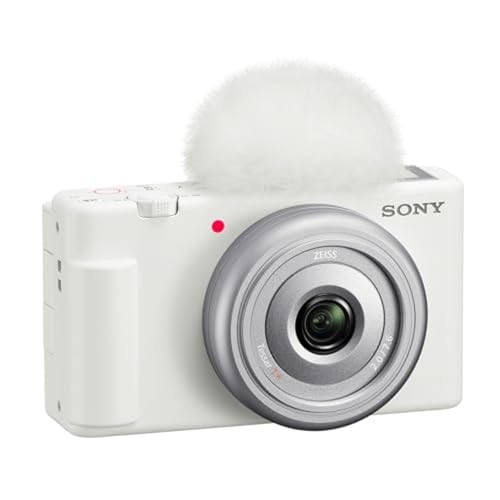
Sony ZV-1F — Best everyday self portraits
The ZV-1F begins from a radical premise: its owner is alone. The flip screen turns to face you completely, the wide lens frames head, shoulders and a meaningful slice of room from a small tripod, and face-priority autofocus with eye detection keeps the important millimetres sharp while you think about expression instead of focus. Sony’s colour flatters skin by default, and the background-defocus switch delivers, with one press, the soft backdrop that used to require a fast lens and an apprenticeship.
Its self-portrait workflow is the fastest here: set it down, frame yourself, let the self-timer or a tap do the rest, review instantly, adjust a shoulder, go again. The iteration loop — shoot, see, correct — is the actual mechanism by which self portraits improve, and this camera shortens it to seconds. For profile photographs, creator headshots, dating profiles and the family picture that finally includes the family’s photographer, it succeeds so easily that the genre stops feeling like a special occasion.
Limits arrive with ambition: the fixed wide lens cannot compress features the way a portrait telephoto does, and very large prints will ask more of the file than it holds. Most self portraits, though, live at screen sizes and modest frames, where this camera’s convenience is not a compromise at all — it is the reason the photographs exist.
- Sensor: 1-inch, roughly 20 megapixels
- Lens: fixed ultra-wide, bright aperture
- Autofocus: face priority with eye detection
- Screen: fully articulating, faces the sitter
Strengths
- The shortest loop from idea to finished portrait
- Skin tones that forgive and flatter
- Background blur without lens theory
Trade-offs
- Wide lens flatters less than a telephoto
- Fixed lens, forever
- Gallery-size printing stretches the file
Best for: everyday self portraits and profile photographs. Not suited for: formal studio portraiture at exhibition scale.

DJI Osmo Pocket 3 — Best for moving self portraits
The Pocket 3 redefines the self portrait as something that can walk. Its gimbal-mounted camera tracks your face with quiet obsession — sit, stand, cross the room, turn away and back — holding you centred and level while its 1-inch sensor renders skin and room with a richness phones envy. For the self portraitist whose work is performative — the dancer documenting practice, the maker narrating a build, the traveller filming a solo journey — it supplies the camera operator the budget never had.
Stills benefit from the same machinery: set it on its mini tripod, let tracking find you, and compose moving, environmental portraits that a static camera would frame wrongly the moment you shifted. The rotating screen serves vertical formats natively, which matters because the modern self portrait’s home is vertical — the story, the profile, the feed.
Its cautions are a gimbal’s cautions: it dislikes drops, sand and being crushed in a bag’s depths, and its fixed wide view will not compress a face like a portrait lens. Treat it as the self portrait’s documentary instrument — the camera of a life being lived rather than a face being studied — and it has no rival in this guide.
- Sensor: 1-inch on a three-axis gimbal
- Tracking: face and subject follow
- Video: 4K, stabilised mechanically
- Screen: rotates for vertical formats
Strengths
- Follows you like a hired operator
- Beautiful moving self portraits
- Pocketable enough for solo travel
Trade-offs
- Gimbal fragility demands a case
- No telephoto compression
- Stills are good, not gallery-grade
Best for: performers, travellers and video diarists. Not suited for: static formal portraiture.

Nikon Z50 II — Best learning studio
The Z50 II is where self portraiture becomes a craft with a future. Its flip screen and people-detection autofocus handle the solo mechanics kindly, while the interchangeable Z mount opens the discipline’s real vocabulary: add an affordable fast prime and the backgrounds melt, the eyes sharpen, and the self portrait stops looking like documentation and starts looking like intent. Nikon’s in-camera presets, including portrait-friendly colour, give a learner’s early work a consistent, flattering signature.
As a studio it scales by accessories rather than replacement: a tripod and remote release this month, the prime lens next, a simple backdrop and one light when the work earns them. Skills transfer upward through Nikon’s whole system, so the self-portraitist who outgrows the body keeps the lenses, the habits and the eye. For students and serious hobbyists, that continuity is the purchase’s deepest value.
The APS-C sensor asks a little more of dim rooms than the full-frame pair below, and the kit zoom is a starting point rather than a portrait instrument. Neither matters much in the learning years, when the limiting factor is the sitter’s patience and the photographer’s eye — both of which this camera trains without punishing.
- Sensor: APS-C, roughly 21 megapixels
- Autofocus: people and eye detection
- Mount: Nikon Z, including fast portrait primes
- Screen: flip design for self-framing
Strengths
- A real portrait system at a learner’s tier
- Presets give early work a house style
- Grows by lenses, not replacement
Trade-offs
- Kit lens is not a portrait lens
- Dim rooms test the smaller sensor
- Studio accessories accumulate
Best for: students and hobbyists building a studio. Not suited for: one-tap casual self portraits.

Sony Alpha 7 IV — Best professional all-rounder
The Alpha 7 IV is the self-portraitist’s professional instrument: a full-frame sensor with files that survive exhibition printing, eye autofocus regarded across the industry as a reference standard, and a fully articulating screen that finally brought Sony’s flagship usability to the solo worker. Tether it to a computer and the self portrait becomes a studio session with a large monitor for a mirror — compose, fire by remote, review at full size, adjust an eyebrow’s worth of light, and shoot again.
Its lens ecosystem is portraiture’s deepest library, from classic fast primes to modern clinical glass, and its colour and dynamic range hold skin’s subtleties through serious editing. Professionals choose it for client work; the self portraitist inherits all of that competence pointed at the hardest sitter of all — the one who knows exactly how the photograph will be judged.
Nothing about it is casual: the body, the lenses and the learning curve all assume intent. A beginner will make worse self portraits with it for a month than with the ZV-1F, because it refuses to hide the decisions. For the committed, that refusal is the point — this is the camera the self portrait grows up into.
- Sensor: full-frame, high-resolution class
- Autofocus: real-time eye detection
- Mount: Sony E, the deepest portrait lens library
- Workflow: tethering and full studio support
Strengths
- Exhibition-grade files of your own face
- Autofocus you can trust blind
- A professional studio in one body
Trade-offs
- Cost, weight and learning curve
- Overkill for profile-photo needs
- Demands lenses to show its best
Best for: serious artists and working photographers. Not suited for: quick social self portraits.

Insta360 GO 3S — Best for impossible angles
The GO 3S asks a subversive question: what if the self portrait’s camera were not across the room, but on you? Thumb-sized and magnetic, it mounts to a cap brim, a chest pendant, a shelf edge or a bicycle’s frame, starting with one press and capturing the self as the world actually sees it — hands busy, environment wrapped around, life in session. Its self portraits are environmental by nature: the cook mid-service, the climber mid-route, the parent at child height in the middle of the game.
The flip-screen action pod frames shots when you want deliberation, and the app’s reframing rescues compositions the tiny camera guessed at. Image quality serves screens and stories rather than walls, and recording comes in bursts rather than sessions — the honest physics of a camera this small.
As a complement it is unmatched; as an only self-portrait camera it is a specialist’s eccentricity. Pair it with any other pick here and the combination covers the genre’s whole map: the considered portrait from the tripod, and the lived portrait from wherever the living happened.
- Size: thumb-scale, magnetic mounting
- Video: 4K point-of-view capture
- Pod: flip screen for deliberate framing
- Start: single-press recording
Strengths
- Angles no tripod can reach
- Environmental, lived-in self portraits
- Instant capture of unrepeatable moments
Trade-offs
- Short clips, modest stills
- Low light is not its element
- No formal portrait capability
Best for: athletes, makers and parents mid-action. Not suited for: the definitive formal self portrait.

Canon EOS R6 Mark II — Best for expressive studio work
Canon’s colour has made faces its own for decades, and the R6 Mark II brings that inheritance to the solo studio with modern machinery: deep subject and eye detection, in-body stabilisation that forgives the hand-held experiments, and a vari-angle screen for framing yourself at any height. Self portraitists who work expressively — costume, character, the constructed persona — will find its files rich, its skin rendering kind, and its autofocus a collaborator that holds the eye while the performance happens in front of it.
The RF system supplies the portrait lenses such work eventually demands, and the body’s video strength lets a self portrait practice extend into moving image without a second camera. In a one-light home studio it behaves like the professional tool it is, returning images whose quality stops being the conversation — leaving the idea, the expression and the nerve as the subjects under discussion.
It asks the professional’s price in money and attention, and its talents are wasted on the occasional profile photograph. For the artist building a body of self-portrait work — a series, an exhibition, a practice — it is the guide’s most expressive instrument, and the one whose ceiling its owner is least likely to meet.
- Sensor: full-frame, 24.2 megapixels
- Stabilisation: in-body assistance
- Autofocus: deep subject and eye detection
- Mount: Canon RF portrait lenses
Strengths
- Canon’s celebrated skin rendering
- Studio and video in one body
- Autofocus that serves performance
Trade-offs
- Professional price and weight
- Capability far beyond casual needs
- Lenses complete the real budget
Best for: artists building a self-portrait practice. Not suited for: occasional profile updates.
How do you light a self portrait when you are also the model?
Start with a window and a chair. Place the chair side-on to a large window, sit so the light rakes across your face rather than flattening it, and let the room’s darker side supply the modelling — this single arrangement, free and repeatable, has produced more good self portraits than any purchasable light. Check the framing on the flip screen, fire a test, and adjust your angle to the light in inches: small turns of the head change a portrait’s mood more than any setting. When window light is unavailable or the work turns nocturnal, one lamp bounced off a wall or ceiling imitates the window’s softness honestly.
What distance flatters a face most?
Farther than your arm, with a longer lens if you have one. Close cameras exaggerate the nearest features — the nose grows, the ears retreat — which is why arm’s-length selfies look like caricatures of their owners. A tripod at two or three metres with a mild telephoto renders a face the way other people see it: proportionate, calm, recognisable. The compacts compensate with well-judged wide lenses and should still be placed rather than held; the mirrorless picks with portrait primes own this territory outright. Distance is the cheapest flattery in photography.
How do you beat the self-timer’s awkwardness?
By refusing the sprint. Use the timer’s longer delay or, better, a remote release — wireless, app-based or the camera’s interval mode — so the sequence becomes: compose, settle, breathe, fire when the expression arrives rather than when the beeping ends. Burst modes help the honest way, capturing the seconds around the pose when the face relaxes into itself. Review for the frame where you forgot the camera; it is usually the portrait. Every pick here supports at least one civilised firing method, and learning yours is the genre’s first technical rite.
What should a self portrait’s background do?
Either testify or disappear. The environmental background testifies: the workshop, the studio wall of failures, the landscape that explains the traveller — composed deliberately, sharp enough to read. The disappearing background — a plain wall, a backdrop, a fast lens’s blur — isolates the face for study. The failures live between: the cluttered shelf, the stranger’s elbow, the doorframe growing from a head. Check the frame’s edges on the screen before firing; the solo portraitist has no one else to blame, which is precisely why the checking becomes a strength.
How do you direct your own expression?
Give yourself something to think about rather than something to perform. Portraits crack when the sitter performs “natural”; they live when the sitter remembers — a person, a verdict, a joke at the edge of laughter. Work in sequences: a dozen frames per idea, reviewing for the one where the thought crossed the face. Music helps more than mirrors. And schedule generously — the first ten minutes of any solo session are the face negotiating with the camera, and the portraits worth keeping almost always live after that negotiation ends.
What is the self portrait’s relationship with honesty?
Negotiable, and the negotiation is the art. The camera offers unflinching material — the mirror at its least merciful — and every self portraitist decides how much of it to keep: the skin’s texture, the year’s evidence, the asymmetry everyone else already knows. The tools here support either philosophy, from the compacts’ gentle default rendering to the full-frame files that record everything and let editing decide. What matters is that the decision be yours, made deliberately, rather than the accident of a filter you never chose. A self portrait is an argument about how you wish to be seen; make it on purpose.
How do you build a self-portrait practice over a year?
With a rhythm and a constraint. The rhythm might be one session a month, same corner, same light, letting the year accumulate in your face and your skill. The constraint might be one lens, one room, one backdrop — limitations that force invention and make the series cohere. Photographers who sustain the practice describe the same discovery around month four: the camera stops being an interrogator and becomes a witness, and the portraits shift from performances to records. Any pick here can host the practice; the mirrorless trio reward its later, more ambitious years.
What do profile and professional headshots require?
Less art and more reliability: a clean background, even flattering light, a current likeness, and a file that crops square without losing the eyes’ sharpness. The ZV-1F produces these almost casually, which is why it leads this guide for most readers; the Z50 II with a prime elevates them for the professions where the headshot is a first interview. Refresh the photograph when your appearance changes materially — the portrait’s contract with its viewer is recognition at the door — and keep the session’s best three frames archived, because opportunities rarely wait for a reshoot.
How should solo travellers handle self portraits?
By carrying the camera that asks nothing of strangers. The Pocket 3’s tracking and the GO 3S’s mounting free the traveller from the ritual of the handed-over phone and its disappointing returns; a small tripod and the timer handle the monuments. Compose for the place first and yourself second — the traveller small in a great landscape is usually the truer souvenir — and respect the sites and people around the frame. The solo archive that results is the journey’s honest record: you were there, alone, and the photographs finally prove it.
What is the role of costume and character in self portraiture?
Permission. A persona — the uniform, the ancestor’s dress, the invented character — licenses expressions and poses the everyday self would veto, which is why constructed self portraiture fills galleries. The studio picks serve it best: controlled light, patient tethering, lenses chosen for the character’s world. But the compacts have their own theatrical history in diaries and social series, where the character is simply the self on a braver day. Either way, the camera’s job is neutrality: it records the performance without applauding or flinching, and the artist supplies the nerve.
How do you review a session without discouragement?
Wait a day, then edit like a friend. The immediate review is poisoned by the mirror’s memory — you see the face you expected, not the one in the frame. Tomorrow, the photographs become pictures of a person you can judge with something like fairness, and the keeper rate mysteriously rises. Delete decisively but not angrily, keep the near-misses that teach, and remember the arithmetic of the genre: professionals discard most of a session too. The self portrait’s difficulty is not a verdict on its practitioner; it is the medium’s admission price, charged to everyone.
What changes when the self portrait moves?
It becomes a performance document, and the questions shift from how you look to how you move through your own frame. The Pocket 3 owns this territory in the guide, with the mirrorless pair’s video modes serving the studio version. Moving self portraits reward rehearsal and punish vanity in useful ways: gesture reads larger than expression, timing matters more than features, and the camera’s tracking frees the performer to forget it. Start with walking, turning, working at a bench — the documentary movements of a life — before attempting choreography.
How do you pose hands and shoulders without an instructor?
Give the hands a job and the shoulders an angle. Hands holding, resting, adjusting, reaching — occupied hands stop performing the awkward semaphore of the unposed portrait, and a prop with meaning (the tool, the instrument, the book actually being read) justifies them completely. Shoulders turned a few degrees from square soften the portrait’s confrontation and model the face in the window light. Check both on the flip screen before firing: the frame’s lower third is where solo portraits quietly fail, and a ten-second inspection is the whole cure.
What is the difference between a self portrait and a selfie?
Intention and distance, in that order. A selfie records presence — I was here, like this, now — with the phone’s convenience as its aesthetic. A self portrait considers: it chooses its distance, its light, its background and its moment, and it accepts the discipline of standing where the sitter belongs while nobody stands where the photographer belongs. The cameras in this guide exist to serve the second act, though several perform the first charmingly. Neither is the other’s enemy; they are different sentences in the same autobiography, and a healthy archive contains both.
How do you use a mirror without photographing the mirror?
As a rehearsal studio, not a prop. Work the expression, the angle and the light in the mirror first — find the turn of the head, the distance from the window — then step into the camera’s frame and reproduce the discovery by feel. Photographing the mirror itself is a legitimate genre with its own masters, but it halves your resolution, doubles your distractions and dates the image by the phone in your hand. Rehearse in glass, perform for the lens: the sequence gives the solo worker a director’s feedback without a director.
What should you wear for a self portrait session?
Whatever the portrait is about, chosen the day before. Clothing in a frame is never neutral — texture reads, colour argues, logos shout — so decide whether the garment testifies (the uniform, the maker’s apron, the inherited coat) or withdraws (plain, mid-toned, unbranded) to let the face carry everything. Avoid fine stripes and tight checks, which shimmer against sensors, and bring two options rather than one: the session’s second act often begins when the first outfit’s idea is exhausted, and a change of cloth is the cheapest change of character available to a solo studio.
How do ageing and change belong in a self-portrait practice?
Centrally, if the practice is honest. The annual portrait — same corner, same light, no negotiation with the year — becomes, across a decade, the most valuable series a family owns, precisely because it refuses the flattery of stopping time. The cameras here support the ritual at every level of mercy: the compacts render kindly by default, the studio bodies record everything and let the artist choose. What matters is the appointment kept. A self-portrait practice is a promise to keep meeting yourself, and its archive eventually argues that the meetings were the point.
What is the best way to photograph yourself with your children or grandchildren?
Get down to their height and into their activity, and let the portrait be of the relationship rather than the lineup. The Pocket 3 on its tripod at table height, tracking; the GO 3S at the game’s level; the ZV-1F on a shelf during the baking — each removes the photographer-shaped hole from family photographs by making the camera patient and the adult present. Fire in bursts while playing, not between plays. The frames that survive are the ones where nobody is performing family, which is the entire technical and emotional brief in a single sentence.
How do you handle glasses, glare and other honest obstacles?
Angle, not avoidance. Glasses glare when light strikes them squarely; turn the head or the lamp a few degrees, raise the camera slightly, and the reflection slides off the lens while the eyes stay lit. The flip screen shows the problem in real time, which is the solo worker’s advantage over every mirrored guess. Similar small physics govern the rest: a hat’s shadow lifted by a bounce of window light, a shiny forehead calmed by moving out of the lamp’s direct line. The self portrait’s obstacles are nearly all geometry, and geometry is patient with those who adjust it.
What can a self portrait do for a professional profile?
It can tell the truth at a resolution a webcam cannot. Clients, employers and readers meet the portrait before the person, and a considered self portrait — well-lit, current, composed in an environment that means something — argues competence before a word is read. The mirrorless picks produce the boardroom grade; the ZV-1F produces the profile grade at a sitting’s fraction. Either way, the discipline is the same: plain background or meaningful one, eyes sharp and lit, expression at the temperature of the work you want. Refresh it as you change, and let it always be the person who will walk through the door.
How do you photograph yourself outdoors without a crew?
Scout the light like a landscape photographer and the position like an actor. Arrive when the location’s light turns kind, set the tripod where the background composes itself, mark your spot with a stone or a bag, and use the timer or remote to walk into a frame that was already a photograph before you entered it. The Pocket 3 and GO 3S extend the method into motion and odd corners; the mirrorless bodies reward it with the finest files. Outdoor solo work fails mainly through haste — the monument at noon, the wind unconsidered — and succeeds through the landscape virtues: timing, patience, return visits.
How do you create a self portrait series rather than single images?
Decide the constant and the variable. The constant — one room, one lens, one backdrop, one time of day — is the series’ grammar; the variable — season, costume, age, mood, the year’s events — is its vocabulary. Viewers read a series the way they read a diary: the pleasure is in what changes against what refuses to. Photographers from the diary tradition to the gallery wall have built whole reputations on a single unchanging corner and a face’s weather across years. Choose a constant your life can actually sustain, because a series is a promise made in instalments.
What is the role of editing in honest self portraiture?
To finish, not to fictionalise — unless fiction is the stated art. The honest edit corrects the camera’s accidents: the colour the room lied about, the crop the tripod guessed, the exposure the window changed mid-session. It leaves the sitter’s evidence intact, because the portrait’s value to its future viewers is that it was true. Constructed work plays by different rules and declares them by its style. Either way, editing is where the portrait’s argument is finalised, and the files from the full-frame picks here tolerate the most ambitious versions of both philosophies.
How do you photograph yourself at work?
In the middle of the work, not posed beside it. The environmental self portrait — hands competent, attention on the task, the workshop composing itself around its worker — testifies more credibly than any portrait against a wall. Set the camera before the session begins, let the Pocket 3 track or the timer fire through the hour, and harvest the frames where the work absorbed you completely. Professions are identities; a self-portrait practice that never visits the bench, the desk or the field is missing the sitter’s largest room.
What should you do when you hate every frame?
Diagnose before despairing. Sort the failures by cause: light, distance, expression, or the day itself. Light and distance are physics, fixable in an afternoon with a window and a tripod. Expression failures usually mean the session was too short or the judgement too immediate — reshoot longer, review tomorrow. And some days the face simply declines; professionals reschedule without drama, and so should you. The archive of a serious practice contains whole sessions in the bin, unmourned. Hating a session is information; hating the endeavour because of one session is arithmetic error.
How do cultural traditions shape the self portrait?
Deeply, and usefully for the borrower. The painted tradition contributes gravity and the long look; the diary tradition contributes frequency and candour; the theatrical tradition contributes the constructed self, costume and all. A modern practitioner with a Z50 II and a free afternoon stands downstream of all three and may draw from any. Looking at how the masters solved your exact problem — Rembrandt’s window, the diarists’ daily frame, the performers’ personas — is the cheapest masterclass in the genre, and it recalibrates ambition better than any equipment discussion.
What is the self portrait’s gift to the photographer’s other work?
Empathy with the sitter. A photographer who has endured the lens — who knows the vulnerability of being looked at by a machine that does not blink kindly — directs other people differently: more patience with the settling minutes, more respect for the review, more honesty about which frames will be kept. Portraitists consistently trace their manner with clients to their own sessions alone. Buy any camera in this guide for yourself, and your photographs of everyone else improve as a side effect; the sitter’s chair is the best school the photographer’s side of the camera has.
How do you store and organise a growing self-portrait archive?
By date, mercilessly, with the keepers starred. A self-portrait archive’s meaning is chronological — it is a life in frames — so folders by year and month, original filenames preserved, and a single best-of collection copied rather than moved. Back it up with the same seriousness as the family archive, because one day it is the family archive: the record of how the person behind every other photograph actually looked, in their own estimation, across the years. Future viewers will not care which camera made it. They will care that it exists, that it is findable, and that it was honest.
What is the first session you should schedule?
A modest one, this week, with no audience and no announcement. One window, one chair, the camera you chose on whatever stands at eye level, thirty frames and a tomorrow-morning review. Modesty is strategic: a first session that asks little gets done, and a done session teaches more than a planned masterpiece. Note what the light did, what the distance did, which frame you keep returning to. Then schedule the second while the notes are warm. Practices are built from second sessions far more than from first ones.
Why does the self portrait outlast every other genre in a personal archive?
Because it is the only genre whose subject is guaranteed to matter more with time. Landscapes change owners, children grow into strangers who visit, events blur — but the face you argued with in the window light becomes, decade by decade, documentary evidence of a person’s whole tenancy in their own life. Seen that way, these six are instruments of biography. Choose the one whose company you enjoy, keep the appointments it makes possible, and let the archive compound. It is the rarest kind of photography: the kind whose value only ever rises.
How do you involve a place in your self portrait?
Let the place make a claim on the composition equal to yours. The traveller tiny in the canyon, the maker centred in the workshop’s organised chaos, the reader in the library’s tall light — environmental self portraits argue that a person is partly the sum of their rooms and landscapes. Compose the scene as a photograph that works empty, then enter it at the point the composition has been saving for you. The wide-lensed compacts were born for this grammar; the studio bodies refine it with depth control. Either way, the portrait gains a second subject, and the second subject never blinks.
What is the kindest way to begin photographing yourself?
Begin with the silhouette, the back, the hands. The full-face reckoning can wait a session or two while the mechanics become friendly: the shadow on the wall at evening, the hands at the instrument, the figure at the window seen from behind. These are real self portraits with a long pedigree, and they teach light, distance and timing without the mirror’s negotiations. When curiosity finally turns the chair around — it always does — the camera will already be a colleague rather than an examiner, and the face’s first session will be kinder for the apprenticeship.
How do you know a self portrait is finished?
When further work stops changing what it says. The finished portrait survives being lived with — pinned above the desk for a week, it keeps its argument; it does not rely on the session’s excitement or the newest lens’s novelty. It also survives its caption: if the image needs three sentences of explanation to be understood, the frame, not the viewer, is unfinished. Put the candidate away, return in a month, and let time perform the final edit. The portraits in your archive that pass that test are the ones the future will call your work.
What does the self portrait ask of its maker, finally?
Regular courage in small doses. Not the courage of revelation — plenty of fine self portraits reveal almost nothing — but the courage of attendance: of sitting, again, in the window light, and letting the record continue. The cameras in this guide lower every other barrier until attendance is the only one left, which is as it should be. A life photographed by others is a biography written by witnesses. A self-portrait practice, however modest, is the autobiography — and it is written one kept appointment at a time.
How do you photograph yourself in a crowd or a city?
By choosing stillness inside the motion. Set the camera on its tripod or a ledge at the square’s edge, compose the scene’s flow, and stand in it as the one unmoving figure while the city streams past — a portrait of a person in their place, made by patience rather than by posing. Short of that theatre, the Pocket 3’s tracking handles the walking portrait through streets and markets with a documentarian’s discretion. Respect the strangers in the frame as fellow citizens rather than props, keep the setup brief and lawful, and the city will lend your portrait its energy without stealing its subject.
What is the role of the self portrait in a family archive?
It is the photographer’s signature on work they otherwise haunt as an absence. Every family archive has the invisible parent — present in every frame’s intention, absent from every frame’s content — and the self portrait, joined with the group photographs the tripod makes possible, corrects the record for the grandchildren who will one day audit it. The cameras here make the correction easy enough to become habitual: set down, step in, be counted. Decades from now, that habit will read as love’s paperwork, and it will be the most consulted section of the archive.
Comparison: all six picks at a glance
| Camera | Form | Character | Choose it if… |
|---|---|---|---|
| Sony ZV-1F | Compact | The easy mirror | Everyday self portraits must simply work |
| DJI Osmo Pocket 3 | Pocket gimbal | The follower | Your self portraits move |
| Nikon Z50 II | Mirrorless | The apprenticeship | You are building a portrait studio |
| Sony Alpha 7 IV | Full-frame mirrorless | The professional | Exhibition files and tethered sessions |
| Insta360 GO 3S | Wearable mini | The insider | Your portraits happen mid-action |
| Canon EOS R6 Mark II | Full-frame mirrorless | The expressionist | Constructed, deliberate studio work |
What are the most common mistakes in self portraiture?
Holding the camera at arm’s length and calling it a portrait
The arm’s-length frame distorts the face, fills the background with ceiling, and announces its own improvisation. Place the camera — any camera in this guide — on a tripod, a shelf or a stack of books at eye level, step back into honest distance, and the same face composes itself. The self portrait begins the moment the camera stops being held; everything before that is a selfie with ambitions, and the distinction shows in every frame.
Staring at your own image instead of the lens
Flip screens seduce the eye toward the mirror of yourself, a few degrees off the lens — and portraits live or die in those degrees, because viewers read gaze direction as connection. Compose on the screen, then lift your eyes to the glass for the firing. The tiny discipline separates the portraits that meet their viewer from the ones that seem to be looking at something just behind them. Practise the glance-shift until it is reflex; your future archive will thank you in every frame.
Shooting one frame and judging the whole endeavour
A self portrait session is a rehearsal that occasionally produces a performance. One frame judges nothing except luck. Work in sequences, vary the thought rather than the pose, and expect the keeper to arrive after the face has forgotten its audience — usually well past the point where a beginner stops. The cameras here make frames cheap; spend them like a professional, in dozens, and let editing, not hope, find the portrait.
Final Recommendation
Match the instrument to the intention. For the self portrait as a daily, friendly act — profiles, diaries, the family record that includes you — the ZV-1F is the kindest tool here, with the Pocket 3 beside it when your portraits move. For the self portrait as a craft, begin with the Z50 II and a fast prime, and let the practice grow. For the self portrait as art at full scale, the Alpha 7 IV and the R6 Mark II wait at the top of the hill, differing mainly in the colour philosophy your work prefers. Add the GO 3S whenever life itself is the studio. Then set the tripod, find the window light, and stay for the frames after the awkward ones — that is where you are.
Frequently Asked Questions
Do I need a tripod for self portraits?
Effectively, yes — or a shelf, a wall and a stack of books serving as one. Distance and eye-level placement are what separate a portrait from a selfie, and both require the camera to stand without you. A small tripod is the cheapest upgrade in this entire guide, it serves every pick here, and it converts the self-timer from a sprint into a session.
Which lens is best for self portraits on a mirrorless camera?
A fast prime in the short-telephoto tradition — the classic portrait lengths that compress gently and blur backgrounds kindly. On the APS-C Nikon, a fast 35mm-class prime plays that role; on the full-frame Sony and Canon, the 85mm tradition rules. The kit zoom will teach you the focal length you favour; buy the prime that matches it, and your self portraits will change more than any body upgrade could achieve.
Can a compact camera really make a good self portrait?
At the sizes self portraits actually live — screens, profiles, modest prints — absolutely. The ZV-1F’s eye autofocus, colour and blur control produce portraits most viewers cannot distinguish from larger cameras’ work, with a fraction of the ceremony. Large exhibition printing and extreme background blur remain the big sensors’ territory, but the everyday self portrait was won by convenience years ago.
How do I stop looking tense in my own photographs?
Lengthen the session and shorten the judgement. Work past the first ten minutes, fire with a remote while thinking about something specific, shoot sequences rather than singles, and review tomorrow instead of today. Tension in self portraits is almost always the face performing for an imagined critic; the frames improve in direct proportion to how thoroughly the session bores that critic into leaving.
Is it vain to practise self portraiture seriously?
It is one of photography’s oldest disciplines — painters rehearsed on their own faces for centuries because the model was free, patient and always available. The self portrait teaches light, lens and expression with a sitter who never cancels, and it produces the most personal archive a life can leave. Vanity is a possible ingredient; it is not a necessary one, and the work itself usually burns it off within a year.
Related Guides
Keep exploring with our companion reading: best cameras for portrait photography of family and friends, best cameras for vlogging and solo creators and best cameras for shallow depth of field and creamy backgrounds.


