reviewstook.com is reader-supported. When you buy through links on our site, we may earn an affiliate commission.
Where to buy
Every filmmaker’s first real question is not which camera is best but which camera will still be rolling, in focus and in love with the light, on the third take of the scene that matters. The best cameras for recording movies in this guide are the hybrid mirrorless bodies that independent filmmakers actually build films on — shorts, features, documentaries and the wedding-and-commercial work that pays for them — judged by the standards of a set rather than a spec sheet: dynamic range when the window blows out, autofocus that can be trusted with an actor’s eyes, recording stamina for a twelve-minute take, and files that a colourist can push without tearing.
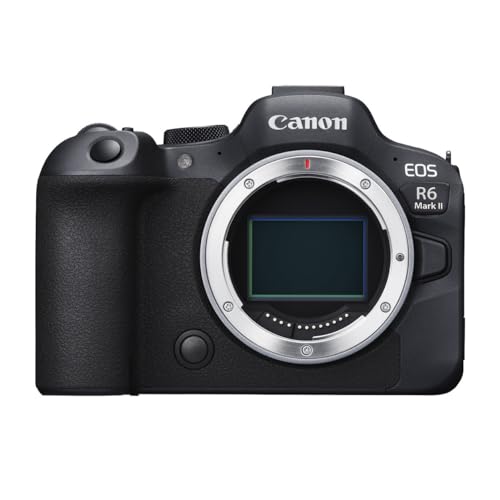
- Canon EOS R6 Mark II: check price on Amazon
- Sony Alpha 7 IV: check price on Amazon
- Panasonic LUMIX S5IIX: check price on Amazon
- Panasonic LUMIX S5II: check price on Amazon
- Canon EOS R6 Mark III: check price on Amazon
- Nikon Z50 II: check price on Amazon
Understand what class of tool this is. These are not cinema cameras with cinema crews assumed; they are the cameras of the one-person department, the small crew, the filmmaker whose lighting package fits in a car and whose locations are borrowed. That constraint is their glory. A generation of festival films has been shot on bodies like these precisely because they disappear — into a real kitchen, a moving car, a location that would never permit a full production — while delivering images that hold up on a cinema screen when the craft around them is sound.
The six divide by filmmaking temperament. Panasonic’s pair are the video-first purists, built around long takes, monitoring tools and codecs. Sony’s hybrid is the industry’s default workhorse, with an autofocus and lens ecosystem that entire rental cultures are built on. Canon’s two bodies bring the colour science actors’ faces love, at workhorse and flagship levels. And Nikon’s small Z50 II is the apprentice’s door into serious filmmaking — a camera a student can grow inside for years. Every one of them has shot a film you could watch tonight. The verdicts are about which temperament matches yours.
Key Takeaways
- For movie recording, trust beats specifications: autofocus on eyes, thermal stamina and honest files decide films.
- The Panasonic LUMIX S5IIX is the video purist’s pick — codecs, monitoring and long-take manners.
- The Sony Alpha 7 IV is the default professional hybrid, with the deepest lens and rental ecosystem.
- Canon’s colour science flatters actors; the R6 Mark II is the value route, the R6 Mark III the flagship.
- The Nikon Z50 II is the best first serious movie camera here for filmmakers on a learning budget.
- Lenses, light and sound will outspend the body — budget for the system, not the camera.
In this guide
Quick Picks
| Camera | Badge | Why it is here |
|---|---|---|
| Canon EOS R6 Mark II | Best value cinema hybrid | Beautiful colour, confident focus and oversampled 4K that punches far above its class. |
| Sony Alpha 7 IV | Best professional default | The hybrid the industry rents, crews and trusts with actors’ eyes. |
| Panasonic LUMIX S5IIX | Best for video purists | Codecs, monitoring tools and recording stamina built for long, serious takes. |
| Panasonic LUMIX S5II | Best stabilised filmmaker | Full-frame film craft with stabilisation that frees the camera from the tripod. |
| Canon EOS R6 Mark III | Best flagship image | Canon’s newest full-frame hybrid for productions that want the signature look. |
| Nikon Z50 II | Best first movie camera | A small, serious filmmaking apprenticeship in one affordable body. |
How did we judge these cameras as movie cameras?
On a set, with actors, against the failures that ruin takes. Each body shot a dialogue scene in a real room with a window in frame — the dynamic-range examination every narrative camera must pass. Each followed an actor crossing light and shadow in one unbroken take, because a film camera’s autofocus is judged by the takes it saves, not the demos it aces. Each recorded a long take in a warm room to learn its thermal honesty, and each handed its files to a colourist, whose report — how far the image bends before it breaks — counted for more than any resolution figure.
Monitoring and ergonomics were scored as filmmaking features, because they are. Waveforms, false colour, frame guides, a screen that can be seen at the angle a low tripod demands, buttons that fall under fingers in the dark between takes — these decide whether a small crew works at the speed of thought. Audio architecture mattered the same way: every body here takes proper microphones and monitoring, because a movie camera is half a sound device whether its maker admits it or not.
Finally, the ecosystem test: can this camera be crewed, rented, repaired and matched? Films are shot on systems, and a body whose lenses are everywhere, whose colour other bodies can be graded to match, and whose quirks every focus puller already knows is worth more on a set than a marginally better sensor in a lonely mount. The rankings reflect that professional reality without apology.

Canon EOS R6 Mark II — Best value cinema hybrid
The R6 Mark II is the camera independent filmmakers recommend to each other in the voice people use for genuine bargains. Its oversampled 4K carries a crispness and colour richness that audiences read as “cinema” without knowing the word for it, Canon’s subject detection holds an actor’s eye through a walk-and-talk with unshowy reliability, and its log profile gives the colourist real material to shape. Faces are its party trick: skin rendered with the warmth that has made actors ask for Canon by name since the DSLR filmmaking era, a lineage this body honours in every frame.
The working cautions are a filmmaker’s rather than a consumer’s. Long takes in hot locations ask for the thermal awareness its class requires — shade the body, mind the record settings, rotate like a professional. Rolling shutter exists in the fastest pans, as it does across this class, and is managed by camera movement craft rather than cured. Neither dents the verdict: for the filmmaker whose budget must also buy lenses, light and sound, the R6 Mark II delivers the highest proportion of cinema per unit of money in this guide.
- Sensor: full-frame, roughly 24 megapixels
- Video: oversampled 4K with log profile
- Autofocus: subject and eye detection
- Mount: Canon RF, strong cinema-friendly glass
Strengths
- Colour that flatters actors natively
- Oversampled image with real crispness
- Focus trustworthy in moving scenes
Trade-offs
- Hot long takes need thermal planning
- Fast pans show the class’s rolling shutter
- Second-slot media discipline is on you
Best for: narrative filmmakers on a real budget. Not suited for: all-day unattended recording.

Sony Alpha 7 IV — Best professional default
There is a reason the Alpha 7 IV is the hybrid other cameras are compared against on professional sets: it refuses to be the problem. Its autofocus is the benchmark for actor work — eyes found instantly, held through turns, profiles and partial occlusion, with breathing compensation that keeps focus pulls from pumping the frame. Its S-Log files grade into house looks across the industry, its lens mount offers every focal length a script can demand at every rental counter in every film city, and its stills are strong enough that the same body shoots the production’s poster and behind-the-scenes without a second thought.
Its compromises are known quantities, which on a set is a kind of virtue: the crop in its highest frame-rate mode, menus that reward a configured custom setup, thermal manners to respect on summer exteriors. Crews plan around all three the way they plan around weather. For the filmmaker building a career — shorts this year, commissioned work next — the Sony is the body whose skills, accessories and files transfer everywhere. Defaults become defaults by surviving productions, and this one’s survival record is the longest in the guide.
- Sensor: full-frame, roughly 33 megapixels
- Video: 4K with S-Log and breathing compensation
- Autofocus: benchmark eye tracking
- Mount: Sony E, the industry’s deepest pool
Strengths
- Focus that saves takes, daily
- Files every colourist knows
- Lenses rentable anywhere films are made
Trade-offs
- High frame rates come with a crop
- Menus reward an initial configuration
- Summer long takes need heat discipline
Best for: working filmmakers and hybrid professionals. Not suited for: purists wanting open-gate video tools.

Panasonic LUMIX S5IIX — Best for video purists
The S5IIX is the filmmaker’s camera in this guide’s most literal sense: a body whose design meetings were clearly about movies. Its codec menu runs to professional formats including external and high-bitrate options, its monitoring tools — waveform, vectorscope, shutter angle, frame markers — are the ones a cinematographer actually uses, and its recording architecture, including SSD options and streaming, treats long-form capture as the main event rather than a video mode. Panasonic’s V-Log has a decade of colourist affection behind it, and the phase-hybrid autofocus finally gives the line the subject confidence its video craft always deserved.
Choosing it is choosing a philosophy: video first, stills as a respected second language, an L-mount ecosystem that is sensibly priced and growing rather than sprawling. It will not match the Sony’s rental ubiquity or the Canon’s out-of-camera warmth, and it asks its owner to learn a professional’s toolkit rather than a consumer’s shortcuts. For the filmmaker who reads a waveform the way actors read a script, those are not costs. They are the job description, printed on the box.
- Sensor: full-frame, roughly 24 megapixels
- Video: professional codecs, external recording options
- Tools: waveform, shutter angle, frame markers
- Colour: V-Log with deep grading headroom
Strengths
- Monitoring tools a cinematographer uses
- Long-form recording taken seriously
- Files built for the grade
Trade-offs
- Stills are the second language
- Smaller rental footprint than Sony
- Professional toolkit must be learned
Best for: cinematographers and video-first filmmakers. Not suited for: casual video dabblers.

Panasonic LUMIX S5II — Best stabilised filmmaker
The S5II shares its sibling’s filmmaking DNA — the same sensor family, the same V-Log craft, the same phase-hybrid autofocus — and adds the emphasis that makes it the documentary maker’s favourite here: stabilisation you can build a shooting style on. Panasonic’s in-body system smooths handheld work to a degree that changes what a small crew attempts — the walking interview, the process shot through a real crowd, the long observational take where a tripod would announce itself. In documentary and run-and-gun narrative, that freedom is not a convenience; it is entire scenes that would otherwise not exist.
Against the X variant it concedes the deepest codec and streaming exotica, which most filmmakers will never invoice for, and keeps everything the daily craft requires. Its price makes the pair’s logic plain: the S5II is the working filmmaker’s full-frame Panasonic, the X the specialist’s. Choose the S5II when your films move — through streets, festivals, real lives — and its stabilisation will quietly become your signature production value, the one audiences feel as calm without ever naming.
- Sensor: full-frame, roughly 24 megapixels
- Stabilisation: class-leading in-body system
- Autofocus: phase hybrid, decisive
- Colour: V-Log for graded workflows
Strengths
- Handheld footage with tripod calm
- Documentary freedom in real locations
- Shares the X’s core image craft
Trade-offs
- Fewer exotic codecs than the S5IIX
- L-mount shelves thinner than rivals’
- Video-first design; stills second
Best for: documentary and run-and-gun filmmakers. Not suited for: studio-bound productions only.

Canon EOS R6 Mark III — Best flagship image
The R6 Mark III is the statement purchase: Canon’s newest full-frame hybrid, carrying the line’s colour into a flagship video specification for productions that want their footage to arrive with a signature already on it. Everything the Mark II does well — actor-flattering rendering, confident subject detection, an image audiences read as cinema — the Mark III extends with the newest processing, deeper video features and the headroom a production buys when the film’s look is part of its pitch to festivals and funders. On a set with a colourist and a schedule, it is the Canon to build around.
Flagship logic applies in full: the body deserves the RF system’s best glass, a rig built deliberately, and an owner whose work will use the margin it offers over its sibling. For many filmmakers the Mark II remains the rational Canon — the verdicts in this guide say so plainly — but rationality is not the only virtue in filmmaking, and the Mark III’s margin is real: in the grade, in the low light, in the confidence of a flagship’s recording manners across a long production day. Buy it when the film deserves it and the budget survives it.
- Sensor: full-frame, Canon’s latest generation
- Video: flagship hybrid specification
- Autofocus: deep subject and eye detection
- Mount: Canon RF premium glass
Strengths
- The signature Canon look, extended
- Headroom in grade and low light
- Flagship recording confidence all day
Trade-offs
- Price demands a production to match
- Best glass grows the real budget
- Margin wasted on casual projects
Best for: funded productions and signature looks. Not suited for: first-camera learners.

Nikon Z50 II — Best first movie camera
Every filmmaker in this guide’s other verdicts started somewhere, and the Z50 II is where this guide advises starting. Nikon’s compact body carries genuine filmmaking substance — subject-detection autofocus that teaches a beginner what trustworthy focus feels like, clean 4K video, colour presets that let a student finish a film in camera while learning, and a path into the Z lens system that the filmmaker’s second body will share. Its size is a pedagogical gift: a camera small enough to take everywhere gets used everywhere, and filmmaking is learned in hours logged, not specifications memorised.
Its limits are a student’s honest curriculum. The APS-C sensor asks more of lighting in dark scenes — which teaches lighting, the craft that separates filmmakers from camera owners. The video specification, while strong, lacks the purist tooling of the Panasonic pair — which teaches that story outranks tooling at every level. A filmmaker who outgrows the Z50 II will know exactly which limitation each upgrade answers, because they will have met each one on a real project. That is what a first camera is for, and few first cameras teach this well.
- Sensor: APS-C, roughly 21 megapixels
- Video: 4K with subject detection
- Presets: in-camera looks for finished films
- Mount: Nikon Z, shared with pro bodies
Strengths
- Serious craft at a learning budget
- Small enough to shoot daily
- A system the filmmaker grows inside
Trade-offs
- Dark scenes demand real lighting
- Fewer purist video tools
- Kit lens is a beginning, not an end
Best for: students and first-feature filmmakers. Not suited for: professional client delivery today.
Why does the lens budget always beat the body budget?
Because audiences see the lens’s decisions and merely benefit from the body’s. The fast prime that lets a night scene exist, the zoom that covers a documentary day without a lens change, the vintage glass whose flare becomes the film’s visual signature — these are the image’s authors in a way no sensor revision is. Every body in this guide out-resolves the screens its films will play on; the differences that survive to the audience are optical and human. The working rule among filmmakers is blunt: buy the body that is good enough, then spend the difference on the glass you will keep for a decade.
Systems thinking follows. A lens bought for the Z50 II serves the Nikon flagship later; an E-mount collection is a career asset that bodies pass through. Rent the exotic for the one scene that needs it rather than owning the mediocre for every scene. And protect the investment with the unglamorous accessories — the variable ND filter that makes daylight filming possible at cinematic apertures is worth more to a movie camera than any feature added in the last three model years.
How do you record production sound worthy of the image?
By refusing to let the camera’s built-in microphones anywhere near the dialogue. A movie’s sound is recorded by a microphone close to the actor — boom overhead, lavalier hidden in costume — into a recorder or a camera input monitored on headphones by a human whose only job is listening. Every body here accepts that discipline gracefully, with proper inputs and monitoring, and none of them excuses skipping it: audiences forgive a soft image in a student film and never forgive dialogue they must strain to hear. Sound is half the movie, and on small productions it is the half that separates the finished from the abandoned.
Build the sound kit in the order ears notice: microphone first, then the recorder or camera input chain, then the wind protection and cables whose failures ruin location days. Record room tone at every location — sixty seconds of the space’s silence — because the edit will beg for it. And slate everything, even with a handclap, because the filmmaker who syncs a hundred clips by waveform at midnight learns the value of a two-second ritual exactly once.
What makes a take long, and which cameras survive it?
The long take is where hybrid cameras confess their design priorities. Heat accumulates, media fills, batteries sag, autofocus must hold an actor through minutes of choreography without a single visible hunt. The Panasonic pair were built with this examination in mind — their recording architectures and cooling manners treat the twelve-minute take as a normal Tuesday. The Sony and Canon bodies pass the same test with the professional’s planning: shade, airflow, sensible record settings, media rotated at scene breaks rather than at warnings.
Plan the long take as a system rather than a hope. External power where the location allows, the largest reliable media the budget holds, a rehearsal recorded and reviewed for focus behaviour before the performance that counts. Directors love the long take for its tension; crews love it when it is engineered. Every body recommended here has at least one celebrated long-take film behind it — the difference is how much of the engineering each asks the crew to supply.
How should a documentary filmmaker choose differently?
Weight endurance, discretion and stabilisation above the last degree of image polish. Documentary reality does not repeat itself for a second take, does not wait for a lighting reset, and often happens in places where a large camera changes the behaviour it came to record. The S5II’s stabilised freedom, the Sony’s focus insurance in unrepeatable moments, the small Nikon’s invisibility in a real kitchen — these are documentary virtues, and they outrank the flagship’s margin in the grade. Sound, likewise, must be single-operator-proof: a camera-mounted quality microphone and a wireless lavalier cover most real days.
The documentary kit is also a travel kit. Two bodies that share lenses and batteries, one of them small enough for the days when the film is made in a crowd — the combinations in this guide were partly ranked for how gracefully they pair. A documentary filmmaker should read the verdicts as duets: the purist Panasonic with the pocketable Nikon, the Sony default with its own second body, the Canon whose colour the subjects’ families will love. The film that exists beats the film that was planned, and documentary choice is the art of maximising existence.
What does a colourist actually do with these files?
Builds the film’s visual argument. The log profiles in these cameras — Canon Log, S-Log, V-Log — capture a flat, wide record of the scene precisely so that the grade can decide where contrast lives, which colour the memory of the scene should carry, and how the film’s world differs from the audience’s. A colourist will tell you the honest hierarchy: exposure discipline on set matters more than the codec, skin tones matter more than resolution, and a file that was lit well grades beautifully from any body in this guide. The cameras differ in headroom at the extremes — the blown window recovered, the shadow lifted — and the verdicts reflect those margins without pretending they rescue bad craft.
Filmmakers should shoot the way their grade will work. Expose to protect the highlights that matter, white-balance deliberately rather than hopefully, and record a grey card at each lighting setup if the production has a colourist — or be your own colourist with the same discipline. The in-camera looks and presets, Nikon’s especially, serve the filmmaker who finishes in camera; log serves the one who finishes in the suite. Both are legitimate cinemas. Choose per production, not per ideology.
How do you light a scene when the budget is one lamp?
Like a painter: place the lamp where a window would be, and let the room’s practicals — the table lamp, the television’s glow, the hallway’s spill — motivate everything the audience sees. One good LED through a shower curtain or bounced off a ceiling becomes the soft key that flatters faces on every sensor here; the cameras’ low-light grace does the rest, holding the shadows the lamp cannot reach. The beginner’s instinct to light everything evenly is television’s instinct. Cinema is the art of deciding what stays dark.
Then expose for the face and let the room fall where it falls. Every body in this guide was tested against exactly this scene — one source, one actor, one window of practicals — because it is the independent film’s native habitat. The differences that appeared were of degree, not kind, which is the most hopeful finding in this guide: a filmmaker with one lamp and any of these six cameras owns the visual grammar of a century of cinema. The remaining variables are taste and practice, and both are free.
How do you direct actors when the camera is also your job?
Briefly, and before the take rather than during it. The solo filmmaker-director learns to separate the crafts in time: the conversation about the scene happens with the camera down, in the actor’s eyeline, at a human distance; then the machine is picked up and the direction becomes a single note per take, given kindly, while the technical mind runs focus, frame and sound beneath consciousness. Actors forgive a director who operates. They do not forgive a camera that seems to matter more than they do — and they can always tell.
Casting your process honestly helps. Rehearse on camera and review together, so the actor sees what the frame loves about their performance and adjusts with intelligence rather than anxiety. Keep the monitor’s playback for the moments that build confidence; a set where actors trust the image is a set where performances deepen across the day. The cameras here serve this intimacy well — quiet, quick to review, kind to faces — but the trust itself is directed, not purchased.
What does a shooting day cost a hybrid camera?
Batteries by the handful, media by the brick, and one full backup of everything by lunch. The professional’s arithmetic: a body consumes a battery per few hours of real work, a day’s footage at serious codecs fills cards faster than beginners believe, and the only copy of the morning’s best take should never ride home in the same bag as the camera. The download ritual — at lunch, at wrap, verified and duplicated — is the production’s true insurance policy, and it costs a laptop and discipline rather than money.
Build the kit bag around the arithmetic. Batteries labelled and rotated, cards formatted only after their footage exists twice, a charger that lives in the bag rather than at home, cables for the connections the day actually uses. All six are honest consumers of power and media; none will surprise a prepared crew. Productions fail administratively in the same handful of ways, and a filmmaker who has solved power, media and backup has solved the only problems that can delete a day.
How do you film in a moving car without a process trailer?
Carefully, legally, and smaller than instinct suggests. The hybrid bodies’ size is their car advantage: mounted securely to a headrest or a suction rig rated for the job, stabilised by the Panasonic pair’s gift or the gimbal logic of a careful frame, they record the two-shot conversation that driving scenes are made of — while a parked, safely crewed setup handles anything the law or sense forbids on the move. Sound is the car’s true difficulty: road noise swallows dialogue recorded at the dashboard, so the actors wear lavaliers and the engine’s rumble becomes the scene’s honest floor.
Rehearse the route as you would a stunt, because it is one. Quiet roads, a dedicated driver who is never the operator, and takes kept short between safe stopping places. The independent cinema’s car scenes are a triumph of planning over budget — the audience sees two people and a moving world; the crew remembers a morning of discipline. Every camera here is small enough to serve that discipline, which is more than can be said for the cinema cameras they imitate.
Why do filmmakers still shoot tests before the production?
Because the camera’s brochure and the camera’s behaviour in your light, on your actor, through your lenses, are different documents. A test day — the lead in the location’s actual light, the wardrobe’s colours against the sensor, the night exterior at the aperture the budget allows — converts the production’s unknowns into decisions while decisions are still free. Colourists bless test footage; focus pullers calibrate to it; directors discover the frame their film actually wants to live in. Half a day of testing saves the first two days of production from being the test, at production prices.
Tests also settle the guide-book arguments with evidence. Whether the Sony’s log or the Canon’s colour serves this story, whether the scene’s darkness needs the flagship’s margin or the workhorse’s craft — these are taste questions wearing technical clothes, and a test answers them in the only court that matters: footage of your film. Shoot tests on the exact bodies you will rent or buy from this guide, and let the screen, not the internet, cast the deciding vote.
How does a film’s aspect ratio change the camera conversation?
Less than beginners hope and more than veterans admit. Every body here records a 16:9 canvas from which the film’s ratio — the classic academy’s, the widescreen’s, the tall frame of a vertical commission — is composed with guides and finished in the edit. The open-gate and taller-sensor modes of the purist tools give the reframing more room, which matters when a production must deliver several ratios from one master, as modern distribution increasingly demands. Frame guides, offered properly on the Panasonic pair and usefully across the guide, turn ratio from an accident into a decision made on set.
The deeper truth is that ratio is a storytelling choice the camera merely serves. The intimate film crowds its faces in a narrower frame; the landscape epic breathes in a wide one. Choose the ratio in prep, mark it on the monitor, and compose inside it with conviction — the audience reads confidence in the frame’s edges. No camera in this guide will prevent a well-chosen ratio, and none will rescue an unchosen one.
What separates a film camera from a video camera in practice?
Intent, recorded in the details. A film camera is operated as if every frame will be projected: shutter angles rather than speeds, monitoring that shows the image’s data rather than its prettiness, files captured wide and flat for a grade that has been planned, and a set whose sound, light and focus crafts are staffed like departments. The bodies in this guide become film cameras when those intentions surround them — the S5IIX arrives with the most of the intention built in, the others acquire it from their crews. The distinction matters because it tells the buyer where the remaining budget belongs: not in a more cinematic body, but in the intentions.
This is also why the same camera can be the right answer for a wedding filmmaker and a narrative director while meaning different things to each. The tool is constant; the practice defines it. A reader of this guide should choose the body whose defaults most resemble their own practice — purist tools for the purist, forgiving hybrids for the improviser, the apprentice’s Nikon for the filmmaker whose practice is still forming — and then invest in the intentions until the distinction disappears.
How do you keep a small crew’s morale inside the footage?
You cannot see morale in a frame, but you can see its absence: the rushed take nobody believed in, the performance that flattened after lunch in the rain. Small-crew filmmaking runs on the director’s husbandry of energy — schedules that respect the light and the humans equally, playback that shows the company what is working, and a camera workflow fast enough that momentum never dies waiting for technology. The hybrids here serve morale structurally: quick to set, quick to review, forgiving of the improvised setup when the location’s gift appears for ten minutes.
Feed people, credit people, and let the camera be seen serving the film rather than the hierarchy. The productions remembered fondly by their crews are, with suspicious regularity, the ones whose footage has ease in it — actors playing rather than enduring, frames that breathe. A filmmaker choosing between the bodies in this guide will find no specification for ease. It is built, daily, by the person who chose the camera and then chose, every morning, to run a set worth filming on.
How do you choose between renting and buying for a production?
By the calendar, honestly read. A body used on forty shooting days a year should be owned, accessorised and known like a colleague; a body needed for one production’s three weeks should be rented, insured and returned without a pang. The middle ground — the filmmaker with two features in development — is where the bodies in this guide earn their hybrid name: buy the workhorse you will live on, rent the flagship for the production that justifies it, and let the rental counter’s availability be one of the quiet arguments for the Sony and Canon ecosystems, whose shelves in film cities are deep.
Renting also rents the knowledge around the camera: the rental house’s prep, the tested accessories, the replacement body at midnight when yours fails — a service no purchase includes. First-time feature filmmakers should rent more than pride suggests, because a production’s camera budget buys reliability better through a rental house than through a credit card. Own the camera your career uses weekly. Rent the one your current film merely visits.
What does the night exterior demand from these bodies?
Everything they have, in a specific order: fast glass first, sensor grace second, focus confidence third. The night street lit by practicals — shop windows, car headlights, the sodium lamp at the corner — is independent cinema’s signature location, and it is shot at apertures and sensitivities that expose every weakness a body owns. The full-frame picks here were ranked for this scene as much as for any: their files hold colour in the murk, their autofocus finds eyes in light a light meter calls insufficient, and their log profiles give the grade a shadow to sculpt rather than a noise floor to hide.
Technique multiplies the bodies’ gifts. Expose for the practicals and let faces live at their edge; add one battery lamp as the moon’s representative rather than fighting the street’s own design; and embrace the grain the sensitivity brings, because night footage scrubbed clean looks like a video game, while night footage with texture looks like memory. The audience has seen a thousand real nights. Show them one.
How should a wedding filmmaker read this movie guide?
As a cousin’s advice, translated. The wedding day is a documentary with narrative lighting and no second takes, so the wedding filmmaker weights autofocus insurance and recording stamina even above the narrative virtues this guide celebrates — the Sony’s default status and the S5IIX’s long-form craft both transfer directly. The differences are of emphasis: weddings punish a missed entrance as features punish a missed performance, and the colour a couple loves is the colour of their own skin on the happiest day, which is why Canon’s rendering keeps its wedding faithful across every guide this site publishes.
The commercial filmmaker should perform the same translation. A product film or a brand story buys the purist tools’ monitoring and the flagship’s signature more rationally than a feature does, because the client is paying for the margin and the deliverable is three minutes long. Read the verdicts for temperament, then re-weight them for your genre’s failure modes. A camera guide can rank the tools; only the filmmaker knows which failures their work cannot afford.
What will your second body be, and why does it matter now?
Because the first purchase quietly chooses it. Systems compound: the lenses, batteries, media and muscle memory of body one become the platform body two stands on, which is why the apprentice’s Nikon and the professional’s Sony are both, in disguise, decisions about a future shelf. The second body on a real production is not a spare — it is the B camera on dialogue, the gimbal body, the one that stays rigged for the car while the A camera lives on the tripod. Filmmakers who plan the pair from the start buy into one mount with intent; filmmakers who drift buy two systems and rent adapters forever.
Let the pair be complementary rather than identical where the guide allows it: the purist Panasonic beside the stabilised one is a redundancy; the S5II beside the Z50 II is a ladder — flagship craft for the set pieces, small invisibility for the real world, one lens conversation between them only if the mounts are planned with adapters honestly assessed. However it assembles, the working filmmaker’s kit becomes a small company of tools that know each other. Choose the first employee as carefully as this guide has tried to, and the company will hire well.
How do you protect a production’s footage like a studio would?
With the three-copy rule applied at the speed of a small crew: the card, the laptop, and a second drive that sleeps in a different bag — or a different building by wrap. Cloud upload joins the chain where the location’s connection allows, but never substitutes for the physical copies a tired crew can verify with their own eyes. Name everything at the moment of download, scene and take in the folder structure, because the edit’s first week is either a library or an excavation, and the choice is made at midnight on the shooting days, not in post.
Studios insure footage because they have priced its loss; the independent production should perform the same arithmetic honestly. A reshoot of one day costs more than every drive and card in this guide’s entire ecosystem. The cameras’ dual slots, where fitted, are the first copy’s twin — use them for the scenes that cannot be repeated, and let the download ritual handle the rest. Professionalism in filmmaking is mostly this: treating the footage as the production’s only asset, because until the premiere, it is.
What is the honest upgrade path from a first film to a fifth?
Glass, then light, then sound, then body — in that order, every time the question is asked. The first film on the Z50 II teaches the filmmaker which lens the second film needs; the second film’s night scenes argue for the lamp; the third film’s festival notes complain, as they always do, about the dialogue’s recording; and only the fourth or fifth film has genuinely exhausted a workhorse body’s craft. Filmmakers who climb in this order own, by the fifth film, a kit where every piece was bought by a specific failure — the most rational equipment history there is.
The bodies in this guide were arranged as that ladder’s rungs. Begin on the Nikon, work on the Canon or Panasonic whose temperament matches the films you actually make, hire the Sony’s ubiquity or the flagship’s margin when the production pays for them, and keep every lens along the way. Careers in filmmaking are long and cameras are brief; the filmmaker who treats bodies as seasons and glass as the orchard will still be shooting, beautifully, when today’s flagships are tomorrow’s bargains.
What should the first scene you shoot with a new camera be?
A gift to your future self: two people, one window, one lamp, and a conversation you care about, shot at the settings the production will actually use. Not a test chart, not the cat — a scene, with faces and a reason. Review it the next morning at full size, grade it the way the film will be graded, and write down what the camera did that you did not expect: the focus behaviour on the turn, the colour of the practical lamp, the shadow’s texture at your working sensitivity. That page of notes, taped inside the camera bag, is worth more than a month of other people’s reviews, because it is written in your light, on your actors, in your film’s own language.
Comparison: all six picks at a glance
| Camera | Sensor | Character | Choose it if… |
|---|---|---|---|
| Canon EOS R6 Mark II | Full-frame | Value cinema | Actors’ faces and budget both matter |
| Sony Alpha 7 IV | Full-frame | Industry default | Your work must crew and rent anywhere |
| Panasonic LUMIX S5IIX | Full-frame | Purist’s tool | Codecs and monitoring are your craft |
| Panasonic LUMIX S5II | Full-frame | Moving filmmaker | Your films walk, follow and observe |
| Canon EOS R6 Mark III | Full-frame | Flagship signature | The look is part of the funding pitch |
| Nikon Z50 II | APS-C | Apprentice’s door | You are learning by shooting, weekly |
What are the most common mistakes new filmmakers make?
Recording dialogue on the camera’s microphone
The single most reliable marker of an unfinished film. The camera sits where the picture is best, which is never where the sound is best, and the resulting dialogue — distant, echoing, buried under the room — cannot be rescued in any edit. A microphone near the actor, monitored by a listening human, is not an upgrade to a movie camera; it is the other half of one.
Buying the flagship body and renting nothing else
The budget that all goes to the body leaves the film unlit, unheard and shot on the kit lens — a flagship’s sensor faithfully recording a production that was never funded. Spread the money the way the verdicts advise: a good-enough body, real glass, one lamp, real sound. Audiences will perceive a richer film in every department except the one the spec sheet measures.
Trusting autofocus without rehearsing it
Modern subject detection is miraculous and still a collaborator, not a guarantee. The professional habit is to record the rehearsal and watch the focus behaviour on the exact blocking, light and wardrobe of the scene — because the sequinned dress, the backlit profile and the second actor crossing are all focus events that announce themselves in rehearsal and ambush in the take. Trust, but verify on the rehearsal’s footage.
Final Recommendation
Match the body to the filmmaking temperament. Purists and cinematographers: the Panasonic LUMIX S5IIX, with the S5II as its moving, stabilised sibling for documentary work. Career builders who need the industry’s common tongue: the Sony Alpha 7 IV. Lovers of the actor’s face on a budget: the Canon EOS R6 Mark II — or the R6 Mark III when the production’s pitch includes its look. Beginners: the Nikon Z50 II and a solemn promise to spend the savings on light, sound and lenses. Then shoot the film. Every camera here has already made one; the only specification that ever really mattered is whether yours gets finished.
Frequently Asked Questions
Can a mirrorless camera really shoot a feature film?
Yes — festival programmes are full of features shot on bodies in this class, because the image from a modern full-frame hybrid, lit and graded with care, holds a cinema screen without apology. The constraints are operational rather than optical: recording stamina, sound discipline, and the crew’s craft. Choose the body whose operational manners fit your production, and the screen will not ask which camera you used.
Which of these is best for a one-person crew?
The Panasonic S5II for its stabilised freedom, or the Sony Alpha 7 IV for its autofocus insurance — both let a solo filmmaker move, focus and record without a second pair of hands. The one-person crew should also weight the unglamorous: flip screens, custom buttons, and files that edit fast at midnight. Solo filmmaking is an endurance event, and the camera that conserves its operator wins it.
Do I need to shoot in log?
Only if you will grade. Log profiles trade an ugly on-set image for flexibility in post, and they reward filmmakers with a colourist or the patience to become one. If your films finish in camera — festivals of a different, faster kind — the standard and preset looks in these bodies, Nikon’s especially, deliver finished images with no apology. The honest question is where your film gets its look: the set, or the suite.
What frame rate should a movie be recorded at?
The cinematic tradition is 24 frames per second, and every body here honours it as the narrative default — it is the cadence audiences have read as “film” for a century. Higher rates serve slow-motion inserts and specific aesthetics; the documentary and event worlds often live at 25 or 30 for broadcast compatibility. Choose per project and stay consistent within a scene; the projector forgives many things, but not a film that cannot decide its own pulse.
How important is a second camera on a film set?
For dialogue, it can double the usable coverage of every performance — the wide and the close captured in the same take, preserving an actor’s best reading in both sizes. Small productions often run a second body from the same system so the colour matches without a colourist’s diplomacy. It is a luxury that behaves like a necessity once experienced, which is why this guide’s systems thinking — shared lenses, shared batteries — matters from the first purchase.
Related Guides
Continue with our companion filmmaking guides: best cameras for recording events and live performances, best cameras for recording slow motion scenes and best cameras for rock concerts and music films.


