reviewstook.com is reader-supported. When you buy through links on our site, we may earn an affiliate commission.
Where to buy
Most photographs are not missed because the camera was bad. They are missed because the camera was slow — asleep in a bag, booting on a splash screen, hunting for focus while the toddler’s expression, the dog’s leap and the street’s perfect accident completed themselves without it. The best cameras for quick photos are engineered around a single humiliation: the moment does not wait. They start fast, focus faster, and put the photograph one button-press away from the instant you saw it, which is why this guide judges every pick by the stopwatch before it judges anything else.
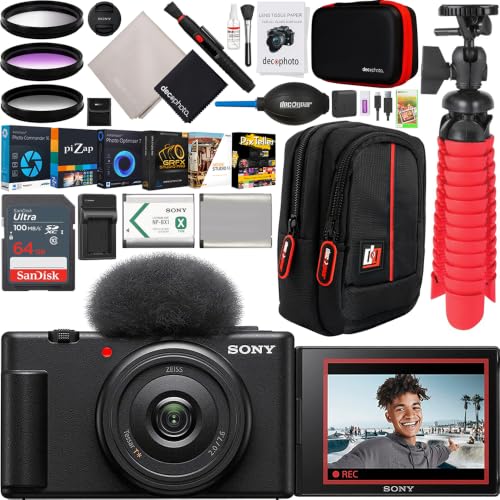
- Sony ZV-1F: check price on Amazon
- GoPro Hero: check price on Amazon
- DJI Osmo Pocket 3: check price on Amazon
- Nikon Z50 II: check price on Amazon
- OM SYSTEM Tough TG-7: check price on Amazon
- Fujifilm X100V: check current availability at your preferred retailer
The quick-photo tribe is easy to recognise. Parents whose children have never once held an expression for a committee. Dog owners, street photographers, travellers in cities that move, grandparents at the exact age where grandchildren accelerate. Journalists of ordinary life — the friend who always has the photograph of the thing everyone else was too slow to catch. What unites them is not a genre but a grievance: they have all watched the picture happen while their equipment was still introducing itself.
Six cameras made this guide, and they divide speed into its honest components. There are the instant-on pocket cameras that live ready — one fixed-lens Sony that wakes like a phone, one tiny GoPro that records before its owner has finished raising it, one gimbal camera that is composed the moment it unfolds. There is the small system camera whose autofocus thinks at flagship speed. There is the armoured compact that can be grabbed wet, sandy and one-handed. And there is the cult fixed-lens camera whose whole design philosophy is readiness. Each was chosen because some part of the chain from seeing to saving is measurably, feelably shorter than the field’s.
A definition before the verdicts, because “quick” is a chain, not a number: pocket-to-eye time, wake time, focus time, shutter lag, and the write time that decides whether the second photograph exists. A camera can win one link and lose the moment on another. The verdicts below grade the whole chain for each pick, name the link where each is weakest, and match the survivors to the kinds of moments their owners actually chase — because the fastest camera for a skateboarder’s friend is not the fastest camera for a newborn’s grandmother, and pretending otherwise would make this a spec sheet rather than a guide.
Key Takeaways
- Quickness is a chain — carry, wake, focus, shutter, write — and a camera is only as fast as its slowest link in your hands.
- Fixed-lens pocket cameras win the chain for everyday moments because they delete decisions; the ZV-1F and GoPro Hero are effectively always ready.
- Autofocus intelligence is the modern speed: the Z50 II’s subject detection finds the moment’s subject before you finish framing it.
- Pre-capture and burst modes, where offered, cheat time itself — frames from before the press are the genre’s newest honest magic.
- The fastest camera is the one already in your hand: carry position and a wrist strap beat every specification in this guide.
In this guide
Quick Picks
| Camera | Badge | Why it is here |
|---|---|---|
| Sony ZV-1F | Best pocket sprinter | Wakes instantly, focuses on faces without instruction, and asks zero decisions between pocket and photograph. |
| GoPro Hero | Best one-button camera | One press from off to recording — the fastest honest route from moment to evidence. |
| DJI Osmo Pocket 3 | Best for moving moments | Unfolds already stabilised and tracking, for the moments that happen while walking toward them. |
| Nikon Z50 II | Best autofocus speed | Flagship-bred subject detection in a small body — the moment’s subject found before you ask. |
| OM SYSTEM Tough TG-7 | Best grab-and-go survivor | Grab it wet, sandy or gloved and shoot — no boot ritual, no protective hesitation. |
| Fujifilm X100V | Best for the ready mind | A fixed-lens classic whose dials are set before the moment, so the photograph is one press deep. |
How did we choose these cameras for quick photos?
The selection was run against a stopwatch and a series of insults. Each candidate faced the genre’s standard ambushes: the camera in a jacket pocket when a child does something unrepeatable across the room; the dog released from a lead at forty metres; the street scene that assembles itself for two seconds at a crossing; the birthday candle that will be blown out exactly once. Cameras were scored on the whole rescue — how much of the moment survived the journey from pocket to saved file — and not on any single laboratory number.
Wake and readiness formed the first filter. A quick camera must be honest about its sleeping state: instant-on designs, lenses that need no cap ceremony, and power switches findable by thumb alone all scored; cameras that boot like computers were cut regardless of their other gifts. Focus behaviour was the second filter, judged on acquisition rather than tracking glamour — the first half-second of autofocus, when it must find a face, an animal or a vehicle in clutter and commit, is where quick photography is won.
The third filter was decision load. Every choice a camera demands — mode, focus area, exposure second-guessing — is time stolen from the moment, so the picks were favoured for automation that can be trusted at speed: face and subject detection that defaults correctly, exposure that handles the doorway’s backlight without a negotiation, and controls that allow one override (exposure compensation, usually) without opening a menu. The fourth filter was the second photograph: buffer and write behaviour that lets a burst become a sequence of real choices rather than one frame and a busy light.
Finally, each pick was matched to a tempo of life. Quick is not one thing: the parent’s quick is readiness across a whole day, the street photographer’s quick is invisibility plus reflexes, the traveller’s quick is a camera that survives being grabbed a hundred times in weather. The six below cover those tempos deliberately, and the verdicts say which tempo each serves — because a camera that is fastest at the wrong tempo is just an expensive way to miss your particular moments.

Sony ZV-1F — Best pocket sprinter
The ZV-1F’s speed is architectural: there is almost nothing between the moment and the photograph. It wakes fast, its fixed lens needs no extension ceremony, its touchscreen interface presents exactly one job, and its autofocus — bred for creators who talk while moving — finds a face and holds it with a casualness that makes the camera feel less operated than simply pointed. From a coat pocket to a saved, sharp, well-exposed photograph of a moving child takes about as long as the sentence describing it, and the bright wide lens means the indoor moments where family speed matters are exposed cleanly rather than hopefully.
Its quickness has honest borders. The fixed wide lens means the quick photograph is the near photograph — the dog across the park stays a dog-shaped rumour, and no burst rate fixes geography. There is no viewfinder for the bright-day grab. And its burst depth is a snapshot tool, not a sports instrument. But within its arena — arm’s length to across the room, the whole geography of domestic and social speed — it is the fastest complete camera in this guide, and the one most likely to be in the pocket when the moment files its usual no-notice appearance.
- Sensor: 1-inch, roughly 20 megapixels
- Lens: fixed ultra-wide, bright, always ready
- Autofocus: face-priority, creator-tuned
- Carry: true pocket size, minimal controls
Strengths
- The shortest pocket-to-photograph chain here
- Faces found and held without instruction
- Bright lens keeps indoor speed honest
Trade-offs
- No zoom; distant moments stay distant
- No viewfinder for glare days
- Burst depth suits moments, not matches
Best for: parents, grandparents and social photographers. Not suited for: sports, wildlife or stage distance.

GoPro Hero — Best one-button camera
The little Hero reduces quickness to its purest form: one button, pressed once, and the camera is recording — from fully off, in about the time a thumb takes to commit. GoPro calls the philosophy capture without friction, and for the moments that define this genre — the wave, the jump, the spill, the first steps crossing the room toward you — a video-first grab is often the truest quick photograph of all, with frames harvestable from the footage afterwards. Mounted, strapped or simply palmed, it is the camera least likely to be booting when history happens.
As a stills camera it is deliberately simple: wide, fixed, honest photographs with the action camera’s deep focus that forgives aim. That forgiveness is itself a speed feature — the Hero does not focus-hunt because its world is essentially all in focus, and its exposure automation handles the beach-to-shade transitions of an active day without supervision. Its limits are the class’s: stills resolution and low-light finesse trail the larger sensors here, and battery life is measured in adventures. But for the user whose moments are kinetic and whose hands are busy living them, the one-button grab is not a compromise. It is the entire point.
- Sensor: compact action sensor, deep-focus lens
- Start: one press from off to recording
- Body: waterproof, mountable anywhere
- Stills: frame grabs plus dedicated photo mode
Strengths
- Fastest possible start — a single press
- Nothing to focus, aim or configure
- Survives the moments it records
Trade-offs
- Stills quality is the modest entry here
- Ultra-wide view distorts near faces
- Battery life suits sessions, not days
Best for: active families, water, bikes and spontaneous video-first grabs. Not suited for: considered stills or dim interiors.

DJI Osmo Pocket 3 — Best for moving moments
Some moments are not still points but short journeys: the toddler’s wobbling expedition across the market, the friend’s entrance, the street performer’s whole thirty seconds. The Pocket 3 is the quick camera for those — it unfolds and powers in one motion, its gimbal levels the world before you have finished raising it, and its tracking locks onto a face or subject so the operator can walk, turn and participate while the framing takes care of itself. The speed here is not shutter speed; it is the deletion of setup, stabilisation and aiming from the moment’s critical path.
Its stills are genuinely good — the 1-inch sensor sees to that — but its soul is motion, and quick-photo buyers should choose it with that self-knowledge: it is the camera for people whose memories increasingly play rather than hang. The gimbal asks for a degree of care the armoured picks do not, and there is no zoom to rescue a distant instant. What it returns is a category of quick capture nothing else here attempts: the moving moment, followed smoothly, from a device that was in a pocket two seconds earlier. For travellers and parents especially, that is not a novelty. It is the family archive’s future tense.
- Sensor: 1-inch, on a 3-axis gimbal
- Start: unfold to ready, stabilised immediately
- Tracking: face and subject follow built in
- Video: 4K, mechanically smooth
Strengths
- Ready and level the moment it unfolds
- Tracking follows the moment so you can join it
- Stills quality equal to the 1-inch class
Trade-offs
- Gimbal mechanism wants reasonable care
- No zoom for distant instants
- Video-first soul; stills are the second language
Best for: travellers, parents and memory-keepers whose moments move. Not suited for: rough handling or telephoto subjects.

Nikon Z50 II — Best autofocus speed
The Z50 II’s quickness lives in its brain. Nikon’s small body carries subject-detection autofocus descended from the company’s flagships — people, animals, birds, vehicles recognised and tracked as categories rather than as contrasts — and for quick photography that intelligence is worth more than raw frame rates, because the classic missed moment is not a slow shutter but a camera that focused on the fence, the crowd, the wrong child. The Z50 II finds the moment’s actual subject in the clutter of real life and holds it while the photographer does the human part: noticing.
As the only interchangeable-lens pick among the sprinters, it also owns the second photograph problem: bursts with the buffer and write speed to make sequences real, and a lens mount that lets the quick kit grow — a fast prime for the dim living room, a telephoto for the school stage — without changing the body the reflexes live in. It asks more than the pocket picks do: a lens mounted, a slightly larger carry, a photographer’s intent. In exchange it is the only camera here whose quickness scales from the kitchen ambush to the sideline. For the quick photographer who also wants a system, it is the obvious citizen.
- Sensor: APS-C, roughly 21 megapixels
- Autofocus: multi-category subject detection
- Bursts: sequences with a working buffer
- Mount: Nikon Z, shared with full-frame bodies
Strengths
- Finds the right subject in real-life clutter
- Quickness that extends to sport and stage
- A system the reflexes can grow inside
Trade-offs
- Bigger than a pocket; carry must be intended
- Kit lens low-light speed is ordinary
- More camera than a pure snapshotter needs
Best for: fast families, sidelines and system-minded quick shooters. Not suited for: true pocket carry or zero-decision shooting.

OM SYSTEM Tough TG-7 — Best grab-and-go survivor
The TG-7’s speed is the speed of not hesitating. Other cameras make their owners calculate — is it raining, is the boat wet, are my hands sandy, will the toddler drop it — and the moment expires during the arithmetic. The TG-7 is waterproof, drop-proof and freeze-proof, which converts its startup sequence into a single act: grab, point, shoot, with wet or gloved hands, from a beach bag or a boat’s console. In the environments where quick moments cluster thickly — pools, slopes, rivers, gardens after rain — that absence of hesitation is worth more than any autofocus specification.
Its photographic quickness is respectable rather than record-breaking: fast enough startup, focus that handles the scene’s obvious subject, and a macro mode for the instant close-up — the frog, the shell, the snowflake — that other cameras would need a lens change to attempt. The small sensor’s limits in dim rooms are the honest price, and there is no viewfinder for the glare of the beach it lives on. But judged by photographs actually captured in hostile conditions — the metric this genre secretly runs on — the TG-7’s tally embarrasses faster cameras that stayed dry, safe and unready in the car.
- Sensor: compact, roughly 12 megapixels, raw capable
- Body: waterproof, drop and freeze resistant
- Macro: microscope mode for instant close-ups
- Operation: glove and wet-hand friendly
Strengths
- Zero hesitation in wet, sandy or cold chaos
- The camera children and weather cannot bench
- Instant macro for the small sudden subject
Trade-offs
- Dim-room quality trails the 1-inch picks
- No viewfinder against beach glare
- Zoom and burst are working-grade only
Best for: beach, pool, snow and garden speed. Not suited for: low-light indoor moments as a speciality.
Fujifilm X100V — Best for the ready mind
The X100V argues that the fastest camera is the one that was ready before the moment knew it was coming. Its philosophy is preparation made physical: aperture on the lens ring, shutter speed and ISO on dials, everything set in advance and visible at a glance, so the act of photographing compresses into raise, frame through the hybrid viewfinder, press. Its fixed lens — a focal length street photographers consider the native length of noticed life — removes the zoom decision entirely. Photographers who carry it describe a state of readiness that feels less like operating a camera and more like having a reflex installed.
Its cult status and scarcity are part of its story, and this guide lists it in prose with respect rather than hype: it is not the quickest starter here, nor the most automated, and its autofocus is a generation’s rather than today’s. What it offers the quick photographer is a discipline — one lens, dials pre-set, a camera carried daily because it is beautiful to carry — that produces the genre’s most reliable statistic: photographs taken. The moment does not care about your specifications. It cares whether a ready camera was present, and the X100V’s owners are present with a consistency the spec-sheet champions envy.
- Sensor: APS-C, roughly 26 megapixels
- Lens: fixed, classic street focal length
- Viewfinder: hybrid optical and electronic
- Controls: dials set before the moment arrives
Strengths
- Readiness as a design philosophy
- A viewfinder for instinctive framing
- The daily-carry habit, engineered by desire
Trade-offs
- Fixed lens; distance is your problem
- Availability has been famously scarce
- Autofocus is not the newest generation’s
Best for: street photographers and deliberate daily carriers. Not suited for: zoom-dependent moments or automation-first shooters.
What are the actual links in the quick-photo chain?
Name them, because each has a different cure. Carry time: the seconds between the moment and the camera being in your hand, governed by pockets, straps and where the camera lives. Wake time: the camera’s own boot and lens extension, a specification manufacturers quote optimistically. Aim time: raising, framing and — on screen-only cameras — fighting glare. Focus time: acquisition on the real subject in real clutter. Decision time: every mode, dial and doubt between you and the button. And write time: the buffer’s permission to take the next frame, which decides whether a moment becomes a sequence or a single guess.
Amateurs shop for focus speed and lose moments to carry time. Professionals of everyday life audit the whole chain in their own hands — time yourself, honestly, from the sofa to a saved frame of the dog — and fix the slowest link, which is usually a bag, a boot screen or a habit. The picks in this guide were chosen to have no catastrophic link, each for its tempo. Your chain, measured once, will tell you which of the six is actually your fastest camera, and the answer regularly surprises people who bought on specifications.
Why do bursts matter less than the first frame?
Because most quick moments have a peak, not a duration. The expression crests once; the leap has one apex; the accident of light and gesture that made the street scene assembles and dissolves in a breath. A burst fired hopefully produces twenty frames of the moment’s neighbourhood and, too often, the peak sits between two of them while the photographer’s attention was on holding the button rather than on seeing. The masters of quick photography shoot bursts the way drummers use fills — deliberately, around a first frame they meant. Anticipation, position and a camera whose first frame is fast and sure beat frame rates in almost every real ambush.
This is also where pre-capture thinking enters, in the cameras and systems that offer it: buffering frames from before the full press, so the photographer’s reflexes are graded on a curve. Where it exists it is genuinely valuable for the peak-predicament subjects — wildlife, sport, children at full chaos. Where it does not, the older technology serves: half-press readiness, the camera awake in the hand during the minutes when moments are likely, the photographer’s body positioned before the event rather than surprised by it. Quickness is mostly anticipation wearing equipment.
How do you photograph children at full speed?
By surrendering the portrait session and adopting the ambush. Children generate moments at a rate no posing survives, so the quick child’s kit is a ready camera in the room — not fetched, present — set to its most forgiving configuration: subject detection on, a shutter floor that respects sprinting, bursts enabled for the peaks. The Z50 II’s animal-and-people detection and the ZV-1F’s face priority exist for exactly this household physics. Photograph the activity, not the child: bubbles, puddles, the dog, the cardboard box’s maiden voyage, and let the expressions happen inside a frame you have already composed.
Position is the parent’s secret weapon. Get low, get there early, and let the action come to the prepared ground — the hallway’s good light, the garden’s open shade — rather than chasing it through the house’s worst corners. Keep the camera’s home where the life is, on the shelf by the door rather than in the study. And review kindly: a quick child’s archive is graded on captured truth, not on sharpness at pixel level, because the photograph of the laugh slightly soft will outrank the sharp photograph of the pose in every future viewing. Speed, here, is love with a shutter.
What makes street photography the purest quick discipline?
It removes every alibi. The street photographer’s moments are unposed, unrepeatable and unlit by anything but the city’s mood; the subject owes the photographer nothing and will not wait. The discipline that results is the genre’s famous toolkit: zone focus or trusted autofocus, exposure set for the light of the block rather than the instant, the camera carried in the hand at the end of a wrist strap — carry time reduced to zero — and a photographer’s attention trained to see the scene assembling two seconds before it peaks. The X100V’s cult is built on serving exactly this toolkit, and the pocket picks serve its casual cousin, the traveller’s street.
The lesson street teaches every other quick genre is anticipation’s arithmetic. Most “sudden” moments announce themselves: the busker’s crescendo, the crossing’s choreography, the child’s wind-up before the splash. The quick photographer is not faster than the moment; they are earlier than it, positioned and pre-set while it is still becoming. Equipment supports that earliness by being ready without ceremony. But the ear itself is trained, free, and worth more than any body in this guide — which is why the guide keeps recommending practice sessions disguised as walks.
How should you set up a camera that must be ready all day?
Configure for the probable, and make the configuration survive sleep. The all-day ready setup is a small liturgy: the camera in its most automatic trustworthy mode, face and subject detection on, auto ISO bounded sensibly, the screen brightness set for the day’s light, power-saving tuned so the camera naps lightly rather than dying between moments — a wake that costs a second is a feature; a boot that costs four is a tax on every photograph. Batteries are part of readiness: a quick camera with a tired battery is a slow camera that has not admitted it yet, so the spare lives in the same pocket as the camera.
Then rehearse the draw. From pocket, bag or shelf to first frame, timed, five times, until the hands know the route without the eyes supervising. Photographers who drill the draw sound theatrical until their archive is compared with an undrilled owner’s: the difference is not talent but a two-second toll paid or not paid on every moment of the year. The cameras in this guide reward the drill differently — the GoPro’s single press, the Sony’s instant wake, the Fujifilm’s pre-set dials — but all of them assume an owner who has decided that readiness is a practice, not a purchase.
What about phones — are they not the quickest cameras of all?
They are the most present, which is not the same thing. A phone’s chain has hidden links: the pocket-to-app journey through a lock screen and a mode carousel, shutter behaviour that varies with processing, a lens at a fixed wide length, and an automation stack optimised for the average scene rather than your moment. For the snapshot in good light the phone’s chain is short enough. For the moving child in a dim room, the dog at distance, the street scene at dusk, the dedicated cameras here shorten the links that matter — focus certainty, light gathering, a button that is a button — and the difference shows up precisely in the photographs phones miss.
The honest verdict is coexistence with a division of labour. The phone remains the camera of administration — the quick document, the shared instantly snap. The dedicated quick camera becomes the camera of the moments the phone’s chain keeps fumbling, carried deliberately on the days those moments gather: the party, the match, the trip, the ordinary Sunday with a toddler in it. Owners who frame the purchase that way stop asking a compact to justify itself against the phone’s whole existence, and start judging it by the shelf of photographs it rescued. That shelf fills faster than sceptics expect.
How do pets rewrite the quick-photography rules?
Animals are moments with no respect for rehearsal. A dog’s decision to leap, a cat’s decision to be magnificent, arrives without the social warning systems humans provide, and the animal’s eye — the focus point that makes the photograph — is small, dark and usually moving. This is why animal detection autofocus has become a headline feature rather than a gimmick: the Z50 II’s animal detection and its rivals’ equivalents find the creature in the frame’s clutter and hold its eye while the owner composes with whatever attention the animal’s schedule permits. For pet owners, that single feature is worth more than every other specification in this guide combined.
The working method around the animal is pure ambush craft. Pre-position at the animal’s level, in the light the garden already has, with the camera awake and the burst armed, and let the game come to the prepared ground — the thrown ball’s return lane, the sunny step the cat owns, the gate the dog greets at. Quick pet photography fails when it chases and succeeds when it waits with a ready camera, which is why the tough and pocket picks, built to wait outdoors without ceremony, tally so many pet keepers’ favourite frames. The animal sets the tempo. The photographer’s whole job is to have removed every delay between the animal’s decision and the shutter’s answer.
What does shutter lag feel like, and why do the picks avoid it?
Shutter lag is the gap between the press and the photograph — the fraction of a second in which the camera finishes focusing, metering and thinking while the moment finishes happening. On older compacts and phones in poor light it can stretch long enough to photograph the aftermath of everything: the expression after the laugh, the splash after the leap. The picks here were chosen partly for how they compress that gap: pre-focused readiness when the button is half-pressed, autofocus that commits rather than deliberates, and — in the GoPro’s case — a deep-focus lens that removes focusing from the critical path entirely.
The photographer’s half of lag management is the half-press habit: focus acquired and held while the scene ripens, so the full press spends its milliseconds only on exposure. Cameras differ in how gracefully they hold that readiness — how long focus stays trusted, how the camera behaves when the subject drifts — and the quick photographer’s muscle memory is built around their own camera’s answer. This is one more reason to choose one quick camera and keep it: lag is partly a specification and partly a relationship, and relationships are not improved by novelty.
How should travellers think about quickness?
As a security policy as much as a photographic one. The traveller’s moments are unrepeatable by definition — this market, this light, this stranger’s gesture, never again — and the traveller’s camera must be quick without being conspicuous, because a large camera raised slowly changes the scene it came to record and occasionally invites the wrong attention. The pocket picks serve the traveller’s tempo exactly: present in a jacket, awake in a second, quiet in operation, and small enough that photographing feels like noticing rather than like production. The X100V’s street discipline is the same policy at a higher level of intent.
Travellers also live the chain’s cruelest version: the camera in the day bag, the moment across the square, the light already leaving. The travel habits that answer it are unglamorous — the camera carried on the body during the golden hours rather than in the bag, the wrist strap as standard equipment, the settings left in the forgiving configuration from breakfast. A journey’s archive is decided less by the camera’s ceiling than by how many of the trip’s hundred small moments found it ready. Choose for readiness, carry for readiness, and the photographs will look like the trip felt: immediate.
What is the role of luck, honestly?
Larger than any photographer admits at conferences, and smaller than any beginner hopes. Luck supplies the moment; readiness decides whether luck gets photographed. The quick photographers whose archives look supernaturally fortunate are, on inspection, simply present and prepared at a rate their peers are not — camera carried daily, settings forgiving, attention practised — so the same statistical luck that visits everyone is harvested by them alone. Pasteur’s line about chance favouring the prepared mind is the genre’s entire philosophy, with a shutter attached.
This is oddly hopeful news for buyers. It means the camera purchase is the smaller half of the improvement available, and the larger half — carry, configuration, anticipation, the drill — is free and transferable to every camera you will ever own. Buy from this guide the pick whose readiness profile matches your life, then invest the real effort in being the kind of photographer moments happen in front of: out in the light, camera in hand, watching the scene assemble itself one second early. The archive that results will look lucky. You will know better, and the knowing is the craft.
How do you keep a quick camera ready across years?
By defending the habit against the two forces that erode it: friction and upgrades. Friction arrives as small taxes — the case that must be unzipped, the lens cap that must be pocketed, the settings that reset themselves overnight, the battery that lives in a drawer in another room. Audit them quarterly the way you would audit anything that costs you photographs, and remove one each time. The camera’s home should be the place your hand already goes: the coat pocket, the shelf by the door, the bag that actually leaves the house.
Upgrades erode readiness differently, by resetting the relationship — new menus, new lag behaviour, new muscle memory to build while the moments keep their own schedule. This is why quick photographers are conservative changers, and why a pick from this guide should be bought as a multi-year companion rather than a season’s experiment. When the change does come, overlap the cameras: carry the new one alongside the trusted one until the hands have transferred their loyalty. Readiness is a property of the photographer-camera pair, and pairs, like partnerships, should not be dissolved casually.
What should a quick-photography kit contain besides the camera?
Almost nothing, and that is the point — every accessory is audited against the chain. A wrist strap, because the drop is the quick camera’s occupational hazard and a strap shortens the draw. A spare battery in the carrying pocket, because readiness dies quietly. A small cloth, because front elements live unprotected lives in pockets. A card with room to be lazy, because a full card is a slow camera wearing a disguise. That is the entire list for most owners, and its brevity is a feature: the quick kit is the one that is already assembled when the moment knocks.
Beyond the list, buy only against named failures. A mini tripod if your quick moments include group shots you must appear in. A weather cover if your tempo is the TG-7’s but your camera is not. A faster card if your bursts genuinely stall on writing. Accessories bought this way extend the chain’s strong links; accessories bought speculatively become the bag’s ballast, and ballast is just carry time wearing a receipt. The quick photographer’s kit should be explainable in one breath, because it may need to be deployed in one.
How does video-first thinking change quick stills?
It offers an insurance policy the stills tradition never had: when the moment is too fast to frame, record it and harvest the frame. The GoPro and Pocket 3 embody the strategy — 4K and better footage yields stills entirely adequate for the family archive and the social feed, which converts the photographer’s hardest decision (when exactly to press) into an editor’s easier one (which frame to keep). Purists note, correctly, that harvested frames rarely match a deliberate still’s quality or intent. Quick photographers answer, also correctly, that a harvested frame of the actual peak outranks a deliberate still of its aftermath in every album ever made.
The mature practice uses both grammars deliberately. Stills when the moment allows composition — the light is right, the subject is near, the peak can be anticipated. Video when the moment is chaos with a deadline — the first steps, the wave’s arrival, the goalmouth scramble. The cameras in this guide were chosen partly for how gracefully they straddle that choice, several of them switching grammars in a button press. The genre’s future is clearly bilingual. The photographer’s skill is knowing which language the next ten seconds speak.
How do you review a day of quick photographs?
Ruthlessly and briefly, because the genre’s volume punishes sentimentality. The quick archive’s keepers are chosen by a single question — does this frame hold the moment’s peak or merely its neighbourhood? — applied at speed, in the first pass, with the delete key treated as a kindness to your future self. Keep the sequence’s best two, not its best twenty; the album that results will be rewatched, which is the entire purpose of the exercise, while the unedited dump will be avoided by everyone including its maker. Bursts especially must be culled on the day, before their hundred near-identical frames fossilise into a chore nobody performs.
Review also closes the learning loop this guide keeps prescribing. Note which link of the chain failed on the day’s misses — the camera asleep, the focus on the fence, the draw too slow from the bag — because the pattern across a month of reviews is a personalised specification for what to fix, buy or practise next. Quick photographers improve by auditing their misses with the same honesty they apply to their keepers. The archive grows sharper; the chain grows shorter; and the moments, which were never waiting, start getting caught anyway.
What is the quick photographer’s one-page checklist?
It fits on an index card and lives in the camera’s pocket. Camera charged, card empty enough, detection on, sleep set light. Strap on the wrist before the hand leaves the bag. Half-press early when the scene starts to assemble. Shoot the peak, then one insurance frame, then stop and watch the rest with your eyes, because presence is also a family duty. Transfer and cull tonight, while the misses can still teach. That is the whole liturgy, and every camera in this guide can be configured to serve it in a single setup session.
Tape the card inside the bag if memory needs help, and revisit it when a new camera arrives, because the checklist is about the photographer, not the equipment. The photographers whose quick archives impress are not carrying secret technology. They are carrying a card’s worth of habits, executed ten thousand times, in front of moments that rewarded exactly that preparation. Buy the camera that fits the card. Then be the person the card describes.
Why does the first photograph of the day matter?
Because it sets the photographer’s tempo and the camera’s state for everything after. A day that begins with the camera already carried, awake at the first small moment — the kitchen’s morning light, the dog’s greeting, the street outside the door — produces a photographer who notices all day, and a camera whose settings have already survived one real test. A day that begins with the camera in its bag produces, too often, a day of almosts. Quick photographers develop the superstition deliberately: shoot something in the first ten minutes, not for the archive but for the readiness, the way musicians play scales before the concert they actually care about.
The habit scales into a philosophy of ordinary days. Most of a life’s unrepeatable moments are not events; they are Tuesdays, and they are missed by people waiting for occasions worthy of fetching a camera. The cameras in this guide were chosen to live at Tuesday readiness — in pockets, on shelves by doors, in the bags that actually leave. Begin the day with one of them in hand and the archive changes character within a month: fewer ceremonies, more life, and a rising suspicion that the moments were always there, waiting for a photographer quick enough to keep up with an ordinary morning.
Comparison: all six picks at a glance
| Camera | Sensor | Character | Choose it if… |
|---|---|---|---|
| Sony ZV-1F | 1-inch fixed lens | Pocket sprinter | Your moments are near, indoor and familial |
| GoPro Hero | Compact action | One-button grab | The moment will not survive a boot screen |
| DJI Osmo Pocket 3 | 1-inch gimbal | Moving-moment tracker | Your quick moments happen in motion |
| Nikon Z50 II | APS-C | Thinking sprinter | Subjects hide in clutter and distance |
| OM SYSTEM Tough TG-7 | Compact | Unhesitating survivor | Your moments are wet, sandy or frozen |
| Fujifilm X100V | APS-C fixed lens | Ready mind | You shoot streets and daily life deliberately |
What are the most common mistakes in quick photography?
Keeping the fast camera in a slow bag
Carry time is the chain’s first link and its most neglected. A camera that lives in a zipped bag inside a backpack has a draw measured in missed moments, whatever its autofocus costs or its burst rate promises. Carry the quick camera in a pocket, on a strap, in the hand — and let the bag carry the accessories instead.
Chasing frame rates while ignoring the first frame
Beginners buy bursts; moments are won by anticipation, position and a first frame that is fast and correctly focused on the subject that matters. Practise the half-press readiness and the prepared position, and let bursts serve the peaks rather than substitute for seeing them coming from across the room, the garden or the street.
Letting power-saving turn the camera into a computer
Aggressive sleep settings and long boots tax every photograph of the day, silently, in moments that never file a complaint. Tune the nap to a light one, keep the battery fresh, and treat wake time as a headline specification when you shop — because in quick photography, it is the headline specification.
Final Recommendation
Match the sprinter to your moments, and be honest about which moments your life actually produces in a month, a season and a year of ordinary, unrepeatable, quickly forgotten and quietly precious family days at home and away from it. For the household’s everyday ambushes, the ZV-1F’s pocket chain is the shortest complete one here; for moments that arrive as motion, the Pocket 3 follows them home; for the grab that cannot wait for a boot, the little GoPro’s single press stands alone. Choose the Z50 II when your quick subjects hide in clutter, distance or sport; the TG-7 when they live in water and weather; and the X100V when your quickness is a discipline you practise daily on the street. Then drill the draw, keep the camera where life happens, and remember the genre’s whole secret: you do not rise to the moment — you arrive before it, ready.
Frequently Asked Questions
What is the single biggest factor in a quick photograph?
Readiness — the camera in hand, awake, charged and set forgivingly when the moment arrives, in the light the moment actually happens in. Specifications arrange themselves behind that fact in a strict order: carry beats wake, wake beats focus, focus beats frame rate, and all of them together lose to the photographer who saw the moment assembling one second early. Audit your own chain before upgrading any link in it.
Is a higher burst rate worth paying for?
For sport, wildlife and genuine peak-predicament subjects, yes — there, the peak repeats, varies and rewards a fast sequence with a real choice of frames. For family and street moments, the first frame’s speed and the photographer’s anticipation decide far more, because the moment crests once and the burst mostly documents its departure. Buy bursts for the subjects that crest repeatedly; buy readiness for everything else.
Can a compact really beat a phone for speed?
At the links that decide difficult moments, yes: a physical button that needs no unlocking, an instant wake, a lens gathering real light in real rooms, autofocus that commits to the subject you meant. The phone wins on presence alone; the compact wins when presence is equal and the moment is hard, dim or moving. Most quick photographers end up carrying both, for different moments, and stop apologising for the redundancy.
What settings should stay on for everyday readiness?
Face or subject detection, auto ISO within a sane ceiling, the most automatic exposure mode you trust, a generous buffer setting if the camera offers one, and a light sleep rather than a full shutdown between moments. Add exposure compensation on a dial or button if the camera offers it — it is the one override quick shooting regularly needs, for the backlit doorway and the snow-bright garden alike.
How do I practise quick photography?
Time your draw from carry to saved frame, then walk a familiar route photographing only moments you anticipated — the busker’s crescendo, the crossing’s pattern, the dog’s return, the shadow arriving on the wall. Review for the chain’s slowest link, not for beauty, and write the link down where you will see it before the next walk. A month of this drill improves any camera in this guide more than an upgrade would.
Which of these is best for a grandparent?
The one with the fewest decisions: the ZV-1F for pocket simplicity and face-finding automation, or the GoPro Hero if the moments are great-grandchildren in motion and one button is the right interface for hands that have earned simplicity. Both forgive everything except absence — so choose the one that will actually be carried, charged and kept by the door.
Related Guides
Keep exploring with our companion reading: best cameras for family photos and everyday fleeting moments, best cameras for street photography and candid everyday moments and best compact cameras for travel and daily carry.


