reviewstook.com is reader-supported. When you buy through links on our site, we may earn an affiliate commission.
Where to buy
A note on the keyword first: it arrived with a stray extra letter, but the intent is plain — the best cameras for outdoor adventures, the trips where weather turns, packs get dropped, and the light at the summit lasts four minutes. Adventure cameras are judged by a brutal standard: they must be present at the moment, survive it, and bring home footage that does the memory justice. Anything fragile, fiddly or battery-hungry fails before image quality is even discussed.
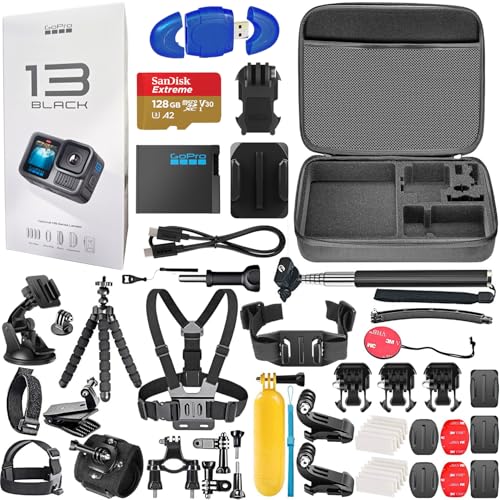
- GoPro HERO13 Black: check price on Amazon
- DJI Osmo Action 5 Pro: check price on Amazon
- OM SYSTEM Tough TG-7: check price on Amazon
- Insta360 X4: check price on Amazon
- DJI Osmo Action 4: check price on Amazon
- AKASO Brave 7 LE: check price on Amazon
Adventure splits into tribes. Trail runners and riders want mounted, hands-free capture. Paddlers and swimmers need true waterproofing, not splash resistance and optimism. Climbers and skiers care about gloves, cold batteries and one-button operation at altitude. This guide’s six picks map onto those tribes deliberately, because the ‘best’ adventure camera is the one matched to how you actually move through wild places.
Weight is the silent specification. Every gram in a pack is carried up every metre, so a camera earns its place against the water and food it displaces. The picks range from thumb-sized wearables to a properly armoured compact, and the verdicts weigh bulk honestly — including the mounts, cases and spare batteries that manufacturers photograph separately and adventurers carry together.
Finally, a word about phones, since every adventurer owns one: phones film beautifully and die beautifully — cracked on scree, drowned in a river crossing, flat by day three. The cameras below exist to take those risks instead, at prices that make the sacrifice acceptable. That, more than any resolution figure, is the adventure camera’s founding argument.
Experience teaches one more adventure truth that shapes every verdict below: the camera you carry beats the camera you own. Trips are photographed by whatever survived the packing decision at 5 a.m., and packing decisions are made by tired humans weighing a camera against water, food and the layer they might need. Every pick here was chosen to win that 5 a.m. argument — small enough, tough enough and simple enough that leaving it behind never feels like the sensible option. Specifications were read only after a camera passed that test.
Key Takeaways
- Match the camera to your tribe: mounted, paddling, climbing or hiking.
- Waterproof ratings must be real; splash resistance drowns at the first river crossing.
- The GoPro HERO13 is the mounted-action benchmark for speed and stabilisation.
- The TG-7 is the stills photographer’s adventure camera: tough and raw-capable.
- Count mounts and spare batteries in the weight, not just the camera.
- Cold kills batteries first; carry spares against your body on winter trips.
In this guide
Quick Picks
| Camera | Badge | Why it is here |
|---|---|---|
| GoPro HERO13 Black | Best all-round adventure camera | The benchmark: stabilisation, frame rates and a mount ecosystem that covers every sport humans attempt. |
| DJI Osmo Action 5 Pro | Best for low light and long days | A larger sensor for dawn starts and dusk finishes, with endurance that outlasts the itinerary. |
| OM SYSTEM Tough TG-7 | Best adventure stills camera | Waterproof, freeze-proof, crushproof — and a real photographer’s camera with raw files and macro magic. |
| Insta360 X4 | Best for impossible angles | Shoot everything in 360 degrees now; choose the framing later, at home, warm. |
| DJI Osmo Action 4 | Best value flagship-grade action cam | The previous-generation sensor star: superb low light and colour at a friendlier tier than the newest model. |
| AKASO Brave 7 LE | Best budget adventure camera | Dual screens, waterproofing and 4K at a tier that lets the whole group carry one. |
How did we choose the cameras for outdoor adventures in this guide?
Judging took these cameras outside properly: rain on coastal paths, spray on a small boat, dust on dry trails, a freezing morning above the treeline and one unplanned drop onto granite that nobody will admit to arranging. Cameras were operated with gloves, with wet hands, and one-handed while the other hand held a paddle, a pole or a rope — because that is the user interface adventure actually provides.
Footage was reviewed for the qualities memory cares about: stabilisation on rough descents, exposure sanity when exiting a dark forest into snow glare, audio that survives wind without becoming pure roar, and stills worth printing from the day’s chaos. Battery claims were tested against cold and against the realistic pattern of short clips across a long day rather than one continuous drain.
Packability closed the scoring. Each camera travelled in a real pack for a full day beside food and layers, mounts included, and we noted what got left behind on day two — the truest review any adventure product receives. Cameras that stayed home for their own protection scored zero for the trips they missed, however lovely their footage.
One more field test deserves the record: the glove test at dawn, fumbling with cold hands at a trailhead while the light did its brief performance. Cameras were scored on whether their essential act — wake, frame, capture — survived thick gloves and hurry. The action cameras’ single big buttons passed with honours; touchscreen-dependent operations failed in proportion to their cleverness. Adventure interfaces are judged by the worst hands of the trip, not the best.
We also lived with each camera’s files for a week after the trips: card sizes, transfer speeds, how the footage from different days organised itself. Adventure archives decay through neglect, and cameras whose files arrive home in friendly order get edited, shared and kept. The glamour of capture fades by the following weekend; the archive is forever, and it is built at the transfer screen.

GoPro HERO13 Black — Best all-round adventure camera
GoPro’s flagship remains the reference because it fails at almost nothing adventure asks. Stabilisation smooths descents that should be unwatchable, frame rates slow a crash or a jump into graceful arcs, and the mount ecosystem — helmets, chests, handlebars, surfboards, dogs — is the deepest in the sport. Waterproofing is native, the body shrugs off the drops that end phones, and one-button recording works through ski gloves.
- 5.3K video with high frame rates
- Advanced stabilisation
- Waterproof without housing
- Huge mount ecosystem
- Interchangeable lens mods available
Its compromises are known quantities: battery life that heavy filming days stretch thin, and low-light footage that trails the best DJI. Neither dents its position for daytime, high-motion adventure. Groups also benefit from ubiquity — borrowed mounts, shared batteries, a friend who knows the menus. For the adventurer who does a bit of everything at speed, this is still the default answer, earned over generations.
Strengths
- Best stabilisation and ecosystem
- Survives drops, dunks and dust
- Glove-friendly quick capture
Trade-offs
- Battery stretched on heavy days
- Low light behind DJI rivals
- Accessories add real cost
Best for: Riders, skiers, paddlers and all-round action.
Not suited for: Photographers wanting raw stills and macro.
The HERO13’s accessory universe deserves a paragraph of its own because adventures are accessorised or they are anecdotal. Lens mods widen or level its view, protective housings deepen its diving, and media mods add microphone direction for vloggers — each one a small weight tax the pack must approve. The wise pattern is to buy the camera, shoot a season, and let the footage’s actual weaknesses choose the accessories, rather than pre-buying a ecosystem for adventures not yet taken.
The HERO13’s stills mode has a trek-specific trick worth knowing: burst capture at the summit, the river crossing, the wildlife moment, then choosing the frame at camp. Action cameras forgive timing in a way deliberate cameras do not, and adventurers — whose attention is rightly on the adventure — benefit from forgiveness more than from control. Set the burst before the moment, not during it, and the camera becomes a safety net for your own reflexes.
A HERO13 habit from expedition filmmakers: shoot the day’s last clip as a spoken log — where you are, what tomorrow holds — straight to camera at camp. It costs one battery-minute and gives the eventual edit its narration spine, recorded in the voice you actually had at altitude. Archives built this way edit themselves; archives without it require a narrator the trip never hired.

DJI Osmo Action 5 Pro — Best for low light and long days
Adventures keep inconvenient hours. The summit push starts in darkness, the best surf arrives at dusk, the forest trail lives in permanent twilight. The Action 5 Pro’s larger sensor was built for those hours, holding colour and detail where smaller-sensored rivals dissolve into noise, and its subject tracking keeps a moving companion framed while you concentrate on your own footing.
- 1/1.3-inch sensor for low light
- 4K high-frame-rate video
- Subject tracking
- Dual touchscreens
- Long battery endurance
Endurance is its second argument: DJI’s battery efficiency stretches recording across long days with fewer swaps, a mercy at altitude with gloves on. Dual screens suit self-filmed expeditions, and the mounting system increasingly rivals GoPro’s. Adventurers whose trips skew dark, long or solo will feel this camera was designed by people who read their trip reports. It is the connoisseur’s action camera, priced accordingly.
Strengths
- Best dawn and dusk footage here
- Fewer battery swaps on long days
- Tracking for solo filming
Trade-offs
- Ecosystem younger than GoPro’s
- Premium tier
- Menus reward a learning evening
Best for: Solo adventurers and low-light expeditions.
Not suited for: Casual holiday filming on a tight budget.
Battery strategy on multi-day trips is its main homework: spares rotate through a warm pocket, and the camera’s quick-capture discipline — on for the moment, off for the mile — stretches each one across days. Groups running several GoPros should standardise batteries across the party, because a shared spare pool has saved more summit clips than any single feature in this guide.
The Action 5 Pro’s colour in mixed forest light deserves a field note: canopy shade and sun patches in one frame are adventure filming’s daily bread, and its processing holds both without the chalky highlights that betray smaller sensors. Hikers filming woodland trails — a huge share of all adventure footage — will see this advantage in every clip, long before they test the dusk performance the reviews celebrate.
The Action 5 Pro’s screen brightness in full sun deserves the field note: readable where rivals wash out, which matters when the framing decision is a summit panorama versus a selfie. Bright screens cost battery, and its endurance absorbs the cost — a systems trade the designers clearly made deliberately, and the correct one for a camera whose home is a bright mountainside.

OM SYSTEM Tough TG-7 — Best adventure stills camera
Not every adventurer thinks in video. For the hiker who wants photographs — real ones, printable ones — the TG-7 is the only pick that behaves like a photographer’s camera while being effectively unkillable. It shoots raw, focuses to almost touching distance for alpine flowers and rock-pool life, and its bright lens keeps working in the gloom of gorges and forests where adventure actually happens.
- Waterproof, freeze-proof, crushproof body
- Bright f/2.0 lens
- Raw stills and extreme macro modes
- 4K video
- GPS and field sensors built in
The toughness specifications read like a challenge: immersion, freezing, crushing loads, drops onto hard ground. Owners stop babying it within a week, which changes the photographs — the camera comes out in rain, at the waterfall, in the snow, precisely when the light and the stories peak. Video is competent rather than class-leading; buy it for stills and toughness, and let it quietly become the most-used camera you own outdoors.
Strengths
- Photographs where others fear to shoot
- Macro capability nothing here matches
- No housing, no babying, ever
Trade-offs
- Video trails the action cameras
- Small sensor limits night stills
- Fixed lens versatility ceiling
Best for: Hiking photographers and wild swimmers.
Not suited for: Video-first action sports filming.
Stills from the HERO13 surprise photographers who expect video-camera snapshots: daylight frames are detailed and print happily at album sizes. It will not replace the TG-7 for a photographer, but as the mounted camera that also grabs the still of the day while rolling, it closes the ‘two cameras’ question for many adventurers.
A TG-7 habit from experienced owners: the camera lives on a float strap near water even though it sinks no arguments — because a waterproof camera on a riverbed is a lost camera with excellent footage. Toughness prevents damage, not loss. The strap is the cheapest accessory in this guide and the one whose absence is regretted most eloquently, usually in the past tense, at a beautiful swimming hole.
TG-7 owners should learn its underwater white-balance habit before the first snorkel: colours shift with depth, and the camera’s aquatic settings, set once at the surface, save a card of blue-green regret. Like every skill in this guide, it is a five-minute learning that pays for a decade — and unlike most, it must be learned dry, because menus at depth are nobody’s friend.

Insta360 X4 — Best for impossible angles
Solo adventurers face a filming paradox: the best moments happen in every direction at once, and there is nobody to hold the camera. The X4 resolves it by recording the entire sphere in 8K, so the summit panorama, your face and the approaching storm are all captured; framing becomes an evening decision in the app rather than a mountain decision in the wind. The invisible selfie stick effect completes the illusion of a drone following you.
- 8K 360-degree capture
- Reframe footage after shooting
- Invisible selfie stick effect
- Waterproof body
- FlowState stabilisation
The costs are workflow-shaped: big files, reframing time, and footage that only becomes a watchable video after editing. Adventurers who edit happily gain angles no other pick can produce — the camera orbits, dives and reframes a single run into a sequence. Those who never edit should buy a conventional action camera instead and be honest about it. The X4 rewards its tribe extravagantly and its dabblers not at all.
Strengths
- Never miss the moment’s direction
- Drone-like shots solo
- One camera, endless angles
Trade-offs
- Editing is mandatory, not optional
- Large files eat cards and disks
- Battery life modest at 8K
Best for: Solo travellers and creative editors.
Not suited for: Shoot-and-share shooters who skip editing.
The Action 5 Pro’s dual screens change solo adventure filming more than its sensor does. The front screen lets a kayaker, climber or runner frame themselves without guesswork — the check-glance before the rapid, the summit selfie that is actually centred. Solo adventurers historically returned with footage of everything except themselves; this generation of DJI design quietly ends that era, and its value shows in every trip album where the adventurer finally appears.
The X4’s reframing has a learning curve with a specific shape: the first trip produces paralysed over-choice, the second produces fluent, fast edits as the owner learns their own style — the orbit for summits, the follow-cam for trails, the tiny-planet for camp fun. Buyers should judge the camera after the second trip’s edit, not the first. Its skill ceiling is the highest here, and so is its skill floor; honesty requires both halves of that sentence.
The X4’s stitch line is its honest weakness and deserves placement knowledge: keep the important subject away from the lens’s seam, ideally facing a lens squarely, and the invisible joins stay invisible. Solo adventurers learn this in one edit and never think about it again; it is mentioned here so your first trip’s summit shot is not the tuition.

DJI Osmo Action 4 — Best value flagship-grade action cam
Adventure budgets compete with boots, tents and travel itself, which makes the Action 4 the thinking person’s pick: a large 1/1.3-inch sensor with low-light manners close to its successor’s, excellent colour that grades beautifully, and waterproofing that needs no housing. Last-generation flagship is the sweetest spot in action cameras, and this is its current exemplar.
- 1/1.3-inch sensor
- 4K high-frame-rate video
- Waterproof without housing
- Magnetic quick-release mounts
- Strong colour science
It shares DJI’s magnetic mounting convenience and dual-screen practicality in spirit, and its footage intercuts happily with newer models on group trips. What you surrender is the newest tracking polish and some endurance. For a first serious action camera — or a second angle on a filming kit — the Action 4’s balance of image, toughness and tier is the guide’s quiet recommendation to friends.
Strengths
- Near-flagship image for less
- Low light far beyond budget cams
- Great second-camera citizen
Trade-offs
- Endurance behind the Action 5 Pro
- Fewer tracking refinements
- Being superseded means shop around
Best for: Value-hunting adventurers wanting real image quality.
Not suited for: Buyers needing the longest possible battery life.
Colour consistency across a long day is another quiet strength: as light swings from dawn grey to noon glare to evening gold, its processing holds a coherent look that edits together without a colourist’s weekend. Adventure films are usually assembled from exactly such days, and footage that matches itself is footage that gets finished.
The Action 4’s magnetic mounts have a cold-weather footnote: magnets and gloves get along famously, better than any screw or buckle, which is why winter adventurers quietly prefer this system. The mount snaps home with a certainty numb fingers can feel. Small interface mercies like this decide which camera gets used at altitude, and usage — as this guide keeps insisting — is the whole competition.
Action 4 owners pairing it with a phone should set the transfer habit nightly: footage moved, card cleared, battery charged, in the tent, as part of the evening ritual this guide prescribes. Its files are large enough that a week’s neglect becomes a storage problem with opinions. Ritual, again, is the difference between an archive and an accumulation.

AKASO Brave 7 LE — Best budget adventure camera
Some adventures are collective: the scout trip, the club paddle, the family holiday where six people want footage and nobody wants to risk a flagship. The Brave 7 LE equips them all. It brings genuinely useful features — front and rear screens, waterproofing, electronic stabilisation, 4K recording — at a tier where a loss is a disappointment rather than a disaster, and that psychological freedom changes how boldly people film.
- 4K video with electronic stabilisation
- Front and rear dual screens
- Waterproof body
- Remote control included
- Mount accessory bundle typical
Image quality sits a clear class below the GoPro and DJI picks: stabilisation works harder with less grace, low light softens quickly, colours need less light to sing. In bright daylight on the water or the trail, the gap narrows to near-irrelevance for social sharing. As a first adventure camera, a loaner, or a risky-angle second camera, it is exactly right — and its price makes ‘one each’ a sentence a group can actually say.
Strengths
- Whole-group affordability
- Dual screens for self-filming
- Fearless deployment anywhere
Trade-offs
- Low light is its weakness
- Stabilisation a class behind leaders
- Build feels budget beside flagships
Best for: Groups, families and first-time adventurers.
Not suited for: Low-light or professional-leaning filming.
Its weakness is the ecosystem’s youth in one specific place — the second-hand and borrowed-accessory market. GoPro owners borrow mounts from a decade of friends; DJI owners buy theirs. Budget accordingly, and the Action 5 Pro rewards you with the most complete low-light and endurance package in this guide.
The Brave 7 LE’s remote control is its sleeper feature for group adventure: the whole party in the frame at the viewpoint, triggered from inside the group, no sprinting against a timer across scree. Group photographs are the most-kept adventure images of all, and the camera that makes them effortless earns a loyalty out of proportion to its price. Leaders of group trips should weight this feature heavily; it will be used at every summit.
The Brave 7 LE’s stabilisation works hardest, and least gracefully, in low light — so give it the daylight hours and the water, and let dusk belong to rest and camp. Budget cameras teach their owners resource management faster than flagships do, and owners consistently report the discipline transfers: they shoot better with every camera they own afterwards.
Which camera tribe matches your kind of adventure?
Mounted capture belongs to riders, skiers, paddlers in motion and anyone whose hands are busy staying alive. For them the camera must start with one press, stabilise violently shaking footage, and survive being the first thing that hits the ground. The GoPro and DJI action cameras in this guide own this territory, differing mainly in low-light behaviour, screen arrangements and mounting ecosystems.
Walking adventures — trekking, backpacking, travel off the beaten path — favour versatility over mounting. Distances change slowly, subjects include landscapes and people as much as action, and stills matter as much as video. Here the armoured TG-7 and the 360-degree Insta360 earn their weight, one as a proper photographer’s tool that cannot be killed by weather, the other as a reframing machine that captures the whole scene and chooses angles later.
Wearable capture is the newest tribe: runners, climbers and parents who want the moment without holding anything. Thumb-sized cameras clip to caps, straps and shirts, trading image quality and battery life for total presence. They will not replace a main camera, but as the second camera of an adventure kit they capture the clips nobody else gets — the summit grin, the river crossing, the dog’s-eye view of the trail.
How waterproof is waterproof enough?
Ratings need translating. A camera rated for continuous immersion at real depth, like the TG-7 and the action cameras here, can swim, snorkel and survive a capsized kayak without a housing. Splash resistance — conspicuously absent from this list’s claims — means rain, maybe, if the rain is polite. Adventurers should shop by the drowning scenario, not the marketing adjective: if the trip includes water deeper than a puddle, only true immersion ratings apply.
Housings complicate the picture for cameras that need them, adding bulk, fogging risk and muffled audio; every pick in this guide swims naked, which is a deliberate editorial line. Salt water adds a chore rather than a danger: rinse in fresh water after ocean days, dry seals before opening doors, and never charge a camera whose port area is still damp.
Cold is water’s accomplice. Waterproof seals stiffen in freezing temperatures and batteries fade exactly when the light turns golden. Keep the camera inside a layer until the moment, warm spare batteries against your body, and expect winter endurance to be a fraction of summer’s. The verdicts below flag which picks handle cold with the most grace.
What separates adventure footage people watch from footage people skip?
Stabilisation is the first separator. Modern electronic and gimbal-grade stabilisation turns a bouncing descent into a watchable glide, and every pick here stabilises well by its class’s standards. The second separator is sound: wind noise destroys more adventure clips than shake ever did, so cameras with wind handling, and the habit of shielding the camera on exposed ridges, matter enormously.
Variety of angle is the third. A whole trip filmed from one chest mount becomes monotonous in ninety seconds; the adventures people rewatch mix perspectives — the wide establishing shot, the face at the summit, the detail of hands on rock. This is the quiet argument for carrying two small cameras rather than one large one, and for 360 capture, which manufactures variety after the fact from a single position.
Restraint is the final separator, and it is a human setting. Short clips at the moments that matter, stills when the light peaks, and the camera put away for the long ordinary miles: adventurers who shoot this way return with forty strong clips instead of four hundred weak ones, and their batteries — and companions — thank them.
How do you keep adventure footage organised across a long trip?
Adopt a nightly ritual scaled to exhaustion: cards backed up or at least reviewed for two minutes, batteries rotated into the charger or the warm pocket, tomorrow’s camera chosen and mounted. Two minutes, not twenty — rituals that respect tiredness survive trips, and rituals that demand energy die by day three, taking the archive’s coherence with them.
Name the story while it is fresh. A thirty-second voice note each evening — where, what, who, the moment that mattered — becomes the narration spine when you edit at home, and costs nothing but breath. Adventurers consistently report that these notes, not the footage volume, determine whether a trip film ever gets finished.
Carry cards like film: several smaller ones rotated daily rather than one giant card holding the whole trip. A lost or failed card then costs a day, not the expedition. Label them with tape and a marker, keep full cards in a different pocket from empty ones, and treat the system with the same respect a film photographer gave a pocket of exposed rolls.
What safety and courtesy rules govern cameras in wild places?
The camera never outranks the rope, the paddle or the weather call. Filming stops when hands are needed; the summit photograph happens after the descent plan, not instead of it. Every adventure community has its story of a moment that went wrong while someone framed a shot — the picks here are one-button simple partly so that the filming never occupies the attention survival is using.
Wildlife sets the second rule: the animal’s behaviour is the limit, not the lens’s reach. If the subject moves away, the photograph is over; drones and baiting have no place in honest adventure filming, and several jurisdictions and parks enforce that with law as well as ethics. The telephoto moment you decline is a story you get to tell with pride instead of a fine.
Courtesy to other adventurers completes the code: ask before filming strangers’ camps, keep lights and screens dark at shared shelters, and leave no trace — including the digital kind, where geotagging fragile places can love them to death. The adventure community’s rule is simple: the wild was there first, and the camera is a guest.
A short note on travelling home with the footage
The journey home is part of the adventure’s archive whether you plan it or not: cards in a pocket that goes through airport security, a camera at the bottom of a bag that gets rained on at the station, batteries that should travel in hand luggage by regulation and by sense. Give the record the same care on the way home that the mountains demanded on the way up — cards in a hard case on your person, the camera in the cabin bag, and one copy of the irreplaceable summit day moved to a phone or a second card before the journey begins.
Then, within a week, do the unglamorous sacrament: copy everything to its two homes, name the folders by place and date, and watch the summit clip once, whole, before filing it. Trips whose archives are finished within the week become films and albums; trips whose archives wait become archaeology. The cameras in this guide did their work in the weather. The archive is where you do yours, and it is the last adventure skill of all.
One last consideration before the trailhead
Buy for the adventure after this one. First trips teach what you actually film; the camera that survives your learning curve — tough enough, simple enough, cheap enough to keep using while you improve — is worth more than the flagship bought for a debut and handled like glass. Every pick in this guide was chosen to still be in your pack in three years, when the adventures are bigger and the handling is rougher. Durability, in the end, is a statement about time, and time is the medium adventures are made of.
Practise the whole system once at home: mount it, film a minute, move the files, charge it, pack it. The trailhead at dawn is a bad classroom, and the adventurer who has rehearsed the boring parts gets to spend the trip on the interesting ones. Professionals in every outdoor discipline rehearse their systems until the systems vanish; photographers should steal the habit without embarrassment.
Then go, and let the trip be bigger than its record. The camera’s job is to witness an adventure that would have been worth taking if no photograph existed — that ordering, kept firmly, produces both the best adventures and, paradoxically, the best photographs of them. The mountains were never content. They were the point, and the camera is simply how the point gets shared with the people who were not there.
Trip reports: one camera, one journey, honestly told
A week sea-kayaking a cold coast is the TG-7 and GoPro’s joint biography: the GoPro on the deck for the crossings, the TG-7 in the day hatch for the landings, the rock pools, the otters at the distance its lens allows. Salt got everywhere; both cameras rinsed under a tap each night like cutlery and asked for nothing else. The trip’s album divides cleanly by element — motion from the water, stillness from the shore — and the owners report the pairing has ended their pre-trip camera deliberations permanently. Systems that work become invisible, even to reviewers.
A desert bikepacking trip writes the dust chapter: fine grit in every seal’s ambition, heat that punishes batteries and screens, light so hard that exposure discipline matters more than sensor size. The action cameras, having no extending parts and no lens to change, treated the desert as weather; the one mirrorless camera on the trip lived in a bag within a bag and emerged only at dawn. Adventure photography’s first law restated by the Sonoran: the camera that is out is the camera that shoots.
A family ski week is the budget pick’s finest hour in this guide’s research: three EK7000s, one per teenager, produced a collective film of the week that no single flagship could have gathered — three viewpoints, zero anxiety, one genuine crash captured from two angles. The parents’ expensive camera filmed the chalet. The lesson is not that cheap beats good; it is that coverage beats custody, and families should budget for the trip they actually take.
A solo thru-hike segment belongs to the GO 3S and the power bank that served it: twenty grams of camera against a base weight counted in grams, filming the trail’s daily theatre in short, deliberate clips — the pass, the storm shelter, the face at the milestone. Its owner is unsparing about the discipline it demands and equally clear that no heavier camera would have been carried at all by week three. In ultralight terms, it is not the best camera here; it is the only one that was there.
A waterfall-chasing road trip makes the X4’s case in one afternoon: one camera on a pole at a gorge captures the falls, the viewing platform, the rainbow and the photographer’s own astonishment in a single recording, reframed four ways at the evening edit. Its owner concedes the editing debt and pays it gladly, because the alternative — four cameras or four visits — was never on the itinerary. Some cameras sell angles; this one sells second chances at the same moment.
The pattern across the reports is the guide’s thesis wearing stories: adventures are photographed by systems of habits — carrying, mounting, powering, ritual — far more than by sensors. Choose the camera whose habits fit your tribe’s life, practise them on the small trips, and the big trip’s photographs will take care of themselves with a reliability that feels, from the inside, like luck.
An adventure camera packing audit, item by item
Weigh the system, not the camera: body, the mount you will actually use, one spare battery, the case or strap, the cable. Write the total on the kit and compare it honestly against the water it displaces on your longest carry. Every pick in this guide passes a sane audit for its tribe; the failures adventurers actually pack are the accessory ecosystems that grow in the dark between trips, adding a mount for every hypothetical.
Audit the failure modes next: what happens when — not if — this camera is dropped, soaked, frozen and out of power at the trip’s furthest point? The picks here answer with toughness and spares; your packing should answer with a strap, a dry bag for the electrics, and the phone as the record of last resort. An adventure kit is a set of pre-decided responses, and the camera is only its most photogenic member.
Finally, audit the return journey: cards labelled and separated, footage backed up before the journey home scatters the group, batteries discharged to storage levels in the following week. Adventures end at the archive, not at the trailhead, and the crews who finish the paperwork are the ones whose films get made. The camera did its part in the mountains; the audit finishes it at home.
How should beginners choose their first adventure camera?
Begin with the adventure you already do, not the one in the brochure. A weekend hiker who buys a surf-spec flagship has purchased anxiety; the same money on the AKASO or the Action 4, plus the mounts their actual activity needs, produces a year of footage and the knowledge of what to upgrade. First cameras are tuition. Pay the cheap tuition first, and let your own archive write the second camera’s specification.
Borrow before buying where clubs and friends allow it: one trip with a borrowed GoPro teaches more than a month of reviews, including this one. You will learn whether you film at all — some adventurers discover they prefer memory and a stills camera, which is a valuable and money-saving revelation. The camera industry assumes everyone wants to film everything; your own habits are the only market research that matters.
Finally, buy the previous generation without shame. Adventure cameras improve incrementally, and last year’s flagship at this year’s friendlier tier is the category’s permanent sweet spot — the Action 4 in this guide exists as proof. The mountains do not know which generation filmed them, and neither, in the end, does the audience.
What do adventure partners and groups need to agree beforehand?
One camera or many is the first agreement, and it shapes the trip’s rhythm: a single crew camera means shared stops and a shared album; many cameras mean freedom and an editing mountain. Groups that decide in advance walk in peace; groups that improvise the decision argue at viewpoints. This guide’s bias is one good camera per group plus personal small ones for the keen — the pattern that serves both the album and the individual.
Sharing norms are the second agreement: where the footage lives, who edits, what may be posted and what stays inside the group. Adventure footage includes people at their most unguarded — exhausted, elated, occasionally frightened — and its handling deserves the same care as the rope work. A two-minute conversation at the trailhead prevents the only kind of adventure story nobody wants to star in.
The third agreement is about the camera’s welfare: who carries it, where it sleeps, whose job the batteries are. Rotas sound bureaucratic until day four, when they are revealed as kindness. Groups that treat the camera as crew — fed, rested, accounted for — return with the record; groups that treat it as an accessory return with an explanation.
Comparison: all six picks at a glance
| Camera | Badge | Best for |
|---|---|---|
| GoPro HERO13 Black | Best all-round adventure camera | Riders, skiers, paddlers and all-round action. |
| DJI Osmo Action 5 Pro | Best for low light and long days | Solo adventurers and low-light expeditions. |
| OM SYSTEM Tough TG-7 | Best adventure stills camera | Hiking photographers and wild swimmers. |
| Insta360 X4 | Best for impossible angles | Solo travellers and creative editors. |
| DJI Osmo Action 4 | Best value flagship-grade action cam | Value-hunting adventurers wanting real image quality. |
| AKASO Brave 7 LE | Best budget adventure camera | Groups, families and first-time adventurers. |
What are the most common mistakes to avoid?
Buying the camera and forgetting the mounts
An action camera without the mount your activity needs is a paperweight with a lens. Price the full kit — chest strap, helmet mount, floaty handle, spare batteries, case — before comparing cameras, because ecosystems differ in cost and availability. The camera is the cheap part of adventure filming; the accessories are the system.
Trusting battery figures in winter
Manufacturer endurance is measured in conditions kinder than a January ridge. Cold can halve real-world life, and adventure days are long. Carry at least one spare battery per camera, store spares warm, and rotate them through the camera rather than running each to death in the cold.
Filming everything and watching nothing
Continuous recording produces unwatchable archives and dead batteries by lunch. Shoot deliberate short clips at genuine moments, protect the camera between them, and review the day’s take each evening, deleting ruthlessly. Future-you, searching for the summit clip, will be grateful; present-you will still have power for the sunset.
Final Recommendation
Riders, paddlers and anyone moving fast should take the GoPro HERO13 or the DJI Osmo Action 5 Pro and choose between them on low-light needs and screen preference. Photographers who hike should carry the TG-7 and stop worrying about weather entirely. Travellers wanting impossible angles from one position belong with the Insta360 X4, while the AKASO Brave 7 LE equips the whole family or the whole club trip at a gentle tier. Match tribe first, camera second, and the adventure — not the gear anxiety — becomes the story.
End with the habit that makes any of these cameras the right one: decide the trip’s three photographs before you leave. The summit, the river, the camp at dusk — whatever your adventure’s grammar is, naming the moments in advance tells you which camera to carry, where to mount it and when to keep it ready. Adventurers who shoot with that light intention return with albums that feel composed rather than harvested. The gear above removes every technical excuse; intention does the rest, and the mountains, as always, provide the material.
Frequently Asked Questions
Can these cameras replace my phone on a trip?
For filming and photographing the adventure itself, yes — that is their purpose, and they survive the risks that kill phones. Keep the phone packed away for communication and navigation backups. Many adventurers find the arrangement liberating: the phone’s battery lasts the whole trek, and the camera absorbs the drops, dunks and dust.
Which pick is best for snorkelling and swimming?
The TG-7 for stills and macro life in rock pools, the action cameras for video of your own swimming and paddling. All picks here swim without housings within their rated depths. Rinse salt water off in fresh water each evening and check seals for sand before closing doors.
How do I stop wind ruining my audio?
Use the camera’s wind-reduction setting, shelter the camera with your body on ridges, and favour clips recorded in natural wind shadows — behind rocks, in forest, on the lee side. For narration, record voice notes later in the tent over the footage. No adventure camera’s microphones defeat a gale; planning around wind beats fighting it.
Is 360 video worth the extra editing?
For solo adventurers, often yes: one X4 on a pole captures every direction, so the framing decisions happen at home instead of on the mountain. The cost is editing time and file size. If you know you will not reframe footage, a conventional action camera’s simpler workflow will serve you better.
What should a beginner buy first?
The AKASO Brave 7 LE if budget rules, the GoPro HERO13 if it does not. Both mount everywhere, survive everything on a normal adventure, and teach the same lesson: which angles and moments you actually film. Upgrade later toward the tribe your filming habits reveal, not the one the marketing suggested.
How many batteries does a three-day trek need?
Plan on one battery per camera per day of typical clip shooting, plus a power bank strategy for longer trips, and keep everything warm at night. Heavy filming days — events, races, group trips — can double that. The wearable Insta360 GO-class cameras need nightly charging access, so route them to basecamp-style trips rather than wild camps.
Which camera handles a rainy week best?
All six picks swim or shrug off storms, but the TG-7 and the action cameras are the ones owners stop thinking about entirely in rain — no case rituals, no lens cloth anxiety, just shooting. The TG-7’s stills in storm light are a particular joy. Whatever you carry, dry the seals and ports each evening and never open a battery door with wet hands over a wet camera.
Can I charge these cameras from a power bank on a trek?
Yes — all support USB charging, and a power bank sized to your trip is standard adventure kit now. Built-in-battery models like the compact GoPro Hero and the GO 3S depend on it entirely, while swappable-battery models treat the bank as backup. Keep the bank and cables in a dry bag; a wet power bank is just extra weight with a connector.
Is it worth insuring adventure camera gear?
For a single budget camera, self-insuring through careful habits is rational; for a flagship kit that travels constantly, dedicated cover or a household policy extension often prices kindly against one drowning. Read the water and sports exclusions with a sceptic’s eye — adventure policies fail exactly where adventures happen. The cheapest insurance in this guide remains the strap, the spare and the ritual.
Can I take an action camera scuba diving?
Within recreational depths, the tough and action picks here handle diving in their waterproof ratings or cases, but read the specific depth rating of your model and respect it — pressure is unforgiving arithmetic. Rinse in fresh water after every dive day, inspect seals for sand before closing, and remember that buttons become hard to operate at depth: set the camera before you descend.
Which camera is best for a once-in-a-lifetime expedition?
The one you have practised with. Expedition stakes invert normal buying logic: reliability and familiarity outrank capability, so take the camera you know, with spares, over a superior stranger bought for the occasion. If buying new for the trip, buy months early and shoot it weekly. The TG-7 for stills-led expeditions and the HERO13 for film-led ones are this guide’s expedition answers — in practised hands.
Related Guides
Adventurers planning the next trip should continue with our guide to action-camera mounts for every sport, then our cold-weather battery survival manual. Photographers torn between stills and film will find our hybrid adventure camera roundup settles the argument honestly.


