reviewstook.com is reader-supported. When you buy through links on our site, we may earn an affiliate commission.
Where to buy
Underwater macro kit is bought in layers: the camera first, then the light, then the tray and arms that hold the two together at working distance. Every linked pick below is sold through Amazon; the prose-only picks are specialist items you will usually source from a dive-photo retailer, and they are included because leaving them out would make this guide dishonest about how the best cameras for macro underwater photography actually get used.
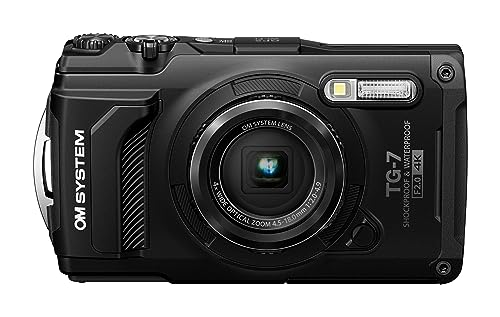
- OM SYSTEM Tough TG-7: check price on Amazon
- GoPro HERO13 Black: see the current price on Amazon
- Insta360 Ace Pro 2: view this camera on Amazon
Macro underwater photography is a discipline of centimetres. Your subject is a nudibranch the length of a thumbnail, a pygmy seahorse clinging to a fan coral, a cleaner shrimp working the inside of an anemone. The water column between lens and subject is your enemy twice over: it eats sharpness and it eats colour, and every extra centimetre of it puts more suspended particles between you and the animal. That is why the camera question in this genre is never really about resolution. It is about how close the lens can focus, how the camera behaves when it is inches from a creature that can vanish into a hole in the reef, and whether the whole rig still handles calmly when you are hovering in a mild surge with one hand on a focus light.
Three honest routes exist. The first is a rugged compact with a genuine microscope-style close-focus mode, used bare or in a housing with strobes. The second is a premium compact in a proper housing, trading pocket size for a larger sensor and real manual control. The third, which surprises people, is a modern action camera: not a true macro tool out of the box, but with close-up diopters and its tiny sensor’s deep focus it can produce pleasing close work of larger reef life while also shooting the wide scenes on the same dive. The six picks below cover all three routes, ranked by how well they serve a diver whose primary goal on the dive is small subjects photographed close.
Key Takeaways
- Minimum focus distance decides everything in this genre: a camera that focuses at one centimetre beats a sharper camera that backs you off to thirty.
- Light is the second camera. Budget for a focus light first and strobes second, or even the best sensor records murk.
- The TG-7 is the only pick here with a true microscope mode, and it remains the default recommendation for dedicated macro divers.
- Action cameras join this list through close-up diopters and deep focus, not through any native macro talent — set expectations accordingly.
- Buoyancy and trim of the whole rig matter as much as the camera: a rig that fights you produces blurred frames and stressed subjects.
- Shoot the behaviour, not the portrait card: feeding, cleaning and hunting moments are what separate macro portfolios from species checklists.
In this guide
Quick Picks
| Camera | Badge | Why it is here |
|---|---|---|
| OM SYSTEM Tough TG-7 | Best true macro tool | Its microscope mode focuses almost on the front element and stacks focus in-camera, which no rival here can match. |
| SeaLife Micro 3.0 | Best permanently sealed simplicity | A leak-proof underwater camera with close focus and no housing ritual before the dive. |
| Sony RX100 VII (in housing) | Best compact for serious macro | A one-inch sensor, fast autofocus and full manual control once it sits in a proper housing with strobe arms. |
| Canon PowerShot G7 X Mark III (in housing) | Best travel-friendly housed compact | Bright lens, friendly colour and a housing ecosystem that suits divers who fly to their reefs. |
| GoPro HERO13 Black | Best action camera for close reef work | Interchangeable lens mods and deep small-sensor focus make larger close subjects easy on mixed wide-and-macro dives. |
| Insta360 Ace Pro 2 | Best low-light action option | A larger action-cam sensor and strong colour science help in the shaded under-ledge spots where macro subjects hide. |
How did we choose cameras for subjects measured in millimetres?
We weighted four things. First, genuine close-focus ability, tested against the subjects divers actually chase: nudibranchs on sponge, shrimp in anemones, blennies in holes. Second, flash and strobe behaviour, because macro underwater lives or dies on artificial light — a camera that cannot fire an external strobe cleanly, or that forces slow sync speeds, caps your ceiling. Third, handling with gloves at depth: button size, menu depth, and whether focus can be locked and left alone. Fourth, the total cost and bulk of the working rig, since a housed camera plus tray, arms and two strobes is a different travel proposition from a compact in a pocket.
We deliberately did not rank by headline megapixels. At macro distances, water quality, light placement and the photographer’s buoyancy control blur more frames than any sensor resolves. A modest sensor held rock-steady two centimetres from a subject, lit by a well-aimed strobe, will out-shoot a flagship waving at arm’s length every dive.
We also asked working dive guides what they actually see guests succeed with, and their answers were blunt: the cameras that produce keeper frames in week-long trips are the ones guests understand by day two. Menus that bury focus modes, housings that hide the shutter half-press, strobes that need a manual’s worth of sync settings — these fail real divers in real water regardless of their laboratory quality. Simplicity under stress is a genuine specification in this genre, and it is scored in this guide alongside the optical numbers.
One more filter shaped this list: honesty about what each tool cannot do. You will find the limits stated plainly under each pick, because macro divers plan trips around their gear’s weaknesses — a night dive for mating mandarinfish is not the moment to discover your camera hunts for focus in the dark.

OM SYSTEM Tough TG-7 — Best true macro tool
The TG-7 owns this category because of one feature no other camera on this page offers: a microscope mode that focuses from roughly a centimetre away and magnifies small subjects to a degree that turns a rice-grain nudibranch into a frame-filling portrait. Underwater, that translates into working distance so short that the water column nearly disappears, and with it most of the backscatter and colour loss that plague longer shots. The camera is waterproof in its own skin to recreational depths, freeze-proof and crush-proof, so it shrugs off the boat-deck knocks and rinse-tank tumbles that end lesser compacts. Its field sensor system logs depth and temperature, which sounds like a gimmick until you are captioning a portfolio by site and depth months later.
In practice the TG-7 rewards a particular rhythm. You approach on the exhale, settle, let the camera’s focus find the eye of the subject, and shoot in short considered bursts rather than spraying. The in-camera focus stacking is the quiet superpower: for a stationary subject — a sleeping shrimp, a flatworm on sponge — the camera merges a bracket of focus positions into one deeply sharp frame, solving the paper-thin depth of field that ruins macro shots at wide apertures. Paired with a small focus light to help it see, and ideally one strobe on a short arm, it produces images that visiting divers assume came from a rig costing five times more.
One habit separates TG-7 owners who love the camera from those who merely own it: they learn its underwater program modes instead of fighting them. The dedicated underwater settings handle white balance and flash behaviour in ways the generic modes fumble, and microscope mode has its own logic for exposure that rewards trust. Spend one dive shooting a sponge garden and a rubble patch on full program, review what the camera chose, and you will understand its judgement well enough to know when to override it. That single calibration dive pays off on every dive afterwards, because your attention moves from settings to subjects — where, in macro, it always belonged.
- Format: rugged compact, waterproof without a housing to recreational dive depths
- Close focus: microscope mode focuses from about 1 cm
- Focus tools: in-camera focus stacking and focus bracketing
- Video: 4K recording for behavioural clips between stills
- Extras: depth, temperature and GPS logging via field sensors
Strengths
- Unmatched close-focus ability in a camera that needs no housing to start
- Focus stacking rescues depth of field on still subjects
- Toughness removes the anxiety that makes divers baby their gear
Trade-offs
- The small sensor shows noise when ambient light replaces strobe light
- Serious strobe work still means buying a housing, tray and arms
- Battery life asks for a spare on three-dive days
Best for: divers whose trips are planned around muck sites and macro subjects, and who want the highest hit-rate per dive. Not suited for: photographers who mostly shoot wide reef scenes and only dabble in close work.
SeaLife Micro 3.0 — Best permanently sealed simplicity
The Micro 3.0 takes the opposite design bet from every interchangeable or housing-based system: it is permanently sealed, with no doors to grease, no O-rings to inspect with a torch at 6 a.m., and no possibility of the classic flooded-housing disaster. For macro, its appeal is a close-focus lens that lets you work near subjects without accessory diopters, big piano-key buttons that work in thick gloves, and a colour-correction system tuned for underwater stills that reduces the blue-green cast beginners fight. It is the camera a dive guide can hand to a guest, and the camera an experienced shooter keeps as a worry-free second body.
Working with it teaches a useful discipline. Because the system is fixed-lens and sealed, your creativity goes into light position and subject selection rather than settings archaeology. SeaLife’s own tray and light ecosystem bolts together in minutes, and a single video light used at close range doubles as a modelling light that shows you exactly where your exposure will fall. On a muck dive over black sand, that simplicity means more bottom time spent watching a frogfish yawn and less time navigating menus with numb fingers.
There is also a social dimension to this camera that spec sheets miss. Dive boats run on shared rinse tanks and borrowed bench space, and the shooter whose rig needs no assembly, no seal inspection and no anxious freshwater soak is simply easier to travel with. On liveaboards where the camera table is contested territory at dawn, the Micro owner is already kitted and drinking coffee. That ease compounds across a week of four-dive days, and it is why so many experienced photographers, owners of serious housed systems, quietly keep a sealed camera in the bag for the dives when photography is a pleasure rather than a project.
- Format: permanently sealed underwater camera, no housing required
- Controls: oversized buttons designed for gloved hands
- Colour: built-in underwater colour correction modes
- Expansion: tray and light ecosystem from the same maker
- Stills approach: fixed lens, close-focus capable
Strengths
- Zero flood risk from user error — there is nothing to seal wrong
- Glove-friendly controls that stay usable at depth
- Fast to deploy on spontaneous dives and snorkels
Trade-offs
- Fixed lens limits how far the system can grow with you
- Image quality trails the one-inch compacts in this guide
- Prose-only pick: specialist retailers stock it more reliably than general marketplaces
Best for: divers who value a grab-and-go camera that cannot flood, and resorts or guides equipping guests. Not suited for: photographers planning a long upgrade path of ports, diopters and dual strobes.
Sony RX100 VII (in housing) — Best compact for serious macro
The RX100 VII is the connoisseur’s route into underwater macro: a one-inch sensor, a sharp zoom that reaches into short-telephoto territory for shy subjects, and autofocus fast enough to track a moving goby. None of that matters until the camera sits in a housing with a flat port, a wet diopter for true macro magnification, and strobe arms — at which point it becomes the most capable compact system on this page. The real-eye autofocus heritage of the camera helps with skittish subjects, and the sensor’s dynamic range forgives the exposure guesswork of a first strobe dive.
The craft with this rig is diopter management. You flip the wet lens down for the nudibranch, flip it up for the turtle portrait, and learn to judge from the subject’s size which configuration the next ten minutes needs. Zooming to the middle of the range with a strong diopter gives the magnification macro shooters crave while keeping a working distance that does not spook the animal. It is a system that rewards planning a dive around two or three target species rather than wandering hopefully.
Ownership economics deserve a word here, because this pick’s true price is a system price. The housing, port, diopter, tray, arms and strobe together multiply the camera’s cost several times over, and each piece is a deliberate choice rather than an impulse. Buyers who thrive with it treat the build as a season’s project: housing first, one strobe, then the diopter once the basics feel automatic. Bought that way, the rig grows at the speed of your skill. Bought all at once by a diver still finning into the reef, it is an expensive way to learn buoyancy — which is why this pick sits third despite having the finest files on the page.
- Format: one-inch sensor compact, requires a housing for diving
- Autofocus: fast tracking suited to moving small subjects
- Macro path: wet diopters on a flat port for magnification
- Control: full manual exposure for strobe work
- Lens: zoom range covering wide reef scenes to short telephoto
Strengths
- Best image quality available in a compact-based macro rig
- Autofocus speed that keeps restless subjects in play
- Grows from single strobe to a full dual-strobe system
Trade-offs
- The housing and accessories cost more than the camera’s rivals complete
- Small buttons demand a housing with good control access
- Prose-only pick: buy the housing from a dive-photo specialist who can pressure-test it
Best for: experienced underwater shooters stepping up from a rugged compact without going to a full mirrorless rig. Not suited for: beginners who have not yet mastered buoyancy, because this rig punishes contact with the reef.
Canon PowerShot G7 X Mark III (in housing) — Best travel-friendly housed compact
Canon’s G7 X line earned its underwater following through a bright lens and colour that comes out of the water looking close to finished. In a housing, the Mark III gives macro shooters a fast-aperture zoom that keeps strobe power modest, a touchscreen that some housings let you use at depth, and a body small enough that the whole rig still fits a carry-on — a genuine consideration when your dive trip starts with two flights and a ferry. Custom white balance is easy to set, which matters for the ambient-light shots between strobe subjects.
Where this camera charms macro divers is on mixed itineraries: a morning of muck diving, an afternoon snorkel with turtles, an evening of street food photography in the port town. The same camera covers all three without a bag of bodies. Its macro approach is the classic compact one — get close at the wide end, crop with restraint, and let the bright lens and short distances do the work. Add a wet diopter later and it stretches further into true macro than its size suggests.
The Canon also suits a particular kind of macro shooter: the one who edits lightly and shares quickly. Its colour science produces files that need a white-balance nudge and little else, which matters when the audience is family following the trip in near-real time rather than a competition jury next season. On a liveaboard with patchy satellite internet, the camera that produces the finished-looking file on the boat is the camera whose pictures actually get seen. Purists may call that a soft criterion; travelling photographers know it decides which camera leaves the cabin.
- Format: one-inch class compact, housing required for scuba depths
- Lens: bright zoom suited to modest strobe power
- Travel: rig stays within carry-on limits for most airlines
- Colour: well-regarded out-of-camera rendering
- Video: capable clips for behavioural sequences
Strengths
- Bright lens flatters both macro and ambient-light shooting
- Smallest full-system option here for travelling divers
- Friendly colour reduces editing time after the trip
Trade-offs
- Native close focus is less extreme than the TG-7’s microscope mode
- Housing choice strongly affects control quality — research before buying
- Prose-only pick: housings and ports are specialist purchases
Best for: travelling divers who want one camera for the reef and the rest of the holiday. Not suited for: dedicated macro specialists who measure success in millimetres of subject size.

GoPro HERO13 Black — Best action camera for close reef work
Let us be precise about what a GoPro can and cannot do here. It has no microscope mode and no true macro focus; subjects the size of a fingernail will not fill its frame unaided. What it has is an interchangeable lens ecosystem that now includes macro-oriented mods, a tiny sensor whose deep depth of field keeps a whole anemone sharp at once, and waterproofing that needs no housing at recreational depths. For close-focus wide-angle work — the recognised CFWA style, where a larger subject like a scorpionfish or an octopus sits close in the foreground against the reef behind — it is genuinely excellent, and it shoots the dive’s wide scenes on the same battery.
The working method is different from every other pick: you compose on the large rear screen, place the camera on a small tray or grip astonishingly close to the subject, and let the deep focus forgive your distance judgement. A video light on a short arm transforms its macro-adjacent work, filling the shadows that its small sensor cannot lift. Divers who add one to a TG-7 kit often find the GoPro becomes the storytelling camera — the one that records the frogfish’s lunge in smooth slow motion while the compact handles the portrait.
Mounting is where GoPro macro-adjacent work is won. Handheld at arm’s length, the camera waves with every surge and the footage sways; on a small tray with two handles, or a single grip steadied against a fin tip planted in sand, the same camera becomes a stable platform. Many divers shoot it on a short pole laid along the bottom, sliding the camera the last few centimetres toward a scorpionfish in a motion too slow to register as threat. That technique — the patient push-in — is this camera’s signature macro move, and it produces clips no stills camera on this page can imitate.
- Format: waterproof action camera, no housing needed at recreational depth
- Lens: interchangeable lens mods including close-focus options
- Focus character: deep depth of field from a small sensor
- Video: high-frame-rate recording for behaviour in slow motion
- Mounting: tray and grip ecosystem shared with lights
Strengths
- Superb for close-focus wide-angle compositions
- Deep focus forgives the distance errors surge causes
- Doubles as the trip’s wide-angle and surface camera
Trade-offs
- Not a true macro camera — tiny subjects need other picks
- Stills quality trails the compacts when cropped
- Needs a light for colour at any real depth
Best for: divers who want close reef storytelling and video alongside a stills camera. Not suited for: anyone whose definition of macro starts below two centimetres of subject.

Insta360 Ace Pro 2 — Best low-light action option
The Ace Pro 2 earns the final slot through its sensor. Action cameras traditionally collapse in the shaded, green half-light under ledges and inside swim-throughs — exactly where macro subjects shelter. This one’s larger sensor and strong low-light processing hold colour and detail noticeably better, and its flip screen makes low, upward angles at a subject’s eye level practical without contorting your whole body on the reef. Like the GoPro, it is a close-focus wide-angle tool rather than a macro camera, and it should be bought with that understanding.
Its underwater colour rendering deserves the praise it gets from divers: reds survive a few metres deeper before the water takes them, which matters for the sponges and soft corals that backdrop macro scenes. On a night dive with a focus light, it records the hunting behaviour — octopus pouncing, crabs sparring — in video that looks considered rather than accidental. Pair it with a compact for stills and you have the two-camera muck kit that many working dive photographers now carry.
Consider also how this camera changes a dive’s rhythm. Because it asks for no housing checks and wakes instantly, it suits the opportunistic moments macro divers otherwise miss: the eel that appears during the safety stop, the turtle that materialises while the group waits at the mooring line. Kept clipped to a chest D-ring, it is simply there, and a surprising fraction of a trip’s best behavioural footage comes from exactly those unplanned minutes. A dedicated macro rig wins the planned encounters; this camera wins the ones nobody planned.
- Format: waterproof action camera with flip screen
- Sensor: larger than typical action-cam sensors, stronger in low light
- Colour: underwater rendering that resists the usual green cast
- Screen: flip design for low eye-level compositions
- Role: video-first companion to a stills macro camera
Strengths
- Best shaded-reef and night-dive video in the action class
- Flip screen changes the angles you can attempt
- Colour science flatters sponge and coral backdrops
Trade-offs
- Shares the action-cam class limit: no true macro magnification
- Flip screen mechanism asks for care in sandy environments
- Stills are a secondary strength, not the reason to buy it
Best for: divers filming behaviour in shade and at night alongside a stills camera. Not suited for: photographers who shoot stills only and want maximum magnification.
What actually makes a camera good at macro underwater?
Four variables interact. Minimum focus distance sets your magnification ceiling. Depth of field, which shrinks brutally as you focus closer, decides how much of the subject can be sharp at once — and is why small sensors, usually a weakness, become an advantage here. Light delivery decides colour: water absorbs red within the first few metres, so the strobe or light you place ten centimetres from the subject matters more than the sensor behind the lens. And working distance — the gap between port and subject — is a behavioural variable as much as an optical one, because every species has a flight distance, and the best macro photographers know each one’s to the centimetre.
Understanding these interactions explains the shape of this list. The TG-7 wins on focus distance and depth of field. The housed compacts win on light delivery and control. The action cameras win on working distance for the CFWA style, where the subject is large and the drama is in the setting. Choosing among them is really choosing which variable your favourite subjects punish most.
How do you light macro subjects without ruining the shot?
Start with a focus light, always. It helps autofocus see, shows you where the subject is in dim water, and its red mode — on lights that offer one — lets you approach light-shy species that bolt from white beams. For stills, one strobe on a short arm, angled inward and slightly above the lens axis, is the classic macro setup: it models the subject with shadow and keeps the beam’s edge off the particles between lens and subject, which is where backscatter is born. Pull the strobe closer to the port and further inward as you focus closer; the geometry that works at thirty centimetres floods a five-centimetre shot with flare.
Then learn snooting when you are ready. A snoot narrows the strobe’s beam to a coin-sized pool of light, letting you light one shrimp against black water while the reef behind disappears. It is fiddly, it halves your hit rate at first, and it produces the black-background portraits that define modern macro portfolios. Practise on a cooperative subject — a hermit crab will forgive your learning curve; a pygmy seahorse will not.
Which settings should you start with on a macro dive?
For strobe-lit stills on a compact, begin with the camera in manual: a shutter speed around the middle of the range to darken ambient water, an aperture stopped well down for depth of field, low sensitivity, and strobe power adjusted by test shots on a sponge before you approach anything alive. Shoot, review the histogram rather than the screen’s brightness, and adjust the strobe, not the camera, when the subject is too bright or dark. For the TG-7’s microscope mode, let the camera’s dedicated program work — it was engineered for exactly this — and spend your attention on steadiness and angle instead.
Buoyancy is a setting too. Add or shed a breath to hover motionless, rest nothing on the reef, and if the site allows it, settle your elbows’ worth of stability from a muck stick planted in sand — never in coral, never in a sponge garden. The sharpest macro portfolios are mostly evidence of divers who learned to be furniture.
How does water change the rules compared with macro on land?
Land macro photographers who take their skills diving discover that half their instincts transfer and half betray them. Working distance discipline transfers: the slow approach, the patience, the respect for a subject’s flight zone. But light behaves entirely differently. On land, your flash dominates a scene lit by a sun you can supplement; underwater, the water itself is a coloured filter stacked on everything, thickening with every metre of depth and every metre of distance. A red nudibranch at eight metres is a brown nudibranch unless your strobe, placed centimetres away, repaints it. This is why underwater macro is fundamentally a lighting genre wearing a camera genre’s clothes.
Stability also inverts. The land shooter braces against ground, table or tripod; the diver braces against nothing, in three dimensions, while breathing moves the camera in a slow vertical rhythm that must be timed like a sniper’s trigger press. Surge adds a horizontal sway. The practical consequence is that shutter discipline and burst timing matter more than absolute sharpness specifications, and why a camera that focuses fast and fires responsively — or stacks focus automatically — rescues frames that a technically superior but slower system loses to motion.
Finally, subject knowledge outweighs even the land premium. Reef species are territorial and habitual: the same goby holds the same hole for weeks, the same cleaning station runs on a daily timetable, the same frogfish hunts the same patch of rubble. The diver who returns to one site across a week, notebook growing, will out-photograph the diver with better gear visiting once. Every camera on this page is good enough for that approach; the genre rewards the calendar more than the catalogue.
Which subjects suit which camera on this list?
Match the tool to the animal and the day’s frustrations shrink. Nudibranchs and flatworms — slow, colourful, indifferent to a careful diver — belong to the TG-7 and the housed compacts, where magnification and strobe control turn a two-centimetre slug into a jewel. Cleaner shrimp and their anemone hosts reward the TG-7’s stacking, because the whole scene sits still long enough for the bracket to run. Blennies and gobies, peeking from holes and gone in a blink, favour the RX100 VII’s autofocus and the patience to pre-focus on the hole’s rim and wait for the resident to re-emerge into your frame.
Frogfish are a lighting exam: they sit still, they are all texture, and they forgive a snoot while punishing flat frontal light that erases their camouflage. Any strobe-capable pick here passes that exam with practice. Octopus and cuttlefish, by contrast, are video subjects as much as stills subjects — their colour changes and hunting lunges are behaviour, and the two action cameras record that behaviour in a way a stills-first rig interrupts. Mandarinfish at dusk are the TG-7’s party piece: the mating rise happens in dim light over a few minutes, focus lights on red mode keep the fish calm, and the camera’s close focus fills the frame with a fish the size of your thumb joint.
Pygmy seahorses deserve their own paragraph because they reorder your priorities. Magnification matters, but so does the discipline to shoot a handful of frames and leave. The TG-7’s microscope mode gets the shot at the shortest distance, which paradoxically can mean the least time spent hovering and adjusting — you compose, expose carefully, and back away. Divers who chase pygmies with housed rigs should practise the entire sequence on a fan coral without an animal first, because fiddling with diopter flips and strobe angles above a seahorse is how both photographs and reputations get ruined.
Where in the world does macro photography reward the travel most?
Certain destinations have become macro pilgrimages, and understanding why helps you choose both trips and cameras. The Lembeh Strait in Indonesia built its reputation on volcanic black sand where frogfish, mimic octopus and hairy shrimp appear in densities found almost nowhere else; its dives are shallow, calm and close to shore, which is why beginners produce portfolio frames there within days. Anilao in the Philippines offers similar riches with more varied terrain and a famous night-diving culture. Dumaguete’s Dauin coast adds turtle-grass shallows and a marine sanctuary system that concentrates subjects conveniently.
Bali’s Tulamben coast mixes wreck rubble with muck slopes a short swim from shore diving, making it the budget macro classroom of Asia. Further afield, the Caribbean’s Bonaire offers shore-diving freedom that suits photographers who want unlimited bottom time without a boat schedule, while British and Irish divers know that home waters — Swanage pier, the Farne Islands in season — hide macro life as rich as any tropical site for those willing to dive cold and green. The pattern across all of them: macro rewards destinations where you can dive the same site repeatedly, in calm conditions, with a guide who knows which rock the frogfish lives under.
That pattern should steer your camera choice more than any review can. A photographer travelling twice a year to guided muck destinations thrives with the TG-7 and a light. A photographer diving home waters weekly, in cold and gloom, needs the strobe-capable rig and the patience of a local. Buy for the diving you will actually do, in the water you will actually do it in.
What accessories actually earn their place in a macro kit?
The tray and handles come first, unglamorous as they are, because they convert a camera into a rig you can hold motionless with two hands and mount lights where the geometry wants them. A focus light follows, for the reasons covered earlier. Third is the diopter or close-up lens for housed systems, the accessory that redraws your minimum subject size. Fourth, and most underrated, is a simple pair of spare O-rings, grease and a lint-free cloth kit in a dry bag — the ten-minute pre-dive ritual of cleaning and inspecting seals is the difference between a camera and a paperweight, and it is skipped precisely once per photographer.
After that, spend on arms and clamps of decent quality, because cheap clamps creep under strobe weight and quietly re-aim your light mid-dive. A small red filter for the focus light, a lanyard or coil cord that keeps the rig attached to you in surge, and a padded hand luggage solution for the flight home complete the sensible list. Notice what is absent: a second strobe. One strobe mastered — its angles, its power curve, its snoot — beats two strobes waved hopefully, and the money saved buys the extra dive days that actually build a portfolio.
How do you plan a dive around macro photography?
Read the site before you splash. Muck sites over sand and rubble hold the highest density of macro subjects and forgive a photographer’s slow pace; reef walls reward wide lenses and punish hovering in current. Ask the guide which subjects are seasonal — mating, egg-laying and juvenile appearances follow calendars — and agree hand signals for the half-dozen species you most want, because underwater conversation is pantomime. Set a personal limit for each subject: a number of frames or minutes after which you move on regardless, which protects both the animal’s energy and your air supply.
Gas planning changes with a camera in hand. Photographers breathe harder, hover rather than swim, and lose track of depth while composing; check your gauges on a schedule, not on a feeling. On the boat, rinse in the dedicated camera tank only, keep the rig shaded, and review the morning’s frames with a notebook open: which subjects, which light angles, which mistakes. Macro skill compounds faster from written notes than from any gear purchase, because the genre’s lessons are about light geometry and animal behaviour, and both are learnable on paper between dives.
Comparison Table
| Camera | Macro route | Housing needed | Best subject size |
|---|---|---|---|
| OM SYSTEM Tough TG-7 | Microscope mode, ~1 cm focus | Only for strobes/deeper rigs | Millimetres to centimetres |
| SeaLife Micro 3.0 | Close-focus fixed lens | Never — permanently sealed | Centimetres |
| Sony RX100 VII | Wet diopter on flat port | Yes | Centimetres, with quality headroom |
| Canon G7 X Mark III | Close wide-end focus, optional diopter | Yes | Centimetres and up |
| GoPro HERO13 Black | Lens mods, deep focus | No, at recreational depth | Hand-sized and larger, close |
| Insta360 Ace Pro 2 | Close wide focus, low-light sensor | No, at recreational depth | Hand-sized and larger, shaded spots |
What mistakes do new macro divers make most?
The classic error is approaching from above. Subjects read a descending silhouette as a predator, and even those that stay present a flat, unflattering top view. Come in low and level, at the animal’s eye line. The second error is chasing: a followed nudibranch contracts, a followed shrimp retreats into its anemone, and the photographs record stress rather than behaviour. Pick a subject, settle nearby, and let curiosity or indifference bring the moment to you. Third is lighting from the camera’s position with the beam dead ahead — a guaranteed backscatter blizzard in plankton-rich water. Angle the light, shorten the water path, and the same dive turns clear.
Finally, respect the site rules and the animal. No touching, no moving subjects to prettier backgrounds, no feeding for a shot. Several famous macro destinations now brief photographers explicitly on this, and the best portfolios in the world are proof that ethics and excellence are the same discipline viewed from two sides.
How do tides, seasons and the hour change what you find?
Macro subjects keep schedules, and the camera matters less than arriving when the schedule says. Dawn dives catch the reef in transition: nocturnal hunters still exposed, diurnal species not yet hidden, and light slanting through shallow water at angles that flatter everything. Dusk is the famous hour — mandarinfish rise to mate, octopus leave their dens, and the whole reef seems to exhale. Night diving is macro’s second world entirely: crustaceans that never show by day wander open sand, and a focus light becomes both your torch and your composition tool, isolating subjects against blackness with no strobe geometry to calculate.
Tides move food, and food moves subjects. A falling tide over a rubble slope concentrates plankton and the small predators that hunt it; slack water gives you the stillness that close focus demands. Seasons layer reproduction over everything — egg ribbons of nudibranchs in one month, juvenile frogfish in another, cuttlefish eggs in a third — and local guides carry these calendars in their heads, which is why the briefing question “what is special right now?” outperforms any gear question you could ask on the boat.
Build your camera decision around these rhythms and the gear arguments simplify. Dusk and night work rewards the cameras with the best focus lights pairing and low-light manners. Repeated dawn shore dives reward the sealed, grab-and-go tools. The portfolio is built by the calendar; the camera is just how you keep the appointment.
How should a beginner sequence their first macro purchases?
Start with the camera that removes excuses: the TG-7, used bare, on the next trip you already have booked. Shoot it for a full trip before buying anything else, because your first hundred frames will teach you whether your love is for the hunting, the lighting or the editing — and each love implies different spending. Add the focus light second; it is cheap, it transforms autofocus reliability, and it doubles as your night-dive torch for spotting subjects. Add the housing and a single strobe third, once your buoyancy is good enough that a bigger rig endangers neither reef nor subject.
Resist the mirrorless leap until your portfolio, not your envy, demands it. The photographers whose macro work you admire at festivals mostly built it on compacts over years, learning species and light in an order no flagship can shortcut. When the leap does come, everything you learned about strobe geometry, working distance and animal patience transfers intact — which is the real argument for starting with the honest tools on this page rather than the most expensive one.
Final Recommendation
Buy the TG-7 if macro is the reason you dive; it is the only camera here designed around the genre, and its microscope mode will still be teaching you things in three years. Step up to the housed RX100 VII when your portfolio demands larger-sensor quality and you have the buoyancy to protect both the reef and the rig. Keep the SeaLife in mind for flood-proof simplicity, the Canon for travel, and treat the two action cameras as what they are: superb close-focus storytellers that complement a macro stills camera rather than replace it. Whichever you choose, spend the next money after the camera on a focus light — it improves more frames than any upgrade on this page.
What should you do with the files once you surface?
Underwater macro files reward a specific editing order. Set white balance first, from a neutral patch of sand or the subject’s own greys, because every later decision about colour saturation is built on that foundation. Lift shadows gently rather than globally brightening: macro frames usually contain a lit subject against water that should stay dark and clean, and global lifts resurrect every particle in that water as visible noise. Sharpen the subject selectively — eyes and texture — and leave the background alone, because sharpened backscatter is the amateur signature in this genre.
Keep a simple dive log beside the edits, noting depth, site and the strobe position that worked, because memory blurs faster than water clears. Then be ruthless. A macro dive produces hundreds of frames of the same animal; the portfolio keeps two. Cull for eye contact, behaviour and clean backgrounds, in that order, and delete the technically fine but emotionally empty frames that clog archives. Caption while the dive is fresh: species, site, depth and the light setup you used. In a year’s time that caption is the difference between an image you can exhibit with authority and a pretty picture you cannot quite explain.
Related guides
Frequently Asked Questions
Can I do macro underwater photography while snorkelling?
Yes, and shallow water is often ideal: sunlight reaches your subject with its reds intact, reducing the need for strobes. The TG-7 and SeaLife both work happily at snorkel depths, and freedivers use them for split-level macro scenes in rock pools and shallow sponge gardens. Breath-hold steadiness becomes the limiting skill.
Do I really need a strobe, or is a video light enough?
A good video light is enough to start and gives pleasing, natural modelling at macro distances. A strobe adds the power to darken backgrounds, freeze motion and shoot at smaller apertures for depth of field. Most macro photographers begin with a light, add one strobe within a season, and some stay there happily for years.
Why do my macro shots come out blue and hazy?
Distance and light angle. Water strips red light quickly and suspended particles scatter your beam back into the lens. Get closer — closer than feels reasonable — angle your light inward from the side, and set a custom white balance or shoot raw so the colour can be rebuilt in editing.
What is a wet diopter and do I need one?
It is a close-up lens that threads or flips onto the front of a housing port, underwater, letting a housed compact focus closer with more magnification. If you shoot a housed compact and want subjects smaller than a matchbox to fill the frame, yes — it is the single most transformative accessory in this genre.
Is a mirrorless camera in a housing worth it for macro?
Eventually, for some photographers. A housed mirrorless system adds dedicated macro lenses with true magnification, larger sensors for cleaner high-sensitivity files, and dual strobes with real modelling control. It also adds airline weight, four-figure housing costs and a rig that demands excellent buoyancy. The honest sequence most professionals followed was compact first, mirrorless when the compact’s limits — not the internet’s opinions — started costing specific shots.
How do I photograph pygmy seahorses responsibly?
With restraint. They are fragile, light-sensitive and heavily protected by local rules in most destinations. Limit strobe bursts, never touch the fan or the animal, accept the shot the encounter offers, and follow your guide’s briefing exactly — several sites limit the number of photographers and frames per animal.
One last word of encouragement for anyone daunted by the rig talk in this guide: the genre’s entry ticket is genuinely low. A single camera from the top of this list, a borrowed focus light and a calm muck site have produced competition-shortlisted images within living memory. Start where you are, dive the same site until it starts introducing you to its residents, and let the portfolio — not the catalogue — tell you what to buy next.
Related Guides
Round out your underwater kit reading with our guides to the best cameras for underwater shooting generally, action cameras tested for diving and snorkelling and the best compact cameras for travel above and below the surface.


