reviewstook.com is reader-supported. When you buy through links on our site, we may earn an affiliate commission.
Where to buy
In the buying list, five entries carry Amazon links and one camera is handled in prose only, for want of a verified listing in our pool. Hobby purchases should be made slowly and joyfully: this is the one category in this series where handling the camera in a shop, and liking the feel of it, is a legitimate specification.
- Nikon Z50 II: check price on Amazon
- Canon EOS R6 Mark II: check price on Amazon
- Sony ZV-1F (Black): check price on Amazon
- Panasonic LUMIX S5II: check price on Amazon
- Sony Alpha 7 IV: check price on Amazon
The keyword for this guide arrived truncated, cut off mid-word, and the honest reading of it is the one we have written: best cameras for hobby photography, the cameras for people who photograph because the photographing itself is the pleasure. That framing matters more than it might seem. A hobby camera is not a professional camera with the price filed down, nor a beginner camera with training wheels; it is an instrument for a practice that must sustain itself on delight for decades, across changing interests, gardens and grandchildren, street corners and star trails, without an invoice ever justifying it. The best cameras for hobby p, for hobby photography in full, are ranked here by how well they feed that practice: how they feel in the hand on a Sunday, how they grow as curiosity wanders, and how kindly they treat a budget that competes with the rest of a life.
The fleet is deliberately a ladder rather than a podium. A compact for the hobbyist whose joy is immediacy, two mid-path mirrorless systems for the learner and the returner, and two full-frame bodies for the hobbyist whose weekends have quietly become serious. A sixth option is discussed in prose as the value doorway many hobbyists actually walk through. Every rung is a legitimate place to live for years; the guide’s job is to match the rung to the reader, not to hurry anyone upward.
One promise before the rankings: no camera here will be described as future-proof, because hobbies do not need proof against the future. They need a present tense that keeps being interesting, and every pick below was chosen for the richness of its present tense.
Key Takeaways
- A hobby camera is bought for delight and growth, not for specifications alone.
- The Z50 II is the learner’s sweet spot: capable, compact and encouraging.
- The R6 Mark II serves the hobbyist whose subjects move and whose weekends fill.
- The ZV-1F is the always-with-you compact for the immediacy-first hobbyist.
- Full frame, via the S5II or A7 IV, is a destination to grow into, not a starting tax.
- The best hobby system is the one still being used, happily, in year five.
In this guide
Quick Picks
| Camera | Badge | Why it is here |
|---|---|---|
| Nikon Z50 II | Best Hobby Camera Overall | Compact mirrorless that teaches, travels and grows with its owner. |
| Canon EOS R6 Mark II | Best for Active Hobbies | Detection autofocus and speed for sport, wildlife and family energy. |
| Sony ZV-1F (Black) | Best Everyday Compact | Fixed-lens immediacy for the hobbyist who photographs everything, daily. |
| Panasonic LUMIX S5II | Best Growth into Full Frame | Colour and stabilisation that reward the deepening hobbyist. |
| Sony Alpha 7 IV | Best Long-Term System | The deepest lens ladder for a hobby that keeps finding new subjects. |
| Canon EOS R50 | Best First Mirrorless (Prose-Only) | A friendly, affordable doorway into interchangeable lenses. |
How did we choose cameras for hobby photography?
We weighted the hand and the heart before the sensor. A hobby camera is handled for pleasure, so grip, dial logic, viewfinder comfort and the simple question of whether the camera invites being picked up were scored as primary features. Cameras that feel like appliances produce appliance-like relationships, dutiful and brief; cameras that feel like instruments get carried for decades, and the hobby is measured in decades.
Second, we scored growth honestly. A hobbyist’s subjects wander: the garden year, the grandchild years, the sudden astronomy phase, the street-photography winter. Systems were favoured whose lens ladders and used markets let the camera follow the wandering without a change of flag, and whose controls can be as simple as the first month demands and as deep as the fifth year deserves. The picks below all pass that test at different prices, which is the guide’s real structure: one philosophy, several purses.
Third, we respected the hobby budget’s ecology. Hobby money competes with holidays, tools and grandchildren, and a recommendation that consumes it entirely on a body, leaving nothing for the lens, the trip, the printing or the club membership, has misunderstood the assignment. Several picks exist specifically to leave the budget alive, because a hobby is an ecosystem and the camera is only its most photogenic species.
The picks in detail

Nikon Z50 II — Best Hobby Camera Overall
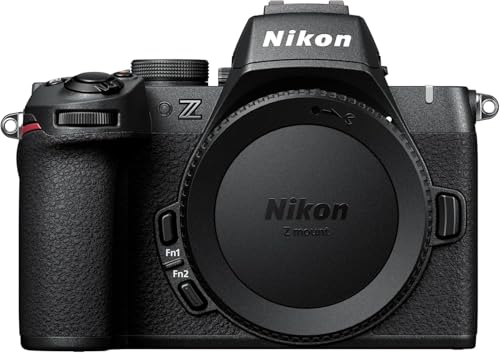
The Z50 II occupies the hobby’s sweet spot with unusual precision. It is small enough to be carried on the walks where hobbies actually happen, serious enough to reward the owner’s growing skill for years, and friendly enough, with its colour presets and modern subject detection, that the first month’s photographs encourage rather than instruct harshly. Its interchangeable lenses open the whole grammar of photography one affordable step at a time: the kit zoom for the world, a fast prime for people and evenings, a telephoto for the garden’s birds, each purchase a small festival in the hobby’s calendar.
Nikon’s colour and handling suit the long relationship: dials where fingers expect them, files that print warmly, a viewfinder that makes manual focus and exposure feel like crafts rather than chores. Wireless sharing keeps the family audience fed, which matters more to a hobby’s survival than purists admit, because hobbies live on their applause, and the grandchild’s portrait admired by lunchtime is fuel for the next outing.
Full frame’s extremes, the darkest light, the shallowest focus, belong to the dearer picks below, and action specialists will outrun its bursts. As the camera a hobbyist can buy once and grow inside for five happy years, though, it is this guide’s first recommendation, and the one we would hand to a friend beginning the best leisure pursuit there is.
- Form: APS-C mirrorless, interchangeable lenses
- Focus: modern subject detection
- Colour: friendly presets plus honest raw
- Sharing: wireless transfer built in
- Role: learning, travel, family, general joy
Strengths
- Grows from first month to fifth year gracefully.
- Size that actually gets carried.
- Lens steps are affordable festivals.
Trade-offs
- Full frame wins the darkest evenings.
- Bursts are hobbyist, not professional.
- Two-lens dreams still cost money.
Best for: new and returning hobbyists wanting one lasting system. Not suited for: professional action or extreme low light.

Canon EOS R6 Mark II — Best for Active Hobbies
Some hobbies move: the junior football league, the dog at full stretch, the birds that treat a garden as an airport. The R6 Mark II is the hobbyist’s answer to motion, with Canon’s subject detection holding focus on people, animals and vehicles through the chaos a family weekend generates, and stabilisation that keeps handheld quality high in the light where life happens. Its full-frame files carry the colour kindness Canon is loved for, so the action archive also prints beautifully, which is not a combination the hobbyist should take for granted.
It suits the returner as much as the advancer: the photographer whose film-era skills are intact and whose patience for missed focus is not. The camera’s competence is liberating in a specific way, it returns the hobbyist’s attention to composition, timing and being there, the parts of photography that are actually the hobby, by making the technical capture feel solved. Weekends fill up with that feeling, and archives grow.
It is the fleet’s heavier investment alongside the Sony, and its gifts are wasted on a purely static practice. Buy it when your subjects genuinely move and your weekends genuinely fill, and it will feel less like an expense than like a season ticket.
- Form: full-frame mirrorless
- Focus: detection for people, animals, vehicles
- Colour: Canon’s people-kind rendering
- Stabilisation: strong lens-cooperative system
- Role: sport, wildlife, family energy, events
Strengths
- Catches the family’s fastest moments.
- Files print with warmth and range.
- Liberates attention for the fun parts.
Trade-offs
- Serious money for a leisure pursuit.
- Static subjects never tax its gifts.
- System weight grows with ambition.
Best for: active hobbyists and returning photographers. Not suited for: still-life purists or minimal budgets.

Sony ZV-1F (Black) — Best Everyday Compact
Not every hobbyist wants a system; some want a companion. The ZV-1F in its black finish is the companion perfected: a one-inch sensor and a bright, wide fixed lens in a body that lives in a coat pocket, ready in seconds, kind to faces, and incapable of asking its owner a single question about lenses. Its hobby is photography as a daily texture, the market, the dog, the light on the stairs, the friends at lunch, recorded with a quality phones envy and an immediacy systems cannot match. Eye autofocus and the product-showcase focus serve its secret second life as the desk and diary camera for the hobbyist who also shares online.
Its limitations are its philosophy: the lens never changes, the framing never zooms beyond its wide honesty, and the battery thinks in sessions. Hobbyists who feel those as reliefs rather than restrictions have found their camera, and there are more such hobbyists than the system market admits. The ZV-1F’s black finish also deserves its sentence: it looks like a camera rather than a gadget, which in a hobby sustained by affection for objects is a real feature.
Buy it as the only camera, or as the second camera that keeps the hobby alive on the days the system stays home. Either way it earns its pocket, and hobbies survive on exactly that kind of daily, unceremonious use.
- Form: fixed-lens compact, one-inch sensor
- Lens: bright and wide, always ready
- Focus: eyes plus product showcase
- Audio: directional built-in array
- Role: daily life, travel light, sharing
Strengths
- Present for more of life than any system.
- Zero decisions between seeing and shooting.
- Quality that shames the phone it replaces.
Trade-offs
- No lens growth, ever, by design.
- Wide framing only.
- Session-length battery.
Best for: immediacy-first hobbyists and everyday carry. Not suited for: wildlife reach or system builders.

Panasonic LUMIX S5II — Best Growth into Full Frame
The S5II is the hobbyist’s considered step into full frame: not the dearest door, but arguably the most rewarding once inside. Its colour rendering has a depth that makes photographers fall for their own archives, its stabilisation is the class reference, which quietly transforms handheld evenings, gardens at dusk, interiors without flash, into quality time, and its phase-hybrid autofocus tracks the family’s motion with new-found steadiness. For the hobbyist whose practice has deepened into prints, projects and a personal style, it offers the full-frame virtues at a price that leaves the lens budget breathing.
The L-mount alliance is its growth story: Panasonic’s and Sigma’s lenses give the hobbyist a ladder with unusually honest pricing, including characterful primes that make a Saturday’s photography feel like an event. The camera also films superbly for the hobbyist whose interests wander into motion, though this guide’s neighbouring pages judge that side of its character in full.
Its action ceiling and regional rental depth trail the Canon and Sony flagships, which a hobbyist may never once notice. As the deepening hobby’s full-frame home, chosen for colour, calm and value, it is the pick most likely to be described by its owner, five years on, as the camera that made the hobby serious without making it solemn.
- Form: full-frame mirrorless
- Colour: rich, filmic rendering
- Stabilisation: class-reference in-body
- Focus: phase-hybrid tracking
- Role: projects, prints, deepening practice
Strengths
- Evenings and interiors become quality time.
- Colour that deepens a personal style.
- Full-frame value that funds lenses.
Trade-offs
- Action ceiling below the flagships.
- Rental depth varies by region.
- Menus reward a learning weekend.
Best for: deepening hobbyists stepping to full frame. Not suited for: fast professional sport.

Sony Alpha 7 IV — Best Long-Term System
Some hobbies do not wander; they excavate, going deeper into one seam for decades, and the Alpha 7 IV is the excavation’s best tool. Its high-resolution full-frame sensor and dynamic range serve the printer and the perfectionist, while the E-mount ecosystem, the deepest lens shelf in photography, guarantees that whatever the seam turns out to be, macro, astro, portraiture, architecture, there is a lens for it at a price a patient hobbyist can reach, new or used. A hobby that keeps finding new subjects needs a system that never says no, and this is that system.
Its maturity is a hobby virtue in disguise: settings, tutorials, club knowledge and second-hand bargains surround it, so the owner’s learning is never blocked by the camera’s obscurity. Eye autofocus raises the keeper rate on the subjects hobbies love most, people and animals, and the files’ headroom forgives the experiments that a growing practice runs weekly.
It asks the fleet’s most serious commitment alongside the Canon, and its generalist depth exceeds any single hobby’s needs. Buy it when the hobby has already proven it is a life’s companion rather than a season’s enthusiasm, and it will repay the commitment by never once being the reason a photograph could not be made.
- Form: full-frame mirrorless
- Sensor: high resolution, wide range
- Focus: eye tracking for people and animals
- System: deepest lens shelf available
- Role: projects, prints, lifelong systems
Strengths
- A lens exists for every future phase.
- Files reward printing and perfectionism.
- Club and used-market support is unmatched.
Trade-offs
- The fleet’s most serious commitment.
- Depth exceeds casual needs.
- Menus deserve configuration time.
Best for: committed hobbyists building for decades. Not suited for: tentative beginners or pocket carry.
Canon EOS R50 — Best First Mirrorless (Prose-Only)
We discuss the R50 without a link because it sits outside our verified pool, but it belongs in any honest hobby conversation as the doorway many photographers actually use: a compact, friendly mirrorless camera whose guided interfaces teach while its manual controls wait patiently for the owner’s curiosity to arrive. Its files are far beyond phone quality, its lens mount opens Canon’s growing RF system, and its price leaves a beginner’s budget alive for the second lens that turns a camera into a hobby.
Its limits are the doorway’s honest dimensions: a smaller viewfinder experience than the Z50 II’s class, fewer physical controls for the fifth year’s fluency, and a system position that many owners will eventually trade upward from. None of that diminishes it. Doorways are judged by where they lead, and this one leads into the full grammar of photography at the friendliest toll in the market.
Choose it when the budget is the binding constraint and the curiosity is real; choose the Z50 II when the budget can reach the roomier house. Either way, the hobby has begun, which is the only step in this entire guide that cannot be postponed without cost.
- Form: compact APS-C mirrorless
- Guidance: beginner-friendly interfaces
- System: Canon RF lens mount
- Files: well beyond phone quality
- Role: first mirrorless, learning, gifts
Strengths
- The friendliest doorway into real photography.
- Leaves budget for the crucial second lens.
- Compact enough to be carried daily.
Trade-offs
- No verified listing in our pool today.
- Fewer controls for later fluency.
- Many owners will trade up eventually.
Best for: first-time mirrorless buyers on real budgets. Not suited for: buyers wanting a five-year final camera.
Comparison table
| Camera | Form | Best at | Standout | Choose it for |
|---|---|---|---|---|
| Nikon Z50 II | APS-C mirrorless | All-round hobby | Growth and handling | Most hobbyists |
| Canon EOS R6 Mark II | Full frame | Moving subjects | Detection autofocus | Active weekends |
| Sony ZV-1F | Compact | Everyday carry | Pocket immediacy | Daily-life hobbyists |
| Panasonic LUMIX S5II | Full frame | Deepening craft | Colour and stabilisation | Projects and prints |
| Sony Alpha 7 IV | Full frame | Long-term system | Lens ecosystem depth | Decades-long hobbies |
| Canon EOS R50 | APS-C mirrorless | First steps | Friendly guidance | Budget beginnings |
What makes photography a hobby that lasts?
Variety within reach. The hobbies that die are usually not outgrown but underfed, starved of new subjects by equipment that answered one question beautifully and the next one not at all. A lasting hobby camera therefore earns its keep in transitions: from garden to grandchildren, from landscape to street, from daylight to the astro phase that arrives, as it does, at 2 a.m. with a tripod and a flask. The systems in this guide were chosen for their transition manners, the lens that exists for the next phase, the used market that makes it affordable, the club knowledge that teaches it.
Community is the other nutrient. Camera clubs, online groups, the friend who also shoots: hobbies with witnesses grow, and several picks here, the Sony above all, plug into large, generous communities whose shared knowledge shortens every learning curve. When two cameras tie on merit, buy the one your people shoot. Their lenses can be borrowed, their settings copied, their company enjoyed on the photo walk, and those are quality features no laboratory measures.
Finally, the lasting hobby is printed and shown. The camera that feeds a wall, an album, a club competition or a family group chat keeps its owner photographing; the camera whose files sleep on a card does not. Choose the pick whose output you will actually finish, and the hobby will finish nothing; it will continue, which is the entire point.
How should a hobbyist spend the first year?
Learn one lens deeply
Resist the collector’s first-year error. One lens, used daily across seasons and subjects, teaches framing, distance and light faster than four lenses used occasionally, and it reveals, with evidence, what the second lens should be. Every system here starts with a capable standard lens; the year’s discipline is to exhaust it happily before replacing its limits with purchases.
Photograph on a rhythm, not a whim
A weekly walk, a monthly project, a seasonal pilgrimage: hobbies survive on rhythm the way fitness does. The camera that suits the rhythm is the one that is charged, carded and by the door, and the picks above were chosen for readiness as much as for quality. Build the rhythm first and let it choose the camera’s size for you.
Print from the first month
Small prints, honestly made, teach more per hour than any tutorial, because paper shows focus, colour and composition without a brightness slider’s mercy. The hobbyist who prints early also builds the wall that justifies the hobby to the household, which is not a trivial matter in the hobby’s domestic politics.
What mistakes do hobby photographers make?
Buying the professional’s camera for a hobbyist’s life
Flagship depth, flagship weight and flagship seriousness can smother the play that a hobby runs on. The camera that gets carried to the market, the match and the marsh is the hobby’s true flagship, whatever its badge. Buy for your Saturdays, not for an imaginary assignment.
Collecting lenses instead of photographs
A lens bought for a phase that never arrives is a paperweight with a mount. Let the archive argue for each purchase, this subject, this limitation, this evidence, and the collection stays a toolkit. The systems above make the argument easy to have honestly, because their used markets also make mistakes reversible.
Letting the phone comparison spoil the joy
The phone is always present and increasingly good, and the hobby camera must justify itself in the only currencies that matter: the pleasure of using it, the control it offers, the files’ depth and the prints’ presence. Judged in those currencies, every pick here wins comfortably. Judged as a telephone, they all lose, and so does the comparison.
Waiting for the perfect camera to begin
The hobby’s first year is worth more than any upgrade’s margin. A good camera now, even the prose-only doorway, photographs a year of life that the perfect camera next year cannot recover. Begin, and let the archive, not the catalogue, direct the second purchase.
Final Recommendation
Most hobbyists should start with the Z50 II and one lens, learn both deeply, and let the archive choose what comes next. Choose the R50’s doorway when the budget insists, the ZV-1F when immediacy is the hobby’s soul, the R6 Mark II when the subjects move, and the S5II or Alpha 7 IV when the practice deepens into full-frame years. Whichever rung you choose, choose it for your actual Saturdays, print from the first month, and the hobby will repay you in the only currency it has ever used: decades of seeing the world on purpose.
Frequently Asked Questions
Is a hobby camera different from a beginner camera?
Yes. A beginner camera optimises the first month; a hobby camera optimises the fifth year, growth, handling pleasure and system depth, while remaining kind in the first month. The Z50 II is this guide’s clearest example of the distinction, and the R50 shows the doorway end of it.
Should a hobbyist buy full frame straight away?
Only if the budget comfortably survives the purchase with lenses included and the interest is demonstrably deep. For most, APS-C first is not a compromise but a curriculum, and the full-frame picks here will be waiting, often in the same owner’s hands, when the archive argues for them.
What about film photography as a hobby?
It is a glorious branch of the hobby, with its own cameras, economics and patience, and many digital hobbyists keep a film body for the deliberate days. This guide’s picks serve the digital main line; nothing in them prevents the film branch from flourishing beside it, and the disciplines cross-pollinate beautifully.
How much should a hobbyist spend?
Enough that the camera is a pleasure rather than a compromise, and not so much that the lenses, trips and printing starve. In practice that means choosing the rung whose total system, body plus the first two lenses across two years, fits the leisure budget without resentment. Resentment is the one specification that ruins hobbies.
Can a hobby camera become a professional one later?
Several picks here already work professionally in their niches, and all of them can support the first commissions a hobbyist is offered. The honest path is to let the work, not the wish, make that decision when it arrives, and to notice that the cameras in this guide will not be the obstacle when it does.
How do hobbies change across a lifetime of photography?
The twenty-year-old’s hobby is velocity: cities, friends, nights, the camera as a passport. The ZV-1F’s immediacy and the Z50 II’s portability serve that decade best. The middle decades add subjects with their own schedules, children, gardens, houses, teams, and the hobby becomes a family’s memory service, where the Canon’s detection and the Nikon’s readiness earn their keep. Later decades deepen rather than widen: the local landscape known in all its lights, the print, the project, the book, and there the S5II’s colour and the Sony’s resolution come into their inheritance.
A camera system bought with that arc in mind is not future-proofing; it is hospitality, making room for the photographer one is becoming. The ladders in this guide were scored for that hospitality. But the arc also counsels humility about prediction: nobody’s phase list survives contact with a life, and the correct response is a system with options rather than a bet on one genre. Options, in a hobby, are spelled lenses, used markets and communities, and they are the true content of the word system.
Buy the system that can host your surprises, carry the camera that suits your current decade, and let the two facts coexist without anxiety. That coexistence, calm and curious, is what a mature hobby feels like from inside, and it is available at every rung of this guide’s ladder.
What should a hobbyist do with a finished photograph?
Finish it, first: the hobby’s quiet scandal is the unedited, unprinted, unshared archive, thousands of frames deep and functionally invisible. A hobby camera earns its place partly by making finishing easy, honest colour out of the camera, painless sharing, files that print without a wrestling match, and the picks above were chosen with the finish line in view. Then give the finished photograph a destination with a date: the wall’s rotation, the album’s page, the club’s evening, the grandparent’s letterbox. Destinations create deadlines, deadlines create finishing, and finishing is where photography turns from capture into communication.
Keep the failures too, in a folder reviewed once a year. A hobby’s failures are its curriculum written in its own hand, and the year-later review, with kinder eyes and better craft, extracts lessons no tutorial can personalise. The cameras will keep making both kinds of frames; the hobbyist’s job is to keep both kinds of records, and to let the wall have the best while the folder keeps the truth.
How does a hobbyist choose a first specialism?
By noticing, not by deciding. After a year of general photographing, the archive votes: sort the keepers and count the subjects, and the specialism announces itself in the tally, birds, grandchildren, streets, stars. The camera system’s job at that moment is to have the next lens ready at a sane price, which is why this guide scored ladders so heavily, and the hobbyist’s job is to buy for the tally rather than for an admired stranger’s genre. Specialisms chosen by evidence deepen; specialisms chosen by aspiration become expensive fancy dress, worn twice.
The first specialism is rarely the last, and that is the hobby’s health rather than its fickleness. The macro year teaches patience that the portrait years spend; the astro phase teaches planning that the landscape work inherits. A system that hosts the sequence without demanding a change of flag, E-mount’s breadth, Canon’s and Nikon’s used depth, L-mount’s honest pricing, is therefore worth more to a hobbyist than a system that wins any single phase’s comparison. Buy the host, not the phase.
And keep the generalist’s camera in the bag even as the specialism deepens. The ZV-1F’s daily witness and the Z50 II’s readiness protect the hobby’s breadth while its depth is being dug, and breadth is what the depth is for: the specialist who still photographs the family’s ordinary Tuesdays owns an archive with a heart as well as a thesis.
What does the used market do for a hobby?
It civilises it. The used market turns the lens ladder from a staircase of retail prices into a library with a returns desk: borrow the telephoto for a season by buying it used, sell it on if the birds lose their appeal, and the hobby’s phases cost rent rather than fortunes. Every system in this guide was partly scored on that library’s depth, Sony’s being the largest, Canon’s and Nikon’s close behind, because a hobbyist’s real budget across a decade is set less by what things cost than by what they cost to change one’s mind about.
Used bodies deserve the same logic with one caution: a hobby camera’s shutter and seals have lived a life, so buy from sellers who describe honestly, test on arrival, and prefer the previous generation’s flagship, the R6 Mark II’s class of bargain, over the current generation’s compromise. The hobbyist who learns the used market’s manners gains a superpower the retail buyer never develops: patience with a price attached, the willingness to wait a month for the right lens at the right figure, which is itself a photographic virtue transferred to shopping.
And sell onward generously. The beginner who receives your outgrown lens at a fair price, with its story told honestly, becomes part of the community that sustains your own hobby, and the circle, elders equipping beginners, beginners becoming elders, is the hobby’s true infrastructure. Cameras are merely its most durable tokens.
How should a hobbyist keep the joy audited?
Once a year, on the hobby’s own anniversary rather than the calendar’s, ask the archive three questions. What did I photograph that I would not have seen without the camera? Whom did the photographs please besides me? What do I want to be able to photograph next year that I cannot yet? The answers steer the hobby better than any buying guide, including this one, because they are written in the only evidence that is actually about you. The camera purchases that follow from the third answer are the rare kind that never gather dust: they are solutions to a named desire, bought by a photographer who can already picture the frames they are for.
The audit also protects against the hobby’s two quiet deaths, which are not technical. The first is comparison, the forums’ league tables applied to a pursuit whose scoring was supposed to be private; the audit’s questions are unanswerable by strangers, which is their design. The second is perfectionism’s delay, the refusal to print, share or begin until the equipment matches the ambition; the audit counts what exists, and existence, in a hobby, is the whole scoreboard.
Keep the audit’s answers in the same notebook as the settings cards and the lens notes, and the hobby acquires a memory of its own intentions. Five years of those pages are worth more than five years of receipts, and they make the next camera decision, when it comes, almost embarrassingly clear.
A word for the returning photographer
A large share of this guide’s readers are not beginners but returners: people who photographed seriously in the film years or the early digital ones, set the camera down for a career and a family, and now feel the old pull with more time and, often, more means than the first time round. The returner’s needs are specific and this fleet serves them deliberately. Their eye is trained, so a camera that insults it with oversimplification will be resented within a month; their patience for technical failure is short, so detection autofocus and honest stabilisation are not luxuries but the price of re-entry; and their subjects have changed, from the street’s strangers to the family’s faces, which reorders every priority the first incarnation held.
For that reader, the R6 Mark II and the S5II are the natural doors, with the Z50 II as the lighter alternative for the returner whose travel years are beginning. What matters most is not the door but the speed of the return: buy within the season the pull is felt, because returning hobbies, like returning tides, should be met when they arrive. The archive of the second incarnation usually surpasses the first within two years, not because the cameras improved, though they astonished, but because the photographer finally has the time the first incarnation was always promising itself.
And the first incarnation’s equipment deserves a kind word in the return: sell it, gift it or keep one body for the deliberate days, but do not let loyalty to it delay the modern system’s gifts. The eye you bring back is the real inheritance; the cameras above are simply its new instruments, and they are worthy of it.
What about the hobbyist’s household?
A hobby lives in a household, and its camera politics are real: the purchase competes with visible alternatives, the outings consume shared weekends, and the archive’s subjects are the household’s own members. The hobbyists who thrive long-term negotiate this ecology honestly, and, surprisingly often, the camera choice itself is the negotiation’s easiest clause. A camera that photographs the household beautifully and often, the Z50 II at the school play, the ZV-1F at the kitchen table, the Canon at the match, converts sceptics into stakeholders faster than any argument, because the household can see what the hobby is for in its own faces.
Sharing the camera is the deeper diplomacy. A system simple enough to hand to a partner or a teenager, with an auto mode that honours the handover, multiplies the archive’s viewpoints and the household’s investment in the hobby’s continuance. Several picks here were scored partly on that handover grace, the guided interfaces of the doorway cameras, the reliable automatics of the whole fleet, because a hobby that only one person can operate is a hobby with a single point of failure.
And give the household the prints. The wall that fills with the family’s own years, made by the family’s own photographer, is the hobby’s permanent exhibition and its best defence in every future budget conversation. No camera in this guide can be justified on paper the way one good wall justifies it in silence.
One good wall justifies it in silence, and the silence is worth planning for: choose the wall, or the album, or the rotating frame, at the same time as the camera, and let the destination’s size and light inform the system’s ambitions. A household whose prints live at album scale is honestly served by the ladder’s lower rungs for a decade; one building a gallery wall in a stairwell has a genuine errand at the full-frame picks. Destinations discipline budgets better than specifications ever will, because a destination can be pointed at, while a specification can only be argued about.
The hobby’s seasons, and the camera that keeps them
Every long hobby develops seasons that have nothing to do with the calendar: the portrait season when a new grandchild reorders the world, the quiet season of illness or workload when the camera rests and the hobby survives on its archive, the travel season, the learning season when a course or a club reopens everything. A well-chosen system weathers the quiet season without penalty, no subscription of the soul required, and is ready, charged and familiar, when the season turns. That readiness across the quiet months is a real buying criterion, and it favours the cameras whose batteries, menus and handling welcome their owner back without a re-education: the whole fleet here, honestly, but the simpler rungs most of all.
The quiet season also clarifies the collection. Equipment that only served the loud seasons can be sold onward without grief, and the kit that remains, a body, two lenses, the compact, is the hobby’s true shape at last. Photographers who reach that shape stop reading guides like this one except for pleasure, which is the correct relationship between a hobbyist and a buying guide, and the destination this particular guide has been steering toward since its truncated keyword was first deciphered.
Steering toward it since the keyword was deciphered: the destination deserves one plain restatement before the related guides. A hobby camera is a companion for seeing, bought once, carried often, grown inside slowly and judged, finally, by the archive and the affection it accumulates. Every pick above can be that companion at its rung. Choose the rung your life and your purse agree on, begin this season rather than the perfect one, and let the photographs, arriving week by week like letters from your own attention, make the case that the choosing is over and the hobby has begun.
What should the hobbyist’s notebook contain?
Every long hobby quietly develops a literature of one: the notebook, physical or digital, where settings that worked, locations by season, lens impressions and project ideas accumulate into the photographer’s private textbook. The cameras in this guide reward the notebook habit because their depths, custom modes, focus behaviours, colour recipes, are exactly the kind of knowledge that evaporates between outings unless it is written down. A page per outing is enough: where, what light, what the camera did that pleased or annoyed, and the one intention for next time. A year of those pages is a portrait of a practice finding itself, and it makes the annual audit described earlier almost effortless.
The notebook is also where the hobby defends itself against the upgrade itch. Temptation arrives as a feeling; the notebook answers with a record, the frames that failed and why they failed, which is rarely the sensor’s fault and often the light’s, the lens’s or the photographer’s honest education. Purchases made after consulting the record are the ones that stick, and a hobby whose purchases stick is a hobby whose budget survives to fund the trips, the printing and the club dues that actually constitute it.
Start the notebook with the camera, on the same day, and write the first page before the first outing: what you hope this hobby will give you, in sentences plain enough to be embarrassed by later. That page, reread at the first anniversary, is the hobby’s founding document, and the cameras above are merely its current stationery.
The founding document deserves its companion ritual: the first photograph made with the new camera should be of something that will matter in ten years, not of the box it came in. A face, a street, the garden as it is this spring. That frame becomes the archive’s page one, and archives with a deliberate page one tend to be continued, because their owners can feel the story’s shape from the start. Every camera in this guide is capable of a worthy page one this weekend. The only ingredient they cannot supply is the decision to begin, and that, fortunately, is the cheapest item in the entire hobby.
The cheapest item in the entire hobby, and the one whose price rises daily: every season of delay is a season of unphotographed life at exactly the age, the children’s, the garden’s, your own, that will never recur. That is not a sales argument; it is the arithmetic that every older photographer recites to every younger one, usually while showing them an archive that began, luckily, just in time. Begin just in time. The ladder is built, the rungs are honest, and the first step, whichever camera it lands on, is the one the rest of the hobby stands on.
The first step is also, happily, reversible in the ways that matter: systems can be traded, lenses resold, rungs revisited, and the only irreversible act available to a hobbyist is the photograph not taken. Keep that asymmetry in view and the choosing loses its terror. Any of the six cameras discussed here, bought this season and used with the rhythms this guide describes, will produce a year of photographs that no later perfection can retroactively improve upon, because they will exist, and existence, in a hobby built of moments, is the whole game.
Existence is the whole game, and the game’s first move is waiting at the top of this page in six honest forms. Pick the one that fits the hand and the season, write the notebook’s first page, make the archive’s first frame of something that matters, and then do the thing that separates hobbyists from shoppers: go out again next week, and the week after, until the camera’s presence in your life stops being a purchase and becomes a practice. That practice, sustained, is the finest product any camera company has ever indirectly sold, and it is assembled entirely by its owner.
Assembled entirely by its owner, with a camera as the excuse and the instrument. That is the kindest and most accurate summary this guide can offer of the pursuit its truncated keyword pointed at, and it explains the rankings better than any table: the best camera for a hobby is the one its owner will still be assembling a life around when the model is two generations old and the photographs are beyond price. Choose for that horizon, and the horizon will take care of the choosing’s reputation.
Choose for that horizon, and one more small thing becomes possible: gratitude for the instrument itself, the unfashionable emotion that long hobbies run on. The camera that has carried a decade of Saturdays acquires a biography, and its owner, handling it, handles their own past at one remove. Manufacturers cannot sell that, and reviewers cannot score it, but every photographer over forty knows exactly which camera in their house has it. The six above are simply the current candidates most likely, by handling, by ecosystem and by sheer staying power, to earn it in yours.
Most likely to earn it in yours: that is the whole claim, and it is enough. Cameras do not make hobbies; people make hobbies, out of attention, rhythm and affection, and the camera’s part is to be worthy of the attention it receives. These six are worthy, each at its price and in its manner. The rest, the decades of seeing that the keyword’s missing letters were reaching for, is gloriously up to you.
Gloriously up to you, starting with the smallest possible version of the decision: not which system for the decade, but which camera for this Saturday. Answer that honestly and the decade tends to answer itself, because Saturdays accumulate into exactly the life the system was meant to serve. The ladder above is patient; it will still be there when Saturday’s evidence asks for the next rung. Begin at the rung that gets you out of the door this weekend, camera in hand, notebook in pocket, and the hobby, truncated keyword and all, is properly underway, and underway, in the end, is the only state a hobby is ever required to be in, this Saturday and every Saturday the light and the life allow.
Every Saturday the light and the life allow adds up, across a decade, to the thing no purchase can be scheduled to deliver: a way of seeing that has become indistinguishable from the person doing the seeing. Cameras start that process; they do not finish it. Finish it yourself, with whichever of these six honest instruments fits your hand this season, and the truncated little keyword that brought you here will have done its work completely, having pointed, despite its missing letters, at the most complete leisure pursuit a person can buy into for the price of a camera.
Related Guides
Hobbyists ready to specialise in print quality should read our high quality photo camera guide. Those whose hobby walks should compare our hiking and camping camera picks, and those filming family life should see our home movie camera roundup.


