reviewstook.com is reader-supported. When you buy through links on our site, we may earn an affiliate commission.
Where to buy
Four of the six cameras below link to their Amazon listings; the automated analysis system and the fixed installation class are prose-only picks in this guide, available from sports-technology providers. Game film is a coaching system before it is a camera: buy the camera with the elevation it needs, the storage a season consumes, and the analysis workflow, even a disciplined free one, that will turn its footage into training. Film that is never broken down is just surveillance of your own team.
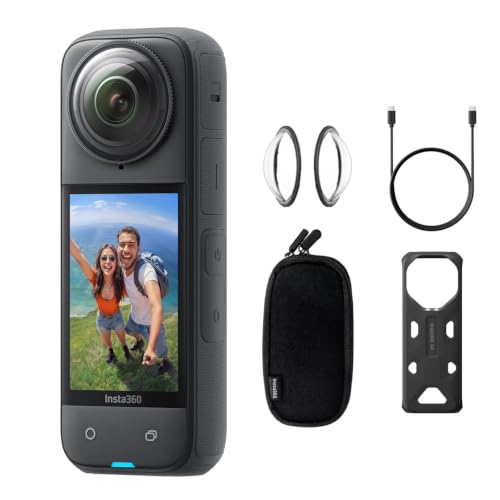
- Insta360 X4: check price on Amazon
- GoPro HERO13 Black: check price on Amazon
- Nikon Z50 II: check price on Amazon
- DJI Osmo Pocket 3: check price on Amazon
- Automated analysis camera class: available from sports-technology providers (prose-only pick in this guide)
- Fixed installation analysis class: available from sports-technology providers (prose-only pick in this guide)
Game film is not a souvenir. Where our neighbouring football guide films the match for the family, the club and the story, game film exists for one reader, the coach, and one purpose, the next training session. Its virtues are therefore inverted: beauty is worthless, legibility is everything; the tight portrait is a failure, the wide shape is the text; and the best moment in a game film is often the one where nothing appears to happen, the midfielder’s positioning three passes before the goal, visible only because the camera refused to follow the ball. The best cameras for game film are ranked here by the analyst’s standard: elevation, width, consistency across a whole season, and footage that survives being paused, zoomed, drawn on and argued over in a changing room on a Tuesday night.
The term crosses sports, and this guide honours that: the football coach breaking down a press, the basketball coach counting defensive rotations, the rugby analyst tracking a defensive line’s speed, the hockey staff reviewing a power play’s shape. The geometry differs, the principle does not. Game film is the wide, high, honest record from which coaching truth is extracted, and the cameras that serve it are chosen for the extraction, not the screening.
A note on the reader’s likely level. Most game film in the world is shot by school and amateur programmes with one camera, one volunteer and a ladder, and it changes those programmes out of all proportion to its cost, because it replaces the argument about what happened with the evidence of what happened. The picks below span that reality, from the single elevated action camera a school can buy this week to the automated systems that professionalising clubs install once and interrogate for years.
Key Takeaways
- Game film is evidence for coaching, judged on legibility, width and consistency.
- The 360-degree X4 gives the analyst the whole field and every replay angle from one recording.
- The HERO13 on a tall mount is the school’s proven, affordable game-film foundation.
- Automated analysis systems film, track and pre-cut every game without an operator.
- A mirrorless body serves the analyst who also needs detail and training-ground film.
- Elevation is the analyst’s first specification; buy height before resolution.
- The best game-film camera is the one whose footage is identical every single week.
In this guide
Quick Picks
| Camera | Badge | Why it is here |
|---|---|---|
| Insta360 X4 | Best for the Analyst’s Desk | Whole-field capture; every angle chosen in the review, not at the match. |
| GoPro HERO13 Black | Best Affordable Game Film | High, wide and tireless on a pole any school can own. |
| Nikon Z50 II | Best for Detail and Training Film | Zoom for set pieces and the training ground’s close work. |
| DJI Osmo Pocket 3 | Best Second Analyst Angle | The end-zone or baseline view that explains the wide film. |
| Automated Analysis Camera Class | Best Complete System | Films, follows, tags and delivers clips to the staff. |
| Fixed Installation Class | Best for Home Grounds | Permanent elevated coverage of every home game and session. |
How did we choose cameras for game film?
We began where every analyst begins: can I see all twenty-two, or all ten, or the whole formation, in one frame, for the whole game? Width and elevation outranked every other virtue, because the tactical story lives in the spaces between players, and a camera that cannot hold the shape cannot tell it. Resolution was judged in its analytical sense, the ability to pause, crop into the frame and still identify a player’s number, stride and body shape at the far side, which is a different and more demanding test than looking sharp in motion.
Consistency was scored as a first-class virtue. Analysis is comparison, this week against last, our shape against theirs, and it demands footage from the same position, at the same height, with the same field of view, game after game. Systems that fix the camera’s geometry permanently scored accordingly, and portable picks were judged on how faithfully a volunteer can reproduce their setup weekly, marks on the ground, a dedicated mount, a settings card in the case.
Workflow closed the judging: how the footage reaches the analyst, how quickly it can be clipped, tagged and shared with players, and whether the camera’s ecosystem speaks to the analysis platforms the sport actually uses. A camera whose film arrives Monday for a Tuesday session is a coaching tool; one whose film arrives Friday is an archive, and this guide ranks accordingly.
The picks in detail

Insta360 X4 — Best for the Analyst’s Desk
The X4 changes game film’s oldest compromise. A conventional wide camera forces the analyst to accept its framing forever; the X4, elevated at halfway or behind the goal, records the entire sphere, and every subsequent viewing chooses its own camera: the wide shape for the press, the tight follow for the winger’s decisions, the reverse angle for the goalkeeper’s starting position, all from the one recording. For the analyst, that is not a convenience but a new category of evidence, because the question that ruins conventional game film, what was happening off the ball, is answered by footage that was never off anything.
Its practical virtues suit the school and club analyst precisely. One device, one mount, no operator, and a reframing workflow that produces the session’s clips in the shapes the analysis software and the players’ phones each prefer. Its stabilisation keeps the elevated pole’s sway from contaminating the evidence, and its resolution across the sphere, while shared, holds identification at the distances school and amateur grounds demand.
The costs are the analyst’s homework: reframing is an edit discipline to learn, files are large across a season, and the farthest detail will not match a long lens dedicated to it. For the programme whose questions are tactical, shape, spacing, timing, the trade is decisively worth it, and this guide ranks the X4 as the most analytically powerful single purchase a grassroots staff can make.
- Form: waterproof 360 action camera
- Position: elevated, halfway or behind goal
- Capture: the entire field, every direction
- Workflow: angles chosen at the desk
- Role: tactical analysis, all field sports
Strengths
- Off-ball evidence, game film’s holy grail.
- Every replay angle from one recording.
- No operator, identical weekly geometry.
Trade-offs
- Reframing must be learned and budgeted.
- Season of files is a storage project.
- Farthest detail trails a dedicated telephoto.
Best for: coaches and analysts breaking down team shape. Not suited for: programmes needing only a simple record to share.

GoPro HERO13 Black — Best Affordable Game Film
Most of the world’s useful game film is shot exactly like this: a GoPro on the tallest mount the programme can manage, at halfway, recording the whole match in a wide honest frame, week after week. The HERO13 is the current peak of that proven formula. Its wide view holds the formation, its resolution lets the analyst crop toward the far side without losing the player’s identity, its toughness survives the school season’s weather and handling, and its price leaves budget for the pole, the storage and the second angle that complete a real game-film system.
Its consistency is the analyst’s quiet delight: the same field of view, the same colour, the same position, producing a season of comparable evidence from which trends, a full-back’s positioning drift, a press’s improving timing, can actually be measured. Its high frame rates serve the set-piece review, where a corner’s blocking scheme is read frame by frame, and its ecosystem supplies every mount from fence clamp to the tall monopods that have become the grassroots analyst’s standard furniture.
The wide philosophy’s limits are stated plainly: the far touchline’s fine detail is adequate, not luxurious, and identification at the greatest distances asks the analyst to work with movement and shape more than with faces. Battery across a tournament day is a spares discipline. Within those honest bounds, it remains the foundation on which more school and club analysis rests than any other camera in this guide, and it earns that position weekly, in all weathers.
- Form: waterproof action camera
- Position: tall mount at halfway
- View: wide formation-holding frame
- Season: identical weekly evidence
- Role: schools, clubs, all field sports
Strengths
- The proven game-film foundation, refined.
- Comparable footage across a whole season.
- Leaves budget for pole, storage, second angle.
Trade-offs
- Far-side detail is adequate, not luxurious.
- Tournament days need battery spares.
- No reframing freedom after the fact.
Best for: schools and clubs starting a real analysis habit. Not suited for: staffs needing automated tagging and delivery.

Nikon Z50 II — Best for Detail and Training Film
Game film’s empire extends beyond match day, and the Nikon kit serves its provinces: the training ground, where a drill’s spacing is filmed close and corrected on the spot; the set-piece library, where the analyst wants the delivery, the run and the contact in detail a wide camera cannot give; and the individual review, where one player’s technique, a goalkeeper’s footwork, a striker’s first touch, is the whole subject. The two-lens kit covers that territory in one bag, standard zoom for the session’s story, telephoto for the detail, with subject recognition that holds the working player among the drill’s decoys.
Its stills serve the analyst’s other language, the annotated frame, the position map, the whiteboard photograph that carries the session’s point into the dressing room. For the programme whose analysis is as much about individual development as team shape, a common and honourable emphasis at school and academy level, this dual fluency makes it the most useful second instrument in the guide.
It is an operator’s camera, which is its boundary as a game-film pick: it will not sit unattended at halfway producing the season’s identical evidence, and its crop sensor asks floodlit matches for their best behaviour. Deployed where its strengths live, the close, the detailed, the developmental, it completes the analytical kit that the wide cameras begin.
- Form: APS-C mirrorless, two-lens kit
- Lenses: session story plus set-piece detail
- Focus: recognition for drill work
- Stills: annotated frames and position maps
- Role: training film, individuals, set pieces
Strengths
- The analyst’s close-work instrument.
- Training and match detail in one bag.
- Stills carry the session into the dressing room.
Trade-offs
- Needs an operator; no unattended record.
- Floodlights test the crop sensor.
- Not the season’s wide-evidence foundation.
Best for: academies and coaches filming individuals and training. Not suited for: programmes needing a set-and-forget match record.

DJI Osmo Pocket 3 — Best Second Analyst Angle
Ask experienced analysts which single addition most improved their game film and a surprising number name the second angle: the view from behind the goal, along the baseline, at the end of the court, which explains what the wide film only shows. The Pocket 3 is the easiest second angle in this guide to deploy: pocket-sized, gimbal-steady, placed on a small stand at the end the wide camera faces, recording the depth the halfway view flattens, the goalkeeper’s line, the defensive line’s height, the spacing between units as the play approaches.
Its tracking and low-light grace serve the indoor sports particularly, the basketball and volleyball programmes whose game film is shot in halls where the big cameras’ size is a liability and the light is a negotiation. As a training-ground instrument it follows a drill’s demonstration, films the coach’s own walkthrough for the players’ phones, and generally behaves as the staff’s pocket witness.
It is a supplement, and knows it: fixed wide view, session-length batteries, no claim on the season’s primary evidence. Analysts do not buy it instead of the wide foundation; they buy it the season after, when the wide film starts asking questions only a second witness can answer, and it answers them at a price and size that make the argument trivial.
- Form: pocket gimbal camera, one-inch sensor
- Position: end zone, baseline, behind goal
- View: the depth the wide film flattens
- Light: graceful in indoor halls
- Role: second angle, training walkthroughs
Strengths
- Explains the wide film’s flat geometry.
- Deploys anywhere in under a minute.
- Indoor sports filmed with ease.
Trade-offs
- A supplement, never the primary record.
- Fixed view, session batteries.
- No season-long unattended duty.
Best for: analysts adding a second witness to wide film. Not suited for: programmes still lacking their first wide camera.
Automated Analysis Camera Class — Best Complete System
The prose-only pick names the class that professionalising programmes graduate to: the automated analysis system, an elevated camera, fixed or portable, whose software follows the play, recognises the game’s events, and delivers tagged clips, goals, set pieces, possessions, to the staff’s devices, integrated with the analysis platforms the sport’s coaches actually use. Discussed without a link because the class is sold as systems and subscriptions by sports-technology providers, outside this guide’s verified pool.
Its transformation of a programme is organisational before it is visual. The volunteer problem disappears, every game and most training sessions are filmed identically, the archive becomes searchable evidence rather than a drawer of cards, and the analyst’s hours move from excavation to interpretation, which is where coaching value actually lives. Players receive their clips on their phones the same evening, and the film session becomes a conversation the whole squad has already started.
The diligence is commercial and ethical in equal measure: subscription totals across a contract’s life, the portability of the archive if the provider changes, the quality of event tagging in your sport at your level, and the consent and data arrangements for filming young athletes, which remain the programme’s responsibility however automated the camera. Programmes that read those terms as carefully as they read an opponent will find the class the single largest upgrade available to their coaching, larger than any camera body in this guide.
- Form: automated camera and software system
- Operation: follows play, tags events itself
- Delivery: clips to staff and players same day
- Integration: analysis platforms and sharing
- Role: academies, ambitious clubs, schools
Strengths
- The analyst interprets instead of excavating.
- Every game filmed identically, unattended.
- Players engaged with their own evidence.
Trade-offs
- Subscription and archive terms need reading.
- Tagging quality varies by sport and level.
- Data duties stay with the programme.
Best for: programmes professionalising their analysis. Not suited for: casual record-keeping and family filming.
Fixed Installation Class — Best for Home Grounds
The second system pick, also prose-only and outside the verified pool, is the fixed installation: a permanent elevated camera, or pair, at the programme’s home ground, wired for power and network, filming every home game and training session to the same geometry forever. Where the automated class sells intelligence, the fixed installation sells permanence, and for the school or club that owns its ground, permanence compounds: the archive’s comparability across seasons becomes absolute, the marginal cost of filming a training session falls to zero, and game film stops being an event and becomes a utility, like the floodlights.
Fixed systems pair naturally with whatever analysis discipline the staff already practises, from the full automated platform to a coach with a laptop and strong opinions, because their gift is the evidence itself, reliably gathered. They also serve the programme’s other lives, safeguarding review, facility sharing, the streamed home game for the community, from the same unblinking witness.
The limits are geography and commitment: away games need a portable sibling from this guide’s linked picks, the installation’s capital moment requires the ground’s owners at the table, and a permanent camera raises the data-governance questions in their most durable form. For the programme settled on its ground and serious about its film, it is the end-state the portable picks are rehearsing for.
- Form: permanent elevated installation
- Power: wired, always ready
- Geometry: identical across seasons, absolutely
- Coverage: home games and all training
- Role: schools and clubs owning their grounds
Strengths
- Comparability across seasons becomes absolute.
- Training film costs nothing extra, ever.
- Serves streaming and safeguarding too.
Trade-offs
- Home ground only; away needs a sibling.
- Capital decision with owners involved.
- Governance questions in durable form.
Best for: settled programmes building a permanent film culture. Not suited for: nomadic teams and single-season projects.
Comparison table
| Camera | Form | Best at | Standout | Choose it for |
|---|---|---|---|---|
| Insta360 X4 | 360 action | Whole-field evidence | Angles chosen at the desk | Tactical analysts |
| GoPro HERO13 Black | Action | Affordable foundation | Identical weekly wide film | Schools and clubs |
| Nikon Z50 II | APS-C mirrorless | Detail and training | Telephoto, stills, drills | Academies |
| DJI Osmo Pocket 3 | Gimbal | Second angle | Depth from the end zone | Analysts expanding |
| Automated Analysis Class | System | Complete automation | Self-tagging, same-day clips | Professionalising staffs |
| Fixed Installation Class | Installed | Permanent home coverage | Season-proof geometry | Ground-owning programmes |
What should a coach check before buying a game-film camera?
Check the elevation you can actually achieve, at your actual grounds, with your actual permissions, because it caps everything else in this guide. A gantry, a scaffold tower the club owns, a tall pole on the halfway line, the roof of the stand: measure the height and the position before pricing cameras, and spend on the mount before the sensor, because three extra metres of height improve game film more than three generations of camera. Then check the geometry’s repeatability: how will next week’s volunteer reproduce this exact frame, and what marks, mounts and written settings make that reproduction a five-minute task rather than an act of interpretation?
Check the footage’s journey to the Tuesday session. Which software will clip it, whose laptop, how the players will see their moments, and whether the camera’s files and the analysis platform’s expectations are on speaking terms. Game film that arrives late or unshareable is a cost dressed as an asset. Finally, check the duties: consent for filming the athletes, especially minors; the storage and sharing rules your league and institution impose; and the archive’s ownership, because evidence about young athletes is not a casual asset and should never live on one volunteer’s personal drive.
How do you film game film a coach can actually use?
Hold the shape, ignore the ball
The analyst’s camera discipline is the opposite of the spectator’s: frame the team’s shape and let the ball travel inside it, widening only when the play’s development demands, never chasing. A game film that follows the ball is a highlight reel with delusions; a game film that holds the shape is evidence, because the coach’s questions, where was the line, who was free, when did the press trigger, are all answered by the spaces the ball-chasing frame throws away.
Keep one geometry for the whole season
Same position, same height, same field of view, marked and documented, so that week twelve’s film can be laid over week one’s and the improvement, or the drift, measured rather than debated. The analyst’s most valuable sentences begin ‘compared with October’, and they are only sayable when October was filmed identically. Consistency is not pedantry here; it is the entire scientific basis of the exercise.
Log the game while it happens
A notebook, a voice memo, a tagging app: the moments noted by the clock during the match, set pieces, goals, the substitutions and the shape changes, turn Sunday’s review from an excavation into an index. Even the automated systems benefit from the human log, because the coach’s eye notices the intention behind the event, which no tagging software yet records.
Deliver clips, not homework
Players learn from ninety seconds aimed at them, not from ninety minutes assigned to them. The game-film workflow ends in editing: the team’s shape in five clips, each player’s moments in two, the opponent’s pattern in three. The camera’s job is to make that editing fast, through consistency, resolution that survives cropping, and files that arrive organised. A staff that masters delivery gets watched; a staff that assigns homework gets archived.
What mistakes do programmes make with game film?
Filming from the touchline at head height
Ground-level game film is the genre’s original sin: the near touchline enormous, the far side a rumour, the shape invisible behind the nearest player’s shoulders. Every analytical virtue in this guide descends from elevation, and the programme filming at head height is collecting footage it will apologise for in every session. A ladder and permission beat a better camera, every week of the season.
Buying the camera and skipping the system
The camera is the visible third of game film; the mount, the storage, the workflow and the session habit are the rest, and programmes that buy the third and improvise the rest own expensive footage and no analysis. Budget the system as one purchase, pole, cards, drive, software, the Tuesday hour in the calendar, or expect the camera to join the long honour roll of analysis equipment retired by November.
Changing the setup every week
The enthusiastic volunteer who improves the position weekly destroys the archive’s comparability as surely as a fire. Innovation belongs in the close season: test in friendlies, fix for the league, and let the season’s evidence accumulate under one unchanging witness. The analyst’s gratitude for boring consistency will be expressed, eventually, in results.
Keeping the film where only one person can find it
Game film on a personal laptop, in a personal folder system, under a personal password is a programme asset held hostage by circumstance. Illness, a new job, a fallen-out volunteer, and the archive walks away. House the film institutionally, backed up, indexed and accessible to the staff, because evidence that cannot be found cannot coach anybody.
Final Recommendation
For most school and club analysts, start with the foundation: the GoPro HERO13 elevated at halfway, on a mount tall enough to see the shape, filming identically every week. Choose the Insta360 X4 when the staff’s questions are tactical and the off-ball evidence matters, as it usually does within a season of serious review. Add the Nikon kit for training and detail, the Pocket 3 for the second angle, and graduate to the automated or fixed classes when the programme’s scale makes the operator the bottleneck. Buy height before resolution, consistency before features, and a workflow before a second camera, and the film will start changing training sessions within a month.
Frequently Asked Questions
How high should a game-film camera be?
High enough to see the shape over the nearest players’ shoulders and read the far side’s spacing: in practice, as high as your ground, permissions and mount safely allow, with the halfway position doing the rest. Analysts treat every additional metre as analytical resolution, which is why the mount budget precedes the camera budget in this guide.
Is 360 footage really useful for coaching?
For shape questions, it is transformative, because the off-ball picture that conventional film discards is preserved and can be interrogated from any angle in the review. Its costs are workflow and file weight, and its far detail is shared across the sphere. Programmes whose questions are tactical tend to convert permanently after one season with it.
Can game film from an action camera really help a school team?
It is, empirically, where most school analysis happens, and it helps in the most concrete way: the argument about what happened ends. Shape, effort, positioning and set pieces become visible to players who have never seen themselves play, and that first sight, from a fifty-dollar mount’s worth of elevation, routinely changes a programme’s training culture within weeks.
How much footage should players watch?
Far less than coaches instinctively assign. Short, specific, personal: the team’s shape in a handful of clips, the individual’s two moments, the opponent’s one pattern. The film session’s authority comes from its editing, and the camera system’s job is to make that editing a half-hour task rather than an evening’s excavation.
Who owns the game film of young athletes?
The programme, under its institution’s safeguarding and data rules, never an individual’s private collection. Consent, storage, sharing and deletion should follow the league’s and school’s policies exactly, and the system’s design, institutional accounts, backed-up archives, access for the staff, should embody those policies rather than merely promise them.
How does game film differ between invasion sports, court sports and ice?
The invasion games, football, rugby, hockey in its field form, share the analyst’s geometry: a large rectangle, two shapes in negotiation, and a premium on the widest honest frame from the highest halfway point. Court sports compress the same questions into a smaller, faster space where the baseline and end views gain value, the second angle often matters as much as the wide one, and the indoor light rewards the Pocket 3’s grace and the mirrorless kit’s lenses. Ice adds speed and boards: the shape moves faster than any other team sport’s, the glass and the crowd constrain positions, and the elevated centre-ice witness earns its keep by refusing to follow a puck that travels faster than thought.
Across all of them the analyst’s commandments hold unchanged: elevation, width, consistency, delivery. The picks in this guide were chosen to travel between sports because programmes, schools especially, are rarely one-sport institutions, and a game-film system that serves the autumn’s football and the winter’s basketball from the same mount is worth two that serve one season each.
What does a season of game film do to a team’s culture?
It makes the truth a shared possession. The dressing-room argument about effort, positioning or the moment it turned becomes a question the film answers in thirty seconds, and teams that live with that evidence develop a distinctive honesty: mistakes are owned faster because they are visible anyway, praise lands precisely because it can be pointed at, and the coach’s authority shifts from volume to accuracy. Players begin to ask for their film, which is the moment the system stops being surveillance and becomes a service, and the camera, elevated and unblinking, becomes as much a part of the programme’s furniture as the tactics board.
It also disciplines the staff. A coach whose sessions are built from evidence coaches differently, fewer impressions, more specifics, and the film’s consistency across the season, this guide’s recurring sermon, is what makes that specificity cumulative rather than anecdotal. Programmes rarely abandon game film once the culture forms; they abandon, instead, the memory of coaching without it, the way one abandons directions written from memory after the first season with a map.
How should a programme archive a season of game film?
As an indexed library, not a pile: every match named by date, opponent and competition, the clips and logs filed with their match, the whole housed institutionally with a backup that does not live in the same bag as the originals. At the season’s end, one curation pass: the set-piece library updated, the individual development reels assembled for each player’s review, the archive’s index checked by a second pair of eyes. That curation is where the season’s film becomes next season’s inheritance, the new coach’s education and the returning players’ evidence of how far the shape has come.
Keep the ordinary matches with the famous ones. Analysis lives on the ordinary, the Tuesday league game where the press actually broke, and a programme that archives only its finals owns a scrapbook where it needed a laboratory. The cameras in this guide make completeness cheap; the discipline to keep it all is the programme’s own, and it is the cheapest performance advantage in sport.
How do you run the Tuesday film session so players actually learn?
The session is where game film either becomes coaching or becomes a screensaver, and its craft is editorial and social in equal measure. Open with the team’s shape, three clips at most, each introduced with the question it answers rather than the fault it exposes. Move to units, then to individuals only in the privacy the subject deserves, because public correction by film is a trust expense no insight repays. Close with the opponent, briefly, and with the one training consequence the film has actually changed, stated plainly, so the squad leaves knowing the evidence altered the week rather than merely filled an hour.
Keep the session shorter than the instinct to fill it. Attention is the analyst’s real budget, and twenty-five honest minutes of film, argued over and acted on, outperform the two-hour marathon that programmes schedule in September and abandon by October. The cameras in this guide serve that economy directly: consistent footage clips fast, 360 footage answers the argument in the room before it becomes one, and same-day automated clips let the session happen while the match is still in the players’ legs.
What should the analyst measure, and what should stay unmeasured?
Measure what the film can actually prove: distances between units, the timing of a press’s trigger, set-piece starting positions, the shape’s width in and out of possession, a player’s scanning before receiving. These are visible, countable and coachable, and a season of them, from identical footage, is a genuine performance dataset for a school or club. Resist measuring what the wide film can only suggest, effort, desire, courage, because numbers pinned to guesses teach players to distrust the honest numbers beside them, and the film’s authority, once spent on theatre, does not refill.
The unmeasured has its own dignity in the session. Some of what the coach saw from the touchline, the game’s emotional weather, belongs in the conversation as testimony, clearly labelled as such, beside the film’s evidence. Programmes that keep the two categories separate, what we can show and what we believe, build players who trust both more, which is the entire cultural project game film exists to serve.
How does game film change recruitment, trials and player development?
For the player, the film becomes a portable truth: the trial reel cut from the season’s identical footage carries a credibility that a parent’s highlight compilation, however loving, cannot, because coaches receiving it know the geometry it was filmed from and can read the shape around the player as well as the player. Academies increasingly ask for full-match film rather than highlights for exactly this reason, and the programme whose archive can produce a player’s complete, honest record on request is giving its athletes a genuine career asset.
For the programme, the development reels close the loop this guide has preached throughout: the same player, the same angle, September against May, is the most persuasive document in youth sport, for the player’s motivation, the parents’ understanding and the staff’s own evaluation of whether the coaching worked. Build those reels as a matter of routine, from the archive’s consistency, and game film stops being a match-day chore and becomes the programme’s memory of its own purpose.
Why does the analyst’s camera outlast the analyst?
Because programmes are relay races. The volunteer who mounts the camera this season hands the position, the marks on the ground, the settings card and the archive’s index to a successor, and the evidence continues unbroken across the handover. That continuity is the deepest argument for the system thinking this guide recommends: buy the setup a stranger could run, document it like a stranger will, and house the film where the institution, not the individual, keeps it. The fixed and automated classes are that philosophy built into hardware, and the portable picks achieve it through discipline, but the philosophy itself is non-negotiable either way.
Choose, therefore, not merely a camera for this season’s questions but a witness for the programme’s next five years of them. On that horizon the rankings above read plainly: geometry that can be kept, files that can be found, and footage honest enough to argue with. The rest is coaching, and the coaching, once the film is trustworthy, tends to take care of itself.
The first month of a game-film habit, week by week
Week one is geometry only: secure the position, the height and the permissions, film one match or one full training game, and watch it as a staff without clipping anything, learning what the witness can and cannot see. Week two adds the log and the first session, three team clips, twenty minutes, one training consequence. Week three adds the individuals, two moments per player, delivered privately and briefly. Week four adds the archive discipline, the naming, the backup, the index, and the first comparison, this week’s shape laid honestly beside week one’s. A programme that completes that month owns a game-film culture; everything afterward is refinement, and the refinement, unlike the culture, can be bought gradually as the questions sharpen.
Notice, again, what the month spends money on: a mount, storage, and time, with the camera itself, whichever of this guide’s picks the budget chose, simply doing its unglamorous duty at the top of the pole. That proportion, system over sensor, is the whole argument of this article compressed into a calendar, and it is why the cheapest complete setup here will outperform, by Christmas, the finest camera bought alone in September.
By Christmas the questions will have sharpened on their own: the far side’s detail in the derby, the second angle for the set-piece problem, the tagging that eats Sunday. Each sharpening names its own purchase, in the order the evidence demands, and the programme that buys in that order builds, across seasons, exactly the system it needs and not a gadget more. That is the final promise of beginning with any honest camera in this guide, properly elevated and faithfully repeated: the film itself will write the shopping list.
Let it write that list, then, starting with the first entry every programme’s film demands and no shop sells: a Tuesday hour, protected in the calendar, where the evidence is watched and the training is changed because of it. Cameras gather evidence; only the hour turns evidence into coaching.
Protect that hour as fiercely as the archive itself, through the busy weeks and the bad results, especially through the bad results, because a losing run is precisely when impressions lie loudest and the film’s calm evidence is worth most. The programmes that improve are not the ones with the finest cameras; they are the ones still watching, honestly, in February.
Still watching in February, with the same camera in the same position producing the same honest frame, is a portrait of a serious programme, and it is available this week to any school or club that chooses a witness from this guide and grants it the season it deserves.
Grant it the season, and grant the players the sight of themselves that only film provides, the honest, wide, unflattering and ultimately liberating sight of the game as it actually was. Athletes raised on that sight develop a feel for shape and space that no amount of shouted instruction installs, because they have watched the truth too many times to unsee it.
Unseeing is impossible, and improvement, given time and Tuesdays, is nearly so, which is as close to a guarantee as coaching honestly offers. It begins, as everything in this guide begins, with a camera placed high and wide before the next match, and a staff willing to look at what it sees.
Look, then, beginning this weekend, and let the first session be short, specific and kind, the way you intend all the others to be. The habit will do the rest, week by identical week, until the film is simply how the programme thinks.
How a programme thinks is, in the end, what its results are made of, and game film, patiently gathered and honestly read, is the most reliable way yet found to improve the thinking. The camera is merely where the improvement enters the building, through the door marked evidence.
Open that door with the next fixture. The mount, the marks on the ground, the settings card, the notebook for the log: an afternoon of preparation buys a season of truth, and there is no better exchange rate in coaching.
A season of truth, filed and findable, outlasts the season itself, becoming the standard against which next year’s shape is measured and the inheritance the next coach, whoever they are, will thank you for in the first week of the job.
Leave that inheritance deliberately, then, rather than by accident, and let the choice from this guide’s table be the first entry in its index: the season the programme started filming like it meant it.
Meaning it, in game film, looks undramatic from the outside: the same pole, the same frame, the same Tuesday hour, and it produces, from the inside, the most dramatic change a coaching staff can make without signing a single new player.
Make that change with the players you already have, whose shapes and habits are waiting, unexamined, in every match they have ever played. The film will introduce the staff to its own team, properly, perhaps for the first time.
Proper introductions change relationships, and the staff’s relationship with its own evidence is the one on which all the others, with players, parents and results, quietly depend. Begin it with the next match’s wide, high, honest frame.
That frame, repeated without exception, becomes the programme’s signature as surely as its kit colours, and opponents who scout you will find, in your own published film, a team whose shape is a matter of public record and private pride.
Pride in the shape, earned by watching it improve on film across a season, is a motivation no team talk manufactures, and it is available, remarkably cheaply, to any programme willing to place a camera high and keep it there.
Keep it there through the weather, the defeats and the volunteer rota’s changes, and the camera will repay the faith in the only currency analysts accept: evidence that settles arguments and builds teams.
Teams built on settled arguments train faster, argue less and improve in public, on the same film that documents the improvement, which is a virtuous circle with a camera at its centre and a season of Tuesdays as its engine.
Start the engine at the next match, with the pole tall, the frame wide and the notebook open, and let the season’s evidence begin accumulating in the only place it has ever accumulated: the record, kept faithfully, of games actually played.
Games actually played, by the players actually coached, in the shape actually used: that specificity is game film’s gift, and no generic footage, however beautifully shot, can substitute for it in a single training session.
Film your own games, then, with your own witness, and let every other programme’s film be what it properly is: interesting, instructive, and about somebody else’s team.
Your team, your shape, your evidence, from this weekend forward: that is the whole offer, and any camera in this guide, honestly deployed, can make it good.
Make it good this weekend, and the season, the squad and the staff will all be measurably harder to beat by spring, on evidence anyone can watch.
Watch it they will, opponents included, which is the final compliment game film pays a programme: its own evidence becomes the league’s scouting report, and the shape it shows is one the whole squad has already agreed to be proud of.
How should coaching staff tag plays during a match so later review sessions start faster?
Assign one assistant to log quarter, clock reading, field zone, and possession outcome using a simple paper grid rather than complicated software courtside. Abbreviations agreed before kickoff keep entries legible when weather, noise, and rapid substitutions compete for attention. Photographing each completed sheet immediately after the final whistle protects the index if rain damages pages during the walk back indoors.
Within twenty four hours, transfer those notes into the video timeline while memories of momentum shifts remain fresh. Prioritise sequences illustrating the upcoming training theme instead of tagging every routine passage exhaustively. Players respond better to a concise playlist organised around clear questions than to an unfiltered archive demanding hours of searching before insight emerges from routine footage.
What sideline communication routine prevents analysts missing a substitution or formation change?
Position the logging assistant within earshot of the bench, with an agreed prompt whenever personnel changes alter the team’s shape. A quick verbal confirmation, repeated back aloud, closes the loop and anchors the change to the match clock for later annotation. Binoculars help identify incoming players when numbers are obscured by mud, distance, or bodies gathering near the technical area during hurried exchanges.
After each period, compare the analyst’s formation sketch against the coach’s own understanding before assumptions harden into review material. Discrepancies are valuable because they reveal where camera angle concealed a rotation or where instructions were interpreted differently on the field. Resolving those questions early ensures film study reinforces shared tactical language rather than accidentally teaching conflicting interpretations to the squad.
Review etiquette shapes whether athletes trust the process across a demanding season. Begin meetings with successful execution linked directly to training work, then examine adjustments using neutral language focused on spacing, timing, and communication rather than personal blame. Closing with one clear collective priority prevents players leaving overwhelmed by twenty observations. When squads experience film as a shared problem solving ritual, attendance and concentration improve noticeably, and quieter members start contributing insights they previously kept to themselves.
Opposition analysis should distinguish habits confirmed across several matches from tendencies visible only once against unusual circumstances. Building a game plan around a single clip invites overreaction, whereas repeated patterns justify targeted preparation. Mark confidence levels beside each observation so players understand which insights are firm evidence and which remain provisional scouting impressions.
Analysts should archive the original unedited recording untouched alongside every clipped playlist, preserving context if a later disagreement questions whether a selected passage represented the wider pattern fairly. Storage is cheaper than credibility once coaches begin relying on evidence for selection decisions.
Related Guides
The same ninety minutes, filmed for the family instead, is the subject of our football filming guide. Occasions and streams are handled in the live events roundup, and individual athletic work continues in our fitness camera guide.


