reviewstook.com is reader-supported. When you buy through links on our site, we may earn an affiliate commission.
Where to buy
All six cameras below link to their Amazon listings, and sports retailers carry most of them. Fitness filming is hard on equipment in specific ways, sweat, chalk, dropped kettlebells, studio mirrors and bathroom humidity, so buy the camera with its protection in the same order: lens guards, a case that lives in the gym bag, and the mount your training actually uses, chest, tripod or magnetic, rather than the mount in the advertisement.
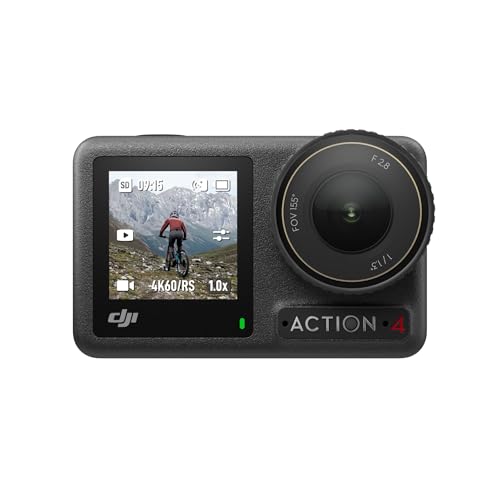
- DJI Osmo Action 4: check price on Amazon
- Insta360 GO 3S: check price on Amazon
- OBSBOT Tiny 2: check price on Amazon
- GoPro HERO12 Black: check price on Amazon
- DJI Osmo Pocket 3: check price on Amazon
- AKASO Brave 7 LE: check price on Amazon
Fitness filming has a peculiar honesty problem: the camera is always pointed at the person who set it up, mid-effort, unflattered, in the least forgiving light architecture ever built, the gym’s overhead panels and wall of mirrors. The best cameras for fitness are the ones that survive that honesty and return something useful: form you can actually check, workouts an audience can actually follow, and footage of a body working that makes the working look worthwhile. Whether the goal is a coach’s eye on your squat, a channel’s daily class, or a runner’s season documented honestly, the camera’s job in fitness is specific, and this guide ranks it specifically.
The fitness brief divides into three real jobs. There is form-check filming, where the camera is a mirror with a memory, and angles, frame rates and playback matter more than beauty. There is instruction filming, classes and follow-along workouts, where the instructor moves, the camera must follow or forgive, and the voice must survive music, breathing and echo. And there is the athletic life filmed from inside it, the run, the ride, the swim, the climb, where the camera is worn and the workout is the location. The six picks below were ranked across those three jobs, and the table reads best when matched to the job that is actually yours.
A note on dignity, because fitness footage is intimate in a way other filming is not. These cameras will record bodies at their most effortful and least composed, often in shared spaces with other people’s bodies at the edges. The guide treats consent, framing and gym etiquette as part of the equipment question, because a camera that gets its owner banned from the gym films nothing at all, and a fitness archive built on other people’s discomfort is a liability wearing a hobby’s clothes.
Key Takeaways
- Fitness filming is three jobs: form checks, instruction and the athletic life worn from inside.
- The DJI Action 4 is the all-round fitness camera, tough, low-light capable and mountable anywhere.
- The GO 3S films form from angles no tripod reaches, worn on the body itself.
- The OBSBOT Tiny 2 follows an instructor around the studio with no operator at all.
- GoPro’s HERO12 remains the endurance athlete’s proven companion.
- The Pocket 3 makes gym content look produced, with gimbal movement and tracking.
- Frame rate matters for form: slow motion is a coaching tool, not a gimmick.
In this guide
Quick Picks
| Camera | Badge | Why it is here |
|---|---|---|
| DJI Osmo Action 4 | Best All-Round Fitness Camera | Low-light strength and mounts for gym, road and water. |
| Insta360 GO 3S | Best for Form Checks | Worn and magnetic angles that show the lift from inside it. |
| OBSBOT Tiny 2 | Best for Instructors | AI tracking follows the class leader across the studio. |
| GoPro HERO12 Black | Best for Endurance Athletes | Proven across marathons, rides and open water. |
| DJI Osmo Pocket 3 | Best for Fitness Content | Produced-looking gym films and follow-along classes. |
| AKASO Brave 7 LE | Best Budget Fitness Camera | Dual screens and honest 4K for the home gym. |
How did we choose cameras for fitness filming?
We started with the mirror test: can this camera show a lifter their own squat depth, knee tracking and bar path clearly enough to coach from? That demands honest angles, a wide enough view for the whole movement, frame rates that slow the decisive second, and a screen or app preview that lets the athlete frame the shot alone, because fitness filming is overwhelmingly solo filming. Cameras that needed a second person to aim them started with a handicap.
Movement came next, in both directions. The camera must film a moving athlete without losing them, tracking, wide forgiving frames, stabilisation for the worn and moving shots, and it must survive being the thing that moves: chest-mounted on a run, bar-mounted on a bike, poolside in the splash zone. Sweat, chalk dust, humidity and the occasional dropped weight were treated as the working environment, not as abuse.
Sound was judged in the gym’s acoustic reality, echo, music, iron, because instruction lives or dies on the voice. Compatibility with wireless microphones scored heavily. And we weighed the unglamorous fitness specifics: quick start between sets, batteries across a long session or a long run, and an app that gets the clip to the phone before the shower, because form feedback delayed by a day is a history lesson, not coaching.
The picks in detail

DJI Osmo Action 4 — Best All-Round Fitness Camera
The Action 4 earns the top of this guide by covering the most fitness territory with the fewest apologies. Its larger sensor is the headline for a reason gym filmers understand: gyms are dim, studios are moody, and early-morning runs happen in the blue hour, and this camera’s low-light and dynamic-range performance keeps footage clean and skin honest where smaller action sensors smear. It mounts like an action camera should, chest for the run, bar for the lift’s front view, tripod for the class, and its magnetic quick-release system moves it between those posts in seconds, which matters when the workout, not the filming, is the point of the hour.
For form work it offers the high frame rates that slow a clean, a sprint start or a golf-swing’s worth of hip rotation into coachable frames, and its colour stays natural under the mixed lighting, LEDs, windows, neon, that fitness spaces specialise in. Waterproofing covers the swim and the rain run without a housing ritual, and the front screen frames the solo check-in, the before-and-after, the talking segment between sets.
It concedes the absolute newest features to DJI’s own Pro sibling and the mount catalogue’s outer edges to GoPro, and its battery, while good, still asks the ultra-distance athlete to plan swaps. As the single camera for a fitness life that spans gym, road and water, it is the most complete answer here, and the one this guide would pack for a training camp in any sport.
- Form: waterproof action camera, magnetic mounts
- Sensor: larger format, strong in gym light
- Motion: high frame rates for form analysis
- Screens: front and rear for solo framing
- Role: gym, running, cycling, swimming, classes
Strengths
- Low-light strength where fitness actually happens.
- Mount changes in seconds between exercises.
- Natural colour under mixed studio lighting.
Trade-offs
- Battery planning still needed for ultras.
- Mount catalogue trails GoPro at the edges.
- Newest features live in its Pro sibling.
Best for: athletes and creators filming across gym, road and water. Not suited for: studio instructors who never move the camera.

Insta360 GO 3S — Best for Form Checks
Form is filmed from where the movement happens, and the GO 3S is the only camera here that can live there. Worn on a pendant at the chest, clipped to a cap, magnetised to the rack at knee height or stuck to the mirror, it captures the squat from the lifter’s own geometry, the row from the handle’s point of view, the swim stroke from the wrist’s world. For the athlete-coach relationship, that footage is gold: bar path, knee travel, hip hinge and head position visible in a single clip, without a tripod negotiation or a training partner press-ganged into camera duty.
Its pod partner handles the conventional work, preview, playback and the tripod-mounted class clip, and its stabilisation irons the body-mounted bounce that would otherwise make POV lifting footage unwatchable. The app workflow is quick, which matters for the between-sets check: film the set, glance at the hinge, adjust, lift again. That loop, tight and immediate, is what form filming is for, and no other pick here closes it as naturally.
The limits are a small camera’s physics: low light is its weakest room, battery life leans on the pod, and its stills are incidental. It is also, being tiny, the easiest camera in this guide to lose in a gym bag’s geology. As the form-check specialist in a fitness kit, though, it does a job the bigger cameras structurally cannot, and athletes who train alone will feel the difference in the first week.
- Form: thumb-sized wearable with charging pod
- Mounting: pendant, clip, magnetic, mirror
- Video: 4K POV, stabilised
- Workflow: fast app review between sets
- Role: form analysis, POV sport, solo training
Strengths
- Angles no tripod or partner can give you.
- The between-sets feedback loop, closed tightly.
- Disappears on the body during the work.
Trade-offs
- Low light is the small sensor’s tax.
- Battery life depends on the pod.
- Easy to misplace in a kit bag.
Best for: solo lifters, runners and technique obsessives. Not suited for: instructors filming full classes in dim studios.

OBSBOT Tiny 2 — Best for Instructors
The fitness instructor’s filming problem is unique: the subject never stops moving, the camera operator does not exist, and the class must be led, cued and counted while the filming happens. The Tiny 2 was practically designed in answer. Its gimbal head and AI tracking follow the instructor across the studio, wide for the demonstration, tighter for the detail, directed by voice or gesture when the hands are holding weights, bands or a microphone’s worth of attention. Its 4K image crops for the closer frame, and its presets give a one-camera class the grammar of a produced one.
For the online class economy, where the instructor is also the producer, editor and tech support, that self-sufficiency is the product. It starts with the computer, behaves identically every session, and removes the two classic failures of instructor filming: the workout that wandered out of frame and the class spent apologising to a tripod. Paired with a wireless microphone, which every serious instructor should treat as the real camera, it produces follow-along content whose production value belies its one-person origin.
It is a studio instrument, bounded by its room: not waterproof, not wearable, not the camera for the trail or the pool. Its low-light performance is a webcam’s, improved by the studio lighting instructors should own anyway. Within the four walls where classes happen, it has no rival in this guide, and the instructors who adopt it tend to describe it the way they describe a good cover teacher: it simply handles it.
- Form: AI-tracking PTZ webcam, 4K
- Tracking: follows the instructor’s movement
- Control: voice and gesture, hands-free
- Framing: presets as production grammar
- Role: classes, follow-alongs, studio instruction
Strengths
- The class stays framed while you teach it.
- Identical, reliable behaviour every session.
- Removes the out-of-frame workout failure.
Trade-offs
- Studio-bound, not for trail or pool.
- Low light is a webcam’s honest limit.
- Needs a wireless mic to complete the job.
Best for: fitness instructors filming classes alone. Not suited for: athletes filming their own outdoor training.

GoPro HERO12 Black — Best for Endurance Athletes
Endurance sport is fitness at duration, and the HERO12 is its proven chronicler: the marathon’s chest mount, the century ride’s bar mount, the open-water swim’s wrist, the trail ultra’s dawn start and dusk finish. Its generation refined the endurance virtues specifically, battery behaviour stretched for the long day, stabilisation that has absorbed more punishment than any rival’s, and an ecosystem of mounts that covers every sport’s peculiar attachment problem, including the ones invented last season.
Its footage serves the endurance athlete’s two audiences. For the self, the long honest record: pacing visible in the stride’s rhythm, the swim stroke’s deterioration at hour two, the climb where the form broke, coaching evidence of the most valuable kind because it is gathered at race duration rather than in a fresh ten-minute test. For the world, the story of the day, the weather, the course, the finish, in footage stable and vivid enough to carry it.
It concedes low light to the DJI’s larger sensor and the newest headline features to its own successor, and its touchscreen still prefers a bare finger at the aid station. What it offers instead is the deepest proof in this guide: a camera that has finished more endurance events than any other here, and whose failure modes, being known, can be planned around like weather.
- Form: waterproof action camera
- Endurance: battery tuned for long days
- Stabilisation: proven at race duration
- Mounts: every endurance sport covered
- Role: marathons, rides, swims, ultras
Strengths
- Has finished more big days than any rival.
- Race-length footage as coaching evidence.
- Mount for every sport’s attachment problem.
Trade-offs
- Low light trails the larger-sensor DJI.
- Touchscreen dislikes gloves and wet hands.
- Successor model owns the newest features.
Best for: endurance athletes documenting training and racing. Not suited for: studio-based fitness content creators.

DJI Osmo Pocket 3 — Best for Fitness Content
There is a difference between filming fitness and filming fitness content, and the Pocket 3 owns the second. Its gimbal turns a walkthrough of the gym into a production, its tracking holds the instructor or the athlete while the operator moves with them, and its one-inch sensor renders studio light and skin with a polish the action cameras admire from below. For the creator whose workouts are the business, follow-alongs, transformations, gym tours, technique series, it produces the look that sponsors and platforms reward, from a device that lives in the gym bag’s side pocket.
Its vertical mode deserves its own sentence in a fitness guide, because fitness content is the most vertical-native genre on the internet, and the Pocket’s rotating screen treats the tall frame as a master rather than a crop. Its wireless microphone pairing completes the class audio without a receiver’s bulk, and its face tracking keeps the talking segments, the cues, the check-ins, framed while the creator demonstrates with both hands.
It is not the camera to chest-mount for a marathon or dunk in the pool, and its delicacy beside the action cameras asks for its case and a moment’s respect in the chalk dust. As the content camera in a two-camera fitness kit, the Action 4 for the work, the Pocket for the presentation, it is the pick that makes a one-person fitness media operation look like a department.
- Form: pocket gimbal camera, one-inch sensor
- Stabilisation: three-axis mechanical
- Screen: rotates for vertical-native content
- Audio: wireless microphone companions
- Role: classes, tours, transformations, series
Strengths
- Gym content with a produced polish.
- Vertical treated as a first-class master.
- Tracking frees the demonstrator’s hands.
Trade-offs
- Not for wearing into the workout itself.
- Gimbal wants care around chalk and iron.
- Battery suits sessions, not race days.
Best for: fitness creators and instructors building a channel. Not suited for: athletes wanting one camera for the race itself.

AKASO Brave 7 LE — Best Budget Fitness Camera
The Brave 7 LE represents the home gym’s honest economics. Most fitness filming happens in garages, spare rooms and garden studios, for form checks, family workouts and the first year of a channel, and it does not require a flagship to do it well. AKASO’s camera offers dual screens, the front one being the solo fitness filmer’s essential, stabilised 4K, waterproofing for the rain run and the poolside, and a mount compatibility that borrows the action world’s vast accessory shelf, at a position in the market that leaves the budget for the rack, the bands and the coaching where fitness money usually belongs.
Its footage is a generation’s honest work: vivid in daylight and decent gym light, stabilised well enough for the bar and the bike, and entirely sufficient for the form analysis that is most fitness filming’s actual purpose. A squat does not need cinema colour to show its depth, and a channel’s first hundred subscribers arrive for the programme, not the pixel count.
The compromises are low light, where its sensor’s generation shows, audio that wants the external microphone for anything serious, and a polish deficit against the DJI and GoPro flagships in menus and app. For the home gym and the beginning creator, those are the right corners to cut, and this guide includes it as the standing reminder that fitness filming’s entry ticket is far cheaper than its reputation.
- Form: dual-screen waterproof action camera
- Screens: front screen for solo framing
- Video: stabilised 4K for form and classes
- Mounts: compatible with the action accessory world
- Role: home gyms, first channels, family fitness
Strengths
- The solo filmer’s front screen, affordably.
- Honest footage for form and first content.
- Leaves budget for actual fitness equipment.
Trade-offs
- Low light shows its generation.
- Serious audio needs an external mic.
- App and menus trail the flagships.
Best for: home gyms, beginners and budget-led creators. Not suited for: professionals filming in dim commercial studios.
Comparison table
| Camera | Form | Best at | Standout | Choose it for |
|---|---|---|---|---|
| DJI Osmo Action 4 | Action | All-round fitness | Low light, quick mounts | Gym, road and water |
| Insta360 GO 3S | Wearable | Form-check angles | Body-worn POV | Solo technique work |
| OBSBOT Tiny 2 | PTZ webcam | Self-following classes | AI tracking, no operator | Studio instructors |
| GoPro HERO12 Black | Action | Endurance documentation | Race-proven stamina | Marathon to ultra |
| DJI Osmo Pocket 3 | Gimbal | Fitness content polish | Vertical-native masters | Creators and channels |
| AKASO Brave 7 LE | Action | Budget fitness filming | Dual screens, honest 4K | Home gyms |
What should you check before buying a camera for fitness?
Check the angle your sport actually needs. The squat wants a side view at hip height and a front view for the knees; the swim wants poolside and underwater; the run wants the chest’s horizon and the road behind. Walk the movement in your space, phone in hand, and discover where the camera must live before you buy the camera that must live there. More fitness cameras are bought wrong on geometry than on quality.
Check the light of your training hour, not the showroom’s. The 6 a.m. garage, the neon studio, the winter evening run each bill the sensor differently, and the low-light order of this guide, DJI’s larger sensors first, exists because fitness keeps unsocial hours. Then check the audio path if instruction is any part of the plan: which wireless microphone the camera accepts, and how the voice will survive the playlist, the echo and the breathing that honest instruction includes.
Finally, check the gym’s rules and the room’s people. Many facilities restrict filming, most restrict other members’ presence in frame, and all of them are right to. The camera that can be aimed tightly, mounted discreetly and reviewed privately, several picks here qualify, is the camera that keeps its owner welcome, and welcome is a specification no box lists.
How do you film fitness that actually helps the training?
Fix the form-check angles and never improvise them
Form analysis is comparison across weeks, and comparison demands identical geometry. Mark the tripod’s spot on the floor, the rack mount’s position, the mirror’s magnetic point, and film every check from the same witnesses. A squat filmed from three angles across a month is three anecdotes; filmed from one, it is data, and data is what coaching, including self-coaching, runs on.
Use slow motion where the movement hides
The decisive faults live in fractions: the knee’s collapse at the hole, the hip’s shift at the catch, the foot strike’s roll. High frame rates, a strength across this guide’s action picks, turn those fractions into frames a coach can point at. Film the heavy sets at speed for honesty and the technical sets slowly for diagnosis, and the two together are a complete form practice.
Let the workout finish before the review starts
Between-sets glances serve the GO 3S loop for a single technical cue, but the full review belongs after the session, when breathing and judgement have both recovered. Athletes who edit their training mid-workout train less and film worse; the camera’s job during the work is to witness, and its hour as a coach comes later, with the notebook open.
Narrate the context while it is free
Ten seconds of voice, the weight, the week of the programme, the fatigue carried in, turns a clip into a record. Fitness footage without context misleads the future self who reviews it, comparing a fresh Monday’s lift against a depleted Friday’s as though the camera were the only variable. The cameras here all hear well enough for the ritual; the discipline is the athlete’s.
What mistakes do fitness filmers make?
Filming from the flattering angle only
The three-quarter view that makes the physique is the view that hides the fault. Form filming’s angles are diagnostic, side, front, the occasional rear, chosen for what they reveal rather than what they forgive. Creators may keep a flattering angle for the public cut, but the working archive should be the honest one, or the camera becomes a mirror that lies.
Ignoring everyone else in the room
The stranger stretching in your background did not consent to your channel. Aim tight, use the portrait modes and crops that exclude bystanders, film in the quiet hours for the wide shots, and know the facility’s policy before the first session rather than during a complaint. Fitness filming’s reputation, in gyms generally, is set by its least considerate practitioner, and this guide declines to train another one.
Letting music eat the instruction
The class playlist at the volume the room loves is the volume at which the camera’s microphone gives up. Instructors filming for an online audience should treat the room’s music and the recording’s music as separate productions, voice on a wireless microphone, music added or ducked in the edit. The follow-along audience forgives simple visuals indefinitely and muffled cues for about ninety seconds.
Chasing content at the training’s expense
When the filming starts choosing the exercises, the camera has eaten the programme. The healthy hierarchy is visible in every successful fitness archive: the training is real, periodised and occasionally unphotogenic, and the camera serves it, witnessing the work rather than casting it. Audiences, who are athletes themselves, can smell the difference between a workout filmed and a filming workshopped, and they subscribe to the first.
Final Recommendation
For the fitness life in general, the DJI Osmo Action 4 is the recommendation: the most complete single camera across gym, road and water. Add the GO 3S when solo form work is the heart of the training, and let the OBSBOT Tiny 2 run the studio if instruction is the business. Endurance athletes should take the HERO12’s proven stamina, creators the Pocket 3’s polish, and the home gym the Brave 7 LE’s honest value. Film the training you are actually doing, from angles that tell the truth, with the room’s consent respected, and the camera becomes what it should be in fitness: a coach that never blinks and a witness that never flatters.
Frequently Asked Questions
What frame rate do I need for form checks?
Enough to slow the decisive fraction into view: the action picks here offer high frame rates that turn a lift’s sticking point or a foot strike into coachable frames. Film the working sets at normal speed for rhythm and honesty, and the technical sets at high speed for diagnosis, from the same fixed angles every week.
Can I film in a commercial gym?
Often yes, within the facility’s policy and other members’ rights, which always outrank your content. Ask, aim tight, avoid bystanders in frame, keep tripods out of walkways, and be the member whose filming nobody has ever had to think about. Policies vary from welcome to prohibition, and the welcome is maintained by exactly this consideration.
Which camera is best for filming online classes?
For a moving instructor working alone, the OBSBOT Tiny 2, because it follows without an operator; for a creator who also demonstrates outdoors and on the move, the Pocket 3. In both cases the wireless microphone is the purchase that decides the class’s quality, and it should be budgeted as part of the camera.
Do I need slow motion for running form?
It helps more than almost any other tool. Foot strike, knee drive and posture faults live in fractions of a stride, and the chest or side footage at high frame rates, reviewed against last month’s from the same angle, is the closest thing a solo runner can own to a gait laboratory.
How do I keep a camera safe in a gym?
Lens guards on, a case that lives in the bag, mounts checked before the set rather than during it, and a healthy respect for the dropped-weight zone, which no warranty treats as an act of God. The action picks here are built for the environment; the gimbal and webcam picks should be positioned like the instruments they are.
How do strength, endurance and class fitness each film differently?
Strength filming is a geometry problem: fixed witnesses, heavy loads, decisive seconds, and a premium on identical angles across a training cycle. Its cameras are the mounted action bodies and the worn GO 3S, its rhythm is the set and the review, and its audience is usually the athlete and the coach. Endurance filming is a duration problem: hours of weather and fatigue, where battery, comfort of the mount and the honesty of the long record dominate, and where the HERO12’s proof and the Action 4’s stamina earn their rankings. Class fitness is a performance problem: a moving instructor, music, cues and an audience following along in real time, where tracking, framing presets and the wireless voice are the whole game, and the Tiny 2 and Pocket 3 divide the territory between the studio-bound and the roaming.
Most fitness lives contain all three in a week, which is why this guide’s kits so often pair: an action body for the work itself and one presenter instrument for the teaching. Buy for your dominant job first, honestly identified, and let the second camera arrive when the second job starts paying, in money or in meaning, for its keep.
What does a season of filmed training teach an athlete?
It teaches that progress is mostly invisible from inside the body. The squat that felt identical in March and June is, on the fixed-angle archive, two different lifts, and the run that felt like decline is visible as a stride holding its form an hour deeper into the long run. Athletes who film consistently stop arguing with their feelings and start consulting their evidence, which is the entire philosophy of coaching, self-administered. It also teaches humility about the bad day: the archive proves the bad day was weather, fatigue and life, not regression, because last month’s identical session is right there, filmed from the same spot, looking strong.
And it teaches the camera’s final fitness lesson, that consistency of witness beats quality of witness. The modest Brave 7 LE filming every session from its marked spot will coach its owner further in a season than a flagship produced twice a month for the highlights. Choose the camera you will actually set up when you are tired, cold and late, because that is the session the archive most needs.
How should fitness footage be organised across a training cycle?
By the programme’s own structure: a folder per block, the fixed-angle checks filed by exercise and date, the context narrated into the clips themselves as this guide recommends. At each block’s end, one review sitting with the notebook, comparing the first and last checks of the key lifts, the long run’s first and final hours, the class’s framing across the month. That review is where the filming pays its rent, and it takes less time than one workout.
Keep the public and private archives separate in spirit even when they share a drive. The form archive is a working document, unflattering and invaluable; the published cut is a story told from it. Athletes who confuse the two start performing for the archive and stop training in it, which is the one failure mode no camera in this guide can fix, because it is not a filming failure at all.
How do you film a transformation or a training journey honestly?
The transformation is fitness media’s most powerful and most abused form, and the camera’s role in its honesty is specific. Film the start as carefully as the finish: same room, same light, same lens distance, same time of day, because a before photographed in gloom and an after photographed in glory is not a transformation but a lighting demonstration. The fixed-angle discipline this guide preaches for form is the same discipline that makes a journey credible, and the creators whose transformations are believed are, without exception, the ones whose conditions never change.
Film the middle with the same fidelity. The plateau weeks, the session done at half strength, the meal that went wrong are the journey’s actual content, and an archive that contains only triumphs teaches its audience that their own plateaus are failures rather than chapters. The cameras here are small enough to witness the unglamorous middle without turning it into a production, which is precisely their value to the genre: honesty at this scale is a logistical achievement before it is a moral one.
What about filming fitness outdoors and in water?
The training life leaves the gym constantly, and this guide’s action picks were chosen to follow it. The trail run at dawn bills the sensor’s low light and the mount’s comfort across hours. The open-water swim bills waterproofing that is native rather than housed, and a wrist or buoy mount that survives the stroke. The outdoor circuit in the park bills the bystander problem in its purest form, where the tight framing and the quiet hours are the whole etiquette. Each of these is a small specialisation of the outdoor filming craft covered in our neighbouring guide, with the fitness difference that the subject is a body working at its limit and the camera’s first duty is never to be the reason a session was shortened, moved or made self-conscious.
Practically, the outdoor fitness kit is the indoor kit plus two habits: a tether on everything, because grass and water hide dropped cameras with professional skill, and a dry cloth sealed in a bag, because the lens that filmed the warm-up will be fogged or splashed by the main set. Small rituals, again, are the entire difference between the athlete whose season is documented and the one whose camera is at the bottom of a lake being philosophical about it.
How do coaches use athletes’ footage well?
The remote coach’s craft with filmed training is a discipline of restraint. Review the fixed angles, annotate sparingly, and send back one cue per lift per week, because an athlete handed nine corrections applies none of them. The footage’s value compounds when the coach and athlete share the archive’s geometry, the same spots, the same distances, so that a cue about knee travel refers to evidence both parties are reading identically. Coaches who build that shared geometry with their athletes, often on the modest cameras in this guide, routinely outperform the analysis available to better-equipped but less systematic pairs.
For the athlete choosing a camera with a coach in mind, the questions are therefore workflow questions: how fast does the clip travel from the gym floor to the coach’s screen, does the app preserve the slow motion the diagnosis needs, and can the same angle be repeated in an unfamiliar gym on a work trip. The GO 3S and the action bodies answer those questions best here, which is why form work, more than content, drives their rankings in this guide.
Why do fitness channels stall, and what has the camera to do with it?
They stall, usually, at the production wall: the point where filming each workout costs more energy than the workout, and the schedule quietly collapses from daily to weekly to fondly remembered. The cameras that prevent the stall share a trait this guide has ranked throughout: they minimise the distance between deciding to film and filming. The Tiny 2 that is simply on, the GO 3S that is simply worn, the Action 4 that mounts in seconds, each removes a negotiation the tired creator would eventually lose. Fitness content is a consistency business wearing a creativity costume, and the camera is best understood as consistency equipment.
The second stall is sameness of frame, the same tripod, the same corner, the same angle until the audience’s eye retires. The cure is not a new camera but a second witness, which is why this guide’s kits pair so naturally: the fixed action body and the roaming Pocket, the worn GO and the tracking Tiny. Two honest angles, alternated, make a one-person production look staffed, and the audience returns for the programme while quietly enjoying the production.
A note on filming your own body without warping your relationship with it
Fitness filming puts a lens between an athlete and their own body for hours a week, and the healthiest practitioners build one protection into the practice: the archive is for the training, and its reviewing hours are scheduled like the training itself. Footage examined in the coaching sitting, notebook open, serves the work; footage scrolled at midnight serves nothing but comparison, and comparison against the edited highlights of strangers is the one exercise in this entire guide with no training benefit. The cameras here will record whatever they are pointed at. Point them, review them, and then go and live in the body they document, which was the purpose of the whole enterprise.
That, finally, is the standard this guide would leave with its reader. The best camera for fitness is the one that makes the training more honest, the coaching more precise and the journey more visible, while asking the least of the athlete’s attention and the room’s patience. On that standard the six above are ranked, and on that standard any of them, used consistently, will change a training life more than a decade of unrecorded effort.
Choose it this week, mount it in its spot before the next session, and film the unremarkable workout in the middle of the programme with the same care you would give a personal best. That unremarkable footage, compared against itself in twelve weeks, is the most motivating film a fitness life can own, and it can only be made by the camera that was bought, placed and trusted before the transformation it will prove had finished happening.
And mark the spot, literally, where the camera stands for the checks, with a strip of tape the gym tolerates or a landmark only you know. Athletes move gyms, racks get rearranged, mirrors get replaced, and the archive’s comparability survives only if its geometry can be rebuilt anywhere. The tape is a trivial object. The season of evidence it protects is not.
Rebuild it faithfully and the camera becomes a fixed point in a changing training life, the one witness whose testimony never drifts. Coaches retire, gyms close, programmes turn over, and the archive, angles intact, carries the whole history forward into whatever comes next. That continuity is worth more than any single feature ranked above, and it costs nothing but a strip of tape and the decision to begin.
Begin before the next session rather than after the next purchase debate, because the archive’s first entry is the one every later comparison depends on, and it cannot be filmed retrospectively. The body you have today, the form you have today, the gym you train in today are the baseline the whole story measures itself against, and they are available for filming exactly once.
Film that baseline without vanity and without despair, at the standard angles, with the context spoken aloud, and file it where the future reviews will find it. Every athlete who has ever shown a coach, a sponsor or a sceptical family member where the journey began has reached for exactly that file, and thanked the person who made it, who was themselves, on an ordinary day, with a camera they had only just bought.
That gratitude, compounded across a training life, is the return on the whole investment, and it dwarfs the differences between the six worthy cameras above. Pick the one matched to your dominant job, set it up before the next session, and let the evidence begin accumulating. Fitness rewards the consistent in everything, and filming, it turns out, is no exception.
Consistency will also protect you from the upgrade treadmill that fitness media monetises so well. A camera filmed with for a full cycle, its angles fixed and its quirks learned, produces evidence and content that a quarterly succession of new bodies never can, because each new body resets the geometry, the colour and the workflow the archive depends on. Upgrade when a named limitation, low light, battery, a missing angle, is costing you sessions, and not before.
Named limitations are this guide’s gift to take into every future purchase, in fitness and beyond it. The athlete who can say precisely what the current camera costs the training owns the only shopping list that has ever mattered, and it is written by the archive, not by an advertisement.
Until a limitation is named, train, film, review and repeat, and let the six cameras above be judged by the standard their makers would least enjoy and their users most respect: not what they filmed on the day they were unboxed, but what they were still filming, faithfully, in the season when the novelty had worn off and only the training was left.
That season is where fitness itself is decided, in the gym and in the archive alike, and the camera that accompanies you there, uncomplaining and exact, will have earned a place in the training life that no specification table can confer and no newer model can retrospectively take away.
So let the decision be made by the training calendar rather than the shopping calendar. The next block starts on a Monday whether the camera has been chosen or not, and the archive either begins with it or begins late, missing the baseline that gives the block its meaning. Choose from the table, set the angle, press record, and lift.
The lifting, after all, was always the point, and the finest compliment any of these cameras can be paid is that after the first week nobody in the gym, including its owner, thinks about it at all. It simply stands in its spot, season after season, telling the truth.
Truth, in a training archive, compounds like strength itself: slowly, invisibly, and then all at once, on the day the comparison is finally made and the whole journey stands revealed in two clips filmed from the same spot by the same unremarkable, indispensable camera.
Make that day possible. It is the whole reason the camera is in the bag.
And when the comparison day comes, share the pair of clips with the people who trained beside you at the start, because a witnessed journey inspires in a way a solitary one cannot, and the gym’s next beginner deserves to see what a season of honest filming and honest work adds up to.
That beginner, watching, will ask which camera made the films, and the answer, whichever of these six it is, will matter far less than the second half of the reply: the one that was there every week.
Where should a camera sit to reveal squat depth honestly without distorting proportions?
Position the lens roughly hip height, several metres sideways from the lifter, aligned so the hip crease and knee joint remain visible throughout descent. Shooting from floor level exaggerates depth dramatically, while a high angle conceals whether thighs reached the intended position. Marking tape on the platform edge gives a repeatable reference across weeks, turning casual clips into comparable evidence of mobility improvements.
Distance matters because wide lenses placed too close bend limb proportions and make stance appear narrower than reality. Step backward and crop modestly afterwards if framing feels loose. Recording one empty bar set from the chosen spot before loading plates lets you verify that safety arms, plates, and feet stay inside the picture throughout the entire movement.
How can training partners share filming duties without sessions becoming distracted or inefficient?
Agree a rotation before warming up: one person lifts, another watches for safety, and a third handles recording only during agreed top sets. Constant filming of every repetition breeds self consciousness and clutters storage with footage nobody reviews. Limiting capture to final working attempts keeps intent sharp and leaves rest periods available for genuine coaching conversation rather than phone fiddling.
Establish a shared folder naming habit using dates plus exercise names, applied immediately after leaving the gym floor. Brief notes about perceived difficulty beside each file help future comparisons distinguish technical breakthroughs from merely heavier loading. Respect anyone declining to appear, framing tightly on the consenting lifter or choosing an empty platform angle, because trust inside a training group outlasts any single progress video.
Progress comparisons gain credibility when clothing, distance, and lighting remain broadly similar between recording dates. Wearing the same top may feel repetitive, yet it removes visual variables that disguise or exaggerate physical change. Stand on identical floor markings, start recording before approaching the bar or machine, and leave several seconds after finishing so editors can trim without cutting the final repetition short. Those boring consistencies transform casual gym clips into a trustworthy longitudinal record spanning months of effort.
Music playing in commercial gyms can trigger automated copyright claims when training clips are uploaded publicly, even if the track was incidental. Filming from a corner away from ceiling speakers reduces that risk, while adding licensed audio later gives cleaner control. Private form archives remain unaffected, another reason to separate coaching records from promotional edits.
Tripods belong outside lifting platforms and walkways, even when a tighter angle tempts you closer. A knocked camera during a heavy attempt endangers far more than equipment, so safety positioning always overrides cinematic ambition inside busy training environments shared with inexperienced members.
Related Guides
The training life leaves the gym in our outdoor filming camera guide. Team sport analysis continues in the game film roundup for coaches, and the wider action world opens in our action camera recording guide.


