reviewstook.com is reader-supported. When you buy through links on our site, we may earn an affiliate commission.
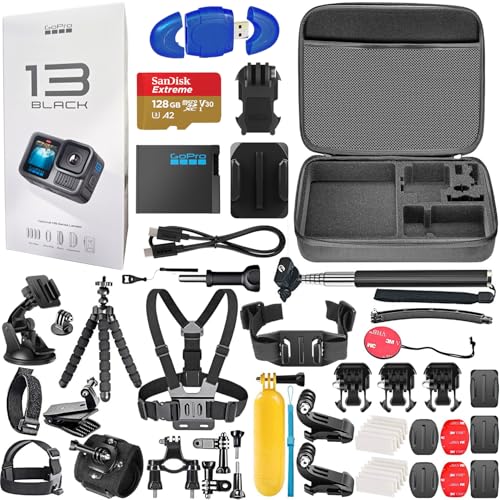
Where to buy
All six cameras below link to their Amazon listings, and outdoor retailers stock most of them as well. Buy the outdoor camera with its armour in the same order: the protective housing or lens guards its system offers, a float or tether for water work, spare batteries for cold days, and the mounts your actual activities need. An outdoor camera bought naked in spring is usually bought twice, once in the shop and once in replacement parts after the first honest weekend.
- GoPro HERO13 Black: check price on Amazon
- DJI Osmo Action 5 Pro: check price on Amazon
- OM SYSTEM Tough TG-7: check price on Amazon
- Insta360 Ace Pro 2: check price on Amazon
- Insta360 X4: check price on Amazon
- DJI Osmo Action 3 Outdoor Combo: check price on Amazon
Outdoors is where cameras go to be lied to. The brochure photograph shows a summit at dawn; the reality is rain sideways at a trailhead, gloves that cannot work a touchscreen, sun that whites out every screen, cold that eats batteries, dust that finds every seal, and a subject, a rider, a river, a child, a storm, that will not wait while you change a setting. The best cameras for filming outdoors are ranked here by a single standard: what they deliver in the weather and the hurry that outdoor filming actually consists of, not what they promise in a studio.
That standard rearranges the category. Waterproofing stops being a bullet point and becomes the premise. Stabilisation is judged on a moving bike and a running trail rather than a walked corridor. Screens are judged in glare, controls with gloves, batteries in cold, and image quality in the harsh midday contrast that outdoor life insists on scheduling everything under. A camera that wins a laboratory comparison and loses a wet weekend is, for this keyword, a losing camera, and this guide says so in its rankings.
The six picks divide the outdoor world by temperament. There are the action cameras proper, built to be mounted, crashed and submerged. There is the one true rugged stills-and-video compact, armoured like equipment rather than electronics. There is the 360 camera that films everything because outdoors, the best moment is reliably behind you. And there is a value combo for the filmer who would rather spend on petrol and permits than on the camera itself. Each earned its place in weather, not on paper.
Key Takeaways
- Outdoor filming is an audit of sealing, gloves, glare and cold before it is a test of image quality.
- The HERO13 Black is the mount-anything benchmark with the deepest accessory world.
- DJI’s Action 5 Pro answers with battery stamina and low-light strength for long days.
- The Tough TG-7 is the one genuinely armoured camera here, for water, frost and drops.
- The Ace Pro 2 brings the sharpest action image and AI help for solo filmers.
- The X4 films in every direction at once, so the moment behind you is not lost.
- Cold, glare and gloves decide more outdoor shoots than resolution ever will.
In this guide
Quick Picks
| Camera | Badge | Why it is here |
|---|---|---|
| GoPro HERO13 Black | Best All-Round Outdoor Camera | The benchmark action camera, mounts and modes for everything. |
| DJI Osmo Action 5 Pro | Best for Long Outdoor Days | Battery stamina and low-light strength for dawn-to-dusk filming. |
| OM SYSTEM Tough TG-7 | Best Truly Rugged Camera | Waterproof, freeze-proof and crush-resistant, stills included. |
| Insta360 Ace Pro 2 | Best Action Image Quality | A large sensor and Leica-bred lens for the sharpest action footage. |
| Insta360 X4 | Best 360 Outdoor Camera | Films every direction; choose the frame afterward. |
| DJI Osmo Action 3 Outdoor Combo | Best Value Outdoor Kit | Camera plus outdoor mounts in one honest-priced bundle. |
How did we choose cameras for filming outdoors?
We weighted survival first, because outdoors, a dead camera films nothing beautifully. Sealing against water and dust, resistance to cold and to being dropped on rock, and construction that tolerates a life in a rucksack’s outer pocket were scored before any image metric. Cameras needing a separate housing for ordinary rain started with a handicap, since the housing is one more thing to fog, forget or crack.
Operation came second, tested in imagination against the outdoor filmer’s actual hands: gloved, wet, cold, one of them holding a paddle, a handlebar or a dog. Big record buttons, voice control, quick-capture from sleep, and screens that remain legible in hard sun all scored heavily. A camera that demands a bare fingertip and a menu in a gale is a studio camera on holiday.
Image quality was judged under outdoor light specifically, which means brutal contrast at noon, deep shade under trees, the blue hour’s fading gift, and weather that flattens everything. Stabilisation was judged at a run and on a bike rather than at a stroll. Battery scores assumed cold mornings. And the mount and accessory ecosystem counted throughout, because an outdoor camera is only ever as useful as the places it can be attached.
The picks in detail

GoPro HERO13 Black — Best All-Round Outdoor Camera
The HERO13 Black is the reference point of outdoor filming for a reason that has less to do with any single specification than with totality: there is no outdoor situation its ecosystem has not already solved. Mounts exist for helmets, chests, boats, boards, dogs and drones’ worth of improbable places; its lens options cover the ultra-wide scene and the more natural documentary view; its waterproofing takes the sea and the river as working environments; and its stabilisation has been refined across more crashed, soaked and frozen units than any rival can claim.
The generation’s refinements serve the outdoor brief precisely. Interchangeable lens mods let the same body film the vast landscape and the close action. Battery behaviour has been addressed with an eye on the long day, and the slow-motion and burst modes catch the outdoor world’s decisive fractions, the jump, the strike, the wave’s lip. Its footage edits kindly and its colour, in the natural profile, grades like a bigger camera’s.
Its compromises are the category’s familiar ones, shared honestly: a small sensor’s limits after dark, a touchscreen that still prefers bare fingers, and a body so capable that its settings menu can swallow a beginner whole. None of this displaces it. For the outdoor filmer buying one camera to mount on a life, the HERO13 remains the answer the others are measured against.
- Form: waterproof action camera
- Video: 5.3K with refined stabilisation
- Lenses: interchangeable mod system
- Mounts: the deepest ecosystem outdoors
- Role: every sport, season and element
Strengths
- No outdoor problem lacks its accessory.
- Stabilisation proven across generations of abuse.
- Lens mods widen one camera into several.
Trade-offs
- Small sensor concedes the night.
- Touchscreen still dislikes gloves.
- Depth of settings can swallow beginners.
Best for: outdoor filmers who mount cameras on sports, vehicles and weather. Not suited for: filmers whose work is mostly indoors or after dark.

DJI Osmo Action 5 Pro — Best for Long Outdoor Days
DJI’s Action 5 Pro is the outdoor camera for the filmer whose day is measured in hours rather than highlights: the hiker crossing a range, the rider on a long trail, the kayaker on a river that does not care about charging opportunities. Its headline virtue is stamina, battery behaviour that treats a full day’s intermittent filming as a normal shift, extended by a design that sips power in standby and wakes ready. Around that stamina sits a larger sensor than the action class usually offers, and with it, low-light and dynamic-range performance that stretches the filming day at both ends, into the dawn start and the dusk finish where outdoor light is best and most cameras are weakest.
Its dual screens serve the solo outdoor filmer precisely, the front screen framing the windswept piece to camera on a summit or a shore without a phone’s help. Subject tracking and strong stabilisation keep the moving subject centred while the carrier concentrates on the trail, the river or the road, which is where their attention belongs for reasons beyond cinematography. Waterproofing is native and deep-rated for the swimmers and paddlers.
It concedes the GoPro’s sheer breadth of mounts and mods, though its own ecosystem grows yearly and adapters bridge most gaps, and its colour science, while pleasing, splits opinion against DJI’s other cameras in a mixed kit. For the long-day outdoor filmer, stamina plus sensor is the argument that matters, and this camera makes it better than any rival here.
- Form: waterproof action camera, dual screens
- Sensor: larger than class norm, strong in low light
- Battery: built for dawn-to-dusk days
- Tracking: keeps moving subjects centred
- Role: hiking, riding, paddling, long trails
Strengths
- Stamina that respects a full day outdoors.
- Low-light strength at the day’s best hours.
- Front screen for the solo summit report.
Trade-offs
- Mount world still trails GoPro’s breadth.
- Mixed-kit colour matching needs care.
- Pro features reward a settings session first.
Best for: long-day outdoor filmers, hikers, riders and paddlers. Not suited for: filmers who need the widest possible mount catalogue today.

OM SYSTEM Tough TG-7 — Best Truly Rugged Camera
Every other camera in this guide is an electronic device that tolerates the outdoors. The Tough TG-7 is outdoor equipment that happens to film. It is waterproof to real depths without a housing, freeze-proof to temperatures that stop other cameras and their owners’ fingers, crush-resistant under loads that would end the conversation for any rival, and sealed against the dust of building sites and deserts. It also, uniquely here, is a genuine stills camera, with raw files, a bright lens, and macro abilities that film the outdoor world’s small print, the frost crystal, the tidepool, the insect, at magnifications the action cameras cannot approach.
Its video is honest 4K, stabilised adequately for the handheld outdoor report, and its GPS and environmental sensors log the where, the depth, the temperature and the altitude alongside the footage, turning a dive or a summit into a documented record rather than a claim. For field work, surveying, inspection, adventure instruction and any filming where the camera’s survival is genuinely in question, it is not merely the best pick here; it is close to the only pick of its kind left in the market.
The trade-offs are a small sensor’s image ceiling, video features a generation behind the action specialists, and a control layout from the compact era. It will not produce the silkiest action footage in this guide. It will produce footage, and photographs, on the days when every other camera here is in a dry bag being protected from the story.
- Form: armoured compact, stills and video
- Proofing: waterproof, freeze-proof, crush-resistant
- Lens: bright, with serious macro modes
- Logging: GPS, depth, temperature, altitude
- Role: field work, diving, expeditions, instruction
Strengths
- Survives what ends other cameras’ days.
- Real stills and macro, not just video.
- Environmental log makes footage a record.
Trade-offs
- Video features trail the action specialists.
- Small sensor sets an image ceiling.
- Compact-era controls take learning.
Best for: divers, field workers, instructors and expedition filmers. Not suited for: filmers chasing the smoothest, highest-end action footage.

Insta360 Ace Pro 2 — Best Action Image Quality
The Ace Pro 2 is what happens when an action camera is designed by people who care about the image first and the crashing second, though it crashes perfectly well. A large sensor for the class, a lens carrying a famous German name, and processing with genuine intelligence produce action footage with a clarity and low-light reach that make rival clips look a generation older. For the outdoor filmer whose audience watches on large screens, the skier, the rider, the diver whose work is judged as cinematography, that image lead is the whole argument.
Its practical virtues serve solo outdoor work specifically. The flip screen frames the presenter properly rather than hopefully. AI editing assistance finds the action in hours of trail footage, which is the outdoor filmer’s real bottleneck, not capture but excavation. Waterproofing is native, the build shrugs at the trail’s insults, and its low-light performance extends filming into the forest shade and the evening session where this class usually surrenders.
It asks a premium for its image, its accessory world is younger than GoPro’s, and purists note that heavy processing is a taste as well as a virtue. For the outdoor filmer who has watched their footage beside a bigger camera’s and felt the gap, the Ace Pro 2 is the pick that closes it without leaving the action form factor behind.
- Form: waterproof action camera, flip screen
- Sensor: large for class, strong after dark
- Lens: premium optics, wide and sharp
- Editing: AI finds the action in long footage
- Role: skiers, riders, divers, image-led creators
Strengths
- The sharpest action image in this guide.
- Low light that extends the filming day.
- Flip screen frames solo presenters properly.
Trade-offs
- Premium position in the class.
- Accessory ecosystem still growing.
- Processed look is a matter of taste.
Best for: outdoor creators whose footage is judged on big screens. Not suited for: budget-first filmers or mount-catalogue maximalists.

Insta360 X4 — Best 360 Outdoor Camera
Outdoors, the decisive moment has a postal address, and it is always just outside your frame. The X4 abolishes the frame. Its two lenses film the entire sphere in 8K, and the filmer chooses the shot afterward, in the edit, panning the stored world to wherever the eagle, the wipeout, the summit view or the friend’s face actually was. For sports and travel filming, where aiming is a luxury the activity forbids, this is not a novelty; it is a different and often better contract with reality.
As an outdoor instrument it is considered: waterproof, stabilised by software that has the whole sphere to work with, and capable of the famous invisible-selfie-stick effect that makes trail and ski footage look drone-flown. It also works as a conventional wide action camera when 360 is more than the day requires. The reframing workflow, choosing shots in the app or desktop editor, becomes quick with practice and yields several distinct films from one descent or one hike, a economy content-hungry outdoor creators exploit ruthlessly.
The costs are real: large files, an editing step that traditional cameras do not demand, exposed lenses that deserve their guards and a moment’s care, and per-shot resolution below the dedicated cameras when the sphere is cropped hard. For the outdoor filmer whose problem is aiming, though, the X4 does not mitigate the problem. It deletes it.
- Form: waterproof 360 action camera
- Video: 8K full-sphere capture
- Workflow: reframe and direct in the edit
- Effect: invisible selfie stick as standard
- Role: skiing, riding, travel, solo adventure
Strengths
- The moment behind you is filmed too.
- One run becomes several different films.
- Drone-like shots with no drone.
Trade-offs
- Editing step is mandatory, files are large.
- Exposed lenses need guards and care.
- Hard crops trail dedicated cameras’ detail.
Best for: solo adventurers and sports filmers who cannot aim while doing. Not suited for: filmers who want finished footage straight from the camera.

DJI Osmo Action 3 Outdoor Combo — Best Value Outdoor Kit
The Action 3 Outdoor Combo is the pick for the filmer who has done the honest maths: the camera is only part of an outdoor kit, and a bundle that includes the chest and backpack mounts the activities actually use can be worth more than a newer sensor bought naked. DJI’s third-generation action camera remains a thoroughly capable outdoor instrument, waterproof, stabilised, quick to wake and simple to run with cold hands, and the combo packaging puts it on the body and into the weather on the day it arrives.
Its image is a generation behind its Pro sibling in low light and dynamic range, and a generation is not a chasm: in daylight, where most outdoor filming lives, its footage is vivid, stable and entirely publishable, and its battery ecosystem and cold tolerance were designed by people who film winters. For the club, the school, the family or the creator equipping several angles at once, the combo’s economics allow coverage that a flagship’s price would forbid.
It concedes the newest features, the largest sensors and the longest spec sheets, and its screens and menus are the previous design language. What it offers instead is the complete outdoor start, camera and mounts together, at a position in the range that leaves budget for the trips the camera exists to film. That is a trade many outdoor filmers should make gladly, and this guide respects it with a place at the table.
- Form: waterproof action camera bundle
- Kit: chest and backpack mounts included
- Operation: quick wake, cold-friendly
- Image: strong daylight 4K, stabilised
- Role: clubs, families, multi-angle coverage
Strengths
- Arrives as a working outdoor kit, not a camera alone.
- Daylight footage is vivid and stable.
- Leaves budget for the trips themselves.
Trade-offs
- Low light trails the newest generation.
- Previous-generation menus and screens.
- Fewer headline features than flagships.
Best for: clubs, schools, families and value-led outdoor filmers. Not suited for: filmers needing the best low-light action image available.
Comparison table
| Camera | Form | Best at | Standout | Choose it for |
|---|---|---|---|---|
| GoPro HERO13 Black | Action | Everything, mounted anywhere | Lens mods, deepest mounts | The benchmark |
| DJI Osmo Action 5 Pro | Action | Long days, low light | Stamina, dual screens | Dawn-to-dusk filmers |
| OM SYSTEM Tough TG-7 | Armoured compact | Survival plus stills and macro | Freeze and crush proofing | Field and expedition work |
| Insta360 Ace Pro 2 | Action | Image quality | Large sensor, premium lens | Big-screen creators |
| Insta360 X4 | 360 action | Filming every direction | Reframe after the fact | Solo adventurers |
| DJI Action 3 Combo | Action bundle | Complete value kit | Mounts in the box | Clubs and families |
What should you check before buying a camera for filming outdoors?
Check the waterproof claim’s fine print with a sceptic’s eye. Depth ratings assume still, fresh water and perfect seals; surfing impacts, hot tubs, salt and age all tax them, and the honest question is whether the camera survives your water, not water in general. Then check the seal ritual the design demands, because the camera whose battery door you will actually inspect for grit at a windy trailhead beats the theoretically tougher camera whose seals you will not.
Check the cold story. Batteries lose their nerve in frost at different rates, screens slow, and lubricants thicken; a camera rated and proven for winter is a different instrument from one merely taken skiing once. Check the glare story too: screen brightness and the availability of a viewfinder-free framing method, because at altitude in hard sun you will film half-blind and the camera should have planned for it. Finally, check the mount list against your actual sports, named one by one, because an ecosystem that covers somebody else’s activities is a catalogue, not a kit.
How do you film outdoors without the weather winning?
Start the camera before the moment starts you
Outdoor action does not rehearse. Use quick-capture from sleep, pre-set the mode the activity needs before the gloves go on, and let the camera wait ready rather than be configured in a panic. The ten seconds before the drop-in, the cast or the summit push are for breathing and framing, not for menus.
Protect the lens, then forget the camera
Most ruined outdoor footage is a droplet, a smear or a fogged lens, not a wrong setting. Lens guards on, a cloth in a dry pocket, the habit of a glance and a wipe at every stop: these unglamorous rituals are the outdoor filmer’s real technique. Once they are habits, forget the camera entirely and do the activity; the footage of a person actually skiing, paddling or climbing outclasses any footage of a person filming.
Manage batteries like a mountaineer
Cold batteries are carried warm, against the body, and rotated; spent ones are marked so the dead are not reinserted at the crucial moment; and the day’s filming is budgeted like water on a dry route, spent on the descents and the summits rather than evaporated on the walk-ins. Every pick in this guide rewards this discipline and punishes its absence at altitude.
Film the weather, do not just endure it
The storm light, the clearing ridge, the river in spate: weather is the outdoor film’s production value, free and unrepeatable. The armoured and waterproof picks exist so the camera can stay out when the weather turns interesting, which is precisely when the fair-weather cameras go away. Some of the finest outdoor footage ever made was filmed in conditions its makers were enduring rather than enjoying.
What mistakes do outdoor filmers make?
Trusting a touchscreen with gloves on
The mountain does not care about your interface preferences. Cameras bought for their screens and never tested with the gloves of the actual activity become sculptures at altitude. Voice control, big buttons, quick-capture and presets exist in these picks because the category learned this lesson in frostbite’s classroom.
Leaving the camera unprotected to get the shot
The unguarded 360 lens, the housing left open after a battery swap on a beach, the unarmoured compact in the kayak’s puddle: outdoor filming’s losses are overwhelmingly administrative, not heroic. Tether, guard, seal, check, in that order, every time, especially when excited, because excitement is when the ritual gets skipped.
Filming only the action and never the place
A reel of pure descents could have been filmed anywhere, and increasingly looks like it was. The approach, the weather, the camp, the faces at the rest stop are what make an outdoor film a record of somewhere. The wide and 360 picks in this guide exist to gather the place as faithfully as the action, and the filmers who use them that way produce work that ages into memory instead of content.
Underestimating sound outdoors
Wind is the outdoor soundtrack’s default setting and its ruin. Wind muffs, sheltered positions, and the discipline of narrating with your back to the gale separate the watchable outdoor film from the endured one. The cameras’ microphones have improved across this whole category, but none of them repeals physics, and the filmer’s positioning remains the first and best wind filter.
Final Recommendation
For the general outdoor life, the GoPro HERO13 Black remains the default recommendation, the most complete answer to the most situations. Take the DJI Action 5 Pro when your days are long and your light is low, the Tough TG-7 when survival and stills matter more than silk, the Ace Pro 2 when the image itself is the product, and the X4 when aiming is the one thing your activity forbids. The Action 3 Combo equips a club, a family or a careful budget completely. Whichever you choose, buy its armour with it, practise with your gloves on, and remember that outdoors, the camera that is still working at the end of the weather is the best camera in the world.
Frequently Asked Questions
Do I still need a waterproof housing?
For most of these cameras, not for rain, swimming or snorkelling, since their native sealing covers ordinary water life. Housings still earn their place for deep diving beyond the native rating, for high-impact water sports, and as sacrificial armour for the lens. Read your exact model’s rating and respect its assumptions about seals and still water.
Which of these is best in winter?
The Tough TG-7 is explicitly freeze-proof, and the action cameras all tolerate skiing and mountaineering well when their batteries are managed warmly. Winter filming is mostly a battery discipline: spares against the body, rotation, and filming in deliberate bursts rather than leaving the camera awake in the cold.
Can an action camera replace a travel camera?
For filming-led travel, increasingly yes, especially the larger-sensor picks here. For photography-led travel, the TG-7’s stills and macro, or a mirrorless body from our neighbouring guides, serve better. The honest division is that action cameras film the journey superbly and photograph it adequately, and travellers should buy according to which verb leads their trips.
How do I stop the lens fogging and spotting?
Guards and housings fog from trapped warm air meeting cold water or air; acclimatise the camera gradually, use anti-fog inserts where housings allow, and keep a dry cloth for the outer surface. Spotting is a wiping ritual: at every stop, glance, wipe, glance again. It is dull, and it is the difference between footage and soup.
Is 360 worth the editing effort outdoors?
For solo and action filming, very often yes, because the alternative is the moment missed entirely while you were busy doing the activity. The reframing step is real work, but it replaces the impossible work of aiming a camera mid-descent, and one descent yields several finished films. For a filmer who can aim, a traditional camera remains the simpler tool.
How do sea, mountain, desert and forest each test a camera differently?
The sea tests sealing and corrosion. Salt is patient and finds every seam over a season, so the marine filmer’s rituals are rinsing in fresh water, drying before storage, and inspecting seals as a liturgy. The mountain tests cold, glare and consequence: batteries fade, screens blind, and a dropped camera is not scratched but gone, which is why tethers and chest mounts outsell hand straps at altitude. The desert tests heat and dust, baking electronics at noon and insinuating grit into every control, favouring the sealed armoured designs and punishing lens changes of any kind. The forest tests light, dim green shade under canopy where the larger sensors of the Action 5 Pro and Ace Pro 2 earn their keep, and moisture that never quite rains and never quite stops.
A camera chosen for one element and used in another usually survives; a camera chosen with no element in mind, bought from a specification table, meets its own element as a surprise. Name your weather before you rank your cameras, and the table above will read itself.
What does an outdoor filming kit weigh, and why does it matter?
Outdoor filming is carried, and carried weight is spent from the same budget as strength, warmth and water. The action cameras’ great unspoken virtue is that a complete kit, camera, mounts, spares, fits a jacket’s worth of pockets and a rucksack’s lid, leaving the carrier a hiker or rider first and a filmer second. The moment the kit demands its own bag and its own planning, the filming starts competing with the activity, and the activity, which is the entire subject, loses.
This is why this guide contains no mirrorless body, though several film beautifully outdoors in a photographer’s hands. The keyword’s searcher is doing something outdoors and filming it, and for that person the camera must be the smallest complete answer to the day’s weather and motion. Judge every accessory by the same standard: if it does not earn its grams on the trail, it stays home, and if it stays home twice, it leaves the kit.
How should outdoor footage be handled when you get home?
Outdoor days produce footage in hostile quantities, hours of trail for minutes of summit, and the edit begins with respect for that ratio. Log the day while the memory is warm, marking the moments the body’s own memory flags, the shout, the silence, the sudden stop. Back up before any card returns to the camera, because outdoor cards live dangerous lives and are reformatted at trailheads by tired people. Rinse and dry the kit as part of the same ritual, seals inspected while the day’s grit is still visible, so the camera that survived today is ready to survive next weekend.
Then cut the film the activity deserves: the place established, the effort honoured, the action placed inside the day rather than instead of it. Outdoor audiences, who are usually outdoor people, can smell a film that was made by someone who was actually there, in the weather, at the pace. Every camera in this guide can gather the evidence for such a film; the handling afterward is how the evidence becomes one.
How do you film wildlife outdoors without disturbing it?
Wildlife filming outdoors is a discipline of distance and patience, and it changes the camera’s job entirely. The action cameras here serve as remote and hide cameras, placed early, left alone, filming the waterhole, the nest’s approach or the trail crossing when the animal forgets the world is watching. Their small size, weather sealing and long standby make them honest wildlife tools in a way a flagship body on a tripod, with a human attached, often is not. The TG-7’s macro, meanwhile, opens the miniature wild, the beetles, frogs and fungi that a patient filmer can approach without consequence.
The ethics are the technique. No footage justifies a disturbed nest, a flushed bird or a baited predator, and the outdoor filmer’s reputation in a valley or a reserve is earned across seasons. Film the animal’s day, not your interruption of it, keep the camera’s presence smaller than your own, and accept the empty hours as the price of the honest seconds. The audience for wildlife film can tell the difference between behaviour and performance, and only one of those is worth the weather.
What about filming outdoors at night?
Night outdoors is two different assignments wearing one name. The first is the lit night, the camp, the festival, the night market, where practical light exists and the larger-sensor picks, the Action 5 Pro and Ace Pro 2, film it with a reach their smaller rivals cannot match. The second is the true dark, the star field, the aurora, the nocturnal animal, where action cameras of any badge reach their physics and the honest tools become patience, long exposures for the sky, and infrared patience for the animals. This guide’s picks were ranked for the first night and for the day that surrounds it; the filmer whose subject is the second night should treat the action camera as the day instrument and plan the darkness separately.
Even within the lit night, technique rescues more footage than sensitivity does. Expose for the lit faces and let the backgrounds fall honestly dark, keep the camera still because stabilisation and low light are natural enemies, and film the fire, the lamps and the lit windows as subjects in their own right. Outdoor night footage fails most often from ambition, the attempt to make midnight look like noon, and succeeds when it lets the night be night.
How do group trips change the outdoor filming plan?
A group outdoors generates footage the solo filmer cannot: other people’s faces, efforts and triumphs, which are what the film will actually be watched for in ten years. The practical consequence is distribution. A camera that anyone can operate, the Action 3 Combo or the little GoPro passed hand to hand, gathers the group’s own view of itself, and the designated filmer is freed to be in the film occasionally, a gift future viewers will thank the plan for. Agree the hand-over ritual, tether on, lens wiped, record pressed, so the shared camera survives its democracy.
Groups also multiply the archive, which returns the plan to housekeeping: one collector of cards each evening, one folder per day, one person whose job is the backup while the tents are still being pitched. The group’s film is a collective asset and deserves a named custodian, because the alternative, footage scattered across six people’s pockets and clouds, is a film that will never quite be assembled.
Why do outdoor filmers keep a logbook, even a tiny one?
Because the outdoors repeats its lessons at intervals just long enough to forget them. The bay where the seals haul out at low water in April. The ridge where the cloud breaks twenty minutes after the summit push. The battery brand that lied in the cold. A line in a notebook, or a note spoken into the camera at the day’s end, converts one season’s luck into the next season’s plan, and outdoor filming, more than any other kind in this series, is a seasonal craft whose masters are simply the people who remembered.
The logbook also protects the footage’s meaning. A clip of a river in spate is data with its date and its rainfall; without them it is weather. The TG-7 logs its environment automatically, and the habit it embodies, context captured with image, is worth imitating on every camera here, by slate, by spoken note, by the humble discipline of filming the trailhead sign. Future editors, often future you, will be grateful out of all proportion to the seconds it cost.
How do you keep filming when conditions turn dangerous?
There is a line in outdoor filming where the camera’s survival stops being the question, and recognising it is part of the craft this guide is really about. Lightning on a ridge, a rising river, a slope loading with snow: the correct production decision is to leave, and the waterproof, crush-proof virtues celebrated here exist for weather’s rudeness, not for its violence. No frame in any archive justifies the rescue services’ evening. The experienced outdoor filmer’s boldness is selective, spent on discomfort freely and on danger never, and their footage is better for the discipline because they are present, season after season, to film the days after the storm as well as its approach.
Within discomfort, preparation is the whole game: the turnaround time agreed before the summit, the spare battery warm, the descent filmed only when the party is safe to be filmed. A camera that starts instantly and runs itself, as every pick here can, is a safety feature in this light, because it asks nothing of hands and minds that are busy with the mountain. Choose the camera that disappears in a crisis and reappears in the calm, and you have understood outdoor filming’s deepest specification.
The outdoor filmer’s closing ritual
Every outdoor day in this guide’s world ends the same way, and the ritual deserves its place beside the rankings. The camera is rinsed or wiped according to its element, its seals inspected while the day’s evidence is still on them, its cards copied before its battery is charged, and its one best frame of the day looked at properly, on a real screen, before sleep. That last habit is the quiet engine of improvement: a season of best frames, reviewed nightly, teaches framing, timing and weather sense faster than any course, and it turns a pile of footage into a body of work with a visible direction.
Do this across a year and the camera, whichever of the six it is, stops being equipment and becomes a companion with a shared history of places. That is, in the end, what the searcher behind this keyword is buying: not a specification, but a witness that can keep up with their life outdoors and bring it home intact.
How does filming change the outdoor experience itself?
Honesty requires admitting that a camera outdoors is not a neutral witness. It can sharpen attention, the filmer notices light, weather and behaviour that the unburdened walker passes by, and many outdoor people credit their cameras with teaching them their own landscapes. It can also tax the day, turning companions into cast and summits into sets, and the mature outdoor filmer develops a private rule for the balance: film the ascent, pocket the camera for the summit’s first minutes; film the river, then swim in it unrecorded. The archive gains a little less footage and the life gains back its centre, and, surprisingly, the footage improves too, because a filmer who is present in the day recognises its real moments when they arrive.
The picks in this guide were chosen partly for how gracefully they accept this rhythm, quick to start when the moment calls, quick to vanish when it passes. That is the final outdoor specification, and no laboratory measures it: the camera as a good companion, present without insistence, ready without demand.
Keep that companionship in mind in the shop, where it is easy to be seduced by the longest feature list. Ask instead which of these six you would still be carrying, gladly, on the fiftieth wet walk, the hundredth ride, the tenth season. Outdoor filming is a long relationship conducted in bad weather, and like all such relationships it rewards the partner who shows up, copes, and asks little. Choose that one, maintain its seals like a friendship, and the films will accumulate into the truest possible record: not of what the outdoors looked like from a studio’s imagination, but of what your own days outside actually were.
One more field note, learned by every generation of outdoor filmers and relearned by each new one at some cost: mark your cards and your batteries with the day, in pencil or tape, at the moment they leave the camera. The trailhead confusion between the full card and the empty one, the charged battery and the spent one, has ended more filming days than weather ever has, and it is entirely a failure of labelling, which is to say entirely preventable by ten seconds of honesty at every swap.
And when the filming day is done and the weather has had its say, resist the urge to judge the footage by the day’s discomfort. Some of the most treasured outdoor film ever brought home looked, at the trailhead, like a grey record of a miserable afternoon, and revealed itself at the desk as the truest souvenir of the season. The camera’s job outdoors is to endure and witness; the judging belongs to the warm room, later, with the whole day visible at once.
That patience, applied to gear choices as much as to footage, is the outdoor filmer’s final virtue. The camera bought for the life you actually lead outdoors, maintained through its seasons and forgiven its few limits, will out-film a restless succession of upgrades, because it was there, every time, and being there is the one specification the outdoors has ever truly enforced.
So take the shortlist onto your own ground before deciding finally: the garden in rain, the beach in wind, the hill in whatever the sky is doing this weekend. Ten minutes of your own weather will tell you more about these cameras than another ten reviews, including this one, because outdoor filming was never a specification contest. It is a negotiation between a person, a place and a sky, and the right camera is simply the one that keeps its side of that negotiation, season after season, without ever becoming the reason you stayed home.
Bring a cloth for the lens on that test, and gloves if your filming life involves them, and notice honestly which camera your hands liked. Hands are rarely wrong about outdoor equipment; they know the cold, the wet and the hurry better than the eyes reading a comparison table do, and the camera your hands choose is the one your future self, on the ridge in the rain, will be grateful you bought.
Then commit to the choice for a full season before judging it, because outdoor cameras reveal themselves across weather, not across weekends, and the filmer who grants a camera its season almost always discovers that the limits they feared were theoretical and the virtues they underrated, the instant start, the honest sealing, the mount that was simply there, were the ones the outdoors had been asking for all along.
A season is also long enough for the camera to gather its own patina of trust: the seal you no longer double-check anxiously, the mount you fit in the dark, the battery whose true cold-weather honesty you have measured yourself. That trust, more than any number in this guide, is what outdoor filming runs on.
Buy it, armour it, learn its voice in your own weather, and then stop shopping and start filming, because the outdoors will not wait for the perfect camera, and with any of these six it does not have to.
How do I protect lenses from condensation after bringing cold equipment into a heated vehicle?
Seal the body inside a zip bag before stepping indoors, trapping dry outside air around glass surfaces while temperatures equalise gradually. Leave that bag closed for at least forty minutes on longer winter shoots, resisting curiosity to inspect images immediately. Moisture then forms on plastic exterior instead of delicate coatings, and a soft cloth handles the outer dampness once equilibrium returns.
Hotel rooms create identical risks after frosty dawn sessions beside lakes or ridgelines. Park gear inside an unheated porch or bathroom with extractor running, rather than beside a radiator blasting warm air. Silica packets stored within the main compartment help between outings, provided they get dried periodically according to maker guidance and replaced when saturated.
Which clothing choices genuinely improve filming endurance during prolonged exposure to wind and rain?
Thin liner gloves beneath fingerless outer mitts preserve dexterity for focus rings while shielding knuckles during static waits for wildlife. A brimmed waterproof hat keeps droplets off rear screens better than a hood, which muffles environmental sounds and restricts peripheral awareness near cliff edges or riverbanks. Merino base layers regulate temperature during alternating bursts of hiking and motionless observation without retaining sweat odour on multi day assignments.
Footwear matters equally because numb feet shorten concentration long before batteries surrender. Choose boots already broken in, paired with spare socks sealed inside the pack lid for stream crossings gone wrong. Photographers who dress for standing still, rather than merely reaching a location, consistently return with longer usable sequences and fewer abandoned attempts when weather turns hostile near sunset.
River crossings deserve a specific routine: unclip one shoulder strap, keep the pack high, and use a trekking pole to probe submerged stones before committing weight. Cameras survive splashes far better than full immersion following a fall, so protecting balance protects equipment indirectly. Once across, pause on the far bank to inspect seals and mounts before continuing, rather than discovering a loosened plate or trapped grit hours later when conditions have deteriorated and retreat options have narrowed considerably.
Salt spray near coasts demands rinsing discipline distinct from freshwater rain care. Wipe exterior surfaces with a cloth barely dampened by clean water once back at base, paying attention to dials and port covers where crystals accumulate. Leaving salt unaddressed through a week long trip gradually stiffens controls and corrodes exposed metal fittings unnoticed.
Keep one lens cloth sealed separately for emergencies, because the everyday cloth eventually gathers grit that turns a quick polish into a risk.
Related Guides
Water takes the lead in our underwater action camera guide. The hall and the stage are covered by the live events filming roundup, and training gets its own shortlist in our fitness camera guide.


