reviewstook.com is reader-supported. When you buy through links on our site, we may earn an affiliate commission.
Where to Buy a Camera That Survives — and Deserves — a Cruise
A cruise is not one photographic environment but six stacked on a ship: salt spray on deck, cavernous dining rooms, blinding Caribbean noon, a snorkel excursion, a formal night, and a small cabin where everything you brought must justify its corner of the luggage. The best cameras for a cruise are the ones that move between those worlds without a bag change, a lens change or a worry — waterproof when the tender boat splashes, stabilised when the deck moves under your feet, small enough to come to dinner, and honest enough in low light to make the ship’s evenings look as golden as they felt.
This guide is built around how cruising actually works, because generic travel advice fails at sea in specific ways. Drones are banned on essentially every ship, so that footage plan is out before it starts. Excursions compress a destination into four hurried hours, so a camera that needs setup is a camera that misses the port. Ship Wi-Fi makes large uploads painful, so workflows that end on the device matter. And the sea itself — salt, humidity, sudden rain in the tropics — is a hostile environment that quietly kills unprepared electronics somewhere around day four.
Six cameras follow, all from our verified pool and linked. They divide into the waterproof storytellers that own excursion days, the 360 camera that captures the whole deck party at once, and the smooth, pocketable filmmakers for port walks and ship life. Most cruisers need exactly one of them, chosen by which version of the holiday lives in their head. Read the sections on ship rules and sea-proofing before you sail: the best cruise camera is the one still working, still charged and still with you on the last formal night.
Key Takeaways
- Waterproof without a housing is the cruise superpower: tenders splash, excursions snorkel, tropical rain arrives sideways.
- Drones are banned on cruise ships — plan your footage around cameras you can actually use.
- Stabilisation matters doubly at sea: the deck moves even when you are standing still.
- One camera that comes everywhere beats a kit that stays in the cabin safe.
- Salt is the silent killer: rinse waterproof cameras in fresh water nightly and the camera outlives the cruise.
- Excursion time is compressed — instant-on, auto-everything cameras catch ports that deliberate cameras miss.
In this guide
Quick Picks
| Pick | Badge | Why it made the list |
|---|---|---|
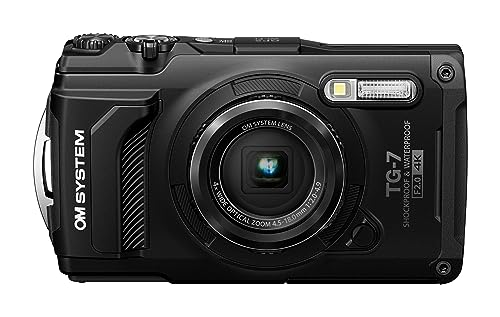
| OM SYSTEM Tough TG-7 | Best cruise camera overall | Waterproof for snorkelling excursions, tough for tenders and beaches, and a proper stills camera for port days — the one-camera cruise answer. |
| GoPro HERO11 Black | Best for deck action and water sports | A proven flagship action camera for the surf simulator, the zip-line excursion and the tender ride — waterproof, stabilised, mountable anywhere. |
| DJI Osmo Action 4 | Best for evenings and low light at sea | A larger sensor makes the Action 4 the pick for deck parties, dining rooms and the golden sailaway hour when other action cameras smear. |
| Insta360 X4 | Best for capturing the whole party | 360 capture records the entire deck, the whole table, the full panorama from the rail — then lets you frame the best of it later. |
| Sony ZV-1F | Best for cruise vloggers | The creator camera for cabin tours, food reviews and port-day vlogs — a 1-inch sensor and eye autofocus in a dinner-jacket pocket. |
| DJI Osmo Pocket 3 | Best for smooth port walks and ship tours | A gimbal camera that turns a walking tour of a port — or a tour of the ship herself — into footage that glides like a professional production. |
How Did We Choose Cameras Specifically for Cruising?
We started from the cruise day itself, hour by hour. Mornings are excursions — wet, hurried, bright — which demanded waterproofing without housings, instant readiness and screens readable in hard sun. Afternoons are the ship: pools, decks, quizzes, cocktails, where discretion and size decide whether the camera is present at all. Evenings are the hardest light of the day — dining rooms, theatres, deck parties — which pushed low-light ability and stabilisation up the rankings and pushed flash-dependent cameras out of them entirely.
Shipboard realities formed the second filter. Luggage and cabin space are finite, so every pick is a single unit that earns its place without a supporting cast of lenses. Power is plentiful in cabins but attention is not, so battery behaviour and simple charging mattered. And because cruise photography includes strangers, crew and children, we favoured cameras whose use is socially easy — small, quiet, obviously a holiday camera — over anything that changes the temperature of a room when it appears.
Finally, the sea test: every pick tolerates the marine environment as designed, either by being sealed for water outright or by being simple enough to protect with ordinary care. We also considered the journey home — footage formats your phone and family can actually receive, since ship Wi-Fi punishes anyone whose sharing plan depends on uploading a week of giant files from deck seven.
We also applied the embarkation test: every pick had to justify itself in the first hour aboard, when the cabin is small, the sailaway is imminent and the traveller’s patience for setup is zero. Cameras that needed an app pairing ceremony, a firmware update or a manual to produce their first good footage were marked down hard. A cruise camera’s first clip is the sailaway, and the picks above are the ones that never miss it.
Detailed Picks: Six Cameras for Life at Sea

OM SYSTEM Tough TG-7 — Best cruise camera overall
If one camera in this guide was designed by fate for cruising, it is the TG-7. It snorkels without a housing on the morning excursion, rinses under the cabin tap at noon, photographs the old town after lunch, and survives being dropped on the pool deck by dinner. Its waterproofing is the real, swim-with-it kind, its build treats shipboard knocks as beneath notice, and its image quality is proper-camera quality — the photographs of the formal night and the port’s cathedral will hold their own in the family archive for decades, which action cameras’ stills often do not.
Its cruise-specific talents run deeper than toughness. The microscope modes turn the rock-pool and market-stall details of a port into small wonders; the underwater modes correct the colour the sea steals; and its size keeps it in a pocket or evening bag rather than the cabin safe, which is where cruise photographs are actually decided — present beats perfect, every day of the itinerary. For the cruiser who photographs more than they film, this is not the compromise pick. It is the destination.
One more TG-7 habit for cruisers: learn its underwater white-balance behaviour in the hotel pool before the reef day, because the first snorkel is a poor classroom and the colours reward the rehearsed. Its log-shooting and RAW options also give the keen photographer a project for sea days — the port, shot deliberately, in the quiet hour before the excursion crowds — which is how a holiday camera becomes a portfolio without anyone noticing the transition.
Solo cruisers rate the TG-7 highest of all these picks in practice, because it never asks for a photographer’s assistant: no lens cap to hold, no housing to assemble, no mode to confirm — just a camera that is ready at the speed of noticing, which is the solo traveller’s whole requirement.
- Type: waterproof tough compact camera
- Video: 4K video alongside strong stills
- Waterproof: swims and snorkels without a housing
- Standout features: underwater modes, microscope close-ups
- Controls: automatic modes for excursion speed, depth for port days
- Best paired with: a floating strap — overboard is forever
Strengths
- The complete excursion camera: water, sand, drops, rain
- Real stills quality for ports and formal nights
- Pocketable enough to be present all day
Trade-offs
- Video is good rather than class-leading
- Small sensor works harder in theatre light
- Adult menus beneath the automatic surface
Best for: photographers who cruise — excursion-heavy itineraries, snorkellers, port explorers.
Not suited for: filmmakers whose cruise is primarily a video project.

GoPro HERO11 Black — Best for deck action and water sports
The HERO11 Black is the cruise’s action specialist: the camera for the flow-rider, the snorkel boat, the jet-ski excursion and the zip line over the jungle. It is waterproof out of the box, its stabilisation irons out tender boats and moving decks, and its mounting ecosystem means the excursion operator’s helmet, the kayak’s bow and your own chest are all tripods. A generation behind the flagship keeps it keenly priced in most markets while its footage remains, for holiday purposes, indistinguishable from the newest — a trade experienced buyers make deliberately.
On board, its smallness is its social skill: it films the deck party without announcing itself, time-lapses the sailaway from a balcony rail, and captures the wake’s hypnotic churn in modes a phone cannot match. The cruise caveats are the action-camera universals — stills are a sideline, low light is a negotiation, and a spare battery earns its place on excursion days. As the second camera beside a stills-focused phone, or the only camera for an activity-first cruiser, it is the itinerary-proof choice.
The HERO11’s time-lapse modes deserve a cruiser’s footnote: a night-lapse of the ship’s wake under stars, or the sunrise arrival into port shot from a balcony, are the clips families replay for years, and they cost nothing but a clamped camera and an early alarm. Set them the night before, in the calm, because the dawn version of you will not read menus — a truth every camera in this guide was partly chosen around.
Keep one HERO11 battery discipline at sea: the camera that films the sailaway at dusk should not be the one that spent the afternoon as a pool toy without a charge between. The charging ritual at the dinner hour exists precisely for this camera’s appetites.
- Type: flagship-class action camera
- Video: high-resolution with reference stabilisation
- Waterproof: body-sealed, no housing needed
- Mounting: full GoPro ecosystem for excursions
- Modes: time-lapse and night modes for sailaways
- Best paired with: a handler grip that floats
Strengths
- Excursion-proof: water, motion and mounting all covered
- Stabilisation handles boats and decks beautifully
- Previous-flagship value with flagship footage
Trade-offs
- Stills are secondary to video
- Low light needs care and modest expectations
- Battery rotation on long excursion days
Best for: active cruisers — water sports, adventure excursions, deck life on the move.
Not suited for: stills-first photographers, who should take the TG-7.

DJI Osmo Action 4 — Best for evenings and low light at sea
Cruises are secretly evening events: the sailaway at golden hour, dinner, the show, the deck party under string lights. The Action 4’s larger sensor was built for exactly that register, gathering more light than the action class’s average and keeping faces and festivity clean where smaller-sensored rivals dissolve into noise. By day it is a fully competitive action camera — waterproof, stabilised, with DJI’s magnetic quick-release mounting — but its soul is crepuscular, and cruisers whose memories glow at dusk will feel the difference in every clip.
The mounting system deserves its cruise mention: moving the camera between a balcony rail, a chest strap and a handheld grip with cold or sunscreen-slick fingers is fastest with DJI’s magnetic release, and excursion mornings reward that speed. Its colour handling flatters the blues and golds of the maritime palette without grading. Choose it over the GoPro when your itinerary is heavy on evenings, late excursions and indoor ship life — which, if you read your cruise programme honestly, it probably is.
DJI’s colour profiles include a flatter option for those who grade their holiday films, unusual generosity in an action camera, and the Action 4’s footage cuts acceptably beside the ZV-1F’s richer files in a mixed edit — a real consideration for couples carrying one of each. Its front screen, used sparingly, also makes it the best of the action picks for the solo cruiser’s self-portraits at the rail: framed properly, first time, without a stranger’s assistance.
Evening shooters should learn the Action 4’s exposure lock before sailing: tap, hold, and the dining room’s mixed light stops breathing in your footage. Five seconds of knowledge, bought at home, repaid at every dinner of the cruise.
- Type: action camera with larger sensor
- Video: 4K with strong low-light performance
- Waterproof: body-sealed for swimming and snorkelling
- Mounting: magnetic quick-release system
- Screens: front and rear touchscreens
- Best paired with: a mini tripod for dining-table time-lapses
Strengths
- Best evening and indoor footage of the action picks
- Quick-release mounting suits excursion mornings
- Colours flatter sea and sunset palettes
Trade-offs
- Accessory universe younger than GoPro’s
- Daylight footage matches, not beats, its rivals
- Front screen tempts battery-hungry checking
Best for: cruisers whose holiday peaks at golden hour and after — sailaways, shows, deck parties.
Not suited for: mount-collectors already deep in the GoPro ecosystem.

Insta360 X4 — Best for capturing the whole party
A cruise is a 360-degree experience trapped in a forward-facing holiday, and the X4 is the camera that breaks the frame. Mounted on its invisible selfie stick at the rail, it films you, the ship and the approaching port in one spherical shot that looks drone-flown — the drone being banned, this is the only way that footage exists. At the captain’s table or the deck party it simply records everything, and the framing decisions happen later, in the app, at leisure: the toast, the sunset and the child’s face are all in the same file, waiting to be chosen.
The cruiser’s caveats are practical. Reframing is an extra step, best done in port-day downtime or after the holiday, and ship Wi-Fi will not love the large files — plan to edit on the device or at home. The exposed lenses need their guards and case in a beach bag’s sandy chaos. But for the social, celebratory, once-a-decade cruise — the anniversary sailing, the family reunion at sea — nothing else here can hold the whole room the way the X4 does, and holding the whole room is what those voyages are for.
A word on the X4 in port: some terminals and old towns are tripoded-out zones where a selfie stick reads as equipment, so learn its handheld, no-stick operation before you need it — the sphere does not care how it is held, and a palm-sized grip keeps the whole apparatus below the threshold of official attention. The footage loses the floating third-person magic and keeps everything else, which in a cathedral close is the right exchange.
The X4’s spheres have one more cruise use: the cabin itself, captured whole on embarkation day — the room, the balcony, the view — which becomes the film’s opening and the family’s reference for every ‘remember the little desk by the window’ conversation for years.
- Type: 360 action camera with single-lens mode
- Video: 8K 360 capture, reframed afterwards
- Signature feature: invisible selfie stick, drone-like rail shots
- Waterproof: body-sealed for pool and sea use with care
- Workflow: shoot everything now, frame it later
- Best paired with: lens guards and the longest selfie stick allowed ashore
Strengths
- Captures whole scenes no forward camera can
- Drone-style footage on ships where drones are banned
- One recording serves many different edits
Trade-offs
- Reframing step before sharing
- Large files versus ship Wi-Fi and phone storage
- Exposed lenses need guarding in beach bags
Best for: celebration cruises, group travel and rail-side panoramas.
Not suited for: instant sharers or rough-and-tumble excursions.

Sony ZV-1F — Best for cruise vloggers
Cruise vlogging is its own genre — cabin tours, buffet reviews, port guides, sea-day diaries — and the ZV-1F is its natural instrument. The 1-inch sensor makes dining rooms and cabin interiors look rich rather than murky, the wide lens fits a vlogger and a balcony into one arm’s-length frame, and eye autofocus holds the presenter while the ship moves gently around them. It slips into an evening pocket, behaves discreetly in restaurants, and its product-showcase mode was practically invented for the cruise-shopping haul video.
Its limits are the shore-side ones: it is not waterproof and not an action camera, so excursion days in the water belong to a companion device or a phone, and its fixed wide lens will not reach the whale from the rail. Within the ship-and-port world it is superb, and its footage edits into the kind of cruise diary that gets watched for years. For the cruiser whose holiday is also content — or whose family expects a proper film of the voyage — this is the camera that makes the ship look as good as it felt.
The ZV-1F’s product-showcase mode, designed for reviewers, has a cruise career of its own: the market find held up in the cabin, the local delicacy presented at the café table, the grandchild’s requested souvenir examined for the folks at home. Solo cruisers also find its flip screen and face tracking make the one-person travelogue — half the cruise content on the internet — a one-take exercise rather than an afternoon of framing failures.
Vloggers should scout the ZV-1F’s three shipboard studios on day one — the quiet lounge corner, the balcony at golden hour, the café table by the window — and the whole week’s filming becomes a rotation of known-good light rather than a daily improvisation.
- Type: fixed-lens creator compact, 1-inch sensor
- Video: 4K with eye autofocus and creator modes
- Lens: bright wide lens for arm’s-length presenting
- Audio: directional microphone with windscreen
- Size: evening-pocket small, restaurant discreet
- Best paired with: a mini tripod for cabin-tour filming
Strengths
- Interiors and food look genuinely rich
- Presenter-focused autofocus and controls
- Discreet in dining rooms and theatres
Trade-offs
- Not waterproof — water excursions need a companion
- Fixed wide lens cannot reach distant wildlife
- Stills are good, not its headline act
Best for: cruise vloggers, food and cabin reviewers, family film-makers.
Not suited for: snorkel-first itineraries as the only camera.

DJI Osmo Pocket 3 — Best for smooth port walks and ship tours
Some cruise footage should feel like memory actually feels: gliding. The Pocket 3’s mechanical gimbal erases the walking bounce, the deck’s vibration and the hand’s tremor, so a stroll through a port’s old town or a deck-by-deck tour of the ship plays back like a steadicam shot from a travel programme. Its 1-inch sensor keeps the quality high into the evening, its tracking keeps a travelling companion centred while you walk and talk, and its size — a chocolate bar — means it is in your pocket at the exact moment the light turns perfect, which on a cruise is most moments.
It asks for the care a precision instrument deserves: its case, not a beach bag’s sandy floor; awareness around water, since it is not a swimmer; and battery planning on long port days. What it returns is the most watchable footage in this guide — the kind families actually rewatch, because smoothness is mercy on the viewer’s eye. If your cruise is a grand itinerary of beautiful ports and a beautiful ship, and the film of it matters to you, the Pocket 3 is the connoisseur’s embarkation.
The Pocket 3’s tracking has a shipboard party trick: set it on the table at dinner and it will follow the speaker as the conversation moves around the courses, filming the table’s life with a discretion no held camera manages. Use it with the table’s knowledge and blessing, obviously — but on the celebration cruise, that unobtrusive witness becomes the family’s favourite footage, precisely because nobody performed for it.
Walk the ship with the Pocket 3 on the first sea day, while she is still new to you: that footage, discovery and all, becomes the film’s establishing act, and it cannot be re-shot once the vessel has become familiar — familiarity is the one lens no money can remove.
- Type: gimbal camera with 1-inch sensor
- Video: 4K, mechanically stabilised
- Screen: rotating, for horizontal and vertical filming
- Tracking: subject and face tracking while walking
- Size: pocketable; case-carried by design
- Best paired with: the battery handle for full port days
Strengths
- Walking footage of unmatched smoothness
- Excellent in evening ship light
- Always pocket-present for the perfect moment
Trade-offs
- Not waterproof; beach and pool need care
- Gimbal deserves its case, not loose travel
- Stills are a bonus, not a purpose
Best for: port explorers and ship-tour filmmakers who value watchable footage.
Not suited for: water-first itineraries as the sole camera.
How Do the Six Best Cameras for a Cruise Compare?
Cruise cameras divide by the part of the holiday they own. This table matches each pick to its home territory on a cruise and the compromise it carries, so you can buy for your itinerary rather than for a brochure.
| Pick | Best at | Watch out for |
|---|---|---|
| OM SYSTEM Tough TG-7 | Excursions, snorkelling and port stills in one pocket | Video and theatre light are its limits |
| GoPro HERO11 Black | Water sports and moving-deck action | Stills and low light are secondary |
| DJI Osmo Action 4 | Evenings, dining rooms and golden sailaways | Ecosystem depth behind GoPro |
| Insta360 X4 | Whole-scene celebration and panorama capture | Workflow and lens care |
| Sony ZV-1F | Vlogging the ship, the food and the ports | Dry-land camera on a wet holiday |
| DJI Osmo Pocket 3 | Gliding port walks and ship tours | Dry, careful handling required |
What Are the Camera Rules on a Cruise Ship?
Three rules govern almost every line. Drones are banned — carried aboard at best confiscated until disembarkation, at worst a denied boarding — so leave the drone at home and let the X4’s invisible-stick shots scratch that itch. Photography in theatres and shows is restricted or forbidden during performances on most ships, both for copyright and courtesy; photograph the venue before the show, enjoy the performance, and let the camera rest. And crew and fellow passengers have the same claim on courtesy at sea as ashore: ask before close portraits, never film in spas, gyms’ changing areas or the medical centre, and treat the crew’s workplace with the respect you would want in yours.
Ports add their own layer: some terminals, military harbours and certain attractions restrict photography, and local rules — not ship rules — apply the moment you step ashore. The good news is that all six cameras here are unambiguously holiday cameras, the kind security staff wave through daily. The travellers who meet friction are those with large rigs, tripods in crowded terminals and drones in the luggage. Cruise small, cruise cheerful, and the world’s ports are photographically yours.
How Do You Protect a Camera From Salt, Sand and Humidity?
Salt is patient and corrosive: it creeps into dials, clouds lenses and corrodes contacts, and a week at sea gives it time. The waterproof cameras’ ritual is non-negotiable — a fresh-water rinse or soak, per the maker’s guidance, every night after sea or pool use, dried before charging, because charging a damp camera invites the corrosion inside. Check seals and doors for sand and hair before every closing; a single grain is the difference between waterproof and formerly waterproof, and it is the owner’s eyes, not the camera’s engineering, that make the seal true.
The non-waterproof picks need the gentler arts: a sealed bag for beach excursions, a lens cloth that lives in the same pocket as the camera, and the cabin’s air-conditioning used wisely — a cold camera taken into tropical humidity fogs its lens inside and out, so let it warm gradually in its bag when coming in from excursions. Silica gel sachets in the camera’s drawer cost nothing and work all week. None of this is burdensome; it is the five-minute daily liturgy that separates the camera that comes home gleaming from the one that comes home as a cautionary tale.
How Should You Handle Power, Storage and Ship Wi-Fi?
Cabins have sockets; what they lack is your attention, so build the charging ritual into the day’s hinge — cameras on charge while you dress for dinner, collected on the way out. Action cameras on excursion days want a spare battery in the beach bag, changed at lunch rather than nursed. Storage follows the same discipline: a card per day is the tidy cruiser’s system, swapped at the same charging ritual, so a lost camera loses a day, not the voyage, and the cards ride home in different bags.
Ship Wi-Fi is priced and paced for messages, not for a week of 4K. Plan your sharing accordingly: edit selects on the device, send the small vertical clips the family chat actually wants, and let the full archive wait for home broadband. This constraint is secretly a gift — it keeps the holiday in the holiday instead of in an upload queue — and it rewards the cameras here whose in-device editing and reframing (the X4 above all) let you finish small pieces at sea. The full film, like the tan, is completed at home.
Which Camera Suits Which Itinerary?
Read your itinerary like a photographer. A Caribbean loop of beach clubs and snorkel boats is waterproof country: the TG-7 or HERO11 owns it, and evenings add the Action 4’s case. A Mediterranean itinerary of old towns, museums and long lunches belongs to the Pocket 3 and ZV-1F, whose walking footage and interior quality match a civilisation-heavy map. An Alaska or Norwegian fjords sailing is a landscape and wildlife problem: reach and steadiness matter, the TG-7’s toughness handles the weather, and every camera’s battery will feel the cold — spares carried warm, in inside pockets, are the old expedition trick that still works.
The celebration cruise — reunion, anniversary, the whole family afloat — is the X4’s natural water, because its sphere forgives the chaos of group joy. And the transatlantic crossing, all sea days and ship life, rewards the cameras that make the vessel herself interesting: the Pocket 3’s gliding tours, the ZV-1F’s food and faces. Itineraries are promises about light and water; choose the camera that believes the same promise, and the holiday photographs itself.
How Do You Photograph People Well on a Ship?
Shipboard portraits live or die on background and timing. The sea is the greatest backdrop in photography and the rail at golden hour its studio: place your subject with the light across their face rather than behind it, step close enough that the horizon becomes a wash rather than a distraction, and shoot in the twenty minutes when the whole ship glows — the cameras’ evening strengths, the Action 4 and ZV-1F especially, exist for this appointment. Formal night is the second studio: the grand staircase and the atrium are lit like theatres because they are, and a camera already in your pocket beats the professional’s queue and prices.
Candid ship life needs the opposite virtues: smallness, quiet and patience. The Pocket 3 and the action cameras disappear into the scene in a way a large camera never will, and the etiquette is simple — photograph your own party freely, ask strangers for the portrait you want rather than stealing the one you can, and let the crew decline with grace if duties press. The best cruise albums balance the two registers: the golden portraits everyone frames, and the unposed deck life everyone actually remembers.
What Should You Film on Sea Days?
Sea days are the cruise’s slow cinema, and they reward the patient camera. The wake, filmed from the stern in the early morning, is hypnotically beautiful and entirely free. Time-lapses from a balcony or a sheltered rail — the HERO11’s home ground — compress a day of ocean into a minute of weather and light. The ship herself is a subject: her staircases, her machinery of leisure, the small ceremonies of afternoon tea and sailaway, all of which the Pocket 3’s glide was born to tour. Interviews with your travelling companions, one question per sea day, become the voyage’s spine in the final edit.
Sea days are also when the archive gets its maintenance: cards swapped, selects marked, the X4’s spheres reframed over coffee while the horizon does its slow work outside the window. Cruisers who treat sea days as production days come home with a film; cruisers who treat them as gaps come home with excursions and a blur. The ship is not the transport between the destinations. Photographed properly, she is the destination that moves.
How Many Cameras Should You Actually Take?
One, for most cruisers — chosen from this guide by itinerary — with the phone as the unplanned second. The one-camera discipline pays for itself daily: one charger, one card ritual, one device whose buttons your fingers know in the dark, and no bag of decisions standing between you and the excursion bus. The pairs that justify themselves are complementary, not competitive: the TG-7 with the Pocket 3 covers water, ports and evenings completely; the HERO11 with the ZV-1F covers action and vlogging. Two cameras that do the same job differently is a collection; two that divide the world is a kit.
Weight and worry are the hidden costs of the third camera, and they compound at sea, where everything is carried through terminals, tenders and old-town stairs. There is also a photographic cost: the traveller choosing between cameras at the rail is not seeing the whale. Buy the one camera your itinerary believes in, learn it on the first sea day, and let the holiday — not the equipment — be the complicated part of the voyage.
How Do You Film Wildlife and Scenery From a Ship?
The ship is a moving observatory with strict limits: you cannot approach, you cannot wait, and the rail is your tripod. Work within them by preparing for the pass — the glacier calving front, the whale ground, the strait’s narrows are all announced, so the camera should be charged, carded and in hand before the rail fills, set to its most forgiving automatic mode with stabilisation on. Shoot wide and crop later; a distant whale centred in a stable wide frame beats a heroic zoom that loses it between swells, and the action cameras’ high resolutions exist partly to fund that crop.
Scenery rewards the opposite patience: the ship’s motion gives you a free tracking shot along every coastline, and the Pocket 3’s gimbal turns the rail into a dolly. Film longer than feels necessary — the edit will want the full pass of the headland, not the ten seconds your attention lasted — and record the ship’s sounds with it, because the gulls, the wake and the distant announcement are half the memory. The cruisers whose films feel like voyages rather than postcards are the ones who filmed the travelling, not just the arrivals.
What About Photographing in Ports With a Camera Versus a Phone?
Ports are where the phone fights back: it is already in your hand, its pictures are instantly shareable, and for café-and-cathedral daylight it is genuinely good. The dedicated camera earns its excursion bag space at the port’s edges — the boat trip to the island, the market’s shade-and-glare contrasts, the evening the ship sails late and the old town turns gold. The TG-7 and Pocket 3 in particular produce port footage and stills with a depth the phone’s processing flattens, and they keep the phone’s battery and storage for the maps, translations and messages that are its real excursion duties.
There is also a security argument seasoned port travellers make quietly: a camera in hand reads as a tourist’s tool, while a flagship phone in hand, in some crowded markets, reads as a target and a distraction from the surroundings it is filming. Neither consideration should be exaggerated, but the division of labour — camera for the seeing, phone for the logistics — is how experienced cruisers organise the day, and their albums show the benefit.
How Do You Make a Cruise Film Your Family Will Actually Watch?
Structure beats footage. The watchable cruise film has a spine — the ship’s geography learned on day one, the itinerary’s rhythm of sea and port, one small story per day — and it is ruthless about length, because the difference between the film shown every Christmas and the one shown once is almost exactly the difference between nine minutes and forty. Shoot for the spine: the cabin tour on embarkation day, the sailaway, one interview question per traveller per sea day, the formal night portrait session, the last sunset. Those rituals, repeated across voyages, become a family archive with a grammar of its own.
The cameras here serve that structure deliberately: the ZV-1F for the interviews and cabin pieces, the Pocket 3 for the port chapters, the waterproof picks for the excursion days, the X4 for the celebration that needs the whole room. You do not need all of them — you need the one whose chapter is your cruise’s longest. Edit on the voyage home if the ship days allow, while the jokes are still warm; a film finished within the month gets watched for years, and a film deferred becomes a hard drive’s rumour.
What Should Solo Cruisers Look For in a Camera?
The solo cruiser’s camera must replace the travelling companion’s three services: holding the camera, appearing in the story, and keeping the photographer honest about framing. Flip screens and front screens — the ZV-1F, the Action 4, the Pocket 3’s rotating display — cover the framing; tracking and timers cover the appearing; and a mini tripod, the solo cruiser’s true best friend, covers the holding, turning balconies, café tables and railings into a crew. The X4 deserves its solo mention too: alone at the rail, its sphere films the traveller and the view in one gesture, which is the solo holiday’s defining photograph.
Solo travel also raises the stakes on simplicity and security: one camera, worn or pocketed, insured by its own discretion, with the charging ritual anchored to the cabin’s dressing hour. The picks here were partly chosen for that one-person logistics chain. A solo cruiser with the right single camera does not have a lesser archive than a couple with a kit bag; frequently, being unbothered by anyone else’s itinerary, they have the better one.
How Do You Pack a Camera Kit for Embarkation Day?
Embarkation day is a photographic day disguised as a logistics day — the first sight of the ship, the cabin reveal, the sailaway — and it punishes any camera still buried in a suitcase in the terminal queue. Pack the camera in the hand luggage, charged, carded and wrist-strapped, with its charger in the same bag against the possibility that the suitcases take the scenic route to your cabin. The travellers whose albums begin at the terminal are not more talented; they are simply the ones whose camera was awake when the holiday was.
The rest of the kit packs by the same logic of access: mounts and grips in the beach bag they will serve, the charging cable by the cabin’s dressing table in your mind before you have seen it, spare cards in two different bags. A cruise’s first evening sets the rituals — charge at dinner, swap at dressing — and the camera that survives embarkation day organised will be organised all week, because systems, like ships, mostly continue in the direction they start.
What Is the Best Camera for a Honeymoon or Anniversary Cruise?
The celebration sailing changes the brief in one respect: the photographs are no longer souvenirs but the official record of an occasion, and other people — family at home, future anniversaries — are their audience. That argues for the stills-strong picks: the TG-7 for a couple whose celebration is adventurous, the ZV-1F for the pair who will film each other a running commentary of the voyage, and the X4 when the celebration includes the whole party and the record must hold everyone at once. Couples consistently underrate the portrait session: one golden hour at the rail, dressed for formal night, with any of these cameras, produces the photograph the marriage will actually frame.
It also argues for a small act of delegation: hand your camera — simple, automatic, already set — to a fellow passenger or a crew member for the two of you together, early and often. Celebration albums fail by absence of the couple, not by absence of scenery. The cameras here were chosen partly for that hand-over moment: any of them, in a stranger’s hands for thirty seconds, returns a usable portrait of the people the cruise was for.
A Last Word Before You Sail
A cruise gives a camera everything at once — water, light, motion, celebration — and asks only that it be present and unbothered. The six cameras in this guide divide that abundance by temperament, and the right choice is the one whose temperament matches the holiday already in your head. Buy it in time to learn it on dry land, pack it where your hand falls at the sailaway, and keep the rituals small and daily. The ship will do the rest: she is, as every returning cruiser learns, the most photogenic hotel on earth, and she rewards the camera that simply shows up for her.
Which Mistakes Ruin Cruise Photography?
The classic is packing a drone, which spends the cruise in the purser’s custody while its owner films nothing from the air at all. Close behind: taking a non-waterproof camera as the only camera on a snorkel itinerary, and spending excursion days filming the boat while everyone else films the reef. A third is the unrinsed waterproof camera, salt crusting its seals by day three and its ‘waterproof’ claim quietly expiring — the rinse ritual exists because the sea does not negotiate.
Logistics mistakes sink more albums than optics: one giant card for the whole voyage, lost with the camera on day six; batteries charged ‘later’ through four consecutive evenings; footage trapped in formats nobody at home can open. And the social mistake deserves its line: filming through every show, dinner and conversation until the camera becomes the holiday’s third wheel. The best cruise camera is present for everything and intrusive at nothing — which is a property of its owner as much as of the device.
One more mistake is specific to generous travellers: becoming the ship’s unpaid photographer, filming every tablemate’s evening until your own holiday exists only through a viewfinder. Set the camera down for whole dinners, whole sunsets, whole ports. The archive needs you in the memories as well as behind them — and the cameras in this guide, pocketable and instant, are designed to make putting them away as easy as picking them up.
Final Recommendation
For most cruisers, the OM SYSTEM Tough TG-7 is the embarkation: waterproof for the excursions, tough for the ship, a real camera for the ports, and small enough to be present for all of it — presence being the first law of holiday photography. Activity-first travellers should take the HERO11 or, for evening-heavy itineraries, the Action 4; celebration sailors, the X4; and the voyage’s film-makers, the Pocket 3 for the ports and the ZV-1F for the ship’s golden interiors.
Whichever you pack, sail with the rituals: rinse the seals, charge at dinner, swap the cards, and put the camera down for the sunset itself at least once. A cruise is a machine for making memories at industrial scale; the right camera simply makes sure the memories survive the journey home. Bon voyage — may your light be golden, your seas following, and your memory cards many.
Frequently Asked Questions
Can I take a drone on a cruise?
Essentially no. Cruise lines prohibit drone use on board and most confiscate drones at embarkation, returning them at disembarkation; many ports restrict them too. The Insta360 X4’s invisible selfie stick produces the closest legal equivalent — high, wide, drone-like shots from the rail — and needs no permission anywhere on the itinerary.
Is my phone enough, or do I need a dedicated cruise camera?
A phone covers port days and portraits well. It fails the cruise at the water’s edge — snorkelling, tenders, water sports — in battery endurance across excursion days, and in the risk maths of dropping your most essential device overboard. A waterproof camera from this guide covers exactly the phone’s gaps, which is why the pairing is so popular.
How do I stop my camera fogging in the tropics?
Fogging is condensation when a cold camera meets humid air. Keep the camera in its bag while it warms up after air-conditioned spaces, store it with silica gel, and avoid opening battery doors or housings in steamy bathrooms. Waterproof cameras rinsed and dried nightly fog least of all, because their seals keep the moist air out entirely.
Which camera is best for snorkelling excursions?
The TG-7, for its true swim-proof build, underwater colour modes and stills quality — most cruisers want photographs of the reef as much as footage. The HERO11 is the video-first alternative, mounted or handheld on a floating grip. Whichever you take, the floating strap is not optional: the reef keeps what it catches.
Can I charge cameras and use ship Wi-Fi for backups?
Charging is easy — cabins have sockets, though a small multi-port USB charger earns its space. Backups over ship Wi-Fi are the trap: connections are priced and paced for messaging, and a week of 4K will not climb it. Use the card-per-day system, keep cards in separate bags, and back up properly at home.
What is the best camera for formal night and shows?
For portraits on formal night, the ZV-1F’s 1-inch sensor and the Action 4’s low-light strength lead this list; the grand staircase is lit like a stage, so position your subjects in its light and shoot close. For the shows themselves, photography is usually prohibited during performances — photograph the theatre beforehand and enjoy the performance unmediated.
Related Guides
Keep exploring with best cameras for adventure and best waterproof cameras for snorkelling and best cameras for travel.


