Disclosure: As an Amazon Associate, reviewstook.com earns from qualifying purchases. Links on this page are affiliate links; they cost you nothing extra. Prices and availability change often, so check the current Amazon listing before you buy.
Where to buy the gear in this guide
Linked cameras below were matched to verified listings held for this site; each link sits inside its own review. Unmatched cameras are discussed in prose, tiered in words.
Choosing the best all day cameras for outdoors is a different problem from choosing the best camera in a shop, because a dawn-to-dusk day outside punishes exactly the things spec sheets celebrate least: battery stamina in cold air, a grip that still works in gloves, seals that shrug off drizzle, and a weight your neck forgives by hour nine. A body that wins a studio comparison can be the wrong companion on a ridge, and this guide is built around that gap between laboratory merit and field endurance.
The six cameras below were picked for days that start before the light does. Some are compact enough to live in a jacket pocket between stops; others are full-frame tools that earn their bulk when the weather turns and the light goes strange and beautiful at the edges of the day. What unites them is not sensor size or badge prestige. It is that each one can plausibly be carried, powered and trusted from the first frame of the morning to the last frame of the evening without the day becoming a logistics exercise built around the camera instead of the landscape.
Read the picks in order if you want our hierarchy, but read the trade-offs twice. Outdoor photography fails in predictable ways — a dead battery at the summit, a fogged rear element, a strap that saws into a shoulder on the descent — and every camera here fails differently. The right choice is the one whose weaknesses land on the parts of your day you care about least.
Key Takeaways
- Battery endurance, not resolution, is the first filter for a full day outside; plan around the weakest hour of light, not the best.
- The Nikon Z50 II pairing below is the lightest route to a genuine all-day interchangeable-lens kit in this list.
- Full-frame picks earn their weight after sunset and in bad weather; compact picks earn theirs on steep ground.
- Two batteries and a power bank matter more than a second lens for most walkers, riders and travellers.
- Weather sealing only counts when the lens is sealed too — check the pairing, not just the body badge.
In this guide
Best All Day Cameras for Outdoors: Quick Picks
| Pick | Badge | Why it earns its place |
|---|---|---|
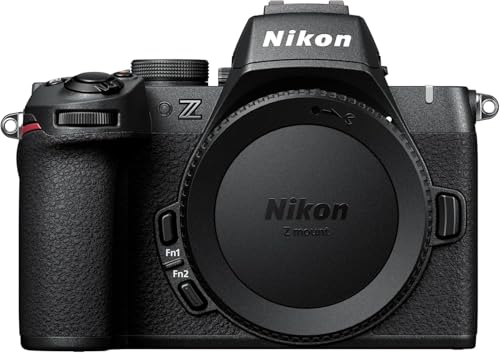
| Nikon Z50 II | Best Overall for All-Day Walks | A compact APS-C body with a proper grip, a bright finder and battery manners that suit dawn-to-dusk walking. |
| Nikon Z50 II with Two Lenses | Best Ready-Made Kit | The same field-friendly body sold with two lenses, covering wide scenes and distant subjects without a second purchase. |
| Canon EOS R6 Mark II | Best for Weather and Wildlife | A sealed full-frame body with fast, confident autofocus and stabilisation that keeps working when the day turns rough. |
| Sony Alpha 7 IV | Best for Hybrid Photo and Video Days | A full-frame hybrid that shoots stills all day and still has the video depth for the film you promised yourself at the trailhead. |
| Panasonic LUMIX S5II | Best for Slow, Deliberate Landscape Days | Phase-hybrid autofocus, strong stabilisation and a landscape-friendly way of working for photographers who compose rather than chase. |
| Sony ZV-1F | Best Pocket Option | A fixed-lens compact that lives in a jacket, starts instantly and covers the social, diary end of an outdoor day with no kit at all. |
How picks were chosen
We started from the cameras this site has already verified against live listings, then filtered hard for field use. Any body whose realistic shooting day depends on a pocketful of proprietary batteries started with a handicap. Any camera that cannot be operated with light gloves, or whose screen washes out completely in hard sun, was marked down no matter how strong its sensor numbers looked on paper. What survived is a deliberately mixed set: APS-C and full-frame, fixed-lens and interchangeable, because all-day outdoor work is itself mixed.
Each pick was then judged on the same five field questions. How far into the day does one battery honestly go when the screen, stabilisation and reviewing habits of a real walker are counted? How does the body behave when it is carried for six hours rather than held for six minutes? Can its files survive a card failure strategy, or does it gamble the whole day on one slot? Does it focus when the subject is backlit, moving, or half hidden by grass and branches? And when something goes wrong at hour seven, can the day still be saved with the controls on the body rather than a menu dive?
Finally, we weighted honesty about weight. Manufacturers quote body-only figures; walkers carry systems. Where a pick only makes sense with a small lens, we say so. Where a pick’s stabilisation genuinely lets you leave the tripod at home for dawn landscapes, we say that too, because leaving a heavy tripod behind is the single biggest quality-of-life upgrade an outdoor photographer can buy.

Nikon Z50 II — Best Overall for All-Day Walks
The Z50 II is the camera we would hand to most people heading out for a full day, and the reason is balance rather than brilliance in any single column. The body is small enough to hang from a strap without announcing itself on every climb, yet the grip is deep enough that cold fingers still find purchase, and the control layout keeps the exposure decisions under your thumb instead of inside a touchscreen menu. For landscapes that turn into wildlife when something moves at the field edge, that immediacy is worth more than a spec-sheet victory.
Battery behaviour is the quiet headline. APS-C sensors sip where full-frame bodies drink, and a walker who shoots in bursts, reviews sparingly and lets the camera sleep between stops can stretch a single pack across a long day in a way that simply is not realistic with the bigger bodies below. The subject-detection autofocus is borrowed from Nikon’s more expensive line and it shows on birds, dogs and people moving through broken light, which is exactly the mix an outdoor day produces.
The honest limitation is the lens wardrobe and the single card slot. Nikon’s DX Z-mount range is good but not deep, and a photographer who wants exotic glass will outgrow it sooner than the full-frame systems here. One slot also means your backup discipline has to live in your evening routine rather than in the camera. Neither flaw matters much on a day walk; both matter on a once-a-year expedition, which is why this pick leads the list for most readers and still carries a clear warning label.
| Format | APS-C mirrorless, Nikon Z mount |
|---|---|
| Position in kit | Primary walking and travel body |
| Carry style | Neck or cross-body strap, small lenses |
| File safety | Single card slot — back up nightly |
Strengths
- Light enough to forget on a strap for most of a day
- Subject-detection autofocus that helps with unplanned wildlife
- Battery economy that suits dawn-to-dusk shooting
Trade-offs
- Single card slot demands a nightly backup habit
- DX lens range is narrower than full-frame rivals
- No in-body stabilisation, so lens choice matters
Best for: walkers and travellers who want one honest camera for the whole day / Not suited for: expedition photographers who need dual slots and a deep lens catalogue

Nikon Z50 II with Two Lenses — Best Ready-Made Kit
Buying a body alone is how outdoor kits stall: the camera arrives, the one lens you own defines every photograph for a year, and the telephoto shots you imagined on the trail never happen. This two-lens bundle answers that failure mode directly. The standard zoom handles the wide valley, the group at the viewpoint and the detail at your feet, while the longer lens reaches across water and up ridgelines to the subjects that make a walking day feel wild rather than merely scenic.
There is a discipline benefit too. A two-lens kit teaches an outdoor photographer to travel inside a known weight budget. Everything fits in a small bag or a large jacket-and-hip-belt arrangement, the lens change happens in seconds with practice, and the total load stays honest on steep ground. Kits assembled one expensive lens at a time rarely stay this disciplined, because each purchase justifies the next and the bag quietly becomes a cupboard you carry.
The compromise is that kit zooms are not the fastest glass in this guide. In deep woodland shade or at the blue end of the day you will lean on higher sensitivity settings and slower shutter speeds more than the full-frame owners below. For daylight-led outdoor work that trade is usually invisible in the finished photographs, but a reader whose days lean toward dawn patrols and dusk hides should read the full-frame reviews before settling here.
| Format | APS-C mirrorless kit, two zooms |
|---|---|
| Position in kit | Complete starter system in one box |
| Carry style | Small shoulder bag or hip belt case |
| File safety | Single card slot — back up nightly |
Strengths
- Wide-to-telephoto coverage from the first morning
- Total kit weight stays realistic for steep ground
- One purchase, no accessory spiral before the first trip
Trade-offs
- Kit zooms are slower in deep shade and at dusk
- Changing lenses outside invites dust if rushed
- Same single-slot backup discipline as the body-only pick
Best for: new system buyers who want the whole day covered immediately / Not suited for: low-light specialists who need fast apertures above all

Canon EOS R6 Mark II — Best for Weather and Wildlife
When the forecast is a rumour and the subjects will not pose, the R6 Mark II is the pick that feels least fragile. Its sealing, grip and control weatherproofing are designed for photographers who keep shooting through the kind of drizzle that sends compact cameras back into bags, and its autofocus has a stubborn quality on moving subjects — birds lifting off water, riders crossing a frame, dogs doing anything at all — that reduces the number of almost-photographs a long day produces.
In-body stabilisation changes the arithmetic of outdoor mornings. Handheld dawn landscapes at slow shutter speeds stop being a gamble, which means the tripod can stay at the car for many routes and the weight saving compounds across every mile. The full-frame files also hold together when you crop a distant subject or lift shadows under a storm sky, two edits outdoor photographers make constantly and apologise for rarely.
The cost is carried on your shoulder and in your battery pouch. This is a system that asks for a real strap, a real bag and at least one spare battery on any honest all-day route, and its lenses are priced like the professional tools they are. Readers who walk ten gentle miles will feel that cost more than readers who drive to a hide and shoot hard for three hours, so match the pick to the shape of your day rather than the size of your ambition.
| Format | Full-frame mirrorless, Canon RF mount |
|---|---|
| Position in kit | Bad-weather and action workhorse |
| Carry style | Padded strap or harness, spare battery essential |
| File safety | Dual card slots |
Strengths
- Autofocus that stays locked on erratic outdoor subjects
- Stabilisation that can retire the tripod on many routes
- Sealing and grip suited to wet, cold working days
Trade-offs
- System weight is felt on long climbs
- Spare batteries are not optional on full days
- RF lenses sit in a premium price tier
Best for: wildlife and weather chasers who shoot through conditions / Not suited for: ultralight walkers counting every gram

Sony Alpha 7 IV — Best for Hybrid Photo and Video Days
Many outdoor days are now two productions at once: the photographs you set out for, and the short film that a ridge, a river or a family walk seems to demand by lunchtime. The a7 IV is the pick for that double life. Its stills files are forgiving in mixed light, its video tools are deep without requiring a cinema degree, and the E-mount lens catalogue is the broadest in this guide, which matters when an outdoor kit grows by one specialised lens a year rather than all at once.
The handling rewards a methodical shooter. Custom buttons can be arranged so that the outdoor essentials — focus area, exposure compensation, a silent mode for wildlife — sit exactly where your fingers expect them by the second day of a trip. Heat and battery behaviour on long video takes need respect rather than fear: short clips woven through a stills day are this camera’s natural rhythm, while locked-off hour-long recordings in summer sun are a job for a dedicated video body.
Menus remain the tax. Sony’s system is powerful and occasionally bewildering, and an outdoor photographer who changes settings with gloves on will spend the first trips building muscle memory. The payoff for that patience is a camera that rarely says no — to a lens, to a lighting problem, to a deliverable a client invents at short notice — and that breadth is why it anchors so many working outdoor kits.
| Format | Full-frame mirrorless, Sony E mount |
|---|---|
| Position in kit | Hybrid stills and video days |
| Carry style | Sling or backpack system, broad lens choice |
| File safety | Dual card slots |
Strengths
- Deepest lens catalogue in this guide
- Stills and video both treated as first-class work
- Customisable controls reward a settled routine
Trade-offs
- Menu system takes genuine learning time
- Long video takes in heat need careful management
- Best lenses push total carry weight up quickly
Best for: creators whose outdoor day mixes photographs and film / Not suited for: shooters who want the simplest possible menu life

Panasonic LUMIX S5II — Best for Slow, Deliberate Landscape Days
Not every outdoor day is a chase. The S5II suits the photographer who walks to a place, waits for the light to do something, and works a scene in variations — the landscape traditionalist, the tripod-optional minimalist, the maker of quiet pictures. Its stabilisation is genuinely enabling at the edges of the day, when a composition appears on the walk back and there is no time, or no flat ground, for legs and a head.
Phase-hybrid autofocus removed the old hesitation that kept Panasonic out of all-rounder conversations, and the camera now focuses with the confidence its video tools always promised. For outdoor work the practical result is simple: moving water, shifting cloud shadows and the occasional animal all stay within the camera’s competence, while the deliberate parts of the day — filters, careful framing, bracketed exposures — are handled with an unhurried control layout.
The ecosystem is the consideration. L-mount glass is growing and the alliance keeps prices honest, but the catalogue is not yet the everything-store that E mount is, and resale shelves are thinner. A landscape-led reader will rarely feel that limit; a reader quietly planning to shoot sport next year should notice it now rather than after the second lens.
| Format | Full-frame mirrorless, L mount |
|---|---|
| Position in kit | Deliberate landscape and travel work |
| Carry style | Backpack or sling, tripod often optional |
| File safety | Dual card slots |
Strengths
- Stabilisation that rescues handheld edge-of-day shots
- Autofocus now matches its video reputation
- Composed, unhurried handling suits landscape method
Trade-offs
- Lens catalogue still smaller than Sony or Canon
- Thinner second-hand market for future trades
- Heavier than the APS-C picks on long approaches
Best for: landscape photographers who work slowly and travel far / Not suited for: buyers who want the widest possible lens shelf on day one

Sony ZV-1F — Best Pocket Option
Every list like this needs the camera that actually gets carried, and for many readers that is not a system at all. The ZV-1F fits a jacket pocket, starts fast, and asks nothing of its owner beyond pointing it at the day. Its wide fixed lens flatters landscapes, groups and the arm’s-length diary clips that turn a walk into a story, and because it weighs almost nothing its battery economics are measured in days of casual use rather than hours of siege.
The vlogging heritage shows in the details outdoor users quietly benefit from: a screen that flips for the viewpoint self-portrait, product-showcase focus tricks that work just as well for a found shell or a trail snack, and audio that copes with a breeze better than most compacts manage. For a family day, a festival field or a city break where photography is seasoning rather than the main course, this is the pick that returns with pictures instead of regrets about the big camera left at the hotel.
Limits are structural and should be respected. A fixed wide lens cannot reach across a valley, low light stretches a small sensor, and there is no viewfinder for the brightest alpine noon. Treat it as the always-present camera rather than the only camera and it is superb; ask it to be a wildlife system and the disappointment will be yours, not its.
| Format | Fixed-lens compact, wide prime |
|---|---|
| Position in kit | Pocket camera and diary tool |
| Carry style | Jacket pocket, wrist strap |
| File safety | Single card slot |
Strengths
- So light it is carried on days systems stay home
- Instant start and simple controls suit casual shooting
- Flip screen and breezy audio serve diary video
Trade-offs
- Fixed wide lens cannot reach distant subjects
- Small sensor is stretched after dark
- No viewfinder for the brightest conditions
Best for: casual outdoor days, families and travel diaries / Not suited for: anyone whose day depends on telephoto reach
Comparison table
Read this table as a map of failure modes rather than a league table. Each camera survives a different kind of long day: the Nikons survive on weight and battery economy, the full-frame trio survive on light and weather, and the little Sony survives by being present at all. The right row is the one whose watch-out column describes problems you are genuinely willing to manage.
| Pick | Badge | Format or type | Standout trait | Watch out for |
|---|---|---|---|---|
| Nikon Z50 II | Best Overall for All-Day Walks | APS-C mirrorless, Nikon Z mount | Light enough to forget on a strap for most of a day | Single card slot demands a nightly backup habit — Check price on Amazon |
| Nikon Z50 II with Two Lenses | Best Ready-Made Kit | APS-C mirrorless kit, two zooms | Wide-to-telephoto coverage from the first morning | Kit zooms are slower in deep shade and at dusk — Check price on Amazon |
| Canon EOS R6 Mark II | Best for Weather and Wildlife | Full-frame mirrorless, Canon RF mount | Autofocus that stays locked on erratic outdoor subjects | System weight is felt on long climbs — Check price on Amazon |
| Sony Alpha 7 IV | Best for Hybrid Photo and Video Days | Full-frame mirrorless, Sony E mount | Deepest lens catalogue in this guide | Menu system takes genuine learning time — Check price on Amazon |
| Panasonic LUMIX S5II | Best for Slow, Deliberate Landscape Days | Full-frame mirrorless, L mount | Stabilisation that rescues handheld edge-of-day shots | Lens catalogue still smaller than Sony or Canon — Check price on Amazon |
| Sony ZV-1F | Best Pocket Option | Fixed-lens compact, wide prime | So light it is carried on days systems stay home | Fixed wide lens cannot reach distant subjects — Check price on Amazon |
How many batteries does an all-day outdoor camera really need?
Plan from the manufacturer’s estimate, then discount it the way weather discounts a forecast. Cold mornings, stabilisation working on uneven ground, a screen reviewed at every stop and autofocus hunting through grass can easily halve the optimistic number. For the APS-C picks here, one battery plus a small power bank is a sane walking load. For the full-frame picks, two batteries is the honest minimum and three is not paranoia on a winter day with video in the plan.
Build the habit that saves more photographs than any spare: let the camera sleep. A body left awake on a strap, waking at every brush of a jacket, burns its day in standby. Set a short auto-off, review in batches at planned stops rather than after every frame, and keep batteries warm in an inside pocket when the temperature drops, swapping the cold spare in at lunch whether the gauge demands it or not.
Does weather sealing actually matter outside, or is it marketing?
Sealing matters in the specific way a good jacket matters: it does not make you waterproof, it makes brief exposure a non-event. Drizzle on a viewpoint, spray near water, dust on a dry trail — sealed bodies and, critically, sealed lenses treat these as working conditions rather than emergencies. The failure most buyers miss is pairing a sealed body with an unsealed lens and believing the badge on the box; the system’s resistance is set by its weakest joint.
Behaviour still outranks hardware. A rain cover or even a well-placed dry bag for the descent, a lens cloth that lives in the same pocket every trip, and the discipline to change lenses under shelter will protect an unsealed compact through years of outdoor use, while a sealed flagship drowned in a river is just an expensive loss. Buy sealing if your days regularly include weather; buy habits regardless.
Should an outdoor beginner start with APS-C or full-frame?
Start where the walking is. APS-C systems like the Nikons here cost less, weigh less and forgive more: their batteries last, their lenses are carryable, and their files are more than good enough for prints, books and screens. The beginner who actually goes out every weekend with an APS-C kit will out-photograph the beginner whose full-frame system is too heavy, too valuable or too hungry to leave the house on a grey morning.
Full-frame earns its premium in specific, nameable situations: regular shooting in the first and last hour, paid work where clients zoom into shadows, or a settled intention to build a long lens collection for wildlife. If none of those describes your next two years, the honest answer is the smaller system and the money kept for trips, boots and time outside — the inputs that improve outdoor photographs most.
How to set up an all-day outdoor shooting routine
Gear survives a long day when the routine around it is settled before the trailhead. This is the sequence our picks assume, from the night before to the evening backup.
Charge and stage the night before
Batteries charge together, cards are formatted in the camera they will be used in, and the bag is packed by the door with lens cloth, cover and power bank in their permanent pockets. Morning-you, half awake at a trailhead in the dark, should be executing a checklist rather than inventing one.
Set the camera for the day, not the moment
Before the first stop, settle the decisions that stay fixed: file format, stabilisation mode for handheld or supported work, and the auto-off timer that protects the battery. Outdoor light changes constantly, but your camera’s personality for the day should not, or every stop becomes a menu negotiation while the light leaves.
Work in stops, not in a continuous drip
Walk with the camera ready but resting, then shoot deliberately at chosen stops — the viewpoint, the water crossing, the change in the treeline. Batch your reviewing to those stops too. This rhythm protects battery, attention and ankles in equal measure, and it produces edited sequences instead of nine hundred near-identical frames.
Rotate batteries at the midpoint
Swap to the fresh battery at lunch or at the day’s obvious halfway point, even if the gauge looks comfortable. Gauges lie optimistically in the cold and pessimistically late, and a planned swap in a sheltered spot beats an emergency swap on an exposed ridge with gloves on and light going.
Protect the kit on the descent
Fatigue causes the day’s accidents: the unzipped bag, the camera swinging against rock, the lens change in dust because the light turned pretty. Put the camera away properly for the rough descent unless a shot is truly worth stopping for, and treat the walk out as transport, not shooting time.
Back up before you celebrate
Cards come out, files copy to two places, and only then does dinner happen. The single-slot picks in this guide make this step non-negotiable, and even dual-slot shooters should treat the evening copy as the moment the day’s work actually exists.
Common mistakes
Buying for the summit photograph and ignoring the six hours before it
A camera chosen for one heroic frame still has to be carried, powered and operated for the whole route. Weight, grip and battery shape the day; resolution only shapes the print. Choose for the journey and the summit takes care of itself.
Trusting the battery gauge in cold weather
Cold cells report creatively. A gauge that reads half at noon can fall off a cliff at three, which is why midpoint swaps and warm spare pockets appear throughout this guide. The mistake is not running out of power; it is being surprised by a behaviour every outdoor photographer learns once.
Changing lenses in the worst possible place
Dust, drizzle and midges all volunteer to enter an open camera. The pretty stop is rarely the sheltered stop, so wait thirty seconds for the lee of a rock or turn your back to the weather and shield the mount with your body. Sensor spots cloned out of four hundred frames are a tuition fee nobody should pay twice.
Leaving the strap as an afterthought
More outdoor cameras are damaged by swinging, slipping and being set down on wet grass than by any defect. A strap or harness that suits your carry style, used every time, is protective equipment. The best camera in this guide is still a falling object without one.
Shooting the whole day on one card with no evening copy
Cards fail rarely and completely. On single-slot bodies the risk is obvious; on dual-slot bodies the risk hides behind complacency when both slots hold the only copy of a once-a-year day. The evening backup is part of the shoot, not admin that follows it.
The outdoor day, hour by hour: where each pick earns or loses its place
Hour one belongs to the light and the cold. This is where glove-friendly controls and a camera that wakes fast separate the picks from the catalogue. The full-frame bodies justify themselves here if the dawn is the point of the trip; the APS-C Nikons justify themselves by simply being awake, warm enough in the hand and ready before the colour leaves the sky, while the pocket Sony is already shooting the walk in from the car park.
The middle hours are a test of carry rather than capability. Hard, high sun flatters no sensor, and the photographs that matter are often about people, weather building, water and the shape of the land — work any of these cameras can do. What differs is how the photographer feels at hour five. Systems that were chosen honestly for weight arrive at the afternoon still looking for pictures; systems bought for prestige start staying in the bag, and a camera in a bag has an effective resolution of zero.
Weather, when it comes, rarely arrives as a single dramatic storm. It creeps: a lens that mists when you stop, drizzle that finds the gaps in an unsealed pairing, wind that makes a light tripod pointless and stabilisation priceless. The Canon’s sealing and the Panasonic’s stabilisation earn their keep in this creep, while the compact’s strategy is retreat and return — pocket it, walk through the shower, shoot the cleared light after, which on many days is the best light of all.
The last hour is where full-frame files show their value and where battery planning is audited. Shadow detail under a dusk sky, a subject moving in dim woodland, the group portrait outside the bothy — the bigger sensors handle these with a calm the smaller ones have to work for. It is also the hour when the photographer with the planned midpoint battery swap is still shooting and the optimist is rationing frames, which is why this guide treats power discipline as a photographic skill rather than a footnote.
None of this makes one camera the answer. It makes the day the question, asked in a specific order: how far, how high, how wet, how dark, how much film alongside the stills. Run your own typical day through those five and the table above stops being a ranking and becomes a matching exercise — which is all a buying guide can honestly be.
Consider the coastal day, because it tests a kit in a sequence no single specification covers. It begins in sea mist that soaks everything without technically raining, moves through hard midday glare off water, and ends with wind strong enough to make every loose strap a metronome against the camera body. In that sequence the sealed Canon earns its keep before breakfast, the little Sony owns the bright, social middle of the day when nobody wants to be a photographer, and the Nikon’s battery economy quietly becomes the reason there are still frames being made at the harbour wall as the boats come in. A reader whose outdoor life is mostly coastal should weight weather behaviour and wind handling above almost everything else in the table.
Now consider the mountain day, which is a different examination sat by the same candidates. Altitude steals battery capacity through cold, gradients tax every gram, and the light at the top is both the reason for the climb and the harshest of the day. Here the order of merit inverts in instructive ways: the APS-C kit’s lightness compounds with every hundred metres of ascent, the full-frame bodies must justify themselves in the first and last thirty minutes or not at all, and stabilisation earns more than sealing because the wind at a summit cairn makes tripods theatrical. Photographers who live for high places should read the trade-off columns as weight statements first and capability statements second.
The forest day deserves its own paragraph because it is the most common outdoor day of all and the least discussed. Under canopy, the light is low, green and still; subjects are close; the photographs are about texture, water and patience rather than vistas. Fast-enough lenses and clean high-sensitivity files matter here more than reach, and the Panasonic’s stabilisation and the Sony a7 IV’s forgiving files both shine in the gloom, while the compact struggles honestly and the kit zooms ask for slower shutter speeds and a steadier hand. A woodland walker should also budget for the least glamorous accessory in outdoor photography: a cloth that is always dry, because forest humidity fogs a front element with a persistence that feels personal.
There is a social dimension to the all-day camera that specification sheets never mention. A large professional body changes how strangers behave around you: it announces intent, invites questions and occasionally closes the candid moment it was carried to capture. The compact and the small APS-C body move through festivals, villages and family gatherings almost invisibly, and the photographs they bring home have a looseness the flagship cannot buy at any price. Photographers whose outdoor days are populated — markets, gatherings, street-led travel — should treat unobtrusiveness as a photographic specification and rank it alongside battery life, because in populated places it decides what can be photographed at all.
The second-hand question hangs over every pick in this guide, so it deserves a direct answer. Outdoor cameras live hard lives, and a used body should be bought on evidence: shutter history where it can be known, the state of seals and dials, a sensor inspected rather than described. The models in this list were chosen partly because their lines are well understood by repairers and their behaviours are documented across years of field use, which makes a used example a calculable risk rather than a lottery ticket. A reader buying used should still reserve part of the budget for a service and a fresh battery, because an old battery in a new-to-you body is the commonest cause of the all-day failure this guide exists to prevent.
Finally, a word about the camera that is not in this list because it is already in your bag. The gap between a competent current camera and the best pick here is real but narrower than the gap between a practised routine and an improvised one. A reader who adopts this guide’s battery discipline, carry honesty and evening backup habit will gain more outdoor photographs from the camera they own than from an upgrade bought without those habits. Buy the new body when a named limitation — weather, darkness, reach — is measurably costing photographs, and buy it into a routine that is already working. That order of operations is unfashionable, and it is how the photographers whose work you admire actually got there.
The question of one camera or two resolves differently outdoors than anywhere else. Indoors, a second body is a luxury; on a long route it is a weight decision that must be argued for in photographs. The pairing that justifies itself most often is asymmetric: a system camera for the deliberate work and the pocket compact for everything between, which is why the ZV-1F sits in this list not as a toy but as the second body most walkers will actually carry. The pairing that rarely justifies itself is two full systems, because the second system’s photographs are usually the first system’s photographs taken heavier. Readers tempted by a two-system day should count the lenses honestly and ask which of them earned a frame on the last three outings.
Rain deserves a protocol rather than a hope. The working version runs: cover on at the first spots rather than the first downpour, lens cloth in a sealed pocket because a damp cloth is a smearing tool, and a standing rule that the camera goes away entirely when the rain turns horizontal, because no photograph in this guide’s categories is worth a drowned body. The sealed picks extend the working window; they do not abolish it. Photographers who shoot weather for a living treat the window’s edge as a professional judgement, and amateurs would do well to copy the judgement rather than the bravado.
Cold is the other great auditor, and it audits the photographer as faithfully as the camera. Fingers lose the small dials first, then the will to change settings at all, which is why the control layouts praised in this guide are praised in glove terms. The practical kit additions are unglamorous and decisive: liner gloves that stay on, batteries rotated through an inside pocket, and a shooting plan simplified in advance for the hours when dexterity is gone. A camera whose essential decisions can be made with two dials and a button will be making photographs at minus five long after a touchscreen-dependent rival has become a paperweight with a lens.
There is also the matter of what the day does to files after the shutter closes. Outdoor light lies to rear screens: a frame that looks perfect in alpine glare can be a stop under, and a histogram trusted over a squinted screen is the professional’s quiet advantage. The picks here all offer the tools — zebras, histograms, finders that escape the sun — but the habit is the photographer’s. Build the check into the stop ritual: three frames, one glance at the graph, walk on. The evening edit will thank the habit more than it thanks any sensor in this guide.
And when the day is done, the honest audit is not of the camera but of the carry. Which lens never left the bag? Which battery was insurance and which was ballast? Which accessory solved a problem that never occurred? Outdoor kits improve by subtraction across a season, and the photographers whose bags get lighter year by year are the ones still walking at the end of it. Let each outing edit the kit the way you edit the photographs: keep what earned its place, release the rest without sentiment, and walk further next time.
Final recommendation
For most readers, the Nikon Z50 II is the recommendation to beat: light, economical with power, honest in the hand, and available as a two-lens kit that covers a walking day from the first morning. It is the camera least likely to be left behind, and presence is the first specification of outdoor photography.
Step up to the Canon EOS R6 Mark II when weather and moving subjects define your days, to the Sony a7 IV when film shares the billing, and to the Panasonic S5II when your days are slow, deliberate and landscape-led. Keep the little ZV-1F in the jacket for the days when the big decision is simply to go out at all — because the best all day cameras for outdoors are, in the end, the ones that are still with you, powered and ready, when the day finally shows you something.
Related guides
Frequently asked questions
What makes a camera an all-day outdoor camera rather than just a good camera?
Endurance in every sense: battery life that survives real shooting habits, a body light enough to carry for eight hours, sealing against the weather your region actually produces, and controls that work with cold or gloved hands. A studio-excellent camera that fails two of those is a poor outdoor camera, which is why this guide ranks carry and power alongside image quality.
Can one camera cover landscapes and wildlife on the same day?
Yes, if the lens plan does the travelling. The two-lens Nikon kit is built exactly for that double life, and the full-frame picks cover it with a standard zoom plus a telephoto. What one camera cannot do is cover both with no lens change and no weight — the day always collects its toll somewhere, so choose where to pay it.
Is a compact like the ZV-1F a serious outdoor choice?
For the diary end of outdoor life — family walks, travel days, festivals, city breaks — it is not only serious, it is often the camera that returns with the photographs, because it was present. Its limits are reach and darkness. Inside those limits it is a legitimate pick; outside them it should be a second camera, not a substitute system.
How important is a second card slot for outdoor work?
It is insurance, priced in bulk and money. Dual slots let the camera mirror every frame, which suits expeditions and paid days. For ordinary walking and travel, a single slot plus a strict evening backup routine manages the same risk almost as well — the routine, not the slot count, is what most photographers actually lack.
What is the first accessory an outdoor photographer should buy?
A strap or harness you will genuinely use, followed by the spare battery your chosen system demands. Both protect the day rather than decorate the camera. A rain cover for your region’s weather comes third, ahead of any lens upgrade, because the photographs lost to a dead or drowned camera outnumber those lost to a merely good lens.
Should I worry about sensor size for printing outdoor work large?
Less than the internet suggests. The APS-C files here print beautifully at the sizes most homes and exhibitions use, provided the exposure was honest and the lens was clean. Full-frame pulls ahead when prints are huge, light was poor, or cropping is heavy — real advantages, but specific ones, and they should be bought for named reasons rather than general anxiety.


