Disclosure: As an Amazon Associate, reviewstook.com earns from qualifying purchases. Links on this page are affiliate links; they cost you nothing extra. Prices and availability change often, so check the current Amazon listing before you buy.
Where to buy
Film kit gets bought in a particular order, body first and everything else with whatever remains, so verify the configuration on Amazon before the rest of the budget gets allocated around it. Several bodies below exist as body-only boxes and as creator bundles with near-identical names, and recording media, batteries and cages all depend on choosing correctly at this step. One famous cinema tool in the list has no verified listing among our checked sources and is therefore written about in prose only. Creator bundles sometimes include a lens your production will never mount; a body-only box plus your chosen glass is frequently the cheaper complete rig.
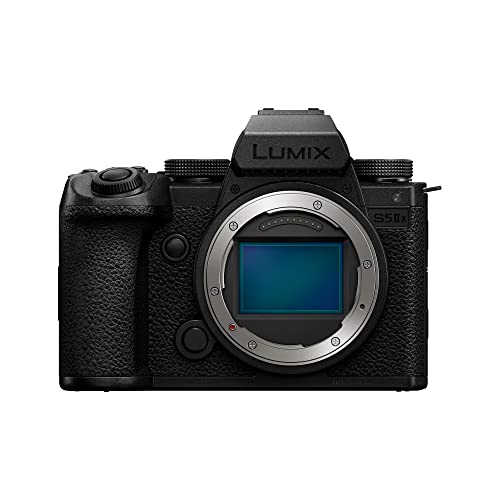
- Panasonic LUMIX S5IIX: check price on Amazon
- Panasonic LUMIX S5II – check price on Amazon
- Sony a7 IV – check price on Amazon
- Canon EOS R6 Mark II – check price on Amazon
- Canon EOS R6 Mark III: check price on Amazon
- Blackmagic Design Pocket Cinema Camera 6K Pro – available from major camera retailers (prose-only pick in this guide)
A short film fails in predictable places. The dialogue scene that runs long and cooks the camera. The night exterior where the image dissolves into crawling noise. The beautiful take ruined because focus drifted off the actor’s eyes during the one performance that mattered. The best affordable cameras for cinema are the ones that survive those three scenes, and this guide ranks six candidates by that standard rather than by launch-day spectacle.
Cinematic, a word abused by every marketing department alive, means something testable here: motion that feels like film rather than surveillance footage, highlights that roll off gently instead of clipping to white, colour deep enough to grade without tearing, and recording that continues for the length of a scene rather than the length of a clip. Sharpness barely makes the list. Audiences forgive softness instantly and forgive plastic-looking motion never. Every pick below was therefore asked a rude question: what do you do when the scene runs long, the light runs low and the actor finally gets it right on take nine?
Independent filmmakers and film students, the readers this shortlist serves, share a working pattern worth naming. They shoot weekends with borrowed lights, actors who are friends, and locations that must be returned to their owners by Monday. Their camera must therefore rig quickly, run from modest power, record to affordable media, and produce files an editor on a mid-range laptop can grade without a render farm. Exotic cinema cameras fail that pattern even when their images triumph.
Money enters as a creative decision, not an accounting one. Every unit not spent on the body buys a lighting rental, a sound recordist for a day, or an extra weekend of shooting, all of which appear on screen more visibly than a sensor upgrade. Affordable in this guide means the tier where the camera stops being the reason a scene looks cheap, leaving the filmmaker free to fix the things that actually do.
Heat, media cost and autofocus trust recur through every review below, because those are the three taxes cinema work levies that stills photography escapes. A body can be a magnificent stills machine and a nervous film tool; the badges here judge only the second job.
A note on what was excluded and why it matters: several celebrated cinema bodies sit above this guide’s price ceiling, and a few stills heroes sit below its recording floor. The six that remain are the ones a working short-film budget can actually assemble into a complete rig, media, power and glass included, without the accessories invoice doubling the body price by the end of the month.
Key Takeaways
- Most cinema per unit of money: Panasonic’s LUMIX S5IIX, loaded with recording and streaming tools.
- Value hybrid of the set: the LUMIX S5II, sharing the sensor while trimming the extras.
- Film-and-stills double agent: Sony’s a7 IV, backed by the deepest lens shelf here.
- Dialogue directors’ favourite: Canon’s EOS R6 Mark II, whose detection babysits actors’ faces.
- Canon for the long haul: the EOS R6 Mark III, newest generation and longest support runway.
- Purist’s instrument: Blackmagic’s Pocket Cinema Camera 6K Pro, prose only, crew required.
- Sound, light and media will consume the rest of the budget; choose a body that leaves room for all three.
In this guide
Quick Picks: Best Affordable Cameras For Cinema
| Pick | Badge | Best for | Buying |
|---|---|---|---|
| Panasonic LUMIX S5IIX | Best Overall for Cinema | Indie filmmakers wanting the most cinema-focused tool here | Check price on Amazon |
| Panasonic LUMIX S5II | Best Value Cinema Hybrid | Film students and wedding videographers on a budget | Check price on Amazon |
| Sony a7 IV | Best Hybrid for Film and Stills | Creators splitting time between films and photography | Check price on Amazon |
| Canon EOS R6 Mark II | Best Autofocus for Actors | Directors filming dialogue with moving actors | Check price on Amazon |
| Canon EOS R6 Mark III | Best Future-Proof Canon | Canon shooters buying a body for the next several years | Check price on Amazon |
| Blackmagic Design Pocket Cinema Camera 6K Pro | Best Pure Cinema Tool | Directors with a crew, a tripod and a lighting plan | Prose-only – see retailers |
How picks were chosen
Evaluation started on a pretend set. Each body was considered through a twelve-minute dialogue take, a dusk exterior, a handheld corridor walk and an evening of grading the results, because cinema cameras reveal themselves across a shooting day rather than in a burst of test charts. Recording stamina, thermal behaviour and file behaviour in an editor carried more weight than any stills metric. Stills quality was still recorded, because productions shoot posters and behind-the-scenes material constantly, but it could not rescue a body whose recording behaviour failed the pretend set.
Colour depth was judged by abuse: underexpose a face by a stop, drag the highlights back, push a night scene toward teal, and watch which files tear into banding and which bend. Ten-bit recording stopped being a spec-sheet ornament in that test and became the dividing line it is treated as below.
Linking followed verification, as everywhere in this guide. Bodies with a confirmed listing carry one; the Blackmagic, absent from the sources we checked, is discussed fully but without a buying destination. Filmmakers deserve the honest map, including the roads we could not signpost.
Audio pathways were examined as part of the camera, not as an accessory afterthought, since every body here will record production sound at some point in its life. Input quality, headphone monitoring and the grace with which a body accepts external recorders all nudged the final order.
The picks in detail: best affordable cameras for cinema reviewed

Panasonic LUMIX S5IIX – Best Overall for Cinema
Read the S5IIX’s recording menu aloud and it sounds like a rental house inventory: 5.8K ProRes internally, RAW output over HDMI for an external recorder, streaming built in, and 4:2:2 10-bit options that refuse to impose a clip-length anxiety on long scenes. Panasonic built this body by asking working videographers what their hybrid cameras lacked, then declining to cut the answers for marketing reasons. For a narrative filmmaker, it is the most complete cinema tool in this entire shortlist.
The 24.2-megapixel full-frame sensor and phase hybrid autofocus behave like a competent modern hybrid should, holding an actor’s face through a slow push-in and delivering stills that satisfy a poster designer. Active I.S. steadies handheld work to a degree that lets a two-person crew attempt corridor shots that once demanded a gimbal, a focus puller and a prayer.
Strengths
- Recording menu reads like a rental-house inventory
- Streaming and external recording cover every delivery
- Active stabilisation rescues handheld dramatic scenes
Trade-offs
- L-mount lens choice remains narrower than rivals
- Menus demand homework before the shoot day
- Stills autofocus trails the sharpest competitors
| Key specs | Full-frame 24.2MP-class L-mount body; 5.8K ProRes and RAW over HDMI per listing; Active I.S. stabilisation |
|---|
Grading is where its files argue loudest. Footage shot flat arrives in the editor with room to build a look, highlights over a window seat roll away instead of snapping, and the colour stays coherent when a scene mixes daylight with a warm practical lamp. Editors who receive S5IIX rushes tend to ask what it was shot on, which is the compliment this class of camera lives for.
The compromises are ecosystem-shaped. L-mount glass is growing but remains the slimmest shelf here, so confirm your intended primes exist before committing. Menus, deep enough to hide a streaming configuration, reward a pre-production evening of study. Stills shooters will also find faster, cleverer autofocus elsewhere.
None of that dents its position for the filmmaker it addresses. If your weekends are spent on narrative shorts and your editor is your second home, this is the body the rest of the list is chasing.
Live and hybrid productions unlock its strangest advantage: a premiere Q and A, a crowdfunding livestream or a client review can run from the same body that shot the film, with streaming treated as a native function rather than a workaround. Small teams feel that consolidation in their schedules, not just their budgets.
Wedding filmmakers, cinema’s cousins, have adopted it for a reason worth stealing: receptions run long, speeches overrun, and a body with this recording stamina and stabilisation covers both without a mid-evening media panic. Narrative directors can borrow that confidence wholesale.
Best for: indie filmmakers wanting the most cinema-focused tool here / Not suited for: stills-first photographers choosing a main body

Panasonic LUMIX S5II – Best Value Cinema Hybrid
The S5II is the same argument with the volume turned down, and for many filmmakers it is the smarter purchase. It shares the 24.2-megapixel full-frame sensor and phase hybrid autofocus of its X sibling, keeps the excellent stabilisation, and headlines unlimited 4:2:2 10-bit recording, the single feature that most separates a cinema-capable hybrid from a stills camera that also films.
Unlimited deserves unpacking, because it changes set behaviour. A wedding filmmaker can let a ceremony run; a documentary maker can let an interviewee finish the long answer; a student can shoot the whole rehearsal and find the performance inside it. Cameras that stop at arbitrary limits train directors to fear their best material, and this one simply declines to.
Strengths
- Unlimited 4:2:2 10-bit recording per its listing
- Shares the stabilisation strengths of its sibling
- Undercuts the X while keeping the same sensor
Trade-offs
- Fewer professional video extras than the S5IIX
- L-mount ecosystem is still the growing kind
- Phase autofocus is good rather than class-leading
| Key specs | Full-frame 24.2MP-class L-mount body; unlimited 4:2:2 10-bit recording per listing; phase hybrid autofocus |
|---|
What the saving costs is the X model’s professional garnish: no ProRes internal recording of that calibre, no RAW over HDMI party trick, streaming absent. Editors working in standard codecs will not miss them weekly; productions delivering to demanding clients might miss them quarterly. Know which production you are.
L-mount caveats apply identically, and its autofocus, while genuinely good since Panasonic adopted phase detection, still concedes the crown to Canon and Sony on a moving face. Within a tripod-led, dialogue-first workflow, those concessions shrink to footnotes.
Film students should read this entry twice. The money saved against the X buys a lighting weekend and a sound kit, and the footage, graded with care, will sit beside its sibling’s on a festival screen without apologising.
There is a teaching virtue in its restraint, too. Students learn exposure, focus and lighting on a body that does not hide their decisions behind computational rescue, yet its files forgive the small errors a learning curve produces. Tutors who grade student rushes develop strong opinions, and this body earns theirs.
Best for: film students and wedding videographers on a budget / Not suited for: directors needing RAW output and streaming built in

Sony a7 IV – Best Hybrid for Film and Stills
The a7 IV is the camera a film school cohort most likely already owns between them, and that ubiquity is itself a cinema feature. Lenses can be borrowed across a class, rental counters in every city stock its mount, and a second body for the two-camera interview setup is a phone call away. Its hybrid credentials are genuine: confident eye autofocus on actors, 4K-class recording, and stills strong enough for the poster, the press kit and the crowdfunding page.
On set it behaves like a reliable supporting actor. Focus transitions can be tuned to feel deliberate rather than electronic, colour profiles give the editor a workable starting point, and the enormous native and third-party lens catalogue means a fast prime for the night scene exists at student money. For run-and-gun documentary passages, its autofocus earns trust that manual-only tools cannot.
Strengths
- Vast native lens catalogue at every budget
- Confident autofocus on an actor’s eyes
- Resale and rental availability across the world
Trade-offs
- Long takes require planning around recording limits
- Rolling shutter appears during fast pans
- Video settings hide among stills options
| Key specs | Full-frame Sony E-mount hybrid; real-time eye-tracking autofocus; 4K-class hybrid recording |
|---|
Cinema purists will find its limits honestly listed. Long takes need planning around recording behaviour, fast pans reveal rolling shutter skew on vertical lines, and video settings live inside menus designed by a stills company, so the first configuration session involves some archaeology.
Heat and media discipline, the usual hybrid taxes, apply: test your longest planned take at home, in a warm room, before the location day. Directors who do that homework routinely complete features on bodies in this class, which tells you where the real ceiling sits.
Choose it when the same camera must shoot the film and everything around the film. As a production’s centre of gravity, stills, behind-the-scenes, trailers and all, it has no equal in this list.
Consider the two-camera interview, documentary’s workhorse. Two a7 IV bodies, or one paired with a smaller Sony sibling, share lenses, batteries and colour logic, so the edit cuts between angles without a colourist earning overtime. Multi-camera coherence is an unglamorous reason this camera anchors so many small production outfits.
Its stills excellence has a production use that is easy to overlook: the same body shoots the unit photography, the poster session and the director’s own location scouts, so the film’s entire visual identity passes through one consistent colour pipeline from first scout to final poster.
Best for: creators dividing time between films and photography / Not suited for: purists wanting a video-only toolset

Canon EOS R6 Mark II – Best Autofocus for Actors
Dialogue is cinema’s core business, and dialogue is where the R6 Mark II earns its badge. Its deep-learning detection finds an actor’s face, selects the nearer eye, and holds both through the head turns, leans and laughter that a good performance involves. A solo director-operator, watching performance instead of a focus monitor, can trust it with the take that cannot be repeated.
Canon’s colour does quiet favours for low-budget productions. Skin under a borrowed LED panel, the classic student-film hazard, emerges plausible rather than embalmed, and the oversampled 4K image carries a softness that reads as cinematic rather than as a defect. Crews with no colourist, which is most crews at this level, benefit disproportionately.
Strengths
- Detection holds faces throughout a performance
- Pleasing colour straight from the camera
- Deep RF range including cinema-friendly primes
Trade-offs
- Heat needs respect during long scenes
- Video ceiling sits below the Panasonic pair
- Top-end RF lenses are costly companions
| Key specs | Full-frame Canon RF body, 24.2MP per listing; deep-learning subject detection; oversampled 4K-class video |
|---|
The RF lens range includes cinema-friendly primes and zooms that rental houses increasingly stock, and the body’s stills are strong enough for production photography. It is, in short, the cast-and-crew favourite: the camera that makes actors look good and focus pullers unemployed.
Its ceiling sits lower than the Panasonic pair’s for dedicated video work. Heat management on long, hot scenes demands respect and testing, the recording specification stops short of the X model’s arsenal, and top RF glass is priced for professionals.
Directors whose films are people talking, in rooms, under pressure, which describes most great low-budget cinema, will find this the most forgiving tool here. Directors planning effects-heavy spectacle should look one row up.
Actors notice this camera, in the complimentary sense. Because the operator can watch them instead of a focus monitor, eye contact survives through the viewfinder, and performances stay connected rather than technical. Directors talk about chemistry; sometimes chemistry is an autofocus system that lets two humans look at each other.
Best for: directors filming dialogue with moving actors / Not suited for: editors wanting a dedicated cinema colour pipeline

Canon EOS R6 Mark III – Best Future-Proof Canon
Buying a cinema body is a longer commitment than buying a stills one, because rigs, cages, monitors and muscle memory accumulate around the mount. The R6 Mark III is the Canon for filmmakers who have done that maths and want the current generation’s runway: the newest detection and processing in the R6 line, carrying the family’s video ambitions forward with the longest support life ahead of it.
On a set, its advantages arrive as margins. Detection a fraction stickier when an actor crosses another, processing a fraction cleaner in the shadows of a night interior, stabilisation helping the handheld confession scene hold its nerve. None of these wins a trailer; together they raise the floor of an entire production’s footage.
Strengths
- Newest Canon full-frame generation in this group
- Carries the line’s video ambitions forward
- Strong choice for Canon loyalists upgrading once
Trade-offs
- Newest also means the least discounted here
- Early accessory and workflow knowledge is thinner
- Over-specified for filmmakers shooting simple scenes
| Key specs | Full-frame Canon RF body from the latest R6 generation; current-generation hybrid recording |
|---|
It shares the R6 family’s practical shape, so existing Canon shooters rig it from muscle memory, and the RF ecosystem’s cinema-leaning glass gives the investment somewhere to grow. For a small production company standardising on one body for years of client work, that continuity has cash value.
The objections are the familiar new-generation ones, sharpened by film budgets. It is the least discounted body here, early workflow knowledge around it is thinner, and a filmmaker shooting simple scenes in good light will capture nothing the Mark II would have missed. The premium buys years, not frames.
Take it when the body is infrastructure: a school, a studio, a director who keeps equipment until it retires. Take its predecessor when the production in front of you needs the money more than the decade does.
Production companies should also weigh training costs in its favour. A body whose logic matches the Canon cameras a freelance crew already knows can be handed over without a familiarisation day, and on a schedule measured in shoot days, that saved day is a tangible line in the budget.
Best for: Canon shooters buying a body for the next several years / Not suited for: bargain hunters maximising features per pound
Blackmagic Design Pocket Cinema Camera 6K Pro – Best Pure Cinema Tool
The Pocket Cinema Camera 6K Pro is the only tool here that wants to be nothing else. Its image pipeline exists solely for filmmaking, recording in Blackmagic RAW formats editors adore, and its built-in ND filters solve the oldest exterior problem in cinema, holding a wide aperture under noon sun, without a matte box full of glass. On a lit set with a tripod and a plan, its images embarrass hybrids costing far more.
That purity is purchased with absences a solo shooter will feel hourly. Autofocus cannot be trusted with actors, there is no stabilisation for handheld work, and battery life assumes a rig with external power as a matter of course. This is a crew camera: it expects a focus puller, a tripod, lights and time.
Strengths
- Image pipeline designed only for filmmaking
- Built-in ND filters transform daylight exteriors
- Recording formats that editors genuinely love
Trade-offs
- Autofocus cannot be trusted with actors
- No stabilisation for handheld shooting
- Battery life demands a rig and external power
| Key specs | Super 35 cinema body in EF mount; Blackmagic RAW-class recording; built-in ND filters |
|---|
Its Super 35 sensor and EF mount connect it to decades of affordable cinema and stills glass, another production-minded virtue. Post-production is its second home, since DaVinci Resolve’s workflow was practically designed around its files, and colourists speak of its footage with genuine affection.
A sourcing note completes the picture: no verified listing for it appeared in the sources we checked, so it is discussed here in prose only, without a buying link. Given its specialist nature, hands-on rental before purchase is wise anyway; a weekend with it will tell you definitively whether you are its kind of filmmaker.
If you have the crew, the lighting plan and the patience, it delivers the most filmic images in this guide. If you are a crew of one, it will punish you beautifully and often.
Its footage also future-proofs a modest production surprisingly well. Because the files carry such grading latitude, a short shot on it can be re-graded years later to match a feature’s look, a trick festival filmmakers use when early work gets revisited by distributors with new deliverable demands.
Budget honestly around it, though. The body is the beginning of a conversation that includes a cage, external power, fast media and at least one proper tripod, and filmmakers who price only the camera will meet the rest of the invoice during their first production week.
Best for: directors with a crew, a tripod and a lighting plan / Not suited for: solo shooters needing autofocus and stabilisation
Comparison table
| Camera | Badge | Key specs | Buying |
|---|---|---|---|
| Panasonic LUMIX S5IIX | Best Overall for Cinema | Full-frame L-mount, 24.2MP class; 5.8K ProRes, RAW over HDMI, Active I.S. | Check price on Amazon |
| Panasonic LUMIX S5II | Best Value Cinema Hybrid | Full-frame L-mount, 24.2MP class; unlimited 4:2:2 10-bit recording | Check price on Amazon |
| Sony a7 IV | Best Hybrid for Film and Stills | Full-frame E-mount; real-time eye tracking; 4K-class hybrid recording | Check price on Amazon |
| Canon EOS R6 Mark II | Best Autofocus for Actors | Full-frame RF, 24.2MP per listing; deep-learning detection, oversampled 4K | Check price on Amazon |
| Canon EOS R6 Mark III | Best Future-Proof Canon | Latest-generation full-frame RF body; current-generation hybrid recording | Check price on Amazon |
| Blackmagic Design Pocket Cinema Camera 6K Pro | Best Pure Cinema Tool | Super 35 EF-mount cinema body; Blackmagic RAW class; built-in ND | Prose-only – see retailers |
How do you choose the right camera for cinematic filmmaking?
Start with the work, not the wishlist
Read your script as a shopping list. Count the dialogue scenes, the night exteriors, the handheld passages and the locked-off interviews, and the camera that serves the majority announces itself. A body bought for the one drone-style flourish in act three, while dialogue scenes suffer, has the budget exactly backwards.
Also count your crew. Autofocus and stabilisation are labour-saving devices, valuable in inverse proportion to the number of hands on set. A five-person crew can indulge a manual cinema tool; a duo should buy every trustworthy automation available.
If the script is still being written, let it be written toward the camera you can afford: fewer night exteriors, more lit interiors, and your affordable body suddenly looks like a deliberate aesthetic rather than a compromise.
Sensor size versus system size
Full frame gives cinema its fashionable shallow focus and strong low-light behaviour, at the price of larger lenses, shallower focus that punishes pulling errors, and heavier rigs. Super 35, represented by the Blackmagic, keeps focus more forgiving and glass more affordable, which is why Hollywood shot on that format for a century.
Choose by your night scenes and your focus puller, not by fashion. If your actors move and your crew is you, forgiveness beats glamour.
Focus forgiveness deserves a number in your thinking. Every missed-focus take costs a performance, and performances are the one resource a small production cannot buy back at any price.
The lens question decides the decade
Cinema consumes lenses differently: you need a matched set that cuts together, similar colour and contrast across focal lengths, with focus throws a hand can learn. Price a trio, wide, standard and portrait length, inside each mount before the body seduces you, and check the rental shelf for the exotic lengths a single scene demands.
Adapted vintage glass is cinema’s beloved loophole, giving character and matched sets at student prices, provided your mount accepts adapters gracefully. Several systems here do; the Blackmagic’s EF mount was born for it.
Manual-focus filmmakers should test focus throw and breathing on their shortlisted lenses in a shop, with the camera recording. Glass that is magnificent for stills can be miserable for pulling focus, and cinema buys lenses with its hands.
Endurance is a specification
A film day is twelve hours of standby punctuated by takes, and endurance means batteries, media and thermals considered together. Ask how many minutes your chosen format records per card, what an afternoon of footage costs in storage, and whether the body runs from the same batteries as your monitor and lights.
Thermal endurance is the hidden clause. Test the longest take in your script, at the warmest temperature your locations offer, before the shoot, because a camera that protects itself mid-performance is teaching you a lesson at the worst possible tuition.
Build a power budget the way you build a shot list: every device, its draw, its battery type, its charger. Productions that unify battery families carry half the chargers and twice the confidence.
Media deserves its own line in that budget. Cinema recording rates devour cards that stills photographers consider enormous, and the honest cost of a body includes the storage its footage will occupy across the edit, the backup and the archive.
Handling beats headlines
On set, handling means rigging: cage mounting points, a screen you can read in daylight, audio inputs that do not hum, and controls a gloved hand can find. Headline frame rates matter for one shot in twenty; a body that rigs in four minutes matters for every setup of every day.
Visit a rental counter and build the rig before buying. The body that balances your monitor, microphone and follow focus without a spaghetti of adapters is the body your future self will thank you for.
Audio handling belongs in this section too. Hold the rig with your actual microphone mounted and listen for handling noise and connector strain; a beautiful image with crackling sound is a reshoot wearing a costume.
Buy for the second year
Second-year filmmaking brings clients, festivals and deliverables with specifications: particular codecs, colour pipelines, streaming for a premiere Q and A. Bodies with deeper recording menus, like the S5IIX, absorb those demands without replacement. Bodies bought purely for today’s short may become next year’s bottleneck.
Balance that against a hard truth: a finished modest film outweighs an unfinished ambitious one. Buy the camera your current production can afford to complete, inside the system your future productions want to inhabit.
Finally, price the exit. Bodies inside popular mounts resell quickly when a production wraps or upgrades, and that liquidity is part of a camera’s true cost across a career.
How to get the best from your camera for cinematic filmmaking
Technique extracts cinema from affordable bodies more reliably than accessories do. The working habits below come from low-budget sets that delivered, and they assume nothing beyond the cameras above, one light and a quiet room.
None of these habits requires the top-ranked body. They are deliberately camera-agnostic, because a disciplined crew with the fifth pick will out-shoot a careless crew with the first, and every director deserves to hear that before spending anything.
- Rehearse the take, then roll. Run each scene twice without recording, once for the actors and once for focus, exposure and sound. Affordable cameras reward preparation disproportionately, because their automation is happiest when nothing surprises it mid-take. Mark the floor for focus during that rehearsal and the operator’s hardest job becomes simple repetition.
- Light for the sensor you own. Add light before adding sensitivity. A single soft source near the actors, plus practical lamps for depth, keeps night interiors out of the noise floor and gives the colourist something to grade instead of something to rescue.
- Lock the shutter, free the aperture. Set the shutter to the classic double of your frame rate, then control exposure with aperture and ND. Motion cadence is half of what audiences call cinematic, and it is set here, in discipline, not in post-production.
- Record sound like it matters more. It does. Position the microphone close, monitor on headphones, and capture thirty seconds of room tone at every location. Audiences forgive a soft image during a gripping scene and forgive nothing about unintelligible dialogue. A boom pole made from a painter’s extension handle has saved more student films than any microphone upgrade in history.
- Shoot coverage in a fixed order. Wide first while energy and light are fresh, then singles, then inserts. A consistent order means the editor always finds the safety shot, and performances build rather than fragment across the day.
- Back up at lunch, without exception. Copy cards to two destinations while the crew eats, and only then consider formatting anything. Low-budget productions die of optimism about storage more often than of any camera limitation.
- End each day with a graded test. Drop one clip into your editor each evening and push it toward the final look. Discovering on day one that a profile grades badly is a lesson; discovering it in the edit is a reshoot.
- Slates are free insurance. Clap or slate every take with scene and take numbers spoken aloud. When the editor faces four hundred clips at midnight, the slate is the difference between a searchable production and an archaeological dig, and it costs four seconds per take.
Follow those habits and the difference between these affordable bodies narrows to taste, which is exactly where a filmmaker wants the decision to live.
Keep a small notebook in the camera case for the first production: every setting that saved you, every one that betrayed you. By the second film it becomes your personal manual, worth more than any generic configuration guide.
Common mistakes
Buying the headline instead of the session
A three-digit frame rate photographs one stunt in your film and idles through the other ninety minutes, yet it headlines every launch video. Shop for your sessions: the dialogue, the dusk exterior, the long interview. The camera that survives your actual script beats the camera that survives a trailer.
Read the call sheet before the brochure: if Thursday is all interiors with two actors, shop for Thursday.
Ignoring the total kit cost
Cinema kits metastasise: cage, monitor, media, batteries, audio, support. A body chosen without pricing its entourage bankrupts the lighting budget by week two. Total the working rig for each finalist, honestly, and notice how the affordable ranking rearranges itself around media and power costs.
Keep the rig list in the same document as the budget, so every accessory admits its price in public.
A useful discipline is to forbid body-only comparisons entirely. Every price quoted in a production meeting must be the price of the working rig, media and power included, or the meeting is comparing fantasies.
Skipping the spare battery
Sets run on power discipline. A body that dies during the only take where the actor cried has not saved you money at any price. Spares for camera, monitor and recorder, charged nightly and rotated visibly, are the cheapest production insurance in existence.
Label batteries with their charge date in tape; mystery batteries are how sets lose their final hour.
Leaving protective gear at home
Locations are dusty, wet and crowded with coffee. A rain cover for the body, caps for every lens, and a blower in the kit bag protect the sensor that your entire production depends on. One dust spot cloned out of four hundred frames teaches this lesson permanently.
Assign one crew member to caps and covers. Diffused responsibility is how sensors meet location dust.
Never updating or checking settings
Firmware improves thermal behaviour and autofocus quietly, while settings drift sabotages silently: a codec changed for a test, a profile left flat for a client job. Audit the camera the night before every shoot day, against a written baseline taped inside the case.
Photograph the baseline menu screens; restoring a drifted camera from pictures takes minutes, from memory takes a morning.
Final recommendation
The LUMIX S5IIX takes the overall recommendation for filmmakers who know their destination: nothing else at this level packs its recording depth, streaming and stabilisation into one body, and its files grade like a tool from the class above. Its sibling, the S5II, is the value answer for dialogue-led productions that can forgo the garnish.
Dialogue directors who operate alone should give the EOS R6 Mark II a long look, hybrid creators the a7 IV, and Canon loyalists building infrastructure the R6 Mark III. The Blackmagic remains the purist’s reward for having a crew. Buy the body your script describes, then spend everything else on light, sound and time. The script, in the end, is the only specification sheet that has ever mattered on a real set.
Whichever body you land on, shoot a complete short with it before judging. Cinema cameras reveal themselves across a whole production, in the edit as much as on the day, and a finished five-minute film teaches more than a month of test footage.
More detail: living with a camera for cinematic filmmaking
A cinema camera’s true character emerges around week three of a production, when novelty has burned off and the crew has opinions. The loved ones share a trait: predictability. You know exactly how its files will grade, how long its batteries truly last in February, which menu page hides the audio limiter. That knowledge lets a director spend attention on performances, the only currency a film is finally judged in. Crews forgive a camera almost anything except surprises, and they remember surprises for entire careers.
Living with one also means living inside its ecosystem of rigs. Cages, plates and monitor arms accumulate fitted to one body, quietly raising the cost of switching, which is why the mount decision in the choosing section deserves its gravity. Your second production inherits everything your first one bought. Choose the mount as you would choose a city to live in: for the people, parts and possibilities already there, not only for the apartment in front of you.
Expect the relationship to deepen through post-production. Cameras reveal their manners in the edit, in how highlights behaved on the day you could not check, in whether skin survived the grade you dreamed of. The picks above were chosen by people who grade their own footage and remember which bodies made that room pleasant.
Post-production teams develop loyalties that directors ignore at their peril. When an editor asks, without being prompted, whether the next production might use the same camera as the last, that is the sound of a workflow that worked. Several bodies above earn that request routinely, and it is worth more than a laboratory’s verdict.
There is a rental-house test worth applying to any finalist: if the counters in your city stock its mount, your production can survive a failure with a same-day hire, match a second body for the big scene, and try exotic lenses for a weekend rate. Infrastructure like that quietly extends a camera’s usefulness far beyond its specification.
FAQ
What makes a camera cinematic rather than just sharp?
Motion cadence, highlight behaviour and colour depth, in that order. A shutter set near the classic double of the frame rate gives movement its filmic blur; sensors and profiles that roll highlights off gently avoid the video look; and 10-bit colour lets a grade shape the image without tearing it. Sharpness is merely the entry fee, and every body here has paid it.
Watch a side-by-side of the same scene shot both ways and the difference announces itself in the movement of a turning head, long before any pixel-peeping begins.
Directors phrase it differently on set: a cinematic camera is one whose footage nobody apologises for in the edit, while a merely sharp camera generates explanations.
Do I need full frame for short films?
No, and cinema history is the proof, having been shot largely on Super 35 for decades. Full frame buys shallower focus and low-light ease, which help small crews in real locations, but it also makes focus less forgiving. The Blackmagic in this guide demonstrates the smaller format’s virtues whenever a skilled crew is present.
What full frame genuinely buys a student is working room: the ability to shoot the night scene the script demands, in the location the budget allows, without renting a lighting package the size of a van.
How important is 10-bit recording for grading?
It is the difference between shaping an image and breaking it. Eight-bit footage bands in skies and walls when pushed; 10-bit files, offered generously by the Panasonic pair, bend through serious grades while holding smooth gradients. If your film’s look will be built in post-production, treat 10-bit as a requirement rather than a luxury.
External recording can upgrade some bodies past their internal limits, which is why the S5IIX’s RAW-over-HDMI path matters to growing productions: the body you own can grow a new capability with a recorder rather than a replacement.
Can one camera handle both dialogue and run-and-gun scenes?
Yes, and that versatility defines the hybrid picks here. The S5II pair and the a7 IV move from a tripod-led dialogue setup to stabilised handheld passages within minutes, provided the rig is designed for quick reconfiguration. The Blackmagic is the exception that proves the rule, excelling at the first job and declining the second.
Plan the rig changeover as choreography. A plate system that moves the body between tripod and shoulder in seconds is worth more, across a shoot, than a marginal difference in sensor performance.
What lens should a first cinema kit start with?
A fast standard zoom covering wide to portrait lengths is the pragmatic foundation, because it shoots the whole first film while you learn which focal lengths your directing actually uses. Add a fast prime for night work second. Directors who begin with a bag of primes often discover their favourite length is the one they did not buy.
Whichever foundation you choose, rent before you commit to a set. A weekend with three candidate primes will teach your hands more about your directing style than any review, including this one.
Is overheating a real problem on film sets?
On hybrid bodies recording long takes in warm rooms, yes, and it is manageable rather than mysterious. Test your longest scene at home under warm conditions, keep bodies out of direct sun between takes, and favour the models whose recording limits and thermal design suit your scene lengths. The unlimited-recording Panasonics exist in this guide partly as the antidote.
Also respect the humble fan-cooled design trend: bodies built for long recording wear their thermal engineering proudly, and for interview-heavy work that engineering outranks almost every glamorous specification.
Directors who test honestly before the shoot almost never meet the problem during it, which is the closest thing cinema offers to a guarantee.
Related guides
Cinema shopping rarely ends at the body, so the guides below cover the microphones, media and supports that complete the rigs these cameras invite. Microphones in particular deserve the same scepticism applied to cameras here, since audiences judge a film’s professionalism by its sound long before its resolution.


