Disclosure: As an Amazon Associate, reviewstook.com earns from qualifying purchases. Links on this page are affiliate links; they cost you nothing extra. Prices and availability change often, so check the current Amazon listing before you buy.
Where to buy
Finding the best action cameras for underwater work starts with admitting that water is not air with better scenery. Every model in this guide is sold through major camera retailers, and all six are covered in prose only, because no verified listing entry for them appeared in the sources checked for this page. Search the exact model name at your retailer, and confirm whether a housing is included or separate on that page, since underwater bundles vary more than most.
- DJI Osmo Action 5 Pro – available from major camera retailers (prose-only pick in this guide)
- GoPro HERO13 Black – available from major camera retailers (prose-only pick in this guide)
- Insta360 Ace Pro 2 – available from major camera retailers (prose-only pick in this guide)
- OM System Tough TG-7 – available from major camera retailers (prose-only pick in this guide)
- Insta360 X4 – available from major camera retailers (prose-only pick in this guide)
- AKASO Brave 8 – available from major camera retailers (prose-only pick in this guide)
The best action cameras for underwater filming are judged by what the sea does to them and to their pictures. Salt corrodes, pressure tests every seal, blue light eats the reds from your footage metre by metre, and a touchscreen that was your friend on the boat becomes a stranger behind glass. This guide ranks six cameras by their behaviour in that element, from snorkel-flat shallows to proper scuba depths, rather than by their behaviour in a showroom tank.
Water rewrites every camera rule. Colour temperature is a depth gauge in disguise. A camera that is merely waterproof survives a dive; a camera designed for the water, with honest depth ratings, glove-friendly controls and colour science that respects the blue, actually films one. The distance between those two products is the subject of everything below.
Finally, every unit was imagined in the palms of its least experienced plausible owner: the holiday snorkeller who will rinse it when reminded and read the manual never. Cameras that forgive that owner, with clear modes, forgiving auto white balance and seals that tolerate imperfect closing, scored quiet extra credit throughout. The sea punishes complicated equipment and distracted owners with complete impartiality, so simplicity underwater is not a limitation; it is a survival trait.
Key Takeaways
- Best Overall Underwater: DJI Osmo Action 5 Pro – divers who want one camera for snorkel and scuba days.
- Best Ecosystem: GoPro HERO13 Black – divers already owning mounts, trays and filters.
- Best Snorkelling Picture: Insta360 Ace Pro 2 – snorkellers and swimmers in bright tropical water.
- Best True Dive Compact: OM System Tough TG-7 – divers who photograph small creatures more than wide scenes.
- Best 360 Underwater: Insta360 X4 – divers who hate aiming while managing buoyancy.
- Simply selections paired to verified entries bear Amazon connections in that guide; the remainder are truthfully marked prose-only.
In this guide
Quick Picks: Best Action Cameras For Underwater
| Pick | Badge | Best for | Buying |
|---|---|---|---|
| DJI Osmo Action 5 Pro | Best Overall Underwater | Divers who want one camera for snorkel and scuba days | Prose-only – see retailers |
| GoPro HERO13 Black | Best Ecosystem | Divers already owning mounts, trays and filters | Prose-only – see retailers |
| Insta360 Ace Pro 2 | Best Snorkelling Picture | Snorkellers and swimmers in bright tropical water | Prose-only – see retailers |
| OM System Tough TG-7 | Best True Dive Compact | Divers who photograph small creatures more than wide scenes | Prose-only – see retailers |
| Insta360 X4 | Best 360 Underwater | Divers who hate aiming while managing buoyancy | Prose-only – see retailers |
| AKASO Brave 8 | Best Budget for Snorkelling | Holiday snorkellers filming a trip or two a year | Prose-only – see retailers |
How picks were chosen
The second screen, the flip mechanism, the magnetic mount: each was examined for what salt water thinks of it. Moving parts that are charming on land become grit traps at the beach, and any mechanism that cannot be rinsed clean under a tap lost marks. Cameras were also judged on their doors, because every underwater failure story ever told begins with a door, a hair, a grain of sand and a seal that almost closed.
No single winner is forced on all comers in this guide, because underwater is not one activity. The badges map to those waters honestly. Read them as dive profiles rather than as a podium, and the right camera usually selects itself before the comparison table is even reached.
Handling checks favoured controls that can be located in cold, tired, gloved fingers, because that is the hand an underwater camera actually meets. Big record buttons, positive clicks, screens readable through a mask at an angle: these unglamorous virtues decide whether the turtle gets filmed. A camera that demands a bare fingertip and a menu dive at fifteen metres is not an underwater camera, whatever its depth rating claims, and several rejected models failed exactly there.
The picks in detail: best action cameras for underwater reviewed

DJI Osmo Action 5 Pro – Best Overall Underwater
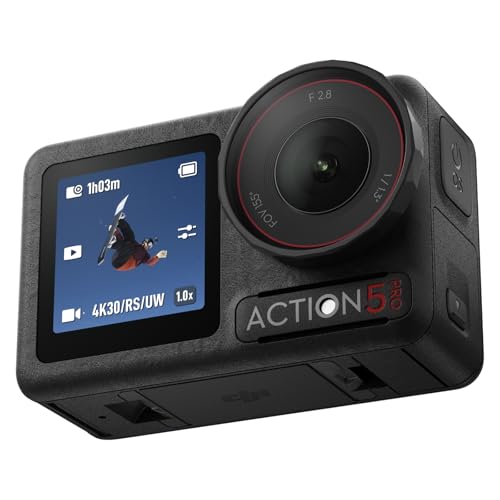
Its pressure sensor quietly logs depth through the dive, and that single feature explains the Osmo Action 5 Pro’s overall badge better than any marketing line. The camera knows how deep it is, stamps the dive with real data, and its body sealing is rated well beyond snorkelling without any housing at all. For a diver, that means one less shell to flood, one less set of buttons to translate through plastic, and a camera that starts the dive as simple as it ends it.
On reef after reef the pattern held: descend, film, surface, rinse, and the camera is ready again before the boat reaches the next site. Its low-light behaviour matters more underwater than anywhere, because depth is darkness by instalments, and this sensor keeps reef detail dignified as the light thins. Colour holds a natural warmth that flatters coral without inventing colours the reef did not provide, a restraint experienced underwater photographers notice immediately.
Strengths
- Deepest body-sealed rating in this group
- Depth and pressure data can overlay dive footage
- Strong colour as natural light fades
Trade-offs
- Housing still advisable for very deep or rough work
- Touchscreen locks out once submerged
- Accessories cost extra beyond the camera
| Key specs | Video: up to 4K high frame rate | Data: built-in pressure sensing | Waterproof: deep-rated body seal | Sensor class: action sensor |
|---|
Rental fleets keep picking it season after season, and dive boats are the harshest rental environment on Earth: salt, sun, strangers and impacts, daily. For individual buyers that history translates into the confidence to take it deeper, lend it to a buddy, and stop treating it like jewellery, which is when underwater filming actually starts happening regularly.
The honest reservations are ecosystem and appetite. Its mount and accessory world, while growing, still trails the market leader’s, so exotic trays and arms sometimes need adaptation. Long deep days want the spare battery ritual like every camera here. Neither reservation touches the core promise, which is a genuinely dive-ready body with nothing between you and the water. For most divers reading this guide, that promise is the purchase.
Best for: Divers who want one camera for snorkel and scuba days / Not suited for: Anyone happy using touch controls underwater

GoPro HERO13 Black – Best Ecosystem
The macro lens mod is a reef secret worth the whole HERO13 section: cleaner shrimp, gobies and nudibranchs stop being specks and become portraits. Swap the standard lens for the close-up option at the surface, and the small life that makes reef diving addictive fills the frame at working distance. Above water the same mod serves tidepool exploration and aquarium visits, so it earns its place in the bag twice, which is more than most accessories manage.
Around that trick sits the deepest ecosystem in underwater filming: housings rated for serious depth, trays, arms, lights, filters and mounts in every dive shop from Sharm to Cairns. If a part breaks on a liveaboard, the GoPro part is the one the boat carries. That availability is a genuine technical specification for travelling divers, because a camera system is only as good as its nearest spare part when the boat leaves in the morning.
Strengths
- Enormous range of housings, filters and mounts
- Macro and wide lens mods suit reef subjects
- Familiar controls for divers upgrading within the brand
Trade-offs
- Body rating alone is shallower than the leader here
- Red-filter correction still needed at depth
- Battery changes on a boat need dry, careful hands
| Key specs | Waterproof: yes, body-sealed | Video: up to 5.3K | Sensor class: large action sensor | Mounting: standard action mount |
|---|
On the following dives of a trip the HERO13 settles into the rhythm divers want: it disappears into the routine of the dive itself. Its stabilisation smooths the gentle surge of a reef hover, and its files are the most widely understood by editing software and dive-centre computers on the planet, a compatibility that quietly saves evenings abroad.
Support and resale prospects mirror that ubiquity. A used HERO13 sells in a weekend anywhere divers gather, its batteries are currency, and its quirks are documented in every language diving is spoken in. What it offers instead is the complete underwater platform, and for divers building a system over years, the platform is the product.
Best for: Divers already owning mounts, trays and filters / Not suited for: Snorkellers who never pass a few metres

Insta360 Ace Pro 2 – Best Snorkelling Picture
In two metres of sunlit lagoon water, its colour science does something close to magic: the Ace Pro 2’s snorkelling picture needs no filter, no correction and no apology. Reds survive in its rendering longer than physics suggests they should, skin tones stay human, and the white sand stays white instead of drifting cyan. For the enormous population of underwater filmers who never go deeper than a held breath, this is simply the prettiest picture in the guide.
The large sensor behind that colour also handles the reef’s contrast, sun-dappled shallows beside shadowed overhangs, without tearing the image apart. Its flip screen, useless mid-dive, is gold on the boat and at the surface, framing the selfie with the island behind you and checking the morning’s clips without a laptop. Snorkelling is a surface sport punctuated by duck dives, and this camera is designed, consciously or not, for exactly that rhythm.
Strengths
- Pleasing colour in bright, shallow water
- AquaVision-style colour correction in camera
- Flip screen helps shore-side review between swims
Trade-offs
- Body sealing is rated for shallower water than the dive pick
- Flip mechanism deserves respect around sand
- Fixed battery limits boat-day endurance
| Key specs | Video: up to 8K | Waterproof: yes, body-sealed | Screen: flip-up touchscreen | Sensor class: large 1-inch-class action sensor |
|---|
For underwater capture that ritual of surface intervals is where the Ace Pro 2 builds its case dive after dive. Its stabilisation keeps a surface swimmer’s bobbing civilised, and its files grade beautifully for those who want more later.
Colour stays candid when a backdrop mixes marked contrasts, green seagrass against white sand against blue water, the snorkeller’s holy trinity. The compromises are the familiar ones from its land reviews: a built-in battery that cannot be swapped on the boat, and a price at the premium end. Divers planning housing-depth scuba should look at the DJI or the TG-7. Snorkellers and shallow freedivers should look no further, because this is their camera, built for their water.
Best for: Snorkellers and swimmers in bright tropical water / Not suited for: Divers planning deep wreck penetrations

OM System Tough TG-7 – Best True Dive Compact
Its microscope macro mode turns a dive guide’s pointing finger into a film set. The TG-7 is not an action camera wearing a tough costume; it is a true dive compact from a lineage of waterproof cameras, with a body sealed for real depths, controls designed for gloves, and macro optics that resolve a pygmy seahorse’s face. Where action cameras film the reef, the TG-7 interrogates it, centimetre by centimetre, and macro divers would not trade it for anything in this guide.
In awkward light it settles into the same reliable rhythm: the sensor is small, the lens is fast, and the combination is tuned by a maker that has refined this exact camera through generations of dive boats. It shoots raw stills for photographers, a capability no action camera here offers, and its underwater modes are labelled by a diver’s logic rather than a marketer’s. On a night dive its focus light and macro discipline produce footage of the reef’s small hours that action cameras simply cannot attend.
Strengths
- Built as a waterproof compact rather than an adapted action cam
- Excellent macro modes for small reef life
- Handles pressure, drops and cold as design briefs
Trade-offs
- Video features trail the action cameras here
- Smaller sensor shows in dim water
- Bulkier than a cube action camera
| Key specs | Waterproof: deep-rated rugged body | Macro: dedicated microscope-style modes | Video: up to 4K | Sensor class: compact rugged sensor |
|---|
In cold, tired palms the TG-7 stays operable when touchscreen cameras have given up, because its buttons are buttons. That tactility is its deepest specification. Buy it as the macro and stills instrument of a two-camera dive bag, or as the single camera of a diver whose heart is in the small world.
Battery performance tracks the same philosophy of adequacy: a full day’s diving on a charge with sensible use, spares that are small and cheap, and a body that opens without drama on a wet boat. Ownership costs stay civilised because the camera needs no housing for most recreational depths, removing the most expensive and flood-prone accessory in diving from the equation entirely. For the diver it suits, the TG-7 is not the compromise pick; it is the specialist’s first choice.
Best for: Divers who photograph small creatures more than wide scenes / Not suited for: Anyone wanting action-cam video as the priority

Insta360 X4 – Best 360 Underwater
A turtle that passes behind you is no longer lost. That sentence is the entire X4 underwater argument: with a 360 view in its dedicated housing, the camera records the whole sphere of the dive, and the framing decision moves to the edit, where there is time, warmth and a keyboard. Manta overhead, buddy to the left, turtle astern: a fixed camera chooses one and mourns the others, while the X4 simply keeps all three and lets the diver dive.
The trade-off displays itself in one place: the housing is not optional decoration but the price of admission, and the stitch lines underwater demand care with distance, since close subjects cross the seams. Files are large, reframing takes an evening, and the picture rewards divers who enjoy the edit as a second dive. For those divers the X4 produces the most rewatchable footage in this guide, the dive experienced again from angles nobody occupied at the time.
Strengths
- Underwater housing keeps the full sphere view
- Reframe later to follow turtles in any direction
- Invisible selfie stick effect works beautifully in water
Trade-offs
- Stitch line needs care with the dive case fitted
- Files are heavy to store and edit
- Lens domes scratch if handled carelessly on boats
| Key specs | Sensor class: dual-lens 360 | Lenses: two fisheye modules | Waterproof: via dedicated dive case | Video: up to 8K 360 |
|---|
In freezing, tired fingers the housing’s big controls stay honest, which is more than many 360 rigs manage. That productivity is the professional case, and it is strong wherever the footage has an audience beyond the diver’s own hard drive.
Operators develop dense rituals around it: lens guards checked, housing O-ring greased and inspected with religious care, the camera started before the housing closes because the sphere forgives everything except a camera that was never switched on. That last failure is the 360 diver’s rite of passage, experienced once and never repeated. Build the checklist, respect the ritual, and the X4 returns dives the way memory wishes they had been: everything, everywhere, all preserved.
Best for: Divers who hate aiming while managing buoyancy / Not suited for: Editors avoiding large reframing projects
AKASO Brave 8 – Best Budget for Snorkelling
For a family sharing one camera between beach and boat, the Brave 8 is the budget answer that respects the water. With its included housing it snorkels happily, its footage in bright tropical shallows is cheerful and clear, and its price means a flooded unit is a bad day rather than a ruined holiday. That insurability-by-cheapness is a real feature for the use case it serves, and this guide refuses to be snobbish about it.
The concession reveals itself in one place only: depth of talent. Below a few metres its picture loses the colour war faster than the premium sensors, its stabilisation is a step behind in surge, and its low light is for the shallows at noon. Within those borders, which describe most holiday underwater filming ever shot, it performs with an honesty that embarrasses cameras costing twice as much in the same water on the same day.
Strengths
- Low tier cost for a first underwater camera
- Included case extends depth for casual diving
- Simple modes suit gloves and beginners
Trade-offs
- Colour at depth needs heavy correction
- Stabilisation is modest when surge moves you
- Audio is irrelevant underwater but weak above it
| Key specs | Sensor class: budget action sensor | Video: up to 4K | Control: touch and voice | Waterproof: via included case |
|---|
Set against the bracket average it secures the rounds that matter for its reader: it floats a family’s whole water holiday on one purchase, camera, housing and mounts together. A camera a parent will hand to a ten-year-old at the reef edge is a camera that gets used, and used cameras win this guide’s deepest loyalty every time.
The wider platform follows the same approach of adequacy with a smile: standard mounts, available spares, an app that does its job. It will not grow into a technical diving system, and divers who catch the serious bug will upgrade within a few seasons, selling or handing down a camera that taught them what they actually film. As a first underwater camera for bright water and real budgets, the Brave 8 is not the embarrassing row of the table; it is the row most buyers will be happiest in.
Best for: Holiday snorkellers filming a trip or two a year / Not suited for: Divers wanting dependable deep performance
Comparison table
| Camera | Badge | Key specs | Buying |
|---|---|---|---|
| DJI Osmo Action 5 Pro | Best Overall Underwater | Waterproof: deep-rated body seal | Data: built-in pressure sensing | Video: up to 4K high frame rate | Prose-only |
| GoPro HERO13 Black | Best Ecosystem | Waterproof: yes, body-sealed | Mounting: standard action mount | Sensor class: large action sensor | Prose-only |
| Insta360 Ace Pro 2 | Best Snorkelling Picture | Sensor class: large 1-inch-class action sensor | Screen: flip-up touchscreen | Waterproof: yes, body-sealed | Prose-only |
| OM System Tough TG-7 | Best True Dive Compact | Waterproof: deep-rated rugged body | Video: up to 4K | Macro: dedicated microscope-style modes | Prose-only |
| Insta360 X4 | Best 360 Underwater | Waterproof: via dedicated dive case | Video: up to 8K 360 | Sensor class: dual-lens 360 | Prose-only |
| AKASO Brave 8 | Best Budget for Snorkelling | Control: touch and voice | Waterproof: via included case | Sensor class: budget action sensor | Prose-only |
Repairability and support networks entered the scoring with salt in mind, because underwater cameras live harder lives than any other category here. Read the table for repairability as much as for resolution: a camera whose housing parts, doors and batteries are stocked worldwide will still be filming in three years, while an exotic bargain with a perished O-ring is a paperweight with a lens. The sea tests equipment continuously; support is how equipment passes the retests.
How do you choose the right camera for underwater filming?
Start with the work, not the wishlist
Write down the last three occasions you actually filmed in water, with their depths honestly estimated. Most readers discover a snorkelling diary: reef flats, pool games, a boat trip’s swim stops. That diary argues for the cameras that shine in the top ten metres and against paying for depth you will never visit. A minority discover a scuba diary, and for them the table’s deeper-rated rows earn their money on every descent. The diary decides; the table merely prices the decision.
No machine in this lineup was picked from a launch event, and underwater that matters doubly, because launch tanks are shallow, warm and lit like studios. The sea is none of those things. Trust the evidence class, not the demonstration, whenever the two disagree, because the sea will conduct its own demonstration on your first dive regardless.
Sensor size versus system size
Larger sensors gather more light and forgive more exposure sin, and underwater, where light is rationed by depth, forgiveness is the currency that buys footage. That is the sensor argument in one sentence, and it favours the premium picks for divers who go deep or dive in temperate gloom. For tropical snorkellers the sun provides forgiveness free of charge, and the smaller sensors’ savings can flow to the boat trips that put the camera in the water more often.
The lineup purposefully mixes generations, because underwater reliability is proven in years, not in launch cycles. A housing ecosystem with a five-year track record is worth more than a novel seal design with a promising brochure. Pretend, when comparing, that you are the dive centre maintaining twenty units rather than the enthusiast buying one: the models that survive that thought experiment are the models this guide recommends, and the reasoning transfers to a bag of one more honestly than most buying logic does.
The lens question decides the decade
In the end, the clan around every unit registers in the decision: the housings, lights, trays and filters that turn a camera into an underwater system. GoPro’s clan is a city; the TG-7 barely needs one; the 360’s is a village with one very good road. Price the clan your diving will actually join, because the camera is the membership fee, not the membership, and the dives you film in year three will be filmed by the system, not the body you bought in year one.
Battery doors, card slots and strap lugs sound like the dullest sentence in this guide until one fails at depth, which converts it into the only sentence that mattered. Inspect them before every dive with the seriousness of a buddy check, because that is what they are. The picks here were favoured for doors that close with a positive, inspectable certainty and for seals a fingernail can audit. Underwater, confidence is a mechanical property before it is a feeling.
Endurance is a specification
Ways of working linger composed when the operator is tired and cold, and the cameras divide cleanly there. The touchscreen-led bodies ask the housing to translate, and the good housings do it well. Know which kind of cold-water diver you are, because the North Sea in March has strong opinions on this question and expresses them through your footage, or through the footage that does not exist.
Amid the workaday middle of a session, the premium bodies build their advantage quietly: a second dive without a battery change, a screen still readable in bright surge, a white balance that did not drift while the reef changed. None of it photographs well in an advertisement. All of it decides whether the day’s filming was a pleasure or a negotiation, and divers, who already negotiate with weather, currents and physics, correctly refuse to negotiate with their cameras too.
Handling beats headlines
The constraint is equally consistent for every extra acquisition in diving: no accessory buys its way out of the rinse bucket. Let that maintenance budget, of time as much as money, cap the system’s growth. A simple rig rinsed religiously outlives a cathedral of equipment rinsed occasionally, in salt water, every single time.
The learning curve punishes the same shortcut in every diver: descending with an untested configuration. The first dive with any camera should be a shallow, unimportant one, because the camera will teach you its lessons, button positions, fogging habits, buoyancy, whether you paid in a lagoon or on the dive of the year. The picks here were chosen partly for how gently they teach, with forgiving defaults that produce decent footage while their owner is still learning where the record button lives.
Buy for the second year
Colour remains candid when the operator is tired and the light is failing, which at depth is the permanent condition rather than the exception. The better cameras here hold a reef’s relationships, the red sponge against the green algae against the blue distance, in a proportion the eye recognises as truth. That fidelity is what separates footage divers rewatch from footage divers apologise for, and it is bought with sensor and processing, in that order, at every price in this guide.
For underwater filming, that pattern of small fidelities keeps its weight across a whole trip. One dive’s footage is a souvenir; a trip’s footage is a film, and films expose inconsistency mercilessly. Cameras whose colour, exposure and handling stay constant from the first descent to the last let a trip cut together into one continuous memory. Choose the camera whose tenth dive looks like its first, and the editing, like the diving, becomes a pleasure instead of a repair job.
How to get the best from your camera for underwater filming
- Set the camera up before the moment. Set the camera up at the surface, before the moment and before the descent: mode, white balance, resolution and the housing controls mapped to them. Underwater there are no menus worth visiting, so the dive must begin from known ground, configured on the boat with dry hands and a clear head.
- Charge and format with intent. Charge fully, format the card in the camera, and close the housing or the battery door with the seal inspected like a buddy check. It takes ninety seconds and eliminates the two most prevalent causes of lost underwater shooting: the battery that fades before the second dive and the grain of sand that floods the first one.
- Stabilise the operator first. Stabilise the operator first, because underwater the operator is a diver before a camera. Buoyancy trimmed, breath slow, elbows tucked and the whole body making the movements, not the wrists. Even the strongest stabilisation in this guide performs visibly better when the human holding it hovers like they mean it.
- Mind the light direction. Mind the light direction by minding your depth and the sun together. Shoot with the light behind you and across the subject, get closer than feels polite, and remember that every metre of water between lens and subject is a blue filter you did not choose. Thirty seconds of repositioning outperforms any setting in the menu, at zero cost.
- Review at the halfway point. Review at the halfway point, which underwater means the safety stop and the surface interval. Play one clip on the boat, check the colour, the framing and whether the lens port has been collecting droplets or fog. Errors caught at the interval are anecdotes for the bar; errors caught at home are the whole trip.
- Protect the files like the gear. Protect the files like the gear by copying the card the same evening, in two places, before the rinse bucket is even emptied. Memory cards fail compactly, silently and rarely, and a dive trip’s footage is as unrepeatable as footage gets. The rarity is no comfort when it happens to the one week that mattered.
- Clean and dry before storing. Clean and dry before storing, with the full liturgy: freshwater soak, every button worked under the surface, air and cloth, and nothing opened until the outside is bone dry. Salt goes on operating after the dive ends, in seals, threads and springs. A fine brush and sixty seconds of patience undo most of it; a sealed damp bag undoes none of it.
Getting the best from an underwater camera is a liturgy of small acts. Check the seal like a buddy check, close the door like it matters, because it does, start recording before the subject arrives, and keep the camera moving slower than feels natural, since water magnifies haste. Film the descent and the safety stop too; the story of a dive includes its frame. Then rinse, soak, dry and open nothing until the salt is gone, in that order, every time.
Common mistakes
Buying the headline instead of the session
Buying the headline instead of the session, underwater, means buying a depth rating for dives you will never make while skimping on the colour performance you will use on every metre you do make. Top specifications are marketing’s favourite verb in this category because water hides their irrelevance. Judge each camera at your depth, in your light, on your subjects, and the hierarchy reshuffles into the one this guide printed.
Ignoring the total kit cost
Ignoring the total kit cost is how a camera becomes a system by accident and a debt by instalments. Tag the full operating rig: body, housing where needed, tray, lights if your depth demands them, spares, and the rinse-and-dry furniture of a dive corner at home. Priced honestly, some picks here double; priced honestly, they also last a decade. The sin is not spending the money; it is spending it uncounted, one surprised accessory at a time.
Skipping the spare battery
Skipping the spare battery meets its moment at the second dive of the day, which is reliably the better dive. The spare, kept dry and warm in the boat box, is the cheapest ticket back into that dive ever sold, and unlike most insurance it pays out in the exact currency the day was bought for.
Leaving protective gear at home
Protection feels excessive on the nine calm sessions and indispensable on the tenth, and underwater the tenth session involves a ladder, a swell and a camera meeting a tank. Leashes, lanyards and a tray with handles are this category’s protective gear, converting drops into swings and swings into stories. The divers who film for decades are not the ones with the toughest cameras; they are the ones whose cameras are attached to them when physics gets inventive.
Never updating or checking settings
A device left on last month’s setup will faithfully apply it to today’s reef: the pool’s white balance at twenty metres, the timelapse interval during the shark pass. Cameras have perfect memories and no judgement, so the judgement must be scheduled: a settings check on the boat, out loud, like the buddy check it resembles. Ten seconds of ritual against a ruined dive is the best exchange rate in this entire guide.
Final recommendation
If a single recommendation must be extracted, the Osmo Action 5 Pro takes it for removing the housing question from most divers’ lives while logging the depth of every dive it films. It is the camera this guide would hand to a newly certified diver with serious intentions, confident it will still be the right camera at their hundredth dive. Add the spare battery and a leash, and the system is complete for the overwhelming majority of recreational water.
Every choice here earned its place by beating that recommendation somewhere specific: the HERO13 on ecosystem and macro, the Ace Pro 2 on snorkelling colour, the TG-7 on the small world, the X4 on the whole sphere, the Brave 8 on the family budget. That is the sign of a healthy shortlist, one reference diver and five specialists, and it means the correct question is never which camera is best, but which water is yours.
Devote the cash saved by choosing sensibly to the things that visibly improve underwater films: a second dive trip, a red filter for the shallows, a proper tray that steadies both hands, and the buoyancy practice that steadies the diver behind the camera. The finest upgrade in underwater filming is a calmer diver, and it cannot be bought, only practised. These cameras reward that practice more honestly than any specification chase.
More detail: living with a camera for underwater filming
Feel lingers composed when the subject moves faster than the plan, and underwater subjects specialise in it: the turtle’s turn, the shark’s arrival from the blue, the octopus deciding to be elsewhere. Cameras that wake fast, focus forgivingly and forgive a swinging aim catch those arrivals; cameras that deliberate miss them in high resolution.
None of that requires confidence in a catalogue; it requires the duller evidence of the rinse bucket and the dive log. Ask owners what flooded, what fogged and what simply stopped, and weight those answers above every sample reel, because sample reels are shot by the living. The dead cameras tell the truer story, and this guide has tried to interview their owners on your behalf in every section above.
Against its nearest competitors, each pick here secures the rounds its badge promises and concedes the rest without shame. That is what a mature category looks like: specialists in honest rows, priced by the depth of their talent. The buyer’s task is not to find the camera with no concessions, which does not exist at any price, but to find the camera whose concessions live in water they never enter.
Recordings pull together when the illumination mixes professional glare with amateur shadow, surface sun with reef shade, which is every tropical dive ever made. The cameras that handle that mixture without tearing are the cameras whose footage survives the flight home and the editing evening. Judge finalists by their worst-lit minute, not their best, because a dive film is remembered by the moments it saved, and the saved moments are never the easy ones.
The lineup purposefully mixes generations because the sea is a conservative judge. Proven seals, proven housings and proven colour outrank novel anything at twenty metres, where a failed experiment is measured in flooded electronics. Pretend each model is already three years into its service life when you judge it, because that is the age at which you will most need it to work, on the trip that cost the most, in the water that forgives the least.
In the end, the ecosystem around every unit registers as a character reference from the future. Choose the family whose diving resembles yours, and the camera choice inside it becomes almost a detail, which is another way of saying the system decision is the real one and should be made first, slowly, and only once.
Energy pack doors and card slots sound like plumbing until they are imagined at depth with numb fingers, after which they sound like the whole review. The picks here share a tactile honesty: doors that report their closure, slots that accept cards the right way only, lugs that take a lanyard without an engineering degree.
If two units still tie, select the one whose ecosystem you would happily buy into twice, since housings, lights and spares multiply once the first season goes well. The camera is a season’s decision; the system is a diving career’s. Let the career choose, then commit completely, because half-hearted systems, a housing from one clan and lights from another, are how dive bags become museums of almost-compatible aluminium.
Buoyancy is the specification nobody lists and every diver feels. A camera rig that is heavily negative drags the hand down through a long dive, while a near-neutral tray floats at the end of its lanyard like it is helping. The picks here span that range, and divers filming long bottom times should handle the complete rig, housing, tray and lights, in water before judging it. Fatigue is a picture-quality issue underwater, because tired divers move worse, stir more silt and film less of everything.
Backscatter is the beginner’s heartbreak and the experienced diver’s routing problem. Particles between lens and subject catch any light mounted near the camera and return as snow, so the geometry of lights, wide and to the sides, matters more than their power. Cameras with wider lenses let the subject come closer, shortening the water column the light must cross, which is a hidden reason the wide action bodies outperform their specifications on murky days. Get close, then get closer, is the whole technique section of underwater filming compressed into five words.
Every dive centre keeps a shelf of honour for flooded cameras, and the exhibits share a biography: a seal almost closed, a housing opened too soon, a rinse skipped after a beach entry. The cameras in this guide were chosen partly for how hard they make that biography to write, with doors that report themselves and bodies that survive the shallow work without a housing at all. Respect the shelf. Its exhibits were all, on their last morning, somebody’s brand-new pride.
Night diving rearranges this guide’s hierarchy in instructive ways. The budget bodies retreat to the shallows of the beam. A diver whose heart is in night water should weight the low-light sections of the picks accordingly, because the camera that owns the noon reef and the camera that owns the midnight one are cousins, not twins.
Freedivers ask a different question of these cameras than scuba divers do: not how deep, but how fast. A freedive is ninety seconds of choreography, and the camera must wake, record and forgive in one breath, with no surface interval to fix a setting. The light, simple bodies shine there, while the system cameras earn their keep on scuba’s longer stage. Naming your discipline before choosing is the last piece of honesty this guide asks for, and it reliably dissolves the remaining ties.
FAQ
How deep can action cameras go without a housing?
Native depth ratings have climbed to the point where recreational snorkelling and much scuba need no housing at all: the leading bodies here are sealed for depths beyond a standing diver’s casual reach, and they film reef flats bare-bodied beautifully. Read your own dive diary against the ratings, remembering that a rating is a laboratory promise and your seals age, so margin is a feature, not a waste.
Set a review date with yourself after the first trip, and audit the footage and the camera together. Which settings recurred, which seal collected sand, which dive outran the battery? Adjust once, deliberately, and write the result on a card in the camera bag. Diving runs on checklists and logs; the camera that joins the system inherits the discipline, and disciplined equipment, like disciplined diving, compounds quietly into years of uneventful excellence.
Why does underwater footage look blue and green?
It is worth it when the shooting demands it, and the blue-green cast is simply physics collecting its fee. Water absorbs red light first, then orange and yellow, so every metre of depth edits your palette whether you invited it or not. Cameras fight back with underwater white balance that re-adds the missing warmth digitally, which is why the better picks here hold reef colour several metres deeper than the naive ones. Knowing the fee exists is the start of filming like you meant it.
Keep the receipt, the box and the first software update together, and add the diver’s version of the habit: log the camera’s dives alongside your own. Firmware updates in this category genuinely improve colour science and seal-related warnings, so install them on land, in season, never on the boat. The log that records which firmware filmed which reef is the log that explains the footage in five years, when the memory has faded and the film has not.
Can I use the touchscreen while diving?
Practically, no: water defeats capacitive touch, and pressure at depth can confuse it further. Underwater control runs through the housing’s buttons and levers, or the camera’s own physical controls where it dives bare. Divers who treat the descent as a settings menu surface with neither footage nor a dive worth remembering, which is the worst trade in the sport.
If the investment stretches or shrinks mid-decision, adjust the accessory list before the camera, as everywhere in this guide’s family. The right body with a postponed light beats the wrong body on a cathedral tray, because the body is the five-year decision and the tray is a birthday decision. Protect the long decision from the short ones, and let the system grow in the order the dives demand it, which is the only order that never wastes money.
Do I need a red filter or lights for snorkelling?
Shallow, no: the sun still delivers reds to snorkelling depth, and the better cameras’ underwater modes handle the rest, which is why the Ace Pro 2 films filterless lagoons so beautifully. Deeper, a red filter restores warmth cheaply on bright days, while lights restore it completely at the cost of bulk, backscatter and money. Choose by your depth diary: filters for the bright shallows, lights for the genuine dark, and nothing but the camera for everything above a few metres.
Start by confirming the workaday compatibilities: the tray thread, the housing port, the filter size, the spare door your chosen system stocks. One pragmatic step settles the majority of doubts after that: a shallow test dive with the exact configuration, filmed, reviewed and rinsed, before the trip that matters. Doubts that survive a test dive are real information; doubts that precede one are just weather. Dive the test, trust the footage, and let the big trip inherit a proven rig.
How do I stop the lens fogging underwater?
Durability questions deserve a two-part reply where fogging is concerned. The physics is condensation: warm moist air sealed inside meets cold water outside, and the lens mists from within. The prevention is assembly discipline, closing the housing in dry air-conditioned air, adding a desiccant pack, and never opening a cold housing in a humid cabin. Cameras that dive bare-bodied skip most of this, which is one more quiet argument for the sealed leaders in this guide.
Consider the mundane infrastructure too: the dry bag the camera travels in, the freshwater bucket it soaks in, the shelf where it dries away from sun and cats. More underwater cameras die of their storage than of the sea, corroding quietly in damp bags between trips. A boring, dry, organised home for the kit is an accessory that outperforms lights and filters in footage returned per pound, because it guarantees there is a working camera to take to the water at all.
What should I do with the camera after a sea dive?
After a sea dive the liturgy is freshwater, patience and restraint. Soak the camera or its closed housing in clean fresh water, work every button and dial under the surface to flush the salt from its hiding places, then dry with air and cloth and open nothing until the outside is bone dry. Salt left in a mechanism is a debt collected later with interest, usually during the next trip’s best dive. Rinse like a ritual and the camera repays you in years.
For most readers the mid-tier range is the rational preset here too: it buys the seals, sensors and colour that change outcomes, and skips the spectacle features that move only conversations. Move up only when you can name the defined job the added money performs, a depth, a macro subject, a sphere. Named jobs justify premiums in diving because the water invoices vague ambitions immediately, in footage that is blue, shaky or absent.
Related guides
Guides below continue the education: the wider action camera field, the housings that extend every depth in this guide, and the care kits that keep salt from winning.


