Disclosure: As an Amazon Associate, reviewstook.com earns from qualifying purchases. Links on this page are affiliate links; they cost you nothing extra. Prices and availability change often, so check the current Amazon listing before you buy.
Few budget earphones carry expectations like the subject of this truthear x crinacle zero red review, because few arrive with a tuning pedigree this discussed. The Zero: RED is the follow-up to a collaboration that already reshaped what listeners expect from an affordable in-ear monitor: Truthear’s dual dynamic driver hardware, tuned with Crinacle — the measurement-driven reviewer whose target curves and ranking lists have influenced a generation of IEM buyers — toward a sound that aims for correctness rather than spectacle. This review examines what that philosophy produces in the ear: a dual-driver wired earphone with a distinctive approach to bass, a fit and cable story that matter more than brochures admit, and a value proposition that has to be understood against both its predecessor and the crowded field it provoked. No laboratory measurements are claimed here; what follows is a careful listener’s and buyer’s account of what this earphone is, who it serves, and where its honest limits lie.
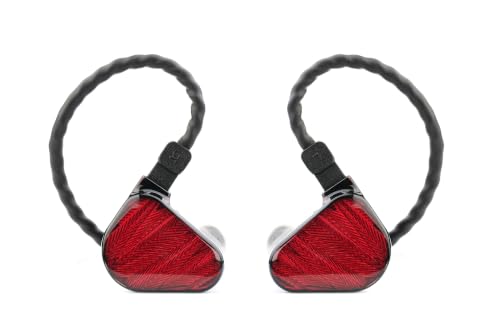
Key takeaways
- The Zero: RED pairs two dynamic drivers — a 10mm unit and a 7.8mm unit — in a crossover arrangement unusual at its accessible tier.
- Its tuning follows a measured, target-led philosophy: balanced with a deliberate, tasteful bass elevation rather than a bass-head slam.
- An included impedance adapter changes the bass level, effectively giving one earphone two related sound signatures.
- Fit is the gatekeeper: the nozzle and shell suit many ears but should be trialled with tip rolling before judgement.
- It is a wired, 0.78mm 2-pin earphone — no battery, no Bluetooth, no app — built for listeners who value sound per unit of money above features.
- Gamers and film watchers benefit from its clean separation and honest staging as much as music listeners do.
In this guide
What is the Zero: RED, and where did it come from?
Context first, because this earphone is a sequel. The original Truthear x Crinacle Zero demonstrated that a dual dynamic driver IEM, tuned to a respected measurement target, could be sold at a price that made the budget segment sit up. The RED revision revisits that formula with refined drivers — a 10mm dynamic driver handling the low region and a smaller 7.8mm unit for the rest — and a tuning that responds to the community’s feedback on the original, particularly around bass character and overall polish. The collaboration model itself is part of the product: Crinacle’s involvement signals that the frequency response was the design brief, not an accident discovered after tooling, and the RED’s reputation rests on that intention being audible.
The hardware formula deserves a plain explanation. Two dynamic drivers in one shell, divided by a crossover, let each driver work where it is happiest: a larger diaphragm moving air for bass, a smaller, nimbler one for midrange clarity and treble detail. At this price tier many rivals use a single driver asked to do everything, or hybrid arrangements with balanced armatures; the dual-dynamic route, executed with discipline, tends to produce a coherent, natural timbre — instruments sounding like themselves — which suits the target-led tuning philosophy perfectly. Add the impedance adapter in the box, a small in-line accessory that shifts the earphone’s bass response when used, and the RED becomes a small argument that thoughtful engineering beats specification inflation.
The subject, examined closely

TRUTHEAR x Crinacle Zero: RED — the budget tuning benchmark
Badge: Best for listeners who want measured correctness at an accessible tier
- Drivers: dual dynamic — 10mm plus 7.8mm configuration
- Connection: wired, detachable 0.78mm 2-pin cable
- Character: in-ear monitor for music, gaming, and media
- In the box thinking: impedance adapter included for bass adjustment
- Listing note: sold via the TRUTHEAR brand listing used as this review’s subject link
Note on listings, in the interest of the same honesty this site applies everywhere: the Zero: RED appears on Amazon under more than one storefront, including a Fanmusic retailer listing of the same product. This review links the TRUTHEAR brand listing as its single subject link, so that readers land on the manufacturer’s own presentation of the earphone; the product under review is the same dual-driver RED either way, and checking the exact seller and listing details before purchase is a sound habit with any popular IEM.
In the ear, the RED’s personality announces itself within a track or two: this is a tuning that respects the recording. The bass is present, textured, and — with the adapter — adjustable toward a warmer, fuller presentation, but it never stages a coup against the midrange. Vocals sit where they should, neither recessed behind a bass curtain nor pushed into your forehead, and the treble extends with a civility that lets long sessions pass without the fatigue that brighter budget tunings inflict by the third album. The cumulative effect is an earphone that disappears into the music more completely than its price suggests it should — the quality listeners describe, often with surprise, as sounding simply right.
Technical performance supports the tuning. Separation between instruments is clean enough that dense arrangements stay legible, imaging places elements convincingly enough for gaming and film, and the soundstage reads as tidy and honest rather than cavernous — this is an in-ear monitor, and it behaves like one, prioritising accuracy of placement over concert-hall illusions. What it will not do is flatter poor recordings or manufacture bass that a track does not contain; listeners raised on heavily boosted consumer tunings may initially hear correctness as restraint, and should give the RED a week of real listening before verdict, because the adjustment of taste it asks for is the same one good speakers have always asked for.
Strengths
- Target-led tuning delivers balance and timbre that shame far pricier earphones.
- The impedance adapter provides a genuine second bass character in the box.
- Dual dynamic drivers produce coherent, natural instrument sound.
Trade-offs
- Wired only — no Bluetooth, no ANC, no app conveniences of any kind.
- Fit depends on tips and nozzle comfort; some ears need tip experimentation.
- Its honesty exposes poor recordings and will not invent bass a track lacks.
Best for: music-first listeners, gamers wanting clean imaging, and anyone curious what the measurement-led tuning movement is about. / Not suited for: buyers needing wireless freedom, noise cancelling, or a bass-heavy party tuning.
How does the sound hold up across music, games, and film?
Across music, the RED’s virtues compound by genre in predictable ways. Acoustic, jazz, and classical recordings show off its timbre and separation — a double bass sounds woody rather than electronic, piano harmonics decay naturally, and a string section separates into instruments rather than a wall of sheen. Vocal-led music benefits from the midrange honesty: singers keep their chest and character instead of being thinned into detail or thickened into warmth. Electronic and hip-hop listeners get bass that is controlled and textured, with the adapter available when a fuller low end is the evening’s mood — though true bass-heads should understand that even adapted, this earphone’s low end is about quality and proportion, and a dedicated bass tuning elsewhere will always out-slam it.
Gaming is a quietly excellent use. Clean imaging and separation translate into footsteps and directional cues that can be placed with confidence, while the balanced tuning keeps explosions from bulldozing the subtle sounds layered beneath them. There is no microphone in the standard configuration to match a headset’s convenience, so competitive players should plan their voice solution separately; for single-player immersion and for listening-led gaming, the RED is a small revelation beside bundled earbuds. Film and streaming reward the same traits — dialogue clarity above all, since the midrange honesty that flatters singers also keeps whispered lines intelligible at modest volumes, a mercy for late-night viewing in shared houses.
How do fit, tips, and the cable shape daily life with it?
An IEM’s sound is hostage to its seal, and the RED is no exception. The shell and nozzle are sized for the average ear, and the included tip selection covers the common range, but the correct ritual for any new owner is tip rolling: try sizes methodically, because a seal one size off does not merely reduce comfort — it deletes bass, thins the sound, and has caused more unfair reviews of good earphones than any tuning decision ever made. Foam tips, available as an aftermarket experiment, can help difficult ears and add isolation at the cost of a slightly softened treble. Isolation overall, once sealed, is the passive, earplug kind — effective against the drone of travel and offices, and entirely dependent on that seal.
The detachable 0.78mm 2-pin cable is the ownership feature that outlasts every other. Cables are the mortality of wired earphones — they tangle, strain, and fail at the connector — and a detachable standard means a failure is a modest cable purchase rather than a new earphone, while an upgrade to a preferred cable, or one with an inline microphone for calls, is a choice rather than a soldering project. Handle the connectors by their housings rather than the wire, coil rather than crumple, and the RED’s working life stretches toward the horizon its sound deserves. Storage in a small case, rather than a pocket’s lint economy, completes the unglamorous habits that separate a three-year earphone from a three-month one.
How should you drive it, and what should you pair it with?
The RED asks little of its source. It is an efficient wired earphone designed for the real world of phones, dongles, laptops, and handheld consoles, and it reaches satisfying volume from modest outputs — which matters, because a budget IEM that secretly requires an amplifier is a budget IEM with an asterisk. A clean USB-C dongle or a decent laptop output serves it fully; a dedicated portable DAC-amp can add refinement and headroom for listeners building a small wired ecosystem, but should be bought as an upgrade to an already-enjoyed earphone, not as a rescue. What genuinely improves the RED is unglamorous: high-quality source files or streams, a proper seal, and the patience to A/B the impedance adapter across a few favourite tracks and settle which character is your default.
Equalisation, for those inclined, should be surgical rather than corrective — the entire point of this tuning is that correction has been done by people with measurement rigs. A gentle preference nudge, a decibel here or there to suit your hearing or your library, respects the design; a wholesale reshaping into a bass cannon wastes the purchase, because bass cannons are sold elsewhere for the same money with more enthusiasm. Treat the RED as a reference you can wear, and its second life becomes educational: it teaches your ears what balanced sounds like, and every future earphone you audition will be judged against the lesson.
How does it sit among its rivals and its own predecessor?
Against its predecessor, the RED reads as a refinement memo made audible: the dual-driver concept retained, the tuning polished in the directions owners asked, the adapter adding flexibility the original lacked. Owners of the original who love it do not need to upgrade urgently; newcomers should buy the RED and get the mature version first. Against the wider budget field — a segment this earphone’s family helped create, crowded now with single-driver, hybrid, and planar experiments at similar money — the RED’s case is coherence and intent. Rivals may offer more features, flashier shells, or a more immediately exciting first thirty seconds; the RED offers the three-hour listening session that still feels right, and the measured confidence that its sound was designed rather than discovered.
Value framing without prices: this is an accessible-tier earphone whose tuning competes with products from tiers above, and whose detachable cable gives it a lifespan those tiers do not always match. Its competition is not really other earphones so much as the listener’s own habits — the wireless buds already in your pocket win on convenience every single morning, and the RED wins every time you actually sit down to listen. Households often end up owning both and using each for its honest purpose, which is a more mature conclusion than any shootout provides. Readers exploring the wider wired and wireless landscape may also enjoy choosing headphones for editing and critical listening and this cluster’s neighbouring USB audio and how digital sound reaches your ears.
What mistakes do first-time IEM buyers make with the RED?
Judging it in the first ninety seconds, with the wrong tips, on a bass-heavy track chosen to impress, leads the list — a ritual practically designed to misunderstand this earphone. Second is skipping the seal work: one tip size tried, bass declared missing, when the missing thing was the fit. Third is ignoring the adapter or, conversely, treating it as a permanent obligation rather than an option to be auditioned honestly across a week. Fourth is expecting wireless-era conveniences — calls in wind, noise cancelling on aircraft, a case that charges — from a product whose entire budget was spent on the sound, and then marking it down for the absence of features it never pretended to have.
Fifth is source snobbery in both directions: assuming a costly DAC is required before the RED can be enjoyed, or feeding it the worst-compressed files in the library and blaming the messenger. Sixth is cable carelessness, the yanked connector and the pocket-crumpled wire, against which the detachable design is insurance rather than immunity. All six mistakes share a theme: the RED rewards the listener who treats it as a small instrument — fitted, fed, and handled properly — and merely tolerates the one who treats it as a disposable accessory, which is a fair summary of the entire audiophile hobby in one sentence.
What is the measurement culture this earphone comes from?
To understand why the RED sounds as it does, a reader needs the movement behind it in one honest sketch. For most of consumer audio’s history, earphones were tuned by ear and by marketing: more bass sold units, more treble sparkle impressed in shops, and the listener’s long-term satisfaction was somebody else’s department. The measurement culture inverted that order. Using standardised rigs that simulate an ear, reviewers and engineers began publishing frequency response graphs — the earphone’s output across the audible spectrum — and comparing them against target curves derived from research into what listeners, on average, perceive as natural. Crinacle became the movement’s most influential populariser: a vast, consistent database of measurements, a ranking list readers treated as scripture and manufacturers treated as weather, and eventually collaborations in which the measurer helped tune the product itself.
The Zero family is that movement made purchasable at an accessible price, and the RED is its refined second statement. This matters to a buyer for a practical reason: a target-led tuning is a promise that can be checked. The earphone’s character is not a mystery meat of adjectives; it is a documented curve that independent measurers can and do verify, and its deviations from its target are the honest subject of discussion in the community. Listeners need not read a single graph to enjoy the result — the result is simply balance you can hear — but the culture explains why this earphone, at this price, sounds disciplined in a way that older budget favourites, tuned for the shop counter’s first thirty seconds, rarely did across a whole evening.
How does it handle the genres your library actually contains?
Take the library shelf by shelf. Rock and indie reward its midrange honesty most: guitars keep their body, snare drums crack without the treble turning to glass, and dense choruses separate into voices rather than compressing into enthusiasm. Metal, the sternest test of budget earphones, stays legible at speed — double-kick patterns remain articulate rather than smearing into rumble, though listeners who want the genre’s physical menace turned to maximum will still find the tuning polite by design. Jazz and acoustic music are the showcase shelves, as earlier noted: brushwork, upright bass, and piano harmonics are exactly the textures a coherent dual-dynamic presentation flatters, and small-ensemble recordings acquire the sense of a room rather than a file.
Pop production, mixed loud and bright by professionals who know their audience’s earbuds, can sound almost startlingly clean here — the RED reveals the craft, and occasionally the artifice, of masters built for lesser transducers. Classical listeners get string tone with its rosin intact and orchestral tuttis that hold their architecture at sane volumes, while the earphone’s tidy staging keeps chamber music intimate rather than inflating it into a stadium. Podcasts and audiobooks, the unglamorous majority of many listeners’ hours, benefit from the same vocal clarity as film dialogue, with the caveat that the RED’s honesty will present a badly recorded show exactly as badly as it was recorded. Across the shelves, the pattern is one personality: the earphone declines to have a favourite genre, and libraries assembled across decades and styles are precisely the ones that reward that neutrality most.
What listening tests reveal the RED’s character fastest?
New owners often ask how to hear what the fuss is about, and a small ritual serves better than random shuffling. Begin with a recording you know intimately — the album whose every entrance you can predict — and listen for placement: where the singer stands relative to the band, whether the bassist and the kick drum are separate citizens, how the room around a quiet passage feels. Follow with a bass test that is musical rather than theatrical: an acoustic bass solo or an electronic track whose low end moves melodically, and judge texture and pitch definition rather than sheer quantity; then repeat a section with the impedance adapter and decide which presentation your ear keeps preferring when the novelty fades. Finish with a vocal recorded close and dry, because the midrange honesty that defines this earphone is most naked there, and a voice that sounds like a person in a room, neither thinned nor sweetened, is the RED’s signature written plainly.
Run the same ritual a week later, after your ears have recalibrated from whatever you used before. The second hearing is the truthful one. Many listeners report that the RED’s virtues are cumulative rather than spectacular — nothing leaps, everything settles — and that returning to a bass-boosted predecessor afterwards is the moment the lesson lands, the old favourite suddenly sounding like a photograph with the contrast forced. That experience, more than any graph, is what the tuning movement has been trying to sell, and the RED delivers it at a price that makes the experiment nearly riskless for the curious.
How does it fit into a wider listening life alongside wireless buds?
Most buyers will not live by the RED alone, and it does not ask them to. The realistic modern arrangement pairs wireless buds — for movement, calls, weather, and the thousand small listens of a day — with a wired earphone kept where listening is the point: the desk, the reading chair, the evening album. In that arrangement the RED is the reference and the reward, the thing that reminds your ears what the library actually sounds like, while the buds handle the commute without complaint. Gamers often add a third context, the desk setup where the RED’s imaging serves long sessions and its cable never presents a battery warning at the worst possible moment. None of these roles requires the others to be wrong; the earphone’s accessibility means the wired reference no longer demands a pilgrim’s budget, which may be its most democratic quality of all.
Care habits protect that arrangement cheaply. Keep the RED in its case rather than in the pocket ecosystem of keys and coins; wipe tips after long sessions; let the cable hang rather than knot; and store the impedance adapter somewhere it will be found in month three, because small accessories migrate like socks. Should the cable eventually fail — the likeliest end to any wired earphone’s story — the detachable standard means the earphone itself survives, and a replacement cable restores the whole instrument for a fraction of its cost. Longevity, in a segment addicted to disposability, is a feature this review refuses to treat as a footnote.
How does the RED behave on the move — travel, commute, and the gym-bag reality?
A wired earphone in a wireless decade owes its owner an honest travel account. On trains and aircraft, the RED’s passive isolation, once the seal is right, takes the edge off cabin drone respectably — not the engineered silence of active cancelling, but enough that music at sane volumes sits clear of the rumble, with the side benefit of a battery that does not exist and therefore cannot die over the ocean. The cable, travel’s traditional villain, is managed by the oldest technologies: a case, a coil, a shirt clip’s worth of discipline. In return the traveller gets an earphone that works with the seatback screen, the laptop, and the phone with equal indifference, never asks to be paired, and can be lent to a seatmate’s child without a settings menu. Many frequent travellers carry exactly this pairing — cancelling buds for the cabin’s worst hours, the RED for the hotel room’s album — and regard the duplication as the system working rather than as indecision.
Exercise is the honest exception. A cable and a run are old enemies, and while the RED can serve a careful gym session routed under a shirt, its design centre is the chair, the desk, and the walk — not the treadmill. Saying so costs the review nothing and buys the reader the truth this site prefers: buy the RED for listening, and let a sport-bud handle the sweat. Products, like the people who review them, are most trustworthy when their limits are stated in the same tone as their virtues.
What should a buyer upgrading from bundled earbuds expect, hour by hour?
The first hour is adjustment, and it may underwhelm: the bundled buds that came with a phone are tuned to impress immediately, all bass warmth and treble sparkle, while the RED’s opening statement is composure. Somewhere in the second hour, usually inside a familiar album, the details begin filing in — the backing vocal that was always there, the bass line’s actual melody, the room around the drums — not as fireworks but as facts you cannot unhear. By the end of the first week the recalibration completes itself in the other direction: the old buds, revisited, sound like a story told too loudly, and the listener understands that the upgrade was never about more of anything. It was about proportion — every element of the music returned to its intended size relative to the others, which is what the word fidelity meant before marketing got to it.
Practical expectations deserve the same hour-by-hour honesty. The fit will take an evening of tip experiments. The cable will remind you it exists whenever you stand up carelessly. The adapter will be tried, loved or set aside, and either outcome is the product working as designed. And the first time a favourite recording reveals an instrument you had never noticed in fifteen years of listening, the RED will have made the only argument it ever intended to make — in your ears, with your music, at a price that makes the experiment available to anyone curious enough to run it.
How does the RED serve listeners with particular tastes — the bass lover, the vocal devotee, the treble-sensitive?
Every tuning is a negotiation among listeners, and the RED’s can be mapped honestly for the three tribes who ask most often. The vocal devotee is its natural citizen: singers, podcasters, and the spoken word arrive with a presence and intelligibility that flatter long listening, and choral or harmony-rich music keeps its inner voices separate in a way that makes this tribe evangelical. The treble-sensitive listener — the one for whom bright earphones are a headache scheduled in advance — finds a treble that informs without needling, and can finally hear cymbal detail as texture rather than as weather. The bass lover receives the nuanced answer this review has given throughout: quality, texture, and the adapter’s fuller setting, offered to a listener willing to discover that bass can be followed like a melody — and a clear signpost toward dedicated bass tunings for the listener who, having heard it, still wants the physical event more than the musical one.
There is a fourth tribe worth naming: the detail hunter, who listens for the recording’s fingerprints — the engineer’s choices, the room, the edit. The RED serves them with separation and honesty rather than with the artificial spotlighting that lesser earphones call detail, and it teaches the distinction that defines mature listening: real detail is the music’s own information, revealed; false detail is a treble shelf, fatiguing by the hour. A budget earphone that can teach that lesson has earned its place in a collection far beyond its price, and many owners keep the RED precisely as the reference that keeps their other purchases honest.
What is it like to hand the RED to a friend who has never heard of it?
Reviewers develop rituals, and one of the most informative is the blind handover: the earphone passed across a table, without its story, to a listener who knows only their own library. The RED’s handovers follow a pattern this review has come to trust. First comes the fit fiddle, universal and unglamorous. Then a chosen track — always a favourite, because people test with the music they love — and a particular expression that is not amazement but recognition, the look of a recording being returned to its owner in better condition than they remembered lending it. The questions that follow are never about drivers or curves. They are about price, asked with disbelief, and about where the bass went, asked by the one listener in five whose taste was trained by boost — and even that conversation usually ends, a week later, with the recalibrated text message this product seems to generate wherever it travels.
The handover matters because it isolates the earphone’s actual claim from its mythology. Stripped of the collaboration’s fame, the measurement movement’s arguments, and the community’s rankings, the RED is a small, red-accented object that makes familiar music sound proportionate and clear — and that, handed across a table without a word of context, turns out to be enough. Products that need their story to impress are marketing; products that survive the story’s removal are engineering, and the distinction is the entire reason this review was written at the length it was.
How should the RED be judged at the end of its first month?
Not by its first evening’s excitement, which it deliberately refuses to manufacture, but by the month’s accumulated evidence. Count the sessions that ran long because the album demanded it. Count the recordings quietly reclassified — the old favourite revealed as a superb production, the impressive one revealed as mostly volume. Notice whether your other earphones have begun to sound like caricatures in comparison, and whether your listening has drifted, almost without decision, toward the wired chair and the full album rather than the shuffled quarter-hour. Those are the RED’s true metrics, and they are the same metrics by which good speakers have always been judged: not what they do to a demo track, but what they do to a library, a habit, and a listener’s standards across a season. Judged so, the earphone’s reputation stops looking like community enthusiasm and starts looking like a measurement of its own — taken not on a rig, but in the only laboratory that finally matters, which is a month of somebody’s actual listening life.
What does the RED reveal about the rest of a listener’s chain?
An honest earphone is an audit instrument, and owners often discover that the RED’s first review is of everything around it. The streaming tier they had never questioned becomes audible as a ceiling on quiet passages. The laptop output they trusted reveals its hiss under the earphone’s clarity, sending them, correctly, toward a decent dongle. A favourite album’s remaster is exposed as a loudness exercise rather than an improvement, while another, long ignored, turns out to have been superbly recorded all along. Even the listener’s own habits get audited: the volume creep of long sessions, the shuffled half-attention that a revealing earphone gently refuses to reward. None of this is the earphone being difficult. It is the earphone being accurate in a chain that had previously been graded on a curve, and most listeners find the audit addictive rather than annoying — each small improvement elsewhere in the chain is suddenly audible, which makes the whole hobby legible in a way it never was through a flattering transducer.
That is also why the RED so often becomes the fixed point in an evolving setup. Sources change, dongles upgrade, wireless buds rotate through their generations, and the wired reference remains, against which each change can be heard rather than imagined. A product that costs what this one does and serves for years as the chain’s honest witness is not merely a good earphone; it is infrastructure for a listener’s judgement, and infrastructure, as this site’s guides keep concluding in field after field, is where the smart money in any hobby quietly lives.
How does the RED age across a year of ownership?
Month one is calibration, as this review described: tips settled, adapter auditioned, ears recalibrated. Month three is when the earphone’s position in a life becomes clear — it has either become the default for seated listening, in which case its cable has acquired the small rituals of a kept instrument, or it has been relegated to a drawer by a listener whose life genuinely belongs to wireless, in which case it waits, patiently and without a battery to degrade, for the flights and evenings that recall it. Month twelve is the audit this guide recommends for any audio purchase: has it been repaired, and how cheaply; has its sound changed, or only your standards; would you buy it again knowing what your library taught you through it? The RED passes that audit in the particular way of honest tools — nothing about it will have surprised you since month one, because it never performed for your attention in the first place. In a hobby of hype cycles, an earphone whose twelfth month sounds exactly like its promise is a rarer achievement than any launch-day sensation, and it is the deepest reason the community that measured it into existence keeps recommending it to the next curious listener at the door.
What is the RED’s relationship with value — and why does it keep being recommended?
Recommendations in audio are usually weather: enthusiastic at launch, forgotten by the next season’s launch. The RED’s persistence in recommendation lists, gift guides, and forum answers deserves explanation, and the explanation is structural rather than sentimental. It occupies the exact point where the tuning movement’s ideas became affordable without becoming compromised — dual drivers, a documented target, a detachable cable, an adapter for taste — and it has remained there, unrevised and unhurried, while rivals chased novelty cycles around it. A product that stays recommendable is one whose virtues do not date: balance does not date, coherence does not date, and a cable you can replace does not date. Its price tier will eventually be disrupted by something, as every tier is, but the listeners who bought it will keep the lesson it taught their ears, which is the only part of any audio purchase that compounds.
That is also the answer to give the friend who asks, at the end of all this, whether the RED is the earphone to buy. If they listen on purpose, even occasionally; if their library spans more than one mood; if they are curious what their music actually sounds like when nobody is shouting — then yes, with the fit caveat and the wired honesty stated plainly. If their life is movement and meetings, the recommendation changes without the product changing at all, because recommendations, like tunings, are only honest when they are aimed at a listener rather than at a leaderboard.
What is the RED’s place in a collection — first earphone, or final one?
Collections in this hobby grow by curiosity, and the RED plays two roles in them depending on when it arrives. As a first serious earphone it is the foundation: the reference that teaches the owner’s ears, against which every later curiosity is measured and most are found to be variations rather than improvements. As a late arrival in an established collection it becomes the palate cleanser and the honesty check — the earphone owners reach for when a new flagship’s character needs a known witness, or when they simply want the library without an agenda. Either way it tends to stay, which is the collection’s own verdict: the pieces that remain are rarely the most exciting ones, but the ones whose absence would be noticed in a week. A budget earphone earning permanent residence among flagships is making, quietly and in the only court that matters, the same argument this review has made at length — that correctness, honestly priced, does not go out of fashion.
What is the shortest honest pitch, for the reader who has scrolled to the end?
It fits in one breath, and the preceding pages are its evidence. Two dynamic drivers, tuned by measurement to a target that respects the recording, in a wired earphone with a cable you can replace and an adapter that lets you choose your bass — sold at a tier that makes the experiment available to anyone, and good enough to remain the reference after the experiment succeeds. If that sentence sounds like your kind of listening, the RED is your kind of earphone, and the only remaining work is the pleasant kind: tips, a week of albums, and the slow discovery of what your library has sounded like all along. If it does not, the market is full of earphones tuned to shout louder, and they will be delighted to meet you. Either way, you now own the standard by which the shouting can be judged — and that, in the end, may be the most valuable thing this small red earphone gives anyone who spends time with it.
What is the last thing a sceptical reader should do before deciding?
Borrow one, or buy one inside a return window, and run the ritual this review described — your album, your tips, your week — because the RED is unusually resistant to being judged from descriptions, including this one. Its virtues are the kind that accumulate in private: the third evening, the familiar chorus, the moment a bass line turns out to have been a melody all these years. A sceptic who runs that week and remains unmoved has learned their taste honestly and can shop elsewhere with a calibrated ear, which is a prize in itself. A sceptic who is converted — and the conversion rate of that particular week is the stuff of this earphone’s legend — will own not just a product but a reference, a teacher, and a small red argument for the idea that in audio, as in most crafts, the measured and the honest tend, over time, to win.
What does the RED teach about reading audio reviews — including this one?
A review of a measurement-led earphone should submit to its own philosophy, so consider this a disclosure of method. Everything claimed here about balance, coherence, and honesty is checkable in two independent ways: against the published measurements of this model, which any reader can find and compare with the targets discussed, and against the reader’s own week of listening, which this review has repeatedly prescribed as the real tribunal. Where the two disagree, trust the week — ears differ, fits differ, libraries differ — but notice that the disagreement itself will be specific and discussable, because a product with a documented character gives its critics a shared language. That is the deepest gift of the tuning movement to ordinary listeners: not a curve to worship, but arguments that can actually be settled. The RED, whatever any individual verdict on it, has made the conversation around it better than the conversation around a hundred vaguer earphones, and a reader who finishes this review able to say precisely why they agree or disagree with it has received the product’s essential benefit before spending anything at all.
Frequently asked questions about the Zero: RED
What does the impedance adapter actually do?
It changes the earphone’s electrical load in a way that raises the bass level, giving the RED a warmer, fuller second character alongside its default balance. Think of it as a tasteful bass shelf built into the box rather than an equaliser preset. Audition it across several familiar tracks over a few days — some listeners adopt it permanently, others reserve it for bass-light recordings or films, and others prefer the default tuning’s discipline. There is no correct setting; there is only the one your library prefers.
Is the Zero: RED good for gaming?
Yes, particularly for players who value imaging and clarity: footsteps, reloads, and directional cues sit in a clean, well-separated field, and the balanced tuning keeps loud effects from masking quiet information. Plan voice chat separately, since the standard cable configuration is a listening tool rather than a headset, and remember that its passive isolation helps focus in a noisy room but will not silence a household the way active cancelling does. For single-player immersion it is an easy recommendation at its tier.
How does it differ from the original Zero?
The RED refines the original’s dual-driver formula with updated drivers, a polished tuning shaped by community feedback, and the flexibility of the included impedance adapter. The family resemblance is strong — measured, balanced, timbre-first — so owners of the original who are happy should feel no urgency, while first-time buyers should start with the RED as the mature expression of the idea. Listings and storefronts vary, so confirm the exact model name on the listing you buy; the RED designation is the point.
Do I need an amplifier or a special player?
No. The RED is designed to be driven happily by ordinary sources — a phone with a decent dongle, a laptop, a handheld console — and reaches comfortable volume without specialist hardware. A quality portable DAC-amp can be a later refinement for listeners building a wired setup, particularly for its cleaner output and headroom, but it is an upgrade path, not an entry requirement. Spend first on tips that seal and music you love; the earphone’s design brief was accessibility in every sense.
Which ear tips should I use?
Start with the included selection and change one variable at a time: size first, because seal governs bass and isolation, then material if your ears remain difficult. The right tip feels secure without pressure, keeps the earphone seated when you move, and delivers the full low end the tuning intends — if the RED sounds thin, the tip is the first suspect, every time. Foam tips are a worthwhile experiment for stubborn fits and noisy environments, accepting a small softening of the treble as their price.
Is it comfortable for long sessions?
For most ears, once the tip choice is right, yes — and its civilised treble helps as much as its shape, because listening fatigue is as much about tuning as about pressure. Sessions should still respect ordinary sense: moderate volumes protect your hearing across years of enjoying exactly this kind of clarity, and any IEM worn for hours benefits from breaks. If one ear consistently complains, experiment asymmetrically; ears are not identical, and different tip sizes per side is a legitimate, common solution.
So, does the Zero: RED deserve its reputation?
Yes — with the understanding that its reputation is for correctness, not for spectacle. This is the earphone as an argument: that a measured target, two well-deployed dynamic drivers, a detachable cable, and an honest price tier can produce listening that feels simply right across music, games, and film. Buy it if you are curious what the tuning movement has been about, if your library rewards balance, or if you want a wired reference against which every future earphone will be judged. Skip it if your life needs Bluetooth and silence-on-demand more than it needs truth. For everyone in the first group, the RED is not merely a good budget earphone; it is the one that explains, in your own ears, why the budget segment will never go back to guessing.