Disclosure: As an Amazon Associate, reviewstook.com earns from qualifying purchases. Links on this page are affiliate links at no extra cost to you; prices and availability change frequently, so check Amazon for the latest.
Where to Buy
These are the six picks for the best camera microphone under $30, each checked against the verified pick sheet used by reviewstook.com for this guide. Follow the product name or the check link under any pick to see it on Amazon.
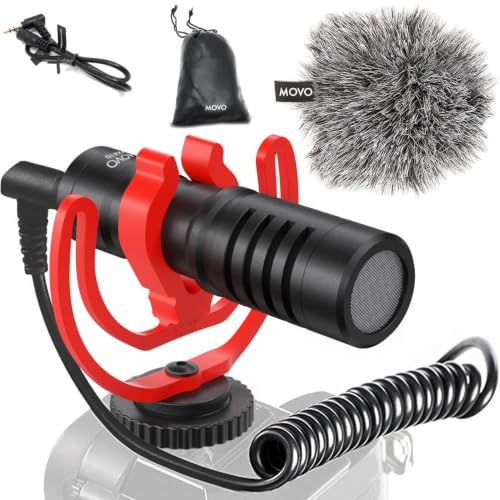
Best Overall — Movo VXR10
Directional pickup that favours the subject in front of the lens over room noise behind the camera. Check on Amazon
Best Budget — tikysky Camera Microphone
Windscreen included in the box, which matters more outdoors than most first-time buyers expect. Check on Amazon
Best Compact — Comica CVM-V30 Lite (Black)
Super-cardioid pattern gives clear, focused voice pickup for talking-head and interview framing. Check on Amazon
Best Wireless — PGDLOF 3-in-1 Wireless Mini Microphone
One wireless system covers iPhone, Android and camera recording, which suits mixed-device creators. Check on Amazon
Best for Interviews — MENERESAS Wireless Mini Microphone
Plug-in receiver with no Bluetooth or app step, which removes a common setup failure. Check on Amazon
Best Complete Kit — Moukey MCM-1
Battery-free operation removes flat-battery failures entirely. Check on Amazon
Introduction
Finding the best camera microphone under $30 is really a search for the microphone that fits how you already film. The budget sets the ceiling, but the format — shotgun on the camera or wireless on the person — decides how your recordings actually sound. This guide compares six verified options for camera shooters of every kind, explains what separates them in daily use, and is honest about where each one stops being the right tool. If your budget is tighter or roomier than this tier, the neighbouring guides in this series cover the same ground at other levels: Best Camera Microphone Under $75 and Best Camera Microphone For Beginners Under $30.
This guide treats the microphone as the other half of your camera. The lens gets the attention and the budget, but viewers forgive soft focus far sooner than they forgive muffled, echoing or distant voices. Every pick below was chosen to close the gap between how your footage looks and how it sounds, at a budget that keeps the decision proportionate.
At the entry tier, the honest goal is not perfection; it is escape velocity from built-in camera audio. Built-in microphones sit in the wrong place, hear the camera’s own handling, and treat the room and the voice as equals. Almost any purpose-built microphone fixes the worst of that, which is why this tier rewards simplicity and included accessories over exotic features. A windscreen in the box is worth more here than a menu of modes you will never open.
In this guide
Quick Picks
Best Overall: Movo VXR10 — directional pickup that favours the subject in front of the lens over room noise behind the camera.
Best Budget: tikysky Camera Microphone — windscreen included in the box, which matters more outdoors than most first-time buyers expect.
Best Compact: Comica CVM-V30 Lite (Black) — super-cardioid pattern gives clear, focused voice pickup for talking-head and interview framing.
Best Wireless: PGDLOF 3-in-1 Wireless Mini Microphone — one wireless system covers iPhone, Android and camera recording, which suits mixed-device creators.
Best for Interviews: MENERESAS Wireless Mini Microphone — plug-in receiver with no Bluetooth or app step, which removes a common setup failure.
Best Complete Kit: Moukey MCM-1 — battery-free operation removes flat-battery failures entirely.
How These Picks Were Chosen
We weighted clarity of voice first, then reliability of the recording chain, then how well each mic fits real camera workflows: mounting, connecting, checking levels and recording without a second pair of hands. Format balance mattered too, so the list mixes shotguns and wireless systems rather than crowning one approach.
Every linked product in this guide comes from a pick sheet verified through the site’s Creators API programme on 2026-11-20: the product name, brand and listing details were matched against the API record before the ASIN was accepted, and only those confirmed ASINs carry Amazon links here. Products we could not confirm were left out or described without links, because an honest guide never invents a product identifier. You will also find no fixed prices and no fixed review scores in this article. Prices move, scores move, and printing either would mislead you within weeks; instead, each pick is positioned by tier and role, and the live listing is one click away whenever you read this.
Two listings from the candidate sheet were deliberately excluded, and the reasoning shows the standard applied. The Shcngqio listings are webcams with built-in microphones, not camera microphones, so they do not belong in this comparison however they are labelled. A red colour variant of the Comica CVM-V30 Lite duplicates the black version already represented, so only one listing is used. Everything that remains earned its place by format, fit for this budget, and a clear job in the list of six.
Detailed Reviews: The Best camera microphone under $30, Pick by Pick

Best Overall — Movo VXR10, Universal Shotgun Mic for DSLR and Phones
Strengths
- Directional pickup that favours the subject in front of the lens over room noise behind the camera
- Works across DSLR cameras and phones, so one mic can follow you from one device to another
- Simple on-camera format with no wireless pairing, charging routine or receiver to manage
Trade-offs
- A wired shotgun still ties you to the camera, so walk-and-talk distance is limited by the cable and your framing
- It cannot isolate a voice in a genuinely loud location the way a mic placed close to the mouth can
- Phone use depends on having the right adapter for your handset, which is easy to forget in a kit bag
| Type | On-camera shotgun microphone |
|---|---|
| Compatibility | DSLR cameras, iPhone and Android phones (per API title) |
| Use case | Vlogging and video recording |
| Pickup | Directional |
The VXR10 is the microphone many first-time video shooters meet before any other, and there is a practical reason it keeps showing up in starter kits: it is a straightforward directional shotgun that mounts on a camera, points where the lens points, and asks almost nothing of the person using it. It is sold for DSLR bodies as well as iPhone and Android phones, and Movo positions it squarely at vlogging and general video rather than studio work. That honesty about its job is its charm. It does not pretend to be a wireless system or a broadcast tool; it is a better-than-built-in step that you can understand in one afternoon.
In general use, a shotgun like the Movo VXR10 earns its place by being ready. It sits on the camera, follows the lens, and improves everything from family events to product clips without asking the subject to wear anything. The discipline it asks in return is framing discipline: keep the subject in the front arc, keep the distance honest, and let the camera position do the work that a closer microphone would otherwise do. Shooters who build that habit find a good shotgun covers the majority of their recording life, which is why this format anchors so many of the lists in this series.
Within a under $30 budget, the Movo VXR10 should be judged as a best overall rather than against microphones from far above this tier. What this budget does not buy is forgiveness. Owners who understand that positioning tend to keep this kind of microphone in service for a long time, often as the dependable second option after a later upgrade, because its job in the kit stays clear even as other gear changes around it.
Best for: camera-led filming with the subject near the lens / Not suited for: subjects who regularly work far from the camera


Best Budget — tikysky Camera Microphone, Shotgun Mic with Windscreen for 3.5mm TRS Cameras
Strengths
- Windscreen included in the box, which matters more outdoors than most first-time buyers expect
- Standard 3.5mm TRS connection suits a wide range of Canon, Nikon, Sony and Fuji cameras
- Interview-friendly shotgun format keeps the workflow to mount, plug in and record
Trade-offs
- Only suits cameras with the matching 3.5mm input, so check your body before ordering
- No wireless freedom: the subject has to stay within your shot and near the camera
- A basic windscreen helps with light air movement but is not a solution for strong wind
| Type | On-camera shotgun microphone |
|---|---|
| Connection | 3.5mm (1/8 inch) TRS plug |
| Compatibility | Canon, Nikon, Sony and Fuji cameras with 3.5mm input |
| Included | Windscreen |
The tikysky camera microphone is an unpretentious interview-style shotgun built around one idea: give a camera with a standard 3.5mm TRS socket a clearer voice than its internal microphones can manage, and include a windscreen so the first outdoor attempt is not ruined by the first gust. It is listed for Canon, Nikon, Sony and Fuji bodies, which covers most of the cameras a beginner or a travelling shooter is likely to carry. There is no app, no wireless menu and no ecosystem to learn. You mount it, plug it in, check your levels once, and then think about the shot instead of the sound.
In general use, a shotgun like the tikysky Camera Microphone earns its place by being ready. It sits on the camera, follows the lens, and improves everything from family events to product clips without asking the subject to wear anything. The discipline it asks in return is framing discipline: keep the subject in the front arc, keep the distance honest, and let the camera position do the work that a closer microphone would otherwise do. Shooters who build that habit find a good shotgun covers the majority of their recording life, which is why this format anchors so many of the lists in this series.
Within a under $30 budget, the tikysky Camera Microphone should be judged as a best budget rather than against microphones from far above this tier. What this budget does not buy is forgiveness. Owners who understand that positioning tend to keep this kind of microphone in service for a long time, often as the dependable second option after a later upgrade, because its job in the kit stays clear even as other gear changes around it.
Best for: camera-led filming with the subject near the lens / Not suited for: subjects who regularly work far from the camera

Best Compact — Comica CVM-V30 Lite (Black), Super-Cardioid Condenser On-Camera Shotgun
Strengths
- Super-cardioid pattern gives clear, focused voice pickup for talking-head and interview framing
- Broad camera compatibility across Canon, Nikon, Sony and Panasonic DSLR bodies
- Also usable with phones that have a 3.5mm jack, which suits hybrid shooters
Trade-offs
- Super-cardioid focus means off-axis subjects fade quickly if they move out of the beam
- Phones without a 3.5mm jack need an adapter that is not the mic itself
- Condenser designs reward sensible gain setting; careless levels will still sound harsh
| Type | Super-cardioid condenser on-camera shotgun |
|---|---|
| Compatibility | Canon, Nikon, Sony, Panasonic DSLR cameras; iPhone and Android with 3.5mm jack |
| Colour | Black |
| Use case | On-camera voice and video recording |
Comica’s CVM-V30 Lite in black is a super-cardioid condenser shotgun for people who want a recognised audio brand’s simplest on-camera design rather than a no-name capsule in a plastic shell. The super-cardioid pattern is the point: it concentrates on what is in front of the camera and is less forgiving of sound arriving from the sides, which is exactly the trade a solo shooter usually wants to make. Comica lists it for Canon, Nikon, Sony and Panasonic DSLR cameras and for iPhone and Android phones with a 3.5mm jack. It is a mic for tidy indoor voices, talking-head pieces and controlled locations more than for chaotic street scenes.
In general use, a shotgun like the Comica CVM-V30 Lite (Black) earns its place by being ready. It sits on the camera, follows the lens, and improves everything from family events to product clips without asking the subject to wear anything. The discipline it asks in return is framing discipline: keep the subject in the front arc, keep the distance honest, and let the camera position do the work that a closer microphone would otherwise do. Shooters who build that habit find a good shotgun covers the majority of their recording life, which is why this format anchors so many of the lists in this series.
Within a under $30 budget, the Comica CVM-V30 Lite (Black) should be judged as a best compact rather than against microphones from far above this tier. What this budget does not buy is forgiveness. Owners who understand that positioning tend to keep this kind of microphone in service for a long time, often as the dependable second option after a later upgrade, because its job in the kit stays clear even as other gear changes around it.
Best for: camera-led filming with the subject near the lens / Not suited for: subjects who regularly work far from the camera

Best Wireless — PGDLOF 3-in-1 Wireless Mini Microphone, Wireless Lavalier for iPhone, Android and Camera
Strengths
- One wireless system covers iPhone, Android and camera recording, which suits mixed-device creators
- Clip-on transmitter keeps the capsule close to the mouth for consistent voice level
- Noise cancelling is built in, aimed at everyday background distractions
Trade-offs
- Small wireless systems live or die by charging discipline; a flat transmitter records nothing
- Clip placement matters: fabric rustle and a badly angled capsule are audible
- It is a convenience-first system, not a modular pro rig with swappable capsules
| Type | Wireless mini lavalier microphone |
|---|---|
| Compatibility | iPhone, Android phones and cameras (3-in-1, per API title) |
| Features | Noise cancelling, clip-on shirt mounting |
| Use case | TikTok, YouTube, podcast and vlogging |
The PGDLOF 3-in-1 is built for the way a lot of video actually gets made now: one creator, three possible recording devices, and no patience for re-buying the same microphone three times. It is a wireless mini lavalier system listed for iPhone, Android phones and cameras, with noise cancelling called out in its title and a clip-on transmitter that sits on a shirt rather than on the camera. PGDLOF aims it at TikTok, YouTube, podcast and vlogging work. The freedom it sells is distance: you can step back from the camera, turn around, demonstrate something with both hands and keep the mic exactly where your voice is.
For general use, a wireless system like the PGDLOF 3-in-1 Wireless Mini Microphone is the flexible friend: it covers the interview on Saturday, the demonstration on Sunday and the piece to camera from across the garden on Monday. Its cost is a small routine — charge it, clip it carefully, check the link — and its reward is that framing stops being an audio decision. You compose the picture you want and the voice stays close regardless. Households and creators with varied subjects usually end up valuing that freedom more than any single specification on the box.
Within a under $30 budget, the PGDLOF 3-in-1 Wireless Mini Microphone should be judged as a best wireless rather than against microphones from far above this tier. What this budget does not buy is forgiveness. Owners who understand that positioning tend to keep this kind of microphone in service for a long time, often as the dependable second option after a later upgrade, because its job in the kit stays clear even as other gear changes around it.
Best for: subjects who move, demonstrate or film at a distance from the camera / Not suited for: shooters who want zero charging or pairing in their workflow

Best for Interviews — MENERESAS Wireless Mini Microphone, USB Lavalier with Mute Mode and 65FT Range
Strengths
- Plug-in receiver with no Bluetooth or app step, which removes a common setup failure
- Mute mode gives quick control during interviews, lessons and live-style recordings
- Stated 65FT range is plenty for room-scale and garden-scale shooting
Trade-offs
- Range is a best-case figure; walls and bodies between transmitter and receiver shorten it
- Aimed at iPhone and USB use, so camera owners should confirm their exact connection path
- Noise reduction helps everyday backgrounds but cannot rescue a very loud location
| Type | Wireless mini lavalier microphone |
|---|---|
| Range | 65FT (per API title) |
| Features | Mute mode, noise reduction, no Bluetooth or app required |
| Use case | YouTube, TikTok and interviews |
MENERESAS pitches its wireless mini microphone at iPhone creators who want to press record rather than study a manual: a USB lavalier with a mute mode, noise reduction, a stated 65FT range and no Bluetooth pairing or app in the way. That last detail is more important than it sounds. A receiver that simply plugs in and is recognised removes the most common beginner failure, which is a mic that is technically connected and practically silent. The mute mode is the other quietly useful feature, because a creator who can silence the mic for a cough, a side conversation or a doorbell keeps control of the recording instead of editing around accidents later.
For general use, a wireless system like the MENERESAS Wireless Mini Microphone is the flexible friend: it covers the interview on Saturday, the demonstration on Sunday and the piece to camera from across the garden on Monday. Its cost is a small routine — charge it, clip it carefully, check the link — and its reward is that framing stops being an audio decision. You compose the picture you want and the voice stays close regardless. Households and creators with varied subjects usually end up valuing that freedom more than any single specification on the box.
Within a under $30 budget, the MENERESAS Wireless Mini Microphone should be judged as a best for interviews rather than against microphones from far above this tier. What this budget does not buy is forgiveness. Owners who understand that positioning tend to keep this kind of microphone in service for a long time, often as the dependable second option after a later upgrade, because its job in the kit stays clear even as other gear changes around it.
Best for: subjects who move, demonstrate or film at a distance from the camera / Not suited for: shooters who want zero charging or pairing in their workflow
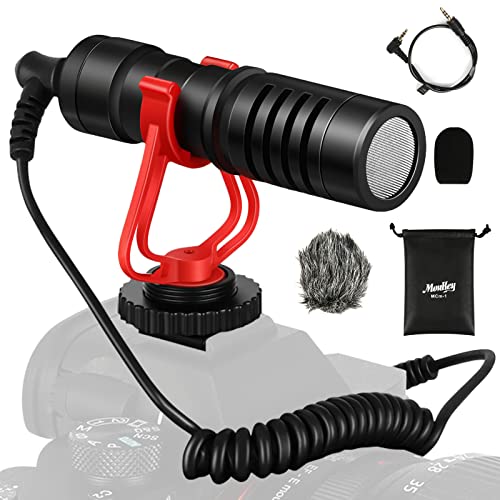
Best Complete Kit — Moukey MCM-1, Camera Microphone with Shock Mount and Windshield
Strengths
- Battery-free operation removes flat-battery failures entirely
- Shock mount and windshield are included, covering handling noise and light wind from day one
- Works across phones, DSLR cameras and camcorders, so it can serve a whole household of devices
Trade-offs
- Battery-free plug-in power means your camera or phone must supply it; check compatibility
- A kit this simple has no wireless option when you need to move away from the camera
- The included windshield is for everyday air movement, not storm conditions
| Type | Shotgun camera microphone (vlogging kit) |
|---|---|
| Power | Battery-free (plug-in power) |
| Included | Shock mount and windshield |
| Compatibility | iPhone, Android, DSLR cameras and camcorders |
The Moukey MCM-1 arrives as a small vlogging kit rather than a bare microphone: a battery-free shotgun with a shock mount and a windshield, listed for iPhone, Android phones, DSLR cameras and camcorders. Battery-free is the detail to underline. A mic that draws what it needs from the recording device cannot die mid-shoot because you forgot a cell, and for occasional shooters that reliability beats a longer feature list. The shock mount earns its place too, because on-camera microphones hear every finger tap and strap knock through the camera body unless something isolates them. Moukey has bundled the two accessories beginners most often forget to buy separately.
In general use, a shotgun like the Moukey MCM-1 earns its place by being ready. It sits on the camera, follows the lens, and improves everything from family events to product clips without asking the subject to wear anything. The discipline it asks in return is framing discipline: keep the subject in the front arc, keep the distance honest, and let the camera position do the work that a closer microphone would otherwise do. Shooters who build that habit find a good shotgun covers the majority of their recording life, which is why this format anchors so many of the lists in this series.
Within a under $30 budget, the Moukey MCM-1 should be judged as a best complete kit rather than against microphones from far above this tier. What this budget does not buy is forgiveness. Owners who understand that positioning tend to keep this kind of microphone in service for a long time, often as the dependable second option after a later upgrade, because its job in the kit stays clear even as other gear changes around it.
Best for: camera-led filming with the subject near the lens / Not suited for: subjects who regularly work far from the camera
Comparison Table
| Pick | Role | Format | Key verified details |
|---|---|---|---|
| Movo VXR10 | Best Overall | shotgun | Type: On-camera shotgun microphone; Compatibility: DSLR cameras, iPhone and Android phones (per API title); Use case: Vlogging and video recording |
| tikysky Camera Microphone | Best Budget | shotgun | Type: On-camera shotgun microphone; Connection: 3.5mm (1/8 inch) TRS plug; Compatibility: Canon, Nikon, Sony and Fuji cameras with 3.5mm input |
| Comica CVM-V30 Lite (Black) | Best Compact | shotgun | Type: Super-cardioid condenser on-camera shotgun; Compatibility: Canon, Nikon, Sony, Panasonic DSLR cameras; iPhone and Android with 3.5mm jack; Colour: Black |
| PGDLOF 3-in-1 Wireless Mini Microphone | Best Wireless | wireless | Type: Wireless mini lavalier microphone; Compatibility: iPhone, Android phones and cameras (3-in-1, per API title); Features: Noise cancelling, clip-on shirt mounting |
| MENERESAS Wireless Mini Microphone | Best for Interviews | wireless | Type: Wireless mini lavalier microphone; Range: 65FT (per API title); Features: Mute mode, noise reduction, no Bluetooth or app required |
| Moukey MCM-1 | Best Complete Kit | shotgun | Type: Shotgun camera microphone (vlogging kit); Power: Battery-free (plug-in power); Included: Shock mount and windshield |
Read the table by format first and brand second. The format column decides how a microphone behaves in your scenes; the verified details then separate the candidates inside that format. Readers comparing microphone accessories alongside a purchase may also find Best Microphone Windscreens and Best Microphone Shock Mounts useful companions to this guide.
How to Choose the Best camera microphone under $30
Start with distance. If your subject is usually within a few feet of the camera and facing it, a shotgun is simple, dependable and needs no wearing or charging. If your subject moves, turns, demonstrates or stands well back for a wider frame, wireless earns its place by keeping the capsule near the mouth. Most other decisions — brand, size, extra features — matter less than getting that first one right.
The smart entry-tier strategy is to buy the microphone that matches the device you actually record on today, in the format you will actually use weekly. A shotgun that lives on your camera beats a theoretically better system that lives in a drawer. Every pick in this list was chosen because a beginner can get a good result from it on the first day, and a noticeably better result by the end of the first month.
What a Under $30 Budget Actually Buys in a Camera Microphone
What this budget does not buy is forgiveness. Wireless systems at this level are convenience tools for controlled spaces, and shotguns at this level need you to keep the subject reasonably close and reasonably in front of the lens. Work within those limits and the results are genuinely good; pretend the limits are not there and no microphone at any price would save the take. Spend your attention on placement, gain and a ten-second test recording, because at this tier technique is the largest component of sound quality.
It helps to separate what money buys in this category into three layers. The first layer is the capsule and its pattern: how cleanly the microphone hears a voice and how much of the surroundings it refuses. The second layer is the recording chain around the capsule: shock mounting, wind protection, connection options and protection against clipping. The third layer is ownership: cases, charging systems, spare cables and the small disciplines that decide whether the microphone is ready on the day. Cheap microphones skimp on all three layers at once; the tiers in this series exist because each step up repairs one layer more convincingly than the last.
Shotgun, Wireless or Lavalier: Which Format Fits Your Camera Work?
A shotgun microphone lives on the camera and hears what the lens sees. It is the natural choice when the subject faces the camera at a sensible distance, and its great virtues are readiness and simplicity: nothing to wear, nothing to charge in the case of plug-in models, and a sound that matches the picture’s perspective. Its limit is geometry. The subject must stay in front of the camera and reasonably near it, because a shotgun cannot defeat distance — it can only make the best of the distance the framing allows.
A wireless lavalier system moves the microphone to the subject and breaks the link between framing and sound. The picture can go wide, the subject can turn, walk and demonstrate, and the voice stays close and consistent. The costs are routine and vigilance: batteries to charge, a link to check, a clip to place with care. Creators whose content moves usually accept those costs gladly. Creators at a fixed desk usually should not pay them at all. The honest question is never which format is better; it is which set of costs your filming style would rather carry. Readers weighing a wider audio kit can compare this guide with Best Wireless Microphones For Content Creators and Best Lavalier Microphones For Content Creators.
How Do You Set Up a Camera Microphone for a Clean First Recording?
The steps below assume no prior audio experience and about ten quiet minutes. Work through them once, slowly, and the routine will compress into a habit you can run in under a minute before any real recording.
Step 1: Mount and connect deliberately
Fit the shock mount fully, route the cable so it cannot tug or tap the camera body, and confirm whether your camera expects a TRS connection and your phone a TRRS or USB one. Most ‘broken microphone’ stories are actually wrong-cable stories.
Step 2: Set levels with headroom
Record your loudest expected moment — a laugh, a clap, an excited sentence — and set gain so that moment stays comfortably below clipping. Quiet can be raised in editing; clipped audio cannot be repaired.
Step 3: Run a ten-second test
Speak at your real shooting distance, then listen back on headphones, not the camera speaker. You are listening for room echo, handling noise, fabric rustle and whether the voice sounds present rather than distant.
Step 4: Protect against wind before it happens
Fit the windscreen or deadcat outdoors even when the air feels calm. Wind arrives in gusts, usually during the sentence you most needed.
Step 5: Monitor when the take matters
If your camera or app allows headphone monitoring, use it for interviews and one-time events. Catching a problem live costs seconds; discovering it in editing costs the take.
Step 6: Build a shutdown routine
Stop recording, play back the last clip, then pack the mic the same way every time. Wireless users: transmitters go straight onto charge. Routines are what make gear reliable.
Problem: the voice sounds distant and echoey -> fix: get the microphone closer before changing any setting. Halving the distance improves clarity more than any menu option; for shotguns that means tighter framing, and for stubborn rooms it means switching to a wireless lavalier.
Problem: loud moments distort -> fix: lower the camera’s input gain and enable any limiting or safety feature your mic offers, then re-test with a deliberate loud sound at your shooting distance.
P -> P
Common Mistakes
Judging by a test in the wrong room. A microphone tested in a tiled kitchen at arm’s length tells you about the kitchen, not the microphone. Test where and how you actually film, at your real distance, with your real speaking energy, and compare against your previous setup in the same conditions. Most unfair verdicts on perfectly good microphones are born in the wrong test.
Buying the format that impresses instead of the format that fits. Wireless systems look modern and shotguns look traditional, and neither impression predicts your results. Your last twenty recordings predict them. If the subject sat near the camera in eighteen of them, the shotgun was the right buy whatever the trend says, and the reverse is equally true for mobile filming.
Skipping the test recording. Every experienced recordist has a story about the silent interview, the clipped speech or the rustling lavalier that a ten-second check would have caught. The test recording is not paranoia; it is the cheapest step in the entire production. Make it a ritual with a fixed form — loud moment, normal speech, five seconds of movement — and it will save you roughly once a season for the rest of your filming life.
The most common general mistake is buying for the camera you wish you used instead of the sessions you actually record. Log your last twenty clips mentally: distances, voices, rooms. The microphone that would have improved fifteen of them is the right purchase, whatever the forums are excited about this month.
Going Deeper: Fieldcraft That Makes Any of These Microphones Sound Better
Polar patterns deserve a plain-English explanation, because they decide more recordings than brand names do. A shotgun concentrates on a narrow arc in front of the camera and hears less from the sides and rear. A cardioid capsule hears a wider, more forgiving front area. A lavalier avoids the question entirely by sitting inches from the voice, where the voice is louder than everything else in the room. None of these is superior in the abstract; each is a different answer to the question of where your subject stands relative to your camera, and the right answer is the one that matches your most common scene.
Gain staging is the least glamorous and most useful skill in camera audio. The microphone produces a signal, the camera or phone amplifies it, and somewhere in that chain a level must be chosen. Set it too high and loud moments distort permanently; set it too low and raising the volume later raises the hiss with it. The working method is simple: rehearse your loudest moment, set the level so that moment is safe, then speak normally and accept a quieter but clean recording. Clean and quiet can be fixed in editing. Distorted cannot, at any price, with any software.
Headphone checks catch what confidence misses. Camera speakers and phone speakers hide exactly the problems that matter — low rumble, fabric rustle, a hum from a cable resting against a charger, the faint echo that says the mic is farther away than you think. A ten-second listen through earbuds before the real take is the cheapest insurance in all of video production. Professional crews monitor constantly; solo creators can at least monitor at the start, which is when every fixable problem is still fixable.
Wind deserves respect out of proportion to how simple it sounds. Moving air hitting a capsule creates low, booming noise that no equaliser fully removes, because the wind is often louder than the voice at the frequencies where they overlap. The defences stack: a deadcat breaks up the airflow, your body blocks it, a closer microphone lets you lower the gain so the wind matters less, and a sheltered position removes it. Use at least two of those on any outdoor take you care about, and three when the take cannot be repeated.
The TRS and TRRS distinction explains a large share of mysterious silent recordings. Cameras expect a TRS plug; phones historically expect TRRS, which carries an extra contact for the microphone channel. Plug the wrong one in and the connection can sit there looking correct while passing nothing, or passing it at a whisper. Modern USB-C microphones sidestep the issue digitally, which is one reason dual-output models are so practical. Whatever you buy, identify which cable or connection each of your devices needs and label them once, permanently.
Shock mounting is invisible engineering that you only notice when it is absent. A microphone bolted rigidly to a camera hears the camera: focus motors, finger taps, strap knocks, tripod adjustments. A suspended mount — a Lyre, an elastic cradle, a Helix-style isolator — breaks that mechanical path so the capsule hears the air instead of the hardware. If your recordings have mysterious thumps that do not match anything in the picture, suspect the mount before the microphone, and check that the capsule is floating freely rather than resting against part of its cradle.
Room sound is the hidden half of every indoor recording. Hard walls, bare floors and a high ceiling return your voice to the microphone a fraction of a second late, and that smear is what viewers describe as ‘echoey’ or ‘cheap’. You do not need studio treatment to fix it: soft furnishings, a rug, curtains drawn, a bookcase, even recording in the room with the most fabric in the house. Move the microphone closer at the same time and the direct voice grows while the room’s contribution shrinks. Most ‘microphone upgrades’ people love are half microphone, half room.
Final Recommendation
For most readers, the Movo VXR10 is the best camera microphone under $30 to buy first: it covers the widest range of real filming with the fewest compromises at this tier, and it is the pick we would hand to a friend who asked for one answer. If value matters most, the tikysky Camera Microphone delivers the essential improvement — a close, clear voice instead of the camera’s distant one — with the least fuss in this list. Readers who already know their format and want the strongest option here should look at the Moukey MCM-1, which is the pick most likely to still be serving as a main microphone years from now.
Whichever you choose, spend your first session on placement, levels and one honest test recording rather than on comparisons with the next tier up. The guides for the other lenses at this same budget — Best Camera Microphone For Streaming Under $30 and Best Camera Microphone For Travel Under $30 — repeat this advice in different words for a reason: at every tier in this series, from the entry level to the flagship level, the microphone is only ever half of the recording. The other half is the thirty seconds of care before you press record.
Frequently Asked Questions
Can one microphone serve my camera and my phone?
Yes, if you choose a pick with both connection paths or supplied cables for both, such as the dual-output and dual-cable models in this list. Check the exact connector your phone needs, because phones without a 3.5mm jack rely on USB-C or an adapter, and confirm the mic is recognised by your recording app before an important shoot.
Is a shotgun or a wireless microphone better for general use?
Neither wins in the abstract. A shotgun is simpler, needs no charging and suits subjects near the camera. A wireless lavalier keeps the voice close at any framing and suits movement. General users who mostly film people talking at home often start with a shotgun; those who film demonstrations, tours or anything mobile usually get more from wireless.
How close does a camera microphone need to be to sound good?
Closer than most people expect, and this is the single most important idea in this entire guide. A shotgun on a camera gives its best voice results within comfortable conversational distance; beyond that, the room and the environment join the recording. A lavalier solves the distance problem by travelling with the subject. If your current recordings sound distant, the fix is almost never a more expensive microphone — it is a shorter distance between the capsule and the voice, achieved by framing, placement or format choice.
Can I record two people with one camera microphone?
Yes, with the right design. Two-transmitter wireless systems mic each person properly and are the cleanest solution. A dual-capsule on-camera mic records the subject and the camera operator, which suits interview filming. A single standard shotgun between two people is the compromise option: it works at close range in a quiet room and disappoints everywhere else. If two-voice recording is a regular part of your work rather than an occasional favour, choose a pick designed for it instead of hoping a solo mic will stretch.
How long will a good camera microphone stay useful?
Years, and usually across several cameras and phones. Microphones do not become obsolete the way camera bodies do; a well-chosen shotgun or wireless system bought at a sensible tier will outlast the device it was bought for and move to the next one. That longevity is the argument for buying the right format at a solid tier rather than the cheapest version of the wrong format. The picks in this list were chosen with that service life in mind, including as second microphones after a future upgrade.
Do I need wind protection if I mostly film indoors?
Indoors, the foam cover most microphones include is usually enough, and it also guards against harsh close consonants. The moment filming moves outside — even to a garden or a balcony — a deadcat-style cover becomes the difference between usable and ruined takes, because light air movement is present on most days in most places. Several picks here include proper wind covers in the box. Treat outdoor wind protection as part of the microphone purchase, not an optional extra to consider later.
Should I buy a wired or wireless camera microphone first?
Start with the format your shooting pattern demands, not the one that sounds more advanced. Wired shotguns are simpler, always ready and ideal when the camera position is fixed and the subject is near it. Wireless systems free the subject and keep the voice close at any distance, at the cost of charging and link checks. Many creators eventually own one of each, using the shotgun for desk and camera-led work and the wireless system for everything mobile. Buying the one you will use weekly first is the only rule that never wastes money.