Disclosure: As an Amazon Associate, reviewstook.com earns from qualifying purchases. Links on this page are affiliate links at no extra cost to you; prices and availability change frequently, so check Amazon for the latest.
Where to Buy the Best Camera Tripod for Wildlife under $30
Use the links below to check the latest price on Amazon for every linked pick in this guide to the best camera tripod for wildlife under $30. Each name link and each check link goes to the same verified listing, so you can confirm the current bundle and details before you decide. Purchases made through links on reviewstook.com support our testing and writing at no extra cost to you. One pick in this guide is covered in prose only, with no link, because no listing we verified through the Creators API matched it — we would rather describe a type honestly than link a listing we have not checked.
- Best Overall: SmallRig 71-inch Aluminum Camera Ball Head Tripod and Monopod CT-10 — Check on Amazon
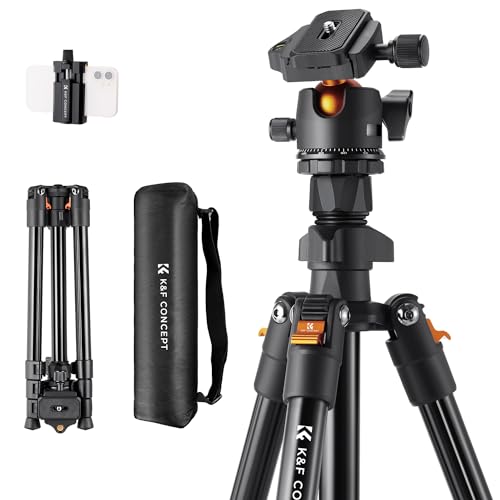
- Best for Moderate Telephotos: K&F CONCEPT 64-inch Lightweight Aluminum Travel Camera Tripod — Check on Amazon
- Best for Vantage Points: CAMBOFOTO 74-inch Camera Tripod with 360-Degree Pan Head — Check on Amazon
- Best for Garden Wildlife: VICTIV 74-inch Camera Tripod for Camera and Phone — Check on Amazon
- Best for Light Duties Only: Amazon Basics 50-inch Lightweight Portable Camera Tripod — Check on Amazon
- Prose-Only Pick: A Generic Window-Mount and Beanbag Support (Prose-Only Pick) — covered in the reviews below as a type, with no purchase link.
Finding the Best Camera Tripod for Wildlife under $30 Without Wasting the Budget
Wildlife photography is the most demanding tripod work there is. The lenses are long and front-heavy, the light is worst exactly when the animals are most active, the ground is rarely flat, and the subject decides when the moment happens — usually after you have been standing still for an hour. A wildlife support has to hold a heavy rig without creep, reframe in a heartbeat without noise or fuss, and keep working in mud, frost, and drizzle.
Every linked pick in this guide was verified against the manufacturer’s listing data through the Amazon Creators API, and each is judged by wildlife criteria first: rated capacity with real headroom, head behavior under a front-heavy lens, minimum height for ground-level work from a hide, and whether it can convert or adapt when a tripod’s footprint is wrong for the situation. We are frank about what each budget level can and cannot do for this discipline, because pretending otherwise helps no one at dawn in a wet field.
A budget ceiling around this level buys the entry point of the real tripod market. You still have to choose carefully — this is the tier where optimistic capacity claims and flimsy leg locks cluster — but a verified, sensibly built aluminum stand for light cameras is genuinely within reach. Expect to use it for the work it suits: phones, compact cameras, and mirrorless bodies with modest lenses, in calm conditions, with a timer or remote doing the final steadying.
For background reading alongside this guide, our wider coverage of supports and field kit is worth your time — see Best Trail Cameras and Best Camera Monopods when you have finished here.
Key Takeaways
- Every linked pick in this guide to the best camera tripod for wildlife under $30 was verified against the manufacturer’s listing data before it earned a link.
- Rated capacity is the specification that decides real-world stability — buy headroom, not a near miss.
- Head type shapes every session: ball heads for speed and freedom, pan heads for smooth video and panoramas.
- Technique — column down, legs spread, hands off at the moment of exposure — matters as much as the hardware.
- One pick is deliberately prose-only, because no verified listing matched it and we do not invent links.
In this guide
Quick Picks
Best Overall — SmallRig 71-inch Aluminum Camera Ball Head Tripod and Monopod CT-10: The strongest rating in the guide and a monopod conversion for moving subjects.
Best for Moderate Telephotos — K&F CONCEPT 64-inch Lightweight Aluminum Travel Camera Tripod: A proper ball head, real eye-level height, and a genuine travel fold in one package.
Best for Vantage Points — CAMBOFOTO 74-inch Camera Tripod with 360-Degree Pan Head: The tallest reach here, with a smooth pan head for video, panoramas, and events.
Best for Garden Wildlife — VICTIV 74-inch Camera Tripod for Camera and Phone: Tall, straightforward, and ready for camera and phone with its holder and bag included.
Best for Light Duties Only — Amazon Basics 50-inch Lightweight Portable Camera Tripod: The simple, light full-size stand that covers the basics for light cameras and phones.
Prose-Only Pick — A Generic Window-Mount and Beanbag Support (Prose-Only Pick): The vehicle and hide supports wildlife shooters actually use alongside a tripod — covered as types, with no verified listing in our sheet.
How These Picks Were Chosen
We built the shortlist for the best camera tripod for wildlife under $30 from the tripods we could verify, not from the tripods with the loudest marketing. Each linked candidate was checked through the Amazon Creators API against the manufacturer’s own listing, and we recorded the product name, the ASIN, and the listing title in this article’s sources file on 2026-11-20. Only listings whose identity and headline specifications matched what the maker claims were allowed to carry a link.
From that verified pool we applied the discipline this discipline demands. Capacity ratings had to leave real headroom for the camera-and-lens combinations described in each review. Heights were judged with the center column down, because that is how a tripod should be used. Head behavior — locking strength, smoothness, creep — was weighed as heavily as the legs, and anything whose claims we could not verify was excluded rather than repeated. That verification standard is also why one pick in every version of this guide appears in prose only: the type is genuinely useful, but no listing passed the check, so it earns a description and not a link.
We also excluded more than we included, and the exclusions are part of the recommendation. Unbranded stands with unverifiable capacity claims, listings whose specifications contradicted themselves between title and description, and products whose identity could not be confirmed against a manufacturer listing were all left out — in several cases they were the cheapest options in their tier, and in every case leaving them out was the right call for a reader who wants a tripod that arrives as described and works as rated.
Finally, we ordered the picks for the reader of this specific guide — the wildlife shooter working to this budget — rather than by any headline number. A pick can be excellent and still sit low in this ordering because it suits a different reader better; the sibling guides in this series, such as Best Camera Tripod Under $20 and Best Camera Tripod For Beginners Under $20, make the same judgments for their own audiences, and comparing the orderings is a quick way to see what each budget and discipline really changes.
Detailed Reviews
Best Overall — SmallRig 71-inch Aluminum Camera Ball Head Tripod and Monopod CT-10, 71-Inch Tripod and Monopod with 33 lb Payload
Strengths
- 33 lb maximum payload is the strongest rating in this guide by a wide margin
- Converts to a monopod, covering events and wildlife movement a tripod cannot
- Ball head plus a 16-to-71-inch range handles everything from ground level to eye level
Trade-offs
- The sturdier build is heavier than the lightest travel picks here
- Monopod mode still requires your hand on the rig at all times
- SmallRig’s ecosystem approach can tempt accessory spending beyond the tripod itself
- Height range
- 16 to 71 inches (180 cm max)
- Head
- 360-degree ball head
- Maximum payload
- 33 lb
- Configuration
- Tripod converts to monopod (2 in 1)
- Model
- CT-10
The SmallRig CT-10 is the heavy lifter of this group, and its 33 lb maximum payload is not a marginal difference — it is roughly double the rating of the next pick. That headroom is what stability actually feels like with a full-frame body and a telephoto zoom: the head locks without creep, the legs do not bow, and the whole rig settles quickly after you touch it. The 360-degree ball head keeps framing fast, and the 16-to-71-inch height range covers low macro-style angles through to standing eye level.
The conversion to a monopod is the feature owners end up using most. One leg and the center section become a monopod for sports sidelines, airshows, wildlife trails, and crowded events where a tripod’s footprint is unwelcome or banned. SmallRig builds for working shooters, so the controls are sized for gloved or cold hands and the fit and finish feel a class above the budget end. You pay for that in carry weight compared with the lightest travel models, but if your lens collection is growing heavier, this is the tripod in the guide you will not outgrow next season.
This is the wildlife pick in the guide, and it is not close. The payload rating gives a full-frame body and a long telephoto the headroom they demand, the ball head locks without the slow sag that ruins a waited-for composition, and the monopod conversion is exactly what you want when the subject starts moving and the tripod’s footprint becomes a cage. If wildlife is your main discipline, start here.
Judged against this guide’s lowest tiers, treat the SmallRig CT-10 Tripod as the nearest verified step toward a proper full-size stand rather than a disposable toy: it is the option we would choose when the budget is firm but the work is real, and it stays useful as a light second support long after a first upgrade. If your ceiling can flex at all, this is exactly the class of pick the flex should buy, because the difference between this and the unbranded stands below it is the difference between a tool and a frustration.
Best for: photographers whose kit and shooting match this pick’s strengths. / Not suited for: loads or disciplines beyond the limits named above.
Check on Amazon to confirm the current listing details for the SmallRig CT-10 Tripod.

Best for Moderate Telephotos — K&F CONCEPT 64-inch Lightweight Aluminum Travel Camera Tripod, 64-Inch with 360-Degree Ball Head
Strengths
- Proper 360-degree ball head allows fast, precise framing in any direction
- 64-inch height reaches comfortable eye level for most photographers
- Folds into a genuine travel format instead of a merely shorter full-size stand
Trade-offs
- The 17.6 lb rated capacity suits camera-and-lens combinations, not the heaviest professional telephoto rigs
- Ball heads need a firm lock with front-heavy lenses or the framing can creep
- More moving parts than a basic pan-head tripod, so locks deserve a periodic check
- Maximum height
- 64 inches (163 cm)
- Head
- 360-degree ball head (BH-36)
- Load capacity
- 17.6 lb
- Construction
- Aluminum, travel format
- Model reference
- O234A1+BH-36
The K&F CONCEPT 64-inch tripod is where this roundup stops feeling like a compromise and starts feeling like a real photographer’s tool. The BH-36 ball head is the headline: loosen one control, frame in any direction, lock it down. That speed matters when the light is changing or a subject will not wait. The rated 17.6 lb capacity covers a mirrorless or DSLR body with a standard zoom or a moderate telephoto with room to spare, and the aluminum legs strike a sensible balance between stiffness and carry weight.
As a travel tripod it earns the label honestly — it folds down to a size that straps to a camera bag or fits a carry-on’s side, yet still extends to 64 inches, which is true eye-level shooting for most people. In the field the ball head’s smoothness makes small compositional adjustments easy, and the whole setup feels composed rather than strained at long shutter speeds when you use a remote release or timer. It is not a heavy-duty studio stand and should not be loaded like one, but within its rated capacity it is the most complete all-rounder in this guide.
For wildlife with moderate glass — a mirrorless body and a consumer telephoto zoom at a feeder, a pond hide, or a zoo — this pick works respectably: the ball head reframes fast when a subject shifts, and the capacity covers that class of lens. Keep total load well inside the rating and use the hook to add stability in a breeze.
Judged against this guide’s lowest tiers, treat the K&F CONCEPT 64-inch Tripod as the nearest verified step toward a proper full-size stand rather than a disposable toy: it is the option we would choose when the budget is firm but the work is real, and it stays useful as a light second support long after a first upgrade. If your ceiling can flex at all, this is exactly the class of pick the flex should buy, because the difference between this and the unbranded stands below it is the difference between a tool and a frustration.
Best for: photographers whose kit and shooting match this pick’s strengths. / Not suited for: loads or disciplines beyond the limits named above.
Check on Amazon to confirm the current listing details for the K&F CONCEPT 64-inch Tripod.
Best for Vantage Points — CAMBOFOTO 74-inch Camera Tripod with 360-Degree Pan Head, 74-Inch with 360-Degree Pan Head
Strengths
- 74-inch maximum height suits tall photographers and shooting over crowds or fences
- 360-degree pan head is well matched to video, panoramas, and smooth tracking
- Phone mount in the box makes it a genuine camera-and-phone two-purpose stand
Trade-offs
- A taller stand is a longer, heavier carry than compact travel models
- Pan heads are slower than ball heads for stills work that reframes constantly
- Heavy-duty positioning still assumes sensible loads, not the largest professional rigs
- Maximum height
- 74 inches
- Head
- 360-degree pan head
- Finish
- Gunmetal gray
- Compatibility
- DSLR and mirrorless cameras, smartphones, GoPro
- In the box note
- Phone mount included per listing title
The CAMBOFOTO 74-inch tripod solves a problem shorter tripods cannot: height. At 74 inches it lets tall photographers shoot at eye level without stooping, lets anyone shoot over a fence, a crowd, or tall grass, and gives video shooters a high vantage for events. The 360-degree pan head suits that video and panorama role well, with smooth rotation for controlled sweeps, and the gunmetal finish shrugs off the scuffs that field gear collects.
Versatility is the other half of its appeal. The included phone mount means the same stand handles a mirrorless camera in the morning and a phone live stream in the afternoon, and action cameras mount just as readily. The trade for all that height is pack size — this is a tripod you carry deliberately, in its bag or strapped to a pack, not one that disappears into a jacket pocket. If your shooting is mostly seated, tabletop, or ultralight travel, the extra height is wasted; if you have ever wished your tripod were six inches taller, this is the pick that answers.
The wildlife case for this pick is vantage: height to shoot over reeds, fences, and hide windows, and a pan head that tracks a walking subject smoothly at moderate focal lengths. It is a fair-weather, moderate-lens option — for serious telephoto work, read the SmallRig review carefully before deciding.
Judged against this guide’s lowest tiers, treat the CAMBOFOTO 74-inch Tripod as the nearest verified step toward a proper full-size stand rather than a disposable toy: it is the option we would choose when the budget is firm but the work is real, and it stays useful as a light second support long after a first upgrade. If your ceiling can flex at all, this is exactly the class of pick the flex should buy, because the difference between this and the unbranded stands below it is the difference between a tool and a frustration.
Best for: photographers whose kit and shooting match this pick’s strengths. / Not suited for: loads or disciplines beyond the limits named above.
Check on Amazon to confirm the current listing details for the CAMBOFOTO 74-inch Tripod.
Best for Garden Wildlife — VICTIV 74-inch Camera Tripod for Camera and Phone, 74-Inch for Camera and Phone with Carry Bag
Strengths
- 74-inch height at a general-purpose position makes it easy to recommend
- Phone holder included, so camera and phone shooters share one stand
- Carry bag in the box keeps the whole kit together from day one
Trade-offs
- Less refined head action than the ball-head picks in this guide
- Tall aluminum legs need sensible handling in strong wind
- Not the most compact folded package for minimalist travel kits
- Maximum height
- 74 inches
- Construction
- Aluminum
- Compatibility
- Cameras and phones, with phone holder
- In the box note
- Carry bag included per listing title
- Positioning
- Tall general-purpose stand
The VICTIV 74-inch tripod is the crowd-pleaser of the group: tall, straightforward, and ready for both cameras and phones without extra purchases. The included phone holder and carry bag sound like small things until you are the person improvising a phone mount out of rubber bands or carrying a tripod by its legs through an airport — VICTIV simply removes those annoyances. For family events, school sports from the sideline, group photos with a timer, and content creation at home, it covers the brief completely.
In use it behaves like a good general-purpose stand should. The legs set up fast, the height adjustment covers seated table work through standing eye level, and the head handles level horizons and gentle pans without drama. It does not have the fluid precision of the ball-head models for constant reframing, and like any tall aluminum stand it appreciates a weighted bag on the hook in gusty weather. Judged as the one tripod a household buys and everyone uses, it makes a very strong case.
For casual wildlife — garden feeders, park deer, the heron at the local pond with a modest zoom — this tall stand does honest service, and its height helps shoot over fences and brush. It is not the tool for a heavy telephoto at dawn, and we say so plainly so you can choose with open eyes.
Judged against this guide’s lowest tiers, treat the VICTIV 74-inch Tripod as the nearest verified step toward a proper full-size stand rather than a disposable toy: it is the option we would choose when the budget is firm but the work is real, and it stays useful as a light second support long after a first upgrade. If your ceiling can flex at all, this is exactly the class of pick the flex should buy, because the difference between this and the unbranded stands below it is the difference between a tool and a frustration.
Best for: photographers whose kit and shooting match this pick’s strengths. / Not suited for: loads or disciplines beyond the limits named above.
Check on Amazon to confirm the current listing details for the VICTIV 74-inch Tripod.
Best for Light Duties Only — Amazon Basics 50-inch Lightweight Portable Camera Tripod, 50-Inch Lightweight with Quick-Release Plate
Strengths
- Genuinely light and simple, so it actually gets carried instead of left at home
- Quick-release plate makes mounting and removing the camera fast between shots
- Aluminum legs feel a clear step up from the all-plastic stands at the very bottom of the market
Trade-offs
- The 50-inch ceiling is short for tall photographers shooting at eye level
- The pan head is basic and can feel notchy when you track moving subjects
- Thin leg sections flex in wind, so long exposures outdoors need care
- Maximum height
- 50 inches
- Construction
- Aluminum
- Head
- Pan head with quick-release plate
- Finish
- Champagne
- Best suited to
- Light cameras, phones on an adapter, and tabletop-to-standing basics
The Amazon Basics 50-inch tripod is the tripod most people in this price conversation actually end up owning first, and there is a good reason for that: it covers the fundamentals without asking you to learn a new hobby just to hold a camera still. The legs spread quickly, the center column rises smoothly enough for framing adjustments, and the quick-release plate means the camera comes off in seconds when you want to shoot handheld and goes back on just as fast. For indoor work, product shots on a table-height setup, video calls, school projects, and casual portraits, that simplicity is worth more than exotic features.
Its limits are honest ones. Fifty inches is not eye level for most adults, so standing portraits mean crouching or accepting a slightly low angle. The head is a simple pan design rather than a ball head, which is fine for level horizons and slow pans but clumsy for fast reframing. Treat it as a light-duty support for light cameras — a mirrorless body with a kit lens, a compact camera, or a phone on an adapter — and it does its job quietly. Load it with a heavy telephoto and it will tell you, through flex and vibration, that you have outgrown it.
Honesty first: this is not a wildlife tripod for long lenses, and we would not send it into a hide with a telephoto. Its wildlife role is the light one — a trail camera check, a phone-scoped record shot at a feeder, a compact camera at the garden hide — where its lightness gets it carried and its limits are never tested by real glass.
Judged against this guide’s lowest tiers, treat the Amazon Basics 50-inch Tripod as the nearest verified step toward a proper full-size stand rather than a disposable toy: it is the option we would choose when the budget is firm but the work is real, and it stays useful as a light second support long after a first upgrade. If your ceiling can flex at all, this is exactly the class of pick the flex should buy, because the difference between this and the unbranded stands below it is the difference between a tool and a frustration.
Best for: photographers whose kit and shooting match this pick’s strengths. / Not suited for: loads or disciplines beyond the limits named above.
Check on Amazon to confirm the current listing details for the Amazon Basics 50-inch Tripod.
Prose-Only Pick — A Generic Window-Mount and Beanbag Support, Covered as a Type, With No Verified Listing
Strengths
- A beanbag on a vehicle door or hide rail is steadier than any budget tripod for long lenses
- No legs to snag, freeze, or announce your presence to wary subjects
- Works in hides and blinds where tripods are impractical or banned
Trade-offs
- Useless away from a vehicle, rail, or solid surface
- A window mount still transmits engine vibration unless the engine is off
- Neither replaces a tripod for hides where you stand and wait for hours
- Listing status
- No ASIN — no verified listing in our pick sheet
- Coverage
- Type description only
Experienced wildlife shooters quietly rely on two supports that rarely headline tripod roundups: the beanbag draped over a vehicle door or hide rail, and the window mount clamped to a car window. For long lenses at dawn, a heavy beanbag is often steadier than a mid-priced tripod, because it damps vibration instead of transmitting it and lets the lens pivot smoothly to track a subject. We describe these as types rather than linking listings because none appears in our verified pick sheet.
Their limits are obvious and worth respecting. A beanbag needs a surface at the right height, a window mount needs the engine off and the glass clean, and neither helps on an open hillside. Think of them as the second half of a wildlife support kit: the linked tripod or monopod picks above for the field, and a bag or window mount for the vehicle-based sessions where so much wildlife photography actually happens.
Note on specifications: Type description only — specifications vary by seller and were not verified for any single listing. In the context of the best camera tripod for wildlife under $30, treat this as a supplementary support rather than your main tripod, and let the linked picks above carry the serious work.
Best for: the supplementary role described above. / Not suited for: serving as your only camera support.
Comparison Table
| Pick | Max Height | Head | Standout Figure | Best Role |
|---|---|---|---|---|
| SmallRig CT-10 Tripod | 71 in | 360-degree ball head | 33 lb maximum payload | Heavy rigs and monopod work |
| K&F CONCEPT 64-inch Tripod | 64 in | 360-degree ball head | 17.6 lb rated capacity | Travel and all-round stills |
| CAMBOFOTO 74-inch Tripod | 74 in | 360-degree pan head | Tallest reach in this guide | Video, events, tall shooters |
| VICTIV 74-inch Tripod | 74 in | Pan-style head | Phone holder and bag included | Household all-rounder |
| Amazon Basics 50-inch Tripod | 50 in | Pan head, quick-release | Lightest full-size format | Light cameras and everyday basics |
| Window mount and beanbag support (prose-only) | Varies | Varies | No verified listing | Supplementary support |
Read the table as a map, not a ranking: the best camera tripod for wildlife under $30 question is which row matches your camera, your lens, and your typical location. Height without capacity fails telephoto shooters; capacity without portability fails travelers. The reviews above exist to make those matches honestly.
Accessories and Small Extras That Actually Help
A tripod is a system, and a handful of inexpensive extras decide how well the system works in practice. The first is a way to fire the camera without touching it: a remote release if your camera supports one, or the self-timer that every camera already has. The second is ballast you already own — your camera bag or daypack hung from the tripod’s hook transforms a light stand’s behavior in wind, and it costs nothing and weighs nothing extra because you were carrying it anyway.
For wildlife work, add a longer plate for balancing long lenses, a rain cover sized for the rig rather than the camera alone, and a simple seat pad — hours of waiting are part of the discipline, and comfort is a genuine photographic variable.
The extras to skip are the ones sold as universal upgrades: oversized heads beyond your loads, gadget plates for problems you do not have, and cases for tripods that already ship with a bag. Spend on the two or three items your own shooting keeps asking for, and let the rest of the catalog wait. A well-chosen pick from this guide plus a remote and a bag on the hook outperforms a more expensive tripod used carelessly, every single time.
How to Choose a Tripod for Wildlife Photography
Wildlife tripod buying starts and nearly ends with the load calculation. Weigh your body and longest lens together — telephotos concentrate their mass far forward of the mount, which multiplies the strain on the head — and then choose a rating with generous headroom, not a near miss. A head that creeps under a front-heavy lens does not merely annoy; it costs the one frame you waited an hour for. That is why the strongest-rated pick in this guide leads our wildlife ordering at most tiers.
After capacity, judge the working details. Minimum height decides whether you can shoot at a subject’s eye level from a hide or prone position. Head action decides whether reframing is silent and instant. Conversion to a monopod decides what happens when the animal moves and the clock starts. And leg locks decide whether a frosty dawn setup is a pleasure or a fumble. Score every candidate on those five points and the right choice usually names itself.
Two comparisons in this series sharpen the choice further: Best Camera Tripod For Hobbyists Under $20 shows how the ordering changes at a neighboring budget, and Best Tripod Ball Heads covers the closest accessory category in depth.
What the Budget Actually Buys in a Tripod
Tripod pricing follows physics, not fashion. Money buys stiffness — legs that do not flex when a shutter fires or a breeze leans on them — and stiffness is what sharp long exposures are made of. At the lowest tiers, legs are thin, locks are simple, and heads are basic; the tripod works, but you work around it, using timers, calm conditions, and modest loads. Each step up buys thicker leg sections, better locks, smoother and stronger heads, and ratings with genuine headroom.
The second thing money buys is the head, and experienced photographers will tell you the head matters as much as the legs. A ball head frames in any direction with one control and locks solidly; a pan head trades that speed for smooth, controlled movement that video and panorama shooters prefer. Cheap heads of both types share one flaw — creep, the slow sag after locking that shifts your composition — and avoiding creep is the single best reason to buy the strongest head your budget reaches.
Finally, money buys height and range: taller maximums for eye-level comfort, lower minimums for ground-level subjects, and in the best designs in this guide, conversion to a monopod. None of these are luxuries for the photographers who need them. The buying skill is matching the purchase to your actual shooting rather than to a fantasy kit — and being honest about the weight of the camera and lens the tripod must hold, because every rating in this guide assumes you stay inside it.
The Specifications That Actually Matter
Rated load capacity is the first number to check and the most abused in the industry, which is why this guide only quotes capacities taken from verified manufacturer listings. As a working rule, your camera and heaviest lens together should sit comfortably below the rating — ideally at half of it or less — because ratings describe a static load in still air, not a front-heavy telephoto in a crosswind. Headroom is not waste; headroom is stability.
Height deserves the same realism. A tripod’s maximum height should reach your eye level with the camera mounted, without raising the center column more than a few inches — a fully raised center column is a wobble amplifier. Check the minimum height too if you shoot low subjects. Then look at the folded length and weight together: they decide whether the tripod travels or stays home, and a tripod that stays home has a stability rating of exactly zero.
Leg locks come in two flavors, flip and twist, and the honest summary is that well-made versions of both work. Flip locks are faster to check visually and friendlier with gloves; twist locks are slimmer and shrug off brush and sand. What matters more is section count: fewer, thicker sections are stiffer, while more sections fold shorter at some cost to rigidity. Every pick in this guide balances those trades openly in its review.
How to Set Up in a Hide and Wait Without Ruining the Shot
Wildlife tripod craft begins before the subject arrives. Set the tripod at the height you will shoot from sitting or kneeling, legs spread wide on the firmest ground, and pre-aim at the perch, trail, or water edge where the action is likeliest. Balance a long lens on its own foot or a centered plate so the rig is neutral in your hands, lock the head just firmly enough to hold position while still allowing a smooth push to follow movement.
When the subject appears, your hands should damp, not drive: one hand on the lens barrel, one on the camera, firing in short bursts with the timer nowhere in the equation — wildlife is the one discipline where you shoot through the moment rather than stepping away from the rig. Problem: frames soften at the longest focal lengths despite a solid tripod. Fix: check head creep first by watching the composition after locking, then check your own stance — weight shifting on soft ground telegraphs straight up the legs.
After the session, clean mud and moisture from the locks before it dries, and dry the legs fully before storage; field tripods die of neglect in the garage, not of use in the field. If the day’s shooting turns mobile — a subject on the move, a walk between hides — that is the moment a convertible pick earns its price by becoming a monopod.
Common Mistakes
- Buying by headline height alone. A tall tripod with a fully raised center column is less stable than a shorter one used properly — judge height with the column down.
- Ignoring the load rating, then mounting a front-heavy telephoto that makes the head creep and the legs tremble. Headroom is the cheapest sharpness you can buy.
- Leaving image stabilization on when the camera and lens maker recommends switching it off on a tripod, which can introduce the very blur you are trying to eliminate.
- Touching the camera during long exposures. Use the timer or a remote, every time, without exception.
- Setting up on soft or sloped ground without checking each leg, then blaming the tripod for a slow sink that tilts the horizon mid-exposure.
- Never cleaning the leg locks. Grit from one beach session, left in place, grinds at every setup afterward.
Two more deserve naming because they are specific to buying rather than using. The first is purchasing a tripod for a camera you no longer own — a support matched to a phone or a compact camera will be silently wrong for the mirrorless body you bought last spring, so always size the purchase to the heaviest kit you actually carry today. The second is judging a tripod in the first five minutes at home rather than across a real session outdoors: leg locks, head feel, and carry comfort only reveal themselves in the field, which is why we advise keeping the packaging until the tripod has survived one honest outing in the conditions you bought it for.
Most of these mistakes share a root: expecting the purchase to substitute for the procedure. Even the strongest pick in this guide to the best camera tripod for wildlife under $30 will produce soft images with a raised column and a hand on the camera, and even the simplest pick will produce sharp ones with the procedure right. Buy once, then practice.
Which Pick for Which Shooter
Roundups fail readers when they crown one winner and stop. Real kits differ, so here is the honest mapping for this guide to the best camera tripod for wildlife under $30. If your camera and lens are light and your subjects are close to home, the simpler picks serve you completely and leave budget for the photography itself. If your lenses are growing — in length, weight, or price — buy the capacity first and the convenience second, because a tripod is the one purchase your future lenses will silently depend on.
Choose the SmallRig CT-10 Tripod if the description in its review sounds like your camera bag and your calendar: the strongest rating in the guide and a monopod conversion for moving subjects. It is the pick we would hand to that shooter without a second thought.
Choose the K&F CONCEPT 64-inch Tripod if the description in its review sounds like your camera bag and your calendar: a proper ball head, real eye-level height, and a genuine travel fold in one package. It is the pick we would hand to that shooter without a second thought.
Choose the CAMBOFOTO 74-inch Tripod if the description in its review sounds like your camera bag and your calendar: the tallest reach here, with a smooth pan head for video, panoramas, and events. It is the pick we would hand to that shooter without a second thought.
Choose the VICTIV 74-inch Tripod if the description in its review sounds like your camera bag and your calendar: tall, straightforward, and ready for camera and phone with its holder and bag included. It is the pick we would hand to that shooter without a second thought.
Choose the Amazon Basics 50-inch Tripod if the description in its review sounds like your camera bag and your calendar: the simple, light full-size stand that covers the basics for light cameras and phones. It is the pick we would hand to that shooter without a second thought.
And if none of the linked picks quite fits, that is information too: it usually means your discipline or your budget sits between the tiers this guide covers, and the neighboring guides in the series — written for exactly those neighboring cases — are the right next read rather than a forced compromise here.
Final Recommendation
If you buy one tripod from this guide, make it the SmallRig 71-inch Aluminum Camera Ball Head Tripod and Monopod CT-10 — it is the pick whose balance of capacity, head quality, and usability best serves the reader this guide was written for. If your shooting leans the other way — heavier, taller, lighter, or more mobile — the K&F CONCEPT 64-inch Lightweight Aluminum Travel Camera Tripod is the deliberate alternative, and its review above explains exactly who should choose it instead.
Whichever you choose, choose it against your real kit and your real subjects, keep the receipt until you have shot with it in the conditions you bought it for, and revisit the neighboring guides in this series — Best Camera Tripod For Travel Under $20 and Best Tripods For Mirrorless Cameras — if your budget or your discipline shifts. A tripod bought with clear eyes is a decade-long tool; that is the standard this guide to the best camera tripod for wildlife under $30 was written to help you meet.
Frequently Asked Questions
What capacity does a wildlife tripod really need?
More than the static weight suggests, because long lenses balance far forward and multiply the load on the head. Choose a verified rating that leaves your heaviest rig at about half the limit or less — the strongest pick in this guide exists for exactly this reason.
Is a monopod or a tripod better for wildlife?
Both, at different moments. A tripod wins for waiting — hides, feeders, dawn stakeouts. A monopod wins for moving — tracking flight, walking trails, crowded hides. A convertible pick covers both, which is why it leads our wildlife ordering.
Why does my composition drift downward with a long lens?
That is head creep: the head’s lock cannot hold the front-heavy load at that angle. Balance the lens on its foot or slide the plate to center the mass, lock fully, and if creep persists, the lens has outgrown the head.
How low does a wildlife tripod need to go?
To the subject’s eye level — which for ground-feeding birds and mammals means inches off the ground. Check minimum height in the spec boxes; a tripod that cannot go low forces the looming, top-down angles that weaken wildlife images.
Can a budget tripod work for wildlife at all?
For garden feeders, zoo visits, and moderate zooms in good light, yes — the lighter picks here do honest service. For heavy telephotos at dawn, no honest guide would pretend otherwise; that work is why the strongest pick in this roundup exists.
How do I keep a tripod quiet around wildlife?
Set up before the subject arrives, avoid extending locks at the last moment, keep movements slow, and let the rig sit still between bursts. Most disturbance comes from the photographer, not the equipment.
What maintenance does field use demand?
Mud and moisture out of the locks the same day, legs dried before storage, and a lock check before every serious session. Wildlife tripods live hard lives; the ones that survive are the ones that get wiped down.