Disclosure: As an Amazon Associate, reviewstook.com earns from qualifying purchases. Links to Amazon on this page are affiliate links; they cost you nothing extra.
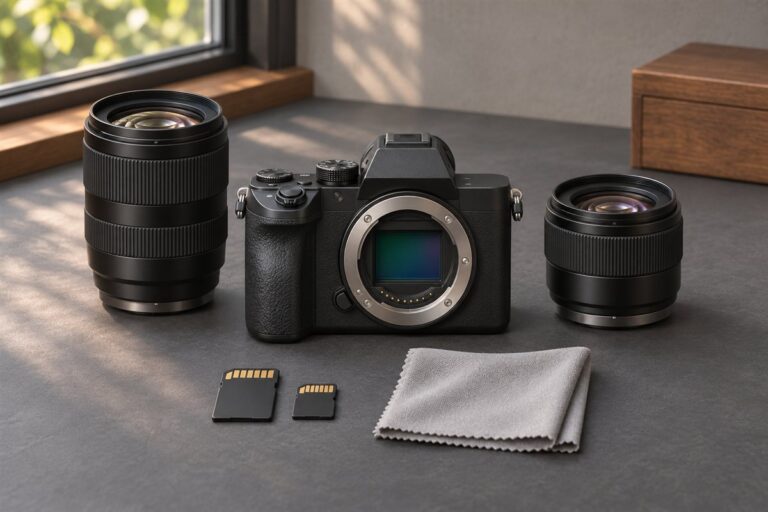
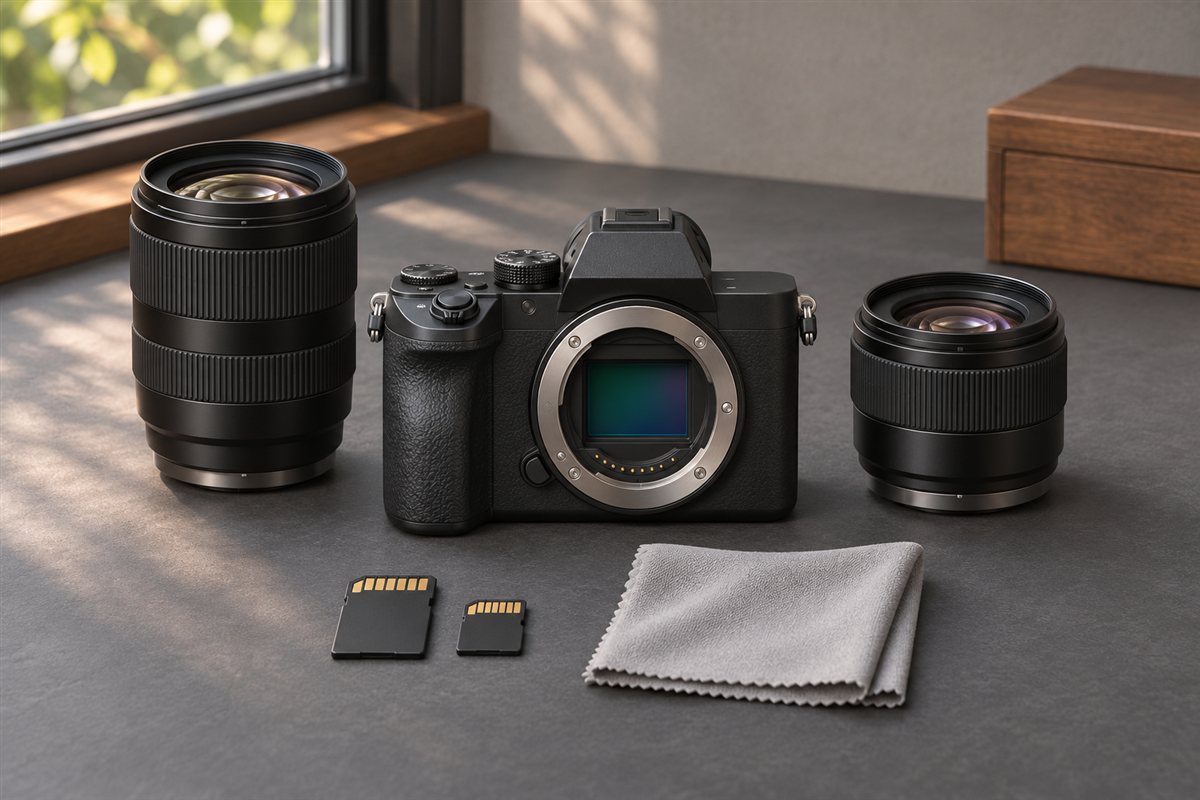
Compact bodies are easier to carry, but lenses still add bulk.
This guide is built from Amazon product listings and maker specs, not our own testing, so confirm kit contents, compatibility and current price on each product page.
Check each product page for the current price before you buy.
Last updated: October 31, 2026.
In this guide
Quick Picks
| Product | Type | Best for |
|---|---|---|
| Canon EOS R100 (RF-S 18-45mm kit) | APS-C entry mirrorless kit | First interchangeable-lens camera |
| Panasonic Lumix G100 (12-32mm kit) | Micro Four Thirds kit | Vlogging on a budget |
| Fujifilm X-M5 (XC 15-45mm kit) | APS-C mirrorless kit | Small Fujifilm for beginners |
| OM SYSTEM OM-5 Mark II (body) | Micro Four Thirds mirrorless | Weather-sealed and compact |
| Fujifilm X100VI | Fixed-lens compact camera | Street and travel |
| Sony Alpha 7C II | Compact full-frame mirrorless | Full frame in a small body |
Our Picks
Top pickBest for first interchangeable-lens camera
1. Canon EOS R100 (RF-S 18-45mm kit)
A Canon EOS R100 mirrorless camera sold with the RF-S18-45mm F4.5-6.3 IS STM lens, per the listing. Check price on Amazon for the current listing.
Good for: First interchangeable-lens camera. Watch out: entry-level feature set.
Best for vlogging on a budget
2. Panasonic Lumix G100 (12-32mm kit)
A Panasonic Lumix DC-G100 camera with the 12-32mm lens kit, per the listing. Check price on Amazon for the current listing.
Good for: Vlogging on a budget. Watch out: Micro Four Thirds sensor.
Best for small Fujifilm for beginners
3. Fujifilm X-M5 (XC 15-45mm kit)
A Fujifilm X-M5 mirrorless camera with the XC 15-45mm f/3.5-5.6 lens, per the listing. Check price on Amazon for the current listing.
Good for: Small Fujifilm for beginners. Watch out: check kit contents.

Best for weather-sealed and compact
4. OM SYSTEM OM-5 Mark II (body)
An OM SYSTEM OM-5 Mark II body, described as compact, lightweight, weather sealed with 4K video, per the listing. Check price on Amazon for the current listing.
Good for: Weather-sealed and compact. Watch out: Micro Four Thirds sensor.


Best for street and travel
5. Fujifilm X100VI
A Fujifilm X100VI digital camera, per the listing. Check price on Amazon for the current listing.
Good for: Street and travel. Watch out: fixed lens, not interchangeable.

Best for full frame in a small body
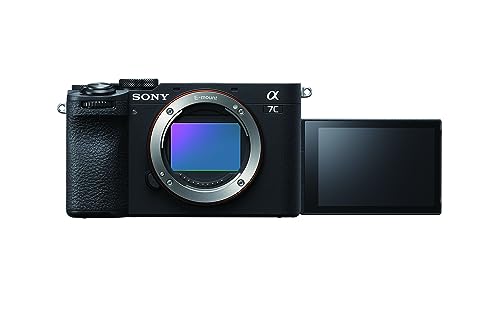
6. Sony Alpha 7C II
A Sony Alpha 7C II full-frame interchangeable-lens camera, per the listing. Check price on Amazon for the current listing.
Good for: Full frame in a small body. Watch out: high price.
Best Picks by Category
These labels summarise the listings covered in this guide. They are a data summary, not hands-on test results.
- Top rated: Sony Alpha 7C II.
- Most reviewed: Canon EOS R100 (RF-S 18-45mm kit).
- Best value: Canon EOS R100 (RF-S 18-45mm kit).
- Lowest price: Canon EOS R100 (RF-S 18-45mm kit).
- Premium option: Sony Alpha 7C II.
Price, Rating and Review Comparison
This table compares the picks side by side, with the price tier for each model.
| Product | Price | Rating | Ratings | Price tier |
|---|---|---|---|---|
| Canon EOS R100 (RF-S 18-45mm kit) | Check price on Amazon | — | — | Budget |
| Panasonic Lumix G100 (12-32mm kit) | Check price on Amazon | n/a | n/a | Budget |
| Fujifilm X-M5 (XC 15-45mm kit) | Check price on Amazon | n/a | n/a | Mid-range |
| OM SYSTEM OM-5 Mark II (body) | Check price on Amazon | — | — | Mid-range |
| Fujifilm X100VI | Check price on Amazon | n/a | n/a | Premium |
| Sony Alpha 7C II | Check price on Amazon | — | — | Premium |
What the Listings Say
Below are the concrete details each seller states on the Amazon listing. Check the live listing for the latest specs before you buy.
Canon EOS R100 (RF-S 18-45mm kit)
The listing states: Stellar Image Quality: Canon EOS R100 4K digital camera with 24.1 megapixel CMOS (APS-C) sensor for superb image clarity and detail can capture images with natural bokeh; Compact Design: Compact, lightweight EOS R series 4K camera with an affordable price; smallest and lightest camera body in the EOS R series built for excellent mobility.
Panasonic Lumix G100 (12-32mm kit)
The listing gives few concrete specifications. Amazon did not show a rating count for this listing.
Fujifilm X-M5 (XC 15-45mm kit)
The listing gives few concrete specifications. Amazon did not show a rating count for this listing.
OM SYSTEM OM-5 Mark II (body)
The listing states: Unlimited 4K Video Recording: Tell your story in motion..
Fujifilm X100VI
The listing gives few concrete specifications. Amazon did not show a rating count for this listing.
Sony Alpha 7C II
The listing states: 33.0MP full-frame Exmor R CMOS sensor; Outstanding 4K 4:2:2 10-bit movie recording up to 60p/50p.
How to Choose
Lens size
Micro Four Thirds lenses are smaller.
Grip
Tiny bodies can be hard to hold.
Fixed lens
Easier to pack but fixed.
Sensor Size and Real Pocketability
A compact body only tells half the story. The sensor size decides how large the lens must be, and the lens is usually what makes a camera feel bulky in a bag. Micro Four Thirds sensors are the smallest of the common mirrorless formats, so lenses designed for them can be short and light. APS-C sits in the middle, and full-frame bodies need larger glass to cover the bigger sensor, even when the body itself is trimmed down.
That is why the picks here suit different people. A full-frame body in a small shell gives you more room to crop and generally more flexibility in dim light, but you carry that benefit in the lens. An APS-C or Micro Four Thirds kit can be easier to slip into a jacket or a small shoulder bag with a lens attached.
When you compare, think about the whole package you will actually carry: body, lens, spare battery, card and strap. Look at the lens dimensions on the listing, not only the body. A collapsible or retractable kit zoom is usually flatter when switched off, but check how it behaves on each model you consider.
- Pick the format by what you will carry daily, not by the sensor you admire on paper.
- Check lens length and filter thread size on the listing.
- Ask yourself whether you will really change lenses on a day out.
Kit Zoom or Single Prime Lens
Most first-time buyers choose a body with a kit zoom, and for good reason: one lens covers wide scenes, portraits and casual travel shots without any swapping. A kit zoom is a sensible default if you are unsure what you like to shoot. Its weakness is that the widest aperture is usually modest, so it asks for more light.
A prime lens, which does not zoom, is often smaller and lets in more light for the same size. It makes you move your feet to frame a shot, which some people enjoy and others find limiting. If you already know that you mostly photograph friends, street scenes or food, a small prime may suit you better than a zoom.
The fixed-lens camera in the roundup takes this idea to the extreme: the lens is part of the body, so there is nothing to choose, buy or lose. The trade-off is that you cannot change the field of view later.
Before buying, confirm what the listing includes. Some listings sell the body alone, while others bundle one or two lenses. A body-only purchase is not a mistake if you already own compatible lenses, but it surprises people who expected to take photos on day one.
Handling, Battery and Card Checks
Small cameras often have small batteries. Check the manual or listing for the stated shot count or recording time, and treat any figure as a rough guide, because real use depends on screen time, video, flash and temperature. If you travel, plan on carrying at least one spare battery and find out whether the camera can charge over USB, which makes a power bank useful on long days.
Memory cards are the next detail. Look up which card type the camera uses and whether video modes require a faster card class. Buying the wrong speed rating is a common reason a camera stops recording or lags during bursts, so follow the maker’s guidance rather than guessing.
Handling matters more on tiny bodies. Without a deep grip, a heavier lens can feel awkward in one hand. Look for a textured front, a thumb rest and buttons that you can reach without shifting your hold. If you have large hands or wear gloves in winter, tiny dials and buttons can become frustrating. Also check whether the screen tilts or flips, whether there is a viewfinder, and whether the strap lugs sit where you can use a wrist strap comfortably. If you can, hold a model in a shop before ordering.
Video Features to Verify
Many people buy a compact camera partly for video. The listings often quote a maximum resolution, but that figure does not tell you everything. Check whether higher modes add a crop to the frame, since a crop makes a wide lens feel tighter and can ruin a selfie shot at arm’s length. Look for notes about recording time limits and heat, because small bodies have less room to shed warmth during long clips.
Audio deserves attention. Built-in microphones are fine for casual clips, but wind and room echo can be a problem. If you plan to talk to the camera, see whether the body has a microphone input and a hot shoe or other mounting point, and whether a headphone jack is offered for monitoring. Some very small models leave these out to save space.
A screen that flips to face forward makes framing yourself easy. Stabilization also varies: some bodies stabilize in the body, others rely on the lens, and some combine both. Read what the maker states for the lens you intend to use. Finally, think about autofocus on people and moving subjects, which affects both stills and video, and read the manual to learn how to switch tracking modes on.
Mount Ecosystem and Future Upgrades
A camera body is replaced far more often than lenses. Because of that, the mount you buy into matters. Each maker uses its own mount, and lenses from one system do not fit another without an adapter, which may limit autofocus or add bulk. Look at the range of lenses on offer for your chosen mount, including small and affordable ones, before you commit.
Think about where you may want to go. If you may later want a fast portrait lens, a wide-angle for landscapes or a long telephoto for wildlife, check that such options exist and fit your budget tier. Mounts shared by several makers, as with Micro Four Thirds, often give you more choice across brands, while single-maker mounts may offer fewer but tightly integrated options.
Also consider the used market and third-party lens support, which can lower costs, but check that autofocus and stabilization features work with your body. Budget buyers should avoid stretching for an expensive body and then being unable to afford a second lens. A balanced approach is a mid-range body, one good lens, a spare battery and a card with the right speed rating. Replace the body only when it clearly limits what you want to shoot.
Camera Settings to Learn First
A new camera offers dozens of options, and the manual can feel overwhelming. You do not need to learn them all. A handful of controls account for most of the difference between a snapshot and a good photograph, and learning them early makes any camera on this list more rewarding.
- Aperture priority: you choose the aperture and the camera sets the shutter speed. It is the best mode for controlling background blur.
- Shutter speed: faster speeds freeze motion, and slower speeds blur it. As a rule of thumb, keep the speed at least as fast as one over the focal length to avoid camera shake, unless stabilization helps.
- ISO: higher values brighten a dark scene but add noise. Larger sensors tolerate higher values better than smaller ones.
- Exposure compensation: a quick way to brighten or darken an image when the camera misjudges the scene.
- Focus mode and area: continuous focus suits moving subjects, while single focus suits still ones. Tracking and face detection save time.
Practice one control at a time for a week. Change only the aperture, for example, and compare results. That teaches more than reading about it.
Learn the menu before you need it. Spend an evening assigning the custom buttons to the functions you use most, such as focus area, ISO and video recording. A camera that responds quickly to your habits will help you catch moments that a default setup would miss. Save your preferred settings as a custom mode if the camera allows it, so you can recall them with one dial turn.
Street, Travel and Family Photography Scenarios
A compact camera earns its place in situations where a big camera would stay at home. Think about where you will use it, because the best choice depends on the occasion.
For street photography, a small body and a quiet shutter help you stay unobtrusive. A fixed lens or a small prime keeps the camera discreet and encourages you to move your feet. For travel, battery life, charging by USB and a lens that covers wide scenes and moderate telephoto are valuable, because you rarely want to swap lenses in a crowd. For family events, fast and reliable autofocus matters most, since children move unpredictably, and a flip screen helps with low or high angles.
If you shoot in low light, such as restaurants or evening gatherings, a larger sensor or a faster lens makes a visible difference. Image stabilization in the body or lens also lets you use slower shutter speeds without blur, though it does not freeze a moving subject.
Heat and moisture are the quiet enemies of cameras. Do not leave the camera in a hot car, and let it warm slowly when moving from cold to a warm room, which prevents condensation on the lens and inside the body. A silica gel packet in the bag absorbs moisture in humid climates.
Bags, Straps and Everyday Carry
The point of a compact camera is that you actually carry it, so how you carry it counts. A small sling or a camera insert in your usual bag is more practical than a full camera backpack. Wrist straps are light but tiring on heavy cameras, and a cross-body strap spreads the weight and keeps the camera safe.
Add a spare battery and a second memory card to the bag. Compact bodies often have smaller batteries, and a dead battery halfway through an outing is common. Keep a microfiber cloth and a small blower to clean the lens and sensor area, and avoid changing lenses in dusty or windy places. A simple UV or clear protective filter is optional, but a lens hood protects against flare and bumps.
RAW Files, Editing and File Management
Most cameras can save images as JPEG, RAW or both. JPEG files are ready to share and small, while RAW files hold more information and give you room to adjust exposure, white balance and color in editing. If you intend to edit, shoot RAW or RAW plus JPEG, and accept that files will be much larger.
Plan storage before you start. Copy memory cards to a computer soon after a shoot, and keep a second copy on an external drive. Use a consistent folder structure, such as year and date, so you can find pictures later. Free editing software is enough to start, and many cameras also offer in-camera conversion if you do not want to use a computer.
Finally, update the camera firmware from the maker’s site. Updates sometimes improve autofocus, add features and fix bugs, and the process takes only a few minutes.
As you grow, you may want to add a prime lens, a tripod or a flash. Resist buying all three at once. Use the camera for a few months, notice what limits your pictures, and buy the accessory that fixes that specific problem.
A Closer Look at Each Pick in Everyday Use
Compact mirrorless only makes sense as a promise: this camera will be with you. Every pick below keeps that promise differently, through a starter kit, a creator kit, a sealed outdoor body, a fixed lens or compact full frame. Judge each one by whether its particular compromise still feels clever after a month of real carrying.
Canon EOS R100 with kit zoom: the smallest simple start in Canon
The R100 kit suits a first-time buyer who wants a real camera’s depth without a real camera’s bulk or complexity. The standard zoom covers everyday life, and the simple layout keeps early learning focused on seeing photographs rather than operating menus. In a bag it behaves like the compact it aims to be, provided you resist adding large lenses that defeat the point. Who should choose it: a beginner, student or family buyer who values a complete, light starter kit. Who should skip it: an enthusiast who already knows they need advanced controls, stronger video tools or a viewfinder-led growth path. Its most common ownership mistake is neglect by ambition: owners buy it, dream of bigger systems and stop shooting. Shoot it constantly instead, and it will teach you exactly what, if anything, your next camera must do better.
Panasonic Lumix G100 with kit zoom: the creator compact
The G100 kit suits vloggers, family filmmakers and travellers who want a small camera that films as willingly as it photographs. Micro Four Thirds lenses keep the whole outfit light, which is the entire point for self-filming and daily carrying. In use, support and sound complete the idea: a small grip or tripod and a microphone suited to your voice and rooms turn this compact into a credible publishing tool. Who should choose it: a beginner creator who will actually carry it daily. Who should skip it: a stills-led buyer who wants a traditional handling experience above all. Confirm the kit contents on the listing, and keep future lenses compact on purpose. The moment a compact creator kit needs its own large bag, it has stopped solving the problem it was bought to solve.
Fujifilm X-M5 with kit zoom: pocketable Fujifilm colour
The X-M5 kit gives the smallest route into Fujifilm’s interchangeable system, with colour that can finish photographs in the camera and a body small enough for a jacket-pocket lifestyle with the right lens. The included zoom makes it a complete starter, suited to travel, social video and everyday documentary shooting. Its daily discipline is size: choose compact lenses, carry it constantly and let frequency build your eye. Who should choose it: a style-aware new owner who wants Fujifilm without Fujifilm bulk. Who should skip it: a buyer who needs a viewfinder-centred stills workflow as their main way of working. Spend an early weekend learning the film simulations properly, comparing the same scenes in different looks where you normally view photographs. That play is not a distraction from learning the camera; with this system, it is learning the camera.
OM SYSTEM OM-5 Mark II body: the compact that goes outdoors properly
The OM-5 Mark II body, described on its listing as compact and weather sealed, suits hikers, travellers and nature lovers who shoot in real weather and want lenses that stay small enough for all-day carrying. Body only means you complete the concept: choose a sealed, compact lens if weather is the point, and the outfit becomes a genuine outdoor tool rather than a fair-weather compact. Who should choose it: an outdoor-led photographer committed to Micro Four Thirds size and reach. Who should skip it: a buyer who mostly shoots indoors and in studios, where its virtues go unused, or a beginner who needs a lens in the box. The ownership mistake to avoid is pairing a sealed body with careless habits: dry the kit after wet use, store it properly and it will repay you for years of trips that larger systems would have watched from home.
Fujifilm X100VI: the compact as a finished idea
The X100VI is the purest compact in this guide because it cannot be expanded: one body, one fixed lens, one way of seeing. Owners who thrive with it shoot street, travel and family life with consistency and joy, and they value that it removes decisions rather than adding options. Owners who struggle bought versatility in their heads while buying simplicity in fact. In daily life it disappears into a small bag or a large pocket setup and reappears for the photographs that happen between planned shoots, which are often the ones families treasure most. Who should choose it: a decided photographer who loves its framing, or a second-camera owner complementing a larger kit. Who should skip it: a first-camera buyer who needs zoom flexibility. Read seller and availability details with extra care for this model, and protect the fixed lens as the whole investment it is.
Sony Alpha 7C II: compact full frame, with full-frame honesty
The 7C II proves compact and full frame can coexist, but only with discipline. The body is small; the format’s lenses decide whether your kit stays that way. Paired with compact primes it is a traveller’s and street photographer’s full-frame tool that genuinely gets carried. Paired with large zooms it becomes a small grip on a big system, and the concept frays. In daily handling, expect a minimalist control approach that rewards a calm style and frustrates shooters who live on dials. Who should choose it: a quality-led minimalist who will curate lenses for size as strictly as for sharpness. Who should skip it: an event shooter on large glass, or anyone who equates compact body with compact system without checking the lenses. Verify the exact offer configuration on the listing, because what is included changes the value story completely at this level.
How the Picks Compare When You Use Them Side by Side
Compare compacts by the bag, not by the body. Put each candidate’s realistic outfit, body plus the lens you would actually use daily, into the bag or coat arrangement you truly carry, at least in your imagination with honest measurements from listings. The R100 and G100 kits win on complete, light simplicity for beginners and creators. The X-M5 wins when Fujifilm colour joins that same daily-carry logic. The OM-5 Mark II wins the moment weather and trails enter the story. The X100VI wins when decisions themselves are the burden you want to lose. The 7C II wins when image quality ambitions are high and lens discipline is real.
The failure mode is shared across all six: compact bodies forgive nothing about lens choices. One careless large lens turns any of them into a normal-sized kit with a smaller grip. That is why the second comparison matters as much as the first: compare the second lens too. A system whose first two lenses both respect your carrying limit will be used for years. A system where only the kit lens qualifies will be admired at home. Presence is the whole category, so let presence, measured honestly in weight and routine, break every tie.
Choosing With Confidence: Criteria That Deserve More Weight
Carrying reality deserves the most weight here, ahead of sensor size. Write down where the camera will live: coat, small sling, handbag, backpack side pocket, car. Then check body and lens dimensions and weight from listings against that home. A camera that fits your life will outperform, in real photographs taken, a superior camera that fits only your shelf. Second, weight the viewfinder and screen question personally. Some compact buyers compose happily on screens; others feel disconnected without an eye-level finder, especially in bright sun. Know which person you are before choosing, because this preference does not change with practice as much as sellers suggest.
Third, weight lens discipline as a system property. Interchangeable compacts stay compact only inside a curated lens set, while the fixed-lens pick removes the question entirely at the cost of flexibility. Decide which kind of discipline suits your character. Finally, do not let sensor size bully the decision. The full-frame pick here is excellent for its owner and pointless for an owner who leaves it behind, while the smallest-sensor picks can produce years of loved photographs in the hands of owners who carry them everywhere. In this category more than any other, the best sensor is the one that is present.
Setup, Daily Handling and Care
Compact cameras live rougher lives than studio bodies, so set up for that reality. Fit the strap or wrist loop and use it every time, without exception, because small cameras are dropped precisely when they feel too small to bother securing. Set the camera so it wakes fast and shoots simply with your most-used settings ready, since compact photography is often spontaneous. Keep a spare card and a charging habit that fits your routine, at home or via the power bank you already carry for travel, following maker guidance for your model.
Care means protecting small bodies from the environments their size invites: sand, rain, bag grit and car heat. Keep the camera in a simple pouch inside larger bags, caps on whenever a lens is off, and clean with a blower and cloth after beach, trail or city days. Dry sealed gear properly after wet outings rather than sealing in damp. Back up frequently in small batches, because compact cameras accumulate irreplaceable everyday photographs quietly, and a month of family life on one card is a month at risk. These habits take minutes and are the difference between a compact that ages into a trusted companion and one that fails on the trip it was bought for.
One creative habit suits this category perfectly: keep the camera on the same simple settings for a full week at a time. A week of one approach to focus, colour and framing teaches your eye faster than constant experimentation, and it shows you whether a limitation you feel belongs to the camera or merely to unfamiliarity. Most of the time, it is unfamiliarity, and it is free to fix.
More Questions to Settle Before You Order
Is a compact mirrorless camera really better than your phone?
For control, lens character, low-light depth and the simple pleasure of a dedicated tool, yes, provided you carry it. For convenience alone, the phone you already own is formidable. The honest dividing line is intention: photographers who want to make photographs, rather than merely capture moments, feel the difference daily. If you suspect the camera will live in a drawer while your phone does the work, save the money. If you already reach for more control than your phone allows, a compact body here will feel like relief.
Fixed lens or interchangeable: which compact philosophy lasts longer?
The one that matches your character. Fixed-lens owners who love their focal length keep their cameras for years without upgrade itch, because there is nothing to upgrade into. Interchangeable owners who curate a small lens set get flexibility without bulk and also settle happily. Regret belongs to mismatches: the flexible soul trapped with one lens, or the minimalist buried under a lens collection. Judge by your recent photographs and your tolerance for decisions, not by which philosophy sounds purer.
What should you buy alongside a compact body first?
Protection and presence: a strap you like, a simple pouch, a spare card and a power routine you will keep. Add a second lens only after a month of files shows a repeated need, and keep it compact enough to preserve the category’s promise. Creator buyers should add sound early, because compact filming lives or dies on audio. Outdoor buyers should add weather discipline before accessories: a dry routine and a bag that suits bad forecasts will save more photographs than any gadget.
How do you keep a compact kit compact as it grows?
Set a carrying rule and enforce it when buying, not when packing: for example, the whole kit must fit the small bag you actually use, with the lenses you truly take. Every new item must earn its place against that rule by displacing something or by proving, over several outings, that it gets used. Kits grow by default and stay useful by decision. The owners happiest with compact systems in five years are not the ones who bought least; they are the ones who kept deciding.
A Carry Audit: Testing Whether Compact Works for You
Before ordering any pick in this guide, run a one-week carry audit with whatever camera or phone setup you already own. Note, honestly and without self-judgement, how often you took it out, how often you left it behind and why, and how many photographs you made on ordinary days rather than special occasions. The pattern in those notes is the best predictor of compact ownership available anywhere. A buyer who already carries daily will thrive with any of these bodies. A buyer whose notes show a camera left behind for weight or fuss has identified the real specification to optimise, and it is not the sensor.
Then audit your bag rather than your wishes. Measure the space a camera may truly occupy in the bag, coat or routine you use most, and compare candidate outfits, body plus daily lens, against that space using listing dimensions. Include the small companions, strap, spare card and pouch, because compact kits fail by accumulation as often as by size. If an outfit only fits a bag you use twice a year, it is not a compact outfit for your life, whatever its category label says.
Finish the audit with light. Look at when your ordinary photographs happen: bright days, indoor evenings, or a genuine mix. That single observation ranks the picks here more reliably than any general verdict, because compact systems trade low-light headroom, handling and size against each other in different proportions. Buy for the light you live in, the bag you carry and the days you actually have, and a compact mirrorless camera stops being a compromise category and becomes, for its right owner, the most satisfying kind of camera there is.
The Small Print That Matters on Compact Listings
Compact cameras attract casual listings, so read them with friendly suspicion. Confirm whether the offer is a kit or a body, which lens is named where one is included, and what the seller states about region and included accessories. With a popular fixed-lens model, confirm the exact model name character by character, because similar names span generations with very different value. Save the listing details with your invoice, test the camera thoroughly in its first days, and register any warranty promptly. None of this implies distrust; it recognises that in this category the description is a large part of the product, and careful buyers are simply reading the whole product before they pay for it.
Frequently Asked Questions
Smallest here?
See Quick Picks.
Cheapest?
Canon R100.
Full frame?
Sony a7C II.
Do I need a viewfinder on a compact mirrorless camera?
It is not essential, but it helps in bright sun when a rear screen is hard to read. A viewfinder also gives a steadier hold because the camera presses against your face. Check each listing, since some small bodies leave it out.
Is a kit lens good enough to start with?
For most beginners it is. It covers a useful range and lets you learn what you like to shoot before spending more. Move to other lenses only when you notice a specific limit, such as needing more light or more reach.
Can I use lenses from other camera brands?
Sometimes, with an adapter, but results vary. Autofocus, stabilization and size can all be affected, so check the adapter and lens listings and the camera manual before buying.
How much memory card space do I need?
It depends on whether you shoot raw files, high-resolution video or only standard photos. Raw and video fill cards quickly, so many people carry two cards or choose a larger one. Check the camera manual for the card type and speed class it asks for.
Are compact mirrorless cameras good for travel?
Yes, because they pair a small body with interchangeable lenses. Pack a spare battery, a card wallet and a lens cloth, and check whether the camera charges over USB so you can top up on the move.
Should I buy a used camera body?
It can lower the cost, but check shutter count if the seller states it, look for signs of wear, and confirm what the warranty or return terms cover. Test the screen, buttons, flash shoe and autofocus soon after it arrives.
Does a bigger sensor always mean better photos?
Not always. A bigger sensor can help in low light and give shallower depth of field, but lens quality, lighting, focus and your technique matter just as much. Choose by how you will use and carry the camera.
Should I shoot RAW or JPEG on a compact mirrorless camera?
Shoot RAW if you plan to edit, since it keeps more detail for adjusting exposure and color. Choose JPEG for quick sharing and smaller files. Many cameras can save both at once, which is a good compromise while you learn.
Do compact mirrorless cameras have image stabilization?
Some do in the body, some in the lens, and some not at all. Stabilization helps with handheld shots in low light and with video. Check the listing for the type, since the camera and lens can work together, and it does not stop subject motion.
How many batteries should I buy for a compact mirrorless camera?
One spare is a sensible starting point for most people, and more for long trips or video. Compact bodies use smaller batteries, and mirrorless cameras draw power for the screen or viewfinder. USB charging in the camera is useful on the road.
Is a compact mirrorless camera better than a smartphone?
For image quality, flexibility and control, usually yes, especially in low light and with lenses that suit your subject. A phone wins on convenience and editing speed. If you want interchangeable lenses and manual control, a compact mirrorless camera is the better choice.
Bottom Line
For budget, the R100. For fixed-lens travel, the X100VI. For compact full frame, the a7C II.
More Camera Guides
- Best Mirrorless Cameras for Vlogging
- Best Tripods for Mirrorless Cameras
- Best Gimbals for Mirrorless Cameras
- Best Camera Bags for Mirrorless Cameras
- Best SD Cards for Mirrorless Cameras
- Best Lenses for Fujifilm X Cameras
- Best Lenses for Micro Four Thirds Cameras
- Best Third-Party Lenses for Sony and Nikon
- Best Microphones for Mirrorless Cameras
- Best Camera Filters for Mirrorless Cameras
- Best Camera Straps
- Best Camera Cleaning Kits
- All camera guides
Related Guides
- 7 Best Mirrorless Cameras: Canon, Sony, Fujifilm, Lumix (2026)
- 6 Best Mirrorless Cameras for Beginners: Canon, Sony (2026)
- 7 Best Full-Frame Mirrorless Cameras: Sony, Canon, Nikon (2026)
- 5 Best Canon Mirrorless Cameras: R100, R10, R8, R7 (2026)
- 8 Best Sony Mirrorless Cameras: a6100, a6700, a7 IV, ZV-E1 (2026)