Disclosure: As an Amazon Associate, reviewstook.com earns from qualifying purchases. Links to Amazon on this page are affiliate links; they cost you nothing extra.
Staying under 1000 dollars gets you APS-C or Micro Four Thirds bodies, often with a kit lens.
Each camera below sits in the tier priced under 1000 dollars on Amazon. Prices change often, so check the current price. This guide is built from Amazon product listings and maker specs, not our own testing, so confirm kit contents, compatibility and current price on each product page.
Last updated: October 31, 2026.
In this guide
Quick Picks
| Product | Type | Best for |
|---|---|---|
| Canon EOS R100 (RF-S 18-45mm kit) | APS-C entry mirrorless kit | First interchangeable-lens camera |
| Panasonic Lumix G100 (12-32mm kit) | Micro Four Thirds kit | Vlogging on a budget |
| Panasonic Lumix G97 | Micro Four Thirds mirrorless | Everyday Micro Four Thirds |
| Sony Alpha a6100 (body) | APS-C mirrorless body | Budget Sony with 24MP APS-C |
| Fujifilm X-M5 (XC 15-45mm kit) | APS-C mirrorless kit | Small Fujifilm for beginners |
| Fujifilm X-T30 II (body) | APS-C mirrorless body | Compact Fujifilm |
| Sony Alpha a6100 (16-50mm kit) | APS-C mirrorless kit | Ready to shoot out of the box |
Our Picks
Top pickBest for first interchangeable-lens camera
1. Canon EOS R100 (RF-S 18-45mm kit)
A Canon EOS R100 mirrorless camera sold with the RF-S18-45mm F4.5-6.3 IS STM lens, per the listing. Check price on Amazon.
Good for: First interchangeable-lens camera. Watch out: entry-level feature set.
Best for vlogging on a budget
2. Panasonic Lumix G100 (12-32mm kit)
A Panasonic Lumix DC-G100 camera with the 12-32mm lens kit, per the listing. Check price on Amazon.
Good for: Vlogging on a budget. Watch out: Micro Four Thirds sensor.
Best for everyday Micro Four Thirds
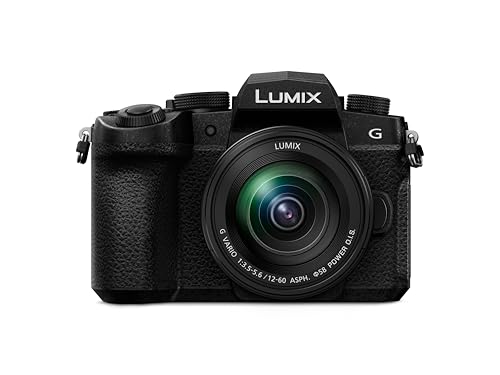
3. Panasonic Lumix G97
A Panasonic Lumix G97 Micro Four Thirds mirrorless camera (DC-G97MK), per the listing. Check price on Amazon.
Good for: Everyday Micro Four Thirds. Watch out: Micro Four Thirds sensor.
Best for budget Sony with 24MP APS-C
4. Sony Alpha a6100 (body)
A Sony Alpha a6100 mirrorless camera with a 24MP APS-C sensor, per the listing. Check price on Amazon.
Good for: Budget Sony with 24MP APS-C. Watch out: older model.
Best for small Fujifilm for beginners
5. Fujifilm X-M5 (XC 15-45mm kit)
A Fujifilm X-M5 mirrorless camera with the XC 15-45mm f/3.5-5.6 lens, per the listing. Check price on Amazon.
Good for: Small Fujifilm for beginners. Watch out: check kit contents.

Best for compact Fujifilm
6. Fujifilm X-T30 II (body)
A Fujifilm X-T30 II digital camera body, per the listing. Check price on Amazon.
Good for: Compact Fujifilm. Watch out: body only.
Best for ready to shoot out of the box
7. Sony Alpha a6100 (16-50mm kit)
A Sony Alpha a6100 mirrorless camera with the E PZ 16-50mm lens, per the listing. Check price on Amazon.
Good for: Ready to shoot out of the box. Watch out: older model.
Best Picks by Category
These labels summarize the Amazon listings. They are a data summary, not hands-on test results.
- Top rated: Sony Alpha a6100 (body) — a mid-range APS-C body option on Amazon.
- Most reviewed: Canon EOS R100 (RF-S 18-45mm kit) — the budget-tier kit option on Amazon.
- Best value: Canon EOS R100 (RF-S 18-45mm kit) — the budget-tier pick in this group on Amazon.
- Lowest price: Canon EOS R100 (RF-S 18-45mm kit) — the budget-tier pick in this group on Amazon.
- Premium option: Sony Alpha a6100 (16-50mm kit) — the premium-tier kit pick in this group on Amazon.
Price, Rating and Review Comparison
This table lists the picks with their price tier.
| Product | Price | Rating | Ratings | Price tier |
|---|---|---|---|---|
| Canon EOS R100 (RF-S 18-45mm kit) | Check price on Amazon | — | — | Budget |
| Panasonic Lumix G100 (12-32mm kit) | Check price on Amazon | n/a | n/a | Mid-range |
| Sony Alpha a6100 (body) | Check price on Amazon | — | — | Mid-range |
| Panasonic Lumix G97 | Check price on Amazon | n/a | n/a | Mid-range |
| Fujifilm X-M5 (XC 15-45mm kit) | Check price on Amazon | n/a | n/a | Mid-range |
| Fujifilm X-T30 II (body) | Check price on Amazon | n/a | n/a | Mid-range |
| Sony Alpha a6100 (16-50mm kit) | Check price on Amazon | — | — | Mid-range |
What the Listings Say
Below are the concrete details each seller states on the Amazon listing. Check the live listing for the latest specs before you buy.
Canon EOS R100 (RF-S 18-45mm kit)
The listing states: Stellar Image Quality: Canon EOS R100 4K digital camera with 24.1 megapixel CMOS (APS-C) sensor for superb image clarity and detail can capture images with natural bokeh; Compact Design: Compact, lightweight EOS R series 4K camera with an affordable price; smallest and lightest camera body in the EOS R series built for excellent mobility.
Panasonic Lumix G100 (12-32mm kit)
The listing gives few concrete specifications. Amazon did not show a rating count for this listing.
Panasonic Lumix G97
The listing gives few concrete specifications. Amazon did not show a rating count for this listing.
Sony Alpha a6100 (body)
The listing states: World s fastest AF at 0.02 sec.; Wide 425-phase/425-contrast detection AF points over 84% of sensor; 24.2MP APS-C Exmor sensor w/ front end LSI and ISO up to 51,200; Up to 11fps continuous shooting5 at 24.2MP RAW w/ AF/AE tracking.
Fujifilm X-M5 (XC 15-45mm kit)
The listing gives few concrete specifications. Amazon did not show a rating count for this listing.
Fujifilm X-T30 II (body)
The listing gives few concrete specifications. Amazon did not show a rating count for this listing.
Sony Alpha a6100 (16-50mm kit)
The listing states: Lightning fast AF at 0.02 sec.; 24.2MP2 APS-C Exmor sensor w/ front end LSI and ISO up to 51,2004; Up to 11fps continuous shooting5 at 24.2MP RAW w/ AF/AE tracking; 4K movie3 w/ 2.4x oversampling, full pixel readout, no pixel binning.
How to Choose
Kit or body
Check the lens included.
Sensor
APS-C or Micro Four Thirds.
Lenses
Plan for a second lens.
APS-C Versus Micro Four Thirds
The cameras in this guide use two sensor sizes. The Canon, Sony and Fujifilm models use APS-C sensors, and the Panasonic Lumix models use Micro Four Thirds. The sensor size shapes image look, camera size, lens options and cost.
A larger sensor collects more light for a given lens and can render a shallower depth of field, which means a blurrier background at a similar framing and aperture. APS-C sensors are larger than Micro Four Thirds sensors, so the difference may be visible in low light and in portraits with blurred backgrounds, though lens choice, lighting and processing also play a major part. Differences between current cameras are often smaller in daily use than spec sheets suggest, and many people find both sizes produce excellent results.
Micro Four Thirds gives smaller lenses for a given zoom range, which keeps the whole kit compact and light. That helps for travel, video and carrying a camera all day. APS-C systems also offer small lenses, but telephoto lenses are usually larger. Each system has its own lens mount, and those mounts are not interchangeable without adapters.
The crop factor is another practical difference. A lens on a smaller sensor gives a narrower field of view than the same focal length on a larger sensor, so the same-numbered lens looks tighter on Micro Four Thirds than on APS-C. When comparing lenses between systems, look at the equivalent field of view that the listing or maker gives.
Pick the system whose lenses and size suit you, not only the sensor. Think about what you will shoot and how much you want to carry.
Kit Lens or Body Only
Several listings in this guide are kits with a lens, and others are body only. The choice affects cost and what you can do on day one.
A kit lens is a general-purpose zoom designed to cover everyday situations at a modest price. The Canon, Panasonic G100 and Fujifilm X-M5 listings include one, and the Sony a6100 appears both ways. A kit lens is a sensible start: it lets you shoot straight away and learn what you like to photograph. Its limits are a modest maximum aperture, which makes low-light shooting and background blur harder, and a limited zoom range.
A body-only purchase suits people who already own compatible lenses or want to choose their own. The Sony a6100 body and the Fujifilm X-T30 II body listings are body only, so you need to buy a lens separately or already have one. Check the listing carefully, because a body without a lens cannot take a picture. Make sure the lens mount matches. Canon lists RF-S lenses for the R100, while other systems have their own mount names, such as E for Sony and X for Fujifilm.
Think about a second lens early. A fast prime, a lens with a fixed focal length and a wide aperture, is a common first addition for low light and portraits. A longer zoom suits travel and wildlife. Third-party lenses are available for some mounts, but check compatibility with your camera.
Finally, compare the total cost of the camera plus the lens you want, not the body price alone.
Autofocus, Stabilization and Video Features
Spec sheets list many features, but a few matter most for everyday shooting. Learn what they do so you can look for them in each listing.
Autofocus decides how reliably the camera locks onto a subject. Listings may mention phase-detection points, eye detection or tracking. Moving subjects, such as children, pets and sport, need good tracking, while static subjects are easier. The Sony listings highlight autofocus speed and points as the maker states them, but results depend on lens, light and subject.
Image stabilization reduces blur from handshake. It may be built into the camera body, into the lens or both, and it varies by model. Check which the camera offers, because a body without stabilization depends on the lens, and some kit lenses include it, as the Canon listing mentions with its IS STM lens. Stabilization helps in low light and with video, though it cannot freeze a moving subject.
For video, look at the maximum resolution and frame rates, whether there is a microphone input, a screen that flips toward you for vlogging and any recording time limits. Several listings mention 4K video, but the details, such as cropping and frame rate, vary by camera and are best checked on the maker’s site. Good sound often matters as much as good pictures, so consider whether the camera accepts an external microphone.
Also check burst speed, viewfinder presence, screen type and touch controls. A built-in viewfinder helps in bright sun, and some entry models do without one. Decide which features matter for your shooting before comparing models.
The Extras That Complete the Kit
A camera listing rarely includes everything you need, so budget for the extras. Skipping them leads to frustration on your first outing.
Memory cards are the first item. Check the type your camera uses, the speed it needs for video and burst shooting, and the capacity that suits your habits. Buy from a reputable seller and consider a spare card. Next is a spare battery, since mirrorless cameras generally drain batteries faster than older designs, and shooting video, using the screen or being in cold weather shortens runtime further. Check whether the camera can charge over USB, which helps for travel and backup power, and whether a charger is in the box.
A camera bag or padded insert protects the camera and lenses. A strap or wrist loop is usually in the box. A tripod suits long exposures, low-light work and video, and a small one is easy to carry. A lens cloth, a blower and a UV or clear filter for lens protection are low-cost basics. If you plan to record sound, consider a clip-on or shotgun microphone that matches the camera’s input.
Software matters too. Some cameras ship with basic editing programs, while others rely on free or paid third-party tools. Think about how you will transfer pictures, whether over a cable, a card reader or wireless link, and how you will back them up.
Finally, read what is in the box for each listing, because kit contents differ and some sellers bundle extras you may or may not want.
Older Models, Sellers and Protecting Your Purchase
Cameras in this price range include recent entry models and older designs that stay on sale. Neither is automatically better, but you should know which you are buying.
The Sony a6100 is flagged as an older model in this guide, and older cameras often cost less because newer ones have arrived. An older model can still take excellent pictures and may have a broad range of lenses and accessories, but it may lack newer features or have an older interface and fewer firmware updates. Check what matters to you: video specs, screen type, connectivity and battery life. Read the maker’s current support page to see what firmware updates are available.
Check the seller as well. Camera listings can come from the maker, an authorized dealer or a third-party seller. Look at who sells and ships the item, and check that the listing describes the exact model, kit and region. Warranty terms can differ if a camera was imported or sold by an unauthorized seller, so confirm the warranty and whether it applies in your country. Be wary of prices far below the usual range, and check that the box includes the contents the listing promises.
Keep your receipt, register the camera with the maker if that is offered, and inspect the camera when it arrives. Check the shutter, the screen, the ports and the lens for damage. Read the return policy and test the camera within the return window.
Several listings in this guide show few details or no rating count, so read the maker’s own product pages before you decide.
What Matters Most for Your First Mirrorless Camera
Buyers often compare specification sheets line by line and still feel unsure. A calmer method is to rank your own needs first, then see which camera lines up. The seven models in this guide cover a spread of sizes and styles, so the question is less which is strongest and more which fits how you shoot.
| If you mostly want | Look closely at | Models to consider |
|---|---|---|
| A small, light body for travel | Weight, grip size and kit lens length | Canon EOS R100, Panasonic Lumix G100, Fujifilm X-M5 |
| Video and vlogging | Flip screen, microphone input, stabilization | Panasonic Lumix G100, Panasonic Lumix G97, Fujifilm X-M5 |
| Photo handling with dials | Control layout and viewfinder | Fujifilm X-T30 II, Sony Alpha a6100 |
| Room to grow with lenses | Lens mount and available glass | Sony Alpha a6100, Fujifilm X-T30 II |
Remember that the table is a way to narrow a list, not a verdict. Check the current specification on each listing, because kit contents and included lenses sometimes change between sellers.
Spend a moment on ergonomics too. A camera that feels awkward in your hand will stay home, and the best sensor in the world does nothing from a shelf. If you can hold one in a shop, even for a minute, do so.
Planning the Whole Setup Beyond the Body
The camera is only the first purchase. A realistic plan includes everything you will need in the first month, so that the first outing does not end in frustration.
- A memory card of the speed class and capacity that the maker lists as suitable for your video settings.
- A spare battery, since mirrorless cameras draw power for the screen or viewfinder constantly.
- A padded bag or case sized for the body and your chosen lens.
- A lens cloth, blower and a clear protective filter if you want extra protection for the front element.
- A strap or wrist loop that you actually like wearing.
Consider the kit lens carefully. The Panasonic Lumix G100 with the 12-32mm lens and the Canon EOS R100 with the RF-S 18-45mm lens both offer a compact entry point, while body-only options such as the Sony Alpha a6100 and Fujifilm X-T30 II ask you to choose a lens separately. If you have no lens already, a kit version spares you that decision.
Finally, learn the basics of exposure before expecting any camera to transform your photos. A few evenings with the manual and a handful of practice shots will do more for your results than a higher model number ever could.
If you are unsure between two bodies, compare how each handles in the menus and with the lenses you are likely to add later. A system with lenses you can grow into will serve you far longer than one that looks slightly better on paper today. Check sellers carefully, and confirm what is included in the box before you order.
A Closer Look at Each Pick in Everyday Use
Every camera in this guide sits in the same broad budget tier, yet they suit quite different first owners. The notes below focus on what each pick feels like to live with, which buyers it serves best, and the trap hidden inside each apparently simple choice. As the main guide stresses, confirm kit contents and current listing details before ordering, because at this tier the box contents often matter more than the badge.
Canon EOS R100 with kit zoom: the complete Canon starter
The R100 kit is the straightforward Canon beginning: body and standard zoom together, ready for family, travel and learning from the first day. In everyday use its simplicity is the feature. New owners can concentrate on light, timing and basic settings instead of menus, and the kit zoom quietly teaches which focal lengths their life actually uses. Its limits are about appetite: keen learners will eventually want more controls, stronger video tools and lenses for dim rooms or distant subjects. Who should choose it: a first-time buyer who wants Canon and a complete kit without decisions. Who should skip it: an enthusiast who already shoots seriously and knows the controls they will miss. The classic mistake at this tier is buying the starter body and immediately adding expensive lenses. Shoot the kit for a season first; your own files will write a far better shopping list than enthusiasm can.
Panasonic Lumix G100 with kit zoom: the small creator kit
The G100 kit suits a buyer whose camera must film as naturally as it photographs: vlogging, family video, travel pieces and learning content creation in a compact shape. The small Micro Four Thirds lenses keep the whole outfit light, which matters for self-filming and for carrying the camera daily. In use, plan around sound and support: a microphone and a small tripod or grip turn this starter into a credible creator kit, while the body alone is only the beginning of that story. Who should choose it: a beginner creator who values size and simplicity. Who should skip it: a stills-led buyer who wants a traditional viewfinder workflow above all, or an action specialist. Confirm exactly what the listing includes, and resist judging it beside larger bodies on features alone; its job is to be brought along, and it does that job well.
Panasonic Lumix G97: the traditional photographer’s value pick
The G97 suits hobbyists who want a proper camera feel, a grip, a viewfinder and the wide Micro Four Thirds lens choice, without stepping into higher tiers. It is a travel, family and hobby all-rounder whose strength is balance: small enough to carry, serious enough to grow with, and supported by lenses for almost any interest. In daily life the decision is the kit definition, so read the listing closely for which lens, if any, is included and plan accordingly. Who should choose it: a photographer first, who films occasionally and values handling. Who should skip it: a video-led creator, who should weight the filming-led picks more heavily. A common error is assuming a value pick means a temporary pick. With well-chosen lenses, a balanced body like this can serve for years, and the money saved against premium bodies often becomes the lens that transforms your photographs.
Sony Alpha a6100 body only: value that depends on your lens plan
The a6100 as a body-only offer is a test of planning. The body itself brings Sony autofocus confidence and the huge E-mount lens choice to a gentle tier, which suits learners whose subjects move: children, pets, family events and street life. But it cannot take a photograph until you add a lens, so its real tier is body plus your chosen glass. Pair it with a sensible standard zoom and it becomes a complete, capable starter; pair it with a compact prime and it becomes a low-light everyday camera. Who should choose it: a buyer who enjoys choosing a lens, or who already owns E-mount glass. Who should skip it: anyone comparing its headline tier directly with complete kits. That comparison flatters it unfairly. Price the finished outfit, including a card and the basics, before deciding it is the cheapest route into Sony.
Fujifilm X-M5 with kit zoom: colour and compactness for new creators
The X-M5 kit gives Fujifilm’s colour character and a genuinely small body to buyers who shoot a mix of stills and social video. As a complete kit it removes the body-only dilemma, and in daily use its size encourages the habit that improves photography fastest: carrying a camera. Film simulations deserve a weekend of play rather than a glance, because they shape a personal look that can simplify editing enormously. Who should choose it: a new creator or traveller who wants Fujifilm style in the smallest sensible package. Who should skip it: a buyer who needs a viewfinder-led stills workflow as the centre of their shooting, or demanding action capability. Add power planning if you film often, and confirm the exact kit lens on the listing. Small bodies reward owners who keep the outfit small; a huge lens added carelessly undoes the idea.
Fujifilm X-T30 II body only: the enthusiast’s dial-led project
The X-T30 II body suits a photographer who already thinks in lenses. Its traditional dials and compact stills-led character make it a joy for street, travel and deliberate everyday photography, especially with a compact prime that preserves its handling. As a body-only purchase at this tier, it asks more of the buyer than the kits do: you must choose and fund the first lens yourself, and accept a stills-first feature set. Who should choose it: an enthusiast entering Fujifilm for its shooting experience, with a lens already in mind. Who should skip it: a true beginner who wants to open one box and shoot, or a video-led creator. The mistake to avoid is buying the body for charm and then compromising on the lens, because with this camera the lens is half the experience. Choose glass you will love touching as much as the dials.
Sony Alpha a6100 with kit zoom: the same body, the simpler decision
This kit version of the a6100 removes the planning burden of the body-only offer and suits buyers who want Sony’s focusing confidence in a ready-to-shoot package. It is the version to compare directly with the other complete kits in this guide. In everyday use the included zoom covers learning, family and travel, while the E-mount catalogue waits for the day your files ask for a prime or a telephoto. Who should choose it: a beginner or family buyer who wants Sony without a lens decision on day one. Who should skip it: an existing E-mount owner, for whom the body-only offer may represent better value, or a buyer whose heart is set on a specific first lens. As ever at this tier, verify the exact lens named in the listing, because kit definitions decide real value more than small body differences do.
How the Picks Compare When You Use Them Side by Side
At this tier the most honest comparison is not body against body, but starting position against starting position. The complete kits, from Canon, Panasonic and Fujifilm plus the Sony kit version, let you shoot immediately and learn what you need. The body-only offers, the Sony body and the Fujifilm body, look simpler on a list and demand more knowledge, rewarding owners who already have lenses or a clear lens plan. Neither group is better in the abstract. A confident buyer saves money and choice with a body; a new buyer buys momentum and simplicity with a kit, and momentum is worth money when you are learning.
System character separates the rest. Canon offers the straightforward starter path. Sony offers focusing confidence and the broadest lens catalogue to grow into. Panasonic’s Micro Four Thirds picks offer compact kits and, in the G100, a creator lean. Fujifilm offers colour and shooting pleasure that many owners value above feature lists. If two picks still feel tied, choose by the photographs you take most: moving family subjects favour focusing confidence, travel favours compact kits, filming favours the creator-leaning bodies, and deliberate stills favour the dial-led Fujifilm. The tier being equal is exactly why these personal factors, not small feature gaps, should decide.
Choosing With Confidence: Criteria That Deserve More Weight
At a fixed budget tier, the whole-kit calculation deserves the most weight. Add the lens if the offer is body only, a memory card, a spare battery if you shoot long days, and a basic bag, then compare totals rather than headlines. Buyers are often surprised to find the apparently cheapest route finishing in the middle once it can actually take photographs. Next, weight the lens ecosystem at attainable prices. Every system here can grow, but the cost and size of the second lens differ, and the second lens is where hobbies either deepen or stall.
Then weight learning comfort. A first mirrorless camera should invite daily use: menus you can face, a size you will carry and controls that do not punish experimentation. Finally, treat seller clarity as a criterion in its own right at this tier. Kit contents, region wording and included accessories vary more here than anywhere else in these guides, and a clear listing from a careful seller is worth a small premium over a vague one. Read the full listing, save its details, and ask questions before ordering rather than discovering answers at unboxing.
Setup, Daily Handling and Care
First cameras fail their owners through habits, not hardware, so build good ones in the first week. Charge the battery, format the card in the camera, set the date, and shoot familiar subjects in familiar light while you learn where focus, playback and video controls live. Review files on a larger screen and notice what the camera did well and what confused you. Keep a tiny notebook or phone note of settings that worked for your common scenes: indoor family, outdoor travel, evening gatherings. That personal record will teach you faster than any generic tutorial.
Care at this tier is about protecting a modest investment so it lasts for years. Keep lens caps on, change lenses sheltered and facing down, store the camera dry and complete with its charger, and clean glass with a blower and proper cloth rather than sleeves. Back up photographs weekly at minimum, and the same day for anything irreplaceable, keeping two copies before formatting a card. If you film with the creator-leaning picks, add a sound check with headphones to your routine. Owners who build these small disciplines early rarely lose photographs, and they learn their cameras deeply enough to know, with evidence, whether and when an upgrade is truly needed.
More Questions to Settle Before You Order
Is a kit lens a compromise you will outgrow in a month?
For most beginners, no. A kit zoom covers the focal lengths everyday life uses, focuses close enough for learning and lets you discover your preferences with real files instead of guesses. Keen photographers do outgrow kit zooms, but usually after months of evidence about which direction to grow: wider, longer, faster or smaller. Buying a replacement before that evidence exists is the expensive way to learn the same lesson. Start with the kit, shoot deliberately, and let your frustrations, written down, choose the next lens.
How many lenses do you need in the first year?
Usually one, sometimes two. One good general lens teaches framing, light and your own habits. A second lens earns its place when a specific, repeated frustration appears: dim rooms, distant subjects or portraits that need more background blur. Owners who buy several lenses at once often carry none of them confidently. Depth with one lens beats breadth across three, both for your photographs and for your budget at this tier.
What is the most common way buyers waste money in this tier?
Splitting the budget across a body, speculative lenses and accessories before learning anything, leaving nothing for the one upgrade their files later demand. A close second is paying for a body-only headline and then overpaying in haste for any lens that fits. The defence is sequence: buy the starting kit, shoot for a month, review honestly, then spend the remaining budget once, on the limitation you can actually point to in your photographs.
Should you worry that an older model will feel dated quickly?
Less than marketing suggests. Still image quality and basic handling age slowly, and a well-chosen camera in this tier can produce excellent photographs for years. Connectivity and video details age faster, so creators should weight current features more heavily than stills buyers. Either way, a camera that fits your subjects and hands today will serve longer than a theoretically fresher camera that does not, and lenses hold their usefulness longer than bodies in every system here.
What Good Looks Like After Three Months
Three months with a first mirrorless camera should leave evidence beyond a full memory card. You should know, without checking, which settings you reach for with family indoors, with travel scenes and with evening gatherings. You should have a small set of photographs you are quietly proud of, and a clearer set of frustrations you can name precisely: a lens that feels short at school events, files that struggle in a particular hall, a menu you still open with dread. That precision is the real product of the first season, because it converts vague upgrade hunger into a short, affordable list.
Your files should also be findable. A simple folder habit by date and occasion, with two copies of anything that matters, means the photographs from this first season will still be openable and enjoyable in ten years. Owners who skip this discipline rarely lose everything at once; they lose gradually, a card here and a forgotten folder there, until the camera’s first year exists mainly as a rumour. Protect the archive early, while it is small enough to organise in an evening.
Finally, your carrying habit should be settled truth rather than intention. Either the camera comes along most days and the system choice was right, or it stays home and something about size, weight or complexity needs honest attention. That verdict is valuable in both directions. A carried camera that feels limited invites one targeted lens. An uncarried camera invites a smaller outfit, not a larger one, and recognising that early saves the most money available anywhere in this guide.
Trading Up Later Without Wasting the First Purchase
Buyers in this tier often assume today’s camera is a disposable step toward a serious one, and that assumption wastes money twice: once in under-using the first camera, and again in under-valuing it later. Treat the first purchase as a system foundation instead. Lenses chosen sensibly, a bag and accessories that fit the system, and good care habits all survive a body upgrade, which is why the guide keeps returning to lens and listing discipline. When upgrade day eventually comes, the body alone changes, and it changes for a reason you can state in one sentence drawn from your own files.
Keep the practical records that make a later sale or trade fair and simple: invoice, box where storage allows, and honest notes about condition. Keep the camera clean and the firmware maintained by maker instructions. And keep shooting it fully until the replacement arrives, because the last month with a familiar camera often produces the photographs that justify the whole first purchase. Upgrading well is a skill, and like every other skill in this guide, it is mostly a matter of evidence, sequence and patience rather than spending.
A Note on Patience at This Tier
The cameras in this guide reward a virtue that shopping culture discourages: patience. A month of patient shooting with a starter kit teaches focal lengths, light and personal taste that no amount of pre-purchase research can simulate. A patient second purchase, made from written frustrations, lands on the lens or accessory that transforms your photographs instead of merely enlarging your bag. Even patience after buying helps, because early files with any new camera understate what the same camera will produce once its handling becomes thoughtless. Judge a first mirrorless camera at three months, not at three days, and judge upgrades by the photographs they must improve, named in advance. Buyers who adopt that rhythm in this tier tend to spend less in total, enjoy each purchase longer and, not coincidentally, take the photographs that made them want a better camera in the first place.
Keeping a First Camera Longer Than Planned
Many owners in this tier discover a pleasant surprise: the starter camera stays. It stays because a well-chosen kit, learned deeply, covers more of life than its first month suggested, and because familiarity is itself a feature no successor can ship with. If that happens to you, invest around the camera rather than beyond it: the lens your files requested, the bag that gets it carried, the backup routine that protects its archive. A first camera kept for years is not a failed upgrade path. It is the strongest evidence that the original choice, made with the discipline this guide describes, was the right one.
Frequently Asked Questions
Best under 1000 dollars?
See Quick Picks.
Cheapest?
Canon R100 kit.
Sony pick?
Sony a6100.
Is APS-C or Micro Four Thirds better for beginners?
Both work well. APS-C has a larger sensor, while Micro Four Thirds offers compact lenses and bodies. Choose by size, lens choice and the features you want.
Do I need a kit lens?
It lets you start shooting straight away. If you already own compatible lenses or want to choose your own, a body-only purchase can make sense. A body alone cannot take pictures without a lens.
Will lenses from other camera brands fit?
Not directly. Each system has its own mount, and adapters exist for some combinations with limits. Check compatibility before buying.
Is image stabilization important?
It helps reduce handshake blur in low light and in video. It may be in the body, in the lens or both, so check which your camera and lens offer.
What memory card should I buy?
Check the card type and speed your camera manual recommends, especially for video. Buy from a reputable seller and consider a spare.
Is an older camera model still worth buying?
It can be, if it has the features you need and a fair warranty. Check firmware support and compare it with newer models.
Do these cameras have a viewfinder?
Some do and some do not. The listings here do not all say, so check the maker's product page if a viewfinder matters to you.
How many lenses do I need to start?
One general-purpose lens is enough for most people. Add a second, such as a fast prime or a longer zoom, once you know what you want to shoot.
Bottom Line
For price, the R100. For Sony lenses, the a6100. For Fujifilm style, the X-M5.
More Camera Guides
- Best Mirrorless Cameras Under 1500 Dollars
- Best Mirrorless Cameras Under 2000 Dollars
- Best Compact Mirrorless Cameras
- Best Mirrorless Cameras for Vlogging
- Best Tripods for Mirrorless Cameras
- Best Gimbals for Mirrorless Cameras
- Best Camera Bags for Mirrorless Cameras
- Best SD Cards for Mirrorless Cameras
- Best Lenses for Fujifilm X Cameras
- Best Lenses for Micro Four Thirds Cameras
- Best Third-Party Lenses for Sony and Nikon
- Best Microphones for Mirrorless Cameras
- All camera guides
Related Guides
- 7 Best Mirrorless Cameras: Canon, Sony, Fujifilm, Lumix (2026)
- 6 Best Mirrorless Cameras for Beginners: Canon, Sony (2026)
- 7 Best Full-Frame Mirrorless Cameras: Sony, Canon, Nikon (2026)
- 5 Best Canon Mirrorless Cameras: R100, R10, R8, R7 (2026)
- 8 Best Sony Mirrorless Cameras: a6100, a6700, a7 IV, ZV-E1 (2026)