Disclosure: As an Amazon Associate, reviewstook.com earns from qualifying purchases. If you buy through a link on this page, we may earn a commission at no extra cost to you.
Where to Buy
Three picks lead our 4k projector black friday deals shortlist. Start with the XGIMI HORIZON 20 if you want the most complete living-room 4K laser projector in this guide, the NEBULA Cosmos 4K SE if you want the deepest verified percentage cut on a portable 4K model, or the Epson Home Cinema 2350 if you want the trusted 3LCD route with bright, rainbow-free color. Every price in this guide is a dated sighting checked against Amazon’s own catalog data on November 20, 2026 — confirm the live price at checkout, because Black Friday pricing moves by the hour.
4K Projector Black Friday Deals: What Is Actually on Sale
Amazon Black Friday Week runs November 19–30, 2026, with Black Friday itself on November 27 and Cyber Monday closing the event on November 30. Projectors are one of the sale’s genuinely rewarding categories, because the category’s normal pricing carries real margin: current 4K models from XGIMI, Epson, BenQ, ViewSonic and Nebula routinely sit at prices that a November event can cut by a fifth or more without anyone losing money. The six deals in this guide were verified one by one against Amazon’s catalog data on November 20, 2026, and their verified cuts run from about 13% on a gaming-focused BenQ to about 31% on Nebula’s portable 4K SE — real money on machines that cost between $749 and $1,299 at sighting.
A word of category honesty before the picks, because projector marketing needs it more than most. “4K” on a projector listing covers two different technologies: native 4K resolution and pixel-shifting systems (Epson’s 4K PRO-UHD, DLP’s XPR shifting) that render a 4K input signal with extremely fast sub-frame offsets. Both produce a genuinely sharp 4K-class image on a wall or screen, and both appear in this guide, labeled as the listings label them. What matters more in a real room is the trio shoppers underweight: brightness measured honestly, contrast in dark scenes, and input lag if a console will ever be connected. This guide weighs all three, and it prints every price as a dated sighting — the only honest unit in a sale week.
The six picks divide by room and by job. Two are living-room flagships built around triple-laser or 3LCD light engines and serious brightness. Two are gaming-first machines whose input lag figures would embarrass many televisions. One is a portable 4K projector with the guide’s deepest cut, and one is a book-sized travel 4K model at the guide’s lowest price. Shoppers building a full entertainment corner this week will also find the screens and sound side of the same sale in our wider tech coverage, and anyone comparing a projector against a big television should read this guide alongside the TV deals before deciding which wall the money belongs on.
In this guide
Quick Picks
| Pick | Best for | Dated sighting | Deal |
|---|---|---|---|
| XGIMI HORIZON 20 | Best overall | Seen at $1,189 on November 20, 2026 (reference $1,559, about 24% off) | Check on Amazon |
| NEBULA Cosmos 4K SE | Deepest verified cut | Seen at $899.99 on November 20, 2026 (reference $1,299.99, about 31% off) | Check on Amazon |
| Epson Home Cinema 2350 | Best 3LCD for bright rooms | Seen at $1,099.99 on November 20, 2026 (reference $1,499.99, about 27% off) | Check on Amazon |
| BenQ TK700 | Best for console gaming | Seen at $1,299 on November 20, 2026 (reference $1,499, about 13% off) | Check on Amazon |
| ViewSonic LX700-4K | Best laser gaming value | Seen at $1,201.46 on November 20, 2026 (reference $1,649.99, about 27% off) | Check on Amazon |
| XGIMI Elfin Flip 4K | Best portable 4K | Seen at $749 on November 20, 2026 (reference $999, about 25% off) | Check on Amazon |
How These Deals Were Chosen
Every pick in this guide was verified the same way: we searched Amazon’s catalog data for the exact product, matched the returned listing title against the projector we intended to cover, and recorded the price, the reference price where one exists, and the official product image from that same listing. Projector listings need this care because the category is thick with lookalike model numbers, last-generation stock wearing this year’s marketing, and brightness figures quoted in incompatible units. Each review below names the exact model verified, quotes brightness in the unit the listing itself uses (ISO lumens and ANSI lumens are not interchangeable, and we do not convert between them), and claims a percentage only where Amazon’s data returned a reference price.
Beyond verification, three tests shaped the list. First, real 4K-class imaging: every pick accepts and renders a 4K signal through native or pixel-shifted output, and none is a 1080p projector wearing a “supports 4K” badge as its headline claim — the oldest trick in this category. Second, a light engine with a future: laser and LED sources dominate the list because they hold brightness for years without lamp replacements, with the Epson’s lamp-based 3LCD included deliberately for buyers who prioritize its color behavior and price. Third, a distinct job per pick: six projectors, six different rooms and buyers, so the guide reads as a decision tool rather than six versions of the same machine.
We also weighed the ownership costs that never appear in deal headlines: replacement lamps where applicable, the screen or wall the image lands on, sound (several picks carry genuinely usable built-in speakers; none replaces a soundbar for film night), and throw distance, because a projector that cannot fill your screen from your room’s depth is a return waiting to happen. Those factors recur in the reviews and in the how-to-choose section, because a Black Friday projector deal is only a deal if the machine fits the room it was bought for.

Top pick
1. XGIMI HORIZON 20 — Best Overall
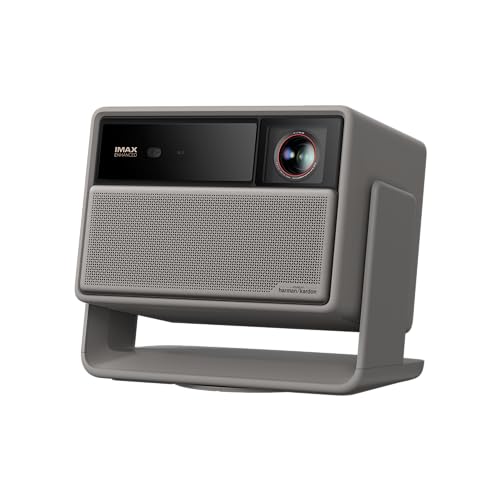
Badge: Best Overall. The HORIZON 20 is the projector this guide would put in a living room and stop apologizing for: seen at $1,189 on November 20, 2026 against a $1,559 reference price — about 24% off. The verified listing describes an RGB triple laser home projector rated at 3,200 ISO lumens, with Google TV and licensed Netflix built in, optical zoom and lens shift, IMAX Enhanced certification, Dolby Vision support, images up to 300 inches, and gaming figures of 240Hz with 1ms input lag. The catalog data adds the substance behind the headline: an X-Master RGB triple laser engine credited with a 100,000:1 contrast ratio, HDR10+ and Filmmaker Mode alongside Dolby Vision, built-in Harman Kardon speakers, an integrated stand, and a two-year warranty.
The triple-laser engine is the argument. Separate red, green and blue laser sources produce a wider, more accurate color gamut than single-laser-plus-color-wheel designs, and they do it at full brightness rather than in a dimmed cinema mode. That is what makes the HORIZON 20 a living-room machine rather than a cave machine: 3,200 ISO lumens is enough output to hold a watchable, colorful image in a room with ordinary ambient light at sensible screen sizes, while the contrast figure and Dolby Vision support give dark film scenes the depth that separates a projector from a big dim television. Lens shift and optical zoom matter more than shoppers expect — they let the projector sit where the room allows and still land a squared, full-resolution image, instead of forcing keystone correction that throws away pixels.
The gaming specification deserves its own sentence because it is unusual in a flagship home model: 240Hz fluidity with 1ms response, plus VRR and ALLM support, means the same machine that shows films on Friday hosts a console on Saturday without the lag penalty that traditionally exiles projectors from gaming. The trade-offs are size and price context: at roughly ten and a half pounds with an integrated stand it is a placed appliance, not a portable, and $1,189 is real money even at 24% off. Buyers in dedicated dark theaters chasing absolute black levels should compare the premium tier; buyers who want one machine that does films, sport, streaming and games in a normal room will not find a more complete answer in this guide. Readers pairing it with a streaming source should note Google TV is built in — the dongle budget can go to the screen instead.
Mini specs (verified from the listing):
- Light engine: RGB triple laser, 3,200 ISO lumens
- Contrast: 100,000:1 (per listing data)
- HDR: Dolby Vision, HDR10+, IMAX Enhanced, Filmmaker Mode
- Optics: optical zoom and lens shift; up to 300-inch image
- Gaming: 240Hz, 1ms input lag, VRR and ALLM
- Smart/audio: Google TV with licensed Netflix; Harman Kardon speakers; integrated stand
Strengths
- About 24% off a current triple-laser flagship at sighting.
- Brightness and contrast that work in real living rooms, not only caves.
- Lens shift plus optical zoom make placement forgiving without losing resolution.
Trade-offs
- A placed appliance at roughly 10.6 lb — not a take-anywhere projector.
- Built-in Harman Kardon sound is good, not a soundbar replacement for film night.
- The guide’s highest mainstream price; the cut is deep but the ticket is too.
Verdict: Best for: living-room buyers who want one 4K laser projector for films, sport, streaming and console gaming. Not suited for: portable use, or dedicated-theater buyers optimizing purely for black levels.
Deal details: Seen at $1,189 on November 20, 2026, against a $1,559 reference price returned by Amazon’s catalog data — about 24% off. The verified listing is the XGIMI HORIZON 20 in Elephant Grey, sold by the XGIMI Official Store.
Check on Amazon · See the current Black Friday price · View this deal on Amazon

2. NEBULA Cosmos 4K SE — Deepest Verified Cut
Badge: Deepest Verified Cut. The Cosmos 4K SE carries this guide’s largest verified percentage, and it does so on a machine with a genuinely interesting light engine: seen at $899.99 on November 20, 2026 against a $1,299.99 reference price — about 31% off. The verified listing describes a portable 4K projector rated at 1,800 ANSI lumens, with the NebulaMaster image engine, HybridBeam technology, Google TV, and screen sizes up to 200 inches, positioned for gaming, home and office use. The catalog data explains HybridBeam as a combined LED-plus-laser light source, credited with 1.07 billion colors, alongside 4K Dolby Vision support and the IEA 4.0 intelligent setup system: real-time autofocus and keystone correction, obstacle avoidance, screen fit, and wall color and ambient light adaptation.
HybridBeam is the substance. Pure LED projectors are quiet and color-rich but brightness-limited; pure laser models are bright but can oversaturate. Combining the two sources is Nebula’s attempt to land in the productive middle, and at 1,800 ANSI lumens the result is a projector that handles a dimmed living room or a darkened bedroom wall convincingly, while the intelligent setup makes it the most forgiving machine here to actually use: set it down, let it find the wall, avoid the picture frame and fit the screen, and watch. That forgiveness is the portable proposition — this is the projector that moves between rooms, goes to the backyard on a dry evening, and sets up at a friend’s house without a tape measure and a prayer.
The honest limits follow from the brightness figure. At 1,800 ANSI lumens, a bright sunlit room will wash the image out where the XGIMI above would hold on; plan on light control for daytime viewing, or treat daytime as sports-and-news brightness rather than cinema. Portability also means the built-in sound and the single-box design serve convenience first. But judged as a package — true 4K with Dolby Vision, an intelligent setup system that genuinely reduces friction, Google TV with 4K Netflix built in, and the guide’s deepest verified cut at about 31% — the Cosmos 4K SE is the value pick of this list, and the one most likely to be a household’s first projector rather than its upgrade. Shoppers furnishing the rest of a media corner will find the companion categories in our Apple Black Friday Deals 2026 and wider sale coverage.
Mini specs (verified from the listing):
- Light engine: HybridBeam (LED + laser), 1,800 ANSI lumens
- Resolution/HDR: 4K with Dolby Vision; up to 200-inch image
- Image engine: NebulaMaster; 1.07 billion colors (per listing data)
- Setup: IEA 4.0 autofocus, keystone, obstacle avoidance, screen fit
- Smart: Google TV with 4K Netflix
- Weight: about 9.9 lb
Strengths
- About 31% off at sighting — the deepest verified cut in this guide.
- Hybrid LED-plus-laser engine balances color and brightness for real rooms.
- Intelligent auto-setup makes it the easiest projector here to live with.
Trade-offs
- 1,800 ANSI lumens wants light control for daytime cinema.
- Portable convenience design; dedicated rooms can use the brighter flagships better.
- Built-in sound serves the room it is in, not a cinema audience.
Verdict: Best for: first-projector households, renters and anyone who will move the projector between rooms. Not suited for: bright sunlit rooms at midday, or fixed dedicated theaters.
Deal details: Seen at $899.99 on November 20, 2026, against a $1,299.99 reference price returned by Amazon’s catalog data — about 31% off. The verified listing is the NEBULA Cosmos 4K SE in Gray, sold by AnkerDirect.
Check on Amazon · See the current Black Friday price · View this deal on Amazon

3. Epson Home Cinema 2350 — Best 3LCD for Bright Rooms
Badge: Best 3LCD for Bright Rooms. Epson is the name households have trusted in projection for decades, and the Home Cinema 2350 is its mainstream 4K proposition at a strong sighting: seen at $1,099.99 on November 20, 2026 against a $1,499.99 reference price — about 27% off. The verified listing describes a 4K PRO-UHD smart streaming projector with Android TV built in, a 3-chip 3LCD engine rated at 2,800 lumens of both color and white brightness, HDR10 and HLG support, low-latency gaming performance, a 10W speaker and Bluetooth. The catalog data adds the details that make 3LCD ownership distinct: the three-chip design displays 100% of the RGB color signal for every frame, which Epson credits with outstanding color accuracy at full color brightness and no distracting rainbowing or color-brightness issues, and the low-latency mode keeps input lag under 20 milliseconds for current consoles.
The 3LCD argument is color honesty. Single-chip DLP projectors — including two excellent ones in this guide — produce color sequentially, which most viewers never notice and a minority perceive as rainbow artifacts in high-contrast scenes. The 2350’s three-chip engine produces all colors simultaneously, at the full rated brightness for both color and white output, which is why Epson quotes the two figures as equal and why bright-room sports and daytime viewing are this machine’s home ground. At 2,800 lumens with that color behavior, the 2350 is the pick for the family room that will never be a cave: weekend football with the curtains half open, kids’ films in the afternoon, and proper movie nights after dark, all from one ceiling-friendly box of about nine pounds.
Its trade-offs are the traditional lamp-based ones, stated plainly. The 4K PRO-UHD system is a pixel-shifting design rather than native 4K — sharp and genuinely 4K-class on screen, and this guide labels it as Epson labels it. The lamp light source will dim over years of heavy use where the laser picks in this guide hold brightness longer, and replacement lamps are an ownership cost to budget. Android TV built in is convenient, though households deep in another streaming ecosystem may still add their preferred stick. Against those, the counterweight is trust and price: a current Epson home cinema model, sold by Amazon.com in the verified listing, at about 27% off, with the color behavior bright rooms reward. For many households this is the sensible center of the entire category.
Mini specs (verified from the listing):
- Light engine: 3-chip 3LCD, 2,800 lumens color and white brightness
- Resolution/HDR: 4K PRO-UHD (pixel-shift), HDR10 and HLG
- Gaming: input lag under 20 ms in low-latency mode (per listing data)
- Smart/audio: Android TV built in, Google Assistant voice search; 10W speaker; Bluetooth
- Weight: about 9 lb
Strengths
- About 27% off a current Epson home cinema model at sighting.
- Full color brightness with no rainbow artifacts — the bright-room advantage.
- Under-20ms lag keeps console gaming respectable on the same machine.
Trade-offs
- Pixel-shifted 4K PRO-UHD rather than native 4K (labeled as such).
- Lamp light source dims over years; budget a replacement lamp for heavy use.
- Android TV may duplicate a streaming stick the household already prefers.
Verdict: Best for: family rooms with ambient light, sports viewers and rainbow-sensitive buyers. Not suited for: buyers who want a lamp-free laser engine, or native-4K purists.
Deal details: Seen at $1,099.99 on November 20, 2026, against a $1,499.99 reference price returned by Amazon’s catalog data — about 27% off. The verified listing is the Epson Home Cinema 2350 in White, sold by Amazon.com.

Check on Amazon · See the current Black Friday price · View this deal on Amazon

4. BenQ TK700 — Best for Console Gaming
Badge: Best for Console Gaming. BenQ built its projector reputation on gaming latency, and the TK700 is the mainstream expression of it: seen at $1,299 on November 20, 2026 against a $1,499 reference price — about 13% off. The verified listing describes a 4K HDR home entertainment gaming and movie projector with 4.2ms latency at its fastest mode, 3,200 lumens, 16ms input lag at 4K, HDMI 2.0, enhanced black detail, a Dolby Atmos speaker, explicit PS5 and Xbox readiness, and a three-year warranty. The catalog data adds the placement figure that decides real installations: standard throw, projecting a 100-inch image from about 8.2 feet — and distinguishes it from its short-throw sibling, which does the same from about 6.5 feet.
Understand the two latency numbers, because they are the product. The 16ms figure is the lag at 4K60, the mode a PS5 or Xbox actually uses for 4K gaming, and it is low enough that the projector disappears from the input chain for all but the most latency-obsessed competitive play. The 4.2ms figure belongs to the high-refresh 1080p mode, where the TK700 serves PC and console players who trade resolution for speed. Between those poles sits a movie projector with 3,200 lumens of brightness and HDR support, which is the actual proposition: one machine, on a shelf or ceiling mount, that runs film night at 4K and game night at either 4K60 or high-refresh 1080p without the household negotiating two displays.
The cut, about 13%, is the shallowest in this guide, and the review should say so without flinching: this is a fair price on a specialist machine, not a clearance event. The TK700 also asks the usual DLP questions — a minority of viewers see rainbow artifacts on single-chip DLP, and the household should know its own sensitivity — and its built-in Atmos speaker is a convenience, not a cinema. But for the specific buyer it serves, the console-first household that measures projectors in milliseconds before lumens, the TK700 at $1,299 remains the benchmark-shaped answer, and Black Friday is when its price is softest. Gamers speccing the rest of the setup will find the console-side categories in our Action Camera Black Friday Deals 2026 sibling coverage of the same sale week.
Mini specs (verified from the listing):
- Resolution: 4K HDR, HDMI 2.0
- Brightness: 3,200 lumens
- Latency: 16ms input lag at 4K; 4.2ms in fastest mode (per listing)
- Throw: 100-inch image from about 8.2 ft (standard throw)
- Audio/extras: Dolby Atmos speaker; PS5 and Xbox ready; 3-year warranty
Strengths
- 4K60 gaming at 16ms and a 4.2ms fast mode — latency is the design center.
- 3,200 lumens holds up for films and sport beyond the gaming brief.
- Three-year warranty, longer than most of this guide.
Trade-offs
- About 13% off is the guide’s shallowest cut — a fair price, not a frenzy.
- Single-chip DLP: a minority of viewers perceive rainbow artifacts.
- Standard throw needs about 8.2 ft for 100 inches; small rooms should check the short-throw sibling.
Verdict: Best for: console-first households that game at 4K60 and watch films on the same screen. Not suited for: rainbow-sensitive viewers, or rooms too short for its throw distance.
Deal details: Seen at $1,299 on November 20, 2026, against a $1,499 reference price returned by Amazon’s catalog data — about 13% off. The verified listing is the BenQ TK700 in White.
Check on Amazon · See the current Black Friday price · View this deal on Amazon

5. ViewSonic LX700-4K — Best Laser Gaming Value
Badge: Best Laser Gaming Value. The LX700-4K is the guide’s quiet overachiever: a laser gaming projector with flagship-adjacent numbers at a midrange sighting — seen at $1,201.46 on November 20, 2026 against a $1,649.99 reference price, about 27% off. The verified listing describes a 4K UHD laser gaming projector rated at 3,500 lumens, built for Xbox with a 240Hz refresh rate and 4.2ms input lag, dual HDMI, SuperColor technology, HDR support, optical zoom and keystone correction. The catalog data raises the brightness figure in its own description to 4,000 ANSI lumens — we print the listing’s headline 3,500-lumen figure in the spec box and note the discrepancy honestly rather than choosing the larger number — and adds 1440p at 120Hz gaming sessions, screen sizes from 80 to 150 inches with a 100-inch image from about 7.7 feet, and a dedicated Golf Mode tuned for golf simulators.
The laser engine is the ownership argument. Where the BenQ above burns a lamp, the LX700-4K’s laser light source is built to hold its brightness across years of use with no lamp replacements in the budget — the running-cost difference that quietly decides total cost of ownership between two similar tickets. Layer on the gaming specification — 240Hz with 4.2ms lag at 1080p, 1440p120 as the console sweet spot, and full 4K for films — and the ViewSonic covers the same dual life as the TK700 while adding laser longevity and a deeper verified cut. The golf simulation mode sounds like a gimmick until a household member prices golf simulators; then it reads as a second hobby included in the ticket.
ViewSonic’s brand gravity in home cinema is lighter than Epson’s or BenQ’s, and buyers who equate badge with support should weigh that honestly; the verified listing is sold by Amazon.com, which settles the purchase-channel question. The DLP rainbow caveat applies here as it does to the BenQ. And the brightness-figure discrepancy between the listing’s headline and its description is exactly why this guide prints sightings and specs as the listing states them, and why buyers should read the listing’s own specification table at checkout. Judged on verified numbers, the LX700-4K at about 27% off is the gaming projector value of this sale: laser light, 240Hz speed, 4K resolution, under $1,210.
Mini specs (verified from the listing):
- Light engine: laser; 3,500 lumens headline rating (listing description cites 4,000 ANSI lumens)
- Resolution: 4K UHD (3840×2160)
- Gaming: 240Hz, 4.2ms input lag; 1440p at 120Hz (per listing data)
- Image: 80–150 inches; 100-inch image from about 7.7 ft; optical zoom
- Extras: dual HDMI, HDR/HLG, SuperColor, Golf Mode
Strengths
- About 27% off at sighting, on a laser engine with no lamp replacements to budget.
- 240Hz and 4.2ms lag match the guide’s fastest gaming figures.
- 1440p120 hits the current consoles’ performance sweet spot.
Trade-offs
- The listing’s own brightness figures differ between headline and description — read its spec table.
- Single-chip DLP rainbow caveat applies, as with the BenQ.
- A lighter home-cinema brand name than Epson or BenQ for support-minded buyers.
Verdict: Best for: gamers who want laser longevity and high-refresh play under a 4K film projector. Not suited for: buyers who prioritize brand-name cinema pedigree over specification value.
Deal details: Seen at $1,201.46 on November 20, 2026, against a $1,649.99 reference price returned by Amazon’s catalog data — about 27% off. The verified listing is the ViewSonic LX700-4K in White, sold by Amazon.com.
Check on Amazon · See the current Black Friday price · View this deal on Amazon

6. XGIMI Elfin Flip 4K — Best Portable 4K
Badge: Best Portable 4K. The Elfin Flip 4K answers the question the flagships cannot: what does real 4K look like in a projector the size of a book? Seen at $749 on November 20, 2026 against a $999 reference price — about 25% off — it is the guide’s lowest ticket and its most portable machine. The verified listing describes a portable 4K projector with Wi-Fi and Bluetooth and Google TV built in, an RGB triple laser light source rated at 1,600 ISO lumens, a 0.98–1.3:1 optical zoom, Harman Kardon sound, and 1ms gaming latency, aimed at home theater and outdoor camping alike. The catalog data fills in the picture: a 20,000:1 dynamic contrast ratio, SGS-certified color accuracy, dual Harman Kardon speakers, access to the major streaming services through Google TV, VRR and ALLM gaming support, and a weight of about 3.4 pounds.
The engineering surprise is what survived the shrinking. A triple-laser engine in a book-sized body is not the category’s habit — portables usually cut the light engine first — and the optical zoom is the second surprise, because small projectors typically fake size adjustment with digital zoom that discards resolution, while the Elfin Flip’s 0.98–1.3:1 optical range resizes the image with the lens, at full quality. At 1,600 ISO lumens the honest use case is a darkened room, a bedroom wall, a backyard after sunset — the settings where portability is actually exercised — and in those settings the image is a genuine 4K cinema that travels in a tote bag. The flip format and integrated design mean setup is: place, power, point, watch.
Its limits are the physics of small boxes. Brightness will not fight a sunlit living room the way the HORIZON 20 does, the built-in speakers serve a bedroom or a campsite rather than a film-night crowd, and a portable that moves needs its lens cared for in transit. Buyers should also note it runs from mains power in the manner of its class — backyard plans should include the extension cord or power station conversation. None of that dents the proposition at $749: the cheapest verified route in this guide to real triple-laser 4K, at about 25% off, in a machine that fits where projectors have never fit. It is the gift-shaped pick of the list as well — the one that turns a blank wall in a dorm, a rental or a holiday house into a cinema.
Mini specs (verified from the listing):
- Light engine: RGB triple laser, 1,600 ISO lumens
- Contrast: 20,000:1 dynamic (per listing data)
- Optics: 0.98–1.3:1 optical zoom
- Smart/audio: Google TV built in; dual Harman Kardon speakers; Wi-Fi and Bluetooth
- Gaming: 1ms latency, VRR and ALLM (per listing data)
- Weight: about 3.4 lb
Strengths
- About 25% off the guide’s lowest 4K ticket at sighting.
- Triple-laser color and optical zoom survive the book-sized format.
- True portability: bedroom, dorm, backyard and holiday-house cinema.
Trade-offs
- 1,600 ISO lumens needs darkness to shine; not a sunlit-room machine.
- Built-in sound suits small spaces, not film-night crowds.
- Mains-powered in the manner of its class — plan power for outdoor use.
Verdict: Best for: portable 4K buyers, students, renters and backyard movie nights. Not suited for: bright-room primary displays, or buyers who will never move it and could use a brighter fixed machine.
Deal details: Seen at $749 on November 20, 2026, against a $999 reference price returned by Amazon’s catalog data — about 25% off. The verified listing is the XGIMI Elfin Flip 4K, sold by the XGIMI Official Store.
Check on Amazon · See the current Black Friday price · View this deal on Amazon
Comparison Table
Read this table as a decision filter, not a ranking: these six projectors serve different rooms, and the right question is which room is yours. Brightness figures are quoted in each listing’s own unit — ISO and ANSI lumens are measured differently and are not converted here. Every price is the November 20, 2026 sighting; confirm the live price on the listing before you buy.
| Model | Key specs | Dated sighting |
|---|---|---|
| XGIMI HORIZON 20 | RGB triple laser, 3,200 ISO lumens, Dolby Vision, lens shift | $1,189 on Nov 20, 2026 |
| NEBULA Cosmos 4K SE | HybridBeam LED+laser, 1,800 ANSI lumens, auto setup, Google TV | $899.99 on Nov 20, 2026 |
| Epson Home Cinema 2350 | 3LCD, 2,800 lumens color/white, 4K PRO-UHD, Android TV | $1,099.99 on Nov 20, 2026 |
| BenQ TK700 | 4K HDR, 3,200 lumens, 16ms at 4K, 3-year warranty | $1,299 on Nov 20, 2026 |
| ViewSonic LX700-4K | Laser, 240Hz, 4.2ms lag, 1440p120 | $1,201.46 on Nov 20, 2026 |
| XGIMI Elfin Flip 4K | RGB triple laser portable, 1,600 ISO lumens, optical zoom | $749 on Nov 20, 2026 |
How to Choose the Right 4K Projector This Black Friday
Start with the room, not the projector. Measure the throw distance your room actually offers — seating wall to screen wall — and the screen size you honestly want, then check the candidate’s throw figures against them: the BenQ TK700 needs about 8.2 feet for 100 inches, the ViewSonic about 7.7 feet, and the lens-shift-and-zoom flagships forgive more placement sins than the fixed portables. A projector that cannot fill your screen from your shelf is a return, whatever its discount. Ceiling mounting, shelf placement and coffee-table duty each favor different machines in this guide, and the room decides before the spec sheet speaks.
Read brightness in its own unit, against your light. ISO lumens and ANSI lumens come from different measurement regimes, and listings in this guide use both; treat cross-unit comparisons as approximate at best. The practical ladder: a dedicated dark room flatters everything here, including the 1,600-ISO-lumen Elfin Flip; a living room with controlled evening light suits the 1,800-ANSI Nebula and the brighter Epson; a family room that hosts afternoon sport wants the 2,800-lumen Epson or the 3,200-lumen flagships. Buying brightness for the room you have beats buying the biggest number on the page.
Choose the light engine by ownership style. Laser engines — the XGIMI pair, the ViewSonic, and Nebula’s hybrid — hold brightness for years with no lamp budget and instant on-off behavior. The Epson’s lamp-based 3LCD trades that longevity for simultaneous-color rendering and bright-room color that many viewers simply prefer. Neither is the correct answer for everyone; the household that projects daily for a decade and the household that projects on weekends will rationally choose differently, and both are right.
If a console is connected, latency is a headline spec. At 4K60, 16ms (the BenQ) is the threshold where a projector stops being the weak link for most players; high-refresh modes at 1080p or 1440p (ViewSonic’s 240Hz and 1440p120, the XGIMI HORIZON 20’s 240Hz/1ms figures) serve players who trade resolution for speed. Casual and cinematic gamers can ignore the millisecond race entirely and buy on image quality — another reason the room-and-use interview comes before the spec sheet. Households speccing a full gaming corner this week will find the display’s other half in our Camera Gimbal Black Friday Deals sibling coverage of creator and gaming gear in the same event.
Budget the whole wall: screen, sound and mount. A painted wall works better than its reputation and worse than a real screen; even an entry screen improves contrast and brightness perception more than a model tier does. Sound follows the same logic: every pick here plays audio, several play it well, and none replaces a soundbar for film night — hold back part of the budget for the bar if films are the point. Mounts, cables long enough for the room, and a streaming source where the projector lacks one complete the real ticket. The deal price is the beginning of the purchase, not its total.
How to Check a Deal Is Real — and Set Up Your Projector Right
Verify the exact model number. Projector lines recycle names across generations and regions; the listings in this guide were matched by exact model — HORIZON 20, Cosmos 4K SE, Home Cinema 2350, TK700, LX700-4K, Elfin Flip 4K. If the price you see differs wildly from a sighting here, check the model suffix first: a letter or a generation changes the light engine, the brightness and the value.
Use the sighting method on anything else you consider. Every price here is a dated sighting because that is the only honest unit during a sale event. Note today’s price, compare it with the same listing before Black Friday Week if you can, and treat any percentage without a visible reference price as decoration. Where a listing’s own figures disagreed — the ViewSonic’s brightness — this guide printed the discrepancy rather than the bigger number; demand the same honesty everywhere.
Set up with the lens, not the keystone. On first night, position the projector square to the wall and use optical zoom and lens shift (where fitted) to fit the image; reserve digital keystone for the last resort, because it discards resolution to fake geometry. Run the auto-setup systems — Nebula’s IEA 4.0, the XGIMI models’ alignment — then check focus at the corners, not just the center, and revisit focus after the first hour as the machine warms.
Feed it a real 4K signal and set the picture mode honestly. Confirm the source is outputting 4K (streaming apps need the bandwidth and, on some services, the right subscription tier), use Filmmaker or cinema modes for films rather than the vivid showroom mode, and let Dolby Vision or HDR10 titles carry the contrast argument. For gaming, enable the low-latency or game mode explicitly — on several models the fastest figures live behind that toggle, and the default picture mode quietly adds processing delay.
Plan the return window as part of the purchase. Rainbow sensitivity, fan noise tolerance and brightness satisfaction are all personal and all discoverable in the first evenings. Buy from a listing whose returns terms you have read, test the projector in your actual room at your actual hours within the window, and treat a mismatch as information, not failure — the second-choice pick in this guide is usually the right one for the room that rejected the first.
Common Mistakes
Buying a “supports 4K” 1080p projector. The category’s oldest trick: a native-1080p machine that accepts a 4K signal and downscales it. Every pick in this guide renders a 4K-class image by native or pixel-shifted output; outside this guide, check the native display specification, not the input specification, before believing a 4K badge.
Comparing lumens across units. ISO and ANSI lumens are different measurements. A 1,600-ISO-lumen portable and a 1,800-ANSI-lumen model are closer than the numbers suggest, and a no-name listing quoting unqualified “lumens” in the tens of thousands is quoting a number with no standard behind it at all.
Ignoring throw distance until the box opens. Screen size is a function of distance and lens. Measure the room first; the reviews above print the verified throw figures where the listings provide them, and the portables forgive placement that fixed installs cannot.
Spending the whole budget on the projector. Screen, sound, mount and cables are part of the cinema. A midrange projector on a real screen with a soundbar outperforms a flagship on a beige wall through its own speaker, for similar total money.
Judging the picture in the first five minutes, in vivid mode, at noon. Projectors are evening machines judged in evening conditions, in cinema picture modes, after focus settles. The returns window exists for honest testing — use it under the conditions the projector was bought for.
Final Recommendation
For most living rooms, the XGIMI HORIZON 20 at $1,189 is the 4k projector black friday deals headline: triple-laser color, real brightness, lens shift, Dolby Vision and genuine gaming speed at about 24% off. The value crown belongs to the NEBULA Cosmos 4K SE at $899.99 — the guide’s deepest cut at about 31% on a forgiving, portable, intelligent 4K machine. Bright family rooms should take the Epson Home Cinema 2350 at $1,099.99; console-first households should choose between the BenQ TK700’s proven latency at $1,299 and the ViewSonic LX700-4K’s laser longevity at $1,201.46; and anyone whose cinema must travel should take the Elfin Flip 4K at $749 without a second thought. Whatever you choose, verify the exact model, the live price and the returns terms at checkout — during November 19–30, those habits matter more than any roundup, this one included. Readers building out the rest of the entertainment stack will find the reading-and-streaming side of the same sale in our Kindle Black Friday Deals 2026 coverage.
FAQ
When do 4K projector Black Friday deals start in 2026?
Amazon Black Friday Week runs November 19–30, 2026. Black Friday is November 27 and Cyber Monday is November 30. Every price in this guide was sighted on November 20, 2026, early in the event; projectors at the deepest verified cuts — the Nebula at about 31% off — are the ones most likely to see stock or pricing move first.
Is pixel-shifted 4K real 4K?
It is a real 4K-class image produced differently: systems like Epson’s 4K PRO-UHD and DLP pixel-shifting render the full 4K signal with extremely fast sub-frame offsets rather than a native 3840×2160 panel. On a wall at normal viewing distances the result is genuinely sharp, and this guide labels each pick’s method as its listing does, so the choice is informed rather than hidden.
How many lumens do I actually need?
Match the figure to the room and read it in its own unit: dark rooms flatter even the 1,600-ISO-lumen portable in this guide; controlled living rooms suit the midrange picks; bright family rooms and afternoon sport want the 2,800-lumen Epson class and above. Screen size matters too — the same projector is dimmer at 150 inches than at 100.
Laser or lamp: which light engine should I choose?
Laser holds brightness for years with no lamp replacements and suits heavy daily use; the Epson’s lamp-based 3LCD offers simultaneous color at full brightness that bright-room viewers often prefer, with a lamp budget over years of heavy use. Choose by how much you project and how your room is lit, not by which technology sounds newer.
Can a projector replace my TV for gaming?
For console gaming at 4K60, yes, with the right model: the BenQ TK700’s 16ms at 4K, the ViewSonic’s 240Hz and 1440p120 modes and the XGIMI HORIZON 20’s gaming figures all clear the bar for all but the most latency-critical competitive play. Enable the game or low-latency mode explicitly — the fastest figures live behind that setting.
Do I need a screen, or is a wall enough?
A smooth, light wall is a workable start and the portables in this guide are designed to forgive walls. A dedicated screen improves contrast, brightness perception and color consistency enough that it is the best upgrade most projector budgets can buy after the machine itself — plan it as phase two if not day one.
Should I wait for Cyber Monday instead?
Cyber Monday (November 30) usually repeats surviving prices rather than beating them. The deepest verified cuts here — the Nebula and the flagships at about 24–27% off — are reasonable buys now; the shallowest cut, the BenQ at about 13%, is the patient buyer’s candidate if any is.