Disclosure: As an Amazon Associate, reviewstook.com earns from qualifying purchases. If you buy through a link on this page, we may earn a commission at no extra cost to you.
Where to Buy
Three picks lead our camera gimbal black friday deals shortlist. Start with the DJI RS 4 if you shoot a full-size mirrorless camera and want the mainstream professional choice, the DJI RS 4 Mini if the same job needs a smaller, cheaper stabilizer, or the DJI Osmo Mobile 7 if the camera is a phone and the budget is firm. Every price in this guide is a dated sighting checked against Amazon’s own catalog data on November 20, 2026 — confirm the live price at checkout, because Black Friday pricing moves by the hour.
Camera Gimbal Black Friday Deals: What Is Actually on Sale
Amazon Black Friday Week runs November 19–30, 2026, with Black Friday itself on November 27 and Cyber Monday closing the event on November 30. Gimbals are one of the few camera categories where Black Friday discounts are both real and simple to read, because the market has a clear structure: DJI’s RS line owns the mirrorless and cinema end, DJI’s Osmo Mobile line owns phone stabilization, and the interesting deals are almost always the same pattern — the current model at a moderate cut, and the previous model at the kind of cut that makes “last generation” the smartest words in the category.
This guide covers six stabilizers we verified one by one against Amazon’s catalog on November 20, 2026: four camera gimbals spanning DJI’s RS range from the travel-weight RS 3 Mini to the cinema-payload RS 4 Pro, and two phone gimbals that cover the current model and the budget previous generation. Every pick carries the exact Amazon listing we checked, the price recorded that day, and — only where Amazon’s data also returned a reference price — the percentage that price represents. Where no reference price was returned, we print no percentage at all. A smaller honest number beats a dramatic invented one.
One decision matters more than any discount in this category, and the picks are organized around it: payload. A gimbal that cannot carry your camera and your heaviest lens is not a bargain at any price, and a gimbal far stronger than your kit needs is weight you carry for nothing. Each pick below states its tested payload in the spec box, and the how-to-choose section walks through matching payload to the camera-and-lens combination you actually own — including the lens you plan to buy next, because gimbals, like the lenses in our Camera Lens Black Friday Deals guide, tend to outlive the body they were bought for.
In this guide
Quick Picks
| Pick | Best for | Dated sighting | Deal |
|---|---|---|---|
| DJI RS 4 | Best overall | Seen at $369 on November 20, 2026 (reference $469, about 21% off) | Check on Amazon |
| DJI RS 4 Mini | Best for mirrorless travelers | Seen at $259 on November 20, 2026 (reference $369, about 30% off) | Check on Amazon |
| DJI RS 3 Mini | Best value camera gimbal | Seen at $199 on November 20, 2026 (reference $237, about 16% off) | Check on Amazon |
| DJI RS 4 Pro | Best for cinema rigs | Seen at $869 on November 20, 2026 (no reference price returned — no percentage claimed) | Check on Amazon |
| DJI Osmo Mobile 8 | Best phone gimbal | Seen at $129 on November 20, 2026 (reference $149, about 13% off) | Check on Amazon |
| DJI Osmo Mobile 7 | Best budget phone gimbal | Seen at $75 on November 20, 2026 (no reference price returned — no percentage claimed) | Check on Amazon |
How These Deals Were Chosen
Every pick in this guide was verified the same way: we searched Amazon’s catalog data for the exact brand and model, matched the returned listing title word for word against the gimbal we intended to cover, and recorded the price, the reference price where one exists, and the official product image from that same listing. Gimbal listings attract the usual traps — renewed units priced like new ones, previous generations wearing current-generation search terms, and accessory listings (a phone holder is not a gimbal) riding the same keywords. If a search returned only those, that model did not get a link. All six picks here are the genuine, current listings, verified on November 20, 2026.
Price honesty shaped the list as much as hardware did. Two of the six picks show no percentage because Amazon’s catalog returned no reference price for those listings, and we would rather leave the cell blank than reverse-engineer a discount from a launch price. Judge those two — the RS 4 Pro and the Osmo Mobile 7 — on their absolute prices against their capability, which is how we judged them: $869 for a 4.5 kg-payload professional stabilizer and $75 for a full-featured phone gimbal are both strong sightings without a badge to dress them up.
We also weighted the unglamorous details that decide whether a gimbal gets used or shelved: how fast it balances, whether it shoots vertical natively for social formats, whether the axis locks are automated, how the battery strategy works across a shooting day, and whether the control ecosystem — Bluetooth shutter control, tracking modules, focus motors — matches the camera brands you own. Every pick here supports the major mirrorless brands named in its listing (Canon, Sony, Nikon, Fujifilm, and Panasonic on some models), but the details differ, and the reviews below say where.

Top pick
1. DJI RS 4 — Best Overall
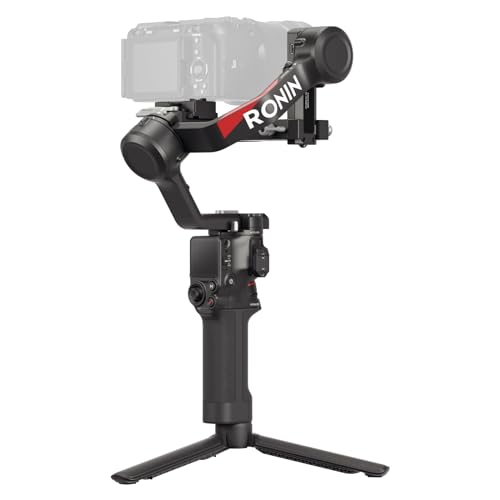
Badge: Best Overall. The RS 4 is the gimbal most working mirrorless shooters should buy, and Black Friday has made it the easiest recommendation in this guide: seen at $369 on November 20, 2026 against a $469 reference price in Amazon’s data — about 21% off. Its 3 kg (6.6 lb) tested payload carries mainstream mirrorless bodies with their professional zoom lenses, which is the combination most paid work actually uses, and its second-generation native vertical shooting switches from horizontal to vertical by re-seating the horizontal plate — no extra accessories, no rebalance drama — which is the feature social-era shooters use daily.
The details are mature in the way fourth-generation products are. Teflon-coated axis arms reduce friction so balancing is precise rather than approximate; the tilt axis is extended by 8.5 mm over the previous generation, giving bulkier camera-and-lens combinations room to balance properly; a joystick mode switch flips between zoom and gimbal control; and the RSA communication port opens DJI’s control ecosystem, from tethered handles to third-party rings. The included BG21 battery grip is rated for about 12 hours of runtime, and the optional BG70 high-capacity grip extends that to 29.5 hours while powering the camera over USB-C — the kind of accessory logic that matters on wedding and event days.
The honest caveats: 3 kg is a ceiling, not a suggestion, and a cinema camera or a heavy telephoto combination will exceed it — that is what the RS 4 Pro below exists for. The tracking and focus accessories that make the RS system shine on solo shoots are separate purchases, so price the ecosystem, not just the gimbal. And while the discount is the cleanest in this guide, gimbal pricing does sometimes dip again on Cyber Monday for current models; if your shoot is in January rather than next week, patience is a defensible strategy here in a way it is not for the clearance picks further down.
Mini specs (verified from the listing):
- Payload: 3 kg (6.6 lb) tested, extended tilt axis
- Shooting: 2nd-gen native vertical shooting, joystick mode switch
- Balancing: Teflon-coated axis arms
- Battery: BG21 grip, about 12 hours; optional BG70 extends to 29.5 hours
- Compatibility: Canon, Sony, Nikon, Fujifilm (per listing); RSA accessory port
Strengths
- The mainstream professional choice: payload, vertical shooting and ecosystem in one mature package.
- Native vertical switching without accessories matches how much paid work is now delivered.
- Battery grip options scale from a half-day shoot to a full weekend without charging.
Trade-offs
- 3 kg payload excludes cinema rigs and the heaviest lens combinations.
- Tracking modules and focus motors are extra purchases on top of the gimbal price.
- As a current model, its price may repeat or dip slightly on Cyber Monday.
Verdict: Best for: wedding, event, corporate and creator shooters on mainstream mirrorless systems who want the default professional tool at a verified 21% saving. Not suited for: cinema-camera operators, or phone-only creators who should spend a fifth as much below.
Deal details: Seen at $369 on November 20, 2026, against a $469 reference price returned by Amazon’s catalog data — about 21% off. The standard RS 4 listing is the one verified; the Combo adds a Focus Pro Motor for more money and is the better buy only if you will use the motor.


2. DJI RS 4 Mini — Best for Mirrorless Travelers
Badge: Best for Mirrorless Travelers. The RS 4 Mini carries the deepest verified percentage in this guide: seen at $259 on November 20, 2026 against a $369 reference price — about 30% off. It is DJI’s answer to the shooter whose camera is a compact mirrorless body with a prime or a small zoom — the travel, street and everyday creator kit — and who found the full-size RS gimbals more stabilizer than their bag wanted. Third-generation native vertical shooting and second-generation automated axis locks headline this generation: the locks engage and release themselves, which sounds minor until you have packed and unpacked a gimbal six times in a day.
What the Mini keeps from its big sibling matters more than what it sheds. Balancing is Teflon-enhanced like the RS 4’s, the control scheme and app are the same ecosystem, and an optional intelligent tracking module (sold separately, and included in the Combo configuration) adds subject tracking for solo shooters. For a creator filming themselves — walking talks, product demos, travel pieces to camera — that tracking option is the difference between a gimbal and a camera operator. Paired with a compact body and a fast prime, the whole rig stays in the size class of a large lens case, which is precisely why it gets taken along when the full RS 4 would be left at home.
The trade-off is payload headroom, and it is a hard wall, not a soft one: the Mini class is built for mirrorless cameras with light-to-moderate lenses. Mount a heavy f/2.8 standard zoom and you are at or past the comfortable limit, with motors working harder and battery draining faster. Buy it for the kit you actually travel with, not the kit you shoot weddings with — or buy the RS 4 above and accept the size. At $259, though, the Mini is the price-performance center of this entire guide for its intended user.
Mini specs (verified from the listing):
- Class: compact mirrorless gimbal (Mini payload class)
- Shooting: 3rd-gen native vertical shooting
- Locks: 2nd-gen automated axis locks
- Balancing: Teflon-enhanced
- Compatibility: Canon, Sony, Nikon, Fujifilm (per listing); optional intelligent tracking module
Strengths
- About 30% off at sighting — the deepest verified percentage among the camera gimbals here.
- Automated axis locks and a compact body make it the gimbal that actually travels.
- Optional tracking module turns it into a solo shooter’s camera operator.
Trade-offs
- Payload suits compact mirrorless kits; heavy f/2.8 zooms overwhelm it.
- The tracking module is a separate purchase unless you buy the Combo.
- Smaller grip and controls are less comfortable for all-day professional use.
Verdict: Best for: travel and everyday creators on compact mirrorless bodies who shoot a lot of vertical and solo content. Not suited for: shooters whose main lens is a heavy professional zoom, or anyone balancing larger cinema bodies.
Deal details: Seen at $259 on November 20, 2026, against a $369 reference price in Amazon’s catalog data — about 30% off. The Combo configuration with the tracking module and briefcase handle was sighted at $309 the same day; choose based on whether you shoot solo.
Check on Amazon · See the current Black Friday price · View this deal on Amazon
3. DJI RS 3 Mini — Best Value Camera Gimbal
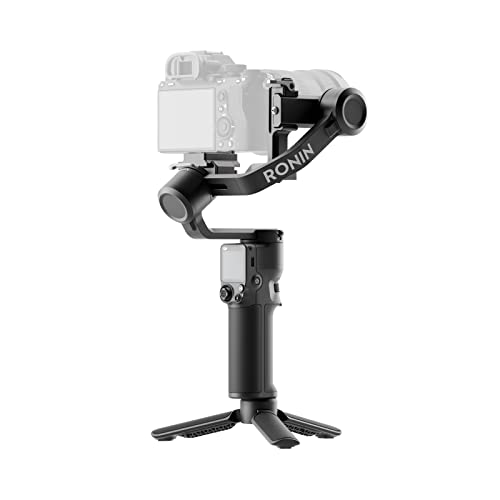
Badge: Best Value Camera Gimbal. The previous-generation Mini is where Black Friday logic bites hardest. The RS 3 Mini was seen at $199 on November 20, 2026 against a $237 reference price — about 16% off — and for that money it remains a serious stabilizer: a 2 kg (4.4 lb) tested payload, a body weight of just 795 g, native vertical shooting, Bluetooth shutter control and DJI’s third-generation RS stabilization algorithm. The RS 4 Mini above it is better in the details — automated locks, newer tracking options — but it costs $60 more at sighting prices, and the footage from the two, on the same camera, is far closer than the price gap.
Who this pick serves is specific: the mirrorless shooter whose kit is a body plus primes or a compact zoom — an a7C with a 40mm, an X-T5 with the kit 18-55, a Z fc with its retro primes — and who wants stabilized video without reorganizing their bag or their budget around it. At 795 g the gimbal itself weighs less than many lenses, Bluetooth shutter control removes the cable fuss for supported cameras, and the whole thing sets up fast enough for run-and-gun travel work. It is also the natural first gimbal: if you discover stabilized shooting is not your style, $199 is a tuition fee you can accept, and the resale market for DJI Minis is brisk.
The warnings are the usual last-generation ones. Stock is finite and the renewed version of this same gimbal circulates at a lower price ($174 in the same search) — the listing we verified at $199 is the new unit, so check the condition line before checkout if the price you see differs. Payload is the hard limit again: 2 kg covers most mirrorless-and-prime combinations and excludes most mirrorless-and-professional-zoom ones. And the newer automated locks genuinely are nicer across a long day. None of that overturns the arithmetic: under $200 for a DJI RS gimbal is the value sighting of this category.
Mini specs (verified from the listing):
- Payload: 2 kg (4.4 lb) tested
- Weight: 795 g
- Shooting: native vertical shooting, Bluetooth shutter control
- Stabilization: 3rd-generation RS stabilization algorithm
- Compatibility: Canon, Sony, Nikon, Fujifilm (per listing)
Strengths
- A genuine DJI RS camera gimbal under $200 at sighting — the category’s value benchmark.
- 795 g body and 2 kg payload fit the compact mirrorless kits most travelers own.
- Bluetooth shutter control and native vertical cover the modern essentials.
Trade-offs
- Previous generation: no automated axis locks, older tracking options.
- 2 kg payload excludes professional zoom combinations.
- Finite stock, and renewed units circulate nearby — verify condition at checkout.
Verdict: Best for: first-gimbal buyers and compact-kit travelers who want DJI stabilization at the lowest honest price. Not suited for: heavy-lens shooters, or buyers who value the newest convenience features over $60.
Deal details: Seen at $199 on November 20, 2026, against a $237 reference price returned by Amazon’s catalog data — about 16% off. Confirm the listing says new, not renewed, before ordering; both circulate under similar titles.

Check on Amazon · See the current Black Friday price · View this deal on Amazon

4. DJI RS 4 Pro — Best for Cinema Rigs
Badge: Best for Cinema Rigs. The RS 4 Pro exists for the cameras the RS 4 cannot carry. Seen at $869 on November 20, 2026 — Amazon’s catalog returned no reference price for this listing, so no percentage is claimed — it lifts a 4.5 kg (10 lb) payload: cinema bodies, full mirrorless rigs with matte boxes and monitors, and the dual focus and zoom motor setups that professional solo operators and small crews actually run. If your camera package has a cage, a follow focus and a transmission system, this is your pick and the cheaper gimbals in this guide are simply not candidates.
What the Pro premium buys beyond payload is control depth. Second-generation native vertical shooting carries over from the RS 4, and the platform supports dual focus and zoom motors, LiDAR-based focusing in the wider RS ecosystem, and the tethered and remote control options that let a gimbal operator and a focus puller work as a team. This is the stabilizer under a large share of the commercial, music-video and wedding-film work shot on mirrorless and compact cinema cameras, which also means the rental houses, crew familiarity and accessory shelves all assume it. Buying into the platform your collaborators already know has a value no spec sheet captures.
The case against it is equally clear, and it is mostly about honesty regarding your own rig. If your camera is a mirrorless body and a zoom — the setup 90% of readers own — the RS 4 Pro is $500 of capacity you will never use, in a heavier package you will feel on every shoot. The Combo configuration with transmitter and focus motor costs substantially more than the $869 standard listing verified here, so price the exact configuration your work needs. And professionals with a December delivery schedule should buy on sighting, not on hope: Pro-tier stock is allocated thinner than consumer stock during Black Friday Week.
Mini specs (verified from the listing):
- Payload: 4.5 kg (10 lb)
- Shooting: 2nd-gen native vertical shooting
- Motors: dual focus and zoom motor support
- Class: DSLR and cinema camera stabilizer
- Compatibility: Canon, Sony, Nikon, Fujifilm and cinema bodies (per listing category)
Strengths
- 4.5 kg payload carries real cinema rigs, not just bare mirrorless bodies.
- The professional platform: motors, LiDAR ecosystem, remote and tethered control.
- Crew and rental familiarity makes it the safe professional standard.
Trade-offs
- Massive overkill — and overweight — for a bare mirrorless body and zoom.
- No reference price was returned, so the saving cannot be expressed as a percentage.
- Full professional configurations (Combo, motors, transmission) cost well beyond $869.
Verdict: Best for: cinema and commercial shooters whose rigs genuinely approach the RS 4’s limits. Not suited for: mainstream mirrorless owners, travelers, or anyone whose heaviest combination is under 3 kg.
Deal details: Seen at $869 on November 20, 2026. No reference price was returned by Amazon’s catalog data for this listing, so no percentage is claimed. The verified listing is the standard RS 4 Pro; the Combo adds transmission and focus hardware at a higher price.


5. DJI Osmo Mobile 8 — Best Phone Gimbal
Badge: Best Phone Gimbal. Half the video shot this year was shot on phones, and the Osmo Mobile 8 is the stabilizer that phone deserves: seen at $129 on November 20, 2026 against a $149 reference price — about 13% off. The headline is native AI tracking with audio and lighting integration: the tracking module follows a subject without depending on an app, works with DJI’s microphone ecosystem, and adds a fill light — the three things phone creators otherwise solve with three separate accessories. Add 360° pan rotation, a built-in extension rod and tripod, and a 10-hour battery, and this is the most complete phone gimbal DJI has made.
The use cases write themselves. A real-estate walkthrough, a coach filming training, a parent filming a school play from the back row, a solo creator whose entire studio is a phone and a window: all of them get footage that looks deliberately shot rather than survived. The built-in extension rod solves the phone gimbal’s oldest problem — arm’s length is too close for a good selfie frame — and the tripod feet turn any table into a locked-off second angle. Phone charging from the gimbal’s battery keeps a long shooting day from ending at 12%.
Perspective, though: $129 is real money against the $75 previous generation directly below, and the honest difference is the tracking module’s independence and polish, the pan rotation, and the lighting/audio integration. If you film other people moving — sports, kids, pets, events — the tracking earns the premium every single shoot. If you film yourself talking at a desk, it largely does not. Know which creator you are before choosing between this pick and the next one; the guide’s job is to make that a $54 decision you make deliberately.
Mini specs (verified from the listing):
- Class: 3-axis phone gimbal for iPhone and Android
- Tracking: AI native tracking with audio and lighting module support
- Rotation: 360° pan
- Built in: extension rod and tripod
- Battery: 10 hours, with phone charging
Strengths
- Native tracking that works without babysitting an app, plus mic and light integration.
- Extension rod, tripod and 360° pan solve the classic phone-gimbal frustrations.
- 10-hour battery that can also charge the phone.
Trade-offs
- Costs $54 more than the previous generation at sightings, for features desk-bound creators may not use.
- Very large phones in heavy cases can approach clamp and motor comfort limits.
- The 13% saving is mild — this is a fair price on the current model, not a clearance.
Verdict: Best for: phone creators who film moving subjects, solo content and walkthroughs. Not suited for: static desk creators, or anyone whose phone footage is occasional rather than a practice.
Deal details: Seen at $129 on November 20, 2026, against a $149 reference price in Amazon’s catalog data — about 13% off. Bundles with the Mic Mini transmitter circulate at higher prices; the verified listing is the standard gimbal.
Check on Amazon · See the current Black Friday price · View this deal on Amazon

6. DJI Osmo Mobile 7 — Best Budget Phone Gimbal
Badge: Best Budget Phone Gimbal. The Osmo Mobile 7 closes the guide at the lowest price in it: seen at $75 on November 20, 2026. Amazon’s catalog returned no reference price for this listing, so no percentage is claimed — at $75 for a current-series DJI phone gimbal with a built-in tripod, ActiveTrack, ShotGuides and one-tap editing in the app, plus 10 hours of use and phone charging, the absolute number is the argument. This is the previous generation in name, but it launched as a mainstream product, and everything casual-to-serious phone creators actually use is present.
Who should buy it is a longer list than the price suggests: parents whose phone footage of games and recitals is currently unwatchable, travelers who want one small stabilizer in the daypack, small businesses filming their own product clips and walkthroughs, students, and anyone gifting a creator. The ultra-light body and comfortable grip (per the verified listing) make it the gimbal most likely to be carried, and a carried gimbal beats a better one at home every time. ShotGuides and one-tap edits matter at this level too: the software teaches framing while it stabilizes, which is why beginners improve faster on this than on a bare phone.
The step up to the Osmo Mobile 8 buys the newer native tracking module with audio and lighting, and 360° pan; the step down from here buys nothing worth owning — the no-name phone stabilizers below this price point are where gimbal disappointment lives. One compatibility note for all phone gimbals: very thick cases and the largest phones can strain any clamp, so check your phone-and-case combination against the listing’s supported sizes, and expect to remove the bulkiest cases for balance. At $75, this is also the easiest gift in the guide — pair it with the ideas in our Black Friday Tech Gifts Under $100 roundup if the creator in your life needs the rest of the kit too.
Mini specs (verified from the listing):
- Class: 3-axis phone gimbal for iPhone and Android
- Tracking: ActiveTrack with ShotGuides and one-tap edit
- Built in: tripod
- Battery: 10 hours use, with phone charging
- Build: ultra-light, comfortable grip
Strengths
- Full DJI phone-gimbal experience at $75 — the lowest sighting in this guide.
- Built-in tripod, tracking and guided shooting help beginners immediately.
- Light enough to be the gimbal that actually gets carried.
Trade-offs
- No reference price was returned, so there is no verified percentage to quote.
- Lacks the Mobile 8’s native tracking module, lighting and 360° pan.
- Thick cases and the largest phones can challenge the clamp and balance.
Verdict: Best for: casual creators, parents, travelers, small businesses and gift buyers on a budget. Not suited for: professional phone productions needing the newest tracking and lighting integration.
Deal details: Seen at $75 on November 20, 2026. No reference price was returned by Amazon’s catalog data for this listing, so no percentage is claimed. The 7P variant with native tracking circulates at $99 the same day if you want the middle step.
Check on Amazon · See the current Black Friday price · View this deal on Amazon
Comparison Table
Read this table as a decision filter, not a ranking. Payload decides eligibility first; size and tracking decide the working experience after that. Every price is the November 20, 2026 sighting — confirm the live price on the listing before you buy.
| Model | Key specs | Dated sighting |
|---|---|---|
| DJI RS 4 | 3 kg payload, native vertical, about 12 h grip | $369 on Nov 20, 2026 |
| DJI RS 4 Mini | Compact mirrorless, automated axis locks, vertical | $259 on Nov 20, 2026 |
| DJI RS 3 Mini | 2 kg payload, 795 g, Bluetooth shutter | $199 on Nov 20, 2026 |
| DJI RS 4 Pro | 4.5 kg payload, dual focus/zoom motors | $869 on Nov 20, 2026 |
| DJI Osmo Mobile 8 | Phone, AI native tracking, 360° pan, 10 h | $129 on Nov 20, 2026 |
| DJI Osmo Mobile 7 | Phone, ActiveTrack, built-in tripod, 10 h | $75 on Nov 20, 2026 |
How to Choose the Right Gimbal This Black Friday
Weigh your heaviest combination, then add margin. Payload ratings are tested maximums, not comfort zones. Add your body, your heaviest lens, a microphone or monitor if you use one, and the cage if you own one — then choose a gimbal whose rating clears that total with room to spare. A combination at 2.8 kg belongs on the RS 4, not on a 2 kg Mini with a prayer. Motors run at their limit balance poorly, drain batteries and wear early; motors run in their middle range feel invisible. This single calculation eliminates most wrong gimbal purchases before they happen.
Decide whether vertical is your living or your garnish. If social formats pay your bills or build your audience, native vertical shooting — present across the RS 4 generation and both Minis here — is a core feature, not a checkbox: it changes the balance once, cleanly, instead of rebuilding the rig sideways. If vertical is an occasional crop from horizontal footage, it should not drive the decision at all, and the cheaper previous-generation picks become even more attractive.
Price the ecosystem, not the gimbal. Tracking modules, focus motors, extended battery grips, briefcase handles and cases are how a $259 gimbal becomes a $450 system. Some of that is money well spent — the RS 4’s BG70 grip genuinely changes event work — and some is shelf decoration. List the accessories your shooting actually requires, price the total system for each candidate, and compare systems, not stickers. The same logic applies to the camera side: our Action Camera Black Friday Deals 2026 guide covers the stabilizer-free end of the market for shoots where a gimbal is the wrong tool entirely.
Match the gimbal to the bag you own. A stabilizer’s working size is its packed size plus setup time, multiplied by every location change in your day. Travel and street shooters should weight the Minis and phone gimbals more heavily than their spec sheets suggest; studio and event shooters, who set up once and shoot for hours, should weight payload and battery systems instead. The best gimbal is the one whose packed form disappears into the kit you already carry.
Think about who operates it. Solo creators need tracking, Bluetooth shutter control and fast balancing, because every friction is theirs alone. Crews need payload, motors and remote options, because the gimbal is one station among several. The picks in this guide divide cleanly along that line — Minis and phone gimbals for solo work, RS 4 for the versatile middle, RS 4 Pro for crews — and buying across the line in either direction wastes money or capability.
Consider the second shoot day, not just the first. Gimbal ownership has a rhythm: the first day is novelty, the second month is habit, and the second year is where quality tells. Automated locks, sealed bearings, a battery grip system that scales, an app that still receives updates — these are second-year features, and they are why the established platform dominates this guide’s picks. A stabilizer is also one of the most borrowed and most resold items in a creator’s kit; the models with deep accessory shelves and active software support hold their value and their usefulness in a way one-season novelties do not. When two candidates sit within $60 of each other, buy the one you can picture on a shoot two winters from now.
How to Check a Deal Is Real — and Balance Your Gimbal Right
Verify the exact model, generation and condition. Gimbal generations share names closely — RS 3 Mini, RS 4 Mini, RS 4, RS 4 Pro — and renewed units circulate under near-identical titles at lower prices. Before checkout, read the full title, the condition line and the configuration (standard versus Combo) one more time. A Combo’s extra motor or handle is real value only if you will mount it; a renewed unit’s saving is real only if the warranty terms suit you. The listings verified in this guide are the new, standard configurations unless a review says otherwise.
Use the sighting method on anything else you consider. Every price in this guide is a dated sighting because that is the only honest unit during a sale event. Apply the same test elsewhere: note today’s price, compare it with the same listing’s pre-event price if you can, and treat any percentage without a visible reference price as decoration. Gimbal pricing from the major brands is comparatively disciplined, which makes verified sightings like the RS 4 Mini’s 30% worth acting on rather than admiring.
Balance it properly the first time — it is a skill, not a chore. Work axis by axis, in the order your model’s guide specifies, with the camera in its shooting configuration: lens at its working zoom position, card and battery in, cap off, microphone mounted. A balanced gimbal holds position when you tilt it and let go at each axis. Save the balance settings for each lens combination you use — most shooters have two or three — and re-check when anything in the rig changes. Ten patient minutes at home is the difference between motors that sip power all day and motors that fight you by lunch.
Update firmware and calibrate before the shoot that matters. Gimbals are computers with motors: firmware updates fix tracking behavior, camera-control compatibility and battery reporting. Update over the app at home, run the auto-calibration on a level surface, and shoot a test walk — forward, a turn, stairs if you have them — reviewing for horizon drift and micro-jitter. Discovering a quirk on a paid shoot is a story you tell for years; discovering it in your hallway is a checkbox.
Rent or borrow before the big purchase if you can. Gimbals are unusually personal tools: grip diameter, button placement and balance feel are matters of hand size and habit, and no review — including this one — can tell you whether an RS 4 or a Mini suits your hands across a six-hour shoot. Many camera shops rent the RS line by the day, and a single paid shoot on a rented unit settles questions that a month of reading cannot. If the rental confirms the match, Black Friday’s sightings are waiting with the discount already verified; if it does not, you have spent a day rate to avoid a $369 mistake, which is the cheapest tuition in this entire category.
Common Mistakes
Buying payload you will never use. An RS 4 Pro under a bare mirrorless body is not future-proofing; it is extra weight, extra cost and a bigger bag, forever. Buy for the rig you own plus the one upgrade you have actually planned.
Buying below your payload and hoping. The opposite error is worse: motors at their limit produce jitter, heat and early shutdowns. If your combination is within a few hundred grams of a gimbal’s rating, step up a class.
Ignoring the phone-gimbal clamp test. The largest phones in thick or wallet cases exceed what phone clamps balance well. Check supported sizes, and be ready to shoot case-free, before blaming the gimbal.
Skipping the balance because “the motors will handle it.” Strong motors mask a bad balance while draining the battery and adding micro-vibration. Balance is the product; the motors are the polish.
Waiting for Cyber Monday on previous-generation stock. The RS 3 Mini and Osmo Mobile 7 are finite inventory. Current models like the RS 4 may repeat their prices on November 30; last-generation picks at clearance sightings simply sell out.
Final Recommendation
For most mirrorless shooters, the DJI RS 4 at its $369 sighting is the buy: the mainstream professional standard, native vertical shooting and a real 21% verified saving. Travelers and solo creators on compact kits should take the RS 4 Mini at $259 and its guide-leading 30% cut, while first-gimbal buyers get the RS 3 Mini at $199 and lose remarkably little. Cinema rigs justify the RS 4 Pro at $869 and nothing cheaper honestly carries them. Phone creators split by subject: the Osmo Mobile 8 at $129 if you film movement, the Osmo Mobile 7 at $75 if you film yourself. Whatever you choose, verify the generation, the condition and the live price at checkout — during November 19–30, those checks matter more than any roundup, this one included. If the gimbal is one piece of a larger creator build, our Dji Black Friday Deals 2026 guide covers the same maker’s cameras and drones in the same dated-sighting format.
FAQ
When do camera gimbal Black Friday deals start in 2026?
Amazon Black Friday Week runs November 19–30, 2026. Black Friday is November 27 and Cyber Monday is November 30. Every price in this guide was sighted on November 20, 2026, early in the event — current models tend to hold event pricing, while previous-generation stock like the RS 3 Mini sells through.
How much payload do I actually need?
Add your camera body, your heaviest lens, and any cage, microphone or monitor you shoot with, then choose a gimbal rated comfortably above that total. Most mirrorless body-and-zoom combinations land between 1.5 and 2.8 kg, which is RS 4 territory; compact prime kits fit the Minis; rigged cinema packages need the RS 4 Pro.
Is the RS 3 Mini still worth buying with the RS 4 Mini out?
At the $199 sighting, yes for compact kits: you give up automated axis locks and the newest tracking options and save $60, with footage quality on the same camera that most viewers cannot separate. Heavy-lens shooters should skip both Minis for the RS 4.
Can a phone gimbal replace a camera gimbal?
Only if the phone is the camera. Phone gimbals stabilize phones superbly and cannot carry a mirrorless camera at any adapter’s promise. Many creators own both: the phone gimbal for everyday capture, the RS for deliberate work.
Why do some picks show no percentage discount?
Because Amazon’s catalog data returned no reference price for those listings on November 20, 2026. We print percentages only when a reference price exists in the data; otherwise we present the absolute sighting price and judge it against the product’s class.
Should I wait for Cyber Monday instead?
Cyber Monday (November 30) usually repeats surviving prices rather than beating them. Current models are a reasonable wait; previous-generation picks like the RS 3 Mini and the Osmo Mobile 7 are finite stock and are the ones most likely to be gone.
Why does this guide not print star ratings?
Ratings and review counts on Amazon listings change constantly during a sale event, so any fixed number printed in a guide goes stale within days. We judge picks on verified listings, dated prices and manufacturer specifications instead.